Wombwell Rainbow Book Interviews: White Noise Machine by Richard Skinner

Richard Skinner

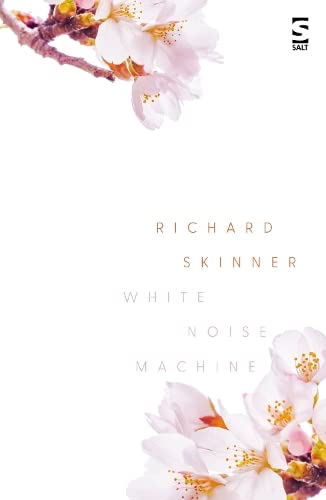
has published five books of poems, the most recent of which is Dream into Play (Poetry Salzburg, 2022). His next collection, White Noise Machine, is out with Salt in September 2023. Richard is Director of the Fiction Programme at Faber Academy. He also runs a small press, VanguardEditions, was the co-editor of Magma 80 and is the current editor of 14 magazine.

White Noise Machine can be purchased here: https://www.amazon.co.uk/White-Noise-Machine-Modern-Poets/dp/1784632864/ref=sr_1_3?crid=2FK3PWR6Y3UAK&keywords=Richard+skinner&qid=1687419417&s=books&sprefix=richard+skinner%2Cstripbooks%2C254&sr=1-3

The Interview

1. When and why did you start writing poetry?

I remember writing my first poem when I was 15 and still at school. It was about the First World War, biplanes and castles—a real adventure. It was so exciting. I carried on writing bad love poetry to girlfriends throughout my teens. Then I joined the poetry society at uni. I’ve been writing poetry all my life and I’m sure I will end my life in a bath chair trying to write a poem.

2. Who introduced you to poetry?

I remember reading TS Eliot’s poems about cats aloud in class when I was 12 or so. Macavity the mystery cat made a big impression on me. I think the next big thing was reading Ted Hughes’ ‘Remains of Elmet’ in a book with beautiful black & white photos by Fay Godwin. The pairing of visual with poem was revelatory to me. I must have been 18/19.

3. How aware are and were you of the dominating presence of older poets traditional and contemporary?

I was mostly aware of the Romantics when I started reading and writing poetry but Wordsworth and the others leave me cold, I’m afraid. The Victorians (Tennyson, etc), too. Later, I discovered the Metaphysical poets, whom I love. And I love Gawain & the Green Knight. My interest as a poet really starts with the First World War poets. Wilfred Owen’s poetry is amazing. That led to Keith Douglas, whose work is also amazing. And then everything that followed. And, of course, whichever way I look, there is always TS Eliot.

4. What is your daily writing routine?

No daily routine. I write whenever the urge luckily comes, wherever I happen to be. For me, travelling is a good time to write.

5. What subjects motivate you to write?

Everything around me and inside me. Playfulness. Lyricism. Nature. Culture.

6. What is your work ethic?

No ethic as such.

7. How do the writers you read when you were young influence your work today?

I think those poems that I read early on have left a lasting impression on me. I have always found Wallace Stevens’ work fascinating—his poem “Tea at the Palaz of Hoon” is a favourite of mine—and I would say that I have favourite poems rather than poets. When I was living in Italy, I used the British Council library a lot and came across a wonderful short poem there by Lotte Kramer called “White Morning”, which left an indelible impression on me. Yeats’ “The Wild Swans at Coole” made a similarly big impression, as did Geoffrey Hill’s “A Song from Armenia” and Anne Stevenson’s “Utah”. Some of Donald Davie’s early poems I like a lot, including his “Ezra Pound in Pisa”. That leads me on to Pound, whose Imagist Manifesto is still meaningful to me. Wallace Stevens’ “Thirteen Ways of Looking at a Blackbird” is the very embodiment of Imagism and a wonderfully alive poem. Stevens’ poem “The Dwarf” is one of the weirdest and most wonderful poems I’ve ever read. Stevens’ poem “The Snow Man”. Sylvia Plath, Ian Hamilton, Paul Muldoon, Keith Douglas. I read all these poems/poets when I was in my teens/20s and they have stayed with me forever.

8. Whom of today’s writers do you admire the most and why?

The titans David Harsent, Paul Muldoon, Peter Didsbury, then Mona Arshi, Catherine Ayres, Clodagh Beresford Dunne, Jane Burn, Chaucer Cameron, Marion Christie, Josephine Corcoran, Anthony Costello, Emma Danes, Nichola Deane, Steve Ely, Cathy Galvin, Peter Gizzi, Lavinia Greenlaw, Jeff Hilson, Lisa Kelly, Zaffar Kunial, Sylvia Legris, Roy Marshall, Richie McCaffery, Nicola Nathan, Eiléan Ní Chuilleanáin, Alice Oswald, Anita Pati, Deborah Randall, Pete Raynard, Denise Saul, Zoë Skoulding, Pauline Stainer, Julian Stannard, Paul Stephenson, Michael Symmons Roberts, Marion Tracy, Julian Turner, Kate Wakeling, Sarah Westcott, Judith Willson, Samantha Wynne-Rhydderch.

9. Why do you write, as opposed to doing anything else?

No choice, I’m afraid. Poems, for me, are traces of my existence.

10. What would you say to someone who asked you “How do you become a writer?”

Read widely and deeply.

11. Tell me about the writing projects you have on at the moment.

My next project is a small collection of fractal poems, a kind of poetry I’ve only recently discovered.

12. How did you decide on the order of the poems in your book?

In the case of ‘White Noise Machine’, I placed the four “Songs”, which are cut-ups of lines taken from spiritual pop songs, every quarter of the way through the collection. They act as the four cornerstones of the collection really and they ‘house’ all the other poems. Once I’d done that, I made sure that the several little ‘runs’ of three or four poems were evenly spaced throughout. Then there were lots of obvious pairings that I made sure were on facing pages: the chicory and lavender poems, the two playful poems based on Irish poets, “Lix” and “Aran”, which are both places in Scotland and the two pantoums “Hub” and “Hem”. 


13. Noting the various locations in your book how important is the “sense of place” in it?

Oh, crucial, I’d say! A great deal of my work is about being/walking in a landscape. In White Noise Machine, there are several poems written in situ or en route. My wife and I went on retreat for the month of December last year to Mevagissey in Cornwall, which was a cosmic experience. The “Three Cornish Landscapes” were written there, written as I was watching the sunrise happen and the days pass. Those three poems are attempts to recreate that sense of the wonder of those places for the reader that I originally felt. “The Scene” was also written in Cornwall, in response to the breathtaking sea- and skyscapes down there. I like to think of them as Impressionist paintings with a dash of the energy of Abstract Expressionism thrown in. The three poems collected together as “A Northern Archive”, on the other hand, were all written while I was walking the Pennine Way last summer. A passed a copse of fir trees and wrote the poem in my head as I walked. The same with “Lapwing”, birds whose cries pierced me nearly every day on the way. “Accordance” was my attempt at describing the way in which you can fuse with the landscape as you walk in it and it took several days on the way to get it right. “Lix”, too, was written while doing a long distance walk, this time the Rob Roy Way in Scotland last September. Near the route, there is a place called Lix, apparently so called because it used to be a Roman encampment. As I was walking from Killin to Kenmore along the shore of Loch Tay, I was wondering what it must have been like for the local people when the Romans were there. I wrote the poem in my head and, when I arrived in Kenmore, I wrote it down as is. These places – Cornwall, the Pennines, Scotland – are all inspirational to me. They breathe the poems into me and I exhale them.

13.1. How intentional is describing your work in terms of other creative pursuits such as painting (Impressionists) and music (White Noise Machine)?

Um, well, “Three Cornish Landscapes” are obviously meant to be very visual poems, but I mentioned Abstract Expressionism because I didn’t want the poems to be entirely descriptive; there is supposed to be an energy in them that transcends the purely visual. There is immense energy in the Cornish sea and sky and I wanted to convey that. As far as the musical is concerned, music runs through the poems in this collection like the current in the river. Throughout the poems I’ve woven in the voices/mimes of David Bowie, Kate Bush, Luc Ferrari, Flaming Lips, Peter Gabriel, Genesis, Christopher Hobbs, Joni Mitchell, Muslimgauze, Éliane Radigue & R.E.M.. The four Songs that I mentioned earlier are cut-ups and are composed of lines cut from spiritual pop songs. These cut-ups have been an ongoing project since lockdown and began with a cut-up of the Talking Heads song, “Once in a Lifetime”. That cut-up, titled “Life in a Oncetime”, was the closing poem of my book Dream into Play, which came out last year. I put out a whole book of cut-ups of pop songs with Vanguard Editions in January this year. The Songs in White Noise Machine were composed in a very particular way: I tried to find two spiritual pop songs that shared a common theme, then cut lines from them into couplets. The couplets were then ordered and repeated via a highly organised pattern. The repetition is supposed to be liturgical and I wanted the poems to act as a balm, a salve for the soul. The whole cut-up process is absolutely alchemical and magical. As William Burroughs said, “When you cut into the present, the future leaks out.”

13.2. Why is the cut up method “alchemical and magical” to you?

The very first cut-up I did was actually a cut-up of two songs by R.E.M. – “Finest Worksong” and “Ignoreland”, called “Finest Ignoreland” – which I posted online just before the American election in January 2021. It was a plea to Americans to do the right thing and vote Biden in. It worked! I chose those two songs of theirs because they shared a very similar political theme – insurrection, protest, etc. – so that one was relatively straightforward to do. I then made the Talking Heads cut-up. I then broadened the remit and looked at making cut-ups, not from a single song or two songs by the same band, but two songs from different bands as well. The first one I did like that was a cut-up of Nick Drake’s “Northern Sky” and Fleetwood Mac’s “Landslide” called “Northern Landslide”. When I thought about those two songs, I realised they subtly shared a theme, i.e. a landscape that expressed a state of mind. They are both songs about doubt, about expressing vulnerability. Sometimes, the songs I chose shared a much more obvious theme – like the references to drug use in Prince’s “Sign o’ the Times” and “White Lines” by Melle Mell. Sometimes it was about genre. I’ve always loved Blue Öyster Cult’s “(Don’t Fear) the Reaper” but what to cut it with? I’m not a huge Heavy Metal fan and know nothing about Metallica other than their most famous song is “Enter the Sandman”, so I looked at that and, lo and behold, they were both gothicky fairytales. Sometimes, it was the song titles that drew me – I couldn’t resist making a cut-up of Blur’s “Tender” with Heaven 17’s “Temptation”, for example. The only reason I cut “Manic Monday” with “Ruby Tuesday” is because of the days of the week in the titles. Those songs have nothing in common so it was more of a challenge, but it works – the poem is common ground between the two but unlike either song. It is its own thing. That’s what’s alchemical and magical about the process – you are taking two things and cutting them together to create a third thing, something new, something that didn’t exist before, that has its own voice and meaning.

13.3. What cut up process do you use once you have found the material.? Is it a conscious process, or arbitrary?

Very conscious. I blow up and print out the lyrics, literally cut them up with scissors and then scatter them on the living room floor. Then I cast my eyes over them, trying to find lines that will go well together, to create a flow. There is meaning there somewhere but you have to find it. It’s a bit like dowsing. Although this process is quite conscious, the form of the resultant poem is arbitrary. I never go in thinking that this poem has to be 14 lines long, or has to have four stanzas, or whatever. The material dictates the form. One of the best cut-ups I’ve ever done is called “Swallow Butterfly Mornings”, which is a cut-up of My Bloody Valentine’s “Swallow” with Hope Sandoval & the Warm Inventions’ (which is MBV’s drummer) “Butterfly Mornings”. On the page, it’s a thing of gossamer beauty drawn out of pure noise cacophony. The poem couldn’t be more different from the MBV song.

13. 4. How do you know when a cut up poem is finished?

Good question. A cut-up has to have meaning in it, meaning that is different from the source material, and I instinctively know when that’s the case. There has to be an energy there for the poem to work; it can’t just be a pastiche. It has to be a unique emotional collage. Really good last lines are always crucial. They close the poem but open something up in the reader, hopefully.

14. Your previous collection were about the “play of light”, this one is about sound. What plans do you have to cover the other senses, touch, taste and smell?

That would be an idea, wouldn’t it? But I don’t really have a priori plans – I tend to follow my nose and see what I come up with. As I say, my next project is to try my hand at some ‘fractal’ poems. 

15. How do you choose which lyrics to cut up?

As I said, I chose the songs for the compatibility of their titles, genres, themes, but, in the case of the four “Songs” in White Noise Machine, I chose the two songs for their spiritual message. “Song: Hounds of Solsbury” is composed of lines cut from “Hounds of Love” by Kate Bush & “Solsbury Hill” by Peter Gabriel. Both those songs are about accepting change in one’s life, a transformation to another state of being. The eagle and hounds in the songs are instruments/metaphors for this change. “Song: Follow Heroes, Follow Me” is composed of lines cut from “Follow You, Follow Me” by Genesis & ““Heroes”” by David Bowie. Both are songs about wanting union, are invitations to stay together while acknowledging that that may not always be easy. “Song: Everybody, Don’t Give Up” is composed of lines cut from “Everybody Hurts” by R.E.M. & “Don’t Give Up” by Peter Gabriel. Both these famous songs are balms for the spirit, salves for the soul. They exhort us to defeat adversity, to cling on to hope. And, finally, “Song: Do You Realize You Are Everything?” is composed of lines cut from “Do You Realize?” by Flaming Lips & “You Are Everything” by R.E.M. Both of these intensely moving songs are a celebration of being alive, a tribute to the people in our lives and an acknowledgment of life’s transience.

15.1. Do you have to ask for permission to use these lyrics?

I haven’t put these cut-up poems into the public domain for profit. One publisher was interested in publishing them but withdrew because of copyright issues. As long as I’m not trying to profit from them, I think I’m ok.

15.2. Have you ever used sources for cut up other than songs, such as advertising, prose, signage, official notices or newspaper articles?

Yes, prose. In Terrace, I published a cut-up of a quote from The Lacemaker, which is a French novel by Pascal Lainé. In The Malvern Aviator, I published a cento from Wind, Sand & Stars by Antoine Saint-Exupéry. And, most recently, in Dream into Play, I published an N+7 poem from Criticism & Truth by Roland Barthes. I’m a sucker for those French guys!

15.3. Do you ever combine cut up with original writing by yourself, or would this dilute the form?

No, they are two distinct disciplines for me. With cut-ups, I’m dealing with other people’s words/lines, which takes the onus off me. It’s kind of liberating. The process of my own work is a whole other story. A friend of mine once described the difference between writing fiction and non-fiction thusly: he said that writing non-fiction was about your enthusiasms whereas writing fiction was about your anxieties. For me, that’s the same difference between the cut-ups and my own work.

15.4. Cut up seems to me to be very similar to collage artworks. What would you think about combining both disciplines.

RS: Yes, as I’ve mentioned, cut-ups are very like collages. So, because they’re so similar, I’m not sure what you mean about combining them.

WR: Placing your cut ups onto collages.

RS: No, I haven’t considered that.

16. Once they have read White Noise Machine, what do you wish the reader to leave with?

Oh, I don’t know! You can’t direct readers. All you can do is write from the heart and soul and hope people connect in some way to what you write. Anything else is a bonus. But I believe that if you write with passion, your work stands a chance of finding passion within the reader. It’s a transaction, but with no rules, no profits.

White Noise Machine can be purchased here: https://www.amazon.co.uk/White-Noise-Machine-Modern-Poets/dp/1784632864/ref=sr_1_3?crid=2FK3PWR6Y3UAK&keywords=Richard+skinner&qid=1687419417&s=books&sprefix=richard+skinner%2Cstripbooks%2C254&sr=1-3

#TheWildness. Day 22. Describe the most fascinating insect you have encountered during your challenge. What makes it unique? Please join Jane Dougherty, Misky and me in celebrating wildness all this month. I tried to get permission from the Wildlife Trust to use their #3ODaysWild as prompts but it was not forthcoming, so here are my own prompts with a little help from chatgbt. I will feature your draft published/unpublished poetry/short prose/artworks using the following prompts. Please include a short third person bio. Numbers refer to dates in June: Day 1. Describe the sounds you hear when you step outside your home. How does nature contribute to this musical work? 2. Write a letter to a tree or plant that you encounter on your daily walk. What would you say to it? 3. Imagine you could transform into any animal for a day. Which animal would you choose and why? 4. Write a short story about a magical encounter with a wild animal in your backyard. 5. Describe a peaceful moment spent observing a body of water. What emotions does it evoke in you? 6. Write a poem inspired by the vibrant colours and patterns of a butterfly’s wings. 7. Imagine you are a wildlife photographer. Describe the most breathtaking picture you have taken during your challenge. 8. Write about a favourite childhood memory spent in nature. How did it shape your connection with the natural world? 9. Create a dialogue between two different species of birds perched on a branch. What would they talk about? 10. Describe the texture and scent of wildflowers you encounter on your nature walks. How do they make you feel? 11. Write a persuasive essay on the importance of conserving and protecting local wildlife habitats. 12. Imagine you are a nature guide. Describe a walk you would take visitors on to showcase the beauty and diversity of your local environment. 13. Write a poem about the changing seasons and how they affect the behaviour of wildlife. 14. Imagine you are a detective investigating the disappearance of a rare animal. Describe your search for clues in the natural world. 15. Write a poem/flash fiction about a mischievous squirrel that causes chaos in your garden. 16. Describe a special moment when you felt truly connected to nature. What did it teach you about yourself and the world around you? 17. Write a letter to future generations, urging them to protect and cherish the natural world. 18. Create a detailed observation log of a specific species of bird that you have been monitoring throughout the challenge. 19. Write a poem inspired by the soothing sounds of a flowing stream or river. 20. Imagine you are a nature-inspired artist. Describe the masterpiece you would create using materials found in the great outdoors. 21. Write a short story about a group of friends who embark on an unforgettable camping trip in the wilderness. 22. Describe the most fascinating insect you have encountered during your challenge. What makes it unique? 23. Write a diary entry from the perspective of a tree, chronicling its experiences and the changes it witnesses over the course of a year. 24. Imagine you could communicate with one animal species. Which species would you choose and what would you ask them? 25. Describe a magical sunrise or sunset you have witnessed during your journey. How did it make you feel? 26. Write a letter to a future self, reflecting on the impact of the challenge on your relationship with nature. 27. Imagine you are a character in a wildlife-themed adventure novel. Describe the perilous situation you find yourself in and how you escape. 28. Write a poem celebrating the diversity and resilience of nature, even in the face of human challenges. 29. Describe the feeling of walking barefoot on cool, damp grass. How does it connect you to the Earth? 30. Write a short story about a hidden, enchanted forest where magical creatures dwell. What adventures await those who discover it? Feel free to adapt these prompts to suit your writing style or preferences.

A Beetle photo by Paul Brookes

Ants

Ants march
nothing stops them
ants march
over dead bodies
of siblings
ants march
to and fro
fro and to
indefatigable.

Ants seethe
through cracks
in the plaster
gaps in the stone
back and forth
from outside to attic
a seething river
of migrants.

I spread
the terror
of coffee grounds
on the bedroom floor
in cracks and holes
along the outside wall
where ants march
seethe
a river indefatigable.

And I hope
to divert the flow.

Jane Dougherty

Bios and Links

Jane Dougherty

lives and works in southwest France. A Pushcart Prize nominee, her poems and stories have been published in magazines and journals including Ogham Stone, the Ekphrastic Review, Black Bough Poetry, ink sweat and tears, Gleam, Nightingale & Sparrow, Green Ink and Brilliant Flash Fiction. She blogs at https://janedougherty.wordpress.com/ Her poetry chapbooks, thicker than water and birds and other feathers were published in October and November 2020.

22 June: Aimlessly Green #thewildness

Misky's avatarIt's Still Life

rose chafer beetle, watercolour and ink with mixed media image

Day 22. Describe the most fascinating insect you have encountered during your challenge.

Aimlessly Green

A white rose leaned,
meek as if asleep.

Petals folded deep in silence,
leaves flung wide in defiance.

And there stood a rose chafer,
green like jelly, lime flavour.

And then upon seeing me,
it opened its wings, fleeing

with a sharp, short buzz,
and crashed into the fence.


Day 22. Describe the most fascinating insect you have encountered during your challenge. Artwork is created using Midjourney. Imagery and poems ©Misky 2023.

View original post

Poetry Showcase: December Lace (from Fevers of the Mind & republishings)

davidlonan1's avatarFevers of the Mind

BIO: December Lace is a former professional wrestler and pinup model from Chicago. She has 
appeared in the Chicago Tribune, Pro Wrestling Illustrated, The Molotov Cocktail, Vamp 
Cat, The Cabinet of Heed, Kissing Dynamite, Mookychick, Dark Marrow, and Rhythm & Bones 
YANYR Anthology, among others as well as the forthcoming Riggwelter Press and Coffin 
Bell. She loves Batman, burlesque, cats, and horror movies. She can be found on Twitter 
@TheMissDecember.

Imperfect Parts A holy rage christens me, a baptism in my head // the fluid in my brain unsettling, curling, unfurling, poisoned ink infecting me // an ocean of pain // tainting what memories I’m allowed to have // the ghostly god shining down on me // casting his approval for what I can/cannot remember // He knows what’s best for me- // He can make my brain bleed, says it’s from my art, tells me it’s part of a…

View original post 7,134 more words

Wildness Day 21

Jane Dougherty's avatarThe Four Swans

For Paul Brookes’ Wildness challenge.

Haibun for peace

I have never camped, never encountered wilderness, never had friends who would have wanted to find it. Never felt the urge, or dared, to get so far from other people, but only for a while. How could I face the return? Like ringing the crabby old one’s doorbell and running away.
Where walking into a passage grave feels like going home, back to the womb of human civilisation, a reverent, silent experience, walking into a wild place is an intrusion. Eyes watch. Ears listen. Nothing shows itself, not while we are there. Not until we go away.
People say, but surely you’d love to visit the Serengeti, the Amazon, the endless lakes of Finland, to stand on the roof of the world, look up from the bottom of the ocean? The answer is, no, I wouldn’t. I would rather time flowed over…

View original post 62 more words

21 June: On The Beach #thewildness

Misky's avatarIt's Still Life

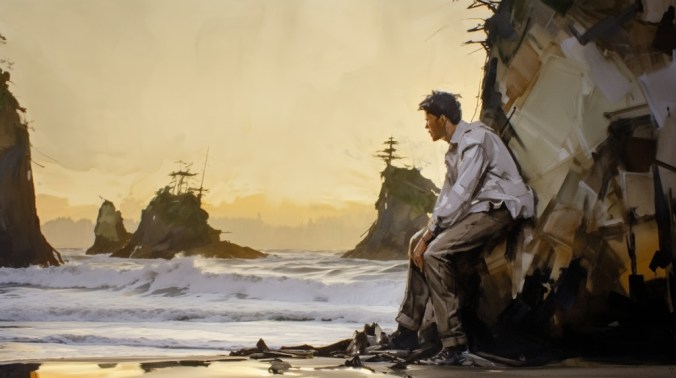
AI artwork, beach, hills, person looking out to sea, mute colours.

21. Write a short story about friends who embark on an unforgettable camping trip in the wilderness.

On The Beach

It was the four of us, two couples who hadn’t yet coupled, best friends more like, and we drove to the coast. The car was packed with camping gear. Just a small hike through a forest to the beach, the boys said. Just a few miles.

From the carpark, we slipped on our backpacks. Mine was heavy, it dug into my shoulders and the small of my back. After an hour, I wished I was home. The path was muddy, the fallen logs too large to step over, moss hung long from tree branches and dripped down on us, my shoes scraped at my blisters, and the trail climbed steep and endlessly upward – or so it seemed. Someone commented that I wasn’t a happy camper. I don’t remember what…

View original post 253 more words

#TheWildness. Day 21. Write a short story about a group of friends who embark on an unforgettable camping trip in the wilderness. Please join Jane Dougherty and me in celebrating wildness all this month. I tried to get permission from the Wildlife Trust to use their #3ODaysWild as prompts but it was not forthcoming, so here are my own prompts with a little help from chatgbt. I will feature your draft published/unpublished poetry/short prose/artworks using the following prompts. Please include a short third person bio. Numbers refer to dates in June: Day 1. Describe the sounds you hear when you step outside your home. How does nature contribute to this musical work? 2. Write a letter to a tree or plant that you encounter on your daily walk. What would you say to it? 3. Imagine you could transform into any animal for a day. Which animal would you choose and why? 4. Write a short story about a magical encounter with a wild animal in your backyard. 5. Describe a peaceful moment spent observing a body of water. What emotions does it evoke in you? 6. Write a poem inspired by the vibrant colours and patterns of a butterfly’s wings. 7. Imagine you are a wildlife photographer. Describe the most breathtaking picture you have taken during your challenge. 8. Write about a favourite childhood memory spent in nature. How did it shape your connection with the natural world? 9. Create a dialogue between two different species of birds perched on a branch. What would they talk about? 10. Describe the texture and scent of wildflowers you encounter on your nature walks. How do they make you feel? 11. Write a persuasive essay on the importance of conserving and protecting local wildlife habitats. 12. Imagine you are a nature guide. Describe a walk you would take visitors on to showcase the beauty and diversity of your local environment. 13. Write a poem about the changing seasons and how they affect the behaviour of wildlife. 14. Imagine you are a detective investigating the disappearance of a rare animal. Describe your search for clues in the natural world. 15. Write a poem/flash fiction about a mischievous squirrel that causes chaos in your garden. 16. Describe a special moment when you felt truly connected to nature. What did it teach you about yourself and the world around you? 17. Write a letter to future generations, urging them to protect and cherish the natural world. 18. Create a detailed observation log of a specific species of bird that you have been monitoring throughout the challenge. 19. Write a poem inspired by the soothing sounds of a flowing stream or river. 20. Imagine you are a nature-inspired artist. Describe the masterpiece you would create using materials found in the great outdoors. 21. Write a short story about a group of friends who embark on an unforgettable camping trip in the wilderness. 22. Describe the most fascinating insect you have encountered during your challenge. What makes it unique? 23. Write a diary entry from the perspective of a tree, chronicling its experiences and the changes it witnesses over the course of a year. 24. Imagine you could communicate with one animal species. Which species would you choose and what would you ask them? 25. Describe a magical sunrise or sunset you have witnessed during your journey. How did it make you feel? 26. Write a letter to a future self, reflecting on the impact of the challenge on your relationship with nature. 27. Imagine you are a character in a wildlife-themed adventure novel. Describe the perilous situation you find yourself in and how you escape. 28. Write a poem celebrating the diversity and resilience of nature, even in the face of human challenges. 29. Describe the feeling of walking barefoot on cool, damp grass. How does it connect you to the Earth? 30. Write a short story about a hidden, enchanted forest where magical creatures dwell. What adventures await those who discover it? Feel free to adapt these prompts to suit your writing style or preferences.

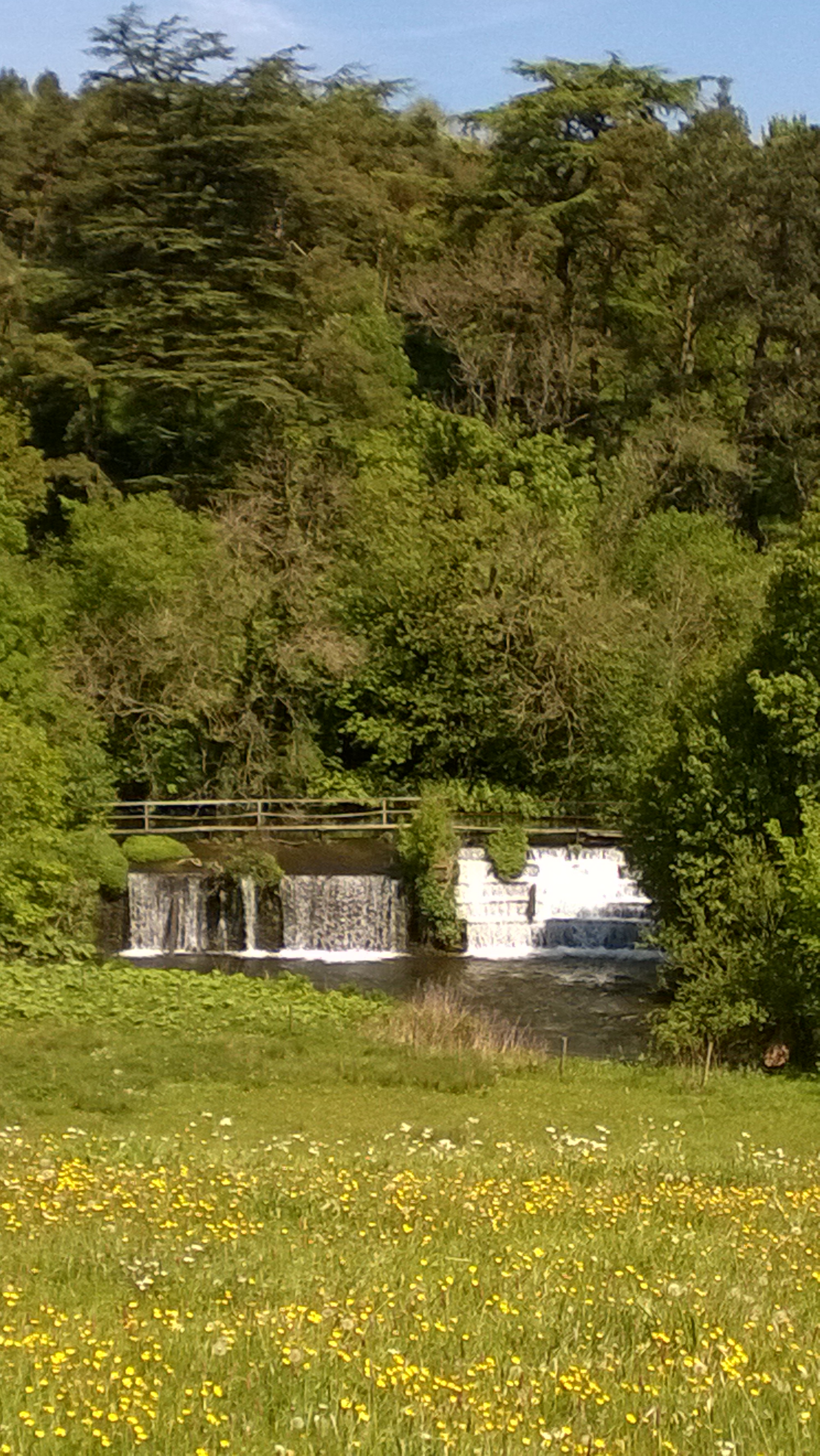
Bakewell wet photo by Paul Brookes

Haibun for peace

I have never camped, never encountered wilderness, never had friends who would have wanted to find it. Never felt the urge, or dared, to get so far from other people, but only for a while. How could I face the return? Like ringing the crabby old one’s doorbell and running away.
Where walking into a passage grave feels like going home, back to the womb of human civilisation, a reverent, silent experience, walking into a wild place is an intrusion. Eyes watch. Ears listen. Nothing shows itself, not while we are there. Not until we go away.
People say, but surely you’d love to visit the Serengeti, the Amazon, the endless lakes of Finland, to stand on the roof of the world, look up from the bottom of the ocean? The answer is, no, I wouldn’t. I would rather time flowed over and around them without the clatter of human feet, the chatter of human tongues.
Isn’t it enough to know the wild is there without jetting in to an airport, driving along roads cut through virgin forest, staying in purpose-built hotels, fouling the peace? Just to take a few photos, touch a tree or two?

Spring flowers
uncurl from winter dreaming
sleeping beauties.

Jane Dougherty

Bios and Links

Jane Dougherty

lives and works in southwest France. A Pushcart Prize nominee, her poems and stories have been published in magazines and journals including Ogham Stone, the Ekphrastic Review, Black Bough Poetry, ink sweat and tears, Gleam, Nightingale & Sparrow, Green Ink and Brilliant Flash Fiction. She blogs at https://janedougherty.wordpress.com/ Her poetry chapbooks, thicker than water and birds and other feathers were published in October and November 2020.

Guest Feature – Annick Yerem

Patricia M Osborne's avatarPatricia M Osborne

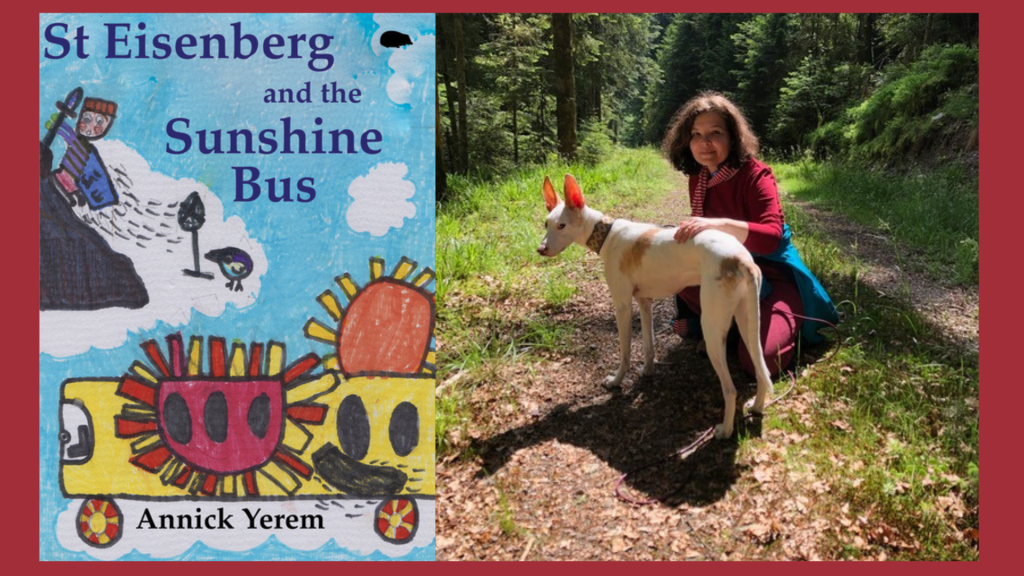
I’m delighted to invite Annick Yerem, a fellow Hedgehog Poetry Press poet, over to Patricia’s Pen for the first time. Annick is not only a poet but also founder of a new poetry press. She is here to tell you more about her writing so without further ado, it’s over to Annick.

My Writing

Annick Yerem

Thank you so much for inviting me, Patricia!

Writing found me again at the end of 2019. The year before, I had started taking care of my parents, who had both become very ill. The plan was originally to write a book about the German care system, how to apply for things, very matter-of-fact. But after one session with Nancy Wigglesworth, a wonderful coach, there was suddenly a poem in my head, called Things I Cannot Tell My Children. It was also the first time I wrote in English, not in German…

View original post 501 more words

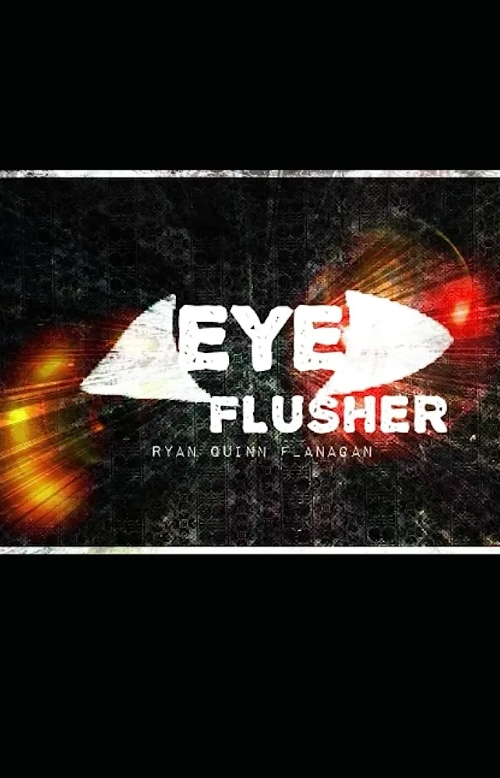
Wombwell Rainbow Book Interviews: Eye Flusher by Ryan Quinn Flanagan

Ryan Quinn Flanagan

is a Canadian born author presently residing in Elliot Lake, Ontario Canada. His work has been published both in print and online in such places as The New York Quarterly, Windsor Review, Vallum, The Antigonish Review, CV2, Horror Sleaze Trash, Evergreen Review, Your One Phone Call and In Between Hangovers.

The Interview

1. How did you decide on the order of the poems?

Flow is very important to me. I treat it like building a music album in many ways. Outside of that prime focus, I also try to avoid theme-related poems being too close together in the book. I am also always conscious of the letter of the alphabet that the title of the poem leads off with and split the poems up this way in a secondary fashion to ensure the reading experience is also more aesthetically pleasing that way as I personally find repeat letting in titles back-to-back very obvious to me when I am reading someone else’s work. Outside of that, there are not many other deciding factors. Flow is key to everything, really!

2. How important is form in your poetry?

Whereas flow is of central importance, form is much less so. I enjoy the differences in aspect and even just visually on the page, but outside of aesthetics, form is not a key consideration for me unless I am writing a book of more experimental poetry (of which I’ve done twice before). Form is key to those more experimental offerings where I tend to get much more playful with form within the medium. But overall, form plays a minimal role with the majority of my work.

3. In your book there is a focus on relationships between men and women, usually from the male perspective. Hoe important is this for you?

I personally feel the dynamic between men and women is both central to lots of art and quite comical at times. Our human fallibility really seems to come through in such relations which is great when expressing it in writing or art etc. I write almost solely from the male perspective because that is what I know best as a man. That old adage: write what you know. But yes, for me the men/women thing provides great lessons and far greater comedy. It is a messy existence we lead indeed.

4. How important are American idioms in your poetry?

American idioms do play a prominent part in my poetry, as do Canadian ones. But being a Canadian writer, having the US as a big brother right next door ensures that familiarity with and common usage of such American idioms inevitably seeps into your work. Al Purdy, one of my favourite Canadian writers, was a Canadian cultural nationalist in many respects and railed against dominance or intrusion into Canadian art and expression. While I really enjoy Purdy’s work, I do not share his hang ups with American dominance dwarfing Canadian expression. I can see where he is coming from, but for me it is all writing and part of who I am and I feel no need to be simply a Canadian writer or champion. Additionally, my wife and I travel (before Covid) to the States quite a bit, so there is plenty of writing about our time there that reflects that as well as our time in Europe. I am a Canadian, but I am of the world first and foremost. Without strict adherence to borders or culturally-specific fare.

4.1. Why do American and Canadian idioms play such a prominent part in your poetry?

American idioms do play a prominent part in my poetry, as do Canadian ones. But being a Canadian writer, having the US as a big brother right next door ensures that familiarity with and common usage of such American idioms inevitably seeps into your work. Al Purdy, one of my favourite Canadian writers, was a Canadian cultural nationalist in many respects and railed against dominance or intrusion into Canandian art and expression. While I really enjoy Purdy’s work, I do not share his hang ups with American dominance dwarfing Canadian expression. I can see where he is coming from, but for me it is all writing and part of who I am and I feel no need to be simply a Canadian writer or champion. Additionally, my wife and I travel (before Covid) to the States quite a bit, so there is plenty of writing about our time there that reflects that as well as our time in Europe. I am a Canadian, but I am of the world first and foremost. Without strict adherence to borders or culturally-specific fare.

5. Domestic detail is very important, it seems, bugs in the ceiling light, how to balance a drink in a chain link fence. What fascinates you about this kind of detail?

Writing for me is all about capturing a moment in time, the smallest of details that stand out to me. I enjoy elevating those details to a standing they may not seemingly possess in everyday life so that I can try to use such detail to capture something beyond simple surface reiteration. That is where the poetry often lies for me, in the minutia of things that get highlighted in the way I come at things. Domestic detail is very important as well since it is often what is most central to all of our lives and therefore a simple and relatable. To capture the seemingly mundane in an interesting and artful way is of prime importance to me in my writing.

6. Why do you prefer narrative poetry to imagistic poetry?

I write both narrative and imagistic poetry, but I do tend to write more narrative poems because I feel that is the best way to be most relatable to the reader. Like that old saying about a Lou Reed song and how he made it feel like he was sitting right next to you on the couch in conversation, I really enjoy the idea of that kind of intimacy, even at a distance. The more imagistic poems are fun to write because I like to wander in my writing and sometimes just let the language and fast rush of images lead me wherever they wish to go. That can happen a bit with narrative as well, but the conversational/straight narrative skeleton is already there to work with, which is often not true with imagistic poetry I feel. But yes, relatability for the reader is something I take into consideration when writing and narrative poetry seems to me to be a good vehicle to achieve this.

6.1. The narrative delivery I find very like that in Raymond Chandler’s hard boiled detective novels. What do you think about this?

I think that is probably an apt comparison.  Although mine are not detective novels, I do view writing (and life) as a sort of investigation of things, and therefore a detective novel of sorts in some strange way.  Curiosity is at the heart of most writing I think, and art for that matter, so such a narrative delivery in my particular work seems quite natural to me.  It is also the way I speak/spoke and those around me often did as well so it is the most natural way for me to express things personally.  I really enjoy Raymond Chandler’s work, so the comparison is a nice one to have made as well

7. Why is it called “Eye Flusher”?

The title of the book is meant to not only signify a cleansing of my eyes through the physical act of writing it out, but also the word “flush” is used to mean “full” as well.  Since a lot of the poems possess strong observational aspects, it hints at a bit of sensory overload in many respects, one that I try to capture as best I can in the book.  The artwork for both the cover and interiors was done by fantastic artist Jeremey Moore after brief consultation with both myself and Mike Zone, the super cool editor-in-chief at Dumpster Fire Press.  It was a real team effort, which was very cool!  Overall, the title is meant to suggest a sensory experience, at least that was my intention.

9. How important is political poetry in your writing?

Politics plays a very small part in my writing. I am not a political person, have never once voted for anyone in any election in my life. Personally, I feel politics is just a dirty rigged system whereby the rich enrich themselves at the expense of the poor. As such, I find partisan political poetry of little interest to me and tend not to write about such things. I much prefer to focus on people and their lives (mine included), instead of dirty divisive politics. I have always felt that politics is the toilet brush of the people. I refuse to partake, both in my life and my writing.

10. What do you hope future readers will see in the wealth of your poetry publications

Above all else, I hope they see a certain level of truth and sincerity in my writing, as well as a biting humour that I hope gives them a good laugh. Humour is very important to me; I think a simple honest laughter is great for the soul. I hope readers also see quality work from someone who takes their craft seriously, but little else. I am a joker at heart.

11. Once they have read Eye-Flusher want do you want the reader to leave with?

I hope the reader leaves with a good laugh and an appreciation of some kind of truth I have tried to capture in the work. I try to be as relatable as possible in much of my writing and I hope that helps to add to an overall appreciation of the work as well.

20 June: On A Collage

Misky's avatarIt's Still Life

A collage of things found on a forest floor. AI using Midjourney

Day 20: Imagine you are a nature-inspired artist using materials found in the great outdoors.

On a Collage

In this secret chamber wood,
my knobby walking stick did break.

In these cloistered thick-thatched trees,
where light of day does rarely reach,

my walking stick,
though just a stick,

caught in a hole, a hare’s perhaps,
quite near a dry tree trunk.

It cracked as loud as gunshot,
a sound rising high as fireflies,

and there I fell upon the forest floor,
on a collage of leaves, and twigs,

my nose in roots and mushrooms,
and truly so much more.


Written for The Wildness Challenge Day 20. Imagine you are a nature-inspired artist. Describe the masterpiece you would create using materials found in the great outdoors.  Artwork is created using Midjourney. Imagery and poems ©Misky 2023.

View original post