 Richard Skinner
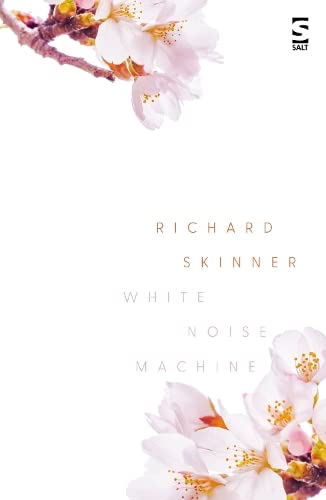
has published five books of poems, the most recent of which is Dream into Play (Poetry Salzburg, 2022). His next collection, White Noise Machine, is out with Salt in September 2023. Richard is Director of the Fiction Programme at Faber Academy. He also runs a small press, VanguardEditions, was the co-editor of Magma 80 and is the current editor of 14 magazine.
White Noise Machine can be purchased here: https://www.amazon.co.uk/White-Noise-Machine-Modern-Poets/dp/1784632864/ref=sr_1_3?crid=2FK3PWR6Y3UAK&keywords=Richard+skinner&qid=1687419417&s=books&sprefix=richard+skinner%2Cstripbooks%2C254&sr=1-3
The Interview
1. When and why did you start writing poetry?
I remember writing my first poem when I was 15 and still at school. It was about the First World War, biplanes and castles—a real adventure. It was so exciting. I carried on writing bad love poetry to girlfriends throughout my teens. Then I joined the poetry society at uni. I’ve been writing poetry all my life and I’m sure I will end my life in a bath chair trying to write a poem.
2. Who introduced you to poetry?
I remember reading TS Eliot’s poems about cats aloud in class when I was 12 or so. Macavity the mystery cat made a big impression on me. I think the next big thing was reading Ted Hughes’ ‘Remains of Elmet’ in a book with beautiful black & white photos by Fay Godwin. The pairing of visual with poem was revelatory to me. I must have been 18/19.
3. How aware are and were you of the dominating presence of older poets traditional and contemporary?
I was mostly aware of the Romantics when I started reading and writing poetry but Wordsworth and the others leave me cold, I’m afraid. The Victorians (Tennyson, etc), too. Later, I discovered the Metaphysical poets, whom I love. And I love Gawain & the Green Knight. My interest as a poet really starts with the First World War poets. Wilfred Owen’s poetry is amazing. That led to Keith Douglas, whose work is also amazing. And then everything that followed. And, of course, whichever way I look, there is always TS Eliot.
4. What is your daily writing routine?
No daily routine. I write whenever the urge luckily comes, wherever I happen to be. For me, travelling is a good time to write.
5. What subjects motivate you to write?
Everything around me and inside me. Playfulness. Lyricism. Nature. Culture.
6. What is your work ethic?
No ethic as such.
7. How do the writers you read when you were young influence your work today?
I think those poems that I read early on have left a lasting impression on me. I have always found Wallace Stevens’ work fascinating—his poem “Tea at the Palaz of Hoon” is a favourite of mine—and I would say that I have favourite poems rather than poets. When I was living in Italy, I used the British Council library a lot and came across a wonderful short poem there by Lotte Kramer called “White Morning”, which left an indelible impression on me. Yeats’ “The Wild Swans at Coole” made a similarly big impression, as did Geoffrey Hill’s “A Song from Armenia” and Anne Stevenson’s “Utah”. Some of Donald Davie’s early poems I like a lot, including his “Ezra Pound in Pisa”. That leads me on to Pound, whose Imagist Manifesto is still meaningful to me. Wallace Stevens’ “Thirteen Ways of Looking at a Blackbird” is the very embodiment of Imagism and a wonderfully alive poem. Stevens’ poem “The Dwarf” is one of the weirdest and most wonderful poems I’ve ever read. Stevens’ poem “The Snow Man”. Sylvia Plath, Ian Hamilton, Paul Muldoon, Keith Douglas. I read all these poems/poets when I was in my teens/20s and they have stayed with me forever.
8. Whom of today’s writers do you admire the most and why?
The titans David Harsent, Paul Muldoon, Peter Didsbury, then Mona Arshi, Catherine Ayres, Clodagh Beresford Dunne, Jane Burn, Chaucer Cameron, Marion Christie, Josephine Corcoran, Anthony Costello, Emma Danes, Nichola Deane, Steve Ely, Cathy Galvin, Peter Gizzi, Lavinia Greenlaw, Jeff Hilson, Lisa Kelly, Zaffar Kunial, Sylvia Legris, Roy Marshall, Richie McCaffery, Nicola Nathan, Eiléan Ní Chuilleanáin, Alice Oswald, Anita Pati, Deborah Randall, Pete Raynard, Denise Saul, Zoë Skoulding, Pauline Stainer, Julian Stannard, Paul Stephenson, Michael Symmons Roberts, Marion Tracy, Julian Turner, Kate Wakeling, Sarah Westcott, Judith Willson, Samantha Wynne-Rhydderch.
9. Why do you write, as opposed to doing anything else?
No choice, I’m afraid. Poems, for me, are traces of my existence.
10. What would you say to someone who asked you “How do you become a writer?”
Read widely and deeply.
11. Tell me about the writing projects you have on at the moment.
My next project is a small collection of fractal poems, a kind of poetry I’ve only recently discovered.
12. How did you decide on the order of the poems in your book?
In the case of ‘White Noise Machine’, I placed the four “Songs”, which are cut-ups of lines taken from spiritual pop songs, every quarter of the way through the collection. They act as the four cornerstones of the collection really and they ‘house’ all the other poems. Once I’d done that, I made sure that the several little ‘runs’ of three or four poems were evenly spaced throughout. Then there were lots of obvious pairings that I made sure were on facing pages: the chicory and lavender poems, the two playful poems based on Irish poets, “Lix” and “Aran”, which are both places in Scotland and the two pantoums “Hub” and “Hem”.
13. Noting the various locations in your book how important is the “sense of place” in it?
Oh, crucial, I’d say! A great deal of my work is about being/walking in a landscape. In White Noise Machine, there are several poems written in situ or en route. My wife and I went on retreat for the month of December last year to Mevagissey in Cornwall, which was a cosmic experience. The “Three Cornish Landscapes” were written there, written as I was watching the sunrise happen and the days pass. Those three poems are attempts to recreate that sense of the wonder of those places for the reader that I originally felt. “The Scene” was also written in Cornwall, in response to the breathtaking sea- and skyscapes down there. I like to think of them as Impressionist paintings with a dash of the energy of Abstract Expressionism thrown in. The three poems collected together as “A Northern Archive”, on the other hand, were all written while I was walking the Pennine Way last summer. A passed a copse of fir trees and wrote the poem in my head as I walked. The same with “Lapwing”, birds whose cries pierced me nearly every day on the way. “Accordance” was my attempt at describing the way in which you can fuse with the landscape as you walk in it and it took several days on the way to get it right. “Lix”, too, was written while doing a long distance walk, this time the Rob Roy Way in Scotland last September. Near the route, there is a place called Lix, apparently so called because it used to be a Roman encampment. As I was walking from Killin to Kenmore along the shore of Loch Tay, I was wondering what it must have been like for the local people when the Romans were there. I wrote the poem in my head and, when I arrived in Kenmore, I wrote it down as is. These places – Cornwall, the Pennines, Scotland – are all inspirational to me. They breathe the poems into me and I exhale them.
13.1. How intentional is describing your work in terms of other creative pursuits such as painting (Impressionists) and music (White Noise Machine)?
Um, well, “Three Cornish Landscapes” are obviously meant to be very visual poems, but I mentioned Abstract Expressionism because I didn’t want the poems to be entirely descriptive; there is supposed to be an energy in them that transcends the purely visual. There is immense energy in the Cornish sea and sky and I wanted to convey that. As far as the musical is concerned, music runs through the poems in this collection like the current in the river. Throughout the poems I’ve woven in the voices/mimes of David Bowie, Kate Bush, Luc Ferrari, Flaming Lips, Peter Gabriel, Genesis, Christopher Hobbs, Joni Mitchell, Muslimgauze, Éliane Radigue & R.E.M.. The four Songs that I mentioned earlier are cut-ups and are composed of lines cut from spiritual pop songs. These cut-ups have been an ongoing project since lockdown and began with a cut-up of the Talking Heads song, “Once in a Lifetime”. That cut-up, titled “Life in a Oncetime”, was the closing poem of my book Dream into Play, which came out last year. I put out a whole book of cut-ups of pop songs with Vanguard Editions in January this year. The Songs in White Noise Machine were composed in a very particular way: I tried to find two spiritual pop songs that shared a common theme, then cut lines from them into couplets. The couplets were then ordered and repeated via a highly organised pattern. The repetition is supposed to be liturgical and I wanted the poems to act as a balm, a salve for the soul. The whole cut-up process is absolutely alchemical and magical. As William Burroughs said, “When you cut into the present, the future leaks out.”
13.2. Why is the cut up method “alchemical and magical” to you?
The very first cut-up I did was actually a cut-up of two songs by R.E.M. – “Finest Worksong” and “Ignoreland”, called “Finest Ignoreland” – which I posted online just before the American election in January 2021. It was a plea to Americans to do the right thing and vote Biden in. It worked! I chose those two songs of theirs because they shared a very similar political theme – insurrection, protest, etc. – so that one was relatively straightforward to do. I then made the Talking Heads cut-up. I then broadened the remit and looked at making cut-ups, not from a single song or two songs by the same band, but two songs from different bands as well. The first one I did like that was a cut-up of Nick Drake’s “Northern Sky” and Fleetwood Mac’s “Landslide” called “Northern Landslide”. When I thought about those two songs, I realised they subtly shared a theme, i.e. a landscape that expressed a state of mind. They are both songs about doubt, about expressing vulnerability. Sometimes, the songs I chose shared a much more obvious theme – like the references to drug use in Prince’s “Sign o’ the Times” and “White Lines” by Melle Mell. Sometimes it was about genre. I’ve always loved Blue Öyster Cult’s “(Don’t Fear) the Reaper” but what to cut it with? I’m not a huge Heavy Metal fan and know nothing about Metallica other than their most famous song is “Enter the Sandman”, so I looked at that and, lo and behold, they were both gothicky fairytales. Sometimes, it was the song titles that drew me – I couldn’t resist making a cut-up of Blur’s “Tender” with Heaven 17’s “Temptation”, for example. The only reason I cut “Manic Monday” with “Ruby Tuesday” is because of the days of the week in the titles. Those songs have nothing in common so it was more of a challenge, but it works – the poem is common ground between the two but unlike either song. It is its own thing. That’s what’s alchemical and magical about the process – you are taking two things and cutting them together to create a third thing, something new, something that didn’t exist before, that has its own voice and meaning.
13.3. What cut up process do you use once you have found the material.? Is it a conscious process, or arbitrary?
Very conscious. I blow up and print out the lyrics, literally cut them up with scissors and then scatter them on the living room floor. Then I cast my eyes over them, trying to find lines that will go well together, to create a flow. There is meaning there somewhere but you have to find it. It’s a bit like dowsing. Although this process is quite conscious, the form of the resultant poem is arbitrary. I never go in thinking that this poem has to be 14 lines long, or has to have four stanzas, or whatever. The material dictates the form. One of the best cut-ups I’ve ever done is called “Swallow Butterfly Mornings”, which is a cut-up of My Bloody Valentine’s “Swallow” with Hope Sandoval & the Warm Inventions’ (which is MBV’s drummer) “Butterfly Mornings”. On the page, it’s a thing of gossamer beauty drawn out of pure noise cacophony. The poem couldn’t be more different from the MBV song.
13. 4. How do you know when a cut up poem is finished?
Good question. A cut-up has to have meaning in it, meaning that is different from the source material, and I instinctively know when that’s the case. There has to be an energy there for the poem to work; it can’t just be a pastiche. It has to be a unique emotional collage. Really good last lines are always crucial. They close the poem but open something up in the reader, hopefully.
14. Your previous collection were about the “play of light”, this one is about sound. What plans do you have to cover the other senses, touch, taste and smell?
That would be an idea, wouldn’t it? But I don’t really have a priori plans – I tend to follow my nose and see what I come up with. As I say, my next project is to try my hand at some ‘fractal’ poems.
15. How do you choose which lyrics to cut up?
As I said, I chose the songs for the compatibility of their titles, genres, themes, but, in the case of the four “Songs” in White Noise Machine, I chose the two songs for their spiritual message. “Song: Hounds of Solsbury” is composed of lines cut from “Hounds of Love” by Kate Bush & “Solsbury Hill” by Peter Gabriel. Both those songs are about accepting change in one’s life, a transformation to another state of being. The eagle and hounds in the songs are instruments/metaphors for this change. “Song: Follow Heroes, Follow Me” is composed of lines cut from “Follow You, Follow Me” by Genesis & ““Heroes”” by David Bowie. Both are songs about wanting union, are invitations to stay together while acknowledging that that may not always be easy. “Song: Everybody, Don’t Give Up” is composed of lines cut from “Everybody Hurts” by R.E.M. & “Don’t Give Up” by Peter Gabriel. Both these famous songs are balms for the spirit, salves for the soul. They exhort us to defeat adversity, to cling on to hope. And, finally, “Song: Do You Realize You Are Everything?” is composed of lines cut from “Do You Realize?” by Flaming Lips & “You Are Everything” by R.E.M. Both of these intensely moving songs are a celebration of being alive, a tribute to the people in our lives and an acknowledgment of life’s transience.
15.1. Do you have to ask for permission to use these lyrics?
I haven’t put these cut-up poems into the public domain for profit. One publisher was interested in publishing them but withdrew because of copyright issues. As long as I’m not trying to profit from them, I think I’m ok.
15.2. Have you ever used sources for cut up other than songs, such as advertising, prose, signage, official notices or newspaper articles?
Yes, prose. In Terrace, I published a cut-up of a quote from The Lacemaker, which is a French novel by Pascal Lainé. In The Malvern Aviator, I published a cento from Wind, Sand & Stars by Antoine Saint-Exupéry. And, most recently, in Dream into Play, I published an N+7 poem from Criticism & Truth by Roland Barthes. I’m a sucker for those French guys!
15.3. Do you ever combine cut up with original writing by yourself, or would this dilute the form?
No, they are two distinct disciplines for me. With cut-ups, I’m dealing with other people’s words/lines, which takes the onus off me. It’s kind of liberating. The process of my own work is a whole other story. A friend of mine once described the difference between writing fiction and non-fiction thusly: he said that writing non-fiction was about your enthusiasms whereas writing fiction was about your anxieties. For me, that’s the same difference between the cut-ups and my own work.
15.4. Cut up seems to me to be very similar to collage artworks. What would you think about combining both disciplines.
RS: Yes, as I’ve mentioned, cut-ups are very like collages. So, because they’re so similar, I’m not sure what you mean about combining them.
WR: Placing your cut ups onto collages.
RS: No, I haven’t considered that.
16. Once they have read White Noise Machine, what do you wish the reader to leave with?
Oh, I don’t know! You can’t direct readers. All you can do is write from the heart and soul and hope people connect in some way to what you write. Anything else is a bonus. But I believe that if you write with passion, your work stands a chance of finding passion within the reader. It’s a transaction, but with no rules, no profits.
White Noise Machine can be purchased here: https://www.amazon.co.uk/White-Noise-Machine-Modern-Poets/dp/1784632864/ref=sr_1_3?crid=2FK3PWR6Y3UAK&keywords=Richard+skinner&qid=1687419417&s=books&sprefix=richard+skinner%2Cstripbooks%2C254&sr=1-3
 The Wombwell Rainbow