The High Window Reviews: Translations

The High Window Review's avatarThe High Window

reviewer

*****

Tempo, Excursions in 21st-Century Italian Poetry •  So That the Butterfly Won’t Die, Selected Poems by Hatif Janabi

*****

Tempo, Excursions in 21st-Century Italian Poetry reviewed by Caroline Maldonado
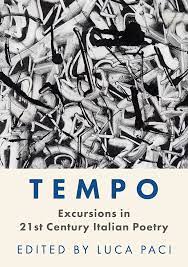
tempoTempo, Excursions in 21st-Century Italian Poetry edited by Luca Paci.
£15. Parthian.ISBN 978-1-91-340-56-9

The title of this collection indicates that it makes no claims to be a revised canon of contemporary Italian poetry.  ‘Excursions’ suggests a more leisurely amble, a more personal and democratic approach. The Italian editor, Luca Paci, who has lived and worked in the UK for over 20 years sets out his principles and intentions in the introduction:

Poetry is an essential tool to understand and question at a deeper level events, feelings and attitudes of present and past, recognising the complexity of reality in a radically different way.

He highlights the diversity of Italian poetry in linguistic practice, form and origin. These are poems that criticise…

View original post 2,161 more words

The Sixco Kids: why Belfast poets are still writing about the Troubles.

poetry owl's avatarPoetry Owl

It is fifty years since I lived in the North of Ireland and I still don’t know what to call it. I am sensitive to my status as no more than an interested outsider when I come to write about poetry and literary issues in the Six Counties.My attention was caught by the apparent cancellation of the novelist, Rosemary Jenkinson, following publication inFortnightmagazine of an article where she argued that young writers should stop writing about the Troubles and that to do so was a form of regressive cashing in. The article met with a degree of outrage in some quarters and was followed by the cancellation of the writer’s publication contract with Doire Press which the publishers denied was a consequence of the article.[1]Nevertheless, this was a deplorable occurrence and while I disagree with Jenkinson’s views, I see no reason why she should not express…

View original post 3,533 more words

Geoffrey Hill 2

poetry owl's avatarPoetry Owl

geoffrey hill

In this post[1], I shall be considering poems from Tenebrae and Canaan. I have omitted Mercian Hymns because I have discussed it in a previous post and The Mystery of the Charity of Charles Péguy because it is too long and because it is in some respects relatively straightforward.

When I first read ‘The Pentecost Castle’ which is the opening sequence in Tenebrae I had three thoughts: one was that the poem was beautiful; the second was that it sounded like devotional love poetry, akin to St John of the Cross or, further back, the Song of Solomon; the third was that the language was extraordinarily old.

It is comparatively easy to work out how the poem works its effect of loveliness. Hill uses beautiful images, many drawn from nature or from the traditional nature images of poetry: flower, briar rose, trees, aspen, river, wind, high…

View original post 2,012 more words

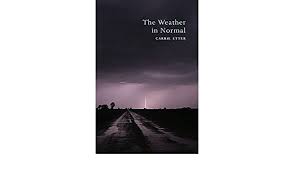
Prairie spaces: a discussion of the representation of space, place and home in Field Requiem (Carcanet, 2021) by Sheri Benning and The Weather in Normal (Station Hill Press, New York, 2018) by Carrie Etter.

poetry owl's avatarPoetry Owl

Note: This post is a slightly revised version of an essay written for the course,Place in Modern Poetry and Prose: Locality, Environment, Community andExile,run by Oxford Department for Continuing Education and taught by Giles Goodland.A useful video of Sheri Benning talking about her book can be found at:https://www.youtube.com/watch?v=TBtJpcKoTLEandhttps://www.youtube.com/watch?v=c5yZPj8U4K4

The promise of the New World to those arriving from the old was the possibility of space, of horizons thrillingly distant, in the prairie lands of the USA and Canada. Sheri Benning is a Canadian poet who writes about Saskatchewan while Carrie Etter, from the USA, sets her poems in Illinois.

Etter traces the etymology of ‘prairie’ in the first poem in the second section ofThe Weather in Normallinking it to Arcadia and eclogue, before declaring that ‘Illinoisians were never raisedfor hills’

prairiethe horizon the veryedge of the world[1]

For her, the prairie…

View original post 1,623 more words

Seeking Mid-Winter Peace

wendycatpratt's avatarWendy Pratt

Photo by picjumbo.com on Pexels.com

Back into the routine this week – 7am at my desk, entering into that place between dreams and waking where the writing seems to live. I watch the burnt orange sunrise and the jackdaws returning like a song, a score, streaming in single file to the beech trees outside my window. Then my second cup of coffee in the big mug with the speckled glaze, a chapter of my book (Samuel Pepy’s 1663 diaries right now) and a walk out with the dog, whatever the weather. This is what it is to be alive in the winter, not powering into resolutions, but, for me, it is about searching for that mid-winter peace. So often I have gotten lost in the cold and the dark of January. So often I have found myself winter-sick and waiting daily for spring. This year I decide to bed into…

View original post 495 more words

A Friendship In Twilight: Lockdown Conversations on Death and Life by Jack Miles & Mark C Taylor (Columbia University Press)

tearsinthefence's avatarTears in the Fence

Mark C. Taylor is, according toWikipedia, ‘a postmodern religious and cultural critic. He has published more than twenty books on theology, metaphysics, art and architecture, media, technology, economics, and postmodernity.’ That means he comes at these things mostly as a philosopher, his theology informed by and dependent upon language and thought and art, more Wittgenstein than study of religious texts. ThatWikidescription doesn’t really do him justice: his books include studies of tattooing and piercing, specific conceptual and avant-garde artists, landscape design, the notion of silence, human perception of time, network cultures, pedagogy and the nature of universities, andImagologieswas one of the first books of media philosophy, written collaboratively about the then-developing internet and digital technologies. This man clearly thinks and thinks clearly about everything.

Since 2004’sGrave Mattersthere have been a number of publications dealing with death, includingField Notes from Elsewhere: Reflections…

View original post 519 more words

Trilce by César Vallejo Translated by Michael Smith & Valentino Gianuzzi (Shearsman Books)

tearsinthefence's avatarTears in the Fence

This very timely book marks a century from the first publication of Trilce in 1922. The cover boldly hails this as a ‘masterpiece’, of a significance in Latin and Spanish letters to match The Waste Land and The Cantos of Western Europe. I find that a bit strong and unsustainable, although Trilce breaks new ground, certainly looking a lot more experimental than it would now. In many ways it must be acknowledged its significant place, perhaps in that sense of The Cantos of being just a bit difficult to read, but one of those titles it would almost be irresponsible to overlook. Vallejo was an admirer of Ruben Dario; others find certain resonances not inconsistent with Whitman.

Much of Vallejo’s interest is that he breaks with tradition. He had a fondness for neologisms such as the chosen title, the most plausible reading of this is perhaps a combining of ‘triste’…

View original post 686 more words

Aeneid Books VI -XII by Virgil translated by David Hadbawnik (Shearsman Books)

tearsinthefence's avatarTears in the Fence

To Virgil, the second half of his epic of Roman imperial destiny and its human cost was themaius opus(‘greater work’). The long voyaging from fallen Troy is over. Aeneas has accepted hisineluctabile fatum, arrived in an Italy already thickly settled with both migrated and autochthonous peoples, and wants land to settle and found his city. There are moments of respite: feasting, aetiological storytelling, divine portents and the extended ekphrasis of Aeneas’ God-made shield. But mostly it’s war: siege, raid, council, treaty, mass funerals and constant one-on-one combat.

The emotional power of this, the Aeneid’s Iliadic half, accumulates iteratively. The relentless and grisly scenes in which, over and over, a character is given a mini-biog only to ‘vomit thick gore’ or have ‘his face […] covered in hot brains’ a few lines later, becomes sickening as well as pitiable. The pity is reinforced by scenes of grieving…

View original post 412 more words

Jane’s Country Year by Malcolm Saville (Handheld Press)

tearsinthefence's avatarTears in the Fence

Malcolm Saville’s Lone Pine Five books were part of my growing up, a more literate successor (along with Arthur Ransome’sSwallows & Amazonsbooks) to Enid Blyton’sFamous Fivebooks, which I loved but raced through. Saville never got much recognition for his writing for children, and only recently did I discover the Lone Pine Five paperbacks I collected (and still have) often had a quarter or more of the story removed since their initial hardback publications.

There are several publishers in recent years who have been reprinting out-of-print books, marketing them to nostalgic adults keen to revisit their past, but Handheld Books – who are new to me – are not one of these. Until now they have been reissuing books by the likes of Rose Macualay, John Buchan, Sylvia Townsend Warner and other authors I have never heard of. But their ‘Handheld Classic 24’ is this stand-alone novel-come-nature…

View original post 450 more words