Photo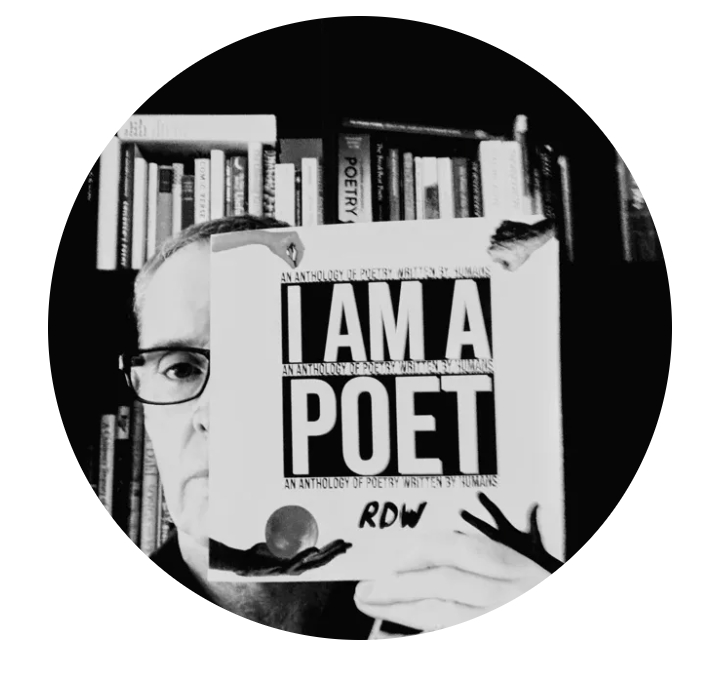
-Dave D
is a writer and poet living in Haddenham, Buckinghamshire. After a thirty-year career, policing the streets of London, he took retirement and is now working to develop a second career as an author. His debut poetry collection, All Mine, a memoir in poetry, was published earlier this year, and several of his poems have featured in various anthologies. He is currently working on his first novel, set around the Miner’s Strike of 1984.
Links.
http://www.davydwriter.uk
Twitter: @davydwriter
Instagram: @davydwriter
The Interview
1. When and why did you start writing poetry?
I was given my first poetry book in 1972, (aged nine) The book was a treasure of adventure and wonder. That kicked off my love for reading and writing poetry and that passion has stayed with me. I had my first poem published in a local school’s anthology around the same time and it was fifty years before the second one went public. I have written poetry and prose during the interim. Writing has always been a personal journey for me.
2. Who introduced you to poetry?
I was brought up in a mining community and lived in a cottage sandwiched between two retired miners. They used to take it in turns reading to me and making me read to them. I also had an excellent teacher in junior school. She introduced me to classical poets like Wordsworth. And my parents always ensured there was a good supply of books to feed my passion.
2.1. Who did the retired miners introduce you to?
Two particular pieces stand out. Shakespeare’s, All the World’s a Stage and the Song of Hiawatha by Henry Wadworth Longfellow. We also enjoyed the lighter side with Dr Seuss, Roald Dahl and Spike Milligan.
2.2. Why did those pieces stand out?
All the World’s a Stage was the first poem I learned off by heart. I had to stand in front of the class and recite it. I still remember the terror. The Song of Hiawatha I read at the same time as the series, The Last of the Mohicans, was on the television. There was the boyhood magic of being a Native American Indian and all the adventures that went with them.
3. How aware are and were you of the dominating presence of older poets traditional and contemporary?
I think, as a writer and poet, it is important to read as many different styles and genre of poetry as you can. My influences have changed over time and what I read can also depend on what mood I am in. All poetry affects us in some way. I am intrigued by the word dominating in your question. In my view, traditional poetry came with access and privilege, whereas contemporary poetry saw class barriers being broken by poets who came from different backgrounds.
4. What is your daily routine?
I am an early riser and wake at 5.30am. I am usually at my writing desk around 6.00am and write for a couple of hours. I find this is the best time for any creativity. I then break the writing with some exercise. Usually, an hour at my local gym. I finish the morning working on the piece of writing I had started. The afternoons are spent planning, future projects, blog posts, other social media stuff. I also use the afternoons for research. I am working on my first novel, which is based in 1970 and 1984 so there is a lot of reading around those times to make sure what I write is authentic. I try to write something every day, even if it is just a hundred words. That daily practice helps in keeping connected with my work.
5. What motivates you to write?
From an early age I have always been captivated by stories. As human beings we navigate through life by stories, stories we tell ourselves and stories passed down through generations. My motivation to write is around being part of that process. I have an active mind and there is always some piece of writing or plotline spinning around inside my head. I find writing calms that down… most of the time. For me, writing is a form of mediation, a chance to be alone to explore my thoughts. Writing gives me an opportunity to make sense of what is going on around me and to connect with other writers and creatives.
6. How do the writers you read when you were young influence your work today?
It’s difficult to say, because over the years I have been influenced by different writers at different times. Every book you read leaves a mark on you in some way. I still remember the classical boy stories I read as child like Treasure Island and King Solomon’s Mines. As a teenager I had the usual exposure, through education, to Shakespeare and the classical poets and writers but was fortunate to be introduced to writers like Charles Bukowski and Dr. John Cooper Clarke. It’s those influences that bring a bit of rebellion into my writing and keep me looking for new writers who break barriers. In some ways I have a mix of new and old influence, as I think that brings balance to my writing.
7. What kind of marks have you noticed being left by the books you read?
Two books immediately spring to mind. Victor. E. Frankl’s, Man’s Search For Meaning and Claudia Rankine’s, Citizen, An American Lyric. Both are books which expose the worst of humankind and leave you with an overwhelming sense of shock. I always go to those books when I need to get back to a feeling of being grounded. As writers, we need to take ownership and responsibility for the words we write. I always try to keep this uppermost in my mind when I put pen to paper.
8. Who of today’s writers do you admire the most and why?
I am writing my first novel which is set in 1970, and the Miner’s Strike in 1984. There is a lot of research involved so I am reading large amounts of social history, especially by David Kynaston. His writing style brings the post war era to life. My favourite author, at the moment, is Douglas Stuart. His first book, Shuggie Bain was hard hitting and emotive. It had that, A Kestrel for a Knave, by Barry Hines, feel to it. Rugged and Northern. I’ve got his new book, Young Mungo, lined up.
In terms of poetry, there are so many exciting new poets coming on to the scene. I admire poets like Alice Oswald, in how she creates a sense of place, and Claudia Rankine for her writing on social injustice. Also, Ian McMillan, and Mike McGarry, two northern poets. Their work is grounded in their local communities and has that raw honesty which reminds me of my own upbringing in a mining town.
9. Why do you write, as opposed to doing anything else?
I have always got some story line, poem idea, a new character, rattling around inside my head. I have to get them out on paper as soon as possible so it creates some space to do other things. Writing is a form of meditation for me. If I get to my writing desk early each day and write it gives me a boost for the rest of the day. I then feel I can get on and do other things. I’ve written from an early age and couldn’t imagine a day without doing some form of writing.
10. What would you say to someone who asked you “How do you become a writer?”
I would say ‘just write.’ I think we can be overcome with all the things we associate with being a writer and forget that one basic element. Once you get into the practice of writing regularly, and not fearing the page, you can then start working on all the other things that encompass writing. Something which held me back for many years was wondering what other people would think of what I wrote. There’s a great quote that says, ‘Better to write for yourself and have no public, than to write for the public and have no self.’
Writing is a personal journey, and it becomes more enjoyable the more skilled you become. I would add, read as much and as widely as you can to that advice and try to connect with other writer’s and creatives.
11. After having read your writing what do you wish the reader to leave with?
I would like them to think there are stories inside all of us and there is someone waiting to hear them. I hope when they read my work they could come away with an ‘ I could write something,’ feeling. If my words can inspire just one person to pick up a pen and tell their story then my work has achieved all it was meant to.
Thanks again Paul for your patience and giving me this opportunity.





 The Wombwell Rainbow