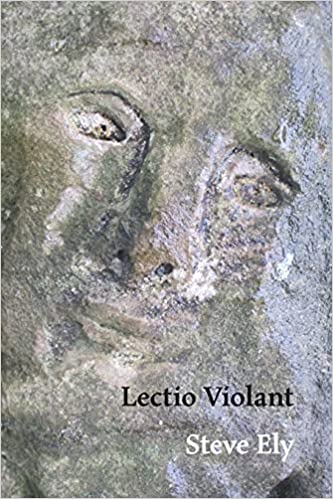
Steve Ely
has published several books of poetry, including Lectio Violant (Shearsman, 2021), Zi-Zi Taah Taah Taah: The Song of the Willow Tit (Wild West Press, 2018)and Englaland (Smokestack Books, 2015). He’s also published a novel, Ratmen (Blackheath Books (2012), and a biographical work, Ted Hughes’s South Yorkshire: Made in Mexborough (Palgrave Macmillan, 2015). Another book of poetry, The European Eel, is forthcoming with Longbarrow Press later in 2021. He teaches Creative Writing at the University of Huddersfield, where he is Director of the Ted Hughes Network.
The Interview
1. How did you decide on the order of the poems?
The poems are presented in their order of composition, which took place over two-and-a-half years between 2016 and 2018—I intended to write the poems quickly, to achieve a unity of spirit, tone and feel, but I kept getting interrupted, and when I returned to the piece, I often found it difficult to pick up where I’d left off. I conceived of these poems from the beginning as improvisations—originally based on the Sermon on the Mount in Matthew’s Gospel. I was looking to write in a more relaxed and looser mode than in my previous books, which were all very tightly structured and planned to explicitly address a range of interrelated themes: identity, Englishness, class, ecology, violence, the human capacity for evil and so on. The ethos of the Sermon of the Mount —‘take no thought for the morrow—sufficient vnto the day is the euill thereof’—seemed right for the type of poems I had in mind. The original plan then, was simply to immerse myself in Matthew 5-8 (the Sermon on the Mount) and write whatever poems turned up.
However, this concept developed, and before I knew it, structure had elbowed its way back in. I widened my reading in the gospels and ultimately decided to focus on four chapters to be the basis for my improvisations: Matthew 6, Mark 5, Luke 15 and Luke 10. I’d have to look back at my notebooks from the period to work out why those particular chapters. The plan was then to write a sequence of improvisations based on each chapter. For some reason I settled on thirteen poems per sequence. This was probably due to a combination of my perverse attraction to the number thirteen, and a pragmatic sense that fifty-two poems is about right for a book of poems. This concept developed further. I formalised my reading of these chapters by developing a structured method of meditative reading which I called Lectio Violant (‘profane reading’), on the model of Lectio Divina (‘sacred reading’), the long-established Catholic technique of devotional reading. Basically, I would use stilling techniques to achieve meditative silence, then slowly read a chapter out loud, following the reading with a period of silent reflection; I would then read it again, and ‘allow’ words, phrases and ideas from the text to rise into my consciousness, sometimes jotting them down. I would then read more actively, highlighting and so on. The aim was to achieve immersion and embed the texts in the unconscious, in the hope that the ethos, mood, tone and language of the text would saturate the poems that arrived. Phrases from the texts that emerged—and seemed important and compelling—became the titles of the poem: and I had the titles for the individual poems of each sequence before I had the poems. The title phrases became the jumping off points for the improvisations.
So, the first sequence to be written was Sufficient vnto the day and the first poem ‘Treasures of heauen and earth’. The last to be written was I beheld Satan as lightning fall from heauen and the last poem ‘Haec nox est’. Because I was frequently interrupted during the writing period, the improvisational unity I had intended did not quite materialise; instead, what I think is discernible across the sequences is development: the poems become progressively longer and the sequences more organised, structured and focused, as I increasingly leap quite rapidly from initial improvisation to explicitly and deliberately address certain clusters of themes—class, mental health, the ecological crisis, revolutionary politics, ‘Brexit Britain’, extinction, violence, miscarriage, guilt, grief and life after death. The last sequence, I beheld Satan fall as lightning from heauen is barely an improvisation at all, and only the title of the title poem is taken from Luke 10. It is of a radically different character to the other sequences and a long way from ‘Treasures of heauen and earth’. This is simply due to my intentions and interests changing over time – and perhaps my understanding of ‘improvisation’. If I’d had a clear six months in 2016, maybe all the poems would have been like those in the first sequence.
Although I briefly considered breaking up the sequences (apart for the last one), and arranging the poems according to some other schema, I quickly rejected the idea and decided to leave the sequences intact and present them in order of composition. Each sequence has its own character and unity, and I think it is interesting to see how the original improvisational impulse develops and grows across the piece. Despite my original intentions, Lectio Violant ultimately became almost as tightly organised and structured as, for example, my previous books Oswald’s Book of Hours and Englaland. I think that says something about the way I prefer to write—on a large scale, according to a plan or overarching concept, with sequencing, structure, form, juxtaposition, polyphony and so on playing key roles—essentially Modernist techniques, I think. This is even more evident in my current work-in-progress, Eely, which is explicitly a symphonic poem written in four movements. For all that, there is a lot of freedom and play in Lectio Violant, which ultimately derives from the persistence of the original improvisational impulse.
2. How important is the use of white space in your book, as the poems are blocks of text on a page?
Poetry needs to be given space on the page so its artefactual shape in two dimensions can be appreciated, to encourage a concentrated reading and to provide space for annotation. That means generous line spacing and broad margins, as far as is pragmatically possible. I think Shearsman have given me that in Lectio Violant. Beyond that, I’m not sure that ‘white space’ is particularly important in the book. I use two long spaces in ‘Exsultet’ as a form of punctuation—connoting absence visually and aurally in the form of a kind of sudden and extended pause. I also chose to format the prose poem ‘I beheld Satan as lightning fall from heauen’ in a relatively narrow column of justified text, because I find that mode of presentation aesthetically pleasing and because I think that prose poems with long lines on pages with narrow margins are not always easy to read. I’ve exploited space much more in other sequences—Werewolf, for example, but not in this book.
3. How does your interest in birdwatching come into this collection? I know you were surprised at how many times birds were mentioned in your first? What role do they play in this one?
There are about sixty species of bird mentioned by name in Lectio Violant—there are similar numbers in each of my previous full-length books of poetry. I think this is because so many of the poems in these collections are explorations of landscape, or at least set in specific landscapes, and for me, landscapes are always full of birds. So even if I’m not doing anything figuratively with birds, or if the book is not ‘about’ birds per se, then they inevitably turn up. This is the case with Lectio Violant, although there are several poems in which birds play more significant, considered roles—so maybe this is a development in my practice vis-à-vis birds. For example, in ‘The foules of the aire’, nightjars and peregrines become symbols of the devouring nature of the Universe in the context of the Anthropocene; in ‘Murmured, murmured’ the jay’s Katyusha-like alarm call becomes a symbol of the violence inflicted on the mining communities in the 1980s and 1990s; the extinct or critically endangered birds that make up the Apocalyptic cast of ‘Reioyce’ are simply devices to dramatise the ‘Sixth Extinction’ and to indict humanity for its relentless destruction of nature—our species’ most heinous, unforgivable sin. The cormorant of ‘I beheld Satan as lightning fall from heauen’, is Satan, after Milton’s usage in Paradise Lost. As I re-read, I see there are many more poems in the book in which I’m deploying birds for specific reasons and to achieve specific effects. But I’ll leave those for readers to discover.
4. What is it about specific landscapes that fascinates you?
The landscape of Lectio Violant is not as defined as the landscape I explored and opened-up in my three Smokestack Books, which was centred on Robin Hood’s Barnsdale and its adjoining parts—the place where I’ve lived and roamed for most of my life. There are some ‘Barnsdale & adjoining’ poems in Lectio Violant, but not many—‘Jesus afarre off’, ‘The damosell is not dead but sleepeth’, ‘Murmured, murmured’, ‘Ioy in the presence of the angels of God’ and one or two more. I suppose the landscape of this book is more conceptual than physical—the crisis of the Anthropocene mediated through my demons and the KJV 1611 Bible. What drew me to write about Barnsdale was my growing awareness—through place names, Ordnance Survey maps and reading—of the long history written into the landscape. Through the combination of personal experience with these supplementary sources, I found I was able to match topography to history and ‘read’ the past in the footpaths, woods, fields, quarries, buildings, towns and villages. The landscape is a palimpsest, but none of its texts are fully erased. This ability to revision the landscape—to see beyond presenting forms and encounter the remains or revenants of the of the past—effectively enobled what had previously been an essentially unremarkable, quotidian place—‘round here’. It lit up the place up, ensouled it, gave it dignity, depth and resonance–and enabled the writing of alternative histories in which aspects of the landscape become portals, and in which past, present and future are all simultaneously present.
5. Religious texts, especially the King James Bible, are a theme throughout your books. How important is this to your poetry?
The Bible is fundamental to my poetry. My undergraduate degree was in Biblical Studies, and the main reason I took that degree was to immerse myself in the Bible so it might become to my writing what the Greek & Roman myths had become (or so I thought in those days), for the Canon. Although I stopped writing poetry almost as soon as I started the degree (and didn’t start again until fifteen years later), I suppose the strategy bore fruit in the end. In 2010 I was received into the Catholic church, which led me into a world of missals, liturgical works and devotional writings that also found their way into my writing. Lectio Violant represents a coming together of those strands. Despite this engagement with religion and religious texts, I’ve never been particularly religious in what most people would regard as the usual sense—giving intellectual assent to faith assertions, going to church, or ‘practising’—although I have my moments. I’m essentially heterodox, syncretistic, sceptical, animist, pagan. I suppose a religious or spiritual impulse is integral to my affective encounter with the world. I have a decent collection of English Bibles or Biblical texts, from Old English versions of Genesis and the Hexateuch, through Wycliffe’s and onward to more modern translations. Unoriginally, the KJV 1611 remains my favourite version from a literary point-of-view. 1 Samuel 15 is one of the greatest, most economical pieces of literature in the language. https://www.kingjamesbibleonline.org/1611_1-Samuel-Chapter-15/. Here’s an extract.
Then said Samuel, Bring you hither to me Agag the king of the Amalekites: and Agag came vnto him delicately. And Agag said, Surely the bitternesse of death is past. And Samuel said, As thy sword hath made women childlesse, so shall thy mother bee childlesse among women. And Samuel hewed Agag in pieces before the Lord in Gilgal.
6. Why do you think “a religious or spiritual impulse is integral to (your) affective encounter with the world”?
I think one root comes from empathy for other living things—fellow humans, animals, plants, landscapes—and a sense that it is wrong to harm or destroy them, because they have intrinsic worth independent of their utility to me. Another comes from aesthetics—if something is beautiful or harmonious, it should not be marred or destroyed, even if that profits me. It is a short step from here to a form of animism—the imputation of value in these ways constitutes a rejection of the crassly material and utilitarian and implies an animating principle, a spirit. This engenders senses of affinity, humility and reverence, an ethic of brotherhood and solidarity, a sense of connection—for me, this is the starting point. The rest—exploring texts and traditions, or practising religion, or spirituality—is simply exploration. As I said in response to the previous question, I find it hard and unnecessary to hold to dogmatic beliefs as matters of empirical fact—I suppose the third root of my approach to my ‘affective encounter’ is scepticism: however I’m increasingly recognising that I do in fact hold two beliefs, inchoately, but quite firmly and I think wholly instinctively—that spirit runs through all things, and that life persists in some form after death. I think I’ve ‘believed’ these things from a very young age. These beliefs manifest quite strongly in Lectio Violant, I think, particularly in the last sequence ‘I beheld Satan as lightning fall from heauen. For what it’s worth, it might well be that inhumanity to our fellow men and the extinction crisis ultimately flow from the denial that all living things have intrinsic value, unconcern about aesthetics and beauty and a lack of scepticism about the dogmatic materialist reductionism that insists that the value of everything is simply the extent to which it can be converted into profit, gain or advantage.
7. Why do you think rigidity came back to the form of the poems, despite your will that they be looser?
It wasn’t so much that ‘rigidity’ displaced ‘looseness’, but simply that, over time, the improvisational concept developed. The original intention was to improvise relaxed poems, and not work to an overarching schema. Astute readers will note that even that relatively nebulous intention implies a plan, sort of. As I wrote, I began to feel certain themes muscling in and I suppose I wanted to explore them at greater length, from different angles. So I began to shape the improvisations—at first, the improvisations were more open: this poem could go anywhere. As the book progressed, I kind of knew more-or-less what the poem would be about, although I retained enough of the improvisational impulse to let it emerge rather than pre-define it. It dawns on me that as I answer this I’m giving the impression that this was a conscious process. It wasn’t. It just happened. What I’m giving now is my after-the-fact understanding of the process, which is probably tidied up, partial and misleading. What is true, I think, is that I find it almost impossible to write what I call ‘occasional verse’—Monday morning a sonnet about owls, Tuesday a villanelle about bereavement, Wednesday a pantoum about a landscape, and so on. I prefer—have an artistic compulsion—to work at scale, to be comprehensive and exhaustive, which implies long poems, sequences, book-length poems—which demand planning, structure, research—concepts. Maybe it’s because I’ve a strong Expressionist streak, a strong subjectivity, that I work in narrative, history and ideas that results in this default to structure and scale.
8. How important is the sound of the poem to you in this book?
Sound is always important in poetry—certainly in my poems—primarily in its role in achieving the rhythm, cadence and tone of the speaker’s voice, or creating an aural effect that reinforces the lexical, imagistic, thematic and other dimensions of a given poem. As Basil Bunting said—’Poetry is a sound’. But not for its own sake, I hope. With specific reference to Lectio Violant, I think you can see a range approaches to sound. A quieter, more reflective poem such as ‘Murmured, murmured’ adopts a subdued but earnest and urgent expository tone, developing across long sentences, whereas the succeeding poem, ‘This man receiveth sinners’ is a kind of despairing, sarcastic and disrupted piece, incorporating dialect, what seem to be extracts from extemporised ballads, profanity, close rhyming, lists and absurdity to creating a kind of carnivalesque polyphony. The music created by repetition, alliteration, assonance and a pulsing, insistent, clausally-based rhythm in the twenty-one line sentence that concludes ‘Haec nox est’ is of a different order altogether. ‘Ninety nine in the wilderness’, with its flat, aa/bb rhyme scheme, staccato rhythms and quotidian lexical choices is effectively a deadpan ballad in the voice of a working class raconteur circa 1980.
9. After having read the book what do you wish the reader to leave with?
I hope they will have been entertained, stimulated, provoked and moved. But to what extent do poets consciously write for their readers? I think I write primarily to please myself. Bearing that in mind, I suppose what I would hope from a reader, is that they might join me in the landscape and journey of the book.
*
Link to my 2018 interview with Steve: Wombwell Rainbow Interviews: Steve Ely | The Wombwell Rainbow
Bullet Point Review (To Be Expanded Upon)
- I must admit to reading this volume with trepidation. There is such a depth of reference and learning to the work. The extensive notes at the end of the book are a great help. I love the delight in language, the use of various registers and dialect. The poems are wonderful to read aloud.
- Blends references between “so called” High Art and low art, for example artworks by Durer and the TV programme True Detectives.
- He calls these poems “improvisations” on selected chapters in the New Testament.
- Language, often alliterative, includes new words to me.
- An examination of what we mean by sacred and profane.

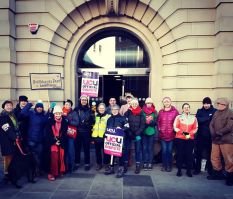 #1 January – February. ‘What was the space we now stood outside of? What was it we were fighting for?’ We start the year with two essays that examine the relationship between public space and creative practice. In ‘On Cities, Solidarity, Loss, and Hope’, Emma Bolland reflects on strikes and collective action, editing the Cities: Sheffield anthology, and the ‘transformative spaces’ of pub and picket line. You can read it here. ‘Poetry climbs down from its pedestal. Parts of the street step into poetry. Happenstance keeps everyone alert. The open interaction is an artform in itself.’ In ‘A Democracy of Words’, Matthew Clegg chronicles the migration of this participatory pop-up event from Mexborough High Street to Elsecar, Rotherham and Doncaster, and celebrates its…



 The Wombwell Rainbow
