Get Outside Day

-Brenna Farrow
firecracker coulee blue
I hear something
& my breathe
catches
I hear a robin
imitate
a laser
see a jet streak
-Connie Bacchus (from her book “Swirl“)
Get Outside Day
-Brenna Farrow
firecracker coulee blue
I hear something
& my breathe
catches
I hear a robin
imitate
a laser
see a jet streak
-Connie Bacchus (from her book “Swirl“)
The Great Big Green Week – Day Nine – Final Day

I Spoke to Our Mother
I went through the wood to the top of the hill
I sat and I waited until everything was still
I opened my heart to the mother of all
I gave her my words and she heard my call
Her message was sent in dreams in the night
Moon-lit… a medicine man… covered in light
We sat down on the ground in a circle of trees
He said “Listen. Hear our voice… please…
You mine and you dig you leach my substance away
You strip and you burn my protection each day
You cut and wound me, expose all that’s within
Tread soft on my mantle, take care of my skin
You are not just living in Nature…
…you are Living Nature
The blood in your veins is iron from my heart
The flesh and your bones are me, every part
We are all made from the substance of stars
Take care where you step, you walk on your scars
You are the dawn, the morn and the midday sun
You are the fading of the light when the day is done
You are the rain, the storm and the streams that run
You are the cry in the night and song at dawning light
You are the whisper in the trees and the summer breeze
You are the waves, the shore, you are so much more
You are the mountains and the earth beneath your feet
You are the cycle of life and you are complete
You are not just a passenger we all have a role
Listen to your voice, your heart and your soul”
With that we stood up all dressed in green skin
The question on my lips “Where do we begin?”
-Peter Roe
I Spoke to Our Mother – Poetry for The Earth Responding to Liv Torc’s Siren Poets project and six amazing Challengers, 60 workshop participants went out into nature to have a conversation with the Earth. They then met at one of five online poetry workshops and shared their experiences. Many went and filmed their poetic responses outside somewhere they love. This is my response. I live on the lower slopes of Allington Hill in Bridport. For the first time in 14 years I climbed a hill and ‘I Spoke to Our Mother’. Her response came to me in dreams in the night. Sceptics may doubt… but when did you last listen to the Earth? Thank you to Earth Mother and Facilitator Liv Torc Peter Roe http://www.livtorc.co.uk http://www.capefarewell.com/sirenpoets #SirenPoets #ClimateIsCulture #TheJawboneCollective #WessexMedia
Springtime Isn’t Always Optimistic
Lush
Green of spring,
Humming
Tree frogs have come
Early.
Outside looks
Good.
Inside, worry.
An empty gas tank,
Errands to run,
Sweating from the already too hot sun,
And they’re raffling off an assault rifle at the bank.
-Samantha Terrell ((Previously published in DoveTales by Writing for Peace, and my collection Vision, and Other Things We Hide From)
Weep Now for Future Losses
We’re told
It’s premature
To weep for it; the
Unwelcome gains, the unjust losses
Brought upon us
By reprehensible
Acts of irresponsible
“Stewards”
Whose
Publicity wars
And plunder for more
Have robbed the future
Of our weeping,
Our living and our breathing.
So we must work harder,
Adapt faster,
Plan for then,
Weep
Now.
-Samantha Terrell
Plea (A Ghazal?)
Love to Mother Earth, you cherished us, nourished us,
we repaid by stripping you, raping you, a sorry too late.
Steam, coal plumes, car emissions, meat methane
We ruined nature, we need you now, nourish us, cherish us.
Raging fires, uncontrolled floods, melting ice rivers
engulf land, on our knees, Mother Earth cherish us.
Monsoon rain, cities destroyed, floating homes
crushed to smithereens, we need you, cherish us
Glaciers melt, fires turn green to black ash
Sorry, sorry, we need you, nourish us, cherish us.
-Leela Soma
black oil slick
washed up on the beach —
looking
in the dead dolphin’s eye
I see a part of myself
Lavana Kray https://bit.ly/3ocHes9 #tanka #poetry #micropoetry #poem #offshoreoilldrilling #climatechange #oilandgas #oceanpollution #climatecrisis
a new rock,
plastiglomerate
litters the shore —
will the words I leave behind
also survive the seas?
Janet Lynn Davis https://bit.ly/2m1hxN7 #tanka #poetry #poem #PlasticPollution #ClimateEmergency
Plastiglomerate: melted #plastic #trash mixed with beach sediment and debris.
a wind
rattling the dry leaves
on eucalypti —
an ink-dark trace
of koalas
https://bit.ly/3vDq7Qm #5lines #tanka #poetry #micropoetry #poem #BushFires #Australia #ClimateChange #ClimateCrisis #ClimateAction #Koalas
waiting room
the
length
of
a
special
report
on
forest
fires
https://bit.ly/38JZksr #VisualHaiku #haiku #poetry #micropoetry #poem #ForestFires #GlobalWarming #GlobalCrisis #ClimateChange
Every other day we purchase
all the green apples the monger
by the station fails to sell
as if it is written in the red,
and often he cannot sell
all his green although it seems
to be the order of the day.
Sometimes he speaks of
the family he keeps in this city
hidden from the one in his bourg
and about those secrets open
like a wound between his toes
alive inside the callouses he harvests.
We listen to him, our teeth in
the juicy hearts of the sourness,
our boredom asleep while the trouble
stirs in another hamlet.
Will he go back to his origin?
I ask. Not today. Today I pass.
Green signals the monsoon’s
through train skipping our station.
Speed blurs through the vagueness
between the two parts of here.
-Kushal Poddar
Data Water
April showers
bring May flowers,
sings the nursery rhyme.
An outdated tune to my desert ear.
Yearly drought
produces much doubt
my children will ever see
the desert blooming this —
is quickly becoming a fantasy.
In the mountains, snow is refusing to fall,
rain forgets to drop in the Valley of the Sun.
The Colorado slumps into a depression,
Lake Mead is quickly fading,
her shore exposing her emptiness.
Whispers are spoken to shadows,
numbers crunched in darkness.
Deals made under cover of
the greenbacks promised success.
Promises contrived that none intend to keep.
One million gallons of sacred water
is required daily to quench
the modern beast of our
data storing machines thirst, to
cool its heated humming collection routines.
The data monsters grin gleefully
with their colorful box windows
as they build their thirsty towers.
The land is cheap and easy,
politicians’ pockets are deep and greasy.
Arizona is once again dehydrated,
it haunts her every 100 years.
Yet, the belly of the beast is
never satisfied, no cure for the virus of greed.
it transmits asymptomatically; none of us are immune.
A new reality is unfolding.
People want to deny
turn their backs and say,
everything’s okay, take a dip in the pool
let’s think about this another day.
Annual dust bowls
will blow into our souls.
Our children’s destiny in question,
as Arizona is wrung out —
to wither like a plucked Saguaro flower.
-Renee Keele
https://andtheyleftusabrokenplanet.com/let-our-voices-be-heard
let our voices be heard
let our voices be heard
from the local town hall
to the Heads of Government in Glasgow
we rebel for our future and we strike
let our dreams be heard
demanding the impossible
as the near impossible is what’s needed
we know it’s not too late if only we act
let our power be heard
changing communities
changing generations
and changing ballots
we fight as one for our home
Earth
there is no Planet B


-Ankh Spice
What Is Ecopoetics?
A rain forest of words
That captures the toxins
Of a world on the brink
-Joe Lamport
More amazing poetry can be found here: https://www.facebook.com/groups/968882923646629
Bios And Links
-Peter Roe
lives in Bridport on the Jurassic coast. He is a prize winning performance poet, artistic, autistic, computer geek and technology nerd. A former Bard of Dorchester and host of Bridport spoken word night Apothecary. Founding editor and publisher of the Jawbone Collective. A self confessed nerd and technology junkie who likes to shatter peoples misconceptions about Aspie computer geeks! In July 2021 Peter was Highly Commended for his forthcoming collection “About Time”. He has been published in ‘Siren Poets’ in 2020. Short listed In Blandford Poetry Prize 2019, Runner up in Bridport Short Story Slam 2018, Finalist in the Apples and Snakes South-West Slam 2018, long listed in ‘Writing Without Limits’ for The Yeovil Literary Prize 2017 and winner of The Western Gazette Best Local Writer 2017. He has been widely published online and in print. Has two published collections of poetry. His debut poetry collection ‘Technology Bytes Back’ (2018) comes from that place where technology meets people and the inevitable mayhem that follows. His second collection “i’m in Love with My Barista” came out in July 2019 to coincide with a series of Fringe events. and show ‘Jawbone’. His fringe event ‘North Verses South’ for 2020 was postponed…
-Renee Keele
is an Arizona native, a rare breed, who lives on a small farm raising chickens and ducks. Her love of writing goes back to elementary school when she discovered her parents’ old typewriter. She is a wife and mother of three children, one biological, and two whom she adopted from the Arizona Foster Care System.
Podcast available on Spotify, Google Podcasts, Apple Podcasts, Anchor, Breaker, Player FM, Radio Public, OverCast, PocketCast, CastBox, ITunes, Podbean and many more platforms.
This episode aired first on Saturday 25th September 2021. The guests were Liam Porter, Lannie Stabile, Paul Brookes, Sinead Griffin, Andy N, produced and hosted by Damien B. Donnelly. Below are details and links to all the guest stars…
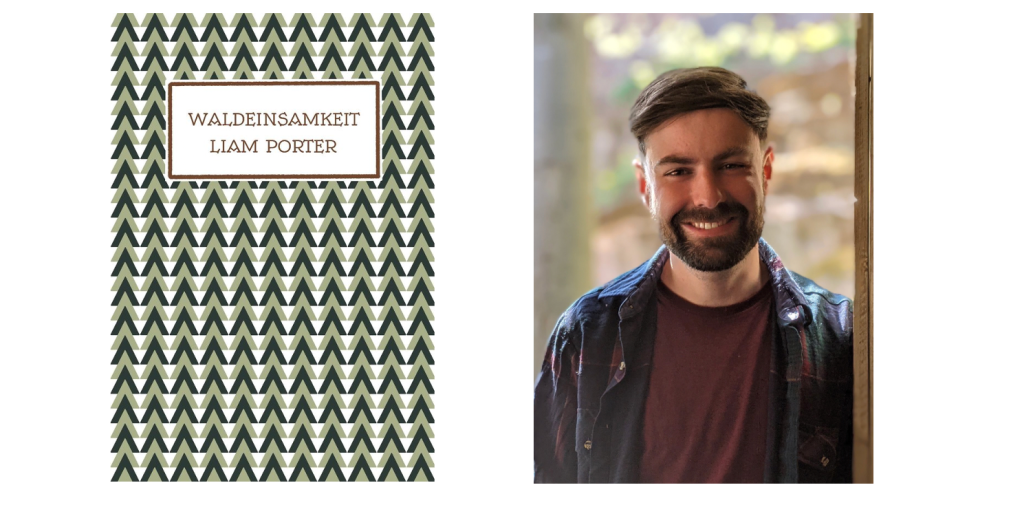
Liam Porter is a writer, poet, and digital marketer from Merseyside, now residing in Chester. His poems have been published in 192, Independent Variable, Bloom and a range of other spaces. He was the co-editor and lead host of the 16th year of In The Red – LJMU’s poetry open mic night and annual anthology. He hopes his writing will provide an essence of calm and reflection in what is a very hectic world. He is the SEO & Content Strategist for Salience Search Marketing. His…
View original post 776 more words


I am delighted to review this week a poet from that wonderful Scottish poetry publisher, Dreich. I’m a relative latecomer to the readership of Dreich publications, but they have rapidly become one of my favourite publishers. Kathleen Kenny and her Forbidden-by-the-sea is typical of the high quality of its output.
Kenny tells us that this collection is a product of ‘a year spent wrangling with love and life, whilst renting a shore-side cottage within spitting distance of the North Sea.’ A year in a cottage by the seaside sounds idyllic, but Kenny’s focus is on realities rather than on dreams, on the world as we experience it, rather than on the world as we would like it or imagine it to be. It’s not that she doesn’t deal with fantasy, but when she does she shows is to be distracting and destructive. For example, in House Hunting she describes the…
View original post 977 more words
One of the most dramatic and controversial myths is revisited and thoughtfully explored in Mandy Pannett’sThe Daedalus Files. The roles of the actors in the story are investigated in the poems, from that of Daedalus, the maker of the labyrinth, to that of his son Icarus, who was the result of Daedalus’s marriage to a slave called Naucrate. Icarus later dies while he is trying to escape, falling from the sky into the Aegean Sea. The role of the monster, the Minotaur, is also explored in the poems; it was created following a sexual encounter between the adulteress queen, Pasiphaë, and the sacred white bull, a present from Poseidon to the king, Minos. Finally, the role of Theseus, the hero, is examined; his victory is tightly linked to the clever tricks of Ariadne, whom he eventually abandons on the island of Naxos. Death is the constant threat that…
View original post 531 more words
The Great Big Green Week – Day Eight
Thoughts On Rising Sea Levels and Sinking Expectations
On the coastlines, sodium-saturated
Wood, swells as systemic
Denial of knowledge
And actively propagandized policies
Override reasonable
Solutions.
We know
Of unreasonable
Numbers of plastic water bottles, saturating
Our waterways and systems
Without any long-term pollution policy
Solutions,
As reasonable-
Minded policy-
Makers are saturated
By systemic
Conflict and mandates, knowing
It’s not enough to propose simple solutions.
Policies
Providing lasting environmental solutions
Must be backed by a reasonably
Large number of knowledgeable
Lawmakers who aren’t already saturated
With other issues in the system.
Yet, offering no solutions
To climate change, is to ignore reason –
Allowing a corrupt system
To saturate
Public airways with, more than smog but also, ignorance and lies instead of knowledge,
Further delaying solvent policies.
Take on the system!
Saturate
The world with knowledge
And reason.
Demand solutions.
Propose new policies.
Promote honesty and knowledge.
Earth deserves solutions
Based in science, and reason.
-SamanthaTerrell.com
A soap bubble…
…was blown
so long ago,
the wide-eyed, Wonderland-oblivious,
toddler of humanity blew
clumsily through the loop gripped
in one chubby fist
—billions of people will die—
and the soap film hesitantly bulged out
powered by bronze,
steel, the horse collar, crop rotation.
Sailing ships and steam engines
smoothed into the fragile sphere,
as were pickaxes, dynamite, production-lines…
industrial farming, the Haber Process,
internal combustion engines and the fractional distillation
of crude oil… Fast-breeder reactors…
embedded in the almost imaginary skin
of this bubble we blew,
this quintessentially breakable world
we knew through all our lives,
and implicitly assumed was real
—and billions will start to die—
when it turns out it is not. We built
a civilization on stuff we borrowed. We assumed
that fossil fuel in the ground
was a permanent state:
a natural condition forever. We thought
fertile topsoil was a given,
and clean water another gift, temperate climate,
fish-filled oceans, the very air…
—billions of people are starting to die—
as our assumptions start to crack along fine lines
and this is a bubble in the purest economic sense
because it actually worked through all the time
during which it seemed to work,
until one day, suddenly, boom!
It’s always been a lie.
If this island earth were a spaceship:
power failing, the food limited,
life support pumping dodgy air;
we’d get all of engineering there
and have a meeting to decide
who can be stuffed in lifeboats,
who can be stuffed in freezers, and who
—because engineers are nothing if not completely realistic—
won’t reach their destination.
You can try to get that one
before the United Nations, good luck with that!
And not to be a bore, but…
—billions of people will die—
and I don’t trust that lot to do much about it.
Although, also, I, with my slightly less than human head on,
—because I have one of those—I say: OK,
billions will die, it is hard to overestimate the size
of disaster facing us, but it’s not the end of the world,
it’s just the end of the world as we know it
and as long as we don’t completely blow it…
and as long as we weather the change
ride the tsunami
take what life remains us, as and where we find it
and not go end-of-days-fucking-crazy
with a Mad Max style weapons stash
and supercharger
on everybody’s Christmas list, then…
—for the billions who by chance do not die—
there will be some loss of privileges.
We won’t be eating meat;
we won’t be mining bitcoin; may not be driving personal cars
but we can hope still to be here
in some form.
We haven’t been attempting the impossible
it’s not that a planet cannot support an apical species
with a silly headcount.
It’s just that we didn’t do our homework.
We don’t have all the required tech,
have not closed the carbon curve,
balanced the energy budget, or worked out
what happens when ageing plastics want to retire…
…not produced a society that can keep its calm
on pressure-cooker starship Earth…
…but it can be done. Still, not a comfortable thought,
and it’s going to take some time
—during which billions of people will die.
It’s not the end of the world,
it’s just a soap bubble,
it’s the end of the world as we know it:
pop.
-Ian Badcoe
Carbon Footprint
MAY 06, 2019
I’m your deadly carbon footprint
Lurking spectre grim and grey
Growing larger, never smaller
I will never fade away
Stalking stealthily behind you
While you live your life on Earth
I’m your stain, your deep impression
I’m your legacy, your curse
I’m your dirty carbon footprint
Don’t ignore my warning sign
I’m your carelessness, your cancer
Soon consuming humankind
As you use your power electric
Coal and petrol, oil and gas
Killing nature with pollution
While you’re counting up your cash
I’m your lethal carbon footprint
Leaving you a bitter taste
Eating up all of our planet
Thriving on your piles of waste
I’m your rubbish not recycled
I’m the sting that’s in your tail
If you want to see tomorrow
Then you need to shrink me…now
-Neal Zetter
This melancholy book-length poem, first published in Norway in 2014, begins with a motionless drama:
THERE IS A YOUNG MAN inside me
I see him standing
by a dark wall
somewhere in the forest
which sets the timbre straight off. ‘Inside’, in a way, means ‘outside’. We’re not going to be able to trust even the simplest language. Adjectives will cancel each other out: ‘the beautiful, ugly buildings/ the rich, poor rooms’.Line-breaks are deployed to leave you rudderless:
Quietly I passed into that area of darkness
which does not exist.
[…]
Mother fell and moved around in a circle
which was impossible
and expected emotional reactions are denied: ‘I am not happy to see him/ nor do I mourn him’. Soon sets of spiralling metaphors are in play: the red place is the heart, which is the piano, which is the lover and the coffin, which is the forest which…
View original post 415 more words
Great Big Green Week -Day Seven
these days, the end-times
Sam Donaldson
For us in these times, to even have hope is too abstract, too detached, too spectatorial. Instead we must be a hope, a participant and a force for good as we face this catastrophe.
(Cornel West)
Hopeless Hope
These days weigh heavy, a burden upon the shoulders of my subconscious.
I am aware of a strong sense of hopelessness emerging within me. A deep despair and violent rage grow, despair and rage linked to what we are doing to our one and only planet, mother earth. I know that to be alive on this earth is a wonderful, bitter-sweet gift, but the more deeply I feel this connection the more deeply my despair and rage become, for dark, dark clouds are gathering overhead.
We live in a time when nuclear destruction is a probability but ecological destruction is a certainty, a time when the rich get richer and the poor get poorer, when the dark clouds of neo-fascism gather overhead.
Hull, my home, is due to be one of the first cities in the UK to be lost to rising sea levels.
Is hope possible in this time of ours?
These days I have lost all interest in abstract ideas of hope, all interest in optimistic illusions which deny how hopeless our situation really is. These days I am interested only in that mysterious spiritual quality embodied by many people actively resisting the forces of death across the world, a paradoxical quality I like to call “hopeless hope”.
laughing while weeping
teach us how to sit in the sound of raw lament
guttural cries buried deep underground
under mountains of rock
under layers and layers and layers
of silence
teach us how to pray, how to sit
in the sound of mothers crying
“for aren’t we perhaps born
from another’s pain?”
isn’t it true that the Gods within
can only be woken by the wailing
of a people whipped and starved and chained?
teach us how to sit in the sound of bruised dark night
to hear its hidden message, the gospel
for these days of stillborn futures
no joy to birth
teach us how to pray
how to let salty water
tend to open sores, turning tears
into the smiles of children
emptying us of the years
and years
and years
of unwept weeping
fill us with the music of life
fill us with the pleasure of dance
fill us with the warm embrace of love
teach us how to laugh
while we weep
I Lost My Laughter
Humanity has always lived under the shadow of death. But death, in and of itself, is not the problem. As Martin Beck Matustik puts it, “Finitude and mortality motivate tears or inspire works of tragedy, but they do not yield the bitter fruit of hopelessness. That graver condition arises from a type of action that affects meaningful human flourishing at its heart.”
The problem is greed, ignorance, hatred. The problem is cruel death. The problem is evil.
Embracing our mortality enriches our lives, but the shadow of cruel death undermines it. Evil does something to us, in our depths, shaking any sense we may have that being alive is a gift. It causes us to wonder whether it would have been better that we had never existed at all, sapping the future of any vitality or possibility other than the possibility of worse yet to come.
A friend of mine, an environmental activist, told me of how from 2006-2008 he had immersed himself in researching and communicating climate science and politics, as well as taking action. He told me of how, in retrospect, this changed his personality fundamentally. He said, “I used to be very extrovert and fun and am now basically introvert and terribly earnest, amongst other impacts. I learned that facts do not change minds – at least certainly not in any predictable way. I learned that people do not want to talk to me about our world and future. I learned that more than adequate technological solutions already existed, but they were not going to be implemented. The Powers that Be would rather risk Armageddon. I lost my laughter.”
If it was in our power to dispense with this shadow of cruel death, then we might be able to cultivate some sense of optimistic hope. However, the great beast of imperialistic, white-supremacist, capitalist hetero-patriarchy, incessantly spewing out cruel death, is immense. This “filthy, rotten system”, as Dorothy Day put it, is seemingly all-powerful, its roots go deep into the very soil and soul of our society.
This beast far out-numbers and out-guns the tiny communities of loving-resistance that exist like little oases in a barren wasteland.
We know we cannot win.
But maybe, just maybe, we may not lose. Maybe, just maybe, we will be given the grace not to lose our humanity, not to lose our laughter!
the signs of the end-times
prophesy to the wind
the signs of the end-times
waters rise and rise and slowly warm
while we march on down to worship
at our shopping-mall cathedrals
like frogs, unaware, our curtains drawn
in cold midwinter
while we march on down to high street stores
heaters blasting through open doors
while we march on down to their mantra
buy buy buy
our call to prayer
sung from minarets and TV screens
to own our souls and fill
our empty dreams
prophesy to the wind
the engine chugs, pumping clouds of steam
faster faster faster
bellowing thick dark smoke from the machine
demanding
commanding us to
drill drill drill
for we have more people with more cars to fill
(it’s OK, our grandchildren can foot the bill)
no need to change
no need to struggle
sacrifice – that relic of a history now ended
of a by-gone age
buried now
replaced by the ascent of man
Babel’s rubble, reassembled brick by brick
by our bloodied hands
up beyond heaven
up beyond god
up beyond the earth into the cold dead stratosphere of steel
and rubbish dumps
our great plastic mounds
the inheritance we pass on
the very ground we leave
to our children
the soiled soil from which they’ll feed
prophesy to the wind
that our blind eyes cannot weep
that our deaf ears dull our minds to sleep
that our souls now quiet as stone
leave our hearts unkind, unknown
prophesy to the wind
the textbooks teach, the homework set
the message:
that life is elsewhere
better elsewhere
and that we must be beautiful, now
and strong, now
and happy, now
needing that and that and that
now
bombarded, in every place, in every moment
by pictures
thin happy bodies, faultless faces
so thin, so happy
images of perfect bliss
covered in gold, dancing in ecstasy
never alone, never old
unlike here, unlike this
unlike me
drilling, without anaesthetic, through our skulls
boring down into our very souls
to fill us with that emptiness untold
that place where
every piece of crap imaginable
can be sold
prophesy to the wind
that we are already dead
these are the signs of the end-times
The Gift of Lament
When asked how to save our planet, Thich Nhat Hanh responded, “What we most need to do is to hear within us the sound of the earth crying.” In a similar vein, the theologian Walter Bruggemann writes that “anguish is the door to historical existence” and that the “embrace of ending permits beginnings”.
However, let’s not kid ourselves – the embrace of endings is not easy. In fact, it is a terrible thing, a death of sorts.
But the seed must die!
In their book Active Hope, Joanna Macy and Chris Johnstone talk about our need to undergo a virtuous spiral that moves from gratitude, to honouring our pain for the world, to seeing with new eyes, to going forth. Unless we allow ourselves to really feel and honour our pain for the world, we cannot move forward.
By plunging into the darkness of hopelessness and embracing our end, we allow ourselves to fully feel and honour our pain, and this in turn can transform us, enabling us to begin to see with new eyes, to go forth transformed to work for peace, justice and life.
As Carl Jung wrote, “It’s not by looking into the light that we become luminous but by plunging into the darkness.”
within this dying womb
within this dying womb
nine months of body bled dry around me
nine months of speaking to brick wall
inert
within this silenced body of hurt
I have spent my days pleading
but to no avail
finally cursing, striking out staff against cold, hard rock
against dry dry stone
striking out in anger
before sitting down in the dust
frustrated
exhausted
alone
still no water came
no word returned, these days of crying
now become decision
every heartbeat, every breath now a choice
for us
to compose a Requiem for this earth
to empty out our purse for the hospice nurse
now for comfort, no hope to mend
to sing out a haunting Lacrimosa
for our mother
for our lover
for our friend
We Can’t Just Weep
For a long while I have been drawn to Jeremiah, the weeping prophet, the prophet of doom who is called by God to try and wake his people up to their oncoming destruction, to speak, knowing no-one will listen.
There is a prophet in me too who weeps in despair, who wants to rant and rave, accusing all those who are sleeping-walking our species off the edge of a cliff (myself included). The prophet in me wants to silence every laugh and to wipe off every smile from every face, to close down every party and to grieve at every birth.
And yet, the more I reflect, the more I realise that while darkness is true, it is not the whole truth, and that weeping alone will not help us navigate our way through all this darkness. I have come to see that we need to laugh while weeping.
I am learning that our weeping needs to be balanced by, and grounded in laughter, rest, self-care, gratitude, and play. Otherwise it can spiral down into desperation or frustrated fury.
Deeply playful, joyful celebration is not a betrayal of those suffering and dying under our filthy rotten system, if it emerges from our day to day struggles of compassionate care and prophetic witness. In fact, it is a form of solidarity, a way of enacting a little bit of the world we desire for all. We celebrate deeply because the struggle is so tough. We laugh outrageously because we cry so painfully, and so often. The two go hand in hand.
deadly silence
drifting through this land
of no conversation
of deadly silence
of neon lights, car-exhausts
smartphones and reality TV
drifting through this land
now become a living cemetery
of indifference
now become an orphanage
devoid of touch
built of saddened walls
stained by unheard cries
no longer cried
cries of gentle bodies chained to beds
cries buried deep into bone marrow
as cancer, biting from the inside
like the cold of lonely winter
drifting through this land
where nothing happens to no-one
I ask myself
can anyone remember
why we killed God?
why we tore down temples?
why we poured concrete over sacred places?
beneath this silence
another silence whispers
that it was the men of philosophy
of science
of money and power
who chained the last poet down
to the cold hard vivisection table
while she cried
“Holy is the world! Holy is the soul! Holy is the skin!”
and they cut out her tongue
and now the trees no longer speak
and now the birds have forgotten their names
and now the rivers are muddied with oil
for it was cement and aluminium
that banished the spirits
that ate brains and imaginations
leaving only the dead silence
of pure machinery
of demonic industry
flourishing in the hushed shadows
of blind capitals, shrouded in fog
Moloch! Moloch!
this is your turf
so these days I see it as foolish
to sit like King Cnut
enthroned at the ocean’s edge
forbidding this world to be this world
forbidding plastic and oil
machine and tower-block
forbidding it all to be
for that is not poetry
poetry is to sing like a bird
in the dark, waiting for the morning light
or to bend down and write in the sand
words that will be forgotten forever
or to curate ordinary time
tending to kitchen table and fire-place
to create an exhibition
of such warmth, laughter and beauty
that Holy Trinity longing to be born
like an idea
like a field of white roses
like the never-ending hymn
Holy! Holy! Holy!
Holy is the world!
Holy is the soul!
Holy is the skin!
Holy!
Acceptance is Not the Same as Apathy!
One day, a couple of years ago, I remember feeling extremes both of desperation and frustrated fury as I struggled to wake up the world around me, but to absolutely no avail. That afternoon, I met with a good friend of mine in a coffee shop. As we chatted and I told him how I felt, he said to me, “let’s face it, we’ve lost.”
Mysteriously, these words, rather than becoming a millstone around my neck, became a liberation. As they sank in, I felt myself able to breathe deeply and relax, to let go.
Later I came across a video about despair in which Thich Nhat Hanh talks about the importance of accepting reality as it is, of the liberation that can come through embracing the worst:
“We have to accept that this civilisation can be destroyed, not by something outside, but by ourselves. In fact, many civilisations have been destroyed in the past. So, our mental formation, our minds, are very important. If we allow despair to take over, we have no strength left in order to do anything at all. And that is why we should do anything that can prevent despair to happen, including meditation. So, when we meditate on civilizations that have been destroyed in the past, and if we can accept, then we can have peace, and become a better worker for the environment … We have to accept reality as it is and acceptance like that can bring us peace, and with that kind of peace, we have force … And meditation plays a role. Meditation means to look deeply, and when you look deeply you get insight and with that insight you are free from despair and anger, and you are a better worker for the environment.”
Acceptance is not the same as apathy!
liberation
the old nun sits at her window
coffee in hand, staring out
upon bulbs now bathed in sunshine
bulbs breaking through, soaking in the light
famished babes gulping down their mother’s milk
stretching up for the sun
after winter’s night
the old nun sits at her window
coffee in hand, staring out
out beyond bulbs
out beyond her church now crumbling
out onto these days of ours
empty and old
eroding away into the dust
the die is cast
the axe already fallen
she smiles, remembering that God
made plenty of time
enough time for everything
enough time to be born
to plant
to laugh
to dance
enough time to weep
to cry
to mourn
to die
in no hurry, she finishes her coffee
her gaze gracing those bulbs
remaining resolute in their appointed task
to flower
come what may
whatever the future ask
putting down her coffee cup, she accepts her charge
to become compost, good food
for the next thing
to fertilize an image, a vision
vague, unclear
of bulbs that have grown again
in some far-distant spring
grown in the garden of her church, now crumbled
flowering in a future
not her own
Keep On Keeping On
Matt Carmichael writes, “Hope does not depend on circumstances; when we speak of hoping for this, or hoping that the other, we are confusing hope with optimism. Whereas optimism makes the present more palatable by projecting today’s desires onto the future, hope makes the future bearable by perceiving the eternal pregnancy of the present moment. Hope is a state of mind that arises naturally from a disciplined openness to the vast potential of the moment.”
‘Hopeless hope’ seems to me to be a mystery that paradoxically emerges out from the darkness of hopelessness, holding itself in tension between the closedness of the future and the openness of the present, between the certainty of future defeat and the vast potential of the present moment. It is neither optimistic nor pessimistic, but “post-pessimistic”, as my friend Jill Mann put it. Rather than giving in to despair, ‘hopeless hope’ faithfully and defiantly refuses to give up, instead throwing itself more intensely into life in all its fullness.
As Karen Baker-Fletcher writes “Hope emerges most deeply and powerfully from struggle. That is its most powerful form. Hope is when you wake up in the morning, set both feet firmly on the ground, and keep on keeping on. Hope is a decision to keep on living and struggling for life.”
becoming body
these days I discover myself
more and more displaced
within these warped contours
of the machine, pulling
me out of place, pulling
me out of time, time
now with no seasons
no rhythms
no day or night
to guide me
all replaced
with one rhythm
one beat
relentlessly reworking my DNA
reforming my flesh and bone
around restless mind
frantic
unimaginably empty
angry
violent
seeping into the deepest pores
of my being
but I do not consent
pacing up and down, captive
tiger wrenched from the forest floor
sorrowed
knowing in my limbs that this is not right
not how things were made to be
and so
these days
I wander city streets differently
softer
slowly becoming body
made of skin that hurts
and bleeds
and longs for touch, fragile canvas
alive with memory, marked
with absence and presence
alien in a foreign land
made not of mud
nor wood, nor streams
but cold hard glass and concrete
tombstone for the ancient rhythms of the earth
my response:
each day to become softer
to become gut
to become heart
to kneel down now to worship
only at the temples of warmth and kindness
to beg for tenderness
vowing defiantly to fill each day
with tears
with laughter
with dance
and to hug my father
before the day is done
To Save Life, We Must Love and Celebrate It Too!
Laughing while weeping is impossibly difficult.
That’s why we need one another, communities where we support one another to do more together than we can do alone. Together we need to rediscover and recreate new rituals which will enable us to process what we are living and to channel it in positive ways. We need to rediscover and recreate times and spaces where lament and celebration go hand in hand, where rage and gratitude are intertwined, where we laugh and weep together.
This is the challenge ahead of us: To not be afraid of the darkness, but to face into it courageously, allowing ourselves to weep together for all that has been lost, is being lost and will be lost, and yet, to laugh together as we do. Our laughter must be as deep as, or deeper, than our weeping. We must celebrate and enjoy life, savouring every breath, tasting every mouthful. We must build the kinds of communities that know how to creatively inter-twine paradoxical dimensions of life in ways that are redemptive, bringing some small ray of light into the darkness of our world.
As Diana Francis puts it, “Of one thing I am certain: that laughter is essential to our spiritual energy. The road ahead may be daunting and at times sad and frustrating, yet there must be joy in the mix or we will never stay the course. To save life we must love and celebrate it too.”
the last days
if these days are the last days
I will prepare my hours
a will and testimony
each breath a gift
each smile a legacy
to pass on to the soil
for the next great ascendency
if these days are the last days
I will let go of each inhibition
lighting a fire
that will rage with its mission
to burn down to ash
every regret and omission
if these days are the last days
each word that I speak
will be my last stanza
that points at the moon
with a finger of wonder
that denounces injustice
with the claws of the lion
roaring out its reminder
that with each breath we are dying
that it takes work to be kinder
and love is all
that we can ever leave behind us
-Sam Donaldson
Bios And Links
Sam Donaldson,
is a coach, a mindfulness mentor, poet, and community activist with years of experience of living and working in intentional communities committed to care and constructive social change. After leaving Oxford University with a first in Philosophy, Politics and Economics, and studying for an MA in Post-War Recovery Studies at York, he began what he calls “my adventure of living life off the beaten track,” choosing to live and work in a L’Arche community, managing a house providing care for six adults with learning disabilities. It was during this experience of leadership that ” I began my love affair with personal and organisational growth, as well as beginning my meditation practice and setting out on a creative journey with poetry.” Since then he has gained experience in a variety of grassroots community settings, including helping found and run the Mad Pride Hull project and helping found and run Quaker Roots, a grassroots peacebuilding group. He practices both Zen and Quakerism, and is currently training for a Post-Graduate Certificate in Psychosynthesis Leadership Coaching, and is in the process of publishing a collection of illustrated poems called ‘This Place’ with artist and poet Mike Sprout. Alongside all this, he loves sport, listening to music, walking in nature and spending quality time with friends and family.
Great Big Green Week – Day Six
Fugitive in the Date Palm
It is hard to ignore the red-billed toucan.
Solomon says his bill is chipped like an old teacup
but we see the translucence of the deglet noor,
its caramelised sunlight.
After the stripping of thorn and billowing
of pollen across the plantation,
he blew in on a salt wind through the canyons,
beak bright as paintpots,
took shelter in the branches,
peeped at us with his blue eye from the canopy
while donkeys grazed determinedly below
oblivious to his dipping and tilting.
Solomon says he’s an escapee from a sultan’s
menagerie; we feed him pomegranate, mango,
leaving them in quiet acts of worship
at the foot of his favourite palm.
We know he is lonely, thousands of miles
of desert and ocean from home.
We call to him while we hang on ladders
wrapping the khlal in muslin.
Evenings, he hops about chuntering
at shadows, then curls into a feathered ball
secured by his great beak,
to sleep.
We think he dreams deep jungle:
Costa Rican mists, the whirring of moths
and pop of frogs, another red-billed toucan
hidden, waiting, in the forest gloom.
Solomon says one day, maybe he’ll set off
like a beacon, winging over Egypt, Libya,
Nigeria, the South Atlantic.
He prays for the fruits to ripen,
sweet rutab to delay his leaving,
checks on him each morning, peering
up into the leaves, his crippled toes sinking
in the warm sand.
-Jane Lovell
Ming
We ease you open.
Hinged to each valve,
a pale tongue rooted in silence
tears from its mantle.
You slacken and still.
A clear liquid oozes lustre
gleaned from ocean salt.
Muscle and foot, we scrape you
out, put you to one side,
globby and unfortunate.
Such is fate.
Carved into your shell
we find trade routes, the wake
of explorers, contours of underwater
mountains, the migratory patterns
of whales.
We measure the scrawled ridges,
scribbled centuries of silt and swell,
share tales – the ancients
of the deep:
ghost barnacles
on a fairground tail-slap swirl;
turritopsis dohrnii, aspic thimbles,
their eternal cycle of drifting light;
horseshoe crabs caught by the tide
in halls of porous rock,
tails and spines shattered
by the blast.
We call you Ming.
You are older than this world
we created.
We wrap your gummy form
in polythene, keep it on ice.
Ming, the bivalve mollusc was ‘born’ in 1499, meaning it was swimming in the oceans before Henry VIII took the English throne. It was unfortunately killed by researchers when they opened its shell to find out how old it was.
-Jane Lovell (she says: Ming won this year’s Ginkgo Prize).
Portraits, Samoa 1853
I use pens whittled from pointed bones,
quills and picks of tortoiseshell,
to draw their innocence:
angels appearing in a white sky,
black angels ground from bullets,
smoke of charred wood and candlenut,
their features, sepia drawn from ink sacs
of cuttlefish, the thin brown
of old blood scratched on cotton.
They come, warm skin strung with beads
and feathers, meandering tidelines of salt,
kneel in the sand, teach me the old tales:
that birds carry a piece of the land you miss
as a song, notes held in their mouths
on their sharp-leaf tongues.
I listen to their stories,
surround them with charcoal waves,
channels swimming with turtles,
coral blown through tiny bones.
They know I must leave soon.
We have gathered nutmeg, papaya, guava
seedlings rooted in packets of sand.
I scribe their names, put away my books.
High above the beach, great nets blow
with the day’s catch: lupe, knots of finch,
the last few still fluttering.
-Jane Lovell
Swimming Reindeer, British Museum
The figure in front is a female, with her smaller frame
and antlers. Watch her.
She is swimming the Aveyron with her head back, ears flat,
taking in the dizzy autumn air along her stippled length.
Eyes on the far bank and a skyline of chestnuts,
she kicks away the eels and navigates the current.
The male, chin resting on her haunch,
breathes heavily, catches his hooves
on unexpected rocks.
-Jane Lovell
gris, amarillo filters
on the field next door
the one trying to grow back invasive weeds
the one threatening to build a house so it is
no longer a beautiful field changing seasons for quail
running deer
& us
It is about the wildfire smoke we have in August.
-Connie Bacchus
Polar bear as the ice is melting:
So, maybe I’m the bear,
and the fear I see is my fear,
and the bewilderment is mine.,
as if I’m swimming hard
in a dissolving world, where all
those age-old certainties are melting –
that the world is ours,
that I am good,
that this place is bountiful,
and beautiful, and bottomless.
Maybe we’re all the bear,
realising that our home is shrinking
to a small space that can’t support
our weight, can’t feed us,
but we can’t step on
without disaster,
and the world is screaming.
The truth is that
the bear is the bear.
She swims on. I don’t know
if she feels hope, or fear,
and I can’t claim her
as a metaphor. She’s flesh and blood
and bones protruding,
she’s hungry
and the ice is melting.
-Sarah Connor
The Malnourished
(Previously published in the Poets’ Choice Global Warming Issue)
Drought
Can drive anyone
To desperation, and
Sweat
And toil are
Known thieves of time.
Then, while greed
Eats the garden you grew
For your family,
Little
Is left
For nourishment.
But don’t we
All have plenty of
Plastic silverware?
-Samantha Terrell
Bios And Links
-Jane Lovell
is an award-winning poet whose work focuses on our relationship with the planet and its wildlife. Her latest collection This Tilting Earth is published by Seren. She is Writer-in-Residence at Rye Harbour Nature Reserve. Her new collection ‘God of Lost Ways’ is forthcoming from Indigo Dreams Press later this year.
Jane has won the Flambard Prize (2015), the Wigtown Poetry Prize (2018), the Geoff Stevens Memorial Prize (2020) and the Ginkgo Prize (2020). She has been shortlisted for several other literary awards including the Basil Bunting Prize, the Robert Graves Prize and Periplum Book Award and has recently been nominated for the Pushcart Prize.
Publications include ‘Metastatic’ (Against the Grain), ‘One Tree’ (Night River Wood), ‘Forbidden’ (Coast to Coast to Coast), ‘This Tilting Earth’ (Seren Books) and ‘The God of Lost Ways’ (Indigo Dreams Press).
Jane also writes for Dark Mountain, Elementum Journal and Photographers Against Wildlife Crime.
She lives in Kent and is Writer-in-Residence at Rye Harbour Nature Reserve.
You can contact Jane at janelovell128@hotmail.com
down the centre of town
an avenue in fall
and the day came divine
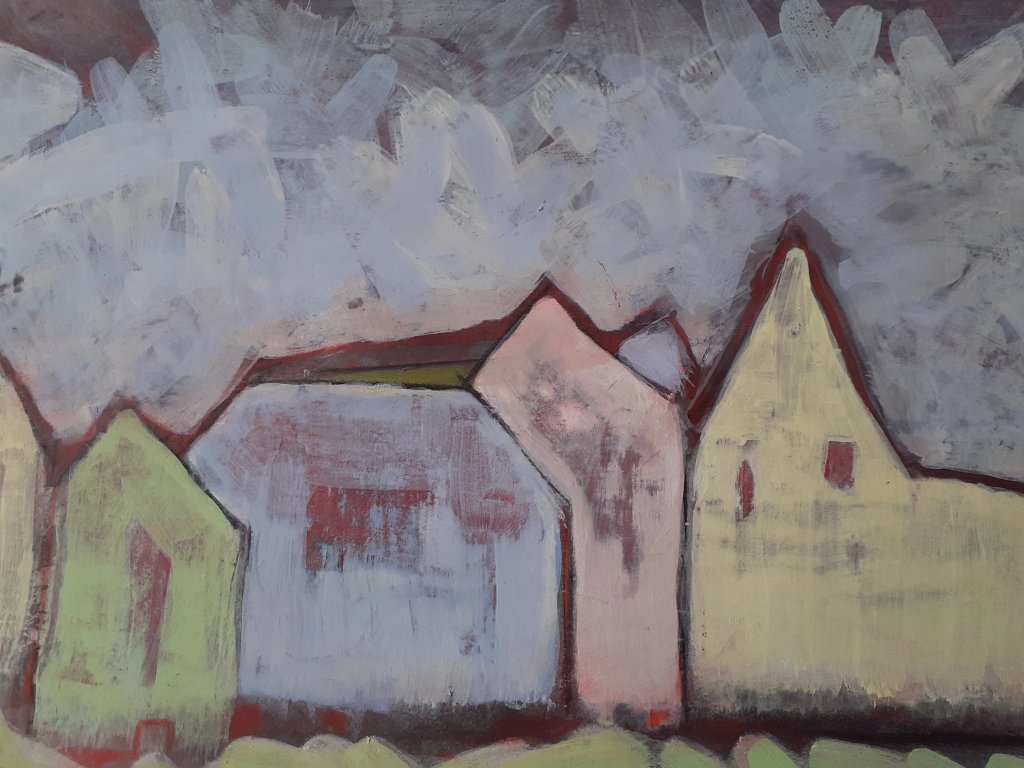


 The Wombwell Rainbow