Poetry Thanks and Praise, 2020

Sharon Larkin's avatarComing up with the Words

This blog article aims to record my appreciation of the many wonderful ‘people in poetry’ I have met and worked with over the past year. I would like to thank each and every one of them for their extraordinary efforts in a year when we have all had to overcome immense challenges simply to handle everyday life. To achieve anything additional to getting through each day has required greater determination, patience and flexibility … and more creativity and ingenuity in finding new ways of doing things. So thank you to everyone in the world of poetry who has helped anyone to find ‘an outlet for their output’ during a year that seemed determined to lock everyone in and close everything down. Thanks for your resilience and energy … in spite of everything.

Publications and Launch Events

Firstly, huge thanks to the hard-working and astonishingly innovative publisher, Mark Davidson of Hedgehog…

View original post 2,819 more words
One Breath

merrildsmith's avatarYesterday and today: Merril's historical musings

Light through the clouds. The beginning of a new year. ©️Merril D. Smith, 2021

One breath—a cloud-blush
and almost away, a fiery, fever-dazzle
wakens, though you remember the ghost embrace,
you are given morning, one, then two–
each a secret unfolding–not always, but if,
a window opens to sea scent and wind-kiss,
linger in its whispered blue,
wait for the caramel light–and after
the soft laugh of stars.

The Oracle seems to be offering messages of hope at the start of the year. As usual, she knows everything. I looked out at a gray morning, but as I started walking the sun came through the clouds.

View original post

Chaos and Ash by Kendall Johnson (Pelekinesis Press)

tearsinthefence's avatarTears in the Fence

In a world where movies and books often treat trauma casually and even glibly, Kendall Johnson’sChaos and Ashfrom Pelekinesis Press gives us an inside view of what it truly is and what treatment actually looks like. Johnson is someone who understands trauma. He is a Vietnam combat veteran and a former firefighter who rushed into the chaos of wildland fires in California. He later became a trauma psychotherapist and consultant specializing in big events. He was a second responder to 9/11, the Rodney King uprising in Los Angeles, wildfires across the United States, and the Northridge earthquake. He is someone who has spent a lifetime dealing with his trauma and others’, and where other books I have read treat the concept as an aside, Johnson’s book gives it the weight it deserves.

ThatChaos and Ashis a fictionalized memoir in flash and a few other forms is…

View original post 790 more words

Reach, a Bradgate Oddity | Mark Goodwin

Brian Lewis's avatarLongbarrow Blog

Introduction by Lord ‘Broc’ Howk

Over the years, the Greater Bradgate Range of Leicestershire has yielded strange journeys. The territory is laden with ghosts, mostly in the form of venerable oaks with their crowns chopped out – reminders of poor Lady Jane Grey, that very young and innocent queen, who after her nine days of royalty was beheaded. And there is also Old John himself, that old beer mug of a folly atop one of the grander peaks. In the wrong light one can hear the whinnies of the tortured horses that galloped around the race circuit that encircled Old John’s prominent lookout. They weren’t really tortured, but by gods we can imagine the racket. And none of this, of course, is believable – rather it requires a particular kind of faith, a particular way of looking at things aslant. And the same too can be said for the miniature…

View original post 1,504 more words

‘Don’t think it couldn’t be you’: Peter Reading, Homelessness and Affect | Matthew Clegg

Brian Lewis's avatarLongbarrow Blog

social-housing-karl-hurst From the series ‘Towards a Theory of Social Housing’, Karl Hurst

Early on a bitterly cold, January morning, I walked through Derby city centre, on my way to work. On St Peter’s Street, in the recessed doorway of Lloyds Bank, a homeless couple were bedded down together in a nest made out of dirty blankets and two zipped together sleeping bags. They were obviously huddling for warmth. A few days later, making that same journey, the scene had changed. The recessed doorway had been hosed and soaped down. You could still see the suds, draining into the gutter. On lampposts opposite were two offerings of flowers, in cellophane. I don’t know if these details were in any way connected, but it’s hard not to think so. It reminded me of a spate of articles I’d read over Christmas: articles presenting data gleaned from interviews with homeless people. This data…

View original post 1,500 more words

‘Radged and Nithered’: A Vernacular Sensibility | Matthew Clegg

Brian Lewis's avatarLongbarrow Blog

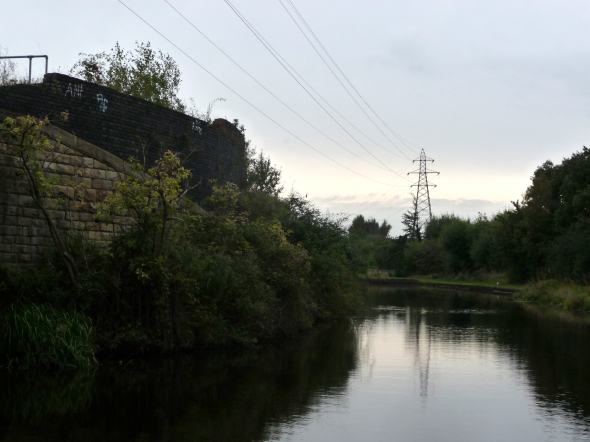
SheffieldTinsleyCanal (N Clayton) The Sheffield and Tinsley Canal, September 2012 (photograph by Nikki Clayton)

Conventionally, we use the term ‘vernacular’ to describe dialect ‘spoken by ordinary people in a particular country or region’ (Oxford English Dictionary); or ‘language spoken in one’s mother tongue, not learned or imposed as a second language’ (O.E.D.). This second definition is instructive: it reminds us that a great deal of what we call correct or Standard English, and its sister, Received Pronunciation, was a system imposed on some speakers after they had left the first world of home and embarked on formal schooling. Many books on dialect ask us to discriminate between merely slipshod or slovenly English and genuine dialect, but I think it’s fair to say that formal schooling has had a part to play in the fade-out of vernacular language in this country, especially in mainstream poetry [i]. A linguist might chastise me for…

View original post 1,585 more words

Second Glance at ‘Deaf School’ | Matthew Clegg

Brian Lewis's avatarLongbarrow Blog

A year ago, I was sitting in the audience of a poetry reading at the Ted Hughes Poetry Festival (Mexborough). The gifted poet Raymond Antrobus had just described ‘Deaf School’ by Ted Hughes as ‘an assault on the deaf community’. I listened carefully for an explanation, but I don’t recall Antrobus offering one that day. In the interval I wanted to talk to someone about this episode, but it didn’t feel right, and an opening didn’t occur. I was disappointed: discussion might have been interesting. I later discovered that Antrobus had published a redacted version of ‘Deaf School’ in his collection The Perseverance. This version has power as an act of raw deconstruction, but the poem that follows it (‘After Reading ‘Deaf School’ by the Mississippi River’) is a considerably more nuanced and imaginative riposte to Hughes. In a review of The Perseverance, Martyn Crucefix states that he…

View original post 1,381 more words

Local Distribution | Brian Lewis

Brian Lewis's avatarLongbarrow Blog

if the weight in my bag has increased
then books are migrating

‘Lines That Echo’, Rachel Smith

At the corner of Bank Street and Scargill Croft the wheeled luggage stops moving. It takes a moment for the arm to grasp this, stretching and jerking. I scan the pavement for obstructions. It is difficult, I cannot bend, I find nothing. The pavement is clean and flat. I tilt forward, the luggage tilts forward, the wheels drag, then turn, I let go, straightening, the trolley slumps back into its bulk. Three strides, stop, repeat. I see the cobbles and the long drop and some bits of Crown Court at the end of the drop and I stop again and look back at where I started, 100 feet to the east.

Always, it is slow, going from door to door. I think back to when I started, the paper round on weekdays and…

View original post 2,337 more words

Meridian: The First Cut | Nancy Gaffield

Brian Lewis's avatarLongbarrow Blog

February 2016

In her long poem Drift, Caroline Bergvall says, “Eventually one comes to a point where being lost can signal a starting point.” She refers to this process as “to north oneself”. This statement is an accurate description of my own long poem, Meridian. I am following the Greenwich Meridian line along public footpaths and bridleways from Peacehaven to the Humber in order to investigate the way that landscapes are disturbed and reordered by history and memory. Meridian is a long poem about time, walking and lines: lines, both real and imaginary, in all their forms. It is also a walking practice, walking in the Wordsworthian sense of “a mode not of travelling, but of being”—a process that implicates both mind and body on equal terms. I want the shape of the poem to be determined by the rhythm of walking—the measure of the step to shore up the…

View original post 1,499 more words