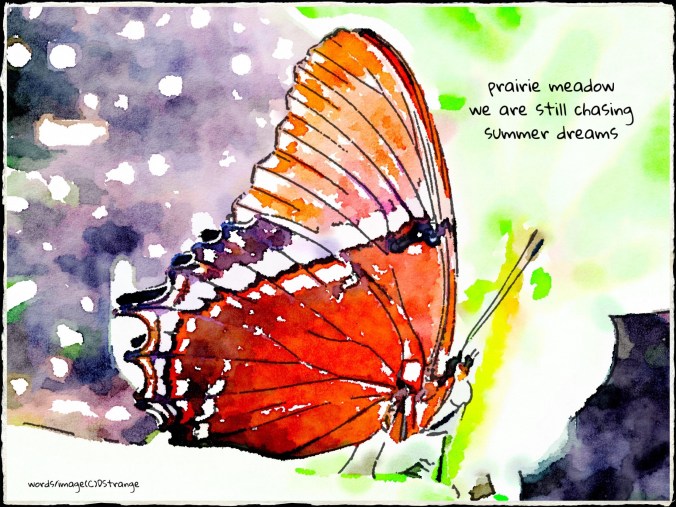
GladToCare Awareness Week poetry challenge 6th-12th July. Join Graham Bibby, Mary Druce, sonja benskin mesher, Yvonne Moura and myself. Let’s celebrate, notice the often unappreciated work of carers, both at home and in carehomes. Please email your poems to me. Monday: Home Carers, Tuesday: Care Homes Wednesday: How Do I Want To Be Cared For, Or Not, Thursday: How I Care? Friday: Who Will Be Choosing My Carehome? Saturday: ‘A day in the life of a loved one in a care home’ Sunday: Why Do We Care? Here are today’s: Wednesday: How Do I Want To Be Cared For, Or Not ?

To be cared for

If I should cease to be automotive
I would wish to be cared for by tall, luxurious giraffes
On rollerskates
holding plates
Filled with tempting treats
Sweetmeats
And fancies
Hippopotamuses wearing tuxedos
Will chauffeur me to posh do’s
Where peacocks will clear the way
As Eagles whoosh me away
To a better day
And my tall and luxurious giraffes

-graham bibby

Stay A Bit Longer

Out of the blue
holds my hand

“Stay a bit longer.”

she says. We sit in plush chairs.

“Not enough tea in this.
It’s just water.

Can you put more sugar in it?

What’s your name again?

Are you Brian?”

I tell her Brian is my dad
and no longer with us.

She holds my hand
on the table.

“Sorry to hear your sad news.”

“He was your husband for a bit.”
I reply

Our conversation amongst the loud shouts,
cutlery clang,
bang of porcelain,
clap
of cupboard doors
make her wince
in the luxury care home.

Is

I was just thinking he says
As he lies in his adjustable bed
My beautiful home in Euxton
and it comes to this.

I remind him the other homes
all stank of stale piss
and he recalls as a county heating engineer
the amount of homes that stank of this.

I need a new bed. he says
This isn’t big enough.
My feet touch the bedstead.
I tell him that as his muscles waste
He has no friction so slips
to the bottom, and has no strength
to haul himself back up.

They keep putting my bed controller

beyond reach so I can’t flatten
the mattress. I tell his key worker
to make a note in his file
that the bed controller must
hang from the middle of the bed
not beyond his reach at top and bottom.

They’ve put a duvet on my bed, again.
I want sheets I can peel off.
Biju, his key worker replaces the plastic
tubes stuck up my dad’s nose.
and says “If he’s not getting oxygen
in his lungs he gets cold.”

“And its come to this. Pass
me my bottle”, my dad says
as he rips off the duvet,
delves into his adult Pampers
and inserts his dick into the bottle.

-Paul Brookes

GladToCare Awareness Week poetry challenge 6th-12th July. Join Ailsa Cawley, Graham Bibby, Mary Druce, sonja benskin mesher, Yvonne Moura and myself. Let’s celebrate, notice the often unappreciated work of carers, both at home and in carehomes. Please email your poems to me. Monday: Home Carers, Tuesday: Care Homes Wednesday: How Do I Want To Be Cared For, Or Not Thursday: How I Care? Friday: Who Will Be Choosing My Carehome? Saturday: ‘A day in the life of a loved one in a care home’ Sunday: Why Do We Care? Here are today’s: Tuesday: Care Homes

Sixteen and broken

First job sixteen
A care home full of love
Tough love for a child to learn
Asked to go look after a woman
Glass of water in hand
The door locks behind me
And I realise what I hear
Don’t know how I know this
Primal knowledge of a death rattle

I hold your hand,tell you to relax
Your wasted form claw like hands
Grab on for reassurance
That I’m not sure I’m able to give
I don’t cry though I’m scared
I don’t run but I want to
I can’t leave you alone
You asked me not to and you know

Know it’s your time and you need
A hand,some warmth.
Until your grip slackens
Your words go,jaw gaping
No movement from your chest
You have left the room
But I always remember seeing your face
I was indoctrinated into the death
On that first day and I cried
For a woman

I’d never known
Probably for my loss of childhood
But it made me see in a cruel way
How much the sick,dying,elderly
Need a carer who cares
Who shares themselves
Taking nothing while losing
A tiny piece of themselves
Every single day.

-Ailsa Crawley

The daily challenge

I looked forward to seeing you
your honesty, bravery and talent
You’d been an artist yet now
It’s different because you’re stuck
With folk who are cared for
Just like you but you remember
Every last second of life.

While they think they live
In some glorious yesteryear
And nobody will contradict them
You’re awkward when you do
But you know all that’s gone
See what you’re in for saying
I’m going in my sleep I can’t do that
And when I find you gone.

You’d never have known it
Never said it possible
But my aged, funny, wise friend
I am bereft at losing your presence
You’re not a number
Carers care, carers love
We miss those we lose
And we know you need care

-AilsaCawleyPoetry2020

Carers by Jim

-Jim

Mary Druce (1944-2018)
(from Gray Lightfoot)
I first met Mary Druce just before we performed together for the 2015 Penzance Litfest in a show called Poetry Tapas (poetry for people who think they don’t like poetry). Mary and I were one of four poets, the other two being Katrina Quinn and Colin Stringer.

Mary, originally from Bristol, had travelled furthest to be here that day – twenty miles from Mullion, Cornwall where she was active in writing and performing plays with the local theatre group. Her acting prowess came to the fore when performing her very funny poetry imbibed with a sense of the ridiculous which never failed to make audiences laugh.

However her wonderful poem I Painted Your Nails Today, Betty lovingly invokes the bittersweet relationship of a person caring for somebody with dementia.

I PAINTED YOUR NAILS TODAY, BETTY

I painted your nails today, Betty;
The colour you like, with the sparkly bits.
And you gave me that beautiful smile,
Innocent, childlike, trusting – no Betty, your nails aren’t dry yet!
But still you hugged me.

In this pretty box of souls, the harvest of lives well spent
Now rests chintz-cushioned from this troubled world.
And the hours hang like faded apple blossom
Waiting for the wind to lift and scatter them
into the sea and beyond.
And I know that when I see you tomorrow you will have forgotten
That yesterday I painted your nails.

Betty I’m here again. How pretty your nails look.
I painted them yesterday. Do you remember?
You giggle. No, of course you don’t
And so we both giggle, and I remind her
That she’s not the only one who forgets things…
(God, I have lists all over the place!)

There are scrapbooks in your room; graduation pictures
Of handsome grandsons – all family history;
Loving children; happy snaps of Christmas;
Jolly dogs and tumbling babies.
There has been so much joy in your life, Betty,
Yet today you do not even remember
That yesterday I painted your nails.

I’ve seen the yellowed newspaper cutting, Betty,
Sliding around unglued in its silver frame.
It keeps falling over and gets covered by other things.
It says you were awarded a medal by the Queen
For work you did with orphaned children
In Penang. Another life, a world away.

You don’t remember any of it, do you, Betty?
You may not be able to talk to me but
You can sing like an angel, and know all the words.
Your sweetness shines through the silence.
And so I got out my polish, with all the glittery stuff
And once again I was humbled by the simple joy it gave you, Betty,
When I painted your nails.

-Mary Druce

Escape to the Folies-Bergere

The residents in the block are free to come and go though they pine for romance and bodies that work, and oh, how some of them like to complain – of skateboarders on the streets, the screaming seagulls, the high price of tea.
Each resident has a story. Sad and happy, and a few that don’t make sense at all.
Mrs. Upton’s husband dropped dead at the age of 45 from a ruptured artery. He worked as a signalman on the railway. She tells me this every day. Her story is not a complaint but a constant puzzle. Miss Hopkins likes to moan – the room is too hot, too chilly, the lounge chairs have been moved, someone has put a plant on top of the piano, her feet hurt so, and she was important once, and goodness what’s that seagull doing, walking across the carpet? Why can’t Miss Hopkins be more like Dora, bent in half like a broken reed but always smiling – Dora who bakes sponges, helps out at the Salvation Army and has her hair done every week.

Three o’clock on a winter’s afternoon. A lounge with easy chairs. Light music. Irene and Enid dancing, steps hushed on the pink carpet. Mr. Franklin collecting the empty cups. His face red. Hands trembling.
The room smells of biscuits and moth-balls. No one looking out at the distant sea.
‘Someone’s escaped.’ Bonnie presses a bony hand into mine.
‘Who?’
‘Dora. She had a hole in her ticket but she has no idea where to get off the bus, dear.’
‘Has she taken the bus?’
Bonnie sips her tea. ‘What’s happened to the biscuits? Have they all been eaten?’
A seagull flies past the window. It casts a greedy eye in our direction.
‘Scum.’ Miss Hopkins says. ‘Flying rats.’
Bonnie taps me on the shoulder. ‘Dora always keeps a ten pound note in her glasses case so that if she forgets her purse, she always has money.’
Someone has turned up the music but only Irene is dancing, her eyes half-closed; her petticoat slipping down from underneath her tweed skirt.
I fetch more biscuits.
Bonnie grabs a pink wafer. Crumbs fall on her lap and tumble onto the carpet. ‘Irene has such beautiful dresses.’
‘She’s wearing a skirt.’
‘I can see. My eyes are not that bad. Irene is saving her dresses because once you’ve crossed a line, you can never come back.’ Bonnie seizes two chocolate digestives.
‘Back from where?’
‘The red line, dear.’

The manager asks me to help clear the tables. We’re one member of staff short. We’re always one person short. A waltz is playing but Irene is no longer dancing. No one is dancing now.

When I return, Bonnie says, ‘She’ll have gone to Paris.’
Dora will be lucky if she makes it as far as the seafront. The wind has blown up and spots of rain are splattering the windows.
Bonnie peers at the empty plate. ‘Where are the biscuits?’
‘You must have eaten them.’
Bonnie frowns. ‘Not me. I’m watching my weight. Edward hates it when I put on weight.’
Edward died twenty years ago.
I pick up the plate and walk to the office and here is Dora – her neat grey hair encased in a plastic rain-hat.
‘I’ve mislaid my key.’ She rummages in her green leather handbag.
‘I hear you escaped.’ I take the master key from its metal box.
Dora rests on her stick. ‘Who said that?’
‘Bonnie.’
‘Goodness, I only have to nip out for milk and she thinks I’ve run away.’
‘She said you’d gone to Paris.’
‘Paris?’ Dora raises her eyebrows and looks at me as if I were crazy.

Each morning I call up the residents one by one. To check they’ve not died in the night. Or disappeared in some other way.
When Dora doesn’t answer my call, I walk up the stairs, knock twice on her door and wait.
The flat is empty, the interior doors closed. A clock ticks, my feet pad quiet on the thick carpet. Rainwater slides down the window. There’s a framed print of A Bar at the Folies-Bergere hanging on the living room wall. ‘Miss Roberts,’ I call. ‘Dora!’
One plate and a knife on the kitchen counter. In the bathroom a bar of pink soap. A pale blue flannel. On the bedroom dresser a photo in a silver frame. An elegant young woman standing in front of the Eiffel Tower. I pick it up. This is a younger Dora, younger than I am myself now.
I almost fall out of my skin. Because here is the Dora who’s eighty-nine. ‘You didn’t answer your call,’ I say. I set the photograph back on the dressing table. ‘You look happy there.’
‘I’d escaped to Paris. I was having the most wonderful time.’ A small sigh. Like a whisper. ‘How about a nice cup of tea?’
We sit in her living room with the ticking clock and the print of the Folies-Bergere. ‘Such an interesting picture,’ I say.
Dora stares at her ring-less fingers. ‘I was going to be married in Paris. I got as far as the church but he never turned up. I was jilted at the altar. Can you imagine?’
‘What a bastard.’
She giggles like a schoolgirl. ‘Yes, what a bastard.’
‘Why did he?’
‘He never said.’ She glances at the Manet print. ‘I heard he married another woman and became a serial adulterer. He wasn’t who I thought he was, after all.’
‘You never married then?’
‘No.’
‘You escaped.’ I stare at the barmaid in the Folies- Bergere. The clock ticks on. ‘She looks sad.’
‘Oh, I’m not sad,’ Dora says. ‘What an exciting life I’ve led. I’ve never been troubled by anything.’ She taps my hand with a gnarled finger. ‘Not like some I know. This place collects them.’
We laugh together and sip the milky tea and outside, a leaf falls quiet to the pavement below.

-Bronwen Griffiths

.seeds.

have you collected seeds
of many years, packed,
labelled, dated.
have you died, and left
the table unprepared.
i have them now in boxes,
a gift, from those who love.
they will bring me work, joy,
an independent air, profound words,
from those who care.

sbm.

Bios and Links

=Ailsa Cawley

was born in the East End of Newcastle. She is an avid reader and has written poetry since she could rhyme! She also writes fiction and is currently writing a psychological thriller with a paranormal twist. She is now living on the mystical Isle of Skye.

Shop Talk: Poems for Shop Workers by Tanner (Penniless Press)

tearsinthefence's avatarTears in the Fence

Since the mid-2000s, Tanner (the ‘Paul’ was dropped in about 2009) has been publishing interesting, distinctive work in The Crazy Oik, Monkey Kettle, Penniless Press, Pulsar, The Recusant and elsewhere, as well as satirical cartoons and a novel. The earlier collections include graphics and prose heavy on bodily fluids and youthful opinion, but among them are poems that shine in their energy, wit and fast-paced depictions of bus-stop-level life ‘in the autumn of our country’ in Birkenhead and Preston. This latest collection has identified the strongest stuff and honed it well. The settings are a series of supermarkets and minimarkets, and the perspective is of a low-paid shelf-stacker/ till-attendant. The management are a pain,

they’d keep you behind, unpaid
for 15 minutes a night
just because they could,

but the customers are far worse. They queue-jump, moan, spit, make personal comments, demand unreasonable discounts or refunds…

View original post 366 more words

#GladToCare Awareness Week poetry challenge 6th-12th July. Join Graham Bibby, sonja benskin mesher, Yvonne Moura and myself. I have expanded the remit to include home care. Let’s celebrate, notice the often unappreciated work of carers, both at home and in carehomes. Please email your poems to me. Monday: Home Carers, Tuesday: Care Homes Wednesday: How Do I Want To Be Cared For, Or Not Thursday: How I Care? Friday: Who Will Be Choosing My Carehome? Saturday: ‘A day in the life of a loved one in a care home’ Sunday: Why Do We Care? Here are today’s: Monday: Home Carers

When My Abusive Father Got Alzheimer’s, Spoon-Feeding Him Helped Me Forgive

Iwatch him pick up his burgundy cloth napkin, drape it over his spaghetti and meatballs, then fumble with his spoon before balancing it on top of the sealed Hoodsie cup. This isn’t unusual behavior for someone with Alzheimer’s. Still, I ask my 74-year-old father, “What are you doing?” He gives me a hollow stare, his blue eyes as dry as his memory. I unveil his plate, cut up a meatball, then scoop up a spoonful and hand him the spoon. He sets it back down on top of the Hoodsie. I pick up the spoon and offer it to him again, but he gives me that same hollow stare, and re-drapes the napkin over the plate. I feel compelled to feed him, but the aides here at the nursing home usually do that. Though I worked as a nurse for 20 years and fed lots of people, I don’t want to feed him. I consider my reluctance. Am I afraid of the final admission that the parent has become the child?

The truth is, I’m terrified of feeding my father. Sitting in the naturally-lit dining room beside him, close enough for his hand to strike my face, an image flies back to me from the past. I’m 13; my father chases me into my bedroom and grabs from the top of my dresser the skating scribe I use to carve patterns in the ice. I dart into a corner. He lunges toward me, and raises the sharp end of the scribe over my head, inches from my skull. Desperate to protect myself from his metallic rage, I curl into a ball, my face against my knees. My heart beats in stutters, in my ears, in my throat.

I don’t remember what I did wrong. Maybe I forgot to take out the trash, empty the dishwasher, neglected to walk the dog. There were other incidents of rage, but I don’t remember what my failures were that provoked my father. The most horrifying memoires are the ones that involved my siblings. I remember crying in my bedroom, listening to my father’s heavy footsteps as he chased my older sister through the house. I remember the time he bloodied my younger brother’s face with his fist. I can’t recall what they did wrong, either.

My thoughts spring back to the present. I’m almost fifty. It’s time I kick my fear of my father out of my mind’s bedroom.

He’s in a wheelchair, and hasn’t been able to walk for months. He certainly can’t chase me now. Alzheimer’s has also had a calming effect on him, or maybe it’s the medications, which are supposed to slow down the progression of the disease. Either way, he’s mostly gentle and quiet, displaying moments of delight like clapping when my husband walks into the dining room, or smiling and patting me on the shoulder when I lean down to kiss him on his mole-flecked forehead. He even shocked me once by speaking to a basket of bananas: “So beautiful.” My pre-Alzheimer’s father was a left-brain thinker, and never noticed the aesthetics of fruit. I don’t recall him ever regarding beauty at all.

In an attempt to overcome my fear and judgment, I tell myself that my grandfather is to blame for my father’s dysfunction. He verbally abused others around him. He once whipped an olive at a waitress for forgetting he had ordered his martini with no garnish. My father, who witnessed these kinds of tantrums as a child, inherited my grandfather’s intolerance and impatience.

So I take a chance. I lift the meatball-filled spoon from the Hoodsie and guide it towards him. “Here, Dad, doesn’t it look good?” He raises his hand from the table, and steadily reaches for the handle gripped between my pointer finger and thumb. My hand trembles as the tip of my finger meets the side of his finger, the spot once swollen with a knobby protrusion from his pen gripping days.

He clutches the spoon, and lifts it towards his mouth, pauses, raises it higher. It tilts to the left then to the right. I wring my hands. My teeth sink into my bottom lip. I want to help him; I don’t want to help him. His jaw juts forward, his neck veins pulsing. He eases the spoon closer to his mouth. I hold my breath. He bites down on the crumbled half meatball. He chews, swallows. I lean back. Breathe.

Again, he sets his spoon down on top of the Hoodsie and drapes his napkin over his plate. An aide with generous hips dances a little sashay over to our table. “Hey, Joe,” she says, rubbing my father’s back. “I thought Italian was your favorite. When you’re done, you can have all the ice cream you want.” He smiles at her. I smile at her too, comforted by her recognition of what he enjoys most: Italian food, back rubs, and ice cream.

“Come on, Joe. Here.” She sits beside him, and ties a clean napkin around his neck, as if he’s about to eat a lobster. “We like to keep his clothes as clean as possible,” she says, looking directly at me. I nod, but feel as if I’m being scolded for my oversight. She takes the spoon, shovels up another half a meatball and tenderly slips it into my father’s wide-open mouth.

“See, Joe. Isn’t that good?” After he swallows, she wipes the corners of his mouth with his napkin. “He’s okay,” she assures me. “Sometimes he just needs help. You can feed him.”

My stomach does a somersault. What would she think of me if I tell her I can’t, or won’t, feed my father? I’m embarrassed to tell her that I’m terrified of doing so. I could lie and say that I don’t feel qualified to feed him. But what kind of qualifications does one need to feed your own parent?

“Go ahead,” she urges. She hands me the spoon. And walks away.

I look at my father, who’s eyeing his hand resting on the table, the one with the knobby finger protrusion. He hasn’t gripped his pen in a year. As a savvy businessman, he filled his yellow pad with the latest land-for-sale deals, the highest bond interest rates, and upcoming foreclosures. I wonder if my father has forgotten about his pen – his blue, ballpoint Bic pen.

He slides his hand towards mine also resting on the table, and touches it. He squeezes, as if he’s trying to tell me something.

“Dad, you want more?”

He nods.

I gulp down my fear, and mix some sauce with crumbled meatball and spaghetti, scoop it up, then slowly raise the spoon to his mouth. He opens it for me, just as he did for the aide. Quickly, I slip the food off the spoon. He chews, swallows, rubs his belly.

“More?” I realize that I’m not asking him if he’s hungry; still wary, I’m asking for permission to feed him.

Again, he nods, and opens his mouth.

Again, he chews and swallows. I ask if he wants more, wait for him to nod, then feed him another spoonful. This exchange continues a few more times before he reaches for the Hoodsie, and slides it towards himself.

“You ready for ice-cream?” I ask.

A smile spreads across his face like a sunrise. In a matter of minutes, we have choreographed a new father-daughter dynamic.

I visit him again on Thanksgiving. As I walk into the dining room, I rehearse the steps in my head, hoping my tying of his napkin bib around his neck is enough of a cue that our dance is about to begin. But he’s having a good brain day, and he’s mostly able to feed himself the ground turkey and sweet potatoes. When he tires and doesn’t have the strength to lift his glass of milk, I lift it for him. “Here, Dad, you want some milk?” I bring it closer to him, and he grabs it. Slams it against the table. I startle, skid backwards in my chair. He’s over-stimulated, I think. Frustrated. He lets go of the glass and looks at me, his eyes wet and crinkled at the edges. Our faces, and bodies, are capable of saying “I’m sorry.”

Another piece of history comes flying back to me. It’s six months earlier, and my father is hospitalized for abdominal bleeding. I’m standing over his bed, holding his hands so he doesn’t yank out his IV. Completely out of context, he says, “It’s not your fault, Melissa.” I accepted this as an apology for all the times he hurt me. The language of genuine contrition is as diverse as each of our regrets.

I give up on the milk and try to feed him. He cooperates on the first bite. I try again – another spoonful of Thanksgiving. He chews, swallows. This time he burps. We giggle. When his eyes droop, I lead the next dance step. I untie the napkin, wipe his mouth clean – and rub his back. His head falls forward and he begins to doze. In a few seconds, he opens his eyes and lays his hand on top of mine. I massage the smooth spot on the side of his pointer finger until he falls into a slumber.

As I watch my father sleep, I know it is his utter helplessness that has made it easier for me to want to be with him, to deeply care about him, despite his past hurts. That’s exactly what I’ve needed for so long – a father I no longer fear, but one who unconditionally lets me into his vulnerable world and gives me the chance to begin to forgive him.

=Mekssa Cronin ( Previously published here: https://narratively.com/when-my-abusive-father-got-alzheimers-spoon-feeding-him-helped-me-forgive/

Mother doesn’t know who is wiping her mouth.
Mother doesn’t know who is changing her wet sheets.
Mother doesn’t know who is cooking her favorite dish.
Mother doesn’t know who is trying to hold her hand.
Mother doesn’t know who is reading to her.
Mother doesn’t know who is in her wedding picture.
Mother doesn’t know who is the baby in the bassinet.
Mother doesn’t know. Mother doesn’t know.
Mother doesn’t know who is mourning her.

-Elizabeth Moura

The Day My Grandad Disappeared

A knock at our front door. A Doctor has brought Grandad home. Grandad has gone into a Doctors believing he has an appointment.

Grandad goes for a paper, for the footie pages. As he does everyday, dressed immaculately, jacket, waistcoat, tie, black shoes shining.

Nana and he arrive a couple of days ago to help Dad again in caring for Mam, who is fighting Breast Cancer. Always a quiet man. Keeps himself to himself. Even when I am a child and we go to see the latest James Bond he says very little. He talks footie but I am not into that. He does Littlewoods Pools and Spot the Ball.

He comes in from sorting at the Post Office, walks through the lounge door, bangs the door with one hand as his other hand grabs his nose and laughs. He is good, we laugh too.

Grandad is very late. Grandad left three hours ago. Nana wants to call local hospitals fearing he has been knocked down. Dad drives around the village, pops into the newsagents. Grandad has not bought his paper.

My grandad suffers illnesses. Among my late Nanas belongings I discover a note he has written.

Ellesmere Port.    Pneumonia May     1942 Dec 1942

When I had been in the army a year my health began to deteriate  I had Pneumonia twice in six months The last time I almost lost my life They sent for my wife and sat with me alnight  When I was twenty two I had mumps in hospital again I was never rid of styes in my eyes having to go in hospital again as Both my eyes closed. Had pains in my Back although I didn’t go in hospital I was put on light duties for a fortnight When I was on leave I saw my own doctor who gave me injection in my Back I have a disabled Badge in my car and  am under hospital care as an outpatient for my stomach another specialist for my chest.

The note appears to have been written sometime later, perhaps as evidence for a new doctor.

In a 1993 poetry anthology ‘Rats For Love:The Book’ my poem ‘Bait’ describes the banter between Nana and Grandad. It describes how she felt about his forgetfulness before he was diagnosed:

Married forty years to the same man. Ate with her mouth open. Talked with her mouth full. Masticated his forgetfulness through two romantic lovers between the pages. Cut with some bloodless cold steel then tongued from cheek to cheek morsels of his past with her: Who lost his false teeth … … Ieft his pipe on the bin lid outside … kept new clothes unwrapped for years … did not like driving in the dark … ? She levered chewed events from good teeth, pushed them down to the acid below through shredding walls to feed blood and bile that formed into words goading him to grab the bait. And when he did she hauled him in to be filleted, iced and sold to others as good quality food to be eaten.

The title is a play on words that is not made obvious in the poem. My Nana is born in Sunderland and the North East dialect word for food is ‘bait.’

Especially after Mam dies of Cancer, Grandad gradually forgets how to care for himself. Nana looks after him until it gets too much for her too.

Nana buys packs of incontinence pants as Grandad loses control of his bowels. She puts new ones on, bins the old. Grandad does not help, as on one of many occasions he gets into bed, soils himself, takes off the pants while in bed, and throws them on the bedroom floor soiled side down.

A large man Nana has to bath him, then try to get him out of the bath when he will not move.

He has spells in local care homes, gradually stays longer and longer. A respite for Nana.

Nana ensures he has what she calls ‘decent’ clothes in his suitcase, each piece of clothing painstakingly labelled with his name. When he returns home she is forever phoning the homes about someone elses clothes in the returned suitcase. On one occasion, Grandad walks five miles from Care home to Nana’s.

Last time I see Grandad my wife and I treat both him and Nana to a Sunday pub lunch at Knox Arms. A  stone built pub about two miles from Nanas.

Nana dresses Grandad immaculately, razor sharp trouser creases, spotless shirt, waistcoat, matching tie  Throughout, our visit Grandad never speaks. We order a Taxi to the pub. At the Knox, Nana tucks a paper napkin into Grandad’s shirt, and when it arrives cuts his roast dinner up for him. Nana talks throughout about daily problems with Grandads incontinence pads and staff in the homes, the uselessness of Social Services. On the walk home I notice Grandads waistcoat and shirt gravy stained and ribbons of carrot cling to the underside of his lip.

I search his eyes for recognition of who I am, from the time I say hello to the time I say goodbye to him sat in his favourite chair at Nanas. My Grandad has disappeared..</

-Paul Brookes

.seeds.

have you collected seeds
of many years, packed,
labelled, dated.
have you died, and left
the table unprepared.
i have them now in boxes,
a gift, from those who love.
they will bring me work, joy,
an independent air, profound words,
from those who care.

sbm.

Until forever

I have slipped, I fear.
Go to touch the burning hot
The scalding pot
I know no fear
Her hand on mine
Our fingers intertwine
A Calming tone
Can’t leave you alone
Not now or in the morning glow
Climbed out a small window
And off to town I go
She was woken by the crackle
Of a police radio
Can’t go on like this
This, incessant raging decline
Painted the clothes on the washing line
Make them look clean
Drive her to distraction
What’s this for?
It’s the toaster
I know that!!!!
But what, is, it, for!!!
They sit on the floor
And weep for what was before
And weep for what lies before
And then
He didn’t notice her gone
But when they played her favorite song
His foot tapped along
Inside
Dancing
With his bride.

-Graham Bibby

How Much

Time has it been?
Has it been
So much time?

I have left me.
No, he has left me.
No, they have left me.

I’m single, aren’t I?
I feel I’m single.
Are you here
For a date?

Are we staying long?
Do I have a room.
This is my house.
Is this my house?

I recognise that furniture.
It’s mine. Have we just
Moved in ? Why do you
Make me confused?

Forty two years
And now he’s left me.
Twenty six years
We’ve lived here.

I thought we’d just
Moved in. I don’t
Want strangers
In my house

Eyeing up my furniture.
Carers are strangers.
I don’t know who
Everyone is.

-Paul Brookes

Bios and Links

-Elizabeth Moura

lives in a converted factory and works with elders. She has had poetry, flash fiction or photographs published in online and print publications Human/Kind Journal, Rose Quartz Poetry Magazine, Hawk & Whippoorwill, The Cormorant, Radical: A Lit Zine, Chrysanthemum, Occulum, Flash, Paragraph Planet, and Flash Fiction Magazine. On Twitter @mourapoet, Instagram mourathepoet and mourastudio.wordpress.com.

-sonja benskin mesher

born , Bournemouth.

now

lives and works in North Wales
as an independent artist

‘i am a multidisciplinary artist, crafting paint, charcoal, words and whatever comes to hand, to explain ideas and issues

words have not come easily. I draw on experience, remember and write. speak of a small life’.

Elected as a member of the Royal Cambrian Academy and the United Artists Society
The work has been in solo exhibitions through Wales and England, and in selected and solo worldwide.
Much of the work is now in both private, and public collections, and has been featured in several television documentaries, radio programmes and magazines.

Here is my interview of sonja benskin mesher:

https://thewombwellrainbow.com/2018/10/16/wombwell-rainbow-interviews-sonja-benskin-mesher/

-Paul Brookes

is a shop asst. Lives in a cat house full of teddy bears. His chapbooks include The Fabulous Invention Of Barnsley, (Dearne Community Arts, 1993). The Headpoke and Firewedding (Alien Buddha Press, 2017), A World Where and She Needs That Edge (Nixes Mate Press, 2017, 2018) The Spermbot Blues (OpPRESS, 2017), Port Of Souls (Alien Buddha Press, 2018), Please Take Change (Cyberwit.net, 2018), Stubborn Sod, with Marcel Herms (artist) (Alien Buddha Press, 2019), As Folk Over Yonder ( Afterworld Books, 2019). Forthcoming Khoshhali with Hiva Moazed (artist), Our Ghost’s Holiday (Final book of threesome “A Pagan’s Year”) . He is a contributing writer of Literati Magazine and Editor of Wombwell Rainbow Interviews.
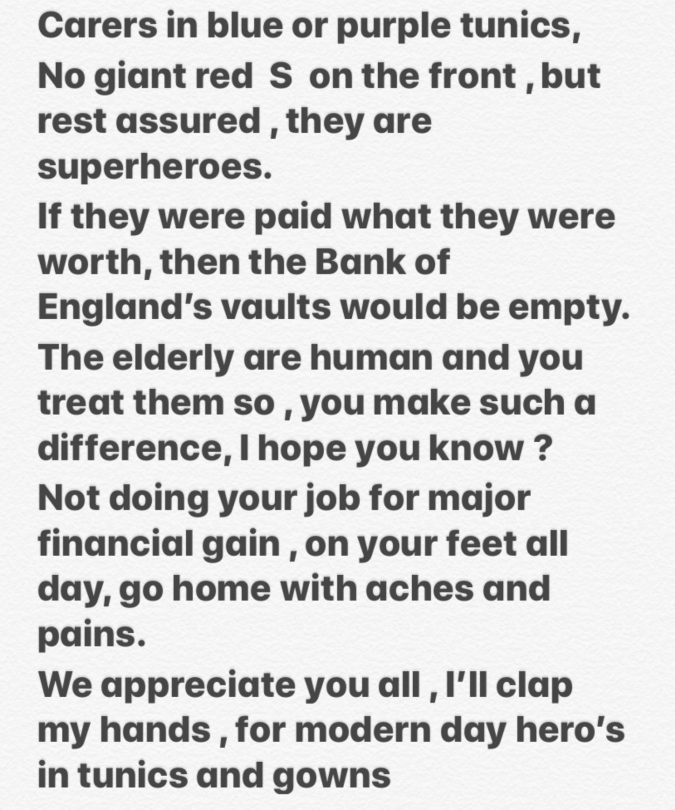
A very quick poetry challenge. Blink and you might miss it. Every Sunday join Sue Harpham, Rachael Ikins, Margaret Royall, Jane Cornwell, Anthony JP, Bronwen Griffiths, Ailsa Cawley, Christina Chin, Kushal Poddar, sonja benskin mesher, Fi, Spangle McQueen, Linda L. Ludwig and myself. Send me your wildflower poems #Wildflowerhour this Sunday and I will post them between between 8-9pm UK time. Artworks welcome, too.

To Each His Own

The gardener looked at the flower
Thinking how pretty it would look next to her roses

The mathematician looked at the flower
Noticing its unique symmetry

The Christian looked at the flower
Observing God in it

The environmentalist looked at the flower
Concerned for its future

The teacher looked at the flower
And devised a lesson for her class

The businessman looked at the flower
Calculating how much money he could sell it for

The criminal looked at the flower
Plotting to steal it

The archaeologist looked at the flower
Longing to dig it up to see what was in the earth beneath

The artist looked at the flower
While painting a beautiful picture of it

The lover looked at the flower
Wanting to pick it for his mistress

The poet looked at the flower
And wrote this

-Neal Zetter

Pressed flowers by Sue Harpham

-Photo by Sue Harpham

Pressed flowers
Formed an army.
A bonanza troop
Patrolling the field.
Harmoniously.
The only noise
Was the wind.
Blowing abundantly
Like ripples of ghosts
Soothing the land
With their chants
Of peace.

-Sue Harpham

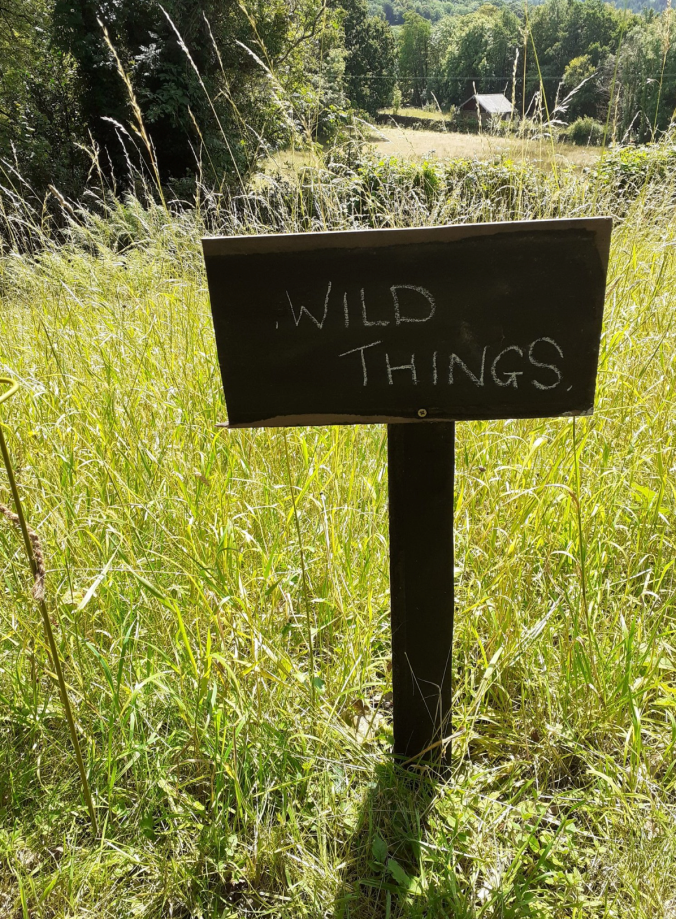
Wild Things by sonia

Summer Meadows

Cooperation is the buzzword;
harmonious consensus.
Opulent symphonies with
Nature the sentient conductor.
Poppy, ranunculus and kingcup
rising and falling in gentle cadence
with cornflower, salvia and forget-me-not;
a fragrant patchwork in the sweet grass,
like an eco rainbow, tipping the earth,
radiant with inner beauty.
A ballet of delicate blooms
dressed in powder-puff tutus,
thoughtfully choreographed,
dancing to the tune of sun, wind and rain.

Wildflower meadows echo the vibe
of cottage gardens in a bygone age….
Green spaces flourishing
with aphids, beetles, butterflies,
moths and caterpillars,
bumble bee numbers multiplied tenfold –
that gentle, hypnotic hum reassuring
as they delve in the throats of foxgloves.
The project enhances both water and soil,
a winning outcome for biota.
This wild beauty brings closer
the goal of a greener future.
Just stop and look!
Paradise stretches out
before your eyes,
a triumph of rewilding.

-Margaret Royall (from her forthcoming collection Practising Floriography)

After the Long Dry Spell, New Dress

Last summer I rediscovered wild flowers.
Alfalfa, butter ‘n eggs, milkweed, clovers of
all sizes and sweetness, many spontaneous
bouquets dropped petals on my table.
All those years of drought and concrete.
Forgotten.

This year I am the bud. I remember my love
of swirly skirts, the kind when you twirl
flows out from your waist. Old-fashioned,
Fairy clothing. I always used to garden
in embroidered cotton dresses, comfortable
through heat waves and washable.

Long ago my husband would gift
me flowers, more fragrances, the better.
He would slide his hands up my calf’s silk,
tease dress hems, my thighs when I was lying
in our hammock beneath blue spruce, sipping champagne,
or reading.

There was always celebration; bouquets, mysteries,
wonders-revealed; a slender stem, a woman’s
leg, the sculpting fingers of a man defining it,
firefly-lit dusk. White skirts glow in the dark,
opening like petals of some nocturnal
luminous flower.

-Rachael Z. Ikins

Waiting for Bees

Crocus fingers snow-tatters.
Sun coaxes purple, orange.
Cups brim, succulent saffron
offered to the sky.

Earth rotates.
Shadows wake.
Winter’s breath reminisces
with evening.
Flowers pack their cups,
pollen tucked.
Heads bow.
Darkness spits
snow.

Day after night after
day they set their table, cloth ragged, main course
glistens gold,
seven days.
They wait for bees

who never come.
Wilt, heartbreak-fists’ curl
and starvation,

swallowed by Earth’s dry
empty mouth.

-Rachael Ikins

Ode to a Cactus Flower: Calling Me

Petals call my fingers,
mouth, stroke against
my cheek.
Cool silk alien.

Silence roars magenta
ecstasy, each dancer
swirls a wider skirt,
hides my face, those
taffeta folds.

Lavish.
Luscious.
Lipstick-slathered-on-glass, you
wester, melty
sunward.

Palm-stuck skin, my fingernail worries one spine, painful pleasure.
Trickling droplet, my blood’s
color,

your velvet throat.
Swallow
me.

-Rachael Ikins

Meadow

Such loveliness is a summer meadow
What need for rubies, emeralds or gold?
Overflowing with red clover and vetch,
A greenness of grass,
Sprinklings of buttercups and trefoil
This is the meadow.
Glitter of early dew
A thousand diamonds
All jewels are here
The amethyst of orchids,
Dock flower corals
A rose quartz of ragged robin
And six butterflies blue as sapphire
Such loveliness is the summer meadow

I want to write about
Washing on the line, all blue
The colour of mallows, pale pink
The smell of salt in the air

The summer verges
Throwing up poppies, long grass
And an old fat tyre

Walking through wet grass
Blinded by the buttercups
A long stormy night

six spires of foxgloves
edging the summer meadow
dancing, close to grass

in the embroidery of the meadow
the tiny flights of damselflies
kingfisher blue

=Bronwen Griffiths

Wildflower

They call you a weed,
Unwanted,
Growing
in unwelcome places
Between concrete blocks,
You blossom,
In overgrown fields,
You bloom,
Your petals
A riot of colour.
Untamed,
You may not be cultivated,
But you are a wonderful
Wildflower.

-Anthony JP

ChristinaChin_white tulips_Wombwell Rainbow[85712]

-Christina Chin

Wildflowers of The Dry Well

Dawn scatters its dandelion self amidst the clouds. Not your song, you say nay to the music stuck in your head. Not your song because this one your mother used for sending her babies to sleep. Her night cooled around the dry well agape. Still people hear wildflower voices from the well. You want to go back to sleep and live, but light strikes you awake and deceased.

=Kushal Poddar

Jane Cornwell Wildflower 2Jane Cornwell wildflower 1

-Jane Cornwell

Lesser Celandine

One celandine opens her throat
eight-petals to a sunbathed sky

then another and another butter yellow
butterfly yellow a glistening dawn

a lawn so full no foot no mouse or bee
can pass between their heart-shaped leaves

leaves some tear out but here they stay
so I can swallow in the yellow day

drop by drop them on my tongue
sing their tiny yellow song.

-Kerry Darbishire

Flower Faery

Foolishness and madness
i did not surrender
Reality finally dawns
ruling with a daisy crown
and a hyacinth sceptre

#SlamWords
-Fi

Linda Ludwig Wildflower

-Linda Ludwig

Paperskin Wild

-Linda Ludwig

Periwinkle Perhaps

The complexities of the wildflower
I have no name for
occupies this Sunday.

One bird perchance, may be an insect,
has conspired this floret
to efflorescence on my monsoon staircase.

The petals stare at my chance door,
church door for the orphan.
Breeze bells a mellow music.

Sometimes a person yeilds to cruelty
because he desires to be kind
and cannot bear his angel incarnation.

Some Sunday I feel lazy, call my mom,
and as usual her number
reallocated to a new user blasphemes.

This Sunday I wants to weed.
Destroy something I have nothing against,
except the lifespan of a wildflower weighs less
than the impression it leaves on my conscience.

-Kushal Poddar

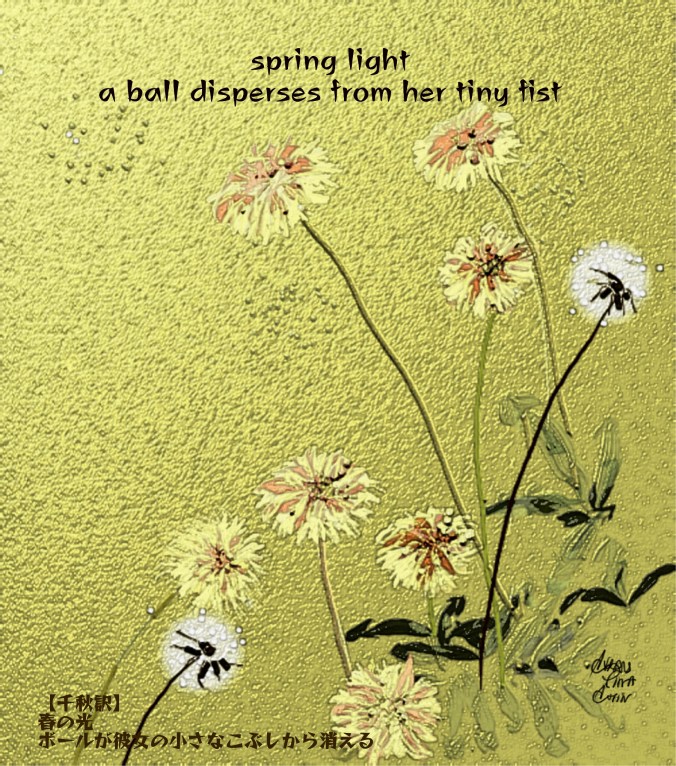
#Wildflowers Spring Light by Christina Chin

spring light
a ball disperses from her tiny fist

【千秋訳】
春の光
ボールが彼女の小さなこぶしから消える

-Christina Chin

garden seat
and sweet pea perfume
ploughman’s lunch

Editors Hidenori Hiruta, Ben Grafström and Team.

https://akitahaiku.com/serow/

-Christina Chin

caravan song
dandelions scatter here and there.

クリスチアン チン(インドネシア)
隊商の歌
たんぽぽはここにもあそこにも四散する
Published in Spring Saijiki 2019

finger painting red poppy fields
Tuscany sunrise

トスカーナの日の出指で描く赤い芥子  (tr. 千秋)

poppy fields
across the grasslands the timbre of sitar

シタールの音色横切るポピー畑 (tr. 千秋)

「シタールの音(ね)草原をこえ芥子畑(sitar no ne sougen wo koe keshi-batake) 」(Christina Chin, tr. N.U.Hanseki)

wind coursing
through red hills
sweeping poppies

the random trills
of violins
red poppy fields

spring fields
the fragrance of
wildflowers underfoot

wildflowers…
in my hand the glint
of morning dew

a scent of bluebells
in the baby’s clutch
wildflowers

-Christina Chin

Garden Seat Christina Chin

garden seat
and sweet pea perfume
ploughman’s lunch

Editors Hidenori Hiruta, Ben Grafström and Team.
Serow

-Christina Chin

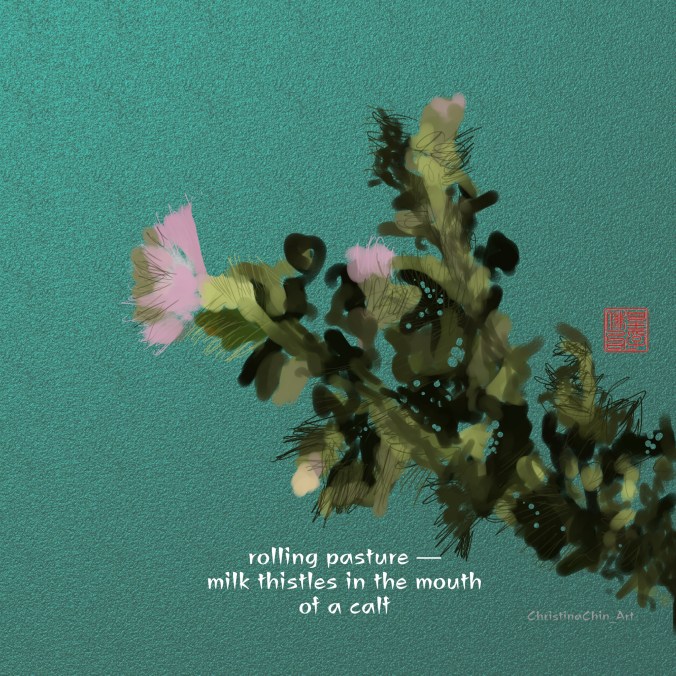
Rolling Pasture Christina Chin

HAIGA

rolling pasture —
milk thistles in the mouth
of a calf

Fresh Out: An Arts and Poetry Collective.
Editors Eric Lohman and Alvah Allen.

-Christina Chin

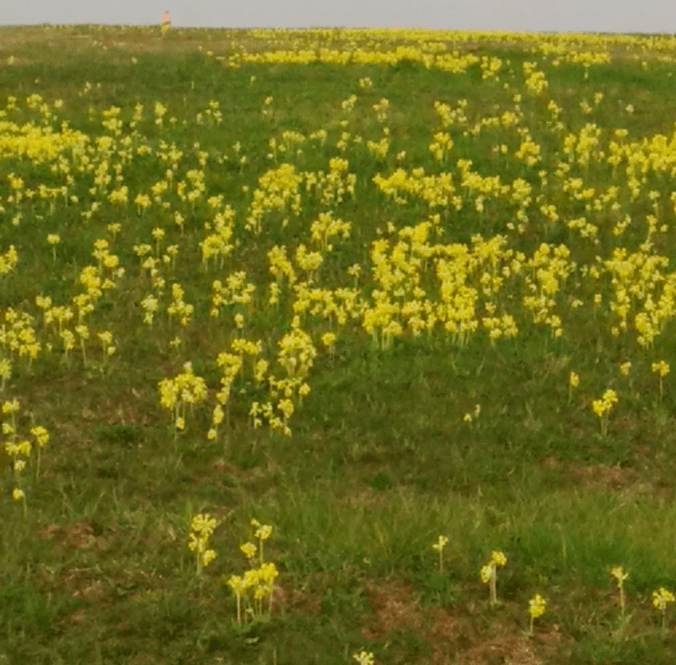
Cowslip

Green rosettes, crinkly, tongue-like
leaves lick the ground.

Tube-like, egg-yolk yellow flowers
cluster at ends of tall, green stems.
Cowslip ball

“Tisty tosty, tell me true,
who shall I be married to?”

Throw the balls foe an answer.

-Paul Brookes

Viola Tricolor

Ophelia says:
There is pansies, that’s for thoughts
And I’ll only smile as I think of you.

Some call her
Heartsease
Heart’s delight
Tickle my fancy
Jack-jump-up-and-kiss-me
Three faces in a hood
But to me she’ll always be
Love-in-idleness.

The hermaphrodite’s draught
Dripped on my droopy eyelids
And I’d left the antidote
Dormant
In the honey pot.

I dreamt of pollination by bees.

And so
Accidentally shafted
By Cupid
I could but love you, my child.

The imperial votaress
Averted her gaze
And walked on
Unblemished
Whilst I sat up to rip
Bedlamish wisps
Of rue flowers from my hair.

-Spangle McQueen

Daisy Queen

Driven to distraction
the daisy Queen
dressed in scattered silver
and silk stockings
dancing with
her dandelion king
to be with him
everywhere

-Fi
#SlamWords

..bees and honey..

lean on the old fence,
watch the bees bumbling.

there are wild flowers here
and brambles.

she cuts those mid afternoon, makes
a tidy pile to clear later.

it is the thirteenth, we are quite lucky.

the bite comes up big and red, swollen.
remarks are made, feeling odd. sleep early.

bees and honey; other insects.

-sbm.

..hedgehog..

have been out looking
for you
amongst the knapweed
amongst the flowers

cut those brambles that may stick
to your prickles

we left it longer
the tidying this year
so as not to be a slave to it
and rewards are endless

good it has become a fashion with the climate
changing
it always did make sense to me
others thought not in the past

we have a a past, it keeps reminding me

rewilding.

=sbm

..the garden in montgomery…

i like the look of wild growth
i like the old garden in montgomery
although my passenger declared it a mess
i worked with a girl this year who studies
wild things, sustainability
a difficult spelling
she says this wild way is best
modern
culture has nutured tidy in the
minds
though i notice a surge in love
for wild flowers
to resist the mowings along the roads
yesterday i left the tall grass and watched
the butterflies there
my daughter gave them names
while indoors again find
no observers book of moths
or butterflies
now back on line
i may
ebay
did the bird survive?
we must try to save the trees
we must try to save it all
regards
have a pleasant day

-sbm.

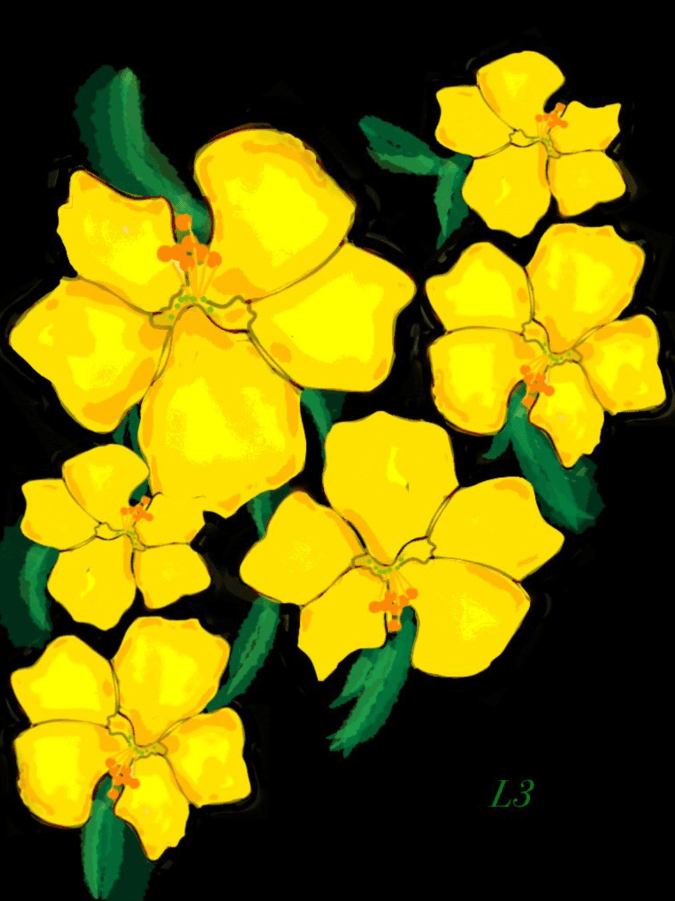
Tatooed Flowers

-Kate

Trills On One Shamrock

Rain curses the diet Coke can
you left on your porch, tilts it, and
a puny frog reveals its dark green,
so dark that you mistake it for black
the way you see monsoon firmament,
and it is never black. You do not know
the names of those shades. Sun goes
into the palliative care. A Parkinson’s ray
trills on one shamrock. The noise
tastes like early morning robusta.
You do not know what these mean.

-Kushal Poddar

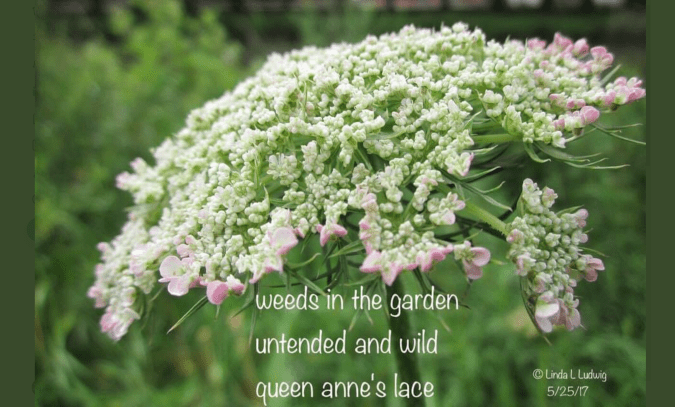
Linda Weeds in the garden

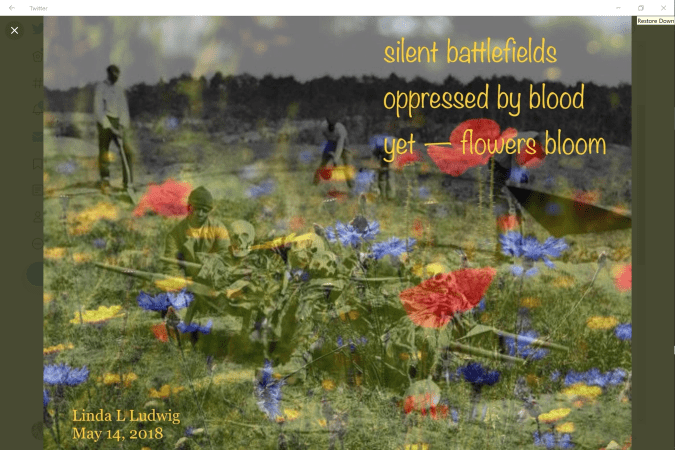
Linda Silent battlefields

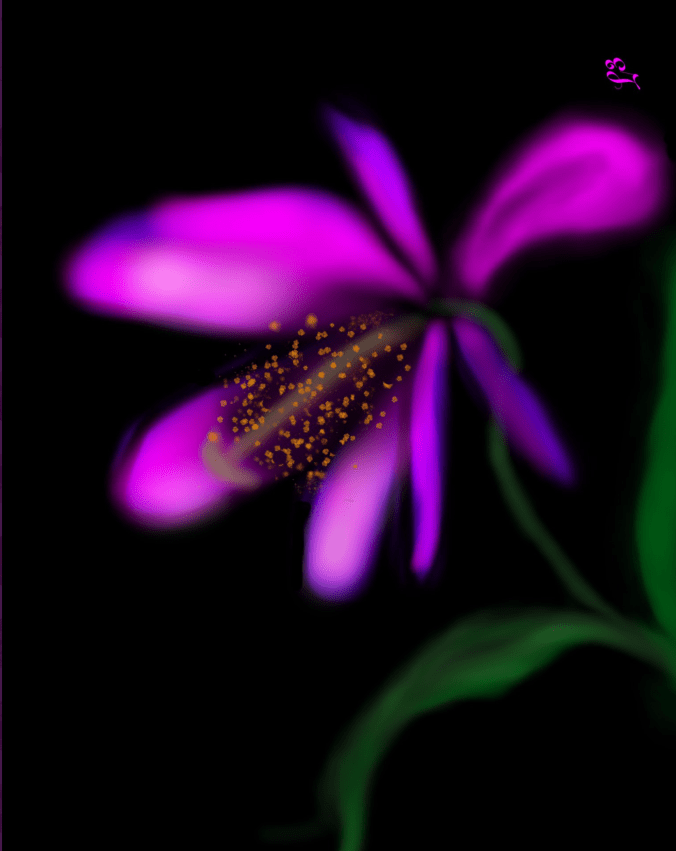
Linda Purple flower

Green flower Linda

-All art and poetry by Linda Ludwig

Wildflower inside,
Wildflower out.
Many other wilds in their own
Boxes, living their own lives.
Around this another
Much larger box,
With all wilds together.
They work to lift the lid.

-Lydia P. Wist

The field awash with golden yellow
Wild buttercups take back their space
Amethyst thistles trim the picture
The poppies wild, bend to the light
All with hearts shimmering
Towards the benevolent sun
Glistening on raindrops that look like diamonds
A true garden of jewels

-AilsaCawleyPoetry 2020

The Primrose

Never a single flower
I always gather thirteen
or more in a bunch,

On May Day, I hang
small primrose bouquets
over my windows and doors

Allow only white magic in.
Braid it into my horses’ manes,
plait iballs to hang
from the necks

of my cows and sheep.
I know you, Hedgewitch
inhale your primrose oinment .

You rub its oil on my eyelids,
so I can see you better.
We drink Primrose wine
I gift you primroses,
Never trust what you say
or do. Perfume is fickle.

-Paul Brookes

Bios and Links

-Fi

Fiona H lives in Ireland and is rather shy so would prefer to let the writing do the talking. She is a former Humanities student, now she studies humanity through creative writing.

Taking the Next Step

wendycatpratt's avatarWendy Pratt

coffee-notebook-pen-writing-34587

Last week I finished a decent draft of the first chapter of a creative non fiction book I’m writing. It was an intense experience, partly because of the content, partly because I’m slightly out of my comfort zone with prose, but I know I need to push through that to reach the place that I want to be. I had been shortlisted for the Alpine Fellowship Writing Award which was a huge deal, it’s very prestigious and the prize money would have meant having the time to write, without distraction. I can’t really emphasise how important that is for a writer. Anyhoo, I did not make it past the shortlist and though I was obviously disappointed, I had a lot to be happy about. There were 2000 entries and I made it to the last thirty, with an essay which I’m hoping will form a chapter of the book later…

View original post 757 more words

#NationalMeadowsDay poetry challenge. Have you written a poem about meadows? If inspired please join me, Lucy Furlong and David Hill in celebrating our countryside. This is a one off challenge. All poems will feature on my website. Artworks welcome too. DM me for my email address

WP_20160527_12_48_00_Rich (2)_eWP_20160527_12_48_00_Rich (2)WP_20160808_13_04_38_Pro (2)WP_20160808_13_08_30_ProWP_20160808_13_10_58_Pro (2)WP_20160808_13_11_21_Pro

The flower meadows at RSPB OLd Moor

-Paul Brookes

Debbie Strange Prairie Meadow

“prairie meadow” – haiku, Frameless Sky 12, June 2020

the meadow
astir with blue skimmers
their wings
darning these placid days
into our histories

tanka published in Ripples in the Sand, Tanka Society of America Members’ Anthology 2016

=Debbie Strange

I Will Not See the Fields of My Childhood Again

Days rolling in unmown meadows,
lady’s smock, bedstraw and saxifrage

the tumbledown barn and ash
we climbed in – or fell out of

the gooseberry which grew
through an antique plough,

the nosy cows
who peered over our wall

tongues lolling and licking,
huge brown eyes

with too-long lashes,
begging you to love them

-Lauren M. Foster

LucyFurlong_OTF-Map-HR[84170]Lucy Furlong OTF_6AcreMeadow_walk2015_resize[84169]Lucy Furlong OTF_Ophelia_2014_resize[84168]

Six Acre Meadow

I

It was just ‘the field the other side of the second bridge’
which led to nowhere but, here, looking across the river,
you knew the manor house was there,
you could hardly see it through the trees then, maybe elms,
couldn’t see it when you went up by the church.

The old barn was on the right hand side below the church
at the bottom of the manor house land, ramshackle unromantic
surrounded by scrub but attractive for its intact hayloft
you climbed through a barbed wire fence, and climbed up
thrilled in successfully trespassing the forbidden space

Four of us got caught once by a man holding a shotgun.
We claimed to be from Worcester Park to throw them off the scent,
some of the other lads came up the hill, saw us being led away,
including Grenville Wiltshire- The Loudest Voice in Tolworth
“They’ve caught Nick, Roger…”

Took us up to the house and gave us stern warnings,
threatened us with the police.
His mother, we assumed, told us not to be cheeky
and eventually we were sent on our way
exhilarated- we’d got away with it.

II

It was just ‘the field the other side of the second bridge,’
somewhere we drifted to, ended up at, randomly,
not a destination, a ‘nothing’ space.
Once, the ice was thick enough across the field
to break out a chunk for a puck, hit with large sticks,
battering up and down playing impromptu ice hockey

Today the ice looks in broken panes,
jagged amongst freezing water and blades of grass,
welly-deep and no gloves you fish tiles out and squint
through them, delightedly, while around your feet
there is a frozen clatter chime of breaking sounds.
You want to take this glassy treasure home.

III

It was just ‘the field the other side of the second bridge’
but all the time this place had a name,
Six Acre Meadow,
the west bank of the Hogsmill,
at the end of the Manor House garden,
location of Millais’s painted Ophelia.

I walked along this bank one day with Gran and my sister,
the dark shaded banks after the second bridge,
always looking for that unseen space, that
place out of sight, always near, following her
as she looked for that unseen space, that
place out of sight, always near, immortalised.

-Lucy Furlong

David Hill Prose Poem

David Hill “celebrates the sensuous side of Hay Making”

1. To Burn Brash

Sat back barked.
Small insects crawl
down tree stretched above
inhabit hair
worn gloves
bruised brashed branches

Breathe wet peat,
damp soil, leaf decay,
autumn dead leaf dance,
spring bluebell wend
summer sacred stainglass
canopy sunshaft play
winter heavesnow clear paths

Sat back barked
canopy leaf horizon
floats shimmers

Calm

2. Our Wombwell Boxed

Lift small boxes wooden lid smell
broadleaved woodland
before rail/road
Press plastic button hear
Skylarks, Meadow Pipits, Woodpeckers,
before rail/road.

Press plastic button watch
Videowalk ancient Beech, Oak, Birch
before rail/road.

Electronic ringtone.

We would like to advise all visitors
The museum is closing soon.
Please exit through main door.
We hope you have enjoyed your visit.
Please come again.

-Paul Brookes

Bios and Links

Lucy Furlong

is a writer, poet and walking artist whose work has been published widely, exhibited nationally and broadcast on BBC Radio 4. Her poetry map Amniotic City was featured in The Guardian and poetry from her Over the Fields map is taught as part of the Open University MA in Creative Writing. She is currently living in Wexford, Ireland. Follow her on twitter @lucyfurleapz

..day 113..

Sonja Benskin Mesher's avatarsonja benskin mesher

..day 113..

dogs.

i miss her eyes, her looking up, back at me
the sound of her running the stairs scratching the door when it slammed shut in the wind

so i imagine your dog
from the description you gave

me

got no walk yesterday for heavy rain
nor today by looks of it

things come together
things are changing

rattles the brain
until things drop into place
and we move forward knowing

i am a fortunate even though

you made a positive change 
i find my words come the same

now with one finger
the pointy one
the one i point with

you know on the bus with her
then
at horses, helicopters and planes

dogs

now I indicate invisible with my mind
unless I forget

though we won’t go on buses now

i count in the last day tomorrow 
for although we must stay safe
i do not…

View original post 31 more words