Wombwell Rainbow Interviews: Antony Dunn

Wombwell Rainbow Interviews
Antony Dunn

Anthony Dunn

was born in London in 1973, and now lives in Leeds. He won the Newdigate Prize in 1995 and received an Eric Gregory Award in 2000. He has published three collections of poems, Pilots and Navigators (Oxford University Press, 1998), Flying Fish (Carcanet OxfordPoets, 2002) and Bugs (Carcanet OxfordPoets, 2009).

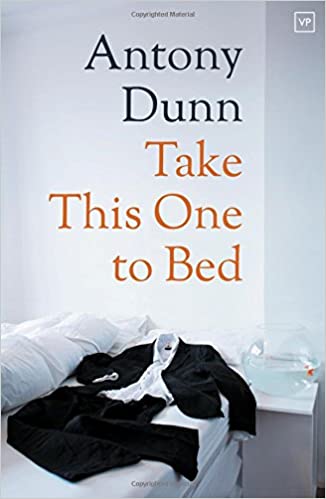
In 2015, he was the editor of Ex Libris, a volume of selected poems by David Hughes. His own fourth collection, Take This One to Bed, was published by Valley Press in October 2016.

The Interview

Antony Dunn

  1. What inspired you  to write poetry?

I’m not honestly sure I remember. I have vague memories of a book my parents gave me when I was very, very young – a treasury of poetry with lots of illustrations. I remember something about the fairies in the fireplace… By the time I was ten or so, I was writing poems a lot, at school, anyway. I wrote one about fox cubs in winter and my English teacher made me write it out nicely and he stuck it on the wall. I thought that was really something at the time. And I loved the game of making the rhyme and rhythm work properly.

Later, it was girls – or, specifically, my first proper girlfriend – that inspired me. She had to endure a number of overwrought sonnets, poor thing.

2. Who introduced you to poetry?

My parents, of course, but when I was teenager there was an English teacher at my school called David Hughes. He never taught me formally, but he became a real mentor for me. He was aware that I wrote lyrics for a pop band (me and my friend Simon), and somehow he got hold of scores and scores of the lyrics. I really can’t think how, now. But he went to the trouble of writing a paragraph or two of criticism on each of those lyrics, which must have taken him hours. Then he gave me the notes, and the gist was really, “Take out the oos and aas and the I love you babys, and apply some more rigorous rules, and you’ll be writing actual poetry.” That really struck me, and it felt as if he’d identified something right in the very essence of me that I hadn’t noticed before. Then I was off… And Dave and I would hang out and talk about poetry, and he introduced me to Edward Thomas and Ted Hughes and Wilfred Owen and took my poetry seriously.

And at almost the same time, I met my first proper girlfriend, and it turned out her father was Nigel Forde – a wonderful poet himself and, at the time, presenter of Bookshelf on Radio 4. He had a massive collection of poetry books, and when I moved in with the family for my gap year before university, we’d often stay up late, talking about poetry and swapping drafts and criticisms. It was wonderful.

So I was very lucky indeed to have those two pushing me on and seeing the potential in what I was writing when I was flailing about trying to work out what on earth I was doing. I owe them a lot.

3. How aware were you of the dominating presence of older poets?

Well, very, in the sense that I held a number of poets in high esteem to the point at which I was in awe of them. Edward Thomas and Ted Hughes, later Philip Larkin and Seamus Heaney, and later still Simon Armitage (who’s only ten years older than me). I wanted to be them, in a way, and I measured my poems against theirs frantically. And of course I always found my poems wanting in that way, which maybe made me work harder? I’ve relaxed a lot in that regard over the years, but I do still have jealous pangs when I read something brilliant that I know I’ll never match.

4. What is your daily writing routine?

Ha ha. Um… Wake up with low-level anxiety about writing, then don’t do any writing. That’s it. I’ve never had a routine, ever. I used to write a lot, and I’ve slowed down incrementally over the years.

Having said that, if I remove myself from real life for a bit something odd happens. A few times I’ve gone away for a week or so to a cottage somewhere with my lovely friend, the poet Matthew Hollis, and we’ve imposed a regime on ourselves. Get up early, drink coffee, write until lunchtime, then long walks, the pub or an afternoon writing if we’re really in the swing. And I’ve always come away from those with new poems, sometimes one from every day of the stay.

I also teach residential courses for the Arvon Foundation at Lumb Bank in Yorkshire and at Totleigh Barton in Devon. There I get up really early, often 5am, write until morning classes start, and then go for late afternoon walks with a notebook. And there again, I come home with new poems every time. Unfortunately, I seem to have trained myself only to write in those environments, and those moments don’t come round that often.

5. What motivates you to write?

That’s different from poem to poem. I don’t ever sit down to do some poetry-writing. I start writing because something very precise and specific has popped into my head and I urgently need to wrangle it before it disappears. Those ideas are like dreams – they’re vivid for a bit, but before you know it all you can remember is the vividness, not the idea itself, and that’s incredibly frustrating.

6. What is your work ethic?

Broken. Next! I look at all those people on Facebook doing NaPoWriMo in absolute disbelief.

7. How do the writers you read when you were young influence you today?

All sorts of ways, I’m sure, noticed and unnoticed. Matthew Sweeney presides still over some of my more surreal, imaginary story-poems. I reckon some of Thomas Hardy’s lyricism has rubbed off on me. And Eward Thomas’s. Simon Armitage’s precision-tooled clarity and cleverness definitely still make me want to write the way he does.

8. Who of today’s writers do you admire the most and why?

Ah, where to start? I love Daljit Nagra for his ability to be both jester and statesman. Kathleen Jamie’s poems break my heart every time. Danez Smith’s Don’t Call Us Dead was a remarkable recent read which I can’t stop thinking about. Jo Shapcott’s wild invention is breathtaking. I’m impatiently waiting for James Giddings to publish another book because his first pamphlet, Everything is Scripted, was brilliant. Julia Copus’s poems seem to be both experimental and, at the same time, absolutely familiar, and I love them. Did I mention Simon Armitage at all yet?

9.  Why do you write, as opposed to doing anything else?

I don’t. I pair socks. I make packed lunches. I load the dishwasher. I unload the dishwasher.

10. What would you say to someone who asked you “How do you become a writer?”

Read books. Loads of books. Go to poetry readings and performances. Find what you love and what inspires you. Read more books and go to more gigs. Start scribbling as you go along. You’re a writer.

11. Tell me about the writing projects you have on at the moment.

Honestly, just ‘writing a poem’ counts as a project for me. But there’s one thing I’ve started thinking about recently. When my son was born in 2010 I was talking to Matthew Hollis about how new-parent-poets must feel the need to write new-parent-poems, and I vowed I wouldn’t do that. Obviously, I did do that, and there are a few of them in Take This One to Bed. I’ve written a few more since then, too. I’m plotting to write a couple more, then publish them as a very limited-edition pamphlet, beautifully made and hand-printed in letterpress, with illustrations by a brilliant artist. I know who she is, but I haven’t asked her yet. And I’m going to call it The Poems I Promised I Wouldn’t Write.

‘She Wouldn’t Be Able To Come To You So Often If She Were Alive’ – A Poem and Two Images by clare e. potter

robertfredekenter's avatarIceFloe Press

‘She Wouldn’t Be Able To Come To You So Often If She Were Alive’*

from Kim Hyesoon

It’s when I’m washing, usually, the dishes,
it’s when I’m lost in a heat of suds
and I’m looking out the window, not staring
mind you, not fixed on anything but not really
seeing, it’s then, it’s then I feel her. I feel her
hand on my shoulder, and now I think of it
the first time was when the kids were babies
when I was delirious and brushing bottles
and teats, decontaminating and weeping into the sink
standing in my piss, and there, her hand on my shoulder;

this first touch was a light touch
not on account of her being dead of course,
she is no longer a wisp of a thing, but
on account of her not wanting to shock
me, on account of her bringing me back
into myself…

View original post 117 more words

November Ekphrastic Challenge: Day 13

Jane Dougherty's avatarJane Dougherty Writes

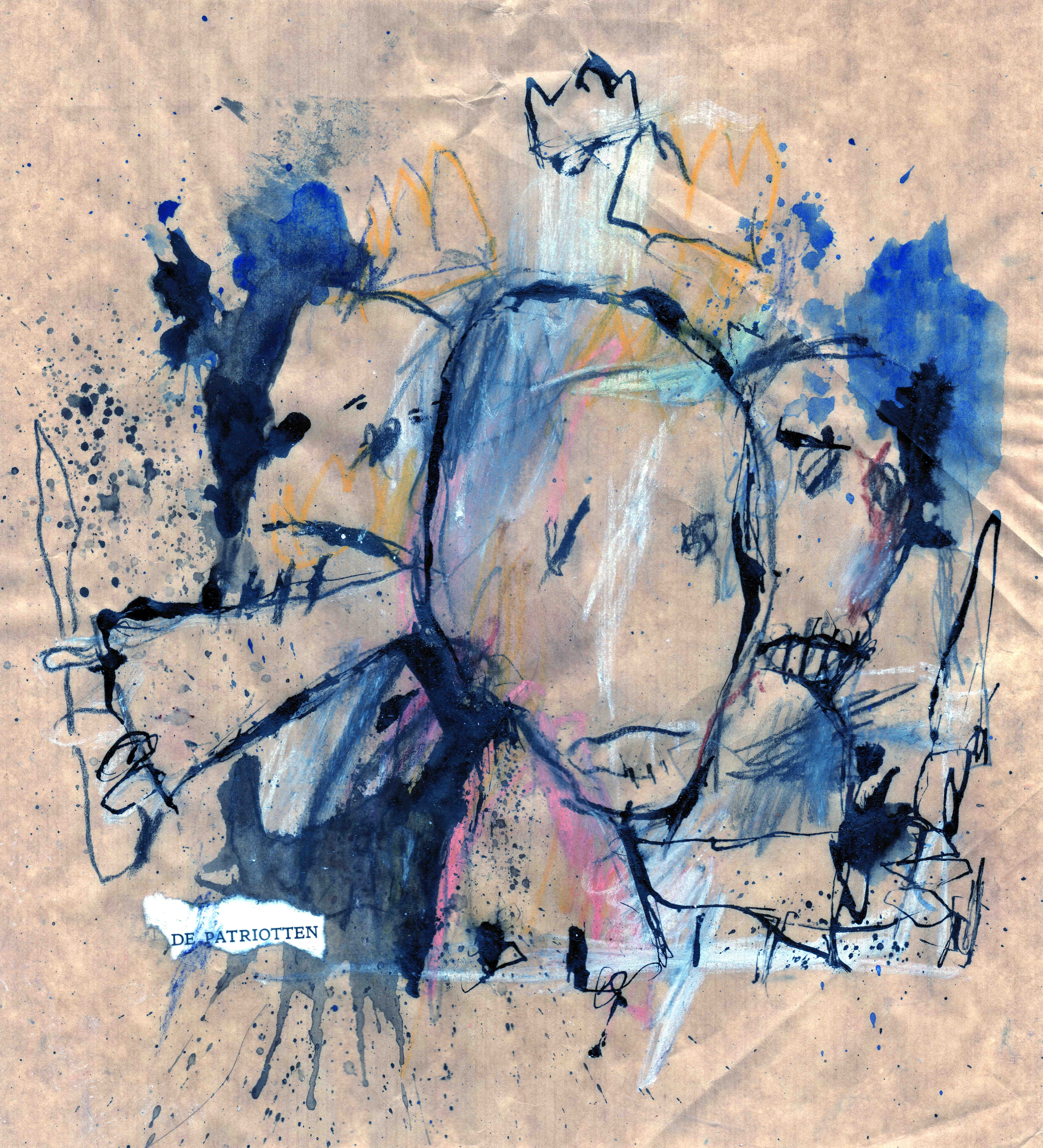
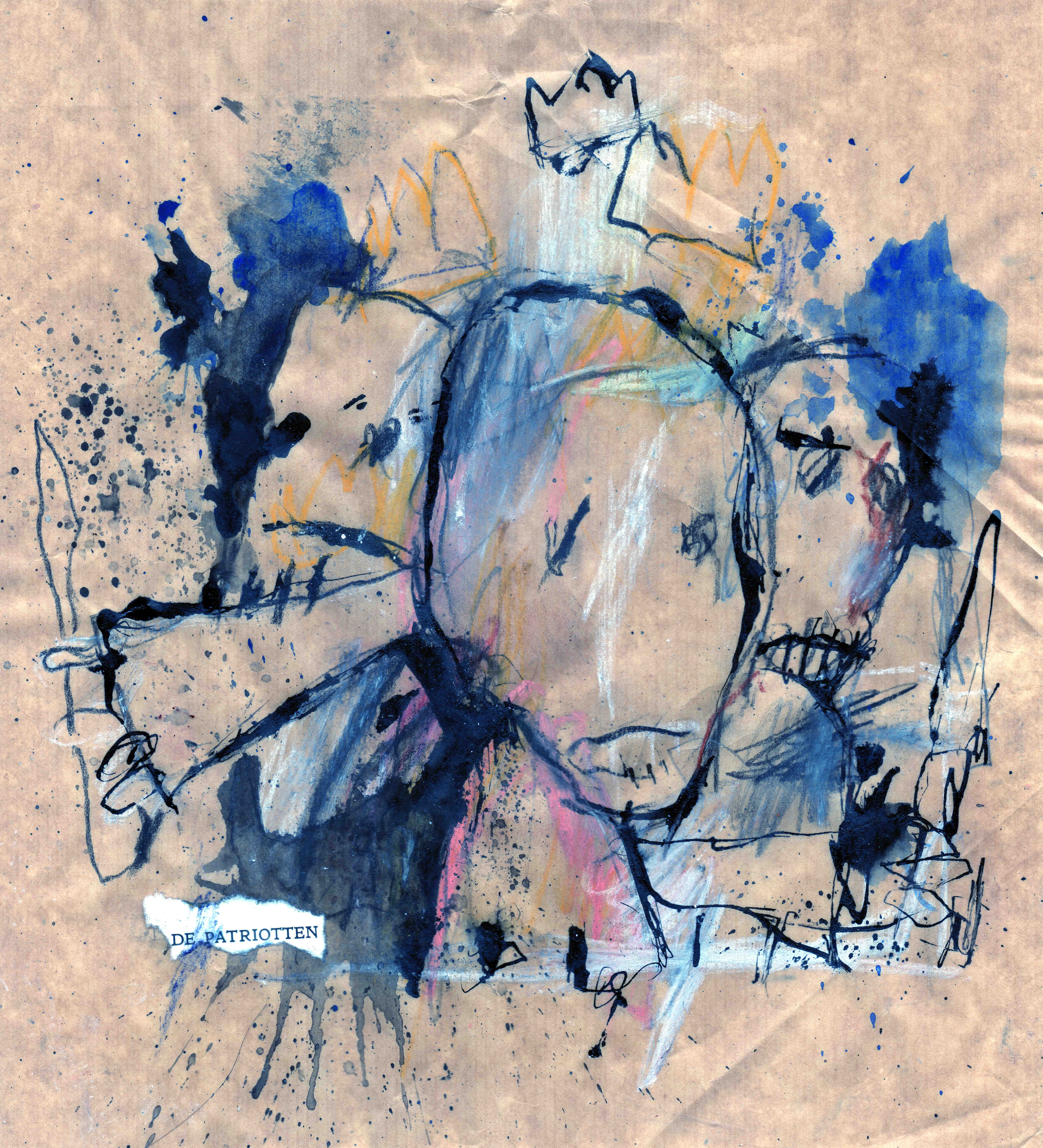
For Paul Brookes’ November challenge, today’s painting inspiration is patriotten by Marcel Herms

MH13De patriotten, mixed media on paper, 20,8 x 22,9 cm, 2020

Crowdspawning

A crowd is not,
not like frogspawn or bee larvae,
elvers or gnats.
A crowd is people,
an agglutination of minds, thoughts, desires.
a crowd is individuals
with unique destinies,
sharing for a moment the same path.
A crowd is people,
eyes, tongues working,
wired up each to a different brain.

But sometimes, a crowd is not people
or even frogspawn,
it is a thing of cells, sharing the same desires,
of thoughts wired to a single brain,
eyes, mouths, tongues working blind and mute.

And then we,
who are not of the crowd,
are afraid.

View original post

Happy #WorldKindnessDay poetry and artwork challenge. Have you written a poem about an act of kindness? Have you made an artwork about kindness? Published and unpublished work is all welcome. Please DM me or contact me via my WordPress site. All submissions will be posted.

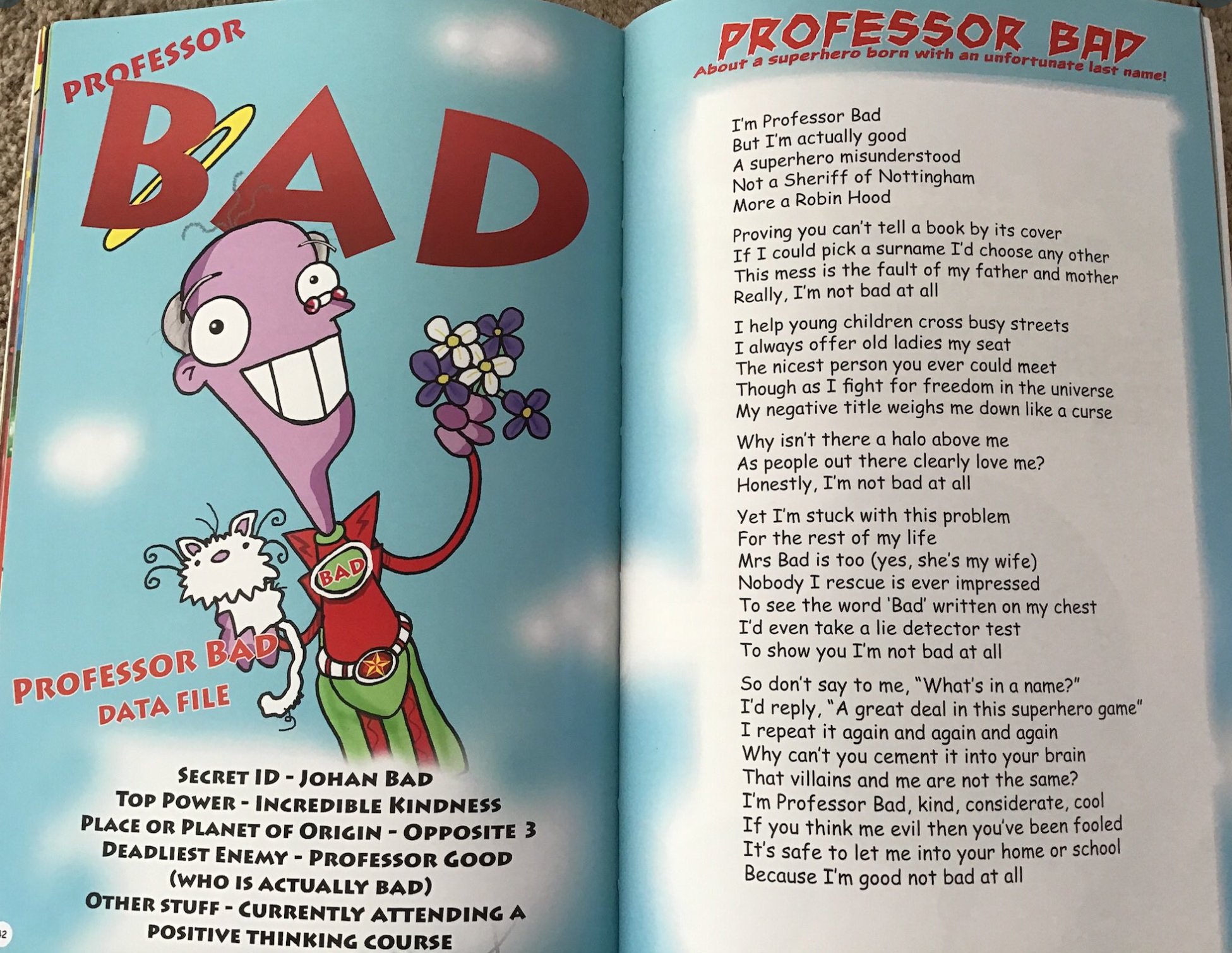
Professor Bad by Neal Zetter

-Neal Zetter

Monday Morning Smile

Smile
Every Monday morning
Smile
When you’re tired and yawning
Smile
Forget weather warnings
Smile
Make a Monday morning
Smile

Let your lips go curly
Smile
Who cares if it’s early?
Smile
Though your tongue’s still furry
Smile
Make a Monday morning
Smile

Tara, Tom, Tess, Trevor
Smile
Get your head together
Smile
Keep the rule forever
Smile
Make a Monday morning
Smile

As the week’s beginning
Smile
Do some facial grinning
Smile
You will soon be winning
Smile
Make a Monday morning
Smile

No excuse – just do it
Smile
Till the sun shines through it
Smile
And the world can view it
Smile
Make a Monday morning
Smile

To prevent a blue day
Smile
Show it to a new day
Smile
So it lasts till Tuesday
Smile
Make a Monday morning
Smile

-By Neal Zetter

The Healing

It happened yesterday in my home town,
at noon or thereabouts,
the sun at its full height.

We all stopped suddenly inside the shops,
across a road,
to look each other in the eye.

It frightened me at first,
then seemed exactly right
for everyone to stand and wait.

I wish I’d been the first
to reach out to a stranger,
say I love you as I love myself.

He didn’t call me mad,
or turn away and laugh.
He simply said the words as well.

I heard them echo through the trees
to settle in the highest branches.
My voice flew back to me:

I’m tired and need to rest but dare not
if there’s any fear between us.
We must call a life-long truce.

You’re free to dress the way you want,
worship as you please.
There’s room for me to do the same.

The only arms we’ll ever raise will open
just as wide as they can go,
reach out to end all mutual need.

I’ll step aside when you walk down the street,
hope you’ll do the same for me
without a sense of loss.

We nodded in agreement
that seemed too good to last
much longer than it took to speak.

But here, on this new day,
I passed a stranger
who stepped aside and smiled at me.

-Jenny Mitchell (The poem previously appeared in The Rialto)

A Stilled Mannequin

leaf washed up by gust
on performative shores.

Trees lose their masks,
and gloves. No longer
use protection so open

window display tall,
thin models who wear well
the cost of living, open

doors to our flotsam insides,
our efforts to sell
the right image.

Mannequins in our image,
not just hangers for clothes
but sustenance providers

for soil hardened to weather.
Goodness givers res-seed barrenness.
A gift left on the doorstep by kindness.

Trees will remask, reglove
in the Spring. We hope to lose
our masks when a cure is found.
When we take off the gloves
washed up on familiar,
to hug, warm the winter into spring.
strangers into old friends

-Paul Brookes

Bios And Links

-Jenny Mitchell

is winner of the Aryamati Poetry Prize; the Segora Poetry Prize; a Bread and Roses Poetry Award; the Fosseway Poetry Prize; joint winner of the Geoff Stevens Memorial Prize 2019 and 2 x Best of the Net Nominee.

A debut collection, Her Lost Language (Indigo Dreams Publishing) is one of 44 Poetry Books for 2019 (Poetry Wales) and a Jhalak Prize #bookwelove recommendation.

A forthcoming collection, Map of a Plantation (IDP), is due in 2021.

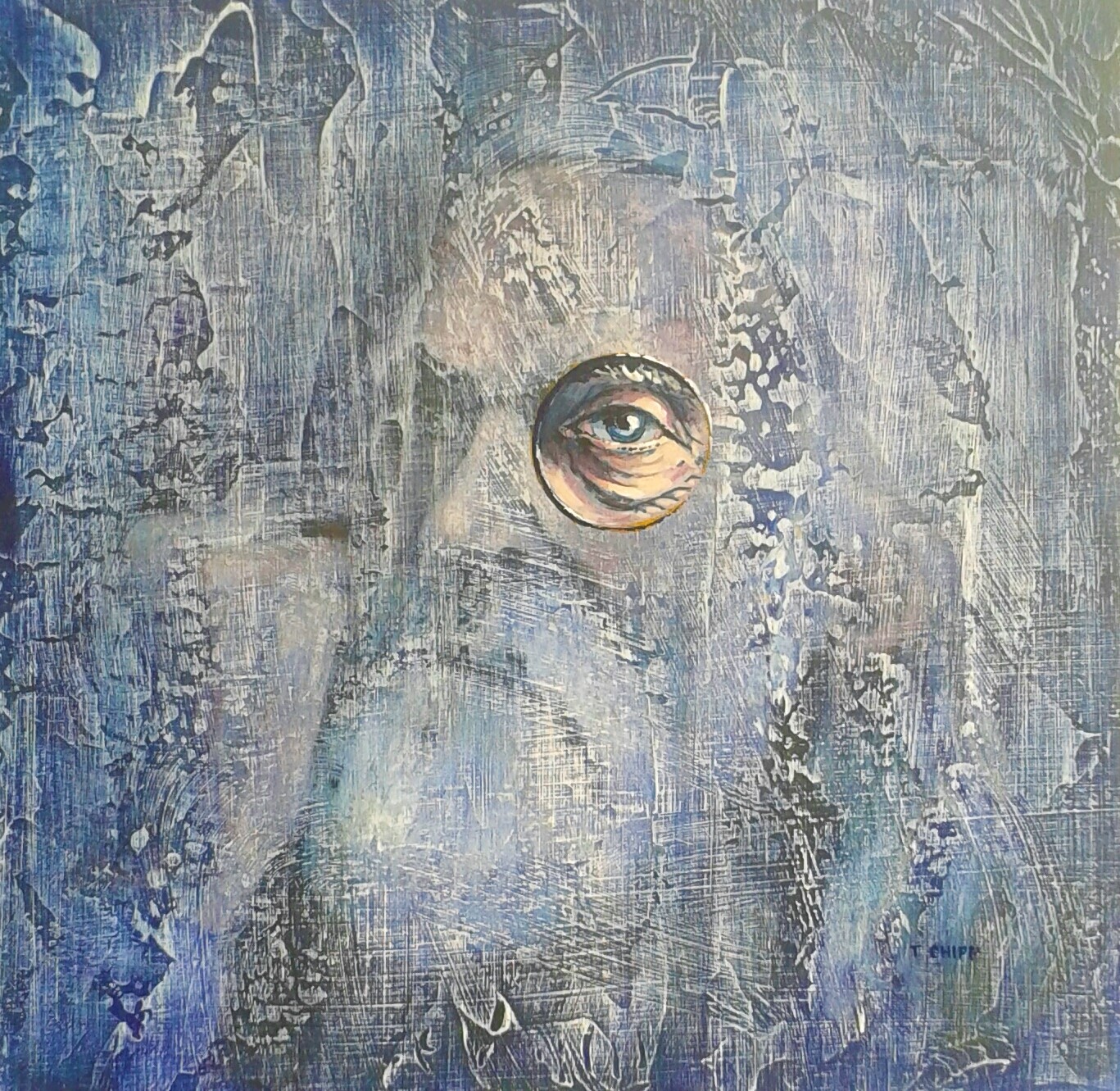
Day Thirteen : Welcome to a special ekphrastic challenge for November. Artworks from Terry Chipp, Marcel Herms, MJ Saucer, P A Morbid, the inspiration for writers, Gaynor Kane, Peach Delphine, Sally O’Dowd, sonja benskin mesher, Anindita Sengupta, Liam Michael Stainsby, Helen Allison, Sarah Connor, Sarah Reeson, Holly York, Jane Dougherty, Gayle J Greenlea, Susan Darlington, Lydia Wist, Dai Fry, and myself. November 13th.

Day Thirteen
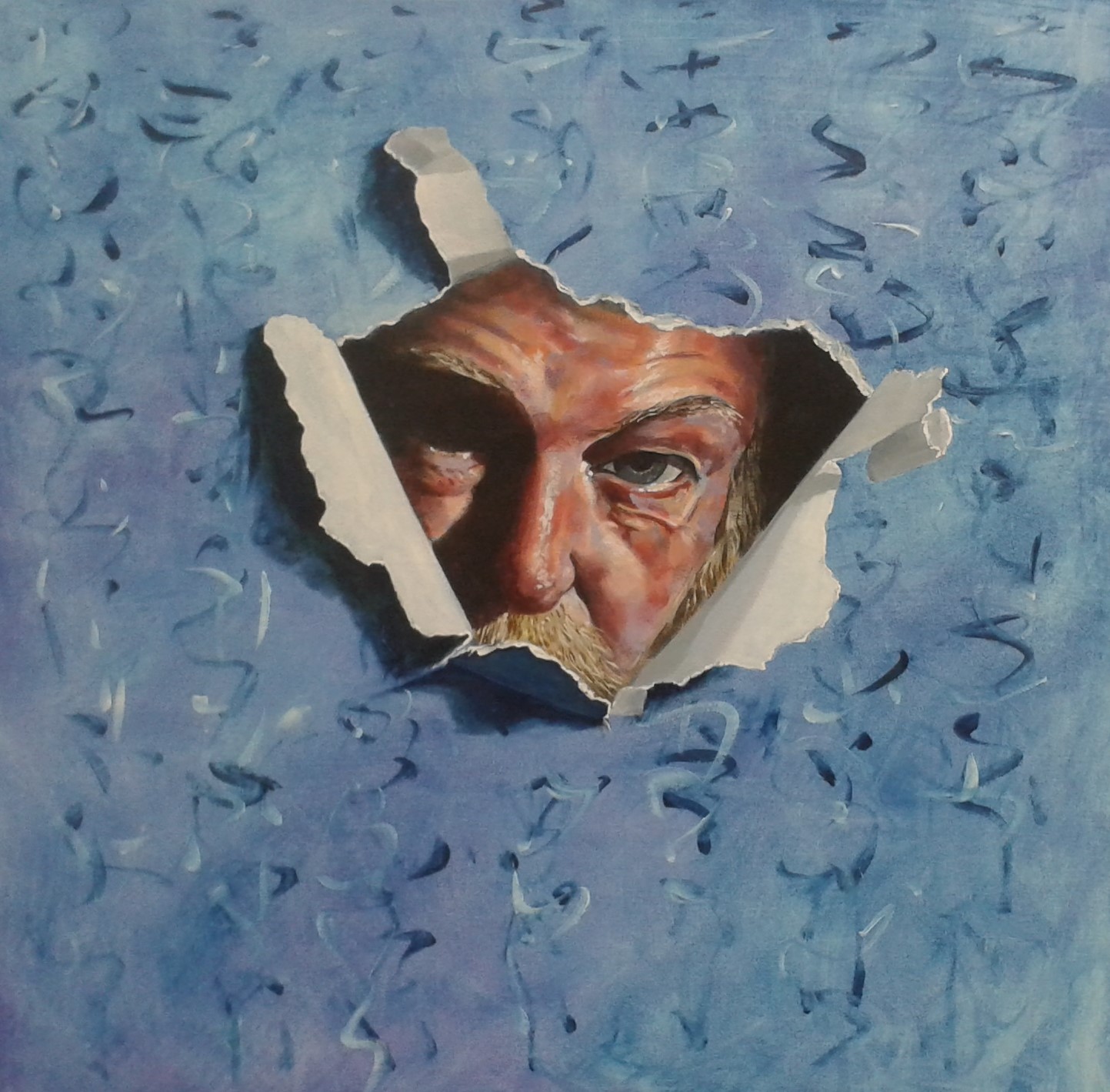
TC13 Hello neighbour!
Hello Neighbour by Terry Chipp
MH13De patriotten, mixed media on paper, 20,8 x 22,9 cm, 2020
Patriotten by Marcel Herms

TC 13

Through the wall, through the looking glass, those on the other side
are a mystery, a mouthful of syllables, hard and obsidian, coal.
Their eyes mine us for what remains. There is nothing

besides endless blue
flecked with darker blue,

a lake in which we see ourselves as clear as we see
our neighbors
or don’t.

We touch the water and make ripples,
like those between countries,
invisible, ever present. Our histories

of ruler and ruled, colonizer
and colonized,
follow us around,
sit at the heads of our beds,
sleep at our feet,
tramp through our rooms
with muddy boots in the night.

I think of the guns. I open my mouth
and syllables fly out like bullets,
hard and cylindrical. The wall is a tear,
a tearful rending, a rent in the fabric
of ourselves

On the other side,
are those we left behind, lost, fled from, forgot, loved, looted, lauded
and loaded into carts to deposit in trenches. On the other side
are our neighbors, our friends, strangers, beloveds.

They stand and look at us,
their eyes like roses,
opening into a thousand black petals.

-Anindita Sengupta

The Patriots

Prince Donald, it is all your fault.
Your kingdom is divided. Darkness
looms, taunting the Enlightenment.

Predacious Proud Boys hoist your
flag on streets and waterways,
playing soldiers. Orangist commissars

thwart the will of Patriots armed
with ballots. You will not win.
Corruption and nepotism will not

win, cannot beat back the will of
the People. Cannot beat back Reason
Or Science. Cannot confine Liberty.

Democracy and Tolerance march
on every street. The Constitution
beats as one heart. You have lost

and you will go. Orangism will be
synonymous with bigotry, injustice;
antithetical to America’s Dream,

Patriotism giving rise to Equality.
You have lost and you will go, voice
of the People ringing in your ears.

– Gayle J. Greenlea

(Hello Neighbour!)

“Sounds”

-heard sounds again from the other side
Of the wall, sure it was neighbour’s D.I.Y

As I listened intently the noises migrated
From wall to ceiling to wall to floor

So not what I thought then something
Else entirely a spectre, a dream or a fancy?

“The Other Ophelia”

Not as pretty but
Still hurting, needs as much love
As Millais’ damsel

(De Patriotten)

“Three Crowns”

I read a story of three

Special treasures coveted

I think the hunters were convinced of their patriotism in acquiring the hoard

(I Speak, But You Do Not Listen)

We can’t get a straight answer
You are like a god to us
Perfect
Our mission is to care for you
Even in ways you do not yet understand
We have to be patient
You are only three years old
-Lydia Wist

The War of The Suburbs

I will the silence to take me.
The war rages on,
on the streets outside.
The war of the people;
the rich and the poor
lying bated and bloody
in some false image of pride.

I’ll leave here in the night-time.
With the woman and child on my back.
Through sinking streets
and past the suburbs
to where the beatniks
sat drowning in poems
they had written for themselves.

I am a traitor to the night –
the sound and the speech
drip from the faucet
inside…
she tells me that she’s lonely
whenever I am with her
and I know all that she is without me.

There is a war raging
on the streets outside;
through it – my voice is still.
There is something in the silence;
some type of surrender.
I wonder if she’ll notice –
if I make it out alive.
Maybe I just feel at home at the end of the world.

-Liam Stainsby

WE THE PEOPLE

We the plebians
do hunger and toil
under rain in soil,
whilst trapped
in our names,
at our station. As
you fatten and prosper.

And all that you are,
you did it for us,
your very own
hoi polloi.

To our benefit, you
breakfast and dine
off the finest china.
Served by the
meek and menial.

Your sterling efforts
do not ever go
unnoticed by…
we the people,
inheritors of these lands.

Lumpen proletariat
for whose sake
you feast lavishly,
still remain comforted.
As you endure
the horrors of
your prosperity.

You sacrifice, as we
-in our rank and file
await your pleasure.

And should you think
that this a joke
or a literary slight
of hand,
no…
it is happening
right now.

-© Dai Fry 12th November 2020

Crowdspawning

A crowd is not,
not like frogspawn or bee larvae,
elvers or gnats.
A crowd is people,
an agglutination of minds, thoughts, desires.
a crowd is individuals
with unique destinies,
sharing for a moment the same path.
A crowd is people,
eyes, tongues working,
wired up each to a different brain.

But sometimes, a crowd is not people
or even frogspawn,
it is a thing of cells, sharing the same desires,
of thoughts wired to a single brain,
eyes, mouths, tongues working blind and mute.

And then we,
who are not of the crowd,
are afraid.

-Jane Dougherty

Hello Neighbour

A turn-of-the-century terrace with thin walls – we knew
our neighbours by their noises. On the left, the elderly man
raked a fire all year-round. Fell from cabs
and through the front door to have drunken fights with himself

On the right, she didn’t make much noise but we heard him
up with the skylark for earlies and blowing yesterday’s detritus
from his nasal passages loud as a foghorn. We wondered
what we sounded like, my burnt offerings setting of fire alarms,

his flatulence or are conversations on the bedroom sills,
windows wide open, legs dangling and roll ups jiggling in lips.
We decorated – peeled off layers of paper like dried onion skins.
Found a hole and plugged it with scrunched up Telegraph and Gripfill.
Smoothed over it with Polyfilla and sanded.

-Gaynor Kane

Bleu blanc et rouge

Sheepish grin masks gritted teeth.
Speak softly, carry a big stick.
Liberté égalité
fraternité and all.
In one hand, flame of freedom.
In the other, sword of enforcement.
Tough to be a patriot
with dreams of coronation.

-Holly York 2020

..day 13..

:: paper chase ::

hiding from the refuse collectors
down at the house
in the paper
hideaway

it was his idea and he rammed
it all in the neighbouring bins
where he found room

said he will take the blame
if found out

****
all four crowd round discussing
the amount of waste
the number of stars

while
he hides
below

..sbm..

HELLO NEIGHBOUR

He said it was an accident
when he hammered
through the lounge wall.
But instead of bricking it up
he climbed right through,
sat next to me on the sofa
and helped himself
to my mug of coffee.

-Susan Darlington

Hello Patriotten

you are best, worst
behind the wall;
that ideal voice
quietly aware
looking away:
yet grasping all

-Sarah Reeson

Bios and Links

-Terry Chipp

grew up in Thurnscoe and ia now living in Doncaster via Wath Grammar school, Doncaster Art College, Bede College in Durham and 30 years teaching.

He sold his first painting at the Goldthorpe Welfare Hall annual exhibition at the age of 17 and he haven’t stopped painting since.

He escaped the classroom 20 years ago to devote more time to his artwork.  Since then he has set up his own studio in Doncaster, exhibited across the north of England as a member of the Leeds Fine Artists group and had his painting demonstrations featured on the SAA’s Painting and drawing TV channel.  Further afield he has accepted invitations to work with international artists’ groups in Spain, Macedonia, Montenegro and USA where his paintings are held in public and private collections. In 2018 he had a solo exhibition in Warsaw, Poland and a joint exhibition in Germany.

His pictures cover a wide range of styles and subjects from abstract to photo-realism though he frequently returns to his main loves of landscape and people.

Visitors are welcome at his studio in the old Art College on Church View, Doncaster.

e-mail:  terry@terrychipp.co.uk

Facebook:  Terry Chipp Fine Art Painting

Instagram: @chippko.art

-Marcel Herms

is a Dutch visual artist. He is also one of the two men behind the publishing house Petrichor. Freedom is very important in the visual work of Marcel Herms. In his paintings he can express who he really is in complete freedom. Without the social barriers of everyday life.
There is a strong relationship with music. Like music, Herms’ art is about autonomy, freedom, passion, color and rhythm. You can hear the rhythm of the colors, the rhythm of the brushstrokes, the raging cry of the pencil, the subtle melody of a collage. The figures in his paintings rotate around you in shock, they are heavily abstracted, making it unclear what they are doing. Sometimes they look like people, monsters, children or animals, or something in between. Sometimes they disappear to be replaced immediately or to take on a different guise. The paintings invite the viewer to join this journey. Free-spirited.

He collaborates with many different authors, poets, visual artists and audio artists from around the world and his work is published by many different publishers.

www.marcelherms.nl

www.uitgeverijpetrichor.nl

-Jane Dougherty

writes novels, short stories and lots of poems. Among her publications is her first chapbook of poetry, thicker than water. She is also a regular contributor to Visual Verse and the Ekphrastic Review. You can find her on twitter @MJDougherty33 and on her blog https://janedougherty.wordpress.com/

-Peach Delphine

is a queer poet from Tampa, Florida. Infatuated with what remains of the undeveloped Gulf coast. Former cook. Has had poems in Cypress Press, Feral Poetry, IceFloe Press, Petrichor. Can be found on Twitter@Peach Delphine

-Dai Fry

is a poet living on the south coast of England. Originally from Swansea. Wales was and still is a huge influence on everything. My pen is my brush. Twitter:

@thnargg

Web: http://seekingthedarklight.co.uk

-Susan Darlington

Susan Darlington’s poetry regularly explores the female experience through nature-based symbolism and stories of transformation. It has been published in Fragmented Voices, Algebra Of Owls, Dreams Walking, and Anti-Heroin Chic among others. Her debut collection, ‘Under The Devil’s Moon’, was published by Penniless Press Publications (2015). Follow her @S_sanDarlington

-Holly York

lives in Atlanta, Georgia with her two large, frightening lapdogs. A PhD in French language and literature, she has retired from teaching French to university students, as well as from fierce competition in martial arts and distance running. She has produced the chapbooks Backwards Through the Rekroy Wen, Scapes, and Postcard Poetry 2020. When she isn’t hard at work writing poems in English, she might be found reading them in French to her long-suffering grandchildren, who don’t yet speak French.

-Gayle J. Greenlea

is an award-winning poet and counselor for survivors of sexual and gender-related violence. Her poem, “Wonderland”, received the Australian Poetry Prod Award in 2011. She shortlisted and longlisted for the Fish Poetry Prize in 2013, and debuted her first novel Zero Gravity at the KGB Literary Bar in Manhattan in 2016. Her work has been published in St. Julian Press, Rebelle Society, A Time to Speak, Astronomy Magazine, Headline Poetry and Press and The Australian Health Review.

-Helen Allison

lives in the North East of Scotland. Her first poetry collection ‘ Tree standing small’ was published in 2018 with Clochoderick Press. Her work has appeared in journals and magazines in print and online and she is working towards a second collection.

-Lydia Wist

Like someone who tries out hats or other samples before making a final decision, experimenting with different ideas and techniques is how Lydia spends some of her time. This allows for other portions of time to speak through the lens of fiction, creative nonfiction and art. You can find her work at Cargo Collective , Lydia Wist Creative and on Twitter @Lydiawist.

Website links:

https://cargocollective.com/lydiawist

https://www.facebook.com/lydiawistcreative/

-Sarah Connor

lives in the wild, wet, south-west of England, surrounded by mud and apple trees. She writes poems to make sense of the world, and would rather weed than wash up.

-sonja benskin mesher

-Liam Stainsby

holds a bachelor in English Literature and Creative Writing and is a secondary school teacher of English and Creative Writing. Liam is currently writing his first, professional collection of poetry entitled Borders that explores poetry from all around the world. Liam also Co-Hosts a movie discussion podcast entitled: The Pick and Mix Podcast. Liam writes under the pseudonym ‘Michael The Poet’

Links: WordPress: https://michael-the-poet.com/

Twitter: stainsby_liam

Instagram: Michael The Poet

-Sarah Reeson

is 54, married and a mother of two, who has been writing and telling stories since childhood. Over the last decade she has utilised writing not just as entertainment, but as a means to improve personal communication skills. That process unexpectedly uncovered increasingly difficult and unpleasant feelings, many forgotten for decades. Diagnosed as a historic trauma survivor in May 2019, Mental health issues had previously hindered the entirety of her adult life: the shift into writing as expression and part of a larger journey into self-awareness began to slowly unwind for her from the past, providing inspiration and focus for a late career change as a multidisciplined artist.

Website: http://internetofwords.com

-Gaynor Kane

is a Northern Irish poet from Belfast. She has two poetry pamphlets, and a full collection, from Hedgehog Poetry Press, they are Circling the Sun, Memory Forest and Venus in pink marble (2018, 2019 and Summer 2020 respectively). She is co-author, along with Karen Mooney, of Penned In a poetry pamphlet written in response to the pandemic and due for release 30th November 2020.  Follow her on Twitter @gaynorkane or read more at www.gaynorkane.com.

-Anindita Sengupta

is the author of Walk Like Monsters (Paperwall, 2016) and City of Water (Sahitya Akademi, 2010). Her work has appeared in anthologies and journals such as Plume, 580 Split, One and Breakwater Review. She is Contributing Editor, Poetry, at Barren Magazine. She has received fellowships and awards from the Charles Wallace Trust India, the International Reporting Project, TFA India and Muse India. She currently lives in Los Angeles, California. Her website is http://aninditasengupta.com

Wombwell Rainbow Interviews: Becky Lowe

Wombwell Rainbow Interviews

I am honoured and privileged that the following writers local, national and international have agreed to be interviewed by me. I gave the writers three options: an emailed list of questions or a more fluid interview via messenger, or an interview about their latest book, or a combination of these.

The usual ground is covered about motivation, daily routines and work ethic, but some surprises too. Some of these poets you may know, others may be new to you. I hope you enjoy the experience as much as I do.

Blood And Water Coloured

Wombwell Rainbow Interviews

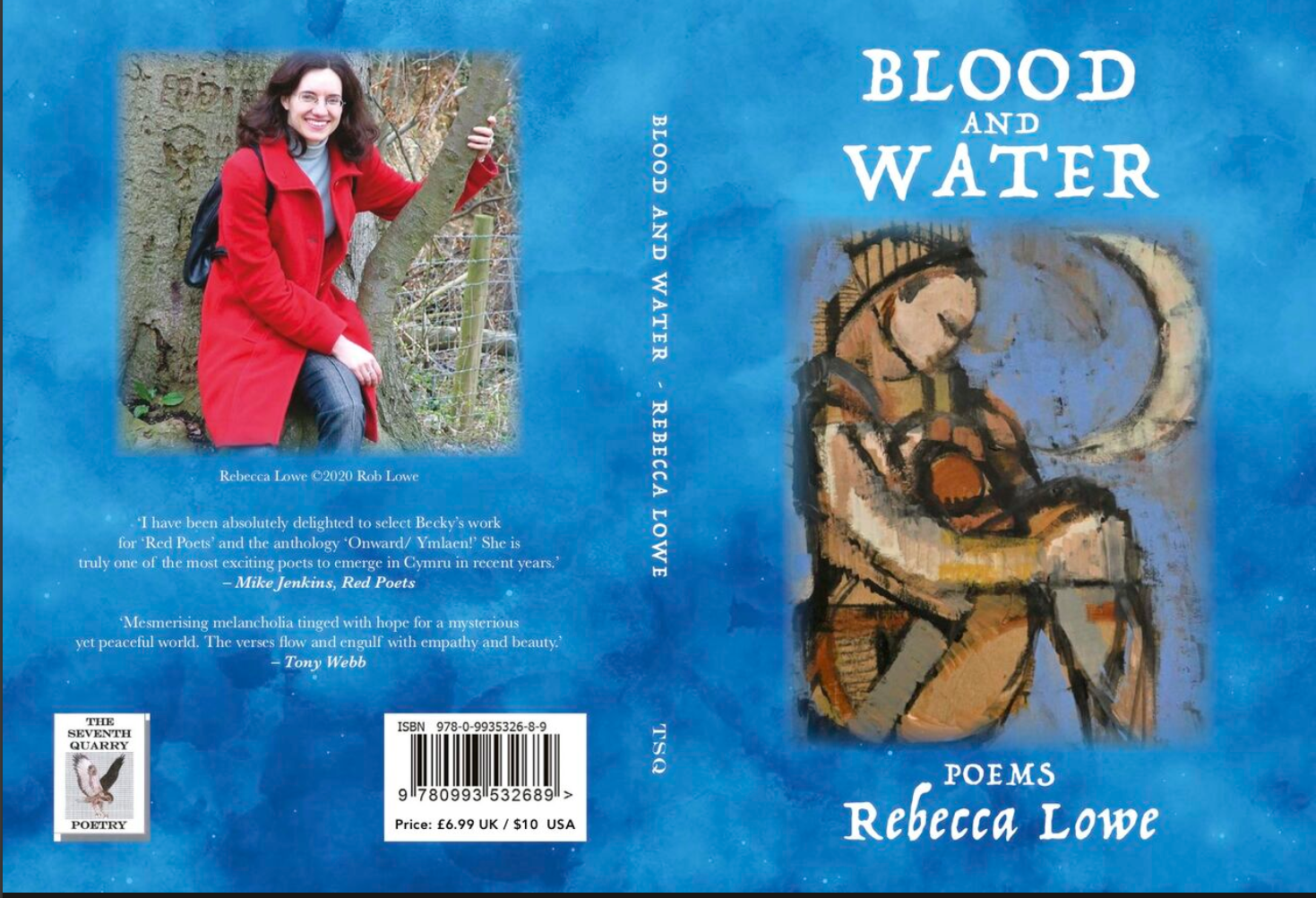
Becky Lowe is a freelance writer, poet, and a Bread and Roses Spoken Word 2020 Award winner. She is based in Swansea, Wales. Her first poetry collection, Blood and Water, is published by The Seventh Quarry Press. Advance copies can be ordered via email at theseventhquarry@btinternet.com

  1. What inspired you to write poetry?

I love words – the sound of them, the shape of them, the way they feel on my tongue, whether spoken or sung. I love the ability of words to jump off the page into my head and hold me spellbound when I listen, to capture a moment or movement in time. It’s no coincidence that the word for ‘enchantment’ also means to sing – or that ‘spelling’ means to cast spells or put letters together to form words. Words are magic!

2. Who introduced you to poetry?

My parents, by reading to me and encouraging me to read. When I was very young I used to love Dr Seuss and Edward Lear’s nonsense verse. At primary school, I had a wonderful teacher called Mrs Baker who would march us all up and down the classroom reciting Captain Beaky and His Band. She understood me and would let me stop whatever I was doing to write. She used to slip me extra notebooks from the store cupboard to take home. When I was about seven, my parents took me and my brother to a poetry workshop run by Roger McGough. I remember him as this big hairy man who leapt around all over the place, reciting poems. He looked like he was enjoying himself so much, I said to myself ‘When I grow up, that’s what I want to do’.

3. How aware were you of the dominating presence of older poets?

I wouldn’t say this is a huge issue for me because I read a lot of work by up-and-coming young poets – people such as Natalie Ann Holborow, Sophie McKeand and Rufus Mufasa, whose work is fresh and exciting. That’s not to say I don’t like the more established poets too, though – we can learn so much from them. I joint-run Talisman Spoken Word open mic in Swansea with David Churchill (whose book Volcano Moon, I helped edit earlier this year). Before lockdown put a halt to live performances, we had attenders from all ages, backgrounds and cultures. Our youngest is 16 and our oldest just turned 90! I feel lucky to be living in a vibrant city. Having such a wide mix of experiences enriches us all.

4. What is your daily writing routine?

I’m constantly juggling! My creative writing is sandwiched into tiny pockets of time, in between proofreading and editing, a two-day-a-week day job, plus ferrying my daughter to and from school. Creative inspiration seems to come in sudden, short waves of energy, which often means doing some of my writing at odd hours such as the middle of the night. I don’t necessarily recommend it!

5. What motivates you to write?

A lot of the earlier poems in my new collection, Blood and Water, have been inspired by my experiences of becoming a mother for the first time. It was a life-changing experience, profound! I’m inspired by all sorts of things  – a word or phrase, a moment or feeling, nature, mythology… Writing gives me a voice and a way of processing things. Social issues drive me, too. A thirst for social justice, sustainability, peace and equality. These values seep into my poetry because they’re such a deep part of me.

Poetry journals are a great way to get your work out there and read writing by other up-and-coming poets. Ones I’d recommend are The Seventh Quarry, Black Bough and Poetry Wales.

6. What is your work ethic?

There’s a discipline to writing, like everything else. I find editing much easier to control, because it uses a different side of my brain. The creative part can be frustrating. I think, like everyone, I sometimes suffer times when I feel like I can’t write anything at all. I do a lot of writing exercises, like haikus or creating ‘found poems’ out of newspaper cuttings, and I read a lot. It’s like anything – the more you practice, the better you’ll get at it.

7. How do the writers you read when you were young influence you today?

Certain writers go with you all the way through your life, almost like personal friends. Herman Hesse is one. I fell in love with his short stories as a student. I live in Swansea, just around the corner from where Dylan Thomas grew up and I’d be lying if I said he wasn’t a big influence. I love the way he plays with words and imagery, and his anarchic sense of humour. Angela Carter is another. I think fairytales was where it all started for me, and fiction-wise, that hasn’t changed. I’m fascinated by folklore, particularly Celtic. Since living in Wales I’ve become aware of the Bardic tradition of interweaving music with poetry. As a writer and musician, this is something I’m keen to explore.

8. Who of today’s writers do you admire the most and why?

Oh gosh, there are so many, it’s hard to know where to start! I read every poetry book I can get my hands on, from the well-known to emerging new writers. I’ve a shelf of books written by my writer friends – Tony Webb, David Churchill, Mark Lyndon, Rhoda Thomas, Tim Evans, Iqbal Malik – all incredible talents! I’ve recently discovered Fran Lock’s work and she’s phenomenal – everyone should read her!

9. Why do you write, as opposed to doing anything else?

I love it! Simple as that. I sing as well, and sometimes paint, but writing has always been my overriding passion. I can’t imagine not doing it. I think I’d go mad!

10. What would you say to someone who asked you “How do you become a writer?”

Don’t assume that you will earn a lot of money (you probably won’t). Don’t try to please everybody (you can’t). Don’t compare yourself to others but be the best version of yourself. Try not to take rejections personally and don’t be disheartened. Be kind to other writers and build one another up – it’s not a competition! If you can, join an open mic or a writing group, as having a community really helps keep you inspired. Take a notebook and pen everywhere. Most of all, write, write, write.

11. Tell me about the writing projects you have on at the moment.

It’s been a crazy busy year! I have my first poetry collection, Blood and Water, being published by The Seventh Quarry Press. Copies can be ordered via email at theseventhquarry@btinternet.com https://peterthebitjones.com/en/the-seventh-quarry

I also wrote a series of poems over lockdown, which is being published by Culture Matters in April. It’s called ‘Our Father Eclipse’ and is described as a ‘pseudo-apocalyptic, eco-socialist, dystopian vision’. It’s very different to what I normally write and is my attempt to make sense of a very strange time in history!

Finally, for some light relief, I co-wrote a collection of poems for primary school children with my daughter Stephanie, aged twelve, as a way of keeping us both entertained when the schools were closed. It’s called Grandmasaurus and is available on Amazon.  

November Ekphrastic Challenge: Day 12

Jane Dougherty's avatarJane Dougherty Writes

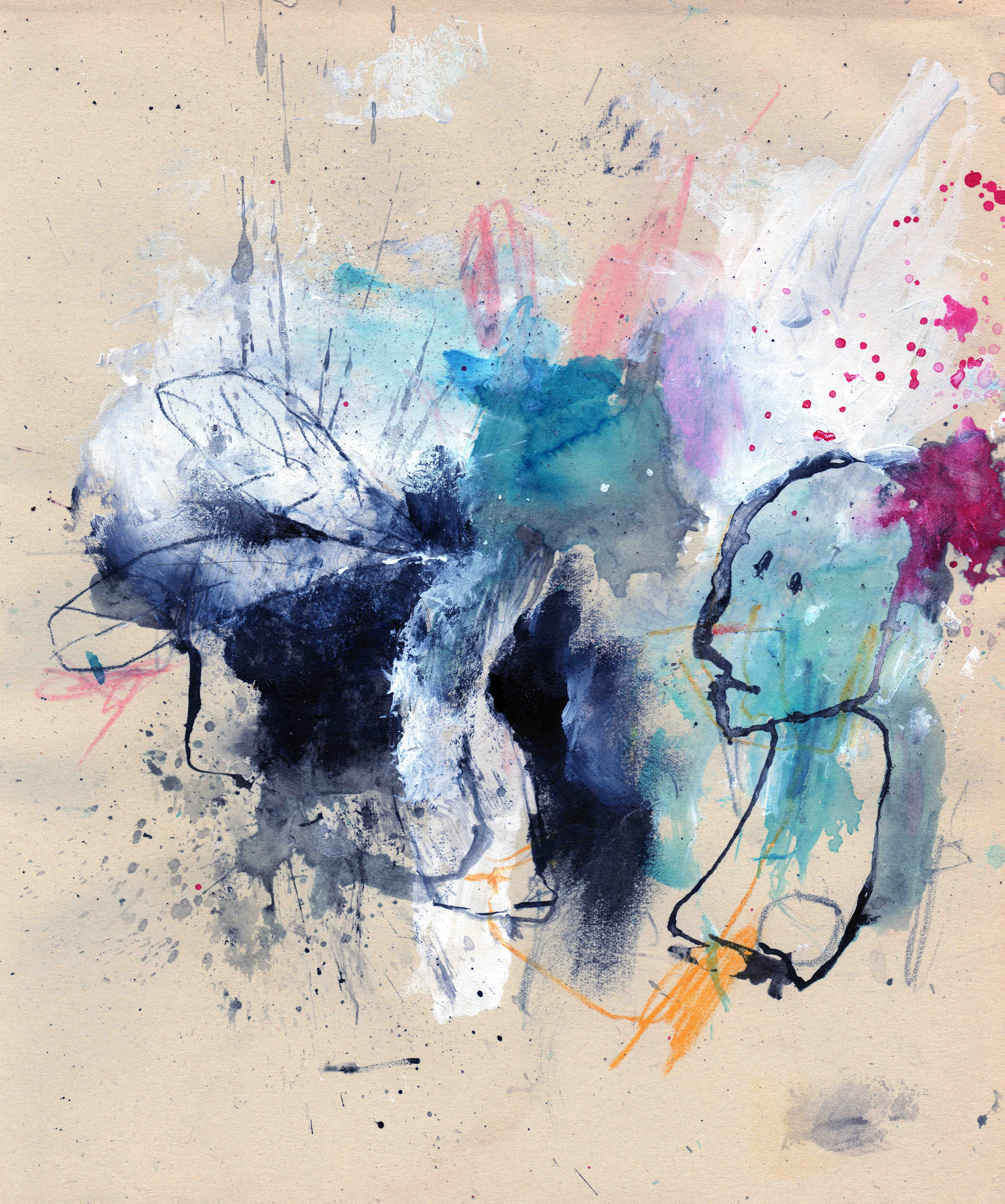
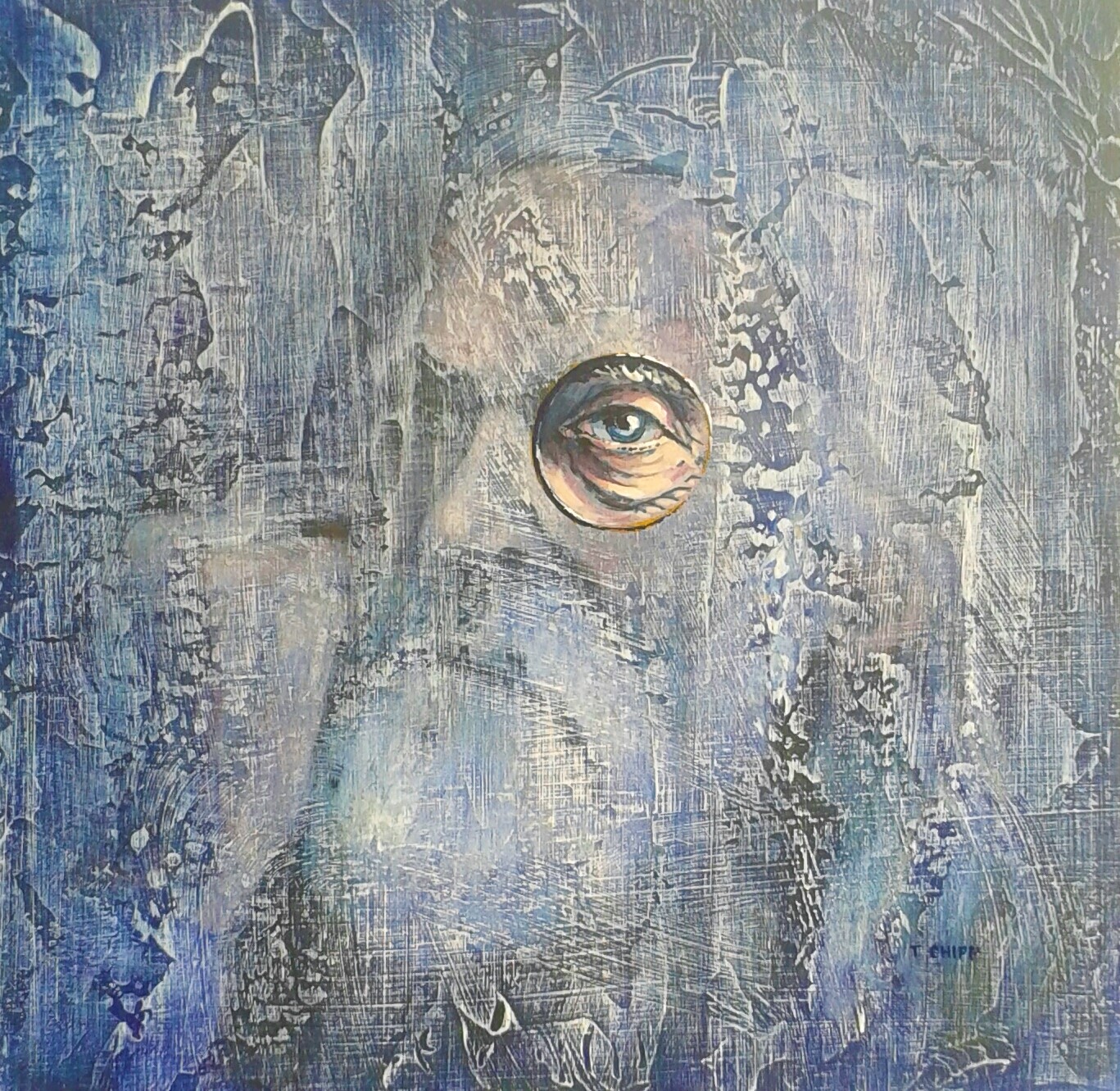
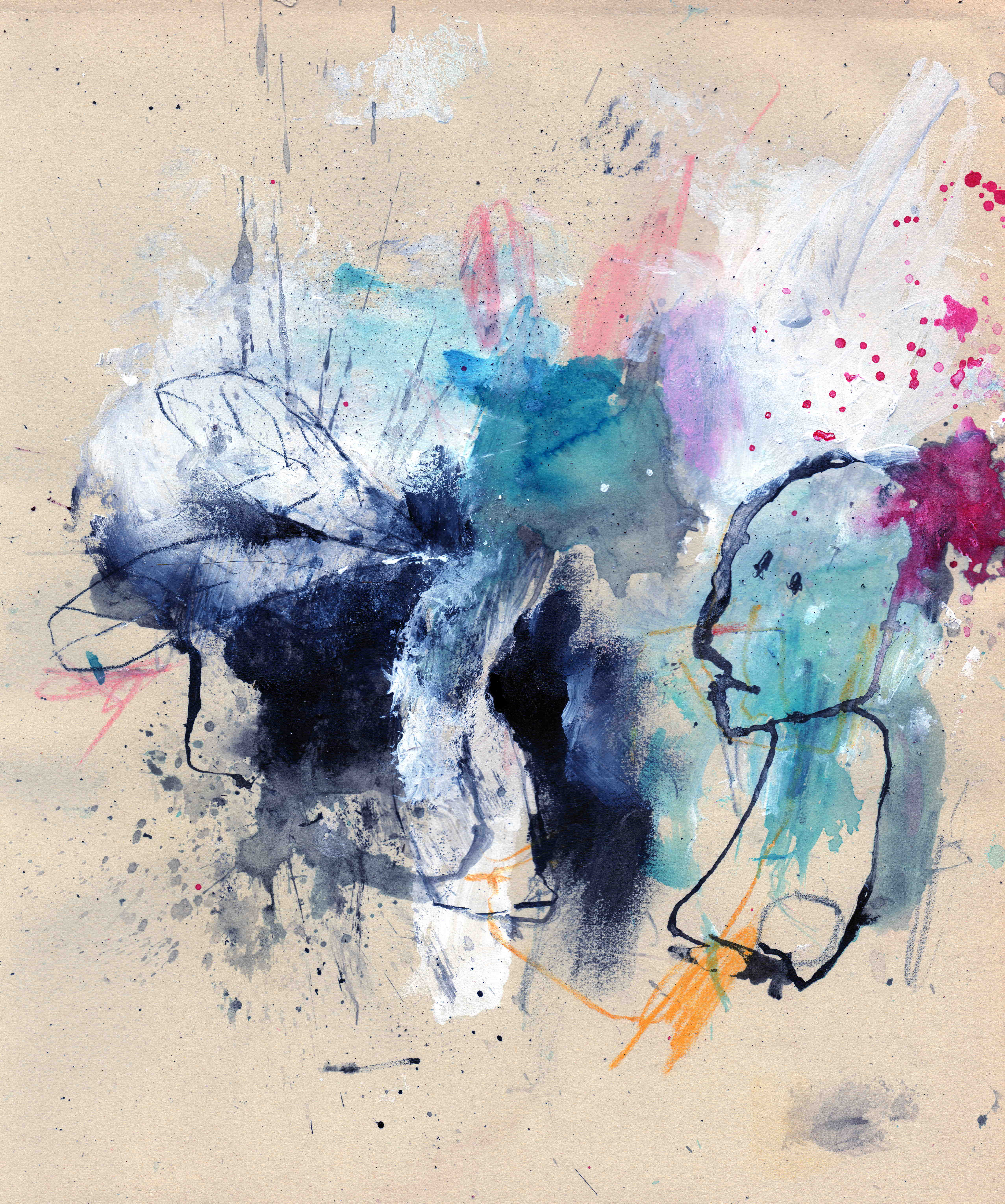
I used both paintings for Paul Brookes’ challenge today, De openbaring by Marcel Herms and Terry Chipp’s Eye spy.

MH12 De openbaring, mixed media on paper, 18,5 x 22,7 cm, 2020

Blame

I hate it when you look at me
that way, as if to say—
but you never do.
You look and wrap up
your hurtful words,
so they don’t show, but I know.
I hate it that you never say
what you hate,
that you leave it too late
to stop my anger overflowing,
and the pain
you should have forestalled
spreads, a stain
that can never be removed.

TC12 Eye spy

View original post

Day Twelve : Welcome to a special ekphrastic challenge for November. Artworks from Terry Chipp, Marcel Herms, MJ Saucer, P A Morbid, the inspiration for writers, Gaynor Kane, Peach Delphine, Sally O’Dowd, sonja benskin mesher, Anindita Sengupta, Liam Michael Stainsby, Helen Allison, Sarah Connor, Sarah Reeson, Holly York, Jane Dougherty, Gayle J Greenlea, Susan Darlington, Lydia Wist, Dai Fry, and myself. November 12th.

Day Twelve

MH12 De openbaring, mixed media on paper, 18,5 x 22,7 cm, 2020

De openbaring by Marcel Herms

TC12 Eye spy

Eye Spy by Terry Chipp

Blame

I hate it when you look at me
that way, as if to say—
but you never do.
You look and wrap up
your hurtful words,
so they don’t show, but I know.
I hate it that you never say
what you hate,
that you leave it too late
to stop my anger overflowing,
and the pain
you should have forestalled
spreads, a stain
that can never be removed.

-Jane Dougherty

Origin

In the sixth month, the angel Gabriel
went to Shrewsbury, a town in England
on the River Severn, and appeared
to the harpsichordist Susannah, daughter
of Sarah and Josiah, wife of Robert, mother
of Marianne, Caroline, Susan and Erasmus.
‘Do not be afraid,’ the angel said, ‘I bring
good news: for you will give birth to a son
whose name shall be Philo, Sage, Saint
of Science. And you will call him Charles,
for he will befriend the earth and move
freely among its creatures, mapping the tree
of life. And his name will be celebrated
forever.’ And Susannah said, ‘If I am part
of this grandeur, let it happen as you say.’

– Gayle J Greenlea

(I Spy)

“All Over The Place”

Long branches each
With a hundred offshoots
Each
with sappy buds
Stumps dry, rotten, sad
*
The prettiest street in Gothenburg
Blessed by the best snow in winter
Lights strong and inviting highlighting ancient cobbles and decorations and a
Chock-a-block antique shop unique
Popular coffee shop chain
*
“Tjäna! Lenge sen” – colloquial local greeting between old friends with arms
Outstretched they embrace enthused
Long time no see
*
In a garden with twisted bronze statues and many roses of many names
Sheila stands out: my maternal Grandmother, it was like she flew over
From England to say hi
*
Endless queues to assistance
People hunched in homes made of the streets the knowledge to flourish without
The opportunity to work
*
Stumps dry, rotten, sad but
A new day, a new season
Fresh eyes look closer at plane tickets
Seemingly against unfair odds
Stumps bear new life
*
Blank pages, canvases
Clear skies, grey skies
New opportunities all over the place

( De Openbaring)

“The Best Kind”

Positive, exciting and filled with
Zings of bright colours ecstatic
What do we do with this kind of revelation?
Overwhelmed nothing is done
Taken in small chunks we can run with it forever

-Lydia Wist

Every Freckle

I hold you to the light
and count every freckle
from your shoulder
to your neck.

I confess my love
for all of the worlds on the nape of your neck
as I draw your eyes to hold me clearly –
my aging ship to wreck –
Let me capsize in your bay.

-Liam Stainsby

I SPY

Shelves of hardback books
that have never been read.

Pot plants patiently trained
into neatly defined shapes.

Chairs decorated with cushions
too plump for comfort.

Stage managed photos
of perfect family gatherings.

And your wife, in bed,
with someone who’s not you.

-Susan Darlington

:: uncle ::

tell him he needs to focus
best eye forward to stop complaining

it is for safety purposes
the rules are made

the family all seem to have
problems with vision
even the dog

things go fady and seep into distant
beings

fairies again
or is it simply the pressure?

..sbm..

Deceit

He asked her what she saw
In the shapes.
This one had colour
Pink for a girl
Blue for a boy
And a feather for hope.

She knew not to talk
About the deathly dark shadows
Or the angel with horns
Or the sad face
On the character
Who looked like they’d pissed
Themselves in fear.

No, she would talk
More about the light
And peaceful feathers in white.

-Gaynor Kane

MH12 De openbaring

Winged shadow come to feed
on the ripeness of my lips
vermillion taste of tongue
the blue of my heart
the cries of gulls plaited
in my hair, the candle
is lit for you, but not you alone,
color assumes shape, lifts
it’s bulk from river bed, toothy
with hunger, in this place
brackish, tree dark, every beast
knows my name, say it now,
say it now, by candle
and moon, open window
looking west.

-Peach Delphine

TC12 Eye spy

From within the wall, concrete,
an eye, traces of a face
perhaps a beard, especially
the eye, from within the wall,
silent watching, as if natural
for a room to observe occupant,
no concealing the eye, face
would shift, eye gleaming,
blinking once or twice,
words had no affect, never
grew comforting, after moving
no pictures or hangings nor curtains
on the windows,
all my walls must be smooth
eyeless and empty.
-Peach Delphine

TC12
Conversation with Sigmund

So Herr Doktor
what do you see?
Peering through the mist
into my broken dreams,
my ugly fantasies,
my thoughts unspoken.
Your bright eye
inspects my faults,
my empty breasts,
my cold hands,
the lies I whisper
and the truths I swallow,
like ice-cubes,
freezing as they burn.

-Sarah Connor

I SPY WITH MY LITTLE EYE

I thought I knew
Mum and Dad.
I’d known them all my life.

But one night Mum
collapsed as a swan might,
graceful yet leaden.

Dad threw her
over his shoulder.
Not a word was said
as he climbed the
imperial stairs.

I tiptoed up quietly
along creaking landings,
to their bedroom door.

A single ray touched
the wooden floor. So
I placed my eye to spy.

He turned Mum’s left
ear half way round and
then unscrewed her head.

Lifting her battery
on to the bed. He
reached for the charger.

I touched my left ear.
Felt my head
start to turn.

-© Dai Fry 11th November 2020

Eye Spy Revelation

behind your wings
he sees, at last
blood’s splattered note:
‘we watch, because -’
the truth, once told
never unlooked

-Sarah Reeson

Bios and Links

-Terry Chipp

grew up in Thurnscoe and ia now living in Doncaster via Wath Grammar school, Doncaster Art College, Bede College in Durham and 30 years teaching.

He sold his first painting at the Goldthorpe Welfare Hall annual exhibition at the age of 17 and he haven’t stopped painting since.

He escaped the classroom 20 years ago to devote more time to his artwork.  Since then he has set up his own studio in Doncaster, exhibited across the north of England as a member of the Leeds Fine Artists group and had his painting demonstrations featured on the SAA’s Painting and drawing TV channel.  Further afield he has accepted invitations to work with international artists’ groups in Spain, Macedonia, Montenegro and USA where his paintings are held in public and private collections. In 2018 he had a solo exhibition in Warsaw, Poland and a joint exhibition in Germany.

His pictures cover a wide range of styles and subjects from abstract to photo-realism though he frequently returns to his main loves of landscape and people.

Visitors are welcome at his studio in the old Art College on Church View, Doncaster.

e-mail:  terry@terrychipp.co.uk

Facebook:  Terry Chipp Fine Art Painting

Instagram: @chippko.art

-Marcel Herms

is a Dutch visual artist. He is also one of the two men behind the publishing house Petrichor. Freedom is very important in the visual work of Marcel Herms. In his paintings he can express who he really is in complete freedom. Without the social barriers of everyday life.
There is a strong relationship with music. Like music, Herms’ art is about autonomy, freedom, passion, color and rhythm. You can hear the rhythm of the colors, the rhythm of the brushstrokes, the raging cry of the pencil, the subtle melody of a collage. The figures in his paintings rotate around you in shock, they are heavily abstracted, making it unclear what they are doing. Sometimes they look like people, monsters, children or animals, or something in between. Sometimes they disappear to be replaced immediately or to take on a different guise. The paintings invite the viewer to join this journey. Free-spirited.

He collaborates with many different authors, poets, visual artists and audio artists from around the world and his work is published by many different publishers.

www.marcelherms.nl

www.uitgeverijpetrichor.nl

-Jane Dougherty

writes novels, short stories and lots of poems. Among her publications is her first chapbook of poetry, thicker than water. She is also a regular contributor to Visual Verse and the Ekphrastic Review. You can find her on twitter @MJDougherty33 and on her blog https://janedougherty.wordpress.com/

-Peach Delphine

is a queer poet from Tampa, Florida. Infatuated with what remains of the undeveloped Gulf coast. Former cook. Has had poems in Cypress Press, Feral Poetry, IceFloe Press, Petrichor. Can be found on Twitter@Peach Delphine.

-Dai Fry

is a poet living on the south coast of England. Originally from Swansea. Wales was and still is a huge influence on everything. My pen is my brush. Twitter:  

@thnargg

Web: http://seekingthedarklight.co.uk

-Susan Darlington

Susan Darlington’s poetry regularly explores the female experience through nature-based symbolism and stories of transformation. It has been published in Fragmented Voices, Algebra Of Owls, Dreams Walking, and Anti-Heroin Chic among others. Her debut collection, ‘Under The Devil’s Moon’, was published by Penniless Press Publications (2015). Follow her @S_sanDarlington    

-Holly York

lives in Atlanta, Georgia with her two large, frightening lapdogs. A PhD in French language and literature, she has retired from teaching French to university students, as well as from fierce competition in martial arts and distance running. She has produced the chapbooks Backwards Through the Rekroy Wen, Scapes, and Postcard Poetry 2020. When she isn’t hard at work writing poems in English, she might be found reading them in French to her long-suffering grandchildren, who don’t yet speak French.

-Gayle J. Greenlea

is an award-winning poet and counselor for survivors of sexual and gender-related violence. Her poem, “Wonderland”, received the Australian Poetry Prod Award in 2011. She shortlisted and longlisted for the Fish Poetry Prize in 2013, and debuted her first novel Zero Gravity at the KGB Literary Bar in Manhattan in 2016. Her work has been published in St. Julian Press, Rebelle Society, A Time to Speak, Astronomy Magazine, Headline Poetry and Press and The Australian Health Review.

-Helen Allison

lives in the North East of Scotland. Her first poetry collection ‘ Tree standing small’ was published in 2018 with Clochoderick Press. Her work has appeared in journals and magazines in print and online and she is working towards a second collection.

-Lydia Wist

Like someone who tries out hats or other samples before making a final decision, experimenting with different ideas and techniques is how Lydia spends some of her time. This allows for other portions of time to speak through the lens of fiction, creative nonfiction and art. You can find her work at Cargo Collective , Lydia Wist Creative and on Twitter @Lydiawist.

Website links:

https://cargocollective.com/lydiawist

https://www.facebook.com/lydiawistcreative/

-Sarah Connor

lives in the wild, wet, south-west of England, surrounded by mud and apple trees. She writes poems to make sense of the world, and would rather weed than wash up.

-sonja benskin mesher

-Liam Stainsby

holds a bachelor in English Literature and Creative Writing and is a secondary school teacher of English and Creative Writing. Liam is currently writing his first, professional collection of poetry entitled Borders that explores poetry from all around the world. Liam also Co-Hosts a movie discussion podcast entitled: The Pick and Mix Podcast. Liam writes under the pseudonym ‘Michael The Poet’ 

Links: WordPress: https://michael-the-poet.com/

Twitter: stainsby_liam

Instagram: Michael The Poet

-Sarah Reeson

is 54, married and a mother of two, who has been writing and telling stories since childhood. Over the last decade she has utilised writing not just as entertainment, but as a means to improve personal communication skills. That process unexpectedly uncovered increasingly difficult and unpleasant feelings, many forgotten for decades. Diagnosed as a historic trauma survivor in May 2019, Mental health issues had previously hindered the entirety of her adult life: the shift into writing as expression and part of a larger journey into self-awareness began to slowly unwind for her from the past, providing inspiration and focus for a late career change as a multidisciplined artist.

Website: http://internetofwords.com

-Gaynor Kane

is a Northern Irish poet from Belfast. She has two poetry pamphlets, and a full collection, from Hedgehog Poetry Press, they are Circling the Sun, Memory Forest and Venus in pink marble (2018, 2019 and Summer 2020 respectively). She is co-author, along with Karen Mooney, of Penned In a poetry pamphlet written in response to the pandemic and due for release 30th November 2020.  Follow her on Twitter @gaynorkane or read more at www.gaynorkane.com.

Anindita Sengupta

is the author of Walk Like Monsters (Paperwall, 2016) and City of Water (Sahitya Akademi, 2010). Her work has appeared in anthologies and journals such as Plume, 580 Split, One and Breakwater Review. She is Contributing Editor, Poetry, at Barren Magazine. She has received fellowships and awards from the Charles Wallace Trust India, the International Reporting Project, TFA India and Muse India. She currently lives in Los Angeles, California. Her website is http://aninditasengupta.com 

Evening Dew – A Poem by Abdulbaseet Yusuff w/an image by Robynne Limoges

robertfredekenter's avatarIceFloe Press

Evening Dew

The men and women that sit under the mango tree outside
the Pension centre swear they have sacrificed their limbs
for the country. They bring callused palms & arthritis
as proof. They once told their stories with the vigor
of green memory – uncertainty has knocked cavities
in their teeth now. They no longer remember their first salary,
& sometimes they forget some of the strokes that make up
their signature. Is it one or two loops? They wonder, as they scrawl
their presence on the attendance sheet. To retire here is
to be twice as tired. The queue of these workers stretch
hungrily like deserts. Some of them do not care for the
dues anymore. It is only folly for one to hope to quench
their thirst with dew. How many droplets will fill the plate
of the tongue? They just come to soak in the ambience

View original post 83 more words