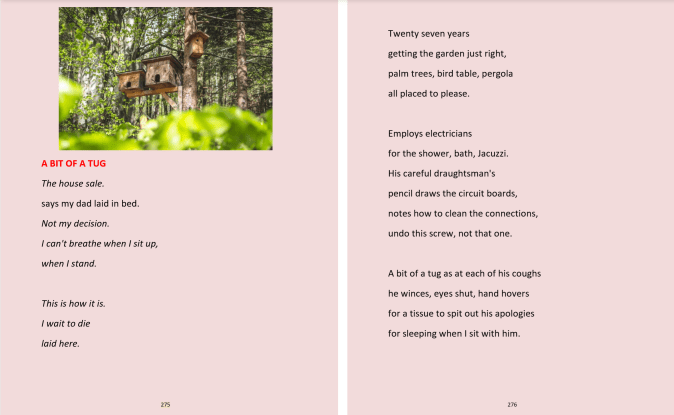

Really stoked to have my poem “A Bit Of A Tug” featured in Glomag May 2020. Thankyou, Glory
..day 90..
as above and i am not bothered
read a little about differing valves
which triggered a vague memory
wrote to the company
to give myself time
then sometime will
simply buy another pump
universal
they said it will rain
and while it looks so
out the front
not so much at the back
it is all away in the shed
tidy and dry
i had sat looking at the nut
tree thinking that it was impossible
yet tried that with the long pole
cutting thing
it don’t take long
hey presto
no huffing
nor puffing
looks prettier
the dress hanging
always a dress hanging
here in voile out there
in cotton
some come satin and trimmed
with sequins you see
they don’t fit me
while no one sees me
it is day 90
james
his fingers move along the piano
listen
to the divine air now
we are…
View original post 162 more words

 Photograph courtesy of Victor Rodvang, Unsplash
Let’s Give the World To the Children
Let’s give the world to the children just for one day
like a balloon in bright and striking colours to play with
let them play singing among the stars
let’s give the world to the children
like a huge apple like a warm loaf of bread
at least for one day let them have enough
let’s give the world to the children
at least for one day let the world learn friendship
children will get the world from our hands
they’ll plant immortal trees
– Nazim Hikmet
After Nazim Hikmet
What happiness that today
I can be “open and confident”
Though normally I would hide
in the safety of feigned ignorance,
feign joy, pretend
that I can see my clear sky
in spite of his clouds
Respectfully, I provide the detail requested …
The year is 2016
View original post 604 more words
..day 89..
joan is a strong one these days
and will defy any notion of that
we are in lockdown
so they cannot get her
not much anyways
there have been a couple
of incidents but now she
is in disguise
with different
hair
more like a lady
gender
they are in the lanes
on those strong branches
sitting alone, smiling much
like the cheshire cat did
those years back
not many can see
them
glad you can too
the bike comes out everyday
looks well in the yard
gets photographed
yet the post has not brought
my requirements
my repair kits
and maybe, and probably
i cannot fix it
so will look after it
admire it daily
unless it rains
james
he came again yesterday lovely
legally at his distance
more like the free days
before this current situation
and i have told her
that things will change
could…
View original post 28 more words
..day 88..
the sticky stuff arrived yesterday
no one read the instructions
i dunno
stuck on my fingers
very well along with
the splinter from the hedge
before
soap and hot water removed
it alongside
other things
that are more topical
at present
they say that the statue
should have been removed before
well they done it now
this weekend and chucked it in the
water
they say is should be in a museum
well it will be now
when they haul it out the
water
the grass is cut down the lane
and
makes a good photo james
all those line and patterns
it was a good walk
she has cut her hair
with clippers now
and says mine can
soon be tied back
james
i no longer look like
joan of arc
except inside myself
to myself
am cutting the jasmine back
i have learned it will still
View original post 11 more words
In an attempt to show that ‘absence’ is more important than ‘presence’ the Elizabethan poet Fulke Greville suggested that ‘like dainty clouds, / On glorious bright’ absence can protect Nature’s ‘weak senses’ from ‘harming light’. However, by the end of ‘Absence and Presence’ the realisation that absence and loss cannot be discussed in these terms compels the poet to say
‘The absence which you glory,
Is that which makes you sorry,
And burn in vain:
For thought is not the weapon,
Wherewith thought’s ease men cheapen,
Absence is pain.’
Threading its path through this deeply moving sequence of lyrics by the Spanish poet Mario Martín Gijón there is what Terence Dooley, the translator, calls ‘a love lost and found’:
‘This might sound like nothing new in the history of poetry, but the poet immerses us in his story by a complex process of linguistic recreation: recreation in the sense of…
View original post 533 more words
..day 87..
it is not just all about numbers
yet the miles you rode to see
your son sound many to me
who merely walks as yet
i take the car out once a week
just to test my eyesight as the
opticians are closed
i don’t drive far
how do you feel about your
job at the hotel
will you go back if it stays
open
when all has changed around us
when things feel more difficult or
maybe i should say challenging
i spoke to others yesterday about
banning the word coping as a negative
thing said with sympathy
head to one side
it feels a frail word and does not apply
i listen to the piano play and deal with changes
today the routine will come differing as i have holly
to burn and need to stay around
it crackles and spits like fireworks
as does the…
View original post 55 more words
Wombwell Rainbow Interviews
I am honoured and privileged that the following writers local, national and international have agreed to be interviewed by me. I gave the writers three options: an emailed list of questions or a more fluid interview via messenger, or an interview about their latest book, or a combination of these.
The usual ground is covered about motivation, daily routines and work ethic, but some surprises too. Some of these poets you may know, others may be new to you. I hope you enjoy the experience as much as I do.
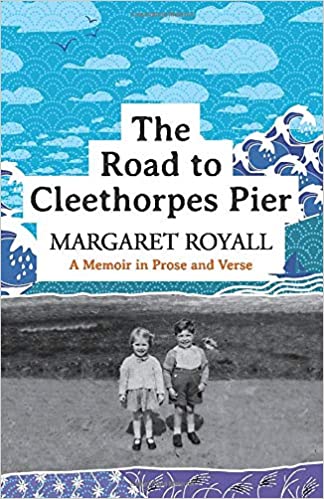
Margaret Royall
was shortlisted for the Bangor Literary Journal and Crowvus poetry prizes 2018 and longlisted recently for the Erbacce Poetry Prize. Her first collection ‘Fording .the Stream’ under a pen name Jessica De Guyat appeared September 2017 and her poems have featured in many journals and pamphlets under her own name, most recently The Blue Nib, Hedgehog Poetry Press and Impspired. Hedgehog Press published her short pamphlet October 2019 ‘Singing The Earth Awake’. Her prose/poetry memoir of childhood ‘ The Road to Cleethorpes Pier’ written in the style of a Japanese Haibun, was recently published with Crumps Barn Studio May 2020 and more recent poems are forthcoming in July in The Blue Nib print magazine.
Margaret leads a writing group and is a member of four local groups. She performs regularly at Writers Live in Nottinghamshire. She is currently working on a second poetry collection.
Twitter:@RoyallMargaret
Website: Greasleycottage.wordpress.com
Instagram: meggiepoet
Facebook blog page: Writing from the Soul at Facebook.com/margaretbrowningroyall
1. When and why did you start writing poetry?
I started composing poems in early childhood. As a young child I would wake up in the night with a poem buzzing in my head, call out to my long-suffering parents and my mother would appear, pen and paper in hand and I would dictate the poem. I wrote many poems at primary school too, since back in the early 50s poetry was firmly in the curriculum and children were encouraged to write poems, particularly about nature, learn famous poems by heart and recite them with the whole class.
As I was brought up in the Methodist church and my father was a lay-preacher my family attended chapel regularly. So my experience of poetry growing up was mainly through the hymns we sang there. This influenced me to write hymns and religious poetry, which, with hindsight, is a remarkable way to start a writing career. My aunt wrote them all down on bits of paper and labelled them ‘ Margaret’s Scribblings’. I still have them in a file today.
2. So you were introduced to poetry through your father’s involvement in the church?
My whole family, not just my father, was very much involved in our local chapel, Mill Road Methodist Church, now rebuilt and renamed St Andrews. My father ran the Boys Brigade Company and my mother the junior section of it, The Lifebuoys. In addition my aunt ran the primary section of the Sunday School, so one way or another I was there most days of the week. I myself was a member of The Girls Brigade and the Youth Club. At each of these groups hymns were incorporated into the devotional part of the activities, so the first ‘poetry’ I heard was these hymns. As far as I can remember we had poems read to us by our primary school class teacher too, which we sometimes recited back to her. My heroine was Enid Blyton back then and from a very young age my childhood ambition was to become an author like her. I can still recite such popular poems of that time as ‘Leisure’ by W.H. Davies ‘From a Railway Carriage Window‘ by Robert Louis Stevenson along with ‘Sea Fever’ and ‘Cargoes’ by John Masefield.
3. What draws you towards the Japanese forms you use in your book?
I like the simplicity of the haiku, although it is deceptively hard to write ones that really work well. It’s simple, prosimetric form appeals to me. I was introduced to the haibun concept on my annual writing retreat on Iona in the Hebrides. As part of that we are tasked to produce a modest project at the end of the course combining prose, poetry, photographs, postcards, maps etc, whatever we have gathered together during the week, which is very much in keeping with the haibun form, often used to create a travelogue.
When I started writing my memoir of childhood, The Road to Cleethorpes Pier, the initial chapters were in prose. They were put aside until last year when, at a local book festival, I attended the launch of a poetry book written, to my great surprise, by someone I had known growing up in my home town. Some of the poems he read were about Cleethorpes. Immediately it struck me that I had written poems about people I knew there but very little about the town and surrounding area. As a result I wrote a sequence of poems about the place, then realised I could fuse them together in the form of a Haibun, adding old photographs and newspaper cuttings. My publisher enhanced the idea by designing a beautiful cover using images from Japanese life and culture. I think this format helps my memoir to stand out from the crowd.
4. What is your daily writing routine?
I generally write in the mornings if I can, even though I am not a lark by nature! A German proverb says ‘Die Morgenstund’ hat Gold im Mund, ( the morning hour has gold in its mouth) and my brain is probably at its sharpest earlier in the day. However, I am equally likely to stay up late and continue writing into the wee small hours. I prefer to have a long stretch of uninterrupted time to edit recently written poems and start new ones. I regularly find time to check my ‘to do’ list of upcoming competitions and open submission windows to ensure I don’t miss deadlines. Social media posts are important for an aspiring writer too and I generally find time to check in, respond to previous tweets and posts and write my own updates. I sometimes resent this time-consuming activity but I have come to appreciate that it is an essential part of an emerging writer’s toolkit; it really helps to promote your writing profile in the right places. I try to support fellow poets I follow with congratulatory messages when they announce their successes. ‘What goes around comes around‘ and growing your circle of followers is important.
I try to find time to revisit older poems and re-edit. Often a better line or expression occurs to me when I return to work I have put aside some time ago. I can look at it with new eyes and may be inspired to rejig the order of lines or stanzas or instantly think of an appropriate line that had eluded me for weeks.
5. Why do you think recording historical details is important in your work?
In writing my memoir of childhood ‘The Road to Cleethorpes Pier’ I wanted first and foremost to leave a legacy for my children. In particular I wanted to present a picture of my youth that truly reveals how I felt and thought about life growing up in that era. To understand this fully it is important that the events I relate are placed in the context of the social history of the period. With advancing age I have come to understand how very different my post war childhood was from that of my own ( now adult) children and even more so compared to children of today. To readers of my story it would seem, without explaining the context, that life was very rigid, choices were fewer, parental rules stricter and things were therefore much more regimented and dismal. To fully comprehend attitudes, customs and peer influences it is necessary to explore that post war heritage. This in fact leads to a realisation that we post war children probably enjoyed a freedom far greater than children have at any time since – but freedom of a different kind, without the constraints of social media and neo-liberal attitudes towards parenting. I believe that well-documented historical detail based on accurate research creates a clear, credible framework for an author’s writing.
6. How do the writers you read when you were young influence your work today?
I recall that I was an avid reader as a child and read a lot of Enid Blyton, my favourite author’s books, notably The ‘Famous Five’ series, the ‘Secret Seven’ series, ‘The Children of Willow Tree Farm’ …..plus the classics of the time ‘Little Women,’ ‘What Katy Did,’ ‘Wind in the Willows,’ A A Milne, ‘Alice In Wonderland,’ Noel Streatfield’s ‘Ballet Shoes, ‘Ella at the Wells’ by Lorna Hill and many more. I think the books I read convinced me I was destined to become an author. I was particularly drawn to adventure and mystery stories and started to write my own ones of that genre. Other favourites were stories about ballet schools and boarding schools, as I aspired to be a dancer and fantasised that boarding school life might be ‘jolly good fun’! I also read poetry. I was given the ‘Book of A Thousand Poems‘ which I adored. I would try to write poems imitating my favourites. I still have the well-thumbed volume on my shelves and some pages have the corners turned down to mark favourites for easy reference.
6.1. Which poems were your favourites?
As well as the ones mentioned above I liked the poems of Christina Rossetti, Robert Louis Stevenson, GK Chesterton and Gerard Manley Hopkins. As to my favourites in more recent years, Seamus Heaney, Ted Hughes, Sylvia Plath, Wordsworth most definitely, Keats, Coleridge, Lawrence Ferlinghetti, Emily Dickinson, Robert Frost and the Dymock poets, Mary Oliver, Wendell Berry, Maya Angelou to pick out just a few who immediately spring to mind. Oh and of course my alleged ancestor Robert Browning ( my maiden name was Browning and I was frequently told by older family members when I was a child that we were descendants). Contemporary poets I have heard at festivals and whose work I have been attracted to are George Szirtes ( with whom I have done several excellent workshops), Patience Agbabe, Wendy Cope, Jo Bell, Kai Miller, Maura Dooley, Malaika Booker ( with whom I won a short mentoring session ), Helen Farish, Kerry Darbishire ( a poetry colleague and fellow Iona Alumnus, who has greatly inspired my nature and landscape poetry.) This is by no means an exhaustive list, however, as I try to read new poets as often as time permits.
7. Noting your stories of time in Germany how do you think being bilingual and experience of living in other cultures has influenced your writing?
The only influences I can imagine are the German authors I read for my A level and university courses and while living there – notably Brecht ( Mother Courage, Galileo Galilei and The Threepenny Opera), Kafka ( Metamorphosis, The Trial ), Max Frisch (Andorra), which addresses anti-semitic attitudes with their dire consequences and most certainly Heinrich Böll ( Das Brot der frühen Jahre, The Bread of The Early years) which had a profound effect on me, bringing home the deprivation of German children in the war with no food and bread becoming the symbol of affluence and lack of it symbolising abject poverty. I could say that studying these texts altered my thinking and my attitude to many things. I subsequently taught this book to my A level students and was appalled how they mocked the protagonist and called him a ‘nutter’ for hoarding scraps of bread. They had no concept of deprivation, living comfortable, middle-class lives in Grantham. I had to call them out on it and forced them to face the ugly history behind it. They were sheepish about their remarks but never again laughed or mocked in class!
My German penfriend’s family were some of the nicest, kindest people I have ever met, as are my other German friends. A deep, very honest conversation with my penfriend’s Mum re the perceived acquiescence of Germans towards Hitler and the Holocaust brought me to tears. I saw it all for the first time from the point-of-view of a young, starving, destitute German seeking escape to a better life. In conclusion I think I became more tolerant and less inclined to believe what I heard or read without fully exploring the context. These enlightened attitudes may well have influenced my writing in some modest way.
8. Who of today’s writers do you admire the most and why?
Where to begin with this? Here are just a few which spring to mind immediately.
I love Kate Atkinson’s writing. The first book of hers I read was ‘ Behind The Scenes At The Museum’ and I found her intimate, conversational style refreshingly different. It is as though she takes you into her confidence and reveals secrets.
Another author whose books I have enjoyed is Kate Mosse. I have read Labyrinth, Sepulchre and Citadel. I like the time slip element of her novels and her skilful narration keeps me spellbound. I have a great interest in the mysteries surrounding The Holy Grail, The Knights Templar, The Cathars and legends of the area around Carcassonne, so the subject matter is perfect for me.
A life-changing read for me was Khaled Hosseini’s ‘A Thousand Splendid Suns’, focussing on the mother-daughter relationship and highlighting the stigma of illegitimate birth, subjugation and abuse of Afghan women. It was an eye-opener.
My guilty pleasure for holiday reads or when I need something which is an easy but compelling read is Adele Parkes. I first bought one of her novels on a second hand book stall and was hooked. Somehow she draws you in and most times I’ve read the whole book in a couple of sittings. Her characters are well-drawn, contemporary, true to life and her writing is fluent and witty. I know a lot of people scorn chic lit but it has its place. Adele Parkes has after all written a string of no 1 best-sellers and has a huge following.
Lastly I should mention Sebastian Faulks. His ‘Engleby’ and ‘Birdsong’ stand out for me. His work has been described as being ‘popular and literary at the same time’, a good mix. Engleby was a departure from previous work in that it has a contemporary setting and is told in the 1st person. It also resonated with me as it recalled my time at Cambridge University perfectly.
9. Why did you call it “The Road To Cleethorpes Pier“? A deliberate reference to Orwell’s “The Road To Wigan Pier?
No, it was never a reference to ‘Wigan Pier’, although readers tend to assume it is. I was aware that a number of publications exist whose titles contain The Road To…….
For me when you think about Cleethorpes the immediate image is the beach and pier. That is what the seaside town has traditionally been known for. I knew instantly that the title had to have a connection to that. For me the phrase ‘the road to’ puts me in mind of a journey and my memoir of childhood is a journey back in time to revisit the people and places I knew so well in my youth. At one point I did consider changing the title to match that of one of the poems in the book ‘A Place To Grow Strong Bones’ but my publisher advised against it and urged me to keep the original one. That’s the simple truth – there is no subliminal message or reference to any other publication.
10. What do you feel the poetry adds to the prose in “The Road To Cleethorpes Pier“?
The fusion of poetry and prose is unusual, I agree. However, judging by the comments and reviews coming in people have found it extremely successful. Together with the photographic plates and newspaper cuttings it forms a kind of travelogue, referencing the Japanese Haibun. I explain this right at the start of my book. Quote:
‘Haibun is a prosimetric literary form originating in Japan, combining prose and haiku (or in this case contemporary poetry). The range of haibun is broad and frequently includes autobiography, diary, essay, prose poem, short story and travelogue’.
This device helps to break up the narrative and switch focus. It enabled me to convey some of the memories in a more vivid, immediate way. I quote here from Amazon reviews recently posted:
‘It’s a refreshing approach to interweave prose with poetry, which is done skilfully, and there is so much rich, human detail not only about Cleethorpes …..’
‘I like the way cameos of Margaret’s early life have been interspersed with poetry and photos, and the compelling narrative holds it all together’
11. What do you hope the reader “The Road To Cleethorpes Pier” will leave with?
I very much hope that readers of my memoir will enjoy reading it for a multitude of reasons.
For those around my age group and a few years older or younger I hope it will bring back many childhood memories and exclamations of “We used to do that too!” – an exhilarating stroll down memory lane revisiting school days, churchgoing, outings in an old banger, picnics on the beach and more.
For younger generations who would like to discover more about how their grandparents lived and about the post war era I hope it will offer some context of the social history and mores of those times and spark an interest to discover more.
For all readers I hope they will find it well-written and illustrated, narrated in an accessible way. I hope that it will be a pleasurable read, a book that can be picked up and put down, giving them an insight into my childhood. If they can laugh and cry with me and be enriched by the experience, I will be truly humbled. A big thank you from my heart to everyone who buys and reads ‘The Road to Cleethorpes Pier,’ a memoir that comes straight from my own heart, full of tender memories.
..day 85..
how far is it to your son’s place
how many miles did you go?
looks like i am static this morning
with heavy rain
as you know i tried before
and it went through me
right through me
so i will rearrange maybe
create another pattern
i made a bike stand with a bit of hedge
cutting which seemed appropriate
i like to see the bike standing independant
not leaning on anything
not reliant on any one thing
i wiped it gently with a three in one
oily rag and watched it shine
sun on my back
memory at my side
i am sure there were special places in
my childhood bike to oil. i think it was
blue
it was second hand
and i fell off
he told me he fell off down the lane
went right over down into the ditch
and i was sympathetic
until…
View original post 91 more words


 The Wombwell Rainbow