via Poems
Poems. Thom Sullivan’s work is well worth a gander.
via Poems
via Poems
Intriguing
Wombwell Rainbow Interviews
Pete Green
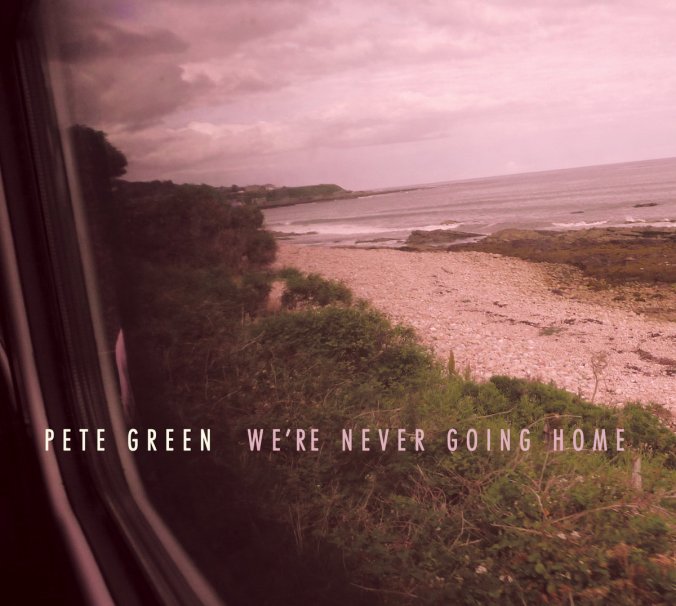
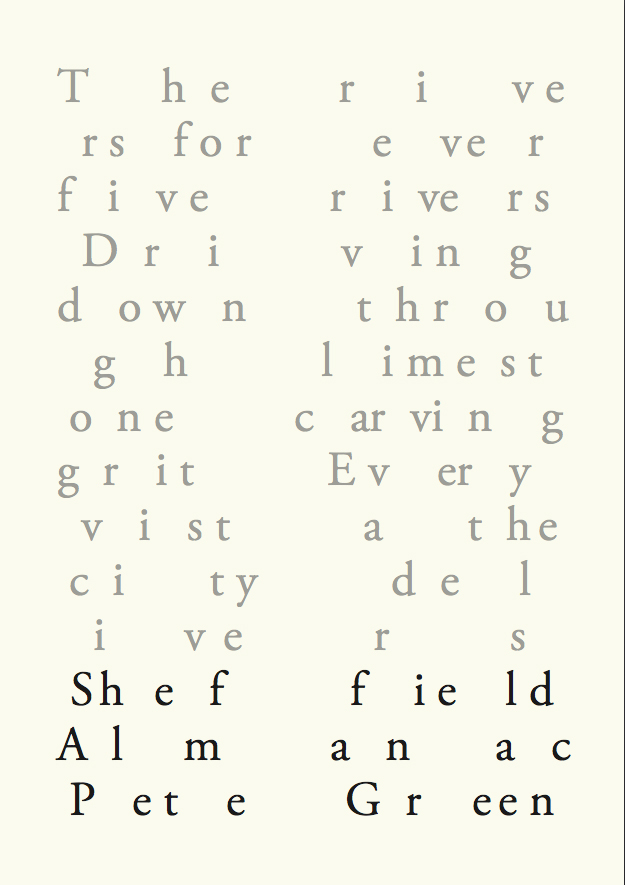
grew up in Grimsby and has lived in Sheffield since 2004. Their work is preoccupied with coastlines and other marginal locations, cities and post-industrial predicaments. Pete has been a featured poet in The Interpreter’s House; their poems also appear in The Fenland Reed, Caught by the River, Under the Radar (forthcoming), and elsewhere. A debut pamphlet Sheffield Almanac, published by Longbarrow Press in 2017, is described by Pete as “a poem in four chapters about rivers, rain, relocation, and regeneration, exploring the industrial past and post-industrial future of my adopted home city”. As a musician Pete fronts the indiepop band The Sweet Nothings and has released two solo albums, the more recent being We’re Never Going Home (Atomic Beat Records, 2016), which continues their ruminations on place and belonging.
main website is petegreensolo.com – this covers poetry and music, and their blog is there too.
Bandcamp petegreen.bandcamp.com
Soundcloud soundcloud.com/petegreen
Instagram instagram.com/petenothing
Twitter twitter.com/petenothing
Facebook facebook.com/petegreensolo
1. When and why did you start writing poetry?
The simple answer is in 2014, because I finally stopped caring whether posh people would laugh me out of the room. Because for 20 years I was so afraid of taking myself too seriously that I never took myself seriously enough.
It’s a bit more complicated than that though, and I’m still working it out.
As an adolescent I did all the correct adolescent poetry things, loved Shelley and Plath and all the outsider figures who were on fire, taught myself how to write sonnets. But I couldn’t take it anywhere because I was a working-class kid from a ruined fishing town and didn’t know anyone who liked books or had been to university. What were you supposed to do? I’d never have the confidence to send poetry to publishers. So instead I started writing songs and playing in indie bands to nine people on a wet Monday night in Coventry and never having the confidence to send demos to record labels.
And that was me done with poetry for a long time. Then I came across the Longbarrow Press anthology The Footing. This was a moment of epiphany. Everything I wanted from the written word but was afraid to ask for. As my best friend brilliantly put it, I didn’t think we were allowed to have poetry like that.
Eventually I was out walking along Padley Gorge with my first-born – three at the time, he was born into the credit crunch – and we found a fallen tree studded with coins. People pick up a rock, hammer loose change into the timber, and make a wish. A couple of days later, without really thinking about it, I’d written a poem called The Money Tree, which turned out to be a response to austerity and different ideas of wealth and value. I liked it enough to write more. And this time I’ve been lucky enough to have some wonderful people around to give encouragement and support, so I’ve never looked back.
2. How aware were you of the domineering influence of older poets, traditional and contemporary?
The other day I was looking at a discussion online about the reputation of Ted Hughes. Someone suggested that the day is past when these great figures like Hughes and Seamus Heaney towered over everything, that perhaps now “we live in the age of the poem more than the poet”. That’s an interesting one. It’s probably a good thing if we are, isn’t it? For the most part towering figures are probably just the product of male cult-making and ego.
That said, I’m still intimidated by reading some contemporary poets, by their approach or by their reputation. It depends who it is and what mood I’m in. Sometimes when I look at other poets I feel inspired but other times I feel like I’m doing it wrong. I misinterpret commentary as prescriptive, as if there’s only one approach that’s ‘right’. So if a ‘confessional’ sort of poet is praised, I might go away and look at my work and think it must be inferior because it’s not personal enough. That’s one of my unhelpful think-habits. Clearly it’s healthy to look at different approaches. I try to, and perhaps to some extent every poet has a responsibility to, but I need to spend a bit of time in a comfort zone, just to stop my self-belief from shattering. I’m frustrated by my own fragility, but there it is.
3. What is your writing routine?
In the tiny gaps between work and parenting, very occasionally I am not too exhausted to write. Sometimes it’ll happen at 4am when I can’t sleep. Sometimes it won’t. Sometimes I have to snatch five minutes on a park bench en route to the office and type up an idea on my phone. I’d love to have the sort of life that has room for a daily writing routine! If anyone reading this has a large amount of disposable wealth and would like to become my patron, please get in touch.
4. How do the writers you read when you were young influence you today?
Influence is a tricky thing to pin down. I think perhaps the writers I’ve read more recently are the ones who have influenced my voice, while the writers I read when I was young influenced my outlook.
I used to read the Romantics a lot and my absorption with landscapes might begin there. The first time I travelled through the Cumbrian fells, at the age of 18, I felt a stir of that Wordsworthian sublime, but just as an outsider looking in. It was only through John Clare, as a champion of small things, that I started developing any sense of my own belonging in a landscape. The Prelude and Clare were both on my a-level syllabus, which was a lucky accident – poetry becoming the window to a more expansive view of the world, enriched by the grandiose and the humble at the same time.
As lyric poets Elizabeth Jennings and Louis MacNeice left a strong early impression on me – and MacNeice was the key influence years later when I wrote my pamphlet Sheffield Almanac. The form he chose for Autumn Journal is ideally suited to a long, discursive poem which ranges widely in focus. The varying length of the lines allows for shifts in pace, while the rhyme scheme holds it all together. And the scope of Autumn Journal is incredible. It’s not just that he shifts focus so deftly between the personal and the social – it’s that he demonstrates their interconnectedness. It sounds like a simple thing but there are so few poets who ever pull that off.
And then there are some writers who I read extensively as a young person but who left no influence at all. There was nothing I could take from Plath or Oscar Wilde and in the end the Beats were less an inspiration than a frustration.
In retrospect, what I needed most was a contemporary working-class voice which could express vulnerability and wonder, in an engaging way.
5. What motivates you to write?
There’s still a part of me that’s doing this for adolescent, wrong-headed reasons – neurosis, solipsism, need for attention, fear of death. But I think mostly I’m writing because poetry has given me a belated last chance to do something decent. I want to find a way to document marginal places and the people in them. I’m haunted by impossible or seemingly unattainable geographical locations, and identities. I’m driven by a weird conviction that the most inconsequential scenes – the far remnant of a platform from a railway station closed down 50 years ago, or the silence drawing over a suburban pub on an overcast Wednesday afternoon – are really the most important thing of all. I’ve still got no confidence but poetry is the first thing I’ve taken seriously in my whole life.
As a latecomer to poetry I’m also keen to make up for lost time. So once the idea is there, I’m motivated to develop it into text, to write and publish, by anxieties about death and unfulfillment, which grow more and more intense as I get closer to the modest age at which my dad died. That all sounds a bit dramatic and Keatsian, but it’s good that something’s driving me on, compelling me to find the energy and time to write. Without that spur, my tiredness might win and I’d write nothing.
6. Who of today’s writers do you admire the most and why?
Kathleen Jamie is probably my favourite poet writing today: she has the keenest eye and the lightest touch. I enjoy Alison Brackenbury for her ability to see layers of past and present in a single scene, and she continues a lyric tradition which links back through Elizabeth Jennings and Thomas Hardy, perhaps all the way to Clare.
My friend Robert Etty has a unique gift for exploring complex nuances of perception and memory using everyday subject matter and plain language – a refreshing antidote to the current tendency for poetry to overdo the pyrotechnics. That said, I really liked Kaveh Akbar’s book too, and it’s a riot of surprising imagery.
For various reasons I hugely admire all the poets who comprise the Longbarrow Press community which I’m lucky enough to have found myself in. As well as an adroit editor and publisher, Brian Lewis is a remarkable poet – the tanka sequences which result from his solo walks have a quiet intensity which seems quite unlike anything else.
7. Why do you write, as opposed to doing anything else?
It’s only in writing that I can escape limitations. When I sing, my vocal range is constrained by the anatomy of my vocal cords and larynx. When I walk, my hips get sore after 15 kilometres and I can’t go any further. When I go to the pub, I run up against social anxiety, conflicted identities, and the finite units of alcohol that I’m allowed to drink because of my irregular heartbeat. But when I write, I don’t have a sense of any such limits. There’s just white space, and infinite ways of combining the words I might place into it.
Sometimes limits are comforting, and limitlessness might feel scary or overwhelming, and then I might do something else. But when I can step into that place, and the words seem to combine well, then the exhilaration of that creative act is its own reward. Before that, the sense of possibility at the outset, which radiates from the blank page, is the greatest thing of all.
8. What would you say to someone who asked you “How do you become a writer?”
For me, poetry begins only when my brain is allowed to decouple from the train of linear thought and minute-to-minute preoccupation – catching the bus, finding the meeting room – and drift more expansively, apprehending the secret connections between apparently disparate items, ideas or words. So you have to get into this other place. You do what it takes to switch into this psychic mode. Put yourself into situations that are conducive to it, and make it a habit of mind.
This definitely means becoming unmindful, for a time, of your day job. It could also mean getting away from your home, perhaps walking with no destination in mind, or catching buses and trains at random until you find a place you’ve never been before and then sitting in a café with a notebook. It could mean taking a bath at 11 o’clock in the morning, or walking in a public place with your eyes closed, or renting a cottage overlooking the cliffs of the North Sea, or just looking very closely at the back of your hand. It could be something else entirely: find what works for you and keep doing it.
There are other things as well, like reading critically and having brilliant friends to give you support and objective feedback, but those are all fairly obvious, aren’t they?
9. Tell me about the writing projects you have on at the moment.
There’s this series of city-themed anthologies of creative writing being put out by Dostoyevsky Wannabe, an indie publisher in Manchester. They’re doing a Sheffield one in the spring. This month I’m working on a short sequence of poems for that. The sequence is called ‘Pulp’. It takes the recent kerfuffle here in Sheffield about the closure of libraries and the felling of street trees as a basis for looking at contrasting ideas of value, and what we think of as renewable or disposable, as temporary or permanent.
Beyond that in 2019 I want to start working towards either a second pamphlet or a first full-length collection. Watch this space, I guess!
Wombwell Rainbow Interviews
I am honoured and privileged that the following writers local, national and international have agreed to be interviewed by me. I gave the writers two options: an emailed list of questions or a more fluid interview via messenger.
The usual ground is covered about motivation, daily routines and work ethic, but some surprises too. Some of these poets you may know, others may be new to you. I hope you enjoy the experience as much as I do.


Luis Cuauhtemoc Berriozabal
According to Bill Shute at Kendra Steiner Editions:
“Los Angeles poet Luis Cuauhtémoc Berriozabal, widely published in the alternative poetry world, is one of the most respected American poets among his peers, the quiet shaman of contemporary poetry, a man who speaks clearly and precisely and beautifully on the page, whose work radiates beauty and wisdom, but who has no need to raise his voice or to indulge in cheap shock effects and theatrics.
Between 2007 and 2016, Luis published six chapbooks with KSE—-MAKE THE LIGHT MINE (KSE #364), DIGGING A GRAVE (KSE #174), OVERCOME (KSE #141), WITHOUT PEACE (KSE #59), KEEPERS OF SILENCE (KSE #82), GARDEN OF ROCKS (KSE #103)—-as well as doing a duo chapbook with Ronald Baatz, NEXT EXIT: SEVEN (KSE #100), and appearing in two KSE multiple poet collections….LAST POEMS (KSE #115) and POLYMORPHOUS URBAN: POEMS FOR LOU REED (KSE #272).”
The Interview
In High School I had an English class where I was introduced to American Poetry. I read Edgar Allan Poe, Robert Frost, Carl Sandberg, Emily Dickinson, Walt Whitman, Wallace Stevens, William Carlos Williams, e e cummings, and other writers. Edgar Allan Poe was perhaps my favorite, because I also liked his short stories. As the years have gone on, I find myself drawn to international poets, Spanish language poets, and song writing poets, such as Dylan. I started off writing songs to and for someone I loved in my late teens. Since there was no music to these words, I was told they seemed more like poems.
Life, mundane things, social issues, almost anything I find worth writing about inspires me to write poems.
Indirectly, it was probably my father who introduced me to poetry. Our house was a house of books; too many books for someone who might hate books. My father had books from some of the best Mexican poets and Spanish language poets. He had books by Octavio Paz, Sor Juana Ines de La Cruz, and Nahuatl poetry. I would go to the bookshelves and read whatever I wanted. He also introduced me to Mexican singer, Agustin Lara, whose words were poetry. There were books by Shakespeare and ancient poets, such as Horace, on the shelves as well. I did not get into Shakespeare until the end of High School and College.
I have been aware of the older poets since the beginning. It seems like the poets I like best are no longer with us. This is nothing against living poets. Throughout my life I have read so many poets and I have so many favorite poets in no definitive order. The list is endless: Federico Garcia Lorca, Cesar Vallejo, Miguel Hernandez, Pablo Neruda, Arthur Rimbaud, Charles Baudelaire, Fernando Pessoa, Julio Cortazar, Rainer Maria Rilke, Juan Ramon Jimenez, Vladimir Mayakovsky, Robinson Jeffers, Charles Bukowski, Alfonsina Storni, Henri Michaux, Jorge Luis Borges, Du Fu, Li Po, Basho, Czeslaw Milosz, Nicanor Parra, Nazim Hikmet, Luis Omar Salinas, Leonard Cirino, and Alejandra Pizarnik. There are so many others. We can learn so much from the past and words of those who have come before us.
I write every day. There is no real routine. I write whenever I find the time. I usually write when there is complete quiet in the house and everyone is asleep. Sometimes I write with music playing. It could be classic rock, alternative rock jazz, soul, rhythm and blues; however I am feeling. I try to read a lot more than I write.
I write to get things off my chest. Reading the poetry of poets I admire, motivates me to write. Social issues, what is going on in the world, motivates me to write.
I probably write too much. I do not edit my work as much as I should. If I write something I do not like, I write something new and try to improve what I wrote before.
I found that the language of poetry has been a great influence. I quite enjoy the surrealism and nature in poetry, the way Edgar Allan Poe writes of the sea, the way Walt Whitman wrote of nature, the way Cesar Vallejo wrote of the human condition, the way Garcia Lorca wrote of the moon and rivers; the colors in the landscape. I am learning more now than when I was young. Poetry is ever evolving and reading something written long ago now is like discovering something new. I wish there were more translators in the world to make the work of poets from all over the world more accessible. When I was in college I read the poetry of the Beat Generation, the prose and poetry of Jack Kerouac and Allen Ginsburg, the work of William Burroughs. I was influenced by the stream of consciousness method of writing. If I was more disciplined and more patient, perhaps I would try and write novels. However, I prefer to write poetry.
One of today’s writers I greatly admire is Robert Edwards from the state of Washington. His poems on social issues are excellent. He uses surreal language, striking images, and speaks through the voice of working people in the struggle of the working class. Glenn Cooper from Australia is another poet I admire. His poetry could be funny, sad, and clever. His prose poetry books, Emancipator and Hum the Song of the Dead Grass are quite original. He observes what he sees and puts observations down on the page in surprising juxtapositions and word-play.
I write because I enjoy it. Through writing I can unleash any tension I have inside. I let my fear, my pain, my anger, my joy, everything I feel inside— out.
I would tell them anyone can become a writer. I would tell them to get themselves a library card and start checking out some books. I would tell them to read voraciously.
I have no current projects at this moment. I am writing all the time. I probably have enough material for a chapbook or two, but I have no offers and I have not solicited my work to any press. My last chapbook was over 2 years ago. If it was not for the kindness of Bill Shute at Kendra Steiner Editions, I probably would have less work available. He has published at least 7 of my chapbooks, including one that was co-written with Ronald Baatz. I had stopped submitting work for the past few years. I had been submitting to only about 6 to 8 journals for the past several years. This summer I was diagnosed with cancer and had to have surgery. The surgery was successful. I am currently cancer free. The surgery and scare kicked my butt. I have been writing more often and submitting more frequently to different journals. I figure if I might kick the bucket sooner than I planned, I might as well do the thing I love, and that is to write, and to share my words with readers and other writers. In the past three months I have submitted poetry to over 50 journals I have never sent work to before. I have lucked out with getting acceptances in about 10 new places. I have also sent out work to journals that have been kind enough to publish my poetry over the years.
Wombwell Rainbow Interviews
I am honoured and privileged that the following writers local, national and international have agreed to be interviewed by me. I gave the writers two options: an emailed list of questions or a more fluid interview via messenger.
The usual ground is covered about motivation, daily routines and work ethic, but some surprises too. Some of these poets you may know, others may be new to you. I hope you enjoy the experience as much as I do.
Thom Sullivan
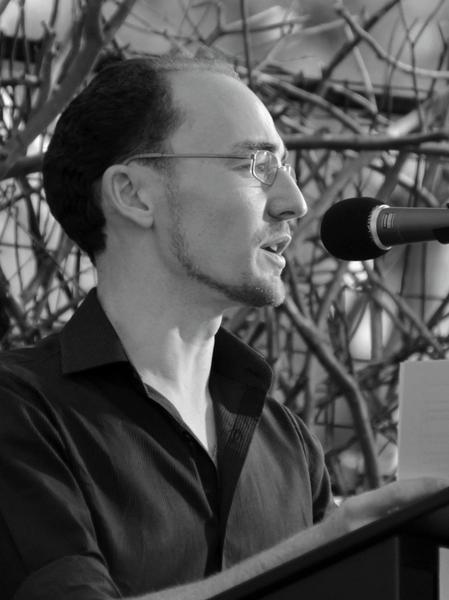
grew up on a farm in Wistow/Bugle Ranges in the Adelaide Hills, South Australia, and studied Arts and Law at Adelaide University, and Social Science at Swinburne University, Melbourne. A short collection of his poems was published in New Poets 14 (Wakefield, 2009). His poems have appeared in Australian Book Review, Australian Love Poems, Australian Poetry Anthology, and The Best Australian Poems 2014 and 2015. His manuscript Carte Blanche won the 2017-18 Noel Rowe Poetry Award and is forthcoming with Vagabond Press. He lives in Adelaide, where he works in public policy.
Website: http://www.thomsullivanpoet.com
Twitter: @thomsullivansa
Book of poems: ‘Carte Blanche’ (https://vagabondpress.net/products/thom-sullivan-carte-blanche)
The Interview
Poetry, and the impulse to write it, turned up in my life at age 14 – accompanied soon after by a clear sense that it was what I wanted to ‘do’ in life. It’s often hard to grasp why an activity or subject matter captivates us, beyond some intuition, or a sense that the thing sort of chooses us, which is how poetry has felt to me. The breadth of poetry is of vast interest to me as a reader, though my own writing began as a way of witnessing and recording the farming area I grew up in, roughly the catchment of South Australia’s Bremer River.
2. Who introduced you to poetry?
Like many Australians, I had a childhood familiarity with Australian bush/folk poetry, but my first specific encounter with poetry was through my grandmother who encouraged me, aged about 8, to memorise Dorothea Mackellar’s My Country (‘I love a sunburnt country / A land of sweeping plains’). I enjoyed studying poetry at school, though I knew how exceptional this was. I recall studying poems by modern Australian poets Bruce Dawe, Gwen Harwood, Oodgeroo Noonuccal and Judith Wright, and in my final year of high school I was introduced to the work of Donne, Marvell, Blake, Coleridge, Keats, Browning, Hopkins, Frost, and Eliot. By the end of high school, I knew I wanted to continue studying poetry and enrolled in Arts at university. In the summer break between school and university, I spent long hours with newly acquired volumes by TS Eliot and Ezra Pound. And the final steps of my introduction to poetry were via A. Alvarez’s 1962 New Poets anthology, a copy of which was in my parents’ bookshelves (Berryman, Lowell, Plath, Gunn, Hughes, etc.), and contemporary Australian anthologies Landbridge (1999) and Calyx (2000), which included work by a range of established and innovating Australian poets.
3. How aware were you of the dominating presence of older poets?
Reading has been the parent-rock of my experience as a poet, so I’ve always written with a consciousness of older poets, past and present, and the wider poetic tradition(s). I’ve never felt tradition as a tyranny or constraint, but as something that multiplies the possibilities for meaning in a poem. Notwithstanding, there’s always a need for writers to innovate, which is perhaps most keenly felt in poetry. Poets live or die by their innovations, if we’re to believe Harold Bloom’s dictum about originality and canonical strangeness. In terms of my practical experience, established poets have been very generous in their support of my writing, including a number of poets who live in my home city Adelaide, such as Ken Bolton, Aidan Coleman, Peter Goldsworthy, Jill Jones, and Jan Owen.
4. What is your daily writing routine?
My daily routines are dictated by a ‘day job’ that accounts for 8 or so hours a day, 5 days a week. While this imposes some order, my schedule inevitably falls somewhere on a broad scale from ‘perfectly-ordered-and-intentional’ to ‘scramble’. Writing and reading are inked in to the ideal version of my day. For example, when I have a day off I usually spend the morning reading at home, then writing in a café. At other times, writing has its place in my day either opportunistically, or as writing exercises that are moveable but non-negotiable parts of my schedule. I often spend an hour or so writing at a café on my way home from work. I generally prefer to write in the evenings, especially on Fridays and Saturdays when I can continue to work through into the night if a writing session has been productive.
5. What motivates you to write?
Reading and writing poetry are inseparable for me, and reading has always come first. I read and write poetry because I’m convinced it matters, as words matter, as ideas matter, as our fundamental grappling with and for meaning matters. For me, grappling with and for meaning – in a personal and sometimes shared sense – happens on the page through renovations to an arrangement of words that may eventually become a published poem. I think of the lines from Les Murray’s Poetry and Religion: ‘Nothing’s said till it’s dreamed out in words / and nothing’s true that figures in words only’. In terms of the impetus to begin writing a new poem, I often find I’m responding to: a poem I enjoy, disagree with, or find some challenge in; a conversation; a line from a song; a place or artwork; or a phrase I find some provocation, resonance, music, or amusement in.
6. What is your work ethic?
I work on the premise that inspiration is like lightning. We can’t make lightning strike at a precise time and place, though we can do things that might help rumble up a storm, or create conditions conducive to a strike if there’s a storm on the horizon – like ascending a hill or wielding a golf club. I have periods of weeks or months when I’m not regularly or actively writing, and ideas, images, lines or drafts of poems arrive only incidentally – when they do, I make what I can of them. At other times, I’m actively engaged in writing exercises, daily or several times a day, usually free writing for periods of 10 to 20 minutes. It’s a practice that generates a lot of bad and unusable writing, though there’re often poems, or parts of poems, or beginnings of poems, I can excavate from the words. Once I select phrases or lines I want to work with, a poem usually exists as a single evolving draft for a year or more before I may settle on a version I regard as complete.
7. How do the writers you read when you were young influence you today?
When I think about writers I read when I was young, I think immediately of a number of Australian poets I read in my early 20s who’ve written extensively about specific regions: Les Murray (Bunyah), Robert Adamson (Hawksbury River), John Kinsella (Western Australia’s wheatbelt), and Robert Gray (Mid North Coast, New South Wales). All had a significant influence on my earliest published poems. The work of these poets gave me permission, at a time I needed it, to write about things that were then important to me. There was an interruption to my writing in around 2010. When I resumed, the range of my work had been broadened by poetry workshops I undertook in the interim with Jan Owen, and my reading of Ted Berrigan’s The Sonnets, certain prose poems, and Franz Wright’s poetry, mainly for its use of parataxis and non-sequiturs. I still read and return to the work of all these writers, though it’s Kinsella’s new books of poems and his overall project that I’ve kept the closest interest in.
8. Who of today’s writers do you admire the most and why?
I read a lot of poetry, generally contemporary, generally by Australian and American poets, though there are plenty of exceptions. The contemporary writers whose work I return to regularly and instinctively include poets AR Ammons (1926–2001), Jorie Graham, Sarah Holland-Batt, John Kinsella, Michael Simmons Roberts, and Franz Wright (1953-2015). The prose writers or novelists whose work I return to are JM Coetzee, Karl Ove Knausgaard, Gerald Murnane, and Gail Jones, among others. I’m interested in novels that blur the line between fiction and biography. It’s a foreseeable interest for someone who reads a lot of poetry, given that the ‘speaker’ in many poems exists in the same ambiguous space between the fictive and the autobiographical.
9. Why do you write?
Poetry began for me, in some sense, as a way of being in the world, but in an inconspicuous way. I was a reluctant talker in most settings throughout my school and university years, and I still prefer how clean and deliberate I can be on paper, in contrast to the ruckus of everyday thought and conversation. I write, ultimately, out of some sense of compulsion to get things down on paper and to work them out in words. I write poetry in particular because, as a reader, I love its potential for immediacy, intensity, vitality, and precision.
10. What would you say to someone who asked you ‘How do you become a writer?’
I’ve always been a writer with a ‘day job’ that’s very separate from my writing, though my current job certainly draws on some of the same skills. Where I can, I refer to my day job in the bio-notes published with my poems, as I know how significant it would’ve been to me in my early 20s to see that a creative life can be accommodated alongside a regular job. It’s something many poets manage, including the well-known examples of TS Eliot, William Carlos Williams and Wallace Stevens, though it has its compromises in terms of time, energy and focus. Not relying on writing to provide a dependable income means I’m free to focus on poetry (rather than other more monetisable genres), and to write what I like, and as much or as little as I like. Aside from that, the recipe for how I became a writer includes these main ingredients: reading avidly and widely, writing regularly, then tentatively sending a few poems to local competitions, newspapers or journals I enjoyed reading, and persisting through rejection. Later, as my poems seemed to improve, I set my sights a little higher. I studied English at university, along with History, Philosophy and Law, all of which have been helpful in their way.
11. Tell me about the writing projects you have on at the moment.
A book of my poems, Carte Blanche, will be published by Vagabond Press later this year. While I’ve focused in recent years on generating work to complete the book, my focus more recently has been on intuiting a new direction for my work. Mostly this has meant a series of experiments and dalliances with ideas. I’ve returned to the practice of regular free writing exercises. Throughout 2018, I worked on a 365-line poem about the year, which I wrote at a rate of one new line per day.
Wombwell Rainbow Interviews
I am honoured and privileged that the following writers local, national and international have agreed to be interviewed by me. I gave the writers two options: an emailed list of questions or a more fluid interview via messenger.
The usual ground is covered about motivation, daily routines and work ethic, but some surprises too. Some of these poets you may know, others may be new to you. I hope you enjoy the experience as much as I do.

![Screen Shot 2018-12-05 at 12.27.29 pm[18882]](https://i0.wp.com/thewombwellrainbow.com/wp-content/uploads/2019/01/Screen-Shot-2018-12-05-at-12.27.29-pm18882.png?w=307&h=479&ssl=1 "Screen Shot 2018-12-05 at 12.27.29 pm[18882]")
Magdalena Ball
was born in New York City, where she grew up. After gaining an honours degree in English Literature from the City University of New York (CCNY), she moved to Oxford to study English Literature at a postgraduate level. After a brief return to the US, she then migrated to NSW Australia, where she now resides on a rural property with her husband and three children. While in Australia she received a Masters degree in Business from Charles Sturt University and a Marketing degree from the University of Newcastle. Magdalena runs the respected review site Compulsive Reader. Her short stories, editorials, poetry, reviews and articles have appeared in a wide number of printed anthologies and journals, and have won local and international awards for poetry and fiction. She is the author of the poetry books Unmaking Atoms, Repulsion Thrust and Quark Soup, the novels Black Cow, and Sleep Before Evening, a nonfiction book The Art of Assessment, and, in collaboration with Carolyn Howard-Johnson, the Celebration Series poetry books Sublime Planet, Deeper Into the Pond, Blooming Red, Cherished Pulse, She Wore Emerald Then, and Imagining the Future. She also runs a radio show, Compulsive Reader Talks. In addition to her writing, Magdalena is a Research Support Lead for a multinational company, and regardless of what she’s doing, will usually be found with a book or two in one form or another, sneaking time for reading.
http://www.compulsivereader.com
The Interview
1. When and why did you begin to write poetry?
I honestly cannot remember a time when I wasn’t writing poetry. It feels very natural to me to express myself poetically, probably because I grew up with a lot of poetry around me, from Dr Seuss and Maurice Sendak to the songs my mother, who was in a rock band, was writing and singing or the poetry my uncle set to music including literary giants like Edna St Vincent Millay, Frank O’Hara, WB Yeats and Emily Dickinson. Poetry has always been part of my environment. I created a lot of handmade ‘zines, themed booklets and celebration poems for friends when I was growing up, but my first official publication was a full centre-page spread in a Greenwich village magazine while I was an undergraduate. I’ve lost the publication now though I kept the clipping for years, but the buzz of that first publication was pretty intense.
2. Who introduced you to poetry?
I think I’d have to say my parents. They both read to me a lot – and there was poetry in the children’s books I loved. Sendak and Seuss come to mind immediately because I also bought and read many books by those two authors for my own children, but there were many books I loved when I was very young like The Story of Ping by Marjorie Flack, Goodnight Moon by Margaret Wise Brown, and Harold and the Purple Crayon by Crocket Johnson, all of which became introductions for me to what language can do as an art form, and how poetic language in particular can convey complex ideas in ways that jump past the intellect using rhythm, correspondence and imagery. I always had a visceral response to the books that were read to me, perhaps because my parents were very good readers and tended to act out the work and engage me in the process by talking to me about what they were reading, letting me fill in words and take over when I was ready. I’m deeply grateful to them for this early gift, which to be honest, I didn’t properly recognise until I was much older. Beyond being read to, I was pretty heavily influenced by my uncle, the composer Ricky Ian Gordon (https://rickyiangordon.com/), who not only set a lot of superb poems to music – the sound of which formed a backdrop to my childhood as I spent a lot of time at my grandparents’ house where Ricky, who is only 10 years older than me, was growing up, but also he was always recommending and gifting books to me. I remember a book pack he gave to me when I was around 12 after he read some of my poems. I still have the books, which include Plath’s Ariel, Sexton’s Live or Die, Brecht’s Manuel of Piety and Rimbaud’s The Drunken Boat – none of which were age appropriate (!) but they certainly left a mark on me – like many young women I became a bit obsessed with Plath in particular for a while! Even now, when I see him he’ll usually recite a poem by heart to me from someone he personally knows or has recently discovered which will immediately blow me away.
3. How aware were and are you of the dominating presence of older poets?
I’d be lying if I said I didn’t suffer from imposter syndrome regularly as a writer. However, I have always been a confident reader. The delight I take in other people’s words is something that has bolstered me since I was very (possibly too) young. I think it’s fair to say that nearly all writers, no matter how famous, need and love attentive readers and reading is my happy place. So whenever I don’t feel like I’m writer enough to match the company I’m keeping (and that company may be on the page rather than in the flesh though I have been lucky enough to meet some intimidatingly good writers), I’m always able to fall back on the joy of delighting in the words of others. It’s a great privilege I think to be able to just pay attention to art that is exquisite. The sheer joy of that deep engagement is something that I think transcends age, fame, and even genius. It’s connection that is very primal and powerful and wipes out jealousy, intimidation and domination. That said, I’m always actively seeking diversity in my reading as I’m conscious that the “dominating presence of older poets” is really partly determined by a canon that isn’t necessarily very diverse. I’m actively trying to read as diversely as possible, not only because it is healthy to be exposed to what challenges you, but also because nuance and exquisite beauty can often be found in under-represented writers that isn’t so easy to find in some of the bigger, more famous names that are treated as “classics”. So I will sometimes deliberately resist that domination.
4. What is your daily writing routine?
I think it would be a rare day when I didn’t write something, but aside from that I just write whenever I can, often in brief snatches here and there, or while everyone else is watching television in the evening once the hubbub of the day has eased off. I have done things like pulled my car over to the side of the road to write something down that came to mind; written poems during business meetings; stirred something on the stove with one hand while writing with the other – you get the idea. I have three children and a day job so can’t really be precious with the time. Poetry is particularly flexible that way and can be fitted into a tight schedule but I have to admit that fiction is harder for me to write in short bursts which is why I’ve been writing a lot of poetry over the past few years.
5. What motivates you to write?
I’m not really sure what motivates me! It’s kind of instinctual. If I don’t write almost every day I find I’m not at my best – I get cranky – some variation of hangry – like there’s a hunger that needs satiating. Being able to sit down, even for just a few minutes, and put something down in writing is part of what my body needs each day – like food, water, exercise, sleep. It’s just part of how I live in the world. I get a lot of pleasure from extrinsic motivations like publication, praise (poets seem to me to be particularly supportive of one another and I’m so grateful for the gorgeous community I feel very much bolstered by), the odd tiny financial reward, and being able to perform/read/connect with readers – they’re all really wonderful perks, but the practice of writing is something I do regardless of those things.
6. What is your work ethic?
I was born and raised in New York, and it may just go with the territory but I think my work ethic has always been a little bit too strong. I have really tried to ease back on my work ethic – to be more present; to take more time on quality over quantity; to slow down a little bit and not feel like I have to be ticking every box on a daily to-do list. That said, I’m always feeling the tug to get one more thing done today. I’m trying to plan a little bit less, and to be more open as I get older.
7. How do the writers you read when you were young influence you today?
See question 2. The writers I read when I was young have had a massive influence on me – they’ve helped formed my identity and not just as a writer. I honestly don’t think I’d be the same person if I hadn’t read so much Maurice Sendak as a child. I still get a little shiver of excitement thinking about Little Bear’s trip to the moon or that wordless page of the wild rumpus in Where the Wild Things Are. I also was heavily influenced as a young adult by writers like Czesław Miłosz who I saw perform at Princeton when I was about 17, and I used to hang around the Poetry Project at St. Marks (https://www.poetryproject.org) (around that time hoping one day I might just end up having a conversation with Patti Smith, Jim Carroll, Allen Ginsberg or Anne Waldman. I was always too shy to approach them (see question 3), but I knew very strongly then that this was a place I felt at home and that theses were voices that resonated with my young self. I took a lot of that in and it helped form my identity.
8. Who of today’s writers do you admire the most and why?
I love so many writers that the answer to this question could go on for about 20 pages! It never fails to amaze me how much superb work just keeps coming out. I’m very lucky to be a book reviewer and so I get a lot of books. I certainly don’t like everything but I get at least one book a week that is excellent, often by someone I never heard of before. I know that the minute I commit a name to paper I’ll have missed out someone critical or maybe I’ll read someone tomorrow and by the time this goes to air I’ll be sad I didn’t include them. So instead of answering this question I might just ‘gather some paradise’ (to steal a phrase from the wonderful PoemTalk podcast (https://jacket2.org/content/poem-talk) and talk about a few poets that I’ve recently read whose work I like. Please note that this is a snapshot of the work I’ve been in contact with over the past month or so and is in no way comprehensive! Tracy K Smith’s latest book Wade in the Water is just so good. You can read the title poem here: https://www.poetryfoundation.org/poems/147467/wade-in-the-water Another poet whose work gets me everytime is Danez Smith’s Don’t Call Us Dead. I don’t even know why but the book has brought me to tears several times and even now, I’m thinking of the title poem. I’m right in the middle of reading Anne Casey’s Where the Lost Things Go (https://www.salmonpoetry.com/details.php?ID=437&a=307) which is just so warm and lovely – so rich with empathy and compassion, and so very relevant. Another book I recently read and loved was Ali Whitelock’s And My Heart Crumples Like a Coke Can, ( https://www.wakefieldpress.com.au/product.php?productid=1437) which is hysterically funny, raw, sad and uplifting all at the same time. Both Anne and Ali are people I recently met and immediately became friends with – it was like we’ve known each other for years and we instantly began planning collaborations, tours, tweeting about one another’s work, etc. I’m so happy to give their wonderful books a shout-out.
9. What would you say to someone who asked you “How do you become a writer?”
At the risk of sounding like Yoda (it wouldn’t be the first time), there is no ‘become’ – if you want to write, write. Don’t waste too much time dreaming about it or making elaborate promotional plans (something I have been guilty of). Just get on with it. Write what you like to read best or what you feel compelled to write. Or pick a competition and begin working towards a submission. Push asdie the doubt and discomfort and that stupid “monkey” voice at the back of your head that says you’re not up to it, and just get on with it. No one is a ‘natural’ – first drafts are almost all bad, every writer no matter how well-respected is struggling with what they’re working on now, and the only way to get good at writing is, like anything, regular practice. You have to fail. It’s part of the learning curve – so get on with the failure, accept it, become comfortable in its presence and keep going. When you’ve got enough material or when your material fits a market, submit it somewhere. Then repeat the process. The one other thing you must do is to read, a lot, and diversely. If, like me, you’re nervous about promoting your own work or you’re uncertain that what you’ve done is great, then promote someone else. Shine a light on the wonderful, especially where it’s underrepresented. Everyone has the power to do that these days – leave a review, buy someone a book for a present, talk up what you love. Then get back to the table and make your own beauty. There’s no magic formula and raw talent that isn’t utilised is nothing. (may the force be with you…)
10. Tell me about the writing projects you have on at the moment.
I’ve just had a poetry book published by Flying Island Books titled High Wire Step, and I’ve got another one coming out in April from Girls on Key Press titled Unreliable Narratives. Neither of those were planned this time last year and I’m really pleased with how they came together and the incredible editorial support I had on both books (I’m very grateful to Kit Kelen and Anna Forsyth respectively). I’m still in promotion mode for these two and there are launches and performances planned at the Newcastle Writers Festival this year and throughout the early part of 2019. I have begun working on a new book of poetry and I am still working on my third novel, a sci fi which is proving to be quite difficult. One of my resolutions for 2019 is to either finish the thing or call it. Every time I sit down to write it strikes me as being too good and too far along to abandon but then I get distracted and it drifts away from my mind and the desire to work on it recedes. This is the year I either finish, or make the call. I also have quite a few multimedia/anthology collaborations in-hand, which I’m very excited about. I can’t divulge, but good things are on the horizon.
Wombwell Rainbow Interviews
I am honoured and privileged that the following writers local, national and international have agreed to be interviewed by me. I gave the writers two options: an emailed list of questions or a more fluid interview via messenger.
The usual ground is covered about motivation, daily routines and work ethic, but some surprises too. Some of these poets you may know, others may be new to you. I hope you enjoy the experience as much as I do.
Lavonne Westbrooks
Editor at scribblecamp.com
The Interview
1. What were the circumstances under which you began to write poetry?
Like most writers, I began to write in high school. I was lucky enough to have a creative writing teacher who encouraged my efforts. Her name was Willifred Johnson.
2. Who introduced you to poetry?
My earliest memory is of my mother reciting Wordsworth to me. Before I knew what the words meant, I knew the emotion because I heard it in my mother’s voice.
3. How aware were you of the dominating presence of older poets?
By older, do you mean earlier? I cut my poetry teeth on Tennyson, Shakespeare, and Coleridge, Byron, Shelley. Then came Yeats, Eliot, Frost, Dickinson, W C Williams, Plath, Neruda, Lorca, Pound. So many more.
4. What is your daily writing routine?
Most often, I write before my husband or any other family members wake. However, I have given my grandchildren journals, and we often spend time writing together. Of course, the three year old only practices his letters and numbers but the six year old began her journal three years ago and her stories are becoming more and more creative. I keep a notebook with me all the time and use the notes I make to flesh out into poetry later when I am alone.
5. What motivates you to write?
Interactions I observe between people, animals, the natural world, emotion that stirs inside me. I find inspiration in everything! Often, the empathy I have for others turns to words on paper.
6. What is your work ethic?
Whether I am writing, caring for family, or working at my ‘day job’, I believe that the most important thing a person can do is keep their commitments.
7. Who of today’s writers do you admire the most and why?
One writer I admire and am proud to call my friend, is Milner Place. You can read about him in Wikipedia. He began writing late in life. He is from my mother’s generation and uses the great experience of his adventurous life to connect his readers to each other and the world at large. I also greatly admire Sherman Alexie. A Native American author who writes movingly about his life in today’s society while drawing from the collective wisdom of the past.
8. Why do you write?
Because I want to remember. I want those who read what I write to remember.
9.. What would you say to someone who asked you “How do you become a writer?”
Pick up a pen, put your fingers on a keyboard. Writing must be practised. The first 500 thousand words you write won’t be worth spit, but that 501 thousandth word will be gold. Listen to all advice. You don’t have to take it – just listen to it.
10. Tell me about the writing projects you have on at the moment.
I am working on a collection of southern colloquial poems. I have several hundred and weeding through them is time consuming! Lots of rewriting and editing. I want this to be a memorable collection.
Thanks so much for giving me a chance to talk with you!
Wombwell Rainbow Interviews
I am honoured and privileged that the following poets, local, national and international have agreed to be interviewed by me. I gave the writers two options: an emailed list of questions or a more fluid interview via messenger.
The usual ground is covered about motivation, daily routines and work ethic, but some surprises too. Some of these poets you may know, others may be new to you. I hope you enjoy the experience as much as I do.


George Szirtes
many books of poetry have won prizes including the T. S. Eliot Prize (2004), for which he was again shortlisted for Bad Machine .Satantango by László Krasznahorkai (whom he interviewed for The White Review was awarded the Best Translated Book Award in the US. He is also the translator of Sandor Marai and Magda Szabo. The Photographer at Sixteen is his first venture into prose writing of his own.
What follows is an extract from his Curriculum Vitae found on his blog:
Poetry
1978 Poetry Introduction 4 with Craig Raine, Alan Hollinghurst, Alistair Elliott, Anne Cluysenaar and Cal Clothier (Faber & Faber) 0-571-11127-0
1979 The Slant Door (Secker & Warburg) 436-50997-0
1981 November and May (Secker & Warburg) 0-436-50996-2
1984 Short Wave (Secker & Warburg) 0-436-50998-9
1986 The Photographer in Winter (Secker & Warburg) 0-436-50995-4
1988 Metro (OUP) 0-19-282096-6
1991 Bridge Passages (OUP) 0-19-282821-5
1994 Blind Field (OUP) 0-19-282387-6
1996 Selected Poems (OUP) 0-19-283223-9
1997 The Red All Over Riddle Book (Faber, for children) 9780571178070
1998 Portrait of my Father in an English Landscape (OUP,) 0-19-288091-8
2000 The Budapest File (Bloodaxe) 1-85224-531-X
2001 An English Apocalypse (Bloodaxe) 1-85224-574-3
2004 A Modern Bestiary with artist Ana Maria Pacheco (Pratt Contemporary Art)
2004 Reel (Bloodaxe) 1-85224-676-6
2008 The Burning of the Books (Circle) 978-0-9561869-0-4
2008 New and Collected Poems (Bloodaxe) 978-1-85224-813-0
2008 Shuck, Hick, Tiffey: Three Regional Libretti (Gatehouse) 978-0-9554770-8-9
2009 The Burning of the Books and Other Poems (Bloodaxe) 978-1-85224-842-0
2012 In the Land of the Giants (Salt) 978-1-84471-451-3
2013 Bad Machine (Bloodaxe) 978-1-85224-957-1
2015 56 (Arc) with Carol Watts to appear later this year
2015 Notes on the Inner City (Eyewear) to appear later this year
Translation
1989 Imre Madách: The Tragedy of Man, verse play (Corvina / Puski 1989) 978-963-13-5850-6
1989 Sándor Csoóri: Barbarian Prayer. Selected Poems. (part translator, Corvina 1989)
1989 István Vas: Through the Smoke. Selected Poems. (editor and part translator, Corvina, 1989) 9789631330694
1991 Dezsö Kosztolányi: Anna Édes. Novel. (Quartet, 1991/ ND 1993) 0-8112-1255-6
1993 Ottó Orbán: The Blood of the Walsungs. Selected Poems. (editor and majority translator, Bloodaxe, 1993) 1-85224-203-5
1994 Zsuzsa Rakovszky: New Life. Selected Poems. (editor and translator, OUP March, 1994) 0-19-283089-9
1998 László Krasznahorkai: The Melancholy of Resistance (Quartet / ND) 0-8112-1450-8
1999 Gyula Krúdy: The Adventures of Sindbad short stories (CEUP, 1999, NYRB) 978-1-59017-445-6
2003 The Night of Akhenaton: Selected Poems of Ágnes Nemes Nagy (editor-translator, Bloodaxe) 1-85224-641-3
2004 Sándor Márai: Conversation in Bolzano (Knopf / Random House, 2004) 0-375-41337-5
2004 László Krasznahorkai: War and War (New Directions, 2005) 0-8112-1609-8
2005 Sándor Márai: The Rebels (Knopf / Random House) 978-0-375-40757-4
2008 Ferenc Karinthy: Metropole (Telegram) 9781846590344
2009 Sándor Márai: Esther’s Inheritance (Knopf/ Random House) 978-1-4000-4500-6
2011 Sándor Márai: Portaits of a Marriage (Knopf / Random House) 978-1-4000-4501-3
2012 Yudit Kiss: The Summer My Father Died (Telegram) 978-1-84659-094-8
2012 László Krasznahorkai: Satantango (New Directions) 9781848877658
2014 Magda Szabó: Iza’s Ballad (Random House) 978-1-846-55265-6
Editing
1991 Birdsuit: writing from Norwich School of Art and Design (9 vols) – 2000
1995 Freda Downie, Collected Poems (Bloodaxe) 1-85224-301-5
1996 The Colonnade of Teeth (co-ed with George Gömöri (Bloodaxe) 1-85224-331-7
1997 The Lost Rider: Hungarian Poetry 16-20th Century, an anthology, editor and chief translator (Corvina, 1998) 963-13-4967-5
2001 New Writing 10, Anthology of new writing co-edited with Penelope Lively (Picador) 9780330482684
2004 An Island of Sound: Hungarian fiction and poetry at the point of change (co-editor) (Harvill) 978-1846555565
2010 New Order: Hungarian Poets of the Post-1989 Generation (Arc) 9781906570507
2012 In Their Own Words: Contemporary Poets on Their Poetry, with Helen Ivory (Salt) 978-1-907773-21-1
Other
2001 Exercise of Power: The Art of Ana Maria Pacheco (Lund Humphries) 9780853318279
2010 Fortinbras at the Fishhouses: responsibility, the Iron Curtain and the sense of history as knowledge. Three lectures. (Bloodaxe) 978-1-85224-880-2
Performed Works (dates, titles and venues of performed works):
Over twenty plays, libretti, and other texts for music, mostly performed but not for professional stage
Journalism:
BBC radio and TV, The Guardian, The Times, The Independent, The TLS, Poetry Review, Poetry London, Magma, and many others. Mostly reviews of literature or art, some columns or essays, occasional pieces on Hungary and miscellaneous matters.
Honours
1980 Faber Memorial Prize for The Slant Door
1982 Elected Fellow of the Royal Society of Literature
1984 Arts Council Travelling Scholarship,
1986 Cholmondeley Prize
1990 Déry Prize for Translation The Tragedy of Man
1991 Gold Star of the Hungarian Republic
1992 Short listed for Whitbread Poetry Prize for Bridge Passages
1995 European Poetry Translation Prize for New Life
1996 Shortlisted for Aristeion Translation Prize New Life
1999 Sony Bronze Award, 1999 – for contribution to BBC Radio Three, Danube programmes
1999 Shortlisted for Weidenfeld Prize for The Adventures of Sindbad
2000 Shortlisted for Forward Prize Single Poem: Norfolk Fields
2002 George Cushing Prize for Anglo-Hungarian Cultural Relations
2002 Society of Authors Travelling Scholarship
2003 Leverhulme Research Fellowship
2004 Pro Cultura Hungarica medal
2005 T. S. Eliot Prize, for Reel
2005 Shortlisted for Weidenfeld Prize for the Night of Akhenaton
2005 Shortlisted for Popescu Translation Prize for The Night of Akhenaton
2007 Laureate Prize, Days and Nights of Poetry Festival, Romania
2008 Bess Hokin Prize (USA) Poetry Foundation
2008 Made Fellow of the English Association
2009 Shortlisted for T S Eliot Prize with The Burning of the Books
2013 Shortlisted for T S Eliot Prize with Bad Machine
2013 Best Translated Book Award (USA) for László Krasznahorkai’s Satantango
2013 CLPE Prize for best book of poetry for children with In the Land of the Giants
2014 Made Honorary Fellow of the Hungarian Academy of Arts and Letters (see above)
2014 Made Honorary Fellow of Goldsmith’s College, London
2015 Translator of László Krasznahorkai winner Man Booker International Prize
The Interview
I was in my sixth form at school, not doing well at the wrong subjects (the sciences) and drifting in all kinds of ways when I started picking poetry books off the school library shelves. Poems were small texts with lots of white space, ideal for drifting and dwelling on, for clearing my head and at the same time opening doors to feelings and ideas I was attracted to without fully understanding them., But I did not think to write poems myself until, not much later – I was seventeen at the time – a friend showed me a poem by a mutual acquaintance. Suddenly I wanted to be a poet. So I bought a notebook and started writing, a poem per day or more.
My family was not literary so we had few books, I had dropped English at O Level and, besides, it was my second language (though that thought never bothered me then). I hadn’t read much literature in the past few years and didn’t really know what I meant by being a poet or what made good poems good. It was a decisive venture into unknown territory. In many ways it was the saving of me in that my life changed and I had a purpose. I went to art school instead of university and things went on from there.
2. How aware were you of the dominating presence of older poets?
Hardly at all at the beginning. The poets I first encountered were either dead or elsewhere. But soon I made friends with another pair of boys who were also studying science but had become as involved in poetry as I was. Like me, they came from non-literary backgrounds. Steve’s father was a postman, Ashley’s a scoutmaster. We passed each other books in chaotic fashion – no particular period in no particular order – just whatever we fancied as long as it was available in cheap paperback or at the library. In retrospect, our reading would have been considered ambitious but we had no idea that it was so. That reading included Keats, Rilke, Rimbaud, Ginsberg, Cavafy, and Donne. but many others too. It was not thorough or analytical reading – none of us read through any solid body of work by a poet unless in a thin cheap paperback and we had no language of criticism. We tasted and swallowed poems whole. The poets were just names to us, not histories, but we read them with excitement. Ginsberg was still alive of course but he may as well have been in some other time zone. If I had done English A Level I suppose I would have been reading D H Lawrence, Eliot and Hughes or Plath, but they came along later., mainly under the tutelage of Martin Bell, my first real poet, who taught an afternoon a week at the art school in Leeds. And later still Larkin, Auden, Stevens and the rest. By the time I was reading Larkin I could see how he was a dominant figure in terms of tone – as was Plath in her way but I learned little directly from either because I had arrived there through other channels. Maybe Larkin’s restraint had some effect on me but it was clear that, not being English, I couldn’t simply adapt his voice. At some point I set myself to read through poetry Eng Lit style from Chaucer on. I got a decent way with that.
3. What is your daily writing routine?
My daily routine is to rise about 8am, have breakfast, then come straight down to my desk and spend the rest of the day there with some breaks for exercise. I write something every day – not always poetry, though I do use Twitter as a kind of small-scale literary notebook. I deal with correspondence. I also maintain my posts on Facebook where other thoughts tend to get some initial development. I read and I watch discussions.I am working towards a new collection booked for 2020. The poems come when I give them space to come or where they appear as potential shadows of poems. Most people consider me productive. I suppose I am.
4. What motivates you to write?
I started writing at the age of seventeen because, for the first time in my life, I suddenly understood that poetry was a way of telling some kind of truth about the world. Over the years that understanding gradually became more complex while remaining essentially the same. Now I would say writing poetry is a kind of drive to do with language, the way language moves in and out of reality to create an experience that feels as true as life, so true that it can feel like a physical shudder. That shudder is to do with the way words spring out of and form a sense of reality. It is about meaning and shadows of meaning lodging themselves powerfully in the mind.
That is what continues to motivate me.
5. What is your work ethic?
Work ethic: You don’t let other people or yourself down.
6. How do the writers you read when you were young influence you today?
Mostly exactly as they did before though some who were important then are less important now. My first loves: Rimbaud, Eliot, Rilke, Blake, Auden, MacNeice, Bishop, Yeats, Stevens and Dickinson remain top loves. Add some other figures chiefly from Europe and US, but I don’t want to list them all. There are plenty of others, plus those who have come into the picture since – either because they were really there but I hadn’t read them or because their books were published later – modify my reading of the original list. Some poets go deep early and set the landscape. Those that go truly deep don’t leave you.
6.1. What do you mean by “go deep”?
I mean that by the time the poem has been once or twice read it has left such a mark on the memory it becomes part of the receiving mechanism for whatever is read later..
I can expand on that if you like but that’s a reasonably succinct way of putting it.
7. Whom of today’s writers do you most admire, and why?
The answers to today’s writers will be generational.
Of the generation slightly older than me or roughy the same age: Peter Scupham, Derek Mahon, Ciaran Carson, James Fenton, Penelope Shuttle, Christopher Reid, and Jane Draycott. Then there is Ian Duhig, Don Paterson, Simon Armitage, Kathleen Jamie, Alice Oswald, Imtiaz Dharker, Michael Hoffman; and younger still: Tiffany Atkinson, Jack Underwood, Vahni Capildeo but now I am listing names that occur to me and no doubt I could go on, especially since I am sure to regret having left out people who should certainly be in. It isn’t a particularly original list but they are all admirable. I don’t necessarily write – or could write – like any of them but of those who are perhaps closest to me in terms of angle to the universe, I’d choose Mahon and Fenton. Mahon aesthetically-morally; Fenton: formally and emotionally. Peter Scupham was a wonderful friend and critic. I am very lucky to have met him.
 The Wombwell Rainbow