Wombwell Rainbow Interviews: R.M. Francis

Wombwell Rainbow Interviews

I am honoured and privileged that the following writers local, national and international have agreed to be interviewed by me. I gave the writers two options: an emailed list of questions or a more fluid interview via messenger.

The usual ground is covered about motivation, daily routines and work ethic, but some surprises too. Some of these poets you may know, others may be new to you. I hope you enjoy the experience as much as I do.


lamella

R. M. Francis

is a poet from Dudley. He recently completed his PhD at the University of Wolverhampton where he lectures with the Creative and Professional Writing team. He’s author of four poetry chapbooks: Transitions, (Black Light Engine Room, 2015), Orpheus, (Lapwing Publications, 2016), Corvus’ Burnt-Wing Love Balm and Cure-All (Black Light engine Room, 2018) and Lamella (Original Plus, 2019)

https://rmfrancis.weebly.com/

https://twitter.com/RMFrancis

The Interview

  1. What inspired you to write?

Growing up, my brother used to bully me in to telling him stories at night – I’d make up really rude tales about the cats in the street. I think his reaction to these stories runs pretty deeply in why I write. On one hand, I want to make sense of things and to add my perspective on things. On the other, I want to impress, show off, garner the big brother’s approval!

In terms of influence it was rock music, and that influence remains to this day. I loved Iron Maiden as a kid, partly because the older kids did, so I spent quite a bit of time trying to imitate Steve Harris and Bruce Dickinson lyrics. Maiden taught me about William Blake and Coleridge, HG Wells and Robert Aikman. Years later, The Manic Street Preachers did the same with Plath, Pinter, Miller and Mailer. Morrisey did the same. Billy Corgan did the same. My old man has always been a big reader, and a wider reader than most people I know. I was lucky enough to have some good English Teachers, Mrs Rowe from Redhill Secondary School has been particularly important to me – she gave me Simon Armitage who I’ve been hooked on for decades now. So, I suppose I was always surrounded with poems and stories and I associated them with adult / peer approval and a certain peacock-ness and I never looked back.

All of this is slightly off though because I feel compelled to write, even when I really don’t want to put pen to paper, I’m under its duress.

  1. Who introduced you to writing?

I’ve mentioned some early influences above so I won’t repeat myself. This is a bit of a weird question for me, maybe for a lot of writers too because we go through various stages of feeling different levels of “writer”. I’ve spent a lot of time doing it on my own, so I introduced myself in some ways. That said, I don’t really consider any of my juvenilia to be “proper writing”. It wasn’t until I started my MA at Teesside University that it all started to take shape. I was a student of poet, Bob Beagrie and he has had a massive influence on my approach to poetry, he introduced me to p. a. morbid who also helped steer the ship, and subsequently became my publisher – The Black Light Engine Room publishing two of my four chapbooks. I recently completed my PhD at the University of Wolverhampton, for which I wrote a novella. This was a huge learning curve for me, I’d only written poems and short prose before. You might say my supervisor, Paul McDonald (novelist, poet, critic) introduced me to tackling this form. You’ve got to keep looking and keep treating your writing as a never complete, ongoing process so I reckon we should all be on the lookout for the next person who might introduce us to writing.

  1. How aware were you of the dominating presence of older writers?

Very aware. They hang over everything I write. Dominate might be the wrong word, or at least not fully. There’s pressure from those who came before, a pressure not to repeat or merely replicate, and a pressure to live up to them – to produce work that is at least in the same stadium, if not the same game. The other side of this though is that the great gods of the past offer helping hands too. All of this is part of the process in becoming a “writer-proper” as Harold Bloom might say. We translate, clash, fuse then break away from what came before, making something new out of it. I like the idea of a hero or a set of heroes anyway, they act as target and as judge. If I can finish a poem, look up at my photo of Tony Harrison and ask, “is that alright, boss?” and get a psychic nod of approval then it means I’m aiming and I’m aiming properly.

  1. What is your daily writing routine?

I write every day and have done for quite a few years. That’s as close as it gets to a routine really. I rarely set myself word count targets or anything like that. I don’t do it at a certain time of day. I just make sure half an hour as a minimum (it’s often several hours) goes down. Of course, this all changes depending on what sort of project I’m working on. For example, I recently completed the manuscript for my chapbook, Lamella out with Original Plus Press this year. At this point the editing process takes priority over new ideas, so the routine is about reading, revising, reading out loud, revising some more, getting feedback from people, revising a bit more.

  1. What motivates you to write?

This is a tough one, and I’ve mentioned some of my motivations in the other questions so far. I’ve spoken about early reactions and of influences so perhaps I’ll tackle this question in terms of discipline. I’m motivated to write by being strict with myself. I want to try to keep getting better, to aim at a perfect sentence or perfect poem – that’s really hard to do and you can only get close to it by getting up and working at it every day. Creativity is like a muscle, the more you use it the easier it gets to use – that’s not to say everyone can do it, most people aren’t creative. Like I’ve mentioned before though, I’m under its curse, there’s part of me that does just want to slob out and watch Hollyoaks, but the more I do that the louder the little daemon gets.

The other side of this is the puzzle of it all, the game of writing is fun. Slowly whittling away at a piece is profoundly satisfying – it’s like the feeling you get when you’ve just cleared out the garage or finished the weeding. There’s orgasmic pleasure in taming the beast!

  1. What is your work ethic?

I’m quite tough on myself and I make sure I go as flat out as I can without burning out, and as rigorous as I can too. The work of Professor Jordan Peterson has helped recently, he says quite a lot about adding up the amount of time you waste, volunterily stepping up to the hard responsibility of life. I think many people think the writer needs to be liberal, flexible and open in their mindset and that is true, but you’ve got to be conservative, stoic and orderly too. Right and left brain have to work together. Being overly liberal creates nothing but ideas. One needs the conservative side to sculpt it down, polish it up and organise the time-space to allow for that. When you get tough on yourself, you get better results, that makes you tougher and you can try even harder next time, and get better and tougher and harder again and again and again.

  1. How do the writers you read when you were young influence you today?

What do you mean ‘when I was young?’ I’ve only been bald for a decade!

I’ve always loved horror and sci-fi and you can see the influence of strange bodies, uncanny tropes, off-kilter landscapes and disturbing images in my work for sure. Simon Armitage, who I read at about 14, gave me the permission to write about things in my own town, estate and experience from a very early age so that’s definitely stuck and is observable in my Black Country poems. I did Blake at A level, his fourfold vision has inspired my poetics; the way he made whatever he was talking about take on a literal, social, political and spiritual resonance.

  1. Who of today’s writers do you admire the most and why?

Wow! Where to start. I’ll pick two to make sure I don’t bore everyone.

Anthony Cartwright is my favourite contemporary novelist. He writes about the cultures and communities of Dudley, and does so in such a beautiful way. He’s measured and clever, giving the dark and light of the region. I love the way he fuses the factual with the fictional and mythical, creating storyworlds where Saxon kings, the local football team, gyspy folktales and the steelworkers all share space.

Samantha Roden is a poet published with Original Plus. She’s absolutely stunning. Sharp as a tack, vulgar as a drunk miner on payday and juggles themes that are too mucky for most poets to handle. Her work is tough and gorgeous and very funny – a much needed remedy in today’s increasingly sanitised culture.

  1. Why do you write?

When I talk to people, I don’t get the chance to edit and revise and work out the best possible way to say things. When I write, I do – it makes me appear smarter than I am. I’m half-joking. Only half, mind.

Writing is fun, like I’ve said before, there’s a dopamine hit that comes from the playfulness of working the puzzle out. That said, I don’t always love doing it, sometimes it’s a real chore, so it’s not just enjoyment.

I don’t feel like writing is a catharsis like many people do, I don’t do it for any self-help reasons or as a release in anyway. I suppose there’s a sense that the way I see the world requires documenting in some way, but that doesn’t sum it all up; that misses out the narcissistic, show-off element. I can’t deny that the peacock side of things is a pull for me. But, like I’ve said, I’m compelled by it, as if its outside of me. I know that sounds pretentious, I love-hate myself for saying that!

  1. What would you say to someone who asked you “How do you become a writer?”

Well, first I’d say never stop asking yourself if you’ve got there yet. Keep trying to become more of one. I still am.

In practical terms, you need to read loads and write as much as you can. Write and read as widely as you can too – the different blueprints will help show you what works, what doesn’t and what rules can be bent. You also need to get in to that liberal-conservative state of mind too – you need ideas, but you need craft and tradition and rigour too. Also, if at first you don’t succeed, try again. Try a second and third time. Try really hard. If you still don’t succeed, give up, it’s not for you. Despite what people say, not everyone is creative. Finally, measure your success on what you intended to do set against how well you executed it, not fame, not sales, not twitter followers.

I eat an egg everyday too – eggs are really good for your brains.

  1. Tell me about the writing projects you have on at the moment.

My next poetry chapbook is out in February. It’s called Lamella and is being published with Original Plus. It’s a series of poems that look at liminal landscapes of post-industrial Britain, the underbellies of everyday life, in the unlooked and overlooked, where we might find the lost feral, primal and off-kilter parts of selfhood.

My novella is looking for a publisher at the moment. It deals with a small community in Netherton, a suburb of Dudley, and their attempts to unlock a mystery that has loomed over them for decades. Everyone has a theory. Everyone has an experience of the ghostly activity. As they delve into the story they not only unlock the truth of the crime but, the odd borderlands of being – the liminal spaces of fear-fascination, attraction-repulsion, sex-death.

I’m currently writing a book chapter about Joel Lane’s horror stories for a collection of essays about New Urban Gothic, and I’m tinkering around with a collection of flash fictions and short stories all set on the Wren’s Nest Housing Estate in Dudley– my home. I’m making a start on writing some proper horror too – playing with the idea that there are things we do in life that welcome in the devil. I like that idea!

Verve Poetry Press have just released an anthology called 84 which is a collection about male suicide, mental health and grief – Helen Calcutt has edited the collection and has done an amazing job of curating something that touches on the polymorph nature of such a subject. I’m one amongst many awesome poets in this.

Next year, my first full collection of poetry is out with Smokestack Books, this is an angry, dialect driven Black Country collection that explores life just before and just after the Brexit referendum.

I’ve got few other irons in the fire at the moment too, in terms of literary events and publishing ideas … I’ll leave you with that.


Wombwell Rainbow Interviews: Mendes Biondo

CAUTION: ADULT MATERIAL

Wombwell Rainbow Interviews

I am honoured and privileged that the following writers local, national and international have agreed to be interviewed by me. I gave the writers two options: an emailed list of questions or a more fluid interview via messenger.
The usual ground is covered about motivation, daily routines and work ethic, but some surprises too. Some of these poets you may know, others may be new to you. I hope you enjoy the experience as much as I do.


spaghetti-and-meatballs

Mendes Biondo

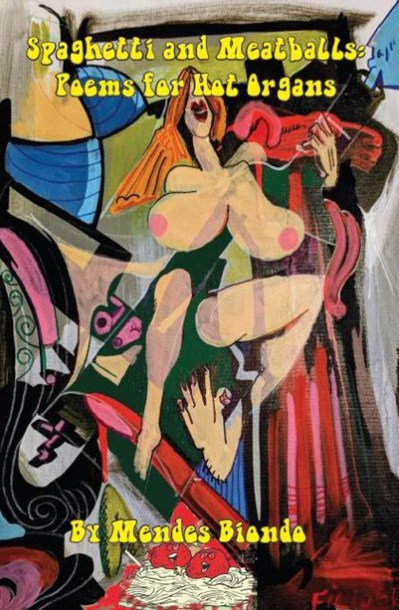
is an Italian journalist and author. His works appeared on Visual Verse, I Am Not A Silent Poet, Literary Yard, Angela Topping Hygge Feature, Indigent A La Carte, The BeZine, Scrittura Magazine, The Song Is, Poetry Pasta and other magazines. He is one of the editors of The Ramingo’s Porch along with Marc Pietrzykowski and Catfish McDaris. His book of poems “Spaghetti & Meatballs – Poems for Hot Organs” was published by Pski’s Porch Publishing.

Blog: https://ramingoblog.com/

Publishing House: http://www.pskisporch.com/

Book:https://www.amazon.com/Spaghetti-Meatballs-Poems-Hot-Organs/dp/1948920107

Magazines: https://www.amazon.com/s/ref=nb_sb_noss?url=search-alias%3Dstripbooks-intl-ship&field-keywords=The+Ramingo%27s+Porch


The Interview

First of all thank you Paul and to your rockin’ readers for having me!

  1. What inspired you to write poetry?

I started writing poetry in Italian during high school, as I believe most of us did. I needed a fast way to shot out my bad and good vibes, my blues and my joy. Anyhow, the real motivation that led me to write poetry is that, at the time, I was courting a girl and it worked, you know? This year Elena and I are celebrating ten years together. Ten years of love, words and travels here and there.

  1. Who introduced you to poetry?

High School introduced me to Italian poetry, and it was both a trauma and a wonderful discovery, while I had a great poet as godmother for English poetry: Deborah Alma, the Emergency Poet. I will never stop thanking her for the help she gave me. She pushed me to write and read more in English language. I’m still writing typos and other kind of silly things but I suppose it’s part of the game, isn’t it?

  1. How aware were you of the dominating presence of older poets?

Consider I live in Virgil hometown and near to me there are cities where Catullo and Ovid lived. Then there are all the other big masters of poetry from Dante Alighieri to Giuseppe Ungaretti. They are two-faced masters: on the one hand they are a great resource, but on the other they are a burden that is difficult to remove from shoulders

  1. What is your daily writing routine?

Working as a freelance journalist permits me to write everyday with method. Poems, generally, comes in the depth of night while I’m going to sleep. So I have to jump down from the bed and write them as fast as I can. Sometimes slumber is so heavy that they are lost in my mind.

  1. What motivates you to write?

As I said in another interview, there are two elements that move me to write: fun and other people happiness. I think poets should be catalysts and give to the reader a sort of balsamic feeling of well-being. You feel down because you’re not able to find a job and a poem helps you to find new energy? That’s what I mean. You feel happy because you’ve had sex with your partner and a poem remembers you that moment? That’s what I mean.

  1. What is your work ethic?

Stay true, also if it hurts you to write those words, or if it could hurt people you know. As a great artist of the past once said: “The flesh, my son, you have to show the flesh of the world”.

  1. How do the writers you read when you were young influence you today?

Every book I read influenced me. I’m a sponge for ideas and thoughts. Probably they gave me method in working and thinking.

  1. Who of today’s writers do you admire the most and why?

Check my friends on Facebook and you’ll find a long list of talented authors – poets and writers – I admire. They are living voices and they are strong. The only names I’ll do without taking away honours to others are Catfish McDaris and Marc Pietrzykowski. They are my fellows “musketeers” at The Ramingo’s Porch, but, first of all, they are Pals of mine.

  1. Why do you write?

Because I’m out of tune, I’m not able to play an instrument, I’m not good at drawing, I’m not able to sculpt and so on…

  1. What would you say to someone who asked you “How do you become a writer?”

Good question! I’m still looking for an answer. Ha.

  1. Tell me about the writing projects you have on at the moment.

Phew, this question is easier than the last one. I’m very happy and proud to say my book “Spaghetti&Meatballs – Poems for Hot Organs” is out. The rockin’ Pski’s Porch Publishing believed in my words and decided to publish it. Soon will be available the fourth issue of The Ramingo’s Porch magazine and it will be a good occasion to celebrate talented voices coming from all over the world. Then I’m always open for collaborations and new projects. Let’s rock all together Brothers and Sisters!

Link to the book: https://www.amazon.com/Spaghetti-Meatballs-Poems-Hot-Organs/dp/1948920107


Wombwell Rainbow Interviews: Phil Vernon

Wombwell Rainbow Interviews

I am honoured and privileged that the following writers local, national and international have agreed to be interviewed by me. I gave the writers two options: an emailed list of questions or a more fluid interview via messenger.

The usual ground is covered about motivation, daily routines and work ethic, but some surprises too. Some of these poets you may know, others may be new to you. I hope you enjoy the experience as much as I do.

philvernon_frontcover


Phil Vernon

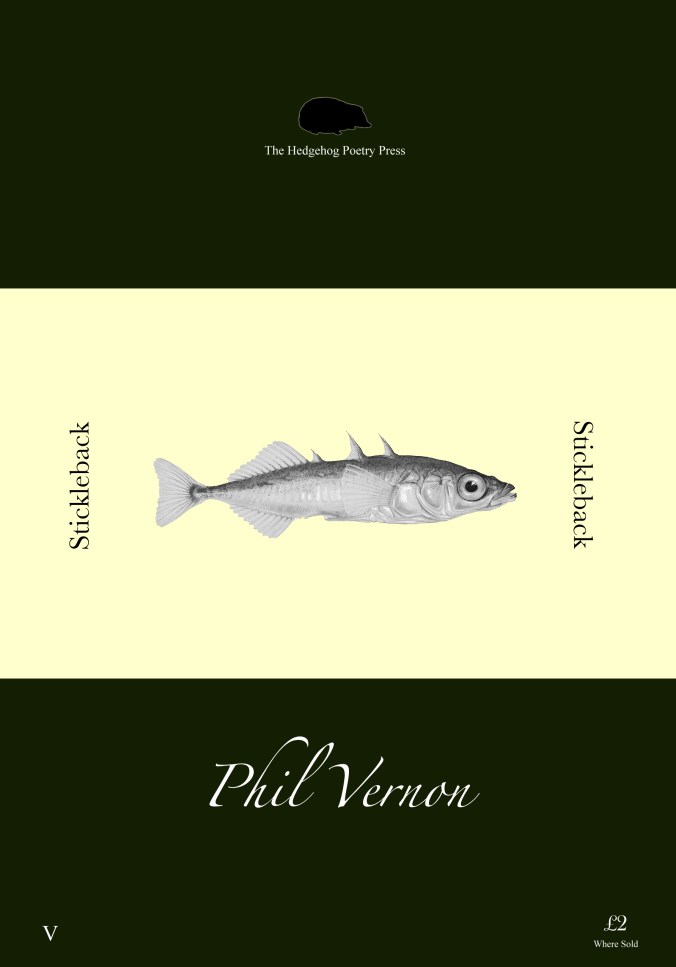
lives in Kent in the UK, where he returned in 2004 after two decades in various parts of Africa. He works as an advisor on peacebuilding and international development. He mainly writes formal poetry, finding the interaction with pre-established patterns of rhythm and rhyme can lead in surprising directions. His poems have been published in numerous magazines, journals and websites, and been shortlisted in, and even won a couple of competitions. A micro-collection, This Quieter Shore, was recently published by Hedgehog Poetry Press https://www.hedgehogpress.co.uk/product/stickleback-v-phil-vernon-this-quieter-shore-limited-print-edition/

Some of his poetry can be found on his website www.philvernon.net/category/poetry.

The Interview

  1. What inspired you to write poetry?

I have written poetry during three phases of my life. At school, and for a year or two thereafter, I wrote a few poems, but I can’t recall why, and they weren’t much good. In my late twenties I lived in a remote village in Sudan and wrote poems as a way to compress and express my sense of awe at the landscapes and the sheer difference. And then I took up writing poems again six years ago, partly as a way to occupy long international flights and my (then) daily commute, and got hooked.

  1. Who introduced you to poetry?

Hard to recall. But I do remember my father persuading me and by brother to learn Blake’s Tyger Tyger, burning bright,/ In the forests of the night by heart.

  1. How aware were you of the dominating presence of older poets?

I think I’ve always been aware of both older and modern poetry.

  1. What is your daily writing routine?

I read some poetry most days, but may go for a week or two without really working on a poem. I keep a notebook where I scribble odd ideas as they occur. Sometimes they never get used; sometimes I use them in a poem the same day or soon after; other times I might pick them up again a year or more later, and start to work a poem around them. Once that happens I work fitfully on the poem until it seems to be finished – perhaps 3-4 times per day. And then later on, revise it again; and again. And probably again.

Because I usually write formal verse, it can take a long time to get the form and content to fit.

  1. What motivates you to write?

The pleasure of the craft. Interest in the insights which emerge. The desire to say something interesting and/or inspiring in an aesthetically successful way. Pride when it comes together.

  1. What is your work ethic?

Driven by the work, rather than driving the work.

  1. How do the writers you read when you were young influence you today?

I used to like Dylan Thomas then, and probably unconsciously tried to imitate his musicality. Nowadays I find his style outweighs the content. TS Eliot was a favourite and probably influences me unconsciously still.

When I was a little older, I remember being knocked sideways by Larkin’s Aubade when it came out. He is still a favourite and perhaps my most important influence. I am impressed by the virtuosity, and moved by the emotions of Arundel Tombs and The Whitsun Weddings, for example.

  1. Who of today’s writers do you admire the most and why?

Don Paterson consistently, for his ear, his insights, his technique and knowledge.

  1. Why do you write, as opposed to doing anything else?

Probably because I am still trying to make sense of things, and poetry is a way to explore that.

  1. What would you say to someone who asked you “How do you become a writer?”

Read a lot. Then write. Keep doing both.

  1. Tell me about the writing projects you have on at the moment.

Two main threads to my poetry currently. First, I’ve been writing a series of poems loosely woven around the garden, gardening and landscape more broadly, as metaphors for a variety of things including relationships, dealing with change, and examining the concept of progress. For example:

Mysterious garden

That loosestrife overwhelms the rose

in June, which branches bow when wet,

a secret silence when it snows,

how birds change key before sunset,


that leaves now green were apple red,

where wrens build nests behind the fern,

which clematis wear velvet threads

and which wear silk: all this we’ve learned.


And yet, it’s only as we turn

the soil, and sow and thin and hoe,

and tie the taller stems to stays,


and coax the unforeseen, and prune

to let light in, we start to know

what this year’s garden wants to say.


Second, I’m interested in how individuals – some well-known, many not – interacted with the circumstances they found themselves in at their particular moment in history: how they were shaped by their environment, and shaped it in return. For example:

Catherine writes home from the Via Appia  

After the Romans subdued the insurrection led by Spartacus,

they crucified more than 6000 slaves along 130 miles

of the Via Appia. – Nineteenth century guide book.


‘A cold, dry wind blows hollow through the hearts

of travellers from Capua to Rome;

a cross set every thirty paces marks

their haunted progress northward and reminds

them uniformly, order outweighs stone.


Uncountable, the undrawn souls consigned

to void, unnamed in epitaph or song…

Conflict is human history’s constant bride;

her dowry underwrites a wedding feast

for which both invitation list and night are long.


With fewer wars today, by learning peace

we darkly learn ourselves: is it enough

we see the cruelty in war decrease

and yet sustain it, plainly hidden among

the dancing shadows of our winter hearth?


All hurt is felt and meted out by one

and every violence is intimate:

upon each cross a soldier nails a man.

Each night I shrink and tighten, and await

the terror of your voice, your breath, your hand.’

On Fiction Wombwell Rainbow Interviews: Kerry Hadley-Pryce

On Fiction Wombwell Rainbow Interviews

I am honoured and privileged that the following writers local, national and international have agreed to be interviewed by me. I gave the writers two options: an emailed list of questions or a more fluid interview via messenger.
The usual ground is covered about motivation, daily routines and work ethic, but some surprises too. Some of these fiction writers you may know, others may be new to you. I hope you enjoy the experience as much as I do.

51wy57oop0l._sx324_bo1,204,203,200_

Kerry Hadley-Pryce

was born in the Black Country. She worked nights in a Wolverhampton petrol station before becoming a secondary school teacher. She wrote her first novel, The Black Country, whilst studying for an MA in Creative Writing at the Manchester Writing School at Manchester Metropolitan University, for which she gained a distinction and was awarded the Michael Schmidt Prize for Outstanding Achievement 2013–14. She is currently a PhD student at the University of Wolverhampton, researching Psychogeography and Black Country Writing. Gamble is her second novel.

Here’s a link to Salt Publishing’s website with info about her two novels: https://www.saltpublishing.com/collections/vendors?q=Kerry%20Hadley-Pryce

A link to her website: https://kerryhadley-pryce.weebly.com/

The Interview

  1. What inspired you to write fiction?

I can’t remember not wanting to write – physically handwrite, I’m talking about. My parents used to give me notebooks before I went to school and I used to write ‘details’ in there. My Dad kept them all, these notebooks. I used to love the feel of the pen in my hand. When it came to writing fiction, I always loved making up stories, creating comic books (or ‘graphic novels’ as they’d be called now). I think it was my Dad, who read a lot to me and encouraged me to be a read, and who introduced me to the library, who inspired me to begin writing fiction.

  1. Who introduced you to fiction?

Reading fiction? My Dad. He was a very committed reader and borrower of books. He believed that reading was vital, and he encouraged me to read as widely as possible. School, I hated, in every single way, so whatever works of fiction I was introduced to (‘Northanger Abbey’ and ‘Macbeth’ together with a lot of war poetry, as I remember) had no impact on me whatsoever.

  1. How aware were you of the dominating presence of older writers?

I read a lot of Dickens as a kid, and made a project of reading everything by Edgar Allan Poe, so, yes, very aware, I’d say.

  1. What is your daily writing routine?

I work to a self-imposed deadline every week. I put together a timetable every Sunday night so I know where I am. I like to write a short story every week, so at some point in my timetable, that happens, but it depends where I am with the project I’m working on as to how the routine goes. Now, for example, I’m editing a novel, which is a different to writing the first draft. I like to make an early start on that, so a 5am start is good as I can get a couple of quiet hours in before the issues of the day start to crowd in. I have a break about 7.30am, take the dog for a walk, then take myself to the gym (I run 10km a day) and might have a couple of hours later on in the day. I’m a Visiting Lecturer at Wolverhampton University, where I’m a PhD candidate, so fit that in, and a bit of property development.

  1. What motivates you to write?

This is a good question. The therapy of it, really. I think it’s like some kind of meditation, for me, a way of getting into a proper state of flow. Writing is a solitary process, and I like that aspect of it. It’s a bit like wakeful dreaming. If I don’t write, I actually feel ill.

  1. What is your work ethic?

Organised, purposeful, serious (see question 4.).

  1. How do the writers you read when you were young influence you today?

I remember reading ‘Alice in Wonderland’ and being profoundly moved by it when I was about eight. There is, of course, a depth of darkness about that novel that is utterly affecting. I missed out a lot of the ‘appropriate’ fiction when I was a kid, skipping across to Andrea Newman quite quickly. That sense of darkness and domestic crisis seem to be themes I return to now.

  1. Who of today’s writers do you admire the most and why?

Not in any particular order: Paul Auster – I love the way he evokes a sense of place. Now, here’s a creepy fact: I went to New York a couple of years back and cruised around Park Slope in Brooklyn because that’s where he lives… (I didn’t see him, sadly.) Vesna Main is a brilliant short story writer. Her work has an excellent unsettling feel. Cynan Jones, because he has an amazing way of constructing sentences and he writes short novels, set in Wales which are absolutely exquisitely dark. Daphne Du Maurier, obviously. She was prolific and her short stories ‘The Birds’ and ‘Don’t Look Now’ are outstanding. Jennifer Egan, for her very clever, experimental writing. Michel Faber who is a total master of writing about place, of making the everyday not everyday at all. I could go on…

  1. Why do you write?

I love everything about it. I like the intrinsic pleasure of it. I like it when an idea materialises as a plot. Through writing I’ve met some fantastically talented people I’d never have met otherwise.

  1. What would you say to someone who asked you “How do you become a writer?”

You have to think of ‘becoming a writer’ as ‘becoming an athlete’. Same thing. See, just because you can run a bit doesn’t automatically make you a champion marathon runner, and just because you can physically put pen to paper doesn’t make you a ‘writer’. Professional writing is a cognitive process, so you need to write, write, write, and read, read, read as much as you possibly can. You need to suck it up, learn and write. You need to actually do it. You need to be open-minded to criticism and rejection, take advantage of any opportunity to write, and you need to heed advice. You need to do it, then do it some more. You need to stop thinking about it and do it. You have to get your head round the fact that not everything you write will work, or be any good. That doesn’t matter. We’re lucky to live in the times we do, as far as writing is concerned, because there are so many ways you can get your work out there: attend open mic nights, construct a website, do a creative writing course – any way you can motivate yourself to write, do it. Don’t go worrying about that massive multi-million pound publishing deal because that’s not the point. Make a project of your writing. Keep busy. When someone asks, tell them you’re a writer. Make a decision, and do it.

  1. Tell me about the writing projects you have on at the moment.

My first two novels, ‘The Black Country’ and ‘Gamble’ are published by Salt Publishing, and I’m writing my third novel with a working title of ‘God’s Country’. It’s part of my PhD in Psychogeographic Flow in Black Country Writing, and is another novel set in the Black Country. As I’m editing it, I am aware it’s becoming more and more dark and more unsettling, which I’m pleased about. I have a short story due to be published by Fictive Dreams, and I’m writing more of those. I had an idea for a series of ‘Black Country Noir’ novels, so I’ve written the opening to one of those, and that’s simmering on the back burner. Teaching creative writing is a pleasure of mine, as is my Visiting Lecturer work at Wolverhampton Uni. I’m also involved with a ‘Smells and Memory’ project called ‘Snidge Scrumpin’’ at the university, in which we’re researching Black Country smells and the memories they invoke, and I’m also writing some non-fiction for that.


my god is – Paul Brookes

Stoked to ne featured by Bola, this months editor at Burning House Press.

bolapoet's avatarBURNING HOUSE PRESS

my god is

imperfect, a perfect image for me.
humbled by its mistakes.

my god is a mistake.
a wrong answer,

differently abled.
its winters often in spring.

its summers sometime in autumn.

View original post 162 more words

Wombwell Rainbow Interviews: Andy Armitage

Wombwell Rainbow Interviews

I am honoured and privileged that the following writers local, national and international have agreed to be interviewed by me. I gave the writers two options: an emailed list of questions or a more fluid interview via messenger.

The usual ground is covered about motivation, daily routines and work ethic, but some surprises too. Some of these poets you may know, others may be new to you. I hope you enjoy the experience as much as I do.

andy armitage

Andy Armitage

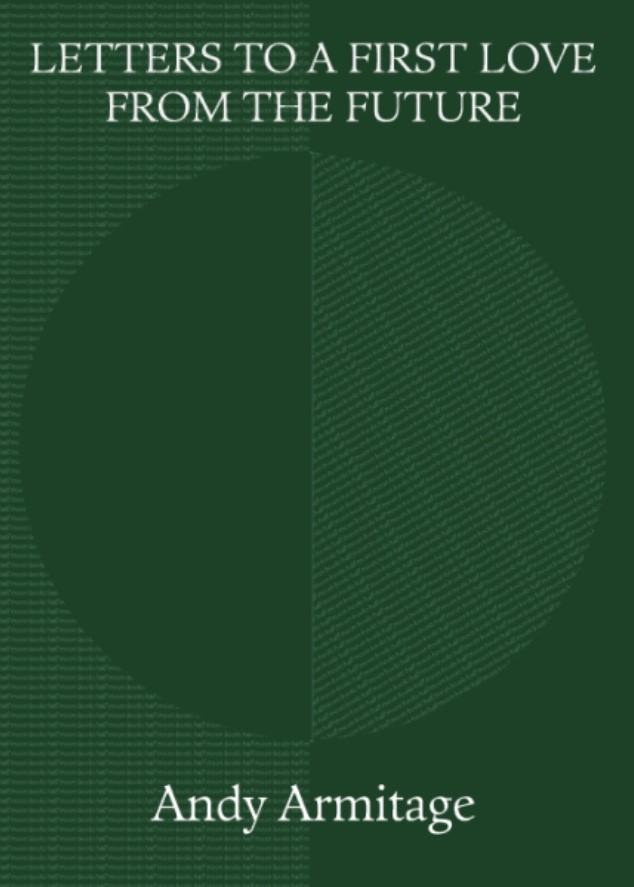
is a poet and editor from Leeds, West Yorkshire. His first book, ‘Letters to a First Love from the Future’ was published by Half Moon Books in 2018.

Andy won First Place in the Leeds Museum Poetry Competition (2017),  was Highly Commended in the York Literature Festival Competition (2018) and Commended in the Elmet Poetry Prize (2018).

His website is: www.andyarmitage.com

The Interview

1. What inspired you to write poetry?

I kept on reading poems that had a powerful affect on me. I could see how some of these poems seemed to work and poems seemed like quite simple things, made up of so few lines on the page and I thought – I bet I can do that. I just started by imitating other poets. It’s like watching a great footballer and then kicking a football. You understand what can be done you just have to work out how.

2. Who introduced you to poetry?

I remember reading Keats and Shakespeare as a teenager but struggling with the language and getting frustrated I couldn’t understand everything. I was more into song lyrics, which seemed less pretentious at the time.  When I went to university and learned some strategies for reading poems I was hooked quite quickly.

3. How aware were you of the dominating presence of older poets?

I don’t feel that this is a problem. Earlier poets are there to show how to write great poems (or how not to) and to inspire rather than oppress. I rarely read a poem and think ‘I could never write as well as that’; more often I think ‘I want to write as well as that’.

4. What is your daily writing routine?

I’m not a morning person but I usually write first thing in the morning for an hour before I’m dressed as it’s the best time to catch myself off guard and get past the censors.

5. What motivates you to write?

I enjoy the feeling when something I write surprises me. It feels as though I’ve made a discovery about myself, or about whatever I’ve been writing about, that I would not have made without the poem – it’s like a gift.

6. What is your work ethic?

I try and write an hour a day. If I have an idea that’s exciting me then I think about it and make notes all day and return to it on an evening.

6. How do the writers you read when you were young influence you today?

W. B. Yeats and Ted Hughes have had a tremendous influence on my writing and on my understanding of what makes a great poem. But whenever I encounter a new poem that interests and surprises me, my idea of what makes a great poem evolves.

7. Who of today’s writers do you admire the most and why?

David Constantine would be the poet I most admire, if only for his first book ‘A Brightness to Cast Shadows’ which is a masterclass in lyrical Romanticism. Of the emerging poets coming through, I really admire Tom Weir who has such a delicate control of language and of images and ideas; his poetry illuminates the most ordinary objects and events.

8. Why do you write, as opposed to doing anything else?

I like the egalitarian nature of writing. You don’t need any specialist equipment, you don’t need a race car, you don’t need a guitar and an amplifier, you just need a pencil and paper.

9. What would you say to someone who asked you “How do you become a writer?”

You just write. When you stop, you stop being a writer – so just keep writing as often as you can manage. To be a good writer you also need to read other poets.

10. Tell me about the writing projects you have on at the moment.

I’m still promoting my first book ‘Letters to a First Love from the Future’ a sequence of poems that came out last year with Half Moon Books. I’m not writing new poems about love or any theme in particular. The last thing I wrote was about the Yorkshire Ripper.

Wombwell Rainbow Interviews: Melanie Branton

Wombwell Rainbow Interviews

I am honoured and privileged that the following writers local, national and international have agreed to be interviewed by me. I gave the writers two options: an emailed list of questions or a more fluid interview via messenger.

The usual ground is covered about motivation, daily routines and work ethic, but some surprises too. Some of these poets you may know, others may be new to you. I hope you enjoy the experience as much as I do.

51ixxpxelxl._sx326_bo1,204,203,200_

Melanie Branton

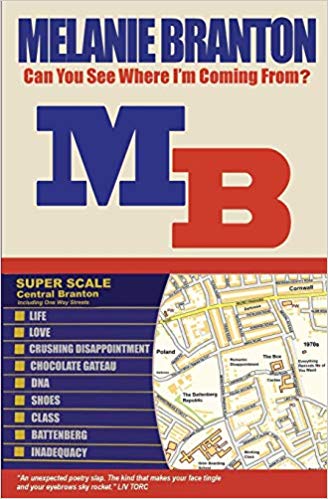
is a spoken word artist and poet from North Somerset. She has two published collections, Can You See Where I’m Coming From? (Burning Eye, 2018) and My Cloth-Eared Heart (Oversteps, 2017). Her work has been published in journals, including Algebra of Owls, Atrium, Bare Fiction, The Frogmore Papers, The High Window, The Interpreter’s House, Obsessed With Pipework and Prole. She has also reached three national slam finals and performed at numerous spoken word nights and arts festivals, including Womad.

https://melaniebranton.wordpress.com/   https://www.facebook.com/melaniebrantonpoet/

Twitter: @sapiencedowne

The Interview

  1. When and why did you begin to write poetry?


I don’t honestly remember. I know I had begun writing poetry by the time I was five, because I have a fleeting memory of a poem I wrote then and know it wasn’t my first. I wrote poetry continually and prolifically until I was about 20. Then some cutting criticism from a university lecturer made me feel that I was gauche and talentless and my poetry was crap and I stopped writing for nearly twenty years (although I continued to read and love poetry).

I started writing it again in my late 30s, when I was caring for my elderly parents. It happened by chance. I wanted to find an activity or group I could join to give me some time out of the house, but couldn’t join a theatre group or choir because the uncertainty of my parents’ health meant I couldn’t commit to being available for set performance dates. Then I saw a poster for a poetry writing group and thought, “That sounds fun and it’s something I could dip in and out of.” As soon as I went to one of their meetings it felt like coming home.

Then I went to a poetry slam when I was 46, just after I’d stopped caring for my parents, and was instantly hooked. That’s how I got into spoken word.

  1. Who introduced you to poetry?

I don’t know where I got it from. My parents had no interest in poetry (although they recited nursery rhymes and nonsense rhymes to me, as I suppose most parents do). They were madly aspirational and wanted my sister and me to have the education they hadn’t had, so surrounded us with books and made sure we had library cards practically as soon as we could walk, so I may have come across poetry in books or on children’s TV. Once she saw it was an interest of mine, my mother encouraged it, by buying me poetry books and praising my poems and I doubt if I would have become a poet without her.

3. How aware were and are you of the dominating presence of older poets?

I’m not entirely sure what this question means. Looking through other poets’ response on your website, many seem to have taken it as “How aware were you of previously published or well-regarded poets or poets of the past influencing your work and stopping you finding your original voice?” Others seem to have read it as “How aware were and are you of the literary canon?” I have become more and more aware of it as I’ve got older and I think this awareness does hold me back. I sometimes meet young spoken word poets who haven’t read a lot of poetry yet and although I think they need to read more if their poetry is going to develop, not having read it is in a way quite liberating for them, because they’re not afraid of being cliched, they’re not afraid of breaking the “rules”, because they don’t yet know what the clichés and the “rules” are. They just write and write and assume everything they write is bloody brilliant and through that process of writing they get better. Whereas I’m often too hesitant to finish things, because I’ve got this internal voice saying, “That’s been said before”, “Ooh, that’s a mixed metaphor!”, “ ‘Shards’? Seriously?” etc.I first read the question, though, as, “How aware were you of older poets hogging all the career opportunities and not letting young poets like you have a crack at the cherry?”

In my case, especially when I returned to poetry in my 30s and 40s, many of the poets who were “dominating” the scene, especially in spoken word, but also in page poetry, were actually much younger than me. I really think we have to get away from this idea that older poets are stifling and “dominating” younger poets and that young poets need all the encouragement and help. It’s ridiculous to suggest that Andrew McMillan and Martha Sprackland needed more help to get onto the first rung of the poetry ladder than a 40-year-old factory worker who discovered poetry on an adult literacy course or a 50-year-old housewife who only had time to write seriously once her children had left home.

3. What is your daily writing routine?

I don’t really have one. I know that makes me sound amateur and dilettante and hopeless and I keep meaning to establish one, but at the moment I write when I have the time and when the Muse comes to me, with no fixed pattern (although I am grateful to journals with submissions deadlines, especially those with set themes, because there’s nothing like a deadline to give the Muse a good kick up the arse).

5. What motivates you to write?

It depends. Sometimes it is pure self-expression – when I am hurt or angry or depressed or in love, I just need to let it out on paper.

Sometimes it’s something that I’ve read – it could be a story in a newspaper or it could be a mundane line in a notice or on food packaging that means something different when taken out of context.

Sometimes I want to explore an idea and find out what I think about it. I wrote my most recent collection, Can You See Where I’m Coming From?, sifting through my childhood memories and trying to explore my fractured sense of class and national identity.

I attend a local writers’ group (see answer to Q. 1) where we get set a theme every month and that is enormously motivating and forces me to write about topics I wouldn’t have chosen – I have produced some of my best work in response to these prompts. It’s also very helpful as it’s a very accepting, non-judgemental group and I take greater risks when writing for them, as I’m not scared to make mistakes in that supportive atmosphere.

I teach English part-time and it is surprising how often I have been inspired to write a poem about a writer or a topic I am teaching: I have a poem about almost every writer on the ‘A’ level English Lit syllabus, a couple of poems about the history of the English Language, and I use grammar as a metaphor so often in my poems that it’s becoming a bit of a cliché.

6. What is your work ethic?

I’m basically very lazy.

7.  How do the writers you read when you were young influence you today?

The two writers I most admired as a teenager were Roger McGough and John Betjeman. I don’t like them as much as I used to and I don’t write anything like either of them, but occasionally I can hear their voices coming out in my work, more so than the voices of many of the poets I most admire now. And I hope I have taken that light touch that they have, that ability to make a serious point more poignant by not overlabouring it and giving it a comic spin.I’ve always been a sucker for a ballad and I’d like to think that some of that passionate use of rhythm and compact storytelling has carried over into my verse.

I also studied Philip Larkin for ‘A’ level and he continues to influence me hugely – I love his unpretentious use of language, the way he conveys a huge amount through sudden changes in diction, the way he uses line breaks to create ambiguity, the way he’s able to expose his own deficiencies and unpleasant features without either trying to justify them or angling for pity.

I have always adored Seamus Heaney and even today, if a poem of mine isn’t working, I look at the ending and think “How can I make this more like a Heaney ending?” and nine times out of ten it fixes the problem.

8. Who of today’s writers do you admire the most and why?

Too many people to mention. Here’s a few: Selima Hill, whose voice is utterly inimitable. She’s accessible, funny, unpretentious, but at the same time difficult, surreal, shocking, and her poetry works on many, many different levels. She can suggest a detailed, disturbing story in just a few lines.

Raymond Antrobus, who straddles literary poetry and spoken word effortlessly and like many great writers is preoccupied with exclusion and not knowing where he belongs, as a mixed-race, working-class, hearing-impaired, literary poet. He’s also a very economical storyteller whose each word has been weighed for its precise connotations.

Fran Lock, who manages to combine the spontaneity and pure emotion of confessional poetry or spoken word with the dazzling, swaggering, self-consciously ostentatious crafted language of a latter-day Shakespeare.

9. Why do you write?

Because it’s always been my go-to way of getting a grip on my emotions and putting my thoughts into order. And because I am, frankly, shit at everything else.

10. What would you say to someone who asked you “How do you become a writer?”

The last thing the world needs is more people who want to “become a writer” more than they want to write. If what they mean is, “I write already. How do I become a published writer?”, I’d say submit to journals and/or enter competitions. Be prepared for it to be a slow and painful road and to receive a lot of rejections. If they want to be a performance poet, enter lots of open mics and slams and once you’ve got a bit of experience start asking promoters for feature slots. Be prepared for it to be a slow and painful road and to receive a lot of rejections.

If what they mean is, “I write already. How do I get better?”, I’d say read/listen to as much poetry as they can. Don’t just read/listen to poetry they like and find instantly accessible. If they read/hear a poem that’s been published in a top journal/won prizes/been otherwise highly acclaimed and they don’t understand why, keep reading it until they do understand. They don’t have to like the poem, but getting to the point where they at least see what other people prize in it will help expand their knowledge of poetry.

11. Tell me about the writing projects you have on at the moment.

I’ve published two collections in a little over a year and am in no hurry to bring out another, but I am interested in doing more writing for children and hope to take a children’s poetry show to the Edinburgh Fringe in the summer, so I’m working on that.

My parents died in 2013 and 2015, respectively, after a long battle with both dementia and physical health problems, and I cared for them for most of that time. I haven’t written much about it so far, because I know it’s going to take a lot out of me emotionally and I haven’t felt ready to deal with that, but I’m starting to tackle it now and I think that could dominate my writing for a time.

Wombwell Rainbow Interviews: Anne Caldwell

Wombwell Rainbow Interviews

I am honoured and privileged that the following writers local, national and international have agreed to be interviewed by me. I gave the writers two options: an emailed list of questions or a more fluid interview via messenger.

The usual ground is covered about motivation, daily routines and work ethic, but some surprises too. Some of these poets you may know, others may be new to you. I hope you enjoy the experience as much as I do.


Anne Caldwell

is a freelance writer, arts consultant and lecturer based in West Yorkshire. She has published a pamphlet: Slug Language (Happenstance) and two collections of poetry: Talking with the Dead and Painting the Spiral Staircase (Cinnamon Press 2014, 2016) and written for/edited a collection of creative non-fiction: Some Girls’ Mothers (Route, 2012). She is currently working on a new collection of prose poetry and editing an anthology of writers from the UK in this genre, which will be published by Valley Press in 2019, funded by the Arts Council. As well as tutoring for the Open University’s MA in creative writing, Anne is studying for a PhD at the University of Bolton. Her research has prose poetry and the idea of North as its focus and she has a strong interest in identity, place writing and eco-poetics. She is also part of a five-year, international prose poetry project co-ordinated by the University of Canberra.

The Interview

1. What inspired you to write poetry

I have always written, from being a child. I had a brilliant junior school teacher called Mrs Bestwick who got her class to write poems every day. Isn’t it strange how you can always remember a good teacher’s name! In later life, I think going to the University of East Anglia as an undergraduate was very inspiring when it came to writing.

2. Who introduced you to poetry?

The teacher above, who I have already mentioned, and then at University I met and worked with Fleur Adcock, Hugo Williams and Margaret Atwood and other visiting poets. What a brilliant group of writers to be in contact with at such a formative age!

3. How aware were you of the dominating presence of older poets?

When I left UEA I did not write for over two years because my head was so full of other voices. It took me until I turned 40 and did an MA in poetry at Manchester Metropolitan University, to begin to gain enough confidence to send out work and get published. My mother had died, and I just thought, come on, Anne, you have always wanted to take writing more seriously. Time is running out. Now is your chance.

4. What is your daily writing routine?

I don’t have a daily routine, but I do write on a regular basis with a writing friend and another group of two poets. These workshop meetings give me deadlines to produce material and fresh inspiration. I am also part of an on- line prose poetry project run by the University of Canberra. This is a group of over 30 international writers sharing work often on a daily basis via a group email and has proved really fruitful. IPSI – https://www.axonjournal.com.au/issue-c1/prose-poetry-project

5. What motivates you to write?

Often the usual big poetry themes – love, sex, death and our relationship with the environment around us. However, my next manuscript has been inspired by a sense of place and the politics of identity. I have written a new collection of prose poetry on the theme of ‘The North’, and it is currently with a publisher. I think I am using writing to try and make sense of the world, voice opinions, and delve beneath the surface to see what is concerning me, beyond the conscious mind. I am also increasingly writing about environmental issues. This has always been a strand in my writing but now feels very urgent indeed. I often think of the image of poets like canaries in a mine when it comes to voicing ideas and issues that need to be spoken about.

6. What is your work ethic?

I seem to have inherited a rather puritanical work ethic from my parents, – Scottish Presbyterian and Lancashire Baptists – so I have always got too many projects on the go. I am trying to address this at the moment, but it is very ingrained!

7. How do the writers you read when you were young influence you today?

I have gone back and re-read a lot of my early influences recently, such as Ted Hughes, the Bronte sisters and modern American poets such as William Carlos Williams. I think they still influence how I shape poetry, cut out wordiness, try not to be pretentious or flowery and concentrate on good craftsmanship.

8. Who of today’s writers do you admire the most and why?

My son gave me Ocean Vuong’s collection, Night Sky with Exit Wounds for Christmas this year. I love the confidence and wide-ranging subject matter of this book. I have also been editing a new collection of prose poetry for Valley Press, alongside Oz Hardwick. So, I have been reading a huge wealth of writers working with this genre. The process of editing has given me a real insight into a new bunch of talented writers. (https://prose-poetry.uk/events). The anthology will be out in the summer, and features writers like Carrie Etter, Helen Mort, Luke Kennard and Simon Armitage as well as newer voices.

9. Why do you write?

What a difficult question to answer! I think it feels like a useful emotional safety valve. I always feel much better after having written.

10. What would you say to someone who asked you “How do you become a writer?”

I think I had not realised when I was younger that connections with other writers would be so important, and that a sense of a community is needed to give you the confidence to begin to call yourself a writer. It is not something you can do in isolation, even if the act of writing is a solitary one.

11. Tell me about the writing projects you have on at the moment.

I have already mentioned the Prose Poetry project, which is funded through the Arts Council. We are launching the new Valley Press Anthology of Prose Poetry in July 2019, and other writers are very welcome to come to the Leeds Trinity symposium and launch. https://prose-poetry.uk/events

I am also working with Hoots, an organisation based in Huddersfield, who work with people with mental health issues. I have just started a writing/visual arts project exploring with a writing group, the wonderful Ted Hughes archive at the University of Huddersfield. Visual artist Sally Barker and I are working towards an on-line gallery of participant’s work and exhibition later this year.

Personally, I am doing a PhD in creative writing, focussing on the prose poem. I am about half way through, so I am writing creatively and critically for this doctorate. It is the most sustained piece of research and writing I have done, and is exciting, exhausting and challenging all at the same time!

Anne Caldwell
Current poetry collection: Painting the Spiral Staircase, Cinnamon 2016
https://annecaldwell.net
https://prose-poetry.uk

https://www.facebook.com/prosepoetry6/
Twitter: @UkProse and @caldwell_anne

Wombwell Rainbow Book Reviews: Persona Non Grata edited by Isabelle Kenyon

Persona

The Review

Let’s celebrate – my Granny’s lavender oil on my wrist,
tangs of sandalwood from the old hippie
with tangled Afro hair and a pet rat up his jumper,
an albino called Ruby. The patchouli-rich leathers of a Hell’s Angel,
a fierce softie who writes poetry to recite in the street.

from “Let’s Celebrate” by Ceinwen Haydon

Three poems helped me explore  this outstanding collection. The lines above are from the first which is surprisingly the last in the book. In straightforward language it shows diversity and undermines stereotypes. It led me back into a book of 45 poets, divided into seven sections that explore social exclusion, including homelessness, political asylum, war and mental health.

Shoes, pointing in all directions
as if they could not decide which
way to go. Ahead the river,
wide and fast, its shore empty of
boats. And people.
The shoes, fissured,
soiled, heels broken; children’s clogs. As

they stood in their final sunlight:
prayers? Huddles of comfort? Piss and
shit leaking onto ancient leather.
Hurled backwards, no funeral flowers
save the smoke curling from the guns,

From “Shoes” by Frank McMahon

Each day she scissors the paper
into inch-wide squares,
isosceles triangles
and imperfect circles.

She won’t leave the house until after dusk
and then only to source fresh paper and beige food.
She never repeats a design,
treble-checks against her colour-coded walls.
It takes seven years to fill the room
and another to post each piece
through gaps in the floorboards.

She sustains splinters,
bruises and paper-cuts,
wraps fingers tight
in flesh-coloured bandages.

She imagines each scrap
butterflying its way into the space
beneath the house
settling bright into a darkness she has never experienced.

She is motionless for a week.
Her hunger for crumpets, rusks and pasta
grumbles at the corners,
shimmies along the dado rail,
lumbers up the staircase.

There is a rainbow goat in the hallway mirror.
It has a strange red energy
and magenta eyes that blink when she blinks.
Its indigo fur itches
where she wants to scratch.

From “Inbetween the cracks” By Sarah L Dixon

For Jo Bell and the 52ers

First published in The Sky is Cracked, Half Moon Books

Finally, last night, I did it.
Although I’m now sitting
in a cell in this stinking jail
of sweat and fear, I’m grinning.
I stole in to the private rooms
in Westminster and I graffitied
on every wall and every mirror
the names of all the benefit suicides.
I prit-sticked photos to MPs’ desks,
sellotaped them on plush seated chairs.
I then confettied the Speaking House
with photos of Aunt Beryl (put her head
in the oven), odd-job-man-Billy
always ready with a smile
(took an overdose) young Sally
(mother of twins) hung herself,
stuck them down with chewing gum
along the central aisle,
all the way to the Speaker’s chair.

From “Posted on the quiet” By Bethany Rivers

This is a book to delve into when for the sake of organisation I sink into the all too human trait of thinking of people as things, not flesh and blood and breath.

All profits from the book will be donated to Shelter and Crisis Aid UK. Isabelle, who is the editor of small press, Fly on the Wall Poetry, hopes that with the support of her readers, and the 45 poets involved in the anthology, she will raise an incredible amount for charity, providing support and advice for anyone who finds themselves homeless.

Here are the links:

https://www.goodreads.com/book/show/42083023-persona-non-grata?ac=1&from_search=true

Wombwell Rainbow Interviews: ReVerse Butcher

Wombwell Rainbow Interviews

I am honoured and privileged that the following writers local, national and international have agreed to be interviewed by me. I gave the writers two options: an emailed list of questions or a more fluid interview via messenger.
The usual ground is covered about motivation, daily routines and work ethic, but some surprises too. Some of these poets you may know, others may be new to you. I hope you enjoy the experience as much as I do.

ReVerse Butcher

is a multi-disciplinary artist with focuses in making unique artist’s books, collages, visual art, writing & performance. She will use any medium necessary to engage and subvert reality until it is less dull and oppressive. When she grows up she wants to be a well-read recluse. She currently lives in Melbourne, Australia.

https://reversebutcher.com/

https://reversebutcher.com/pages/videos

The Interview

  1. What inspired you to write poetry?

Reading books. Listening to & playing music. Poetry is the logical gateway drug between reading, music, and altering consensus reality.

  1. Who introduced you to poetry?

My local library(s), firstly. Secondly, other poets. When I was ready to venture out of the books and start performing poetry in my late teens, I met real, live, weirdos doing poetry. Sometimes they were in bands, sometimes they were in books, sometimes on stage. But there they were. So off I went.

  1. How aware were you of the dominating presence of older poets?

Very aware of it. I started my performance poetry career sneaking into open mics in bars before I was of legal age. Navigating the task of developing my early work(s) was peppered with both honest & friendly alliances, and predatory behaviour. I ran my first collaborative open mic at 18, and started the first of my international tours in my 20s. Trying to confound and short-circuit the dominating presence of older poets as a queer woman has, so far, been a lifelong mission. Luckily enough, I’ve had some excellent role models in other female poets & artists who defied definition at any age, and just continued on making work largely uninterrupted. It can be done. So here we go.

  1. What is your daily writing routine?

Fairly regimented. I write, draw, collage, and/or paint every day. Because my practice has developed through performance and multimedia work, my poems are not usually developed in a linear way. I work on a lot of projects at once, cutting them up into different sessions on different days of work. My works often have different drafts or cycles depending on the type of distribution or performance planned for it. Because of the nature of regular performances to prepare for, I’m writing/creating new material in a few types of genres/media every week.

  1. What motivates you to write?

It is my life’s mission to break language over one knee to see what happens. Language creates consciousness, right? So if you mess with language and it’s functionality, and the way it is possible to think shatters. That is the most interesting thing in the world to me.

  1. What is your work ethic?

Brutal and very focussed. I have a schedule and a plan for each project, and I give myself deadlines before the official deadline so I’m always ahead of schedule.

  1. How do the writers you read when you were young influence you today?

Today? I just cut them up and glue them to other shit. Re-reading old books I loved as a younger person taught me that writers are fallible. That what speaks to one person at one time may change (or may not). That ‘professionals’ are only called that because they called themselves that once and one should not need their validation to continue working towards your own carefully designed endgame. That sometimes an idea is long-winded and may take a lifetime, or several to hatch, and for its relevance to finally be noted. That meaning is multiple and unfixed. That nobody, especially not even you, has the last word.

  1. Who of today’s writers do you admire the most and why?

Currently I am most interested in experimental writers and multimedia artists that are looking at future-media & the developing uses of text(s). Maybe that’s you? Say hi sometime.

Writers/Artists/Academics I have known personally and inspired me include: Kylie Supski, Christine Strelan, Sara Moss, Baden Offord, Jax Jacki Brown, Victor Marsh, Kerry Loughrey, Liz Hall-Downs, Lyn Ashby, Dagmara Gieysztor, Casey Sh, Circus the Interdimensional Prince(ss), Tanya Delys Mandorla, Gerald Keaney, and the late Gilli Smyth and daevid allen.

Writers I have found recently on social media whose works I admire: James Knight, Elytron Frass, Cergat Bos, Miggy Angel, Paul Hawkins, Richard Biddle, Steven J Fowler.

  1. Why do you write, as opposed to doing anything else?

I write AND do everything else. They are the same and not the same. Language makes up every inch of our world. I am also unwriting a lot of the time, does that count?

  1. What would you say to someone who asked you “How do you become a writer?”

Write something. Do it again. Repeat. Congratulations, you’re a writer.

  1. Tell me about the writing projects you have on at the moment.
    1. <li
  1. “Collage”, a collaborative multimedia performance art event. Check us out last Sunday of the next 3 months at The Burrow in Fitzroy, Melbourne. If you’re not in Australia, some videos of live performances are posted on my YouTube Channel from time to time.

I’m directing, and creating the visual projections for a multimedia adaptation of John Cage’s “Lecture on Nothing” later in the year. Kylie Supski is the lead performer, and Roger Alsop is composing and playing an original soundtrack.

I’m also currently working on a multimedia project called “The Illuminated Manuscripts” that incorporates performance, music, projection, altered books, collage, poetry, and virtual reality.

Starting Feb, I’m also collaborating with Chris Wenn on a new experimental music/poetry project.

I have also got a new altered book that’s 98% complete due out in mid-to-late 2019, called “Pinhole Theory.

The next altered book, called “Mad Boy” has already been plotted. Both the process of making it & the end product will feature, in part(s) & intermixed/remixed, in “The Illuminated Manuscripts”.

You can get my most recent book (launched in November 2018) “On the Rod, an Artists Book” online here: http://www.reversebutcher.com

This is a trailer video of “On the Rod, an Artists Book”

https://vimeo.com/287402827

This is the “Lecture on Nothing” teaser trailer for 2019.

https://youtu.be/WNLVVfEYrRs

This was taken from one of the Collage sessions last year. It’s my Kylie Supski performing her poem, while myself and another artist named Brigid Burke (2 x seperate projectionists) do visuals.

https://www.youtube.com/watch?v=o7a0d8nmQP0&t=122s

This was taken at Slamalamadingdong a few years ago. Kylie Supski and I collaboratively performing a poem I wrote called “How To Win A Slam”.

https://www.youtube.com/watch?v=lDkLNGrHscY&t=4s

This is a timelapse of me digitally creating an altered book double page spread in Procreate.

https://www.youtube.com/watch?v=QbeNoNn858Y&t=329s

And here is a link to Slow Process, a now defunct poetry/noise project I was in:

https://open.spotify.com/artist/3D16dUhamWoymfDB99tpOw