Wombwell Rainbow Interviews: Charles G Lauder Jr

Wombwell Rainbow Interviews

I am honoured and privileged that the following writers local, national and international have agreed to be interviewed by me. I gave the writers two options: an emailed list of questions or a more fluid interview via messenger.

The usual ground is covered about motivation, daily routines and work ethic, but some surprises too. Some of these poets you may know, others may be new to you. I hope you enjoy the experience as much as I do.

bleeds

Charles G Lauder Jr

was born and raised in San Antonio, Texas, lived for a few years each on both the East and West Coasts of America, and moved to south Leicestershire, UK, in 2000. His poems have been published widely in print and online, and in his two pamphlets Bleeds (Crystal Clear Creators, 2012) and Camouflaged Beasts (BLER, 2017). From 2014 to 2018, he was the Assistant Editor for The Interpreter’s House, and for over twenty years he has copy-edited academic books on literature, history, medicine, and science. The Aesthetics of Breath, his debut poetry collection, will be published by V. Pres in late 2019.

Twitter: @cglauder

He doesn’t have a website, but is on Twitter and Facebook. No cover has been produced yet for his upcoming collection, but will probably be available by next summer.

The Interview

1) When and why did you start writing poetry?

I don’t remember when I started writing poetry. I know I wrote my first story when I was seven, which my teacher shared with the rest of the class. When I was eight, I had a story included in a Readers’ Digest children’s anthology, and so the writing bug bit. I’ve wanted to be a writer every since, but I always envisioned myself a novelist. I wrote poems as a teenager, and while I don’t remember which was the first, I do remember one in particular that appeared in my high school literary magazine. It was the first one I had published–that’s probably why it stands out–and was called ‘The Wind Blows through the Barren Trees’. It was about a priest rambling about an empty church, partly inspired by the Beatles’ ‘Eleanor Rigby’, I’m sure. It was a poem of quatrains with a lot of repeated lines, and the magazine editor very succinctly cut the repeats and turned it into a poem of couplets. It was a much better poem after that.

Like I said, I wanted to be a novelist but kept finding myself returning to write poetry. I studied literature at university and took creative writing courses in both fiction and poetry. The poems were coming as emotional outbursts. I remember writing poems in my journal at night to try and make sense of the day and what I was feeling. Sometimes I would make a real concerted effort to turn some of that doggerel into a poem. So if fiction writing was large slabs of concrete, poetry was what I poured into the cracks between the slabs. Then for 5 years I focused solely on writing a novel and didn’t write a single poem. At the end of that time, my daughter was born, and when she was less than 4 months old, she had a serious accident. She was fine in the end, but those few hours of rushing to the hospital in an ambulance, watching the paramedics give her oxygen to revive her, the tests, and waiting around to hear if she was going to be OK were hell for my wife and I. A week later I had to stop in the middle of working and write it all down. It came out as a poem, and I realized how much I had missed writing poetry and how essential it was for me. And I haven’t stopped since.

2. How aware are and were you of the dominating presence of older poets traditional and contemporary?

Growing up, my education in literature was on British poetry up until about the Victorian era, then it swapped over to American literature through modern and contemporary times. My only exposure to a contemporary British poem while in high school (that I can recall) was Ted Hughes’ ‘Esther’s Tomcat’. While studying literature at university, I spent a year focused on the Romantics, especially Blake and Keats. I love the way Blake used his poetry, art and original mythology to portray such iconoclastic philosophy and ideas. In short, he’s a rule-breaker: he was true to himself and his visions.

For American literary history, contemporary poetry begins with Emily Dickinson and Walt Whitman, two more rule-breakers, Whitman being a bigger influence on me when I was younger. Other major American influences on me while at university (or immediately thereafter) included Robert Lowell, Sylvia Plath, Wallace Stevens, Audre Lorde, and John Ashbery. Eliot’s work, especially ‘Love Song of J. Alfred Prufrock’, would not make an impact until much later.

I didn’t start to read contemporary British and Irish poetry until my last year of university. I was working part-time in the English Department when I accompanied one of the secretaries to a reading by a visiting Irish poet named Seamus Heaney. And I was hooked. Years later, Heaney’s poetry would be one of the things my wife and I bond over when we first start dating. A couple years after graduating I moved to the UK and eventually got a job in Collet’s bookstore on Charing Cross Road in London, overseeing the poetry and literary criticism sections, exposing me to a lot of contemporary poets in the process.

I’ve lived in the UK for many years now, reading as much British and Irish poetry as possible; however, as before, it’s difficult to keep current with another nation’s poetry if you’re not living there. Thankfully the Poetry Foundation, under former US Poet Laureate Donald Hall, created the Essential American Poets podcast, which provides a great selection of 20th and 21st century poets to choose from. I like to listen to them while walking the dog.

3. What is your daily writing routine?

My daily writing routine is currently on hiatus–it’s slipped because my discipline has slipped in recent weeks. But it’s on my resolutions to get it up and running again in January. When it is going well, I write for an hour most mornings, mainly Monday to Friday. When my children were younger, I would get up before everyone else and write for an hour or so, then get everyone else up for school, make lunches, etc. Now that my children are off at uni or doing exams, they make their own lunches, and I get up after they’ve headed out. Sometimes when the writing’s going very well, and I’m not getting distracted, I will write for longer than an hour. Then I go walk the dog, where sometimes I will continue to mull over what I’ve written, and then when I get back, I will adjust the poem. On rare occasions when I have an idea or impulse that won’t leave me along, I will jot down stuff when I go to bed and just before I turn out the light. Otherwise, I don’t like to write at night. Also I only work on one poem at a time over several days, until I feel it’s at a good point to be shared with my writing group or emailed to a poet friend for her comments, or ready to be sent out. My ultimate critic is my wife, who while claiming not to be completely astute in poetry is a very sound judge of when a poem works and when it doesn’t. Occasionally if I’m really struggling with a poem, I will abandon it and come back to it weeks or months later. In this way, some of my poems take months or years to write, evolving over many drafts.

4. What motivates you to write?

That’s a good question. I’ve always thought of it as a compulsion. When I was writing mainly fiction, it was a desire to be a storyteller. But in the years since my sole focus has been poetry, I realize writing is a conduit to how I explain myself to the world and how the world explains itself to me. A little over 15 years ago, I had just finished a novel and hadn’t written poetry for 5 years when my infant daughter had a serious accident. In the 20 minutes that it took the ambulance to arrive, my wife and I were in a frantic state. Thankfully the paramedics revived our daughter and life returned to normal. But for several days afterward, the whole incident, how close we came to losing our baby girl stayed with me, and suddenly I had to stop in the middle of work and write it all down. And it opened the floodgates, and it kept them open.

As I mentioned earlier, I can be very undisciplined when it comes to writing. In other words, I’m lazy. And in order to stop this, I’ve made myself get up early to write, to keep myself focused. Otherwise I’ll read other people’s work and end up feeling frustrated with myself for not getting my act together. In the end it just kindles much more strongly that compulsion within to write and create.

In many ways I feel I have no choice. I see the Universe has a great river that we all draw from when we create, and when we create we are choosing to be a conduit for those waters. It moves through us with such force that if we don’t create, if we don’t allow it to move through us, to express itself through us, we end up destroying ourselves.

5. What’s your work ethic?

I need to feel invested in what I’m creating. Also the work needs to be honest. While I take inspiration from fellow poets, I don’t like the golden shovel writing method nor starting a poem with lines(s) from a published work–that way leads to the Dark Side. So I need to believe in what I’m creating: I don’t want to send out or share work that I’m not completely satisfied with. Often that means going down roads I’ve not been down before with my poetry, to take a chance and trust when the direction, often new, feels right. That entails removing ego from the process, which is a very difficult thing–to just be focused on what I’m creating and not to be caught up in self-doubt or envisioning how the work will be received. Removing ego means getting out from underneath those plaguing thought, to not pay attention to those demons and just focus on the work at hand. Lastly is discipline, which I’ve mentioned already: building and maintaining the discipline to work each day, dedicating the time to achieve what I want to achieve: to create poetry I believe in.

6. How do the writers you read when you were young influence you today?

William Faulkner wrote in long sentences that wandered and meandered, and his narratives are just as complex and convoluted, often of multiple voices. I like that complexity, to the point where I have to be careful not to overload a poem with too much imagery or metaphor. Likewise, I have been intrigued by Eliot’s use of cultural and historical references throughout The Waste Land; some of my poems have focused on historic figures or events, but much more distilled than the richness of Eliot. The emotional power of Sylvia Plath’s work, in contrast to the cerebral power of Eliot’s, shows how words can carry emotional impact, especially the darker side of the heart, how the personal can be the universal. The evolution of Robert Lowell’s poetry, how he continually challenged himself, reinvented his style with each new book, has reminded me not to settle for the tried and tested, but to push and try new ways of structuring a poem, lest I be seen as a one-trick pony. Blake, even more than Lowell, continues to remind me that one should be true to one’s vision. Keats had his high ideas, especially those about love, which compels me to weave mine into my own lines without hitting the reader over the head with them. And Seamus Heaney to write the effortless, seamless poem, lines full of music—to use the sound of the line to hook and enthral the reader.

7. Who of today’s writers do you admire the most and why?

The contemporary poet I admire the most is Seamus Heaney–he has such a music to his poetry that I love listening to and reading again and again. He makes it seem so effortless and simple, when actually it’s not. His poetry is also deceptive in that there’s more depth to the lines and to what he’s writing about than what you might imagine at first. I’m always learning from his work.

After him, Sinead Morrissey runs a close second–her imagery is so rich and you get the impression that all her words, flowing so easily as they seemingly do, are painstakingly planned out. I feel at ease when I read her work, but also deeply invested. Among American poets, I love the complex imagery and deeply feeling poetry of Yusef Komunyakaa, as well as the frank intimacy of Sharon Olds’ work.

Among British poets, I love the beautiful music and imagery of the poems of Alice Oswald and Nichola Deane. The way Mark Goodwin splits his words and sounds, gappy poetry as he calls it, is quite experimental, ground-breaking, and inspiring–he’s also pushing himself into new areas. Martin Malone’s poetry has a great mix of history and contemporary life, deeply felt, and very intellectual at times.

The poetry of Buddhist priest Dh Maitreyabandu is quiet and subtle, unexpectant. Finally, Lavinia Greenlaw, Jane Draycott, Selima Hill, and Julia Copus are four poets whom I don’t read enough of–again the emotion and the imagery and the music of the lines speak to me, stop me in my tracks, make me want to have the same effect in my own poems. When I read all of these poets’ works, I am deeply inspired and amazed at what poetry can doIf I wasn’t writing, I’d probably be a mathematician or a computer programmer. I’ve always been very good with numbers, and love mental calculations and math games/puzzles. I was studying English at university and my family were strongly encouraging me to study math instead, and for a while I did switch my major to mathematics. But one day I remember sitting in my differential equations class and thinking how bored I was. ‘x’ will always equal ‘x’ … whereas with writing there was so much more possibility. I’m sure mathematicians would argue that x could equally be of any value you wanted. But it wasn’t the same–it was a Blake vs Newton moment. So I switch back to English and haven’t regretted … except that perhaps with math I would have earned more money.

8) Why write, as opposed to doing anything  else?

Writing opens up the world for me, releases the imagination with such elation. It is hard work at times, but it is such a joy to discover what can be written about next, or when I feel I’ve managed to capture what I was trying to say or that a poem has evolved in a direct I wasn’t expecting at all. I love drawing and I love photography, too. For a while, I fancied creating comics, but my drawing skills just aren’t good enough and I’m much more critical of them than of my writing ability. If I’m drawing and drawing and it just continues to look like shit, I give up, whereas if my writing is failing and crashing, I try to learn why and make it better. No matter how hard my writing/poems has fallen on its face, I’m willing to get up, brush myself off, and try again. I don’t know of anything else in my life, with the exception of my relationships with my family, am I willing to do that with.

9. What would you say to who asked you “How do you become a writer?”

I’m sure others have answered this before, but the simple answer is ‘Write, write, write!’ It definitely takes a discipline, in particular to write everyday, but that is the essential step.

What makes the difference is what you do with the writing. If it’s purely for your enjoyment, that’s fine. However, if you intend to share it and perhaps publish it, then being a writer also entails ‘Rewriting, rewriting, rewriting!’ You have to not only be able to create, but as Allen Ginsberg said, to ‘kill your darlings’ as well. To realize you’ve not gone far enough or deep enough. To be willing to learn. Basically, you’ve got to be willing to put the time in. And that takes passion, and from that passion springs a commitment, a commitment that if you were tasked to describe yourself, being a writer would be first and foremost.

Being a writer is not a completely joyful task—it is very stressful, full of hard work, but it calls to you. It’s an innate calling that you have to come terms with, make peace with. So in that regard, “How do you become a writer?” also means recognizing that passion, that calling within yourself and acting on it.

10. Tell me about a writing project you’re involved with at the moment.

I’m currently putting together my debut poetry collection, “The Aesthetics of Breath“, which will be published by V.Press in November 2019. The publisher, Sarah Leavesley, is a very thorough, committed editor, and I’m enjoying working with her. She’s very hands on and it’s good to get her opinion on my work. The other half of the project is putting together a strategic plan on how to promote it, which I’m currently doing with Nichola Deane, whose collection “Cuckoo” is also being published by V.Press at the same time.

Wombwell Rainbow Interviews: Paul Sutton

Wombwell Rainbow Interviews

I am honoured and privileged that the following writers local, national and international have agreed to be interviewed by me. I gave the writers two options: an emailed list of questions or a more fluid interview via messenger.

The usual ground is covered about motivation, daily routines and work ethic, but some surprises too. Some of these poets you may know, others may be new to you. I hope you enjoy the experience as much as I do.

parables

Parables for the Pouring Rain, (BlazeVOX, December 2018)

Paul Sutton

was born in London, 1964, but brought up in Hertfordshire and Wiltshire. He graduated from Jesus College, Oxford, worked in industry until 2004, then left to travel, and now teaches English at a secondary school. He finds this environment stimulating – the joys, rages and stresses are exactly the spurs needed for writing. And the insight gained is revealing; of how dull and pointless most ‘mainstream’ poetry seems, to those who don’t have to feign interest.
A related inspiration is the liberal intelligentsia’s stranglehold on poetry – the absurd perfection and self-appointed moral guardianship, of language and much else, that they seek. Poetically, this is manifested in the domination (particularly in Britain) of the low-voltage faux-modest lyrical anecdote.
He has published six poetry collections –Falling Off (The Knives, Forks and Spoons Press, January 2015) was Poetry Book Society Recommended Autumn Reading, in 2015.

His most recent are The Diversification of Dave Turnip (The Knives, Forks and Spoons, March 2017) and Parables for the Pouring Rain (from US avant-publisher BlazeVox, December 2018):

https://www.knivesforksandspoonspress.co.uk/product-page/falling-off-by-paul-sutton-55-pages

https://www.knivesforksandspoonspress.co.uk/product-page/diversification-of-dave-turnip-by-paul-sutton

http://www.blazevox.org/index.php/Shop/new-releases/parables-for-the-pouring-rain-by-paul-sutton-519/

The Interview

1. When and why did you start writing poetry?

My father was an Eliot fanatic, and I was immediately hooked. As a teenager, I tried to write some Eliot-like pastiches. He also bought me this corny anthology “Other Men’s Flowers”, which I devoured.

I did sciences at A-level – hated dropping English – and also at university. But I wrote for myself, for years – mostly lyrics, for imaginary bands.

I had no idea how to get anything published – though, tragically, used to send stuff to competitions! Crazy. Eventually I joined a poetry writing class – and the discipline of that gave me the focus (and the anger) to be much more serious.

1.1 What was it about Eliot that hooked you?

The sleazy, urban settings, mixed with mythology. Dad played recordings – and I couldn’t believe the dryness and precision of the voice. I’d heard Dylan Thomas – who I now revere – but I was repulsed by the gaminess of it! And Eliot has phrases which, once heard, you can never forget. At the time, I’d never read any urban poetry.

At school, we’d have done Hughes – but all that animal stuff bored me to death. The first modern English poet I liked was Roy Fisher – in fact, I wrote him a fan letter, in 1997, and corresponded on and off with him – organised an Oxford reading, in 1999.

1.2 What attracted you to the sleazy, urban settings, mixed with mythology?

I’ve very powerful memories of late 60s/early 70s London – especially around Kings Cross, to which my parents commuted (both doctors, they worked at University College Hospital). It’s a very Eliot landscape – with Bloomsbury next door (Russell Square in particular). Utterly changed now – but the mythology is both universal but touching – and funny:

While I was fishing in the dull canal
On a winter evening round behind the gashouse.
Musing upon the king my brother’s wreck
And on the king my father’s death before him.

2. How aware are and were you of the dominating presence of older poets traditional and contemporary?

When I write, I’m totally unaware of them, at a conscious level. But unconsciously, I guess everything one has read is somehow accessed – when it’s going well.

I don’t think any contemporary British poets are “dominating” – perhaps the last who were would be Larkin or Auden.

The “elder statesmen” poets we’ve had recently, at least here, are too dull for that. Heaney is a frightful bore. Geoffrey Hill is more interesting, but lacks any of Eliot’s magic. Hughes leaves me cold.

The recent ones I most admire – Roy Fisher, Ken Smith, Peter Reading – aren’t dominating, they’re wonderfully underrated. The big names – Don Paterson, Armitage and Duffy say – just aren’t good enough. No wonder they’re so unknown internationally.

But wonderful American poets – say Ashbery – well, that’s different. But he’s inimitable.

3. What is your daily writing routine?

I don’t have one. I wait until I feel pressured, almost obsessed – and then do it, wherever. I’ve often written at work. But then I’ll edit – mostly for the dynamics. I tend to write sequences, so usually have one “on the go”.

This may be misleading – since the ideas are always churning around. Then a phrase comes. For example, I wanted to write something on pure joy, but had a terrible awareness and inhibition, of how awful that could be.

I was in my local, and a song I realised I loved “Heaven must be missing an angel” came on – and that gave me it:

http://stridemagazine.blogspot.com/2018/12/some-1970s-scene.html?view=classic

4. Is this need to write about a particular thing what motivates you to write?

Yes, though there’s more than one! But I’ve certain obsessive ideas and interests – decay, violence, crime, gentrification, authenticity, serial killers, humiliation – and many more. I especially like mixing the absurd and hyper-reality (as opposed to surrealism, which I dislike). The great French writer Celine (can’t do the accent on the e) is the model for that. I think this captures our reality our frenzied state far better than surrealism, which is often very dull.

4.1. How would you describe hyper-reality?

“Hyper-reality” is a frenzied state, but using concrete objects and ideas from the base situation. It merges internal and external consciousness, without any distinction.

In fiction, Dostoevsky’s most psychological prose would be a perfect example.

4.2. No distinction between fantasy and reality?

Well, more like an elision. But the important thing is a heightened energy – almost a delirium. The point then is to make it readable.

Another favourite (prose) writer of mine – the crime/psychological novelist Patricia Highsmith – is brilliant at it.

4.2. How do you make it more readable?

That’s the question!

I think far too many people – I’ve certainly been guilty – forget this. Poetry is a very highly differentiated type of writing, simply from its name – with all the connotations.

Personally, I just read it cold, and see if I find it interesting.

I ignore all the stuff about form/craft – NOT that this is unimportant. But it can totally obscure the basic act of reading.

As for what makes things readable, I’m convinced it’s pacing and energy – how this is structured. I’m unconvinced “poetic craft” is that relevant – though it is vital, for the poet.

5. How do the writers you read when you were young influence you today?

I’m so glad you focus on “writers”, not just poets. By “young” I guess you mean early teens on?

Hugely! I’m addicted to all the Sherlock Holmes stories – which I reread constantly. And Orwell was my first great love, at school. And Alan Sillitoe. Then I discovered Greene and Waugh. I remember reading “Decline and Fall” literally in the middle of A-level exams. But then reading say Kafka or Doesteovsky – well, it’s like an explosion.

I think the influence is in subject matter; both the mainstream and the dull “experimental” people, with their obsessions over form, seem very limited. Put very crudely, poetry is so marginal an activity that this is pointless.

Subject matter is so much more interesting to experiment in. And virtually all poets seem too sane and measured – poetry can inherently create this “superior seer” mode, which increasingly seems ridiculous.

Again, very crudely, so much mainstream work seems “nice” and preachy – almost like Soviet era propaganda, but for a patronising left-liberal mindset. The group-think aspects are horrific.

6. Whom of today’s writers do you admire the most and why?

I won’t (much) distinguish between living and dead!

I think Coetzee is by far the greatest living prose writer, in English. “Disgrace” is his masterpiece. I can’t think of a better modern political novel, which uses the human condition and exposes the ruthless authoritarianism of modern “liberals”.

I’d say the same of Philip Roth. “American Pastoral” is comparable to “Devils”. Again, he is driven and almost deranged, but incredibly tight and, when that novel ends, one is speechless.

I also think David Mamet is a genius. Better than most poets, in energy, rhythm and imagery. He captures so much that “on message” writers can’t.

Poets I especially admire are: Ken Smith, Roy Fisher, Peter Reading, John Ashbery (all dead, but near contemporary).

I’d not want to say much about truly contemporary ones – but Martin Stannard is one of the finest British poets. I also admire David Harsent, though he is too much “in the scene”.

I think Tom Raworth is outstanding – above all, for the speed and the energy.

7. Why do you write, as opposed to doing anything else?

I write because I love doing it; it’s the only way I can use how I feel and think.

I’m a state secondary school English teacher – working part time; I don’t think a poet can write “full time” – you need another string.

I worked in contract negotiation, purchasing offshore gas fields, for years – a highly technical and very aggressive environment. I hated the corporate environment, but it was very inspiring – I used to write (and photocopy!) extensively at work.

8. What would you say to someone who asked you “How do you become a writer?”

I don’t want to sound trite – but you write and, above all, find out if you can stomach your own stuff. Read it sideways, drunk – whatever. Reread it constantly – and, any slight dislikes you have, act on.

What you don’t do is listen to self-appointed gatekeepers, droning on about whatever.

You find what you enjoy writing, and focus on that,

The “poetry world” is now – like so much of life – managerial and group-thinking, with ludicrous prizes and meaningless “leading figures”.

I’m sure I’m not alone in having picked up their latest hyped figure/collection and thought (as a reader):

“Christ, this is shit.”

Not always, of course. But it’s best to not try and fit into that structure.

9. Tell me about the writing projects you have on at the moment.

I’ve this alter-ego (Dave Turnip), who I thought was finished with me – but I don’t think is.

My last Knives Forks and Spoons’ collection (“The Diversification of Dave Turnip“) collected up all the work – and was illustrated, by an amazing comic artist:

https://www.knivesforksandspoonspress.co.uk/product-page/diversification-of-dave-turnip-by-paul-sutton

The madman has now started stalking me, and I’m going to do another one, as a graphic novel.

He moves between service stations, waits for those perfect dawns found only on slip-roads.

Then foot down – and he’s in the rear-view mirror.

Wombwell Rainbow Interviews: Clark Allison

Wombwell Rainbow Interviews

I am honoured and privileged that the following writers local, national and international have agreed to be interviewed by me. I gave the writers two options: an emailed list of questions or a more fluid interview via messenger.

The usual ground is covered about motivation, daily routines and work ethic, but some surprises too. Some of these poets you may know, others may be new to you. I hope you enjoy the experience as much as I do.

Clark Allison

Born 1961 Glasgow. Attended Glasgow University 80-81. Resident in California 83-92. Studied further at Antioch University, Los Angeles. Took up library studies at Robert Gordon University, Aberdeen 93-98. In continuing education in Aberdeen 2000s. Moved to West Lothian 2015. Publications include two pamphlets ‘Temporal Shift/Daubs’ (Trombone Pr 98) as Carl Engerson, ‘Unspoken’ (Smallminded Books 17). Reviews and poems in Shearsman, Robert Sheppard’s Pages blog, Tears in the Fence, Stride particularly. More limited work experience, though trained in librarianship. Continuing regardless with periodic reading/studying and a varying amount of writing.

Links

Stride stridemagazine.blogspot.com/

and archive https://www.stridebooks.co.uk/archive.htm

Shearsman www.shearsman.com

Robert Sheppard Pages robertsheppard.blogspot.com/

Tears in the Fence https://tearsinthefence.com

The Interview

1.What inspired you to write poetry?

I might prefer a term like ‘persuaded’ or ‘conduced’, since I didn’t have to write. However, I put a lot of it down to social adjustment, and how one chooses to think or behave. The short version would have to cite the anthology ‘Poetry 1900-75’ (Longman 80) ed George MacBeth, which was read and studied in high school, including such poets as Eliot, Yeats and Edwin Muir (no MacDiarmid incidentally).

Having become acquainted with poetry especially in high school, but also essay writing generally, I took it upon myself to continue with a significant amount of reading and writing after I left high school. I wanted to, and did read more by Eliot, including a biography of his early years by Lyndall Gordon. I thought Prufrock and The Wasteland set the bar for short form poems, real set pieces, other instances being Olson’s ‘Kingfishers’ or Apollinaire’s ‘Zone’, though this type of poem is actually quite rare, and maybe even ill advised! And yet equally I’m altogether out of the kind of class consciousness Eliot presented or inhabited, my parents were not well to do, it was a sense for me of being inspired by the writing.

I did write poems after high school. These were decidedly not modelled on Eliot, nor really on anybody else particularly. I’d say my earlier poems were much more influenced by what I might term phenomenology or psychoanalytic association, since I was, equally, very interested in psychology, not at high school, but at university. I thought poems might engage, express and reveal what happened to be going on in my mind, but these were uses of language, too. I was getting a kind of ‘subjective’ orientation from psychology and an ‘objective’ one from Eliot, but I really wasn’t writing poems of that kind. I took up more of his critical ideas fairly seriously, the ‘objective correlative’ and the ‘dissociation of sensibility’, notably. My awareness of behaviourist social conditioning psychology (Pavlov, Skinner etc) had quite an effect, the stimulus-response school.

So, one could either write for an audience, wherein I just didn’t have one. Or one could write as an inquiry into self awareness via language, which is what I found myself doing.

2. Who introduced you to poetry?

Well, this goes back to the first question, that was high school English classes and mainly the MacBeth anthology. We studied Shakespeare too, ‘Lord of the Flies’, Grassic Gibbon. Memorable teaching sessions included whether The Beatles ‘She’s Leaving Home’ counted as poetry; and whether John Cage’s ‘4’33” counted as music or art of any description. I think I was early on struck by the seeming inconsequentiality of writing much. But what I called my writing exercises and reading material continued on, even after I left Scotland in 1983 for the US (until 1992). I really wasn’t sharing my writing much at this time. I found one small magazine called ‘Outposts’ that looked promising and John Calder’s ‘New Writing’ series, but I never took to sending them anything, ie where would that get me anyway?

3.How aware were you of the dominating presence of older poets?

Well, part of this was that I didn’t encounter any poets in person. On the other hand we did have a lecturer in film studies who had published a new book, John Caughie ‘Theories of Authorship’, and he was very engaging and down to earth, while warning us that some of the film/social studies theory was difficult.

The key poets for me, Eliot and Yeats, were long gone. In terms of successors to them, I wasn’t really coming up with a lot. I went off to the States and found that they were much more interested in Pound and Olson rather than Eliot, too Anglophile, likely. In Los Angeles, where I lived, I did encounter Holly Prado’s writing group in person. She’s a fine poet I think, married to Harry Northup an actor and fellow poet, published by Bill Mohr’s Momentum press, and I think I gained a lot from her seminars. She was unintimidating. One felt mostly an invitation to try to comprehend the process, which for her certainly included classical myth like Orphism and Thoth (kind of the Egyptian Hermes) and a kind of sensibility question where one would be taking off from certain themes, eg Robert Bly and masculinity. Holly Prado has a wonderful essentialist work called ‘Word Rituals’ (Boxcar 2). Meanwhile I was if anything more interested in the journals Temblor (ed Leland Hickman) and Sulfur (ed Clayton Eshleman), to whom I submitted but was not published. Hickman encouraged me to send work on, even though as it turned out he didn’t use it, and there was a short correspondence. Paul Vangelisti who had been in Temblor was also running seminars, but I felt it beyond me, and not altogether reasonable, to attend both.

I also submitted work to Barrett Watten at ‘Poetics Journal’ (co-ed Lyn Hejinian) and James Sherry at Roof publishers, which they did not use, but were considerate and respectful in responding. I continued writing exercises on my own account, feeling it, as I said, possibly revelatory or therapeutic, part of the process of getting through things. Reading Kerouac and Burroughs helped a little too. But I had little cognisance of any eventual reader.

4. What is your daily writing routine?

I effectively don’t have one. I try to set aside time for writing, and try to write down anything halfway important that pops into my head. My appetite for writing exercises has reduced, whereas I might formerly write 3 pages a week, now it might be less than one even. I guess I try to establish where it fits in in terms of psychological need. I don’t set a quota.

5. What motivates you to write?

I guess this is back to the psychology. I’d maintain there is a revelatory aspect to writing, ie going through the act of doing writing changes something and it can be personally enlightening and perhaps socially too if you share your work. It might be a bit like thinking and feeling out loud. Write it down! even if for personal reference.

6. What is your work ethic?

I studied continuing education philosophy. Ethics is exceedingly complicated. More than anything I’m a bit of a Darwinian, ie the survival and preservation of the self and of those others in the collective you happen to identify with. Compared say with crop failure and starvation writing poetry can seem like very small beer. On the other hand writing creativity can be inculcated in the education process. Writing surely has an ethics if we seem to mostly be disagreeing just what that is. Art for art’s sake has an argument behind it, but does not seem to me fully defensible, but then neither is Soviet style social realism..

7. How do the writers you read when you were young influence you today?

Here I could perhaps mention that there were a few writers very relevant for me early on, and they still are. All that has happened is that some of my more youthful enthusiasms have worn out to an extent, so that I’ve diverted attention more latterly to such poets as Charles Bernstein, DuPlessis, Silliman and Nathaniel Tarn. I think that High Modernism is on the wane, and we’re diverting more attention back to the Romantic poets like Blake, Coleridge, Wordsworth, Shelley etc. Ah, did ‘Ancient Mariner’ in high school, but I don’t think it’s at all Coleridge’s best; I look more to the ‘Biographia Literaria’. I think accepting the claims of new writers is a cause for some perplexity; they have to persuade and convince, always that problem of the primacy of first acquaintance.

8. Who of today’s writers do you admire the most and why?

This overflows from the last one. One could get quite caught up in a long list. Trying to keep it short. Among contemporaries, usually older, I would include people like Bernstein, who’s a bit of a spokesman for the Language school, Silliman, Bruce Andrews, DuPlessis, Hejinian, in Britain more ‘innovative’ poets like Robert Sheppard, Maggie O’Sullivan, who actually I struggle with, Ken Edwards, Denise Riley, Peter Riley (no relation as he keeps saying), Prynne, Wilkinson, Drew Milne, Andrew Duncan, Alan Halsey, Geraldine Monk, Rupert Loydell, Martin Stannard, Charlie Baylis, Allen Fisher, Rod Mengham, David Rushmer, Kenneth Goldsmith (the Conceptual school), another struggler for me Vahni Capildeo, also poets in translation, but there it tends to thin out, Raul Zurita etc or Zizek’s latest pronouncements on theory and crit.

What I admire most is a sympathy with the innovative and progressive, and addressing writing to the realities that confront us today. However, I don’t think we have to be loud or confrontational, a lot of what’s effective comes out of the words themselves.

9. Why do you write, as opposed to doing anything else?

Well, everything in a sense surely comes down to communication and behaviour, of which communication is a part. Communication can take numerous forms, and indeed many writers now are trying to experiment with other artforms besides, like installations or video etc. I just regard writing essentially as part and parcel of communicating., and that includes the likes of social theory, in which I’m also very interested (eg structuralism, Frankfurt School, narratology etc).

10. What would you say to someone who asked you “How do you become a writer?”

Here I think early education is very important, preschool and primary school included, literacy. Where you have a certain fluency with words it becomes a possibility. But it ties in with motivation. What do you want to do, or achieve? What are your better skills? What is the best use of your time?

11. Tell me about the writing projects you have on at the moment.

Here it becomes a bit indeterminate. I’ve just had a few book reviews posted or due to appear online, of writing by Wilkinson, Richard Gwyn and Vicente Huidobro. There may be some more poems, but I have to say the muse is not entirely with me at present. I seem to have gotten into a pattern of writing responsively to other things I’ve read. I like Terry Eagleton’s phrase, ‘hope without optimism’.

Wombwell Rainbow Interviews: Rupert Loydell

Wombwell Rainbow Interviews

I am honoured and privileged that the following writers local, national and international have agreed to be interviewed by me. I gave the writers two options: an emailed list of questions or a more fluid interview via messenger.

The usual ground is covered about motivation, daily routines and work ethic, but some surprises too. Some of these poets you may know, others may be new to you. I hope you enjoy the experience as much as I do.

41mrnq9lj9l._ac_us436_fmwebp_ql65_

Rupert Loydell

is Senior Lecturer in the School of Writing and Journalism at Falmouth University, a writer, editor and abstract artist. He has many books of poetry in print, including Dear Mary (Shearsman, 2017) and The Return of the Man Who Has Everything (Shearsman 2015); has edited anthologies such as Yesterday’s Music Today (co-edited with Mike Ferguson, Knives Forks and Spoons Press 2014), Smartarse (The Knives Forks and Spoons Press, 2011) , From Hepworth’s Garden Out (Shearsman, 2010) and Troubles Swapped for Something Fresh: manifestos and unmanifestos (Salt, 2010). He has contributed creative and academic writing to Punk & Post-Punk (which he is on the editorial board of), Journal of Writing and Creative Practice, Musicology Research, New Writing, Axon, Text, English, Revenant, The Quint: an interdisciplinary journal from the north, and Journal of Visual Art Practice; and co-authored a chapter in Brian Eno. Oblique Music (Bloomsbury, 2017) and in Critical Essays on Twin Peaks: The Return (Palgrave Macmillan, 2019).

Stride magazine is now online at:  http://stridemagazine.blogspot.com/

Details of Loydell’s Shearsman books are at:  https://www.shearsman.com/british-poetry-books-H-L  [scroll down]

Details of Loydell’s Salt books are at: https://www.saltpublishing.com/collections/author-rupert-loydell

Details of Loydell’s solo and collaborative books from KFS are at:  https://www.knivesforksandspoonspress.co.uk/all-books

The Interview

1. When and why did you start writing poetry?

I attempted to write poetry at school, although my English teacher thought all poetry should be formal and did not encourage my early work. Like many others, I started to write dreadful teenage poetry to emote about girlfriends (real and imaginary) and the pains of adolescence. When I started an Art Foundation course at 17, Brian Louis Pearce – a poet friend of my father, was the librarian at the college and encouraged me to attend the college poetry group. He also introduced me to small presses, poetry magazines and various poetry reading events. Living in London I was very lucky to be able to see many authors reading, including Ted Hughes performing Crow, Tom Pickard with Robert Creeley, and Peter Redgrove, as well as many more obscure authors. In the mid to late 1980s there was still a culture of alternative bookshops that stocked small press zines and pamphlets.

2. How aware are and were you of the dominating presence of older poets traditional and contemporary?

I don’t think I was very much. I had to study Shakespeare at school, but as a playwright, and I was lucky enough to go to a school that was sensible enough to take us to see performances rather than just rely on the text. So, I saw Macbeth in four different productions over two years. I think we studied Keats at some point, and probably the WW1 poets. I didn’t take much notice.

My father, who had become a teacher after being an engineer, loved T.S. Eliot, and I had to study ‘The Waste Land’ but also loved it, mostly as declamation and a London poem. I guess the formative poets for me were Ted Hughes, T.S. Eliot, Robert Creeley and Brian Patten. Adrian Mitchell, too. Only later did I pick up on Eliot as a Modernist, Creeley as a Black Mountain poet, and Patten as one of The Liverpool Poets, which Adrian Mitchell was an accessory to, although more political and anarchic.

Tradition simply seems to me to be another word for history, and history has tended to be somebody in power’s version of things, trying to establish some sort of canon. I’m not that keen on those kind of ideas, but I do read contemporary (20th and 21st Century) poetry widely, although as I get older I try and spend more time with poetry of interest. I’m not very interested in end-of-line rhyming verse, or poems that tell stories, heading towards some kind of epiphany or answer.

3. What is your daily writing routine?

I’m not sure I have one. I often grab some time in the morning to read and edit, I sometimes take paper drafts to work to work on, I have notebooks in all my coat and jacket pockets, I sometimes type new texts up at work and email them home to myself. A lot of my poetry is assembled from other texts, including my own, or written back to images and ideas. I tend to write some poems in my head before committing to the page, others are forced out of the textual material around me to get a first draft I can work on. Most poems stay in my writing folder for several months, being re-read and edited most days, before I decide they are finished. There is usually enough time to get notes and phrases down, and other times to shape and edit properly in my study.

4. What motivates your writing?

I am interested in the amount of information we are swamped by now, and how memory, time and our attitude sieves and juxtaposes that. I also write about (or from) fine art and place. I think language is wonderful and enjoy playing with it: it’s how we understand the world and is a fantastic elastic, pliable and elusive medium to work with.

5. How do the writers you read when you were young influence you today?

An interesting question. ‘The Waste Land’ certainly provides a model for collage and juxtaposition, though I dislike the author’s assumption that we’d be learned enough to know Sanskrit and Mandarin and various European languages. Robert Creeley was a master of minimalism, and transcribing thought processes as they happen, alongside the imagistic. Peter Redgrove, who I was fortunate enough to publish several books by through Stride, opened my eyes to radical use of the senses and the mystical; I’d probably put Ted Hughes’ Crow sequence alongside Redgrove’s work, although it adds mythical and magical elements. Brian Patten showed me the romantic and idealistic; Adrian Mitchell the political lyric and satire. I don’t know if any of them except Creeley have had a lasting and ongoing influence, but formative influences are fine! Sometimes one needs to revisit the familiar past – I’ve actually had a volume of Patten’s selected love poems beside the bed for a couple of weeks, as I picked it up cheap in a secondhand bookshop recently. There are other works such as Ken Smith’s original version of Fox Running, Gavin Selerie’s Azimuth, and Julian Beck’s poetry and theatre journals that I still return to.

I think the music I listen to (and sometimes review or write about), as well as the visual arts, creative non-fiction, postmodern theology, cultural theory and art criticism, along with a number of contemporary poets all influence me far more than those writers from the/my past.

6. Who of today’s writers do you admire the most and why?

Wow, how much time do you have? Allen Fisher, Robert Sheppard, Rachel DuPlessis, for their sustained sequences and linguistic explorations. Charles Wright (who Stride published in the UK and Europe) and David Miller for their obsessions with doubt and faith. Luke Kennard and Dean Young for their wit and absurdism. Cole Swensen for her discreet themed projects. Other books by many other authors, including Mark Strand, Sheila Murphy, Ann Lauterbach, Tony Lopez, John Wilkinson, Alan Halsey, Brenda Coultas, Barrett Watten, Jorie Graham. Influences from deceased poets such as Robert Lax, John Berryman, Charles Olson, Robert Duncan, Ted Berrigan, William Everson, Thomas Merton, Karen Solie, Kenneth Patchen, John Taggart, Yannis Ritsos, Montale.

I like the fiction and creative non-fiction of Teju Cole, Iain Sinclair, Olga Tokarczuk, Dubravka Ugresic, Gabriel Josipovici, Giles Gordon, Rodrigo Fresán, Joan Didion, J.G. Ballard, Charles Williams, Guy Davenport, Alan Garner, Russell Hoban and many others; I have big bookshelves. The third book in Agustín Fernández Mallo’s Nocilla trilogy has just arrived – I am so looking forward to reading that.

I think I should stress that I admire the work, not so much the authors. I know they’re entwined, but it’s the work that counts.

Fiction and music and non-fiction has as much influence on my poetry as poetry itself. In fact I find it much harder these days to get excited about books of poems than non-fiction.

7. Why do you write, as opposed to doing anything else?

What a strange question. I do lots of other things, just as any other writer does. I have a day job as a university lecturer, I am an editor for various journals and magazines, I am an abstract artist who has solo and group exhibitions, and in the past I have performed and recorded with various bands. I’m also a father, a friend, a canoeist, a sailor, a car driver, a letter writer, an avid reader and listener, and a hundred other things.

As I said above, I write because I am interested in how we (society) and I (just me) deal with the changing world around us, which we understand through language. Language is how we think and construct our world. I like what happens on the pages of text I construct, and other people seem to do so too.

8. What makes non fiction more exciting than poetry?

Mostly that it’s not full of people emoting and whining about themselves. If am more polite, I think that the forms of Creative Non-Fiction are really being pushed at the moment, combining prose poetry, fiction, biography, mapping, psychology, photography, geography and other subjects. I’d recommend David Shield’s book Reality Hunger, a kind of collaged poetics of non-fiction as a pivotal document. What’s interesting is that experiment and innovation in creative non-fiction are happening in the mainstream, whereas fewer and fewer poetry publishers are publishing innovative poetry. More than ever, the most interesting poetry is happening live, online, in limited edition pamphlets and artist’s books. One has to look harder than ever, I think. Maybe I’m just turning into a grumpy old man.

9. What would you say to someone who asked you “How do you become a writer?”

I would say start writing, but also start reading and find out how and why poetry has changed in the last century. Read work that confuses, puzzles and surprises you. Work out why you dislike or like some work. Think about how poetry might be renewed or adapted for the 21st century: it clearly makes no sense to write 16th century sonnets about courtly romance today, though that doesn’t mean the sonnet can’t be [ab]used as a poetic form. Think, also, about what you are doing that is different. I always tell my students that it is almost impossible to write new teenage love poems; also that most people have been through that experience. We don’t need any more poems on certain subjects, and we don’t need any poems that work by empathy, that we respond to by emoting and saying ‘I feel that too’.

On a practical level there will come a point for an aspiring writer where the work meets an audience, be that a writing group, a magazine editor (and maybe the readers) or a seminar group at university. That changes everything. The realization that poetry, indeed all writing, goes out alone into the world, open to misunderstanding, dislike and being ignored, is a shocking moment. The more you understand how language works, what poetry can and does do, how the publishing industry and the alternatives work, the better you are prepared.

10. Tell me about the writing projects you have on at the moment.

I have just submitted a new book to Shearsman, which is the third and final part of a loose trilogy about Renaissance paintings, Italy and the annunciation. It includes a section written by Sarah Cave, who I worked with on the second part, Impossible Songs. I’m starting to think about a follow up to The Return of the Man Who Has Everything, which includes more of a loose grouping of my occasional poems, often collaged in response to what is going on around me

I’m working with several authors and artists, including Maria Stadnicka, on poetry and prose poetry about death and how the dead ‘live on’. Not in any spiritual or ghostly sense, but how we remember them, the objects and traces they leave behind. Daniel Y Harris and I have more collaborative books to take to print, and I am working on several interviews with writers and musicians for academic journals. My university colleague the novelist Amy Lilwall and I have almost completed a second short prose work which we are looking to publish in an academic journal, and Kingsley Marshall, the Head of Film at Falmouth University and I are working on a new book chapter and a new conference presentation about Twin Peaks: The Return. We’re also wondering about continuing our collaborative writing about the music of Brian Eno.

I will also be continuing to write book and music reviews for International Times and I have been invited to write a critical book about Brian Eno’s albums, which I am not sure I have the time for at the moment. But you never know…

Wombwell Rainbow Interviews: Muanis Sinanović

Wombwell Rainbow Interviews

I am honoured and privileged that the following writers local, national and international have agreed to be interviewed by me. I gave the writers two options: an emailed list of questions or a more fluid interview via messenger.

The usual ground is covered about motivation, daily routines and work ethic, but some surprises too. Some of these poets you may know, others may be new to you. I hope you enjoy the experience as much as I do

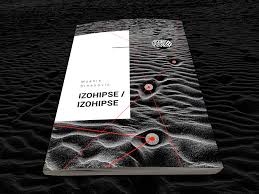
izohipse

Muanis Sinanović

(1989) is a Slovenian poet, writer and an essayist of Bosniak descent. He has published three books of poetry and an experimental novella. His first book was awarded as a best first book in Slovenia at the 2012 Slovenian Book Fair. His writings have appeared in numerous regional magazines as well as in a Greek and Czech anthologies of young Slovenian poetry. He has read in different cities across Europe and has been a host at the Sarajevo writer’s residency in 2016 and a European Poetry Festival (London) in 2018. Occasionally he translates and is also involved in literary, film, music and theatre criticism. He’s also an editor of IDIOT literary magazine. Currently he is working on flash fiction, his next poetry book, a book of essays about immigrant experience in Slovenia, an avant-garde music-poetry collaboration with Andrej Tomažin, and experiments with literary performance.

The Interview

  1. When and why did you start writing poetry? 

Aside from writing some lines about kebab for a bad joke in a high school earlier, I started writing first poems at the age of 17 on a web forum. It was a hard period in my life, struggling on a personal level in many ways. My father had died recently. I caused a lot of troubles at school and spent a lot of time reading and posting random stuff on the Internet. I was reading a lot of modernist literature back then. There was a section on a web forum for literature. I just tried writing. And it seemed to me that I have found a field of free play, noninhibited imagination and a possibility to free myself from the pressure of meaning, from a seemingly inescapable flow of everyday conventions. Then I continued. A guy who worked at a bookstore discovered me, he is now my old friend, his name is Jernej Terseglav. At one point he invited me to a reading at his working place in the capital city of Ljubljana. Four people turned out and it was my first contact with the poetry world.

2. How aware are and were you of the dominating presence of older poets traditional and contemporary?

Very aware. In Slovenia, where poets are considered to be fathers of the nation, you can’t avoid it. Despite the fact that poets are not nearly as influential today as they were in the past, some of them still gain almost mythical status in literary community. Some of them succeed in one way and don’t want to listen to anyone else. I wrote harsh polemics against them. But I don’t do it anymore. I’ve found out that if you’re talking to someone who doesn’t listen, at some point you will cease to listen and repeat their mistakes. On the other hand, from almost all of the poets I’ve admired and turned to them, all of them gave me a positive feedback and helped me to overcome the myth of a great poet.

3. What is your daily writing routine?

I don’t think I have one. I work on ideas almost all the time in my mind. And when they crystalize, I put them down. It wouldn’t be possible if I would write the novels, of course. But with poems, flash fiction and essays I just wait for some kind of inner energy and lucidity to be at a peak level and then I put it down with deep focus and attention. Usually I do it in the evening. I read, watch things and play videogames, do sports a lot in between. I go to theatre, organize events and so on, so my schedule is not fixed at all and is depended on daily circumstances. But there is one constant – I like to go to sleep very late and wake up quite late too. Living in a nonstressful small town or in a small capital allows me that. Sometimes having long walks at night help me to develop ideas. Then I just feel an urge to run home and write.

4. What motivates you to write?

A wish to give sublime a form and communicate it with some other people. Before there was sometimes a need to prove something with writing but not anymore.

4.1. What does “sublime a form” mean to you?

To shape a feeling of sublime which appears at different occasions in our lives, to give it some form, to be able to share little personal revelations with other people.

4.2 How would you describe “sublime”?

I would say that sublime is something that is bigger than us or our daily lives and we are in the awe in front of it.
I’m religious but it doesn’t need to be of explicitly religious nature, it can be found, for example, in the power of history, nature, scientific achievements or even in a language. Sci-fi fiction is, for example, very concerned with the sublime. There are lot of authors interested in everyday life and ordinary things. I’m mainly on the other side, I’m interested in what’s beyond ordinary. But separation is not complete, sublime and ordinary live along each other.

4.3. Why does “ sublime” evoke awe?

Because it is unexpected, it is not something we are prepatwenties. Srečko Kosovel, a tragic poetry hero, was bringing constructivism into poetry, and there was a great amount of experimental poets among leading people of the Communist party which was idealistic and organized great partisan resistance in the world war. Oskar Davičo was one among them, a great poet. In the sixties and seventies new vanguardes emerged, for example Slovenian group OHO, Šalamun became world famous but there were other very special guys too, like Iztok Geister for exemple..

4.4. Why was Iztok Geister very special?

He revolutionized understanding of art in Slovenia with his introduction of concrete poetry and other vanguard techniques, he was a driven artist at a very young age and helped greatly with organizing the underground scene. Later, he turned to more conventional poetry, to ecology and to study of birds.

5. Who of today’s writers do you admire the most and why?

A Slovenian poet Miklavž Komelj is influential for me. London based Steven J. Fowler and Astra Papachristodolou have introduced me to a lot of inspiring young writers and encouraged me – with their own work too – to think about role of literature in our times and to experiment some more. I love Patrick Modiano. Alenka Jovanovski has published a powerful book recently. Augusto Monterosso has been dead for 15 years now but his writings inspired me to write flash fiction and experiment with shorter forms and he was a late discovery for me. There are a lot of friends, fellow writers doing new things at the moment and it would be hard to mention them all, I would certainly leave someone out and it would be unfair.

6.. Why do you write, as opposed to doing anything else?

Mainly because I find myself being better at writing than doing anything else and I find it more fun than anything else.
I find it meaningful also, but there are other vocations that are meaningful too, maybe even more – doctors, teachers for example.

7.  What would you say to someone who asked you “How do you become a writer?”

Be playful. Don’t be discouraged quickly. Take words with a grain of salt, they are not holy but respect them at the same time.
Think about who your ideal reader is and consider her in your writing.

8. Tell me about the writing projects you have on at the moment.

My next poetry book is predicted to be published next year, all the poems are already written actually. I’m starting a poetry-music project with my friend, the words will probably be mostly English. I’m writing a book of essays on places I inhabit, people I know and experiences of immigrants. Slowly short short stories are being written and I will probably publish a collection of them in next few years.

Thank you for interviewing me, Paul!

Wombwell Rainbow Interviews: Marisa Crane

Wombwell Rainbow Interviews

I am honoured and privileged that the following writers local, national and international have agreed to be interviewed by me. I gave the writers two options: an emailed list of questions or a more fluid interview via messenger.

The usual ground is covered about motivation, daily routines and work ethic, but some surprises too. Some of these poets you may know, others may be new to you. I hope you enjoy the experience as much as I do

Marisa Crane

Marisa Crane is a lesbian writer whose work has appeared or is forthcoming in Jellyfish Review, Hobart, Pithead Chapel, Pidgeonholes, Riggwelter Press, Pigeon Pages, Cotton Xenomorph, and elsewhere. She is the co-founder of Collective Unrest, a political resistance magazine. She currently lives in San Diego with her wife.

http://www.marisacrane.org/

The Interview

  1. When and why did you start writing poetry?

I started writing poetry around sixth grade. I used writing as a means to whine about everything going on in my life. Real angsty shit. All of the poems rhymed, too, if you can imagine the absolute horror. Occasionally I even tried to rap them. It was a dark time. But then I won the first poetry contest I ever entered (and haven’t won one since). It was a contest at school. My winning poem was published in the yearbook and I rose to instant fame, and by instant fame, I mean no one noticed and the world continued to spin madly on.

2. Who introduced you to poetry?

I can’t remember anyone introducing me to poetry. My parents had science / medical backgrounds and as much as my mom loves to read, she almost exclusively reads fiction. I think it was just one of those things I fell into because it felt good and right.

2.1 Why did it feel good and right?

I think because it allowed me to process my emotions, fears, insecurities, anxieties, uncertainties etc. in a way that made sense to me. I could revisit old poems in order to conjure up old feelings and ghosts. I could also tear pages out and put those memories to sleep if I wanted. Poetry is magic, a form of time-travel.

3. What is your daily writing routine?

Right now I’m unemployed so my schedule was very different until about a month ago. When I was working, I would wake up around 6 AM and make coffee, do a little creative meditation, then write for about two hours. Generally I’d be working on fiction, whether it was stories or my novella. Then at work if i wasn’t too busy I’d be able to get some writing done on my breaks as well. Now that I’m not working, I wake up a little later, between 7 and 8, and have a slower morning, drink coffee, talk with my wife, beg her to play hooky, which she declines. Once she goes to work, I go to a coffee shop and work on whatever my current project is. This past month I’ve been writing for about 4-6 hours a day.

4. What motivates you to write?

I always feel like this is a tough question to answer, because almost everything sounds cliché to me. I suppose, at the core of it all, my feelings and experiences motivate me to write. Writing helps me process what I’ve been through. It often helps me to forgive myself for my past that I cannot change. I also allows me to express my fears in a healthy, channeled way. For example, I never wanted children until I met my wife, who very much wants to have kids, always has. I’m both excited and terrified of having children. A specific fear associated with this prospect is that my wife will die during childbirth or shortly thereafter, leaving me to raise our child alone. I know that it’s not likely, but it’s something I obsess over. I feel ill-equipped to raise a child. Most days I worry that I’ll break our baby. Anyway, I recently wrote a story about this very thing: having to raise my child after my wife dies during childbirth. The fear hasn’t dissipated since I wrote it, but it’s certainly dulled a bit, which is all I can ask. It’s a pretty damn good story too.

5. Who of today’s writers do you admire and why?

I admire the hell out of Kelly Link. I think that she is a rare genius who can tell a story and captivate a reader in an unprecedented way. She’s not afraid to play and her confidence shows. She could make me believe just about anything. Rivka Galchen is a new favorite of mine as well. She is imaginative, fearless, and unapologetic. Her work takes on a dream-like, surreal quality that stuns me. She also has a sneaky way of surprising the reader on a sentence level. Every time I think a character is going to do, say, or feel a certain thing, I am wrong, and I’m never happier to be wrong than when I’m reading Rivka. Also, Celeste Ng is a force to be reckoned with. I recently read “Little Fires Everywhere” and I swear I barely took a breath the entire time. She is a magician when it comes to creating dynamic and memorable characters. And lastly, Rachel Khong, who has the unique ability to write sentences that are at once heartbreaking and hilarious. Her work packs a huge punch in not so many words. Her turns of phrase sit with me for days.

6. Why write, as opposed to doing anything else?

I fear this response is going to sound really over-played, but the simple answer is that I can’t keep from writing. It’s not something that I ever have to force myself to do. It’s my natural way of processing and understanding life. Everything that isn’t writing feels like second best.

7. What would you say to someone who asked you “How do you become a writer?”

I think I would start by saying that you’ve got to sit down and write something. Or you can stand if you’re so inclined. Or do jumping jacks between words. Burpees, lunges, flame-throwing, etc. No matter how you want to do it, you’ve got to get words down. If you enjoy writing and you in fact DO write, then you’re a writer. I think if it’s something that remains inside your head then you aren’t a writer yet. But otherwise I can’t stand all of the debates surrounding whether someone is a writer or not. In fact, I find them elitist. It’s not a secret club with a special knock. Write the words down and you can confidently call yourself a writer. Try the word on sometime. Say, “I am a writer” in the mirror three times while spinning in circles.

8. Tell me about writing projects you’re involved in at the moment.

I’m currently working on a novel but for the first time in the history of my writing, I haven’t told anyone about it, including my wife. For some reason I feel very superstitious and I want to keep it to myself until it’s done. I’m about halfway there. I have a completed novella called “A Shooting Star Isn’t a Star at All” that I’ve submitted to several contests and presses. It was born out of a private, ongoing workshop with author Elizabeth Crane. The content is based on my experiences as a behavioral health worker for disturbed youth in the Philadelphia school district. It’s written from several different perspectives, including inanimate objects like a baby blankie and bullets in a loaded gun. That’s all I’ll say on that for now. I’m also shopping around a short story collection called “Human Pulp,” which explores the consequences of inaction through off-kilter and quirky voices. Lastly, I’m working on revising and submitting a poetry chapbook called “Our Debatable Bodies,” which documents my experiences as a lesbian and a woman. Another short story collection seems to be on the horizon as well. I can’t shake the idea of writing a series of stream-of-consciousness close third person stories about children / adolescents who experience discrimination / trauma / abuse and the implications of said experiences.

Wombwell Rainbow Interviews: Nancy Patrice Davenport

Wombwell Rainbow Interviews

I am honoured and privileged that the following writers local, national and international have agreed to be interviewed by me. I gave the writers two options: an emailed list of questions or a more fluid interview via messenger.

The usual ground is covered about motivation, daily routines and work ethic, but some surprises too. Some of these poets you may know, others may be new to you. I hope you enjoy the experience as much as I do.

Nancy Patrice Davenport is a native of the San Francisco Bay Area and lives in Oakland, California. A single mother, Nancy has been writing for about ten years.

Her poems are widely published in various journals and anthologies, and have been translated into many languages. Nancy’s JUNE 2 RETROGRADE MINDFULNESS poem was nominated for the 2016 Best of Net.

Nancy’s first chapbook, LA BRIZNA, was published in 2014 by Bookgirl Press. She has work published by Country Valley Press. A full-length book of poems, SMOKING IN MOM’S GARAGE, was published in 2018 by Red Alice Press.

The Interview

  1. When and why did you start writing poetry?

I was inspired to write poetry when my son began high school and I found myself retired due to epilepsy.   I was searching for meaning in my life, and when a friend suggested I write a poem about the recent death of my mother, I found myself inspired. Once I was inspired, I took a file of my poems, and wrote to a poet that became my first mentor, Charlie Mehrhoff, and asked him if he would help teach me.

  1. Who introduced you to poetry?

I am the youngest of four, and wanted to learn to read before I began school, so my mom taught me the basics. This created an intense interest in the written word. As I child I was picked on, the library was my escape.   I equated books with invisibility and peace. For me, novels were new worlds to explore in. Once I discovered poetry, I found emotions universal to my own, I dug how feelings and intimations were expressed through word and white space.

  1. How aware are and were you of the dominating presence of older poets traditional and contemporary?

I wouldn’t call older poets a dominating presence so much as an inspirational presence.

  1. What is your daily writing routine?

When everything is working right, and my brain is Zen, I like to try to write every day, allow the poems to flow. One day a week is for submitting. One day is for editing. One day is for research. One day is for other. But if my brain isn’t working, I don’t force it, because the poems come out sounding forced, and inorganic.

  1. What motivates you to write?

I am motivated to write by life, by what happens to me in life, but misfortune, and fortune. When I have trouble finding inspiration, I create in other art forms. I dislike having idle hands.

  1. What is your work ethic?

My work ethic is humility, honesty, and simplicity. I also like gratitude and some sense of universalism.

  1. How do the writers you read when you were young influence you today?

When I was younger my two favorite poets were Whitman and Cummings.   I was influenced by both their use of space and tabs for emphasis/meaning. My thought was, if they could write this way, I could too, possibly.

  1. Who of today’s writers do you admire the most and why?

Who are the poets I admire most today? This is a difficult question, as there are so many different poets I admire, for so many different reasons. But I admire Bill Gainer a great deal. He is not only a wonderful poet, but a very good editor. Charlie Mehrhoff is another fine poet, and editor. He was the one who advised me to get rid of extra “the, and, I, me, you … etc.” — this helped me tighten up my work. I also have admiration for my first editor, Scott Watson. He is an amazing translator, poet and editor, and he pulled me out of obscurity for my first chapbook. But on another poetic level, I admire poet John Martone for his compact poems that say so very much in so few words; he does what I wish I could do. I also admire the multi-dimensional work of poet Donna Snyder. I think Kushal Podder is a brilliant poet, subtle, with amazing imagery.
Here in the Bay Area I enjoy the work of Kim Shuck, MK Chavez, Natasha Dennerstein, Alexandra Naughton, William Taylor, Jr., Joel Landmine, G. Macias Gusman, and Paul Corman-Roberts. As I said, there are so many poets that I admire. This paragraph could fill an entire page. I am a fan of Arizona poet Jefferson Carter, for many reasons. I not only like his poetry, but I like his attitude.
I am also a fan of Cathyann Cusiamo, Molly Fisk, James Lee Jobe, and more recently, Mike Griffith, Fred Whitehead, Mike James, Seth Berg, Kevin Ridgeway, Curtis Hayes … there are people that post work on Facebook that I admire as well. As I said, the list of these names is endless.

  1. Why do you write, as opposed to doing anything else?

I write because, aside from being a mother, I have discovered that this is my meaning in life, my sense of spirituality, how I am able to free myself from demons. Once I started to write, I didn’t                                                                                                                                                                                                                              know how – or feel able to – stop.   I always wanted to be a writer in some kind of capacity. When I was younger I wanted to write novels. But the novels have come out as poetry.

  1. What would you say to who asked you “How do you become a writer?”

If somebody asked me how to become a writer, I would go about it much the same way I did. I would find a good teacher, someone with experience, and ask for help. Before I referred this person to poets, I would refer them to books: Elements of Style, (Struck and White), The Poet’s Craft (Kreuzer), The Poet’s Glossary, (Hirsch), The Making of a Poem (Spender) and A Poet’s Craft, by Annie Finch. Once these books were acquired and studied, I would begin to refer to poets, depending on the interest of the person. But I would ask this person to think hard. It’s not easy to become anything, think one is born to be a writer, not certain if one can force this, otherwise, the writing itself is forced.

  1. Tell me about the writing projects you have on at the moment.

Writing projects of the moment include a new chapbook in the works, about to go into a third round of editing. I’m also collaborating with a couple of poets with respect to some poems about mental health. The usual submissions. One last project is another full-length collection.

Wombwell Rainbow Interviews: Jeffrey Side

Wombwell Rainbow Interviews

I am honoured and privileged that the following writers local, national and international have agreed to be interviewed by me. I gave the writers two options: an emailed list of questions or a more fluid interview via messenger.

The usual ground is covered about motivation, daily routines and work ethic, but some surprises too. Some of these poets you may know, others may be new to you. I hope you enjoy the experience as much as I do.

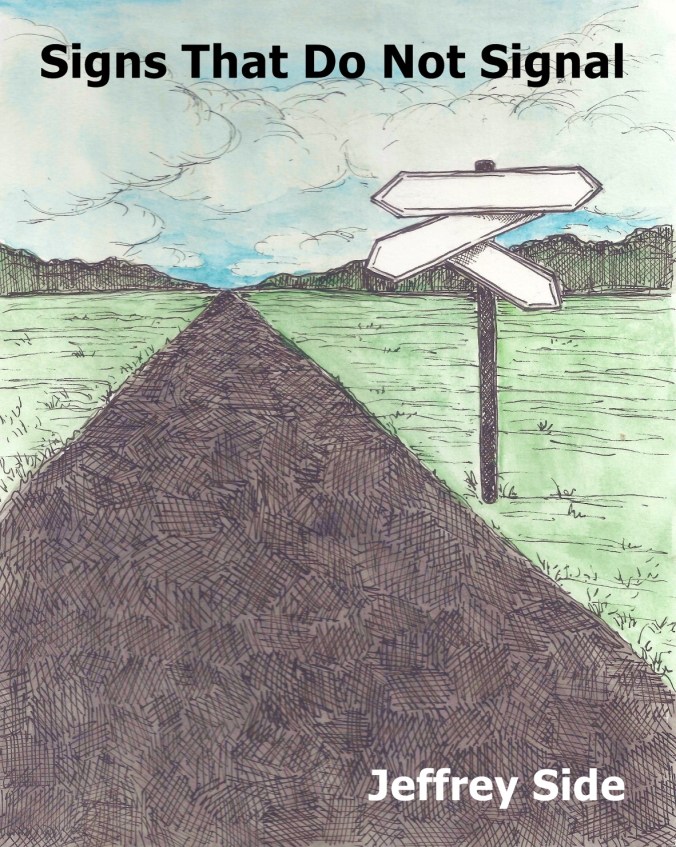
signs that do not signal cover image

Jeffrey Side

has had poetry published in various magazines such as Poetry Salzburg Review, and on poetry web sites such as Underground Window, A Little Poetry, Poethia, Nthposition, Eratio, Pirene’s Fountain, Fieralingue, Moria, Ancient Heart, Blazevox, Lily, Big Bridge, Jacket, Textimagepoem, Apochryphaltext, 9th St. Laboratories, P. F. S. Post, Great Works, Hutt, The Dande Review, Poetry Bay and Dusie.

He has reviewed poetry for Jacket, Eyewear, The Colorado Review, New Hope International, Stride, Acumen and Shearsman. From 1996 to 2000 he was the deputy editor of The Argotist magazine.

His publications include, Carrier of the Seed, Distorted Reflections, Slimvol, Collected Poetry Reviews 2004-2013, Cyclones in High Northern Latitudes (with Jake Berry) and Outside Voices: An Email Correspondence (with Jake Berry).

He edits The Argotist Online (www.argotistonline.co.uk) and has a blog at; http://jeffrey-side.blogspot.com/

The Interview

  1. When and why did you begin to write poetry?

I started writing poetry in 1990, after being introduced to Bob Dylan’s songs by someone. I was taken by Dylan’s use of words and rhyme, and his ability to make his songs personally significant and relatable to experiences in my life with an uncanny accuracy. I thought this was a wonderful gift to have, and wished that I had it. But not having any ability to write songs, I thought I’d try writing poetry instead.

  1. Who introduced you to poetry?

Apart from the person who introduced me to Bob Dylan’s songs, there was no one else. After hearing Dylan’s songs, I began to read (and read about) poetry on my own initiative. This led me to want to study it formally at university, which I later did.

  1. How aware were and are you of the dominating presence of older poets?

When I started writing poetry in 1990, I was only aware of two older poets who had a dominating presence. The first was Seamus Heaney, whose presence and influence was widespread in British mainstream poetry. The second was John Ashbery, whose presence and influence was widespread in American avantgarde poetry.

  1. What is your daily writing routine?

I don’t have one. I tend to operate on impulse and spontaneity when it comes to writing poems. I do, though, jot down phrases that come to me every so often, and file them away for possible later use when writing a poem.

  1. What motivates you to write?

I think what motivates me, is a hope to connect with people. To write poems that hopefully people will find personally significant and relatable to experiences in their lives, as Bob Dylan’s songs are for me.

  1. What is your work ethic?

I don’t really have one. I just write whenever the mood takes me.

  1. How do the writers you read when you were young influence you today?

There have been many poetry influences on me since I started writing poetry. Primary influences are: Bob Dylan, T. S. Eliot and William Blake. Secondary influences are: Leonard Cohen, Allen Ginsberg and Jack Kerouac. It’s difficult for me to specify how these writers influenced me; apart from saying that without their influence my poetry would have been different—if that makes any sense.

  1. Who of today’s writers do you admire the most and why?

I admire Bob Dylan the most, if only because out of all the celebrated poets around today, none have enriched my imagination and emotions as much as he has. I know that sounds like an unschooled response but I have to be honest.

  1. Why do you write?

As in a previous answer, to hopefully connect with people, so they can hopefully find personal significance and relatability to experiences in their lives through my poems, as I do through Bob Dylan’s songs.

  1. What would you say to someone who asked you “How do you become a writer?”

I’d tell them to read some books on how to be a writer, and to go to a creative writing workshop. It is probably easier to be a writer now than at any other time in history, what with the enormous information resource that is the Internet, and a myriad of online writers’ forums, blogs and publishing outlets etc.

  1. Tell me about the writing projects you have on at the moment.

I’m currently working on a collaborative project with Jake Berry, that involves writing aphorisms with the use of a dice. Apart from that, I’m not writing. I tend to be occupied most times with publishing poetry ebooks for other poets, and adding new content to The Argotist Online.