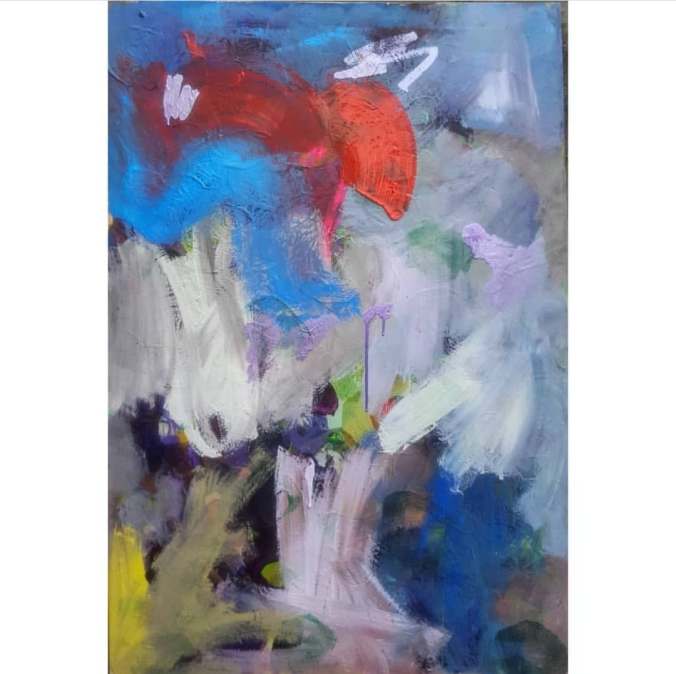
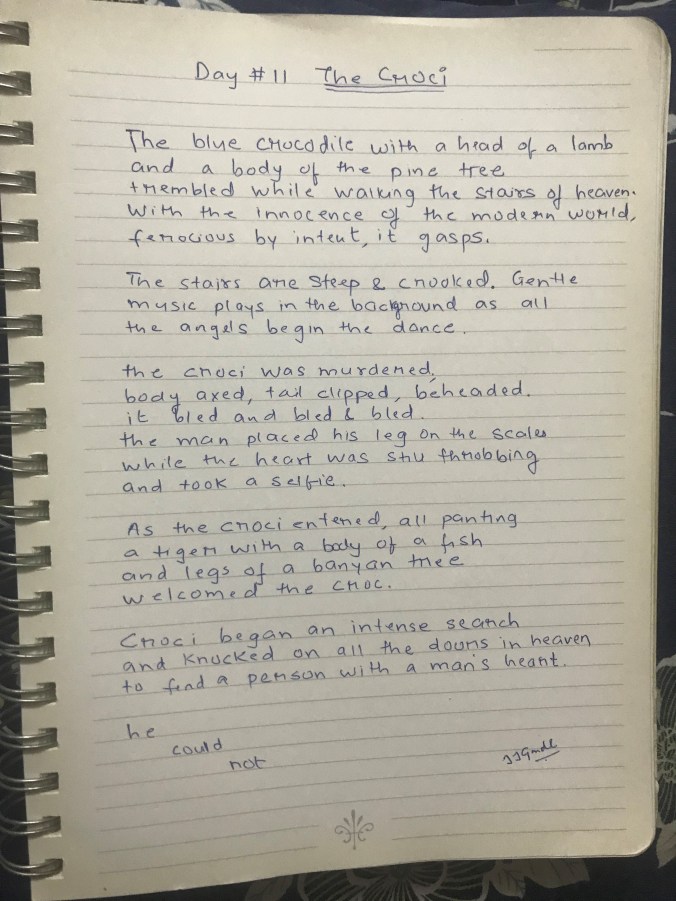
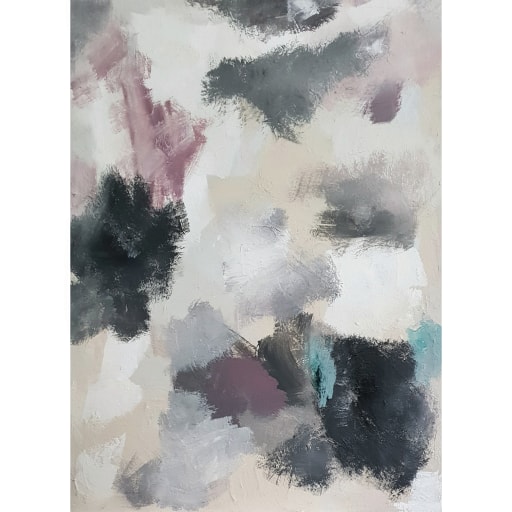
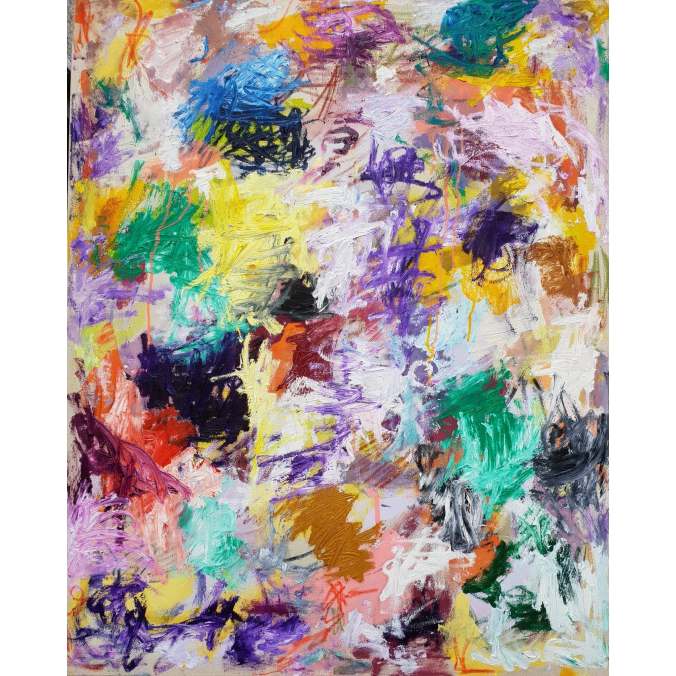
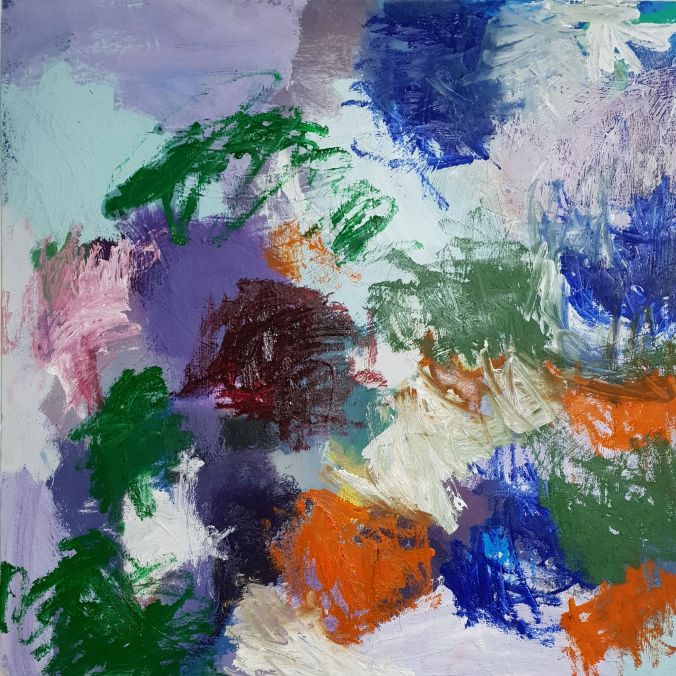
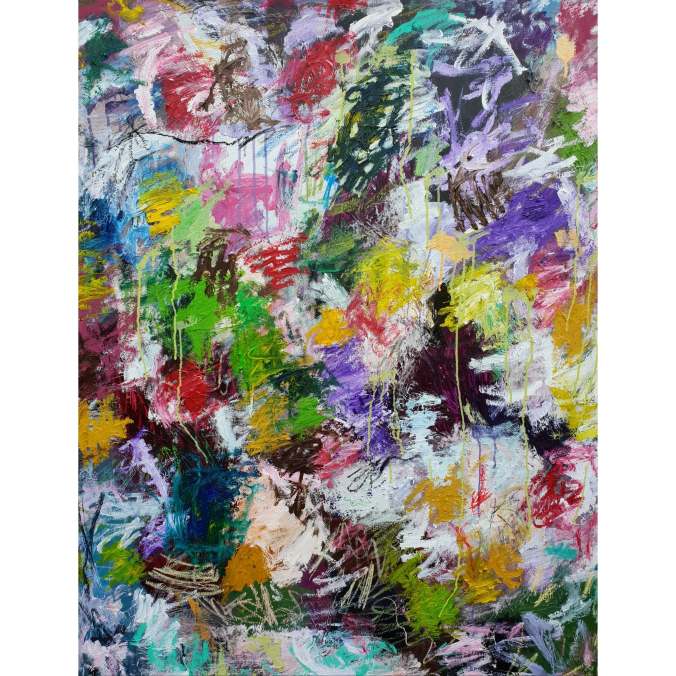
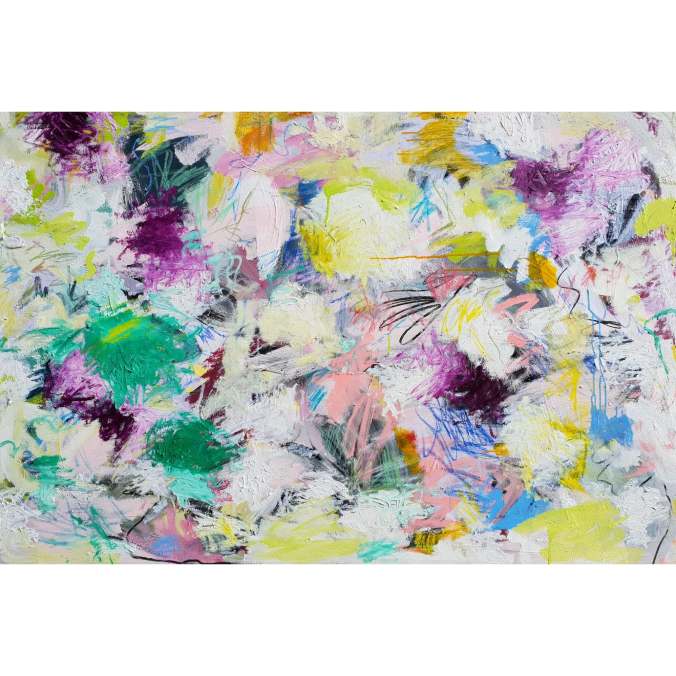
My National Poetry Month challenge to myself has become a collaboration between synaesthetic artist Sammy-John, myself, Anjum Wasim Dar and Jay Gandhi: Day Eleven: My Croci

The Croci

The Croci

CROCi (2)

By Jay Gandhi

Bindweed And Thread

Him hip in a white T-shirt and purple slacks,
yellow complexion all smiles and come on,

Her sinuous and prickly, ignores his glances,
clingy with her mates all winter.

Come spring he thinks himsen not worth her spit
so hung his sorry self with a sinewy rope. When she hears

Sobs so many tears nowt is dry in her house.
Right sad pair so I makes them into flowers because I can.

He a glad sign of early spring in his saffron crocus glory,
Her bindweed bloom in late spring flowers then bulks bold bright berries.

By Paul Brookes

CROCI

Oh Croci no more do I see you on wine glasses,
nor in wreaths crowned on the heads of joyful
Youths, winter white shawl lies  cold spread out
all over the valley, river runs red with blood  of
Martyrs, the young who still had life to live  and
love, but freedom  lies fettered , glaciers gaze
From snowlines on the peaks, the sun timidly peers
Oh Croci, wake up’ it’s time wake up before death
Plays its tune, in colors blue white and golden yellow
wake up in purple royal, let the golden strands flow
O Croci bring dignity pride and success, and saffron
let the rebirth begin, the season rise with your perfume
The early bird waits on the bare branch silently-
do not despair oh winged warner’ gold will bloom
Oh Croci  come let us be joyful and welcome Spring
many grooms are waiting  for many brides to bring…
O Croci may the prayers be answered may freedom ring’
Let freedom ring…

2019 ©  CER  Anjum Wasim Dar

On Fiction Wombwell Rainbow Interviews: Ho Lin

On Fiction Wombwell Rainbow Interviews

I am honoured and privileged that the following writers local, national and international have agreed to be interviewed by me. I gave the writers two options: an emailed list of questions or a more fluid interview via messenger.

The usual ground is covered about motivation, daily routines and work ethic, but some surprises too. Some of these poets you may know, others may be new to you. I hope you enjoy the experience as much as I do.

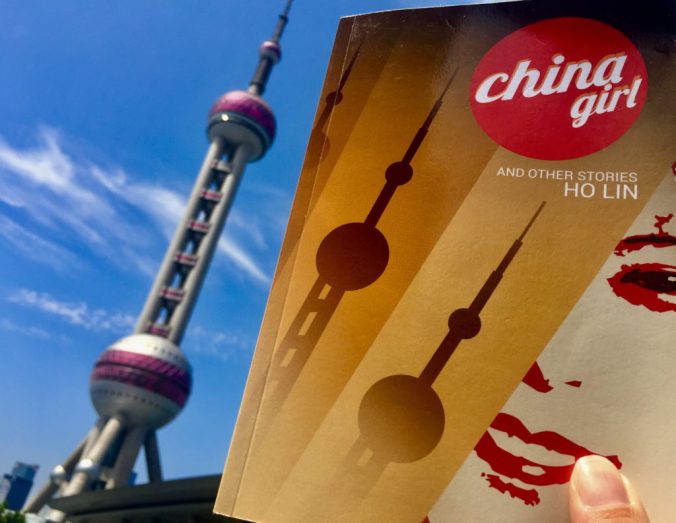
chinagirl-shanghai3-1024x793

Ho Lin

is a writer, editor, musician and filmmaker, and not necessarily in that order (it depends on time of day). He is co-editor of the long-running literary journal Caveat Lector, a lover of fiction and film criticism, and is striking out with his first short story collection, China Girl. He currently resides in San Francisco, although his wanderlust has led him to many different countries, including a stint in Asia.

The Interview

1. When and why did you start writing fiction?

My mother (who was a translator and author in her own right) loved reading, and was poring through Rex Stout mysteries when she was pregnant with me, so it’s fair to say that I’ve had an appreciation of literature from the womb. My first direct contact with fiction probably came with the children’s book “Goodnight Moon” — my brain registered the unreality of the narrative, as we move from day to night in just a few pages, but I was inspired by its creativity, as time collapsed. I wanted to be on the other end of that exchange, constructing something that would give a reader a similar sense of “wow.”

My first attempts at fiction came when I was four, drawing picture stories without dialogue, usually trying to reproduce events from the 1960s “Batman” TV show from my mind. Soon “Batman” gave way to “Star Wars,” and all might have been lost, but fortunately I also started reading E.W. Hildick’s McGurk mysteries (always back to mysteries for me), which impelled me to write stories with full-fledged, honest-to-goodness text. Of course these stories were pale rip-offs of Hildick’s work, with dynamic titles such as “The Case of the Dead Dog,” but my path had been set. Years later, at a fiction workshop at Brown University, one of our exercises was to create a vignette around the discovery of a dead dog in the woods! Life is indeed circular.

2. How aware are and were you of the dominating presence of older writers traditional and contemporary?

The influence and shadow of other writers is unavoidable, and it’s been the case for me for a long time. From the start, really, with my E.W. Hildick pastiches. I think all writers are impressionable to some extent, and it ‘s sometimes challenging to avoid parroting my influences. Anyone who’s been through a standard English major curriculum in university can’t help but be keenly aware of who else is out there.

On the other hand, I’ve been lucky enough to study under authors such as Robert Coover, Robert Stone and John Barth, and draw encouragement from them to go my own way. I like to think that I’m old enough now that I’ve established a middle ground in my writing which acknowledges what’s come before, but also makes room for my own quirks and identity. It’s a sports cliche for a superstar to say, “I can’t worry about being the next [insert legendary superstar name here], I just gotta be me,” but I’ve tried to follow that advice in my own writing. It helps that I’m also a long-time musician, and long ago came to grips with the fact that I’ll never be Paul McCartney. When you learn early in life that you can’t be your idols, you can then move on.

2.1. What did you learn from Robert Coover, Robert Stone and John Barth?

I studied hypertext with Bob Coover (back when linking from one webpage to another was a miraculous thing), and in the process learned that I could play around with the form as well as the content of my work. From a workshop with Robert Stone, I learned how to be tougher on my writing (as one would expect from a two-fisted writer like Robert Stone). And from John Barth, I learned how to let my imagination wander off down cul-de-sacs, blind alleys, and scenic byways, leading to unexpected (but sometimes welcome) destinations.

3. What is your daily writing routine?

I have no routine at all, which is probably the antithesis of what every good writer should do. Most of the time I ruminate and take notes, and when the dam is fit to burst, I’ll write out huge chunks in single settings. Sometimes it takes a week, sometimes a month. I find that this “process” works for short stories, in which I can maintain a consistent rhythm and feel for a short burst. Longer works are a bigger challenge, but my writing tends to coalesce around vignettes and compartmentalized narrative bits, so I’ve gotten by so far. Maybe one day I’ll grow up and commit to writing like committing to a 9-to-5 gig.

4. What motivates you to write?

I’m inspired most by situations — whether it’s something I happen upon as life happens, or something I read about. Even a scrap of conversation or story is usually enough to get ideas ping-ponging around my head, and from there it’s only a matter of time before I’m compelled to apply the written word. I’m also strongly impacted by locales. Lost in an unfamiliar city, or alone in an expanse of landscape — the experience of getting out in the world somehow draws me into my own mind, and allows me to imagine happenings in these places. Wordsworth says plenty on the subject. Finally, I’m motivated by the art around me, whether it’s a book, a film, or a song. In “China Girl,” I count six stories that owe at least a partial genesis from a movie or song snippet, or a particular writer. Usually these moments lead me down a path where I move away from pastiche and towards something of my own. At least, that’s the theory.

5. How do the writers you read when you were young influence you today?

Paul Bowles looms large for me, both in the quality of his writing and his subjects (interlopers and visitors out of their depth in foreign lands). He ranges from the naturalistic to the phantasmagoric, and I’ve tried to stretch in those directions in my own stories. I hesitate to call Haruki Murakami a “young” influence since he’s always been present, but he had a huge impact back in my college days, particularly “A Wild Sheep’s Chase.” In that novel, his narrator describes himself as five-foot-seven, 130 pounds, twentysomething and rootless, which described me to a T at the time I first read it. He has a melancholic sense of whimsy, and I think many of “China Girl”‘s stories appropriate that tone.

Lawrence Durrell is another young influence who is making his way back into my writing. I’m working on a novel that features intersecting plot threads and character perspectives, and in my view, Durrell’s Alexandria Quartet is a masterpiece of that kind of intricate construction.

5.1 Which young influences are calling to you again, and how do they manifest themselves in “China Girl”?

It all goes in circles: I was heavily into genre fiction when I was young (Agatha Christie and Isaac Asimov), and as I grew older I became more aware of their particular limitations as writers, and moved on to postmodernism (and probably a few other -isms). Now I can revisit them and appreciate what they brought to their work in terms of plot and shape. With my own writing, I’ve been through more experimental (chaotic?) phases, and now I find myself looking to simplify, compress and streamline, so my young influences are calling to me again. Call it a second childhood, but everything old does eventually become new.

6. Whom of today’s writers do you admire the most and why?

She’s been around a while, but I enjoy Jane Gardam’s work — most of her books are “quiet,” but they marry plot, tone and style effortlessly. I think they’re quite magical. Lydia Davis is another current favorite — she’s such a master of wit and compression, two qualities often lacking in my own writing. And even though he’s no longer with us, I’ve been getting into Roberto Bolaño. He tackles weighty subjects and moral themes, but he has a certain lightness, a surety of voice, that I find appealing.

7. What would you say to someone who asked you “How do you become a writer?”

Writing is about craft and inspiration — you learn your craft from all the literature that has come before, but you have to live a life to find inspiration. I’m sure examples exist of fantastic writers who thrived based purely on their own imaginations, but most of us need to engage with the world to find the raw materials that fuel what we write. Don’t lock yourself in your head, and if you’re always out in the world, make time to ruminate and compose.

I would also advise a healthy mix of confidence and skepticism. Have faith that what you want to say matters — because heaven knows no one else will do it for us — but be open to the idea that it might not, or that what you say can always be improved upon. Find a community of writers who can nourish and challenge you. I’ve been in workshops and groups that didn’t necessarily “get” my writing, and I’ve come across writers who are so convinced of the rightness of their path that no amount of criticism is allowed to penetrate their hermetically sealed defenses. Finding that sweet spot in-between is challenging but worth it. Assume nothing, have the courage to forge ahead in everything.

Finally, once you’re in a position to get your work out, champion it as much as you can. I’m no marketing genius, in fact it’s my last favorite aspect of the writer life, but one must find ways to gain attention. Use your social networks, contact influencers, or just go out and meet people. Even hiring some publicity help for a few hours can make an impact. You might be surprised by how little things can build momentum, and then suddenly it’s not such a chore.

8. Tell me about the writing projects you have on at the moment.

“China Girl” is a short story collection in which all the stories have something to do with Asia, even if only tangentially. The earliest story in the collection dates to 2002 and the latest to 2017. Some of the tales are naturalistic in approach, while others are more fantastical and fable-like. Nonetheless, some of the happenings that might seem imaginary are based on true events, and vice-versa. Ultimately, the collection is a dialogue between East and West — sometimes political and sometimes personal — seen through the prism of my Asian-American upbringing.

I’m currently dividing my time between two projects: a contemporary novel set in Shanghai, which hinges on a mysterious disappearance (as I said, shades of Lawrence Durrell), and editing travelogues of my late mother’s numerous visits to China during her lifetime. The latter combines the personal and the cultural, as we witness China’s changes over the years, and also learn about my mother’s family story, including reunions with relatives and friends she hasn’t seen in decades.

Thanks for taking the time to interview!

Ho

Wombwell Rainbow Interviews: Shanda D. Boone-Hurdle

Wombwell Rainbow Interviews

I am honoured and privileged that the following writers local, national and international have agreed to be interviewed by me. I gave the writers two options: an emailed list of questions or a more fluid interview via messenger.

The usual ground is covered about motivation, daily routines and work ethic, but some surprises too. Some of these poets you may know, others may be new to you. I hope you enjoy the experience as much as I do.

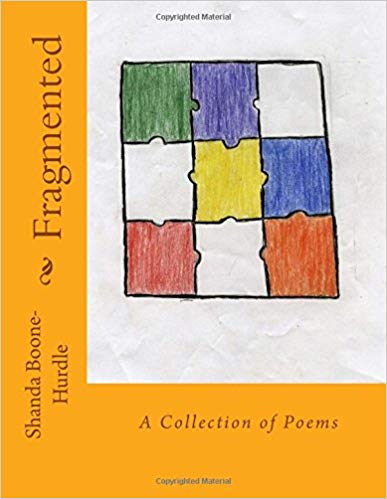
Fragmented

Shanda D. Boone-Hurdle

is a native of Portsmouth, Va. A product of the Portsmouth Public School system, it was her 7th grade and high school English teachers who introduced her to African-American writers. This introduction set the course for her writing and speaking career.
After completing high school, she went on to attend Ferrum College, Ferrum Va., where she received a B. A. in English with minors in Journalism and French. Later, she would attend Old Dominion University, Norfolk, Va., where she received a M. A. in English with a concentration in Professional Writing.
As a highly passionate speaker and educator, it is her strong belief that “You are not a mistake.” There is only one of you and though you have several different roles in your life, you only have One Mission, One Vision, and One Purpose, and everything in your life should work together to achieve it.

The Interview

1. What inspired you to write poetry?

I have been writing poetry since I was about eight years old.  I am not sure how it started.  I just always loved it.  It is my happy place.

2. Who introduced you to poetry?

I am not sure how I was introduced to poetry, probably Dr. Seuss.  However, I was in the 7th grade, when my English teacher, Mrs. Edmonds, introduced me to Black Poets.  Langston Hughes, Gwendolyn Brooks, and James Weldon Johnson were the first.  They knew me.  They told my story. They made my life and existence real.

2.1. How did Langston Hughes, Gwendolyn Brooks, and James Weldon Johnson know you.? How did they tell your story? How did they make your life and existence real?

For the first time, I read stories that told the black experience. The people were familar. I knew these people, though we never met. The people in their stories and poetry were my neighbors, my aunts, my uncles, my church members, and my friends. They spoke in a language that I understood.

3. What is your daily writing routine?

As a public school English teacher, an adjunct professor for a community college, a wife, and mother of five, I do not have a daily writing routine.  I write when the creative process hits, and it is all too consuming to contain.  I write in those limited moments of peace and quiet.

4. What motivates you to write?

Anything can motivate me, a song on the radio, a movie that I saw, a conversation that I had, a new experience, or a painful moment.

5. What is your work ethic?

Normally, I am inspired either first thing in the morning or late at night.  Therefore, I sit and write.  I use the old fashion paper and pencil method.  I feel more connected to my thoughts using paper and pencil versus typing.  I save typing until the end.

6. How do the writers you read when you were young influence you today?
I am greatly influenced by the greats. I love Maya Angelou, Nikki Giovanni, Langston Hughes, Paul Laurence Dunbar, and more.  I keep them in mind.  I want to tell a story the way they did.  I want to make people feel and connect with my pieces the way I connected with theirs.

6.1. How do you tell a story the way Maya Angelou, Nikki Giovanni, Langston Hughes, Paul Laurence Dunbar do?. How did you connect with their stories?

I try to bring a realness to my writing. I want my readers to see themselves or people who they know. I want my readers to know that they are not alone. I try to make the words come to life, as if the reader can close his or her eyes and see the words take shape.

7. Why do you write, as opposed to doing anything else?

I love words. I love the power of words, the way they make you dance.  I love their rhythm, their beauty.  There’s nothing more exciting than when words come together to serve their purpose…delivering a specific message.

8. What would you say to someone who asked you “How do you become a writer?”

I would simply tell them to start writing.  Everyone has a story.  Once that pencil hits the paper, even the author has no idea of what’s to come until it’s done.

9. Tell me about the writing projects you have on at the moment.

I am currently working on my second book, a collection of monologues; I hope that it will be completed by July 2019.  After this book, I will be working on my first novel.

Here is the link for my book:  You can find it on Amazon.com
The book is entitled: Fragmented: A Collection of Poems by Shanda Boone-Hurdle

https://www.amazon.com/s?k=shanda+boone-hurdle&ref=nb_sb_noss

My National Poetry Month challenge to myself has become a collaboration between synaesthetic artist Sammy-John, myself, Anjum Wasim Dar and Jay Gandhi: Day Ten: C Sharp Minor

C Sharp Minor

C Sharp Minor

A day in the park

the light is white as noise is bright
they tread along the spectrum tight,
and every ray is welcome bliss;
each wavelength blows a tender kiss
a shade of green between the mean
a patch of gray amidst the scene
beetroot is pink and there’s a link
which makes me tangle as I think
a cream has come up from behind
like a curtain which blocks the mind
At playground, the children are tired
and all my neurons have been fired
it’s all quite mysterious and dark
but that’s the charm of night at park.

By Jay Gandhi

Picked Apple And Change In C Sharp Minor

I wrap my head with a coloured scarf,
lean on a staff, sprout grey hair, wrinkled,

as a decaying fruit fungus faced, moles and brown blotches,
and a small spiky moustache. She lets me in

the well-tended garden, and admire the fruit
and the fruit of her.

She is

a Pear’s sweetness salves a searching tongue,

a Peach’s blush like sunrise

a Plum’s scent entices, smooth and laughing,

a Cherry’s scarlet lips rain sodden

a blossoming branch

makes bees dance

a secret orchard

‘You are so much more lovely’, I snog her.

Then apologise.

I sit on the flattened grass,
look at the branches
bend weighed down with fruit.

There is an elm opposite,
with gleaming bunches of grapes.
I tell her with my ancient voice.

Remarkable tree, and its entwining vine.
But, if that tree stood there, unmated, without its vine,
it wouldn’t be sought after for more than its leaves,
and vine also, which is joined to and rests on the elm,
will lie on the ground,
if it were not married to it, and leaning on it.’

She replies “It is a tree. Marriage means nothing to me.”

” A thousand men want you,
you shun them, turn away
from their wooing.

But if you are wise,
if you want to marry well,
listen to me, an old lass,

as loves you more than you think,
more than them all, reject others
and choose Change to share your bed!

You have my pledge as well:
he’s not better known to himself
than he is to me: he does not wander
hither and thither, lives by himself
and he doesn’t love latest girl he’s seen.

You’ll be his first love, and his last.
He’ll devote his life only to you.
He’s young, blessed with natural charm,

can take on a fitting appearance, if needs be. Whatever you want,
though you ask for all of it,
he will do.

He doesn’t want fruit of your trees,
or sweet juice of your herbs:
he needs nothing but you.
Take pity on his ardour,
and believe that he,
who seeks you,
is begging you,

in person, through my gob.

C  Sharp Minor
It will not be in a tin fruit can with sweet juice
but in gardens high of a hundred levels

with flowing river water falls and fruits in plenty
none forbidden nor prohibited, but tasty
fruits I saw in childhood would be a surprise
studded rubies  in yellow without space, like
Berries, bananas layered , dates figs and olives
grapes, apples I  loved and dreamed about –
Dreams colorful peaceful and brighter than  the
brightest star, skies opening  in circles of sound
C  sharp minor , symphonies of  fragrant flowers,
celestial  overtures descending in harmony, all

these emerge  as ecstatic aquamarine in numbers
in thousands of  pearly castles in golden diamonds

O beautiful gardens heavenly, I hear notes in C sharp
minor, I  gather good deeds to be in, with the symphony

By Anjum Wasim Dar

My National Poetry Month challenge to myself has become a collaboration between synaesthetic artist Sammy-John, myself, Anjum Wasim Dar and Jay Gandhi: Day Nine: A G Minor

G Minor

G Minor

G minor

Today my heart aspires to go to Church
but feet demand a holiday and park
the 100 kilo body on the sofa:
embrace inertia

if God’s within me, why go to the temple.
Mother’s spirit can also visit the living room

and I think opening up to my lover
or blurting out in front of a counsellor
can at least give me a receipt that
I did confess.

While I find chaos in synagogue,
I find peace during Ganesh Visarjan
when the songs are blaring out

Energy means different things
to different people just as G minor does.

By Jay Gandhi

The Invent Me In G Minor

Make stories about me.
Tell tales of how I live.

Tell of folk I’ve met, slandered,
divorced, harmed and shagged.

Their inventions come back to me.
I’m amazed, horrified, delighted

at what I’ve done. Then worry,
because I remember none of it.

Worry that my mind is going.
I need to hold onto who I am.

In G Minor

It’s her ’ and  no one smiled.
abandoned,  just  a heap of trash
In many lands, born of any caste
or creed, not differentiated, cashed
song composed without G Minor
fifteen to a forty niner, old miner-
might as well dig coal or carry bricks
facing negligence torture injustice
books burnt, sold destroyed tricked
yelling in silent agony, ravaged  into
zombies senseless, has humanity not
metamorphosed, song stilled , shot.

By Anjum Wasim Dar

My National Poetry Month challenge to myself has become a collaboration between synaesthetic artist Sammy-John, myself, Anjum Wasim Dar and Jay Gandhi: Day Eight: Wildflowers

Wildflowers

Wildflowers

in the garden
shake at the sight of themselves
in Alice’s looking glass.

Pink are drained to white.
Pale flowers colour up.

The garden path tells
her to stay still
and she’ll have adventures.

She lets her feet lead her
up or down the garden path
but arrives where she started.

Alice can’t stay still.
She has to move but in moving
always returns to what
she already knows.

I want to have adventures
But nobody’ll let me. she complains.

Looks directly at a Rose
And advises it: Your petals
are a disgrace. They need
To lean in one direction,
not all directions.

By Paul Brookes

Native & dense roses
make colours radiant and
pink turns sky candid.
Happiness inside light;
Everyone is free—
~Wild Flowers~
Free is everyone;
Light inside Happiness.
candid sky turns pink and
radiant colours make
roses dense & native.

By Jay Gandhi

Beyond the beauty, revealed,
quest of finding more persists,
on green and brown sky on land
tiny yellow blue and white, exists

I have found flowers, flowers wild
dancing, waving, studded in green
visible in the weeds, I hear the velvet
tripping of the footsteps of Spring-

Summer pheasants’ eyes shine-
agave branches out to meet Alder
or trumpets  at ‘baby blue eyes’, or
the Barren Strawberry white roses’

Wild flowers touch me like poetry
swaying to soundless sacred sweet
symphonies side to side in obeisance
to invisible conducting companies,
Offering soft cool overtures to
burning soles of injured souls,
enriching meadows to the core,
offering ample colorful cures,
wild flowers in deserted desert
dunes, dream to possess, as King
Ozymandias waits in stony silence,
slithering snakes undulating weave
their colors in the sand, dreading
the deadly Peregrine, embroidered,
jaded, studded, laid for romances,
wondrous world of plant fragrances,

wave upon wave of variegated crowns,
at times, in remote treks, God’s prosody
wild flowers grow, the sight so asking for
journeys, ventures and a supreme odyssey’


2019 © CER    Anjum  Wasim Dar

My National Poetry Month challenge to myself has become a collaboration between synaesthetic artist Sammy-John, myself, Anjum Wasim Dar and Jay Gandhi: Day Seven: The Willow Tree

The Willow Tree

The Willow Tree

The Willow Tree

Either we sprinkle or we splash
sometimes we loiter while we dash

Circling the full grown Willow tree
we get dizzy and we often smash

The colours of the leaves daily vary,
the texture changes just in a flash

Alas! wood will be cut and it will burn
all that will remains is the honorary ash

Jay, the tree lovers will feel sullen:
Hackers have spread like a wild rash.

By Jay Gandhi

An Osier

Use my pliable limbs

wish as you tie me

into a loose knot.

Your wish granted

return untie the knot

you made of me.

By Paul Brookes

Birds chirp, is it dawn ?
it’s still dark, leaves  invisible,
murmur  shiver, tremble,
will we get rain today, it’s so dry –
Someone’s tears may fall
someone may cry, but where?
in a dream, with a willow wand
under the pillow, or on a boat

drifting  along  the river, afraid
of hidden serpents, spellbound
by the moon, what lies beneath
who knows  but Hecate , sound

O’ Orpheus, come play the lyre
so silent is the world  in grief,
seems you have seen magical
colors in harmony, play relief-

The world needs you, play
for hope, we are still green,
green is all they see, no-
not the pale, hanging low

the mournful wailing boughs
For whom do they  weep ?
for thousands  lost at sea ?
or buried  in rubble heaps –
a home a place a country
food sanctity security liberty,
cutting sawing  chopping  up
our green growing solid family,
O Hecate what do you teach
magic for ? We write poetry,
play music do spells for good,
See the hanging willow tree-,

waits for one who planted it free,
by the river calm, as birds chirp
as dawn breaks, now they fly
with the unseen breeze, up high

with a message to return
to brighten the colors, on the
silver river, in the moon light
O Helice’ let the colors shine

Make Happy the lovely Willow Tree
2019 © CER  Anjum Wasim Dar

My National Poetry Month challenge to myself has become a collaboration between synaesthetic artist Sammy-John, myself, Anjum Wasim Dar and Jay Gandhi: Day Six: D Major Fur Mo

D Major Fur Mo

D Major Fur Mo

The Cage

The parrot starts to sing Paani Da
as I play the E minor Chord.
He tries to be in tune but the heat
is getting to him. A.C. is not working,
roof is leaking, maid has not turned up,
Zomato guys are taking ages to deliver
a Cheese Frankie. Nick is still in coma.
I shift the chord to D. It’s ungainly
but the parrot does finish his song

By Jay Gandhi

These Are Victories

fresh green shoots, leaves and flowers,
woodlands heady scent of wild garlic ,
bird song and bleating lambs
wild daffodils appear alongside the river
smaller and more delicate,
trumpet shaped flower a paler yellow.

kittiwakes, guillemots,
razorbills, gannets,
fulmar, shag and puffin
return to seacliffs

blackthorn blossom a froth
of clustered white flowers
on thorny branches
before the leaves burst bud.

curlew’s soft, bubbling call,
Ring Ouzel’s a blackbird
with white bib blasting
out of the heather

emperor’s, orange and yellow
day-flying moths, eyespot patterns
on their four wings, struggle
from cocoons on the moors.

Mo sits and downs a sacrifice of golden ale
sunglint on pint glass, a fine sup,
thankful another winter’s
deaths and distress worked through.

By Paul Brookes

No glory, nor pride in fires of violence ever exists;
Transformed into myriads of granule dust,
Innocent lives to eternal slumber sent
With brave last words they went–
Not to their Earthly abode, but to the celestial
Spheres to twinkle and shine and guide
The world to a higher call from a higher ground.
Once that stood tall was forever destined to fall,
Unnoticed, autumnal traces become visible,
Harbingers of the changing fall, remember ye all
The blaze metamorphosed to flowers?
Darkness white, casting a gloomy pal,
But the crashing of the wall
Was a higher call from a higher ground
To the heavens bound,
Where there are glorious towers.
There will be, there are unforgettable flowers.
Myself in race, color, creed, and freedom fetters–
Could I have served God better?

By Anjum Wasim Dar

Wombwell Rainbow Interviews: Andrena Zawinski

Wombwell Rainbow Interviews

I am honoured and privileged that the following writers local, national and international have agreed to be interviewed by me. I gave the writers two options: an emailed list of questions or a more fluid interview via messenger.
The usual ground is covered about motivation, daily routines and work ethic, but some surprises too. Some of these poets you may know, others may be new to you. I hope you enjoy the experience as much as I do.

A

Andrena Zawinski

is an award winning poet and educator. Landings is her latest poetry collection (Kelsay Books, Hemet, CA, 2017). Her previous book, Something About (Blue Light Press, San Francisco), is a 2010 PEN Oakland Josephine Miles Award recipient for excellence in literature. Her first collection, Traveling in Reflected Light (Pig Iron Press, Youngstown, OH, 1995), was a Kenneth Patchen competition winner. She has additionally authored five chapbooks. Zawinski compiled and edited Turning a Train of Thought Upside Down: An Anthology of Women’s Poetry (Scarlet Tanager Books, Oakland, CA, 2012).

Her poems have won awards for free verse, lyricism, form, poetry of social concern and have appeared in numerous literary journals and magazines including Quarterly West, Gulf Coast, Nimrod, Rattle, Blue Collar Review, Progressive Magazine, Pacific Review, and others. Her poetry has been widely anthologized in American Society: What Poets See, Borderlands and Crossroads: Writing the Motherland, So Luminous the Wildflowers Anthology of California Poets, Veils Halos and Shackles, Women Write Resistance: Poets Resist Gender Violence, Raising Lily Ledbetter: Women Poets Occupy the Workplace, and in many more.

Zawinski has contributed as Features Editor to PoetryMagazine.com since 2000, showcasing emerging and celebrated poets with equal attention. She is on the Poetry Board for The Literary Nest. She also founded the San Francisco Bay Area Women’s Poetry Salon in 2007, a social group that continues to bring together a diversity of talented and accomplished poets.

Zawinski has a long legacy of feminist organizing, consciousness raising, and direct action in the Women Against Violence Against Women Movement. She co-founded Women Against Sexist Violence in Pornography and Media along with the National Radical Feminist Organizing Committee. She was a founding collective member of the Gertrude Stein Memorial Bookshop and worked as manager of the cultural feminist collective, Wildsisters, Inc. restaurant and entertainment space. Zawinski remains committed to poetry and the condition of women and the working class worldwide.

Zawinski is a veteran teacher of English writing of early childhood through college students. She taught at Allegheny Community College, in the Pittsburgh Public Schools, for the Western Pennsylvania Writing Project and International Poetry Forum, for the Pennsylvania Council on the Arts, and at the University of Pittsburgh. She recently retired as a popular English composition and creative writing instructor at Laney College in Oakland, CA.

Some of her honors include Allen Ginsberg Awards, Emily Stauffer Poetry Prize, Ina Coolbrith Award, Milton Acorn Prize, Mulberry Press Award, Pushcart Prize nominations, Triton Salute to the Arts and those that came from Akron Art Museum, Artists Embassy Dancing Poetry, Alameda Arts Council, Bay Area Poetry Coalition, Black Bear Review, Black Hills League of American Pen Women, Sacramento Poetry Center, Sacramento Public Library, Sarasota Poetry Theatre, Soul Making Literary Competition, Taproot Literary Review, Tiferet Journal.

Of her work, Len Roberts described her poetry as “strongly imagistic and tightly rhythmical” while Lynn Emanuel characterizes her writing as “an articulate, urbane, sophisticated voice …[that] seethes with savvy…packed with a bristling ironic intelligence.” Grace Cavalieri calls Zawinski “the poet we find when we’re in luck.” Of her latest collection, Landings, Poet Laureate Rebecca Foust has deemed the collection as “…Part paean and elegy to what was, part lyric and dirge to what is, Landings asks the question of what remains—where we land—after great loss, then answers the question in poem after glowing poem…a book that offers wisdom and solace and one you will take comfort in reading again and again.” Author and Editor Carolyne Wright has said that “Zawinski knows that the missing are never wholly gone, and despite the frequent harshness of human interaction, in these Landings, she embraces the richness of human experience, and praises the courage of those who go on living as if they could do anything. Jan Beatty, Creative Writing Program Director at Carlow University, has said: “…Zawinski’s is the necessary voice of the truth teller, speaking trouble among the beauty. These poems breathe compassion with no borders… In these brave poems, the blood moon blazes red-orange/sunbeams at its edges—as we feel the fire of brutality, the heat of desire and great loss, and the colors spreading out onto our fragile, beautiful lives.”

amazon.com/author/andrenazawinski
https://andrenazawinski.wordpress.com
http://www.poetrymagazine.com/zawinski

The Interview

1. When and why did you first decide to write poetry?

This question makes my head turn two ways: first to “When did I first write poetry?” and then to “When did I consider myself a writer of poetry, a poet?” I was first inspired by poetry after being hungry for mail as a girl landlocked by sweltering summers and frigid winters in Pittsburgh, Pennsylvania. My boredom and curiosity took me to scanning ads in the back of my mother’s magazines, tape quarters she gave me to file cards and send them off in the world of mail order. Some of the earliest arrivals were, of course, the autographed star photos and stamps for a collection; but I actually requested “A Coney Island of the Mind” (Lawrence Ferlinghetti!) and

Howl,” (Allen Ginsberg!), which became both my introduction to poetry and my license to speak my mind in that genre.

It wasn’t really until my twenties, however, that I actually came across the musicality of poetry through Dylan Thomas and the powerful force of poetry through Sylvia Plath. And that’s when I started writing and never stopped, but then also never more than stuff for-the-drawer that I shared with friends but never saved. (I did get a couple of publications under a pen name, and those went into the drawer as well.)

Around 1990, once I started collecting the work and reading in public, I considered myself a poet. I was fortunate to receive encouragement through an audience of both peers and established writers. I participated in workshops with poets I admired who were available to me through the University of Pittsburgh’s Writing Project (Jim Daniels, Lynne Emanuel, Len Roberts), but I never pursued an MFA degree. As a single parent with a BS and M.ED already under my belt along with a short stint into a PHD program, I was delighted instead to be surrounded with people hungry to write and to read poetry, to revel in the passion of poetry.

My first full collection went to print in 1995, having won Pig Iron Press’ Kenneth Patchen Prize in 1993 selected by Joel Climenhaga (who had actually palled around with Patchen). Right after that, honored to be on stage as an “Up and Coming Writer” with two of my mentors, Daniels and Emanuel, at an AWP Conference, I was for the first time paid for my work and went before a really large audience instead of those of small cafes and bookstores. Having had returned from a Prague Summer Writing Program, I was surprised by Pittsburgh Magazine’s Harry Schwalb Excellence in the Arts Award in Literature with honors as “One to Watch in Literature.” There was no turning back to wearing the mask of a pen name or to muffling my poetry in a drawer.

1.1. Why did you request Ferlinghetti and Ginsberg?

City Lights happened to have ads in one of the magazines…I remember Look and Life and Screen. But not which the ads were in which magazines. The city lights books cost fifty cents then in the mid-60’s, if I recall correctly. I was young enough to trick or treat, which I did as a beatnick after reading them and putting it all together.

I actually have anew poem about that. It was called “Girl, waiting to be filled” but I changed it to “mailbox.” I met Ferlinghetti at a party for his paintings. Joyce Jenkins introduced me to him as a real fan. I told him the story, and he said he wished more people would share that sort of thing with him. Later I won through Paterson Literary Review two ALlen Ginsburg honors prizes.

2. How aware are and were you of the dominating presence of older poets traditional and contemporary?

Then? Not at all. I lived and was schooled in a working poor community where the most literary experience I got was being punished to recite Shakespeare in class for the crime of passing a note. My option taking a letter grade drop. I chose the latter. Of course, I became widely aware and moved by contemporary older poets legacy of verse through time.

3. What is your daily writing routine?

Wishing. Wishing I were a fast writer, wishing I were a disciplined writer with a schedule and projects, wishing for an inspiration so strong that I can’t stop writing. The reality is that I am a slow writer, lack a schedule, and am a writer who never embarks upon projects that publishers love to pitch. I enjoy the act of discovery in writing because, as E. M. Forester asserts, and I believe: “How do I know what I think until I see what I say?”

Delays inevitably appear along the way as I revise. This can be polishing phrases and descriptions, tightening lines and stanzas, or finding on the stage of the page what form a piece should take—one unpunctuated sentence, sonnet, haibun, pantoum, villanelle, poetic prose, narrative free verse? I revise more than I generate text.

My writing happens largely at the computer and has since I got one in the late 80s, a Macintosh that whistled like a teapot. On my screen are always one or two poems I am working on that I visit and revisit. And there are files: Works-in-Progress that contains things near completion along with a Seeds file that holds the typing up of scribbles from napkins, receipts, note book pages or descriptions and ideas that might germinate one day. I dip into these files whenever inspiration doesn’t grab me by the throat and demand I find my voice to speak. And then hoping. Hoping the poem is ready to move into my Submissions file, hoping the poem deserves an audience through publication, hoping it fits into the scheme of things of a current manuscript, hoping it will touch someone in some way whether in tenderness or with ferocity.

4. What motivates you to write?

What motivates me to write can be anything in the present moment or distant past from newscasts to poetic tomes that spark imagination to fly into the blank of the page: singing birds and beached whales, roller skates and coal mines, porch swings and fireflies, suitcases and moonbeams, all of it (in the words of Marianne Moore) “the art of creating imaginary gardens with read toads,” revealing the extraordinary in the ordinary.

5. How do the writers you read when you were young influence you today?

Writers I read when young were mostly doled out as high school assignments dictated by teacher preferences, so most of that fell on my deaf ear of a rebellious student. Perhaps if someone would have drawn a line between Romeo and Juliet and West Side Story, I may have cocked that ear. Remember, I did not attend an MFA program in my college years—I was actually and ironically in “teacher training.” Often having characterized myself as a self-taught poet to students in my creative writing classes, this I felt encouraged them to take risks beyond the sanctions of academia to become their own best teachers.

Contemporary writers I have read by choice are the ones who have most influenced me: Adrienne Rich’s consummate truth telling, Marge Piercy’s poignant narratives, Dana Gioia’s beautiful use of tradition, C. K. Williams’ depth of emotion, Sharon Olds’ candor and accessibility, Carolyn Forché’s passion for the personal as political, Yusef Komunyakaa’s musicality and truth telling, Martin Espada’s social consciousness of common folk, Wislawa Szymborska’s plain speak. These I return to again and again for both solace and inspiration.

6. Why do you write?

That’s not an easy question, but I have an easy answer. I suppose it’s the same reason a painter paints, a sculptor sculpts, a musician makes music. It’s a drive combined with a self-perceived talent. For me, as a poet, everything is my canvas, my clay, my notes. I am the consummate eaves dropper—whether on how the humpback hills green in spring or an animated conversation unfolds between a parent and child on a train. I am always watching, always listening—ears, eyes, mind, heart always open, open to it all.

7. What would you say to someone who asked you “How do you become a writer?

Don’t imitate, but do be informed by writers that have come before you and writers you admire who are writing right now. Be part of a community of writers: take a class, join a workshop, attend conferences, go to readings, participate in open mic opportunities. Read a lot of writers. Re-read the ones that tug at your heart over and over again. Start local and go global—let your voice be heard in hometown publications and venues, and as you steady your feet on that ship, sail out to other places you dream to be. It’s limitless.

8. Tell me about the writing projects you have on at the moment.

Earlier I said that I don’t embark upon projects, and what I meant by that is that I am not one to sit down and write a book of, for example, all nature poems or all poems of work or only family poems. I am completing a new manuscript now that contains, of all things, those nature poems, poetry of work, family poems, plus political poems and even a couple of quirky ones that might bring an aha and ha-ha. I also continue (since 2000) to be Features Editor for PoetryMagazine.com, an online only magazine since 1996, that has gone biannual: I invite six poets twice a year to showcase their work there. There is a popular Women’s Poetry Salon that I founded in 2007, for which I organize gatherings about every six weeks that one to two dozen women attend at a time, an informal social group that feeds us with a potluck of poetry and food outside our regular work writing and publishing. Finally, I am honored to have been recently invited to be a guest editor for the Poetry Sunday column for Women’s Voices for Change, something in the offing. There is, of course, the ongoing process—when I am not writing or revising I am submitting poetry for publication and giving public readings.