Wombwell Rainbow Interviews: Leela Soma

Wombwell Rainbow Interviews

I am honoured and privileged that the following writers local, national and international have agreed to be interviewed by me. I gave the writers two options: an emailed list of questions or a more fluid interview via messenger.

The usual ground is covered about motivation, daily routines and work ethic, but some surprises too. Some of these poets you may know, others may be new to you. I hope you enjoy the experience as much as I do.
Tartan

Leela Soma

was born in Madras, India and now lives in Glasgow. Her poems and short stories have been published in a number of anthologies and publications, including the National newspaper The Scotsman, The Grind, Visual Verses, New Voices, Gutter, Bangalore Review in India and Steel Bellows in the USA. ‘From Madras to Milngavie’ was her first poetry pamphlet. She has served on the committee for the Milngavie Books and Arts Festivals and on the Scottish Writer’s Centre Committee. Her work reflects her dual heritage of India and Scotland.

Author of ‘Twice Born’, ‘Bombay Baby‘ and ‘Boxed In’

Available on Amazon and Kindle.

Her website is http://www.leelasoma.wordpress.com

The Interview

1

1. What inspired you to write poetry?

One cannot force poems ‘it happens’ is the best way to describe it. I can’t pinpoint a day, time or a particular poet who inspired me to write poems. To me poetry appears in a phrase or lines in the subconscious and writes itself. I also write prose, but that is a completely different skill. Poetry is ‘given’ to you.

2. Who introduced you to poetry?

Growing up in India listening to music, songs, mantras, shlokas (In Sanskrit) definitely lends one to poetic exposure from lullabies to verses in later life. The strong oral tradition enhances one’s awareness of rhyme and rhythm in the languages I was attuned to as a youngster. Schooling in a convent brought the English poets to the fore, as we learnt by rote, Wordsworth, Thomas Gray, Keats, Shelley and many others. That dual heritage has enriched me tremendously.

3. How aware were you of the dominating presence of older poets?

I admire the strict format many of the older poets used and Stephen Fry’s Book, the ‘Ode Less Travelled’ gives wonderful exercises to try out the various forms that were used. I never felt a ‘dominating presence ‘of older poets but it is a base to build your own ‘voice’ even if it is extremely different from the classical poets. Kalidasa one of India’s classical poets wrote such beautiful lines “For yesterday is but a dream
and tomorrow is only a vision…” Avvaiyar, a female poet of the 3rd C BCE wrote poems that are still recited by school kids in South India. Her poems have lived through centuries. These are influences that become part of one’s DNA. Since I have lived twice as long I Scotland now than my birth country of India I can see some of my work is influenced by contemporary poets like Jackie Kay our National Laureate, Liz Lochhead.

4. What is your daily writing routine?

I don’t have a strict routine especially for poetry. Sometimes I wake up at night and scribble a line or two in a notebook that I keep on my bedside table, or an image that has floated in, may inspire me to write it up properly in the morning.

5. What motivates you to write?

Once it was waiting at a traffic lights and I noticed a sparse tree that made me write a poem on it. It could be a leaf, a snatched conversation overheard in a café, or something I’ve read that motivates me to write.

6.What is your work ethic?

Sometimes you feel an urge to pen those lines so strongly, that you need to type them up. I also tried the NAPOWRIMO, in April, not registered on the site but wrote a few poems that month and two years running I have got a few good poems from that discipline of attempting to write a poem a day for a whole month.
6. How do the writers you read when you were young influence you today?

They must be in one’s subconscious but I don’t think I want to copy their style. Listening to Roger Mc Gough’s ‘Poetry Please,’ on BBC Radio 4 sometimes revives memories of old poems and a line lingers in your mind.

7. Who of today’s writers do you admire the most and why?

There are so many that it is hard to list them all. Maya Angelou, the two Scottish laureates I mentioned above, Kay and Lochhead, Tagore, Lemn Sissy, Zephaniah. Their lyricism, their words strung so perfectly that I want to read the poems again and again. Experiences like Kay’s life growing up as a black child adopted by white parents in Scotland and trying to find her birth origins is fascinating and heart rending.

9. Why do you write, as opposed to doing anything else?

As I said before there is an urge to put some words on paper that all writers would understand. Even if it is not your best you need to write, it is sometimes an overwhelming feeling.

10. What would you say to someone who asked you “How do you become a writer?”

Read, read, read, write, write and write. There is no better thing to do than keep the writing muscle going. There are no clear career options to become a writer. There are courses in Creative Writing in most universities where you can learn the craft of writing but one must have that ‘need’ to write even if one cannot make a living out of it. And be prepared to face rejections and accept that not all those hours of writing will be lauded by all.

11. Tell me about the writing projects you have on at the moment.

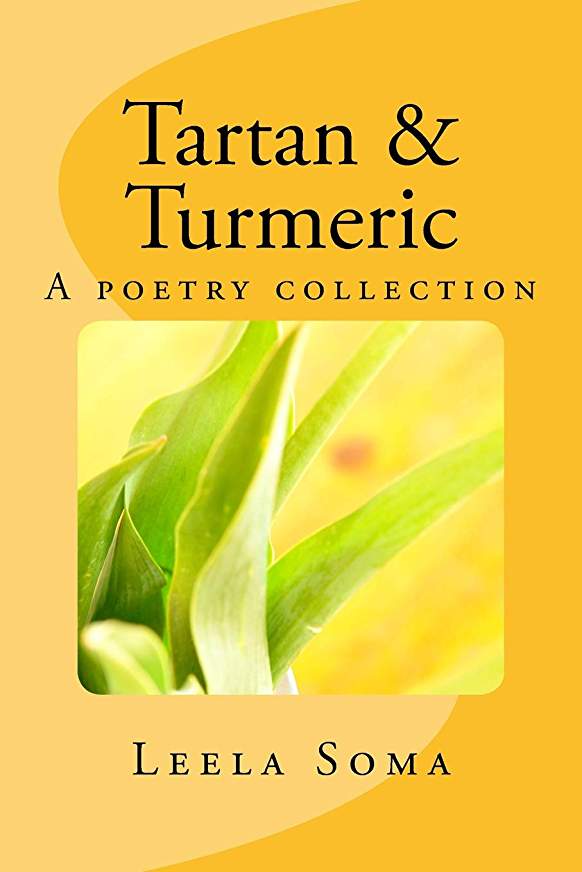
I recently published my second collection of poems’ Tartan and Turmeric’ and it is available on Amazon. I am writing short stories and more poems. The third novel has the first draft completed but editing needs to be done. I serve on the Committee for my local ‘Milngavie Week, and I am on the East Dunbartonshire Arts, & Culture Committee. With a friend I run a writers group, Bearsden Writers, a monthly meeting of local writers. So these are a few projects that are keeping me busy.
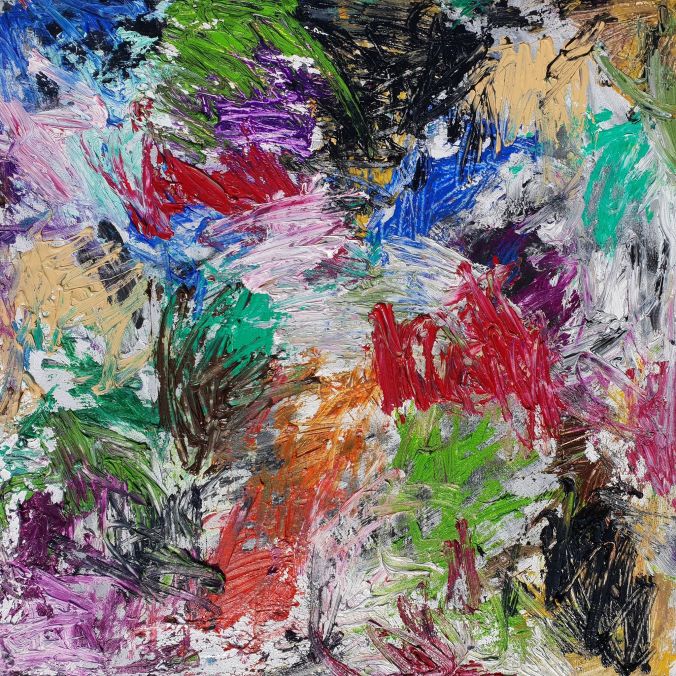
My National Poetry Month challenge to myself has become a collaboration between synaesthetic artist Sammy-John, myself, Anjum Wasim Dar and Jay Gandhi: Day Twenty: A Blackbirds

Blackbirds

Blackbirds

A Blackbirds

From the English version of ‘Epulario’ (The Italian Banquet), published in 1598;

“To Make Pie That the Birds May Be Alive In them and Flie Out When It Is Cut Up: …you shal put it into the coffin, withall put into the said coffin round about the aforesaid pie as many small live birds as the empty coffin will hold, besides the pie aforesaid. And this is to be at such time as you send the pie to the table, and set before the guests: where uncovering or cutting up the lid of the great pie, all the birds will flie out, which is to delight and pleasure…”

four and twenty in the pastry coffin.
Listen before you slice into it.
Is that a Robin or Blackbird’s
short, sweet song verses,
then endless improvisation?

The song a more mellow,
fluty whistle, four or five clear sounds
end with a weak, squeaky twiddle,
than long still notes that flood
into trickle, gush and gurgle
of the redbreast.

Take your sharpened knife
release the winged tasty notes
into colourful air to escape
through Spring’s opened warm windows,
and airing doors a new year’s feast.

2019 Paul Brookes

BLACKBIRDS

nibbled
at my dreams

flew away
with everything

live like
princes
in the jungle
whistle whole day

they’ve stocked
for their
50 generations

By Jay Gandhi

Blackbirds

Four and twenty, no more
Sacred or evil,
Yellow winged or melodious
Tri-coloured or pale,
It is still, a blackbird

Saintly to the Greeks,
Natures symbol of freedom
For some, of desire and temptation,
For a third, of salvation

What caused man to do blackbirding?
Know that blackbirds small, saved the house of worship-
While others with rye, broke the house of kingship,
One group in grace flies high
The other sits and hides in a pie.

2019 © CER Anjum Wasim Dar

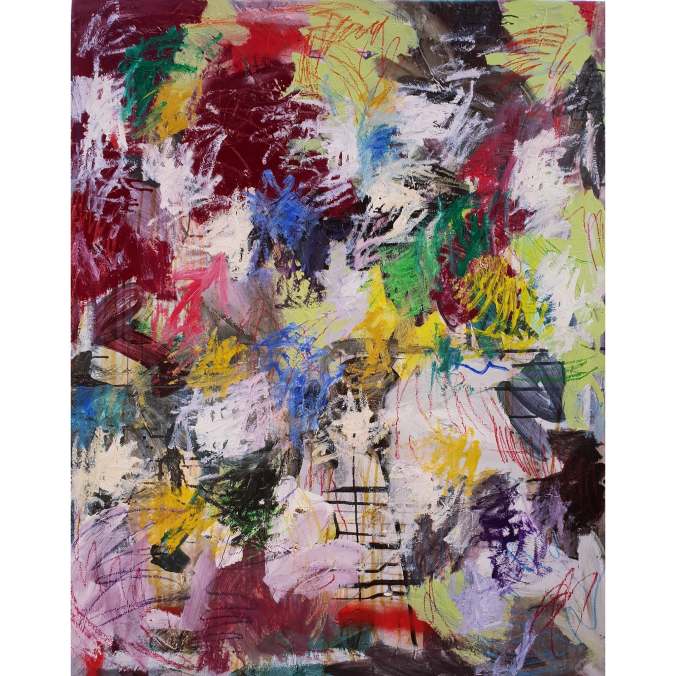
My National Poetry Month challenge to myself has become a collaboration between synaesthetic artist Sammy-John, myself, Anjum Wasim Dar and Jay Gandhi: Day Nineteen: The Untitled

Untitled Oil

Untitled

Untitled Haiku

For one dirham I
bought a cheongsam, for
journey to Siam

Map showed a whirlpool
bounded by reddish bushes,
crocodile in it,

I held the gisarme,
read lines by poet Khayyam,
sat in a wigwam,

Once on Siam land
wore cheongsam, with gisarme
cut the crocodile.

2019 © CER     Anjum Wasim Dar

Untitled

There is a point in the painting
where all the colours gel

I asked my counsellor the difference
between like and love—
if you like a flower, you pluck it
and if you love it, you don’t

Now that’s simple!

The day when you confided
in me that your mother has
Paranoid Schizophrenia
I FELL IN LOVE WITH YOU
No questions asked.

Well, actually,
is there a point where you
can dislodge a flower out of its
groove—
pluck it and yet not pluck it?

By Jay Gandhi

No More Fetch

you here,
Fetch you home.

Fetch my lips to thine.
Fetch my arse to this.

Fetch you dinner.
Fetch you a snog.

Fetch your groceries.
Fetch your washing and ironing.

Fetch your slippers
Fetch my social to your wallet.

Fetch my hand up to stop thy fist.
Fetch your belongings in a black bag.

Fetch your gob and its mouthful.
Fetch mesen to thy want.

2019 Paul Brookes

“The Carpenter’s Son”, two poems… two visions, Sara Teasdale and A.E. Houseman

Happy Good Friday.

Jamie Dedes's avatarJamie Dedes' THE POET BY DAY Webzine

Kreuzigung von Gabriel Wüger, Andachtsbildchen auf dem Vorsatzblatt der Ausgabe des Schott-Messbuchs von 1952

“The soul of the artist cannot remain hidden.”  Henri Nouwen


  • I’m on vacation. This is a prescheduled post. Regular posting will begin again with Wednesday Writing Prompt on April 24 and Opportunity Knocks on April 25.
  • Calls for Submissions, Contests, and Events are posted on The Poet by Day Facebook Page.   
  • You are encouraged to display your work (poetry, art, photography, cartoons, music videos and so forth) and your  artistic successes and other arts-related announcements at The BeZine Arts & Humanities Facebook Group Page


Many people are honoring Good Friday today, a day considered holy by some and that you likely know even if you are not Christian. These two poems are offered without judgement or analyses, simply as an example of different responses by poets of the same era to a moment marked by…

View original post 988 more words

Wombwell Rainbow Interviews: Charles Brice

Wombwell Rainbow Interviews

I am honoured and privileged that the following writers local, national and international have agreed to be interviewed by me. I gave the writers two options: an emailed list of questions or a more fluid interview via messenger.

The usual ground is covered about motivation, daily routines and work ethic, but some surprises too. Some of these poets you may know, others may be new to you. I hope you enjoy the experience as much as I do.

Charlie Brice

is a retired psychoanalyst and is the author of Flashcuts Out of Chaos (2016), Mnemosyne’s Hand (2018), and An Accident of Blood (forthcoming), all from WordTech Editions. His poetry has been nominated for the Best of Net anthology and twice for a Pushcart Prize and has appeared in The Atlanta Review, The Main Street Rag, Chiron Review, Fifth Wednesday Journal, The Paterson Literary Review, and elsewhere.

The Interview

1. When and why did you start writing poetry?

I started out as a fiction writer. I wrote a couple novels but wasn’t happy with them. Tinkered with them endlessly. I wrote poems in high school and in college, then met my wife to be, the poet Judith Brice, read a couple of her poems, and stopped writing poetry for about 25 years! About 15 years ago, Judy and I attended a writers’ conference in Michigan: Judy as a poet and me as a fiction writer. I had some down time and Judy talked me into attending a workshop offered by Maria Mazziotti Gillan (the Editor of Paterson Literary Review). Maria gave us an assignment: write a poem that refers to a popular song. I wrote a poem called “The Game,” about going to a minor league baseball game with our son, Ariel. On a lark I sent it in to a magazine and it got published immediately. More and more of that happened with my poems and I discovered that I was a poet!

2. Who introduced you to poetry?

Well…my first poetry teacher was a horrible woman named Sister Humbert, a Dominican nun who was a full fledged sadist. She made us sixth graders memorize a poem and I memorized Excelsior by Longfellow. I immortalized this experience in my first book, Flashcuts Out of Chaos, with my poem, “My First Poetry Teacher.” Actually, the nuns, for all their faults or because of them, have turned out to be terrific muses for me. The guy who really got me writing poetry was named Bernie Beaver, my freshman English teacher at the University of Wyoming. He really wasn’t a very good teacher, but one thing he drilled into our heads was that “anything can be a poem.” I will forever be thankful to him for that. Because of him I never run out of subjects to write about. Just recently I wrote a poem about what I don’t want to write about. See what I mean?

3. How aware are and were you of the dominating presence of older poets traditional and contemporary?

I never thought of these wonderful people as “dominating,” but as poets whom I loved to read and learn from. I suppose the first poet I loved was e.e. cummings. You’re not supposed to like cummings now. You’re supposed to think of him as a light weight. But lines like, “It may not always be so, and I say, that if your lips should touch another’s as mine in time not far away”…or “nobody, not even the rain, has such small hands” (this may not be perfect–just rattling off the top of my head), lines like those just send me someplace out of this world. Other American poets that I loved: Theodore Roethke, Thomas Lux, Jim Harrison, and the great European poets, especially Rilke, Dylan Thomas, Keats, Shelly, Shakespeare, of course, also Dawson and Swinburne. All those wonderful writers, they were all so inspiring to me. People I could not only learn from, but get comfort from. I used to hand out poems to some of my patients. Hopkins’ poem, “Margarat are you grieving over golden groves unleaving” was especially helpful to people undergoing vast life changes.

4. What is your daily writing routine?

I spend the morning reading. I love fiction, am rereading Jim Harrison’s, The English Major, and Dickins’ Bleak House right now. Just finished, today, The Galloping Hour, by Alejandra Pizarniek–a South American poet who wrote in French and who was clearly interested in the French psychoanalyst Jacques Lacan, and I’m reading Lawrence Krauss’ book on astro physics, A Universe From Nothing. I find physics, especially quantum mechanics, to be an orchard of metaphor for poets. In the afternoon I go up to my study and write. If I don’t have a new poem, I edit and revise old poems, especially ones that have been rejected. I submit a group of poems every day. I see submission as part of my writing day. I love the entire process including editing my work and doing interviews like this one.

5. What motivates you to write?

I think my main motivation is interest in the world and in what we are all up to in our lives. When I was at the Universtiy of Wyoming I was lucky enough to run into a philosophy professor, Richard L. Howey. I took loads of courses from him. Richard taught us to be interested in everything and skeptical of everything and to think before we speak and anticipate the arguments of others before we venture into a debate or dialogue. I have dedicated my new poetry collection, An Accident of Blood, to Richard.

6. What is your work ethic?

My work ethic? I write every day, or submit, or revise. I really feel horrible if I don’t do one or all of those things every day. I can write in all conditions and almost anywhere. I usually start out in longhand in a notebook I carry with me everywhere, then type it up, get it on the computer and go from there. It’s unusual for me to send out a poem that hasn’t gone through at least 7 revisions. Some have been revised as many as 30 times. One poem, Soulium (in my second book, Mnemosyne’s Hand) was accepted 20 minutes after I wrote it! That’s a record for me.

7. How do the writers you read when you were young influence you today?

Cummings remains an influence. I want to write poems that provoke an emotional response in the reader. I don’t care for the more academic writers, the Ashbury’s of this world. If I can’t feel something or if my world isn’t improved by reading a poem, then I’m not interested. Tom Lux and Jim Harrison always produced strong feeling in me and that’s what I want to do in my own work.

8. Whom of today’s writers do you admire the most and why?

I admire so many writers. I love Facebook because I’ve “met” some great writers like Ace Boggess and Gary Glauber there. I admire their work immensely. I think the poetry of my teachers is wonderful: Jack Ridl, Michael Dickman, Robert Fanning, Richard Tillinghast, Maria Gillan, and Maria Howe are terrific teachers and wonderful poets. The poetry community here in Pittsburgh is incredible. Every day of the year, all year long, there is at least one poetry reading in our city. It’s incredible! My favorite poets here are, Judy Brice (my wife), Jason Irwin, Jen Ashburn, Angele Ellis, Janette Schafer, Joan E. Bauer, Michael Wurster and a slew of others too numerous too mention. I feel very lucky to live in this city.

9. Why do you write, as opposed to doing anything else?

I don’t really know why I write. I just write. I can’t imagine not writing. I’m retired now. I was a psychoanalyst for 35 years and I’m much happier as a poet. I miss my patients, but my analytic colleagues were, mostly, much more troubled than my patients. I haven’t met any writers that are as troubled as my former colleagues. Anyway, I just love writing and I’m not sure why I do. I just do.

10. What would you say to someone who asked you “How do you become a writer?”

As for advice on how to become a writer–read, read everything. Do what Howey taught us to do: be interested in everything. My mother always said that if you’re bored, it’s your own fault. You’re not looking far enough or deep enough into your world. She was right. In terms of the writing itself, the most important thing to overcome is the inner critic, what we called in my former profession, the super ego. There will always be a “voice” in your head that will tell you not to write somethin or that no one will be interested in what you say or that you are immature… . Fuck all that. Get rid of the critic. Often, the very stuff you’re critic is telling you not to write is what readers will be most interested in. Also, allow the music you love to influence you. I always write with a soundtrack (usually classical music, but that’s just me).

11. Tell me about the writing projects you have on at the moment.

My new book, An Accident of Blood, should be out in just a couple weeks. I’ve got almost enough poems in the hopper for a fourth book. Aside from that, I’m busy arranging readings and promoting my latest book, Mnemosyne’s Hand, in any way that I can. I’m very grateful for the opportunity to do this interview. Thanks so much.

My National Poetry Month challenge to myself has become a collaboration between synaesthetic artist Sammy-John, myself, Anjum Wasim Dar and Jay Gandhi: Day Eighteen: Our Imposter

Imposter

Imposter

Imposter

scorpion on your back
rises from hibernation when
I gently massage it.
It throbs when my fingers
kiss you. it gets worked
up when my hands go in
unexplored bits of your body.
slowly it uncoils, opens up
to have a heated banter.
initially there is friction,
then fluidity And when
the rush reaches the peak
Scorpion spits venom.

By Jay Gandhi

Our Imposter

writes these words.
It can’t be me.
making black marks in white space,
footprints in the snow, ash on a white shroud.

contrails in translucent skies,
As if it knows how to manipulate
negative space, hint at, disguise
other intentions, stain the page with colours.

I am not good enough to vandalise
this pristine, reshaping of a tree.

2019 Paul Brookes

Imposter
She felt an odd discomfort
adjusted the glasses from
time to time
Black coat red tie, yellow
carnation, a princely smile
apprentice of Promethean

he seemed , ‘You will die’
her first secret task, how to
find the spy? Should she talk

to the one in blue? No’
the mind struck the eye
think’ think the other way
when all appear  the same
the one you seek Dolus’
companion of Pseudologi
is always standing right
right there just behind you
Turn ! Turn !
2019 © CER  Anjum Wasim Dar

Wombwell Rainbow Interviews: Ace Boggess

Wombwell Rainbow Interviews

I am honoured and privileged that the following writers local, national and international have agreed to be interviewed by me. I gave the writers two options: an emailed list of questions or a more fluid interview via messenger.

The usual ground is covered about motivation, daily routines and work ethic, but some surprises too. Some of these poets you may know, others may be new to you. I hope you enjoy the experience as much as I do.

Ace

Ace Boggess

is author of four books of poetry, most recently I Have Lost the Art of Dreaming It So (Unsolicited Press, 2018) and Ultra Deep Field (Brick Road Poetry Press, 2017), and the novel A Song Without a Melody (Hyperborea Publishing, 2016). His writing appears in Harvard Review, Notre Dame Review, Rattle, River Styx, and many other journals. He received a fellowship from the West Virginia Commission on the Arts and spent five years in a West Virginia prison. He lives in Charleston, West Virginia.

Links to the books he still has available:

https://www.amazon.com/gp/product/194702132X/ref=dbs_a_def_rwt_bibl_vppi_i1

https://www.amazon.com/gp/product/0983530475/ref=dbs_a_def_rwt_bibl_vppi_i3

The Interview

1. When and why did you begin to write poetry?

I toyed around with in high school, but started writing it regularly as a way of taking a break from the novels I was working on throughout the 90s. The novels took a great deal out of me and were so focused on their own visions that poetry allowed me to escape them and jot down whatever else might be going on in my head. Then, something weird happened: while I couldn’t sell my novels, the poems started getting picked up by journals and zines. Before I could figure out what was going on, I was known as poet. Life is funny like that.

2. Who introduced you to poetry?

Oh, probably some junior-high teach pedalling the usual classics. Or maybe it was Iron Maiden. I don’t really recall.

3. How aware were and are you of the dominating presence of older poets?

When I was younger, there really was no one else. These days, I think a lot of the younger (or at least, fresher) poets have control of scene. I’m thinking of Kaveh Akbar, Chen Chen, Jenn Givhan, Maggie Smith. There’s so much great work being put out by folks like them. Plus, it seems like the older poets that I loved and consumed in the 90s are dying off at an unbelievable rate these days. It seems almost metaphoric that the old die as the young come to prominence, almost like Kawabata’s The Master of Go. Que sera sera. Still, as a struggling middle-aged poet trapped between the old Greats and the new Greats, I hope there’s a place for me, too.

4. What is your daily writing routine?

I make a lot of coffee. Then I read for about half an hour before writing. After that, I write from sort of a transcendent state, not worrying about whether what I’m putting is any good. I write in longhand, so it’s easy to disappear into the page. Next, I type, revise, and submit. When something comes back, I edit (I say edit here because I believe revision implies transformation whereas editing implies fixing the flaws) and submit. I don’t leave anything lying around.

5. What motivates you to write?

Love for that transcendent state, a desire to create something beautiful, a need to shared my life with others in a way I often can’t do because of my anxieties. So, really, the anxieties motivate me, as they do everything else in my strange world.

6. What is your work ethic?

I write no matter what. Drug addiction didn’t stop me. Prison didn’t. Unemployment, a failed marriage, and a constant sense of unexplainable terror didn’t, don’t, won’t. I thought sobriety would stop me for a while, but no, not that either.

7. How do the writers you read when you were young influence you today?

Not as much in poetry as prose. I don’t care as much for the classics. Most of the writers that have most inspired me are ones I read in my thirties or late twenties: David Lehman, Adam Zagajewski, Billy Collins, Natasha Sajé. And of course the newer poets often blow my mind in a way that opens me up to fresh possibilities.

8. Who of today’s writers do you admire the most and why?

There are too many to name. I already mentioned Kaveh Akbar and Maggie Smith. They are the pinnacle, not just for their beautiful words, but their openness and honesty. I also the love the current poet laureate Tracy K. Smith. Her book about outer space and David Bowie was one of the greatest things I’ve ever read.

9. Why do you write?

At this point, I think it’s because I have to, or because I can’t do anything else, or, I don’t know, because writing still allows me that moment of escape from everything that hurts or trembles inside. I need that. It’s its own drug.

10. What would you say to someone who asked you “How do you become a writer?”

Don’t let anyone tell you that you can’t (there are many writers out there who’ve heard me say that, so I think it’s the advice I always give).

11. Tell me about the writing projects you have on at the moment.

I write poetry and short stories mostly these days. Much of my time is spent trying to find homes for my growing collection of manuscripts. I currently have three other poetry books that I’m trying to find homes for, as well as a couple collections of shorts stories and a few of the novels that I haven’t given up on. One of those, States of Mercy, will be released this summer from Alien Buddha Press, and another, Somewhat Misunderstood, has been edited down to a novella and will be included in the Running Wild Press novella anthology toward the end of the year. I’m excited about those. Both mean a lot to me. As I said, my novel-writing process was immersive. I left big chunks of me in those books, and I’ll be glad to see them out in the world.