Wombwell Rainbow Interviews: Laura McKee

Wombwell Rainbow Interviews

I am honoured and privileged that the following writers local, national and international have agreed to be interviewed by me. I gave the writers two options: an emailed list of questions or a more fluid interview via messenger.

The usual ground is covered about motivation, daily routines and work ethic, but some surprises too. Some of these poets you may know, others may be new to you. I hope you enjoy the experience as much as I do.

pretendpoet

Laura McKee

started writing by mistake. Her poems can be found on postcards to friends, a patio when it rains, once on a bus, and in various poetry journals in print and online: Crannog, Pouch, Obsessed With Pipework, The Rialto, And Other Poems, Frogmore Papers, Poetry Salzburg Review, Molly Bloom, Butcher’s Dog, The Interpreter’s House, Prole. Also in anthologies including Mildly Erotic Verse (Emma Press) and forthcoming in The Result is What You See Today (Smith Doorstop). She was a winner in the Guernsey International Poetry Competition, shortlisted for three years running in the Bridport Prize, and nominated for Best Single Poem in the Forward Prizes.

Twitter:@Estlinin https://twitter.com/Estlinin
Wordpress:https://wordpress.com/view/pretendpoetblog.wordpress.com
Instagram: https://www.instagram.com/pretendpoet1/?hl=en

The Interview

1. What inspired you  to write poetry?

In my forties I started listening to The Verb on Radio 3 and hearing poets read and perform their work seemed to bring it to life for me; particularly a performance by the poet, Ira Lightman, because I loved it and wanted to understand. In time I learned you can get a lot from a poem without demanding that it explains itself.

2. Who introduced you to poetry?

My mum had heard her dad, a bus conductor, recite poems, and she would recite bits to me. My Dad showed me poems by Spike Milligan, Hilaire Belloc, Tennyson. I went to a Secondary Modern school and didn’t have any formal education in poetry.

3. How aware were you of the dominating presence of older poets?

I think this has been changing for some time now. My feeling is we can learn from each other, I hate cliques of any kind.

4. What is your daily writing routine?

I’m not a prolific writer, and I don’t have a daily writing routine as such. I do read poetry every day. I always use my notes app on my phone to record ideas while I’m out and about. Then one day I’ll think of something that ties perhaps two ideas together, then that’s the beginnings of a poem. Either that or an idea seems to spring almost fully formed and the poem flows all at once, I love those moments. Strange fact: that’s happened a couple of times when I’ve been on antibiotics.

5. What motivates you to write?

Antibiotics apparently. Otherwise, to express myself in a way I find difficult sometimes in everyday speech, to communicate, and to calm myself the hecking heck down.

6. What is your work ethic?

Always wear a bowler hat.

7. How do the writers you read when you were young influence you today?

From Milligan and Belloc I learned that I can use humour in poetry. From Tennyson and rap and hip hop artists I have a pretty good ear for the rhythm, pace, and musicality of a poem.

8. Who of today’s writers do you admire the most and why?

Those who are resolutely themselves, and so bring something of themselves to poetry, and are also geniuses, eg. Carole Bromley, Briony Littlefair, Ali Whitelock, Mark Waldron, Hannah Lowe, Denise Riley.

9. Why do you write, as opposed to doing anything else?

Perhaps to leave something else behind to embarrass the children. When I started to write, I was pushing a pushchair, the poem arrived in my head as an escape I think. It feels like something I have to do now, so lord knows how I didn’t for so long, though my friends say I always wrote good letters and postcards.

10. What would you say to someone who asked you “How do you become a writer?”

Read widely, and listen, first. Keep doing that actually, it will inspire you to find your own words.

11. Tell me about the writing projects you have on at the moment.

I have a poem due in an anthology of poems on running, ‘The Result is What you See Today’, from Smith Doorstop. I have applied to do an MA in Writing Poetry, and will also need a scholarship award to afford the fees. I should hear before the end of this month, so, wish me luck!

Very grateful to Jamie Dedes for featuring six of my poems in the excellent company of other responses to last Wednesday’s prompt on her The Poet By Day.

“Mother With the Green Hair” … and other poetic responses to the last Wednesday Writing Prompt

Wombwell Rainbow Interviews: Timothy Tarkelly

Wombwell Rainbow Interviews

I am honoured and privileged that the following writers local, national and international have agreed to be interviewed by me. I gave the writers two options: an emailed list of questions or a more fluid interview via messenger.
The usual ground is covered about motivation, daily routines and work ethic, but some surprises too. Some of these poets you may know, others may be new to you. I hope you enjoy the experience as much as I do.

gently (1)[41625]

Timothy Tarkelly

Timothy Tarkelly’s work has been featured by Cauldron Anthology, Back Patio Press, Philosophical Idiot, Tiny Essays, GNU, Rusty Truck Zine, Sludge Lit, and others. His book, Gently in Manner, Strongly in Deed was published by Spartan Press in April, 2019. When he is not writing, he teaches in Southeast Kansas.

The Interview

1. What inspired you to write poetry?

I have been writing since childhood. I have always connected to poetry and music. When I was in the third grade, my favorite book was A Child’s Garden of Verses by Robert Louis Stevenson. Almost immediately, I started writing my own poetry and stories. I’ve worked a lot of different jobs and have changed my life’s direction several times, but being a writer of some kind has always been my primary ambition. Poetry has always been my favorite medium, but never in a serious way until the last five or six years.

I am inspired by a variety of subjects and have been moved to write poetry about my own life experiences, dead presidents, medieval warriors, vampires, Japanese mythology, politics, and just about everything else.

2. Who introduced you to poetry?

While I connected with poetry at an early age, I had no concept of how vast the world of poetry really was. After I discovered A Child’s Garden of Verses in my elementary school library, my father bought me a book of Edgar Allen Poe’s collected works, as well as Shakespeare’s sonnets. Then, a few years later, my stepfather gave me a collection of Shelley. My senior year of High School, my English teacher introduced me to Petrarch and Donne, and challenged me to write sonnets for the first time. I didn’t even really discover the breadth of contemporary poetry for a while after that.

3. How aware were you of the dominating presence of older poets?

That was all I knew for such a long time. And don’t get me wrong, I appreciate the introduction and still have a deep appreciation for the old poets (Petrarch and all the graveyard poets especially), but living in a small town in Kansas, where there is no literary scene whatsoever, I simply was not exposed. Even in my juvenile forays into the google-sphere turned up very few results that weren’t inundated with “These are the poets you MUST read.” I was in my twenties before I discovered the beats, and it wasn’t until then that writing poetry became more than just a weird hobby I didn’t tell people about.

4. What is your daily writing routine?

Anymore, my writing routine involves me setting aside time to write and then doing anything else instead. When I try to write poetry, I am either spending hours scraping the inside walls of my skull for words that barely make sense, or I am writing ten poems inside of an hour. I know no middle ground.

5. What motivates you to write?

This is a tricky question to answer because my interests are so all over the place. I have always wanted to write and I simply can’t imagine not doing it. I’m not sure it’s more complicated than that. I would like to say that it’s about sharing a certain message, or a deep love of the process, but honestly the process sucks and I write about everything. I write poetry, plays, films, sad stories, essays, and steamy romance novellas. One day, I’ll be working on a 300+ line poem about love in medieval England, then I’ll be working on a romance set in modern day, war-torn Istanbul. I am also the official poet for Altcoin Magazine, where I publish poems about cryptocurrency.

6. What is your work ethic?

When I’m in the zone, I can’t be stopped. However, when I’m not, I can’t be moved to write at all.

A lot of writers will say things like “there’s no such thing as writer’s block. That’s just a fancy way of saying I don’t feel like writing.” Well, I’m glad their brain works in such a singular fashion. Call it laziness if you want, I get writer’s block often and in a very bad way. I haven’t written anything in a month. Which in a way is good, because I get to focus on revisions for another novella I have coming out. I’m struggling now, but last month, I wrote 26 poems. So, who knows?

7. How do the writers you read when you were young influence you today?

I think the content holds true a lot of the time. I don’t write like Thomas Parnell, or Ann Radcliffe, but I am drawn to gothic imagery and it comes out in a lot of my work. Just like the old guard, I make way too many allusions to Biblical and Mythological themes and characters.

I also still use a lot of old forms. The majority of my work is “free verse” (I hate that term), but in the Eisenhower collection, I use Petrarchan sonnets, haibuns, trochaic tetrameter, and other relics from my childhood canon.

8. Who of today’s writers do you admire the most and why?

There are so many, TOO many to really include them all, but I’ll try to name a few. The poets I read the most right now, the ones I can’t stop re-reading are Safiya Sinclair, Joanna C. Valente, Ada Limón, John Dorsey, Kat Giordano, Shawn Pavey, Jason Baldinger. Really, the entire catalogue of Spartan Press and everything Cauldron Anthology, Luna Luna Magazine, and Trailer Park Quarterly publishes.

9. Why do you write, as opposed to doing anything else?

No matter what my job has been, or any situation I have been in, I have always found a way to turn it into some sort of writing project. I don’t understand how you can read and learn, and not want to turn it into work of your own. Eisenhower is a perfect example. The more I learned about Eisenhower, the more I wanted to create something with all of that knowledge, interest, and passion. While it might not have the widest audience appeal, I care deeply about it, and anything or anyone I care about is eventually going to find itself in a google doc, or scribbled inside of a notebook.

10. What would you say to someone who asked you “How do you become a writer?”

First and foremost: find people who support you. I took a lot of writing courses which were all helpful in their own way (even in the sense of learning what kinds of people/advice to ignore completely), but you do not have to go to college or get an MFA to be a writer. HOWEVER, what I got from college and being in an MFA program, is people who believed in me without question. If you are not around creative people, you will feel discouraged and likely spend years not applying enough energy or focus to your craft (like me). The first time I got a story published, I excitedly told someone at work about it. Their response was, “Why?” Why. Why did I write a story and have it published?! To some people, like the population of Chanute, KS, creative endeavours are such a bizarre waste of time that even when you find success, they still don’t get it.

Find your community. Find people who will nod in understanding when you say you’re a writer, even if you haven’t published anything yet, even if your writing only exists as scribbles in a notebook. Online, or in person, I would have never taken a single chance with writing if I hadn’t finally found a group of supportive people.

11. Tell me about the writing projects you have on at the moment.

I am in the revising process for a romance that will be published by The Wild Rose Press. I can’t say much, but it is set in a monastery in Western Kansas, and is being published under their mystery line.

As far as poetry goes, I have been working on a series of prose poems, which is new territory for me and I like it so far. I am also doing research in a lot of areas to finally settle on what my next big project is going to be. I had a lot of fun writing the Eisenhower book and want to do something similar, but in a much different area. So far I am considering a book of poems about: the Moorish conquest of Spain, Fat Mike from NOFX, Mathematics, the history of Fort Scoot, Laura Dern, or something else entirely.

Wombwell Rainbow Interviews: Lisa Kelly

Wombwell Rainbow Interviews

I am honoured and privileged that the following writers local, national and international have agreed to be interviewed by me. I gave the writers two options: an emailed list of questions or a more fluid interview via messenger.

The usual ground is covered about motivation, daily routines and work ethic, but some surprises too. Some of these poets you may know, others may be new to you. I hope you enjoy the experience as much as I do.

Lisa Kelly

Lisa Kelly

Lisa Kelly’s first collection, A Map Towards Fluency, was published by Carcanet in June. Her poems have appeared in Stairs and Whispers: D/deaf and Disabled Poets Write Back (Nine Arches Press) and Carcanet’s New Poetries VII. Her pamphlets are Philip Levine’s Good Ear(Stonewood Press) and Bloodhound (Hearing Eye). Lisa has single-sided deafness through childhood mumps. She is also half Danish on her mother’s side. She is Chair of Magma Poetry and co-edited Magma 69, The Deaf Issue, with Raymond Antrobus. She often hosts events at the Torriano Meeting House, London – a grassroots community arts venue. Her poems have appeared in a range of magazines and anthologies and she has been longlisted twice for the Bridport Prize, and twice for the National Poetry Competition. She is currently studying British Sign Language and is a freelance journalist writing about technology and business.

Her website is Lisa Kelly

Lisa performs her poetry at iambapoet.com

https://www.iambapoet.com/lisa-kelly

The Interview

1. What inspired you to write poetry?

‘Conspired’ maybe. I’m quite suspicious of inspiration. I don’t think you can wait around for the muse to strike. I wrote a little book of poems when I was young about squirrels and such like. I tortured my even younger brother by making him read them as part of our game, ‘School’. My parents had offered me 50p if I taught him to read. I was forced to write poetry at school as most children are at some point – whether for English homework or for projects, when it was always the easier option as opposed to building a Roman fort out of paper machee. One found its way into a school magazine and won a prize. I tried to repeat this success and failed. I gave up writing poems. I studied poetry at school and loved it, discussing it, dissecting it. I was no good at science but liked the science of poems – how they work, where their energy comes from.  I had mumps as a child and as a result am deaf in my left ear. Playgrounds were a nightmare. Books and poetry were much easier and more fun to be around than big gangs of children. Matthew Arnold’s poem, ‘Dover Beach’ made me cry. I loved words and found an outlet for this love in acting, but enjoyed the rehearsal period, the discussions over interpretation etc. more than performing in the same play night after night. I knew something was missing, and the missing something was writing. I retrained as a journalist, but that, as you know, is a different sort of writing, so something was still missing. I joined a creative writing class over ten years ago and then the ‘inspiration’ and poetry community worked together to continue inspiring or conspiring for me to write poetry.

2. Who introduced you to poetry?

My father, I think. He would read me made-up bedtime stories and poems. He left school early to join the Royal Navy to avoid having to go into the army on the advice of my grandfather who experienced the trenches. My father was an autodidact and had one of the best brains I’ve ever come across. He had a deep curiosity about many subjects. He was brilliant at maths and loved literature. I let him down on the maths front, but he always encouraged my love of books. He used to listen to Dylan Thomas’ ‘Under Milk Wood’ on a vinyl LP with a cast of characters. My brother and I were not to disturb him during these sessions, and I gave listening a try, but can’t say I was enthused. However, these things that make an early impression, stick. Later, I had some very good English teachers – Mrs Heritage and Mr Hoffman are two names that come to mind. I thank Mrs Heritage for introducing me to the metaphysical poets and Milton, and Mr Hoffman for being very encouraging about everyone’s poetic efforts and putting them on the classroom wall. Encouragement is so important for anyone in any introduction to poetry – whether in the reading or the writing. When I started writing seriously, the Torriano Meeting House run by John Rety was lifechanging. He was a massively inspirational character, and a very generous soul, who didn’t suffer fools gladly. His partner, Susan Johns, edited my first pamphlet for Hearing Eye, and she is a brilliant and tireless force for grassroots poetry. The Torriano Meeting House is my poetry home.

3. How aware were you of the dominating presence of older poets?

I’m actually more aware now. Back in the day, you just got on with it and the canon was presented as something that came down from Mount Olympus. There is much more questioning now of how that canon was created – the sexism, the racism, all the horrible isms which still exist. Much more is being done now to increase awareness of new voices in poetry and ‘new’ old voices. Poets such as Gertrude Stein, I only looked at later. She would have been considered too difficult for a school curriculum when I was studying. I am always learning – you never stop. So, I think the canon is continually being revisited and re-evaluated. It is no bad thing having a dominating presence of older poets, in my opinion, if we are in some way in communion with those voices and do not feel stifled by them. Look at how Daljit Nagra communes with the canon. When I first read ‘Look We Have Coming to Dover’, I was stunned. It had the vision of possibilities.  I find that very exciting, and I find what is happening with programmes such as The Complete Works; Ledbury Emerging Critics; the spoken word scene especially encouraging. There is such a lot of great energy being injected into the poetry world which is challenging any accepted vision of what a poem should be. Things are always being shaken up, including the presence of dominating older poets. We can have new ghosts to haunt us.

4. What is your daily writing routine?

Nothing set in stone. I write ideas or lines that might trigger a poem on scraps of paper, but I like the discipline of writing in Word on my PC because it is much easier to see the line-breaks – where the poem is baggy, and to play around with form which I enjoy. I like the visual aspect of poems. I’m learning British Sign Language, and as someone who is deaf on one side, control of my ‘interactive’ space is requisite to hearing. This personal preoccupation comes into my poetry. I am often at my PC as my day job as a freelance journalist specialising in technology, means I might have a very dry article on the go about scalable processors and Artificial Intelligence as well as a poem, and switch between the two. It makes for a good balance and stops you getting stuck. Looking after the family, my hands and body might be busy, but there is nothing to stop you thinking or composing in your head. My voluntary role as Chair of Magma takes up a fair bit of time, and if I am co-editing a magazine, then my own poetry takes a backseat. I do try and get out and like to walk to destinations if I can. Sometimes, I’ll read poetry when I’m walking, which is probably as annoying as people looking at their iPhone screens and bumping into you, but reading poetry is incredibly important to my daily writing routine. If I just got caught up in my own writing, my poetry would stagnate.

5. What motivates you to write?

I am always thinking about writing and poetry in some capacity. As a journalist, I am conscious of deadlines and the need to get something finished. If I haven’t written for a while, I get irritable, a bit like if I haven’t exercised. In terms of what I write about – the motivation varies. Sometimes it is anger, and there is much to be angry about in society at present, but we won’t get into Brexit or Trump etc. I will often write as a way of working through something – to discover what I feel about it. A splinter gets trapped in the finger and needs to be teased out with tweezers. It is often cathartic. From a practical point of view, I am part of a peer group of poets, and we meet once a week at the Torriano Meeting House in Kentish Town, London. We take it in turns to run a session and bring in poems on a theme or that illustrate a form. We discuss the work and go away with a prompt to write, and the ‘homeworks’ get read at the next session and sometimes workshopped. What I find is that a prompt might motivate you to write, but what you write about will be something that you need to write about that the prompt unlocks. Times of great stress or sorrow also motivate me to write. Nobody wishes for horrible events but writing about my mother after her death was important to me. She is my muse. When you write about someone who has gone, you bring them back to life in the space of the poem.

6. What is your work ethic?

Strong. I feel guilty if I am not feeding my writing in some way, whether it’s reading, writing, redrafting, attending poetry events. Sometimes, I feel guilty writing poetry because I feel I should be writing stuff that earns money. I had Obsessive Compulsive Disorder (OCD) as a child, and it blew up severely as a teenager, and was related to my schoolwork. It ruined my teenage years, although it got me good A level results. I have to guard against ensuring I don’t get back into OCD thought patterns, as it can crop up at stressful times, such as after the birth of my first child, and I’ve written a couple of poems about it, addressing OCD directly, but actually obsessiveness is a strand within my poetry, especially around form. This might be true for many poets. You have to be a bit OCD to worry about a comma or a line-break.

7. How do the writers you read when you were young influence you today?

Very much so. Many of my poems are in conversation with poems and poets that I read when I was young, and their voices remain alive in my mind. That is why the poets we introduce to children within a classroom setting are so critical to their appreciation and attitude towards poetry. I know many fantastic poets who are working with young people to overcome any fear of poetry and it is amazing how well they respond and many start writing their own poetry and discovering their creativity and worth in self-expression which has positive benefits in all subjects, and of course their lives.

8. Who of today’s writers do you admire the most and why?

I can’t single out a name, because actually it is the poetry community that I admire. I am constantly energised by what I read. I am a magpie for poetry and am always reading new poetry that inspires me. My bedside table and floor is piled high with magazines and books, and if I find a poem I like by a poet I’ve not heard of, I will look them up and follow them on social media, and sometimes invite them to the Torriano Meeting House to read if I have a hosting spot. The poets I especially admire are the ones putting something back – the poets who are working for the poetry community in some way. And brave poets. Alice Hiller, who writes in the face of sexual abuse, comes to mind. There. I’ve mentioned a name.

9. Why do you write, as opposed to doing anything else?

Hmm. I think if I didn’t write, I would have gone very quietly mad. Although sometimes I have a fantasy about being a lumberjack. I love woods and forests.

10. What would you say to someone who asked you “How do you become a writer?”

I would say, you are the only person who can decide if you are a writer. It is a mental attitude. I know poets who don’t describe themselves as poets even though they have had collections published. It is not just down to publication. Poets that we know now as great writers, like Emily Dickinson, who were not widely published in their lifetime, serve an example that success today does not guarantee any poetic legacy. So, with all those caveats in mind, if you want to be a writer, you must ask yourself what the job means to you. If it is about money, then there are very few poets who can claim it as a profession. To get to that point, they will have worked very hard, nurtured their talent, gone to a lot of open mic events, been prepared for criticism, sent off poems, got rejected, tried again, got accepted, got lucky to some extent. Perseverance is helpful. Developing a thin skin for sensitivity to language, and a thick skin for reception of your work is necessary. Don’t let your ego get in the way of the poem. Even if you have a success, when you go back to the blank page, you begin again as a debut writer. Beyond the mechanics of making time to write, it is essential to read as much as you can and be hungry for other people’s poetry more than for your own. If you only read your own writing, you are going to be a terrible writer. Find a supportive group who you can comfortably show your work to, and be prepared to listen to their feedback, think about it, discard what you don’t find helpful, and take on board what you do. If you enjoy the process, you will find a way to becoming a writer on your own terms.

11. Tell me about the writing projects you have on at the moment.

My first collection has just been published by Carcanet, which I am very grateful for, and I have some events at which I am reading, but beyond that, I take it one poem at a time. Some I am happy with and some not so happy with, and it was like that from day one, even when I was writing about squirrels!
Very grateful to Jamie for featuring, in talented company, seven of my poems on the subject of “strangers and sojourners” on her “The Poet By Day”

“I Cannot See My Face”. . . and other poetic responses to the last Wednesday Writing Prompt

Thankyou To Mark Of Ariel Chart for featuring four of my poems.

http://arielchart.blogspot.com/2019/07/a-bit-of-tug.html

http://arielchart.blogspot.com/2019/07/you-must.html

http://arielchart.blogspot.com/2019/07/is.html

http://arielchart.blogspot.com/2019/07/a-fact-losing.html

Wombwell Rainbow Interviews: Sarah Westcott

Wombwell Rainbow Interviews

I am honoured and privileged that the following writers local, national and international have agreed to be interviewed by me. I gave the writers two options: an emailed list of questions or a more fluid interview via messenger.

The usual ground is covered about motivation, daily routines and work ethic, but some surprises too. Some of these poets you may know, others may be new to you. I hope you enjoy the experience as much as I do.

Sarah Westcott

Sarah Westcott’s first poetry collection Slant Light was published by Pavilion Poetry, an imprint of Liverpool University Press, in 2016. A poem from the book was Highly Commended in the 2017 Forward Prizes. Her debut pamphlet Inklings, published by Flipped Eye, was a winner of the Venture Poetry Award and the Poetry Book Society’s Pamphlet Choice for Winter 2013.

Sarah’s poems have appeared in magazines including Poetry Review, POEM, Magma and Butcher’s Dog, on beermats, billboards and the side of buses, and in anthologies including Best British Poetry and The Forward Book of Poetry.

She was a poet-in-residence at the Bethnal Green Nature Reserve in London in 2015 and Manchester Cathedral poet of the year in 2016. She won first place in The London Magazine poetry prize in 2017 and the Poets and Players competition in 2018.  Sarah grew up on the edge of Exmoor,  lives on the London/Kent borders with her family and works as a freelance writer after twenty years as a Fleet Street news reporter. She has a science degree and an MA in Creative Writing from Royal Holloway, University of London.

Sarah has run poetry workshops at schools and for the Second Light Network for women poets, and in 2019 starts work as a poetry tutor for City Lit in Covent Garden. She is an experienced and sensitive editor and offers a professional manuscript critique service for writers ranging from their first pamphlet to a full collection.

Website: https://www.sarahwestcott.co.uk

The Interview

  1. When and why did you start writing poetry?

I had always written and doodled in notebooks and in my head as a child and teenager  but I didn’t start taking any notice of it until my children were young and I was in my early thirties. I felt like something was ‘missing’ but I couldn’t put my finger on it. ~then I realised it was, without sounding pretentious, my creativity. I needed to access that part of myself. I only studied English up to GCSE level (although I kept on reading). I took an introductory OU course in poetry and another on short fiction – they were only about three months long. It was one of those light-bulb moments – you could say poetry ‘found me’. I remember going to see Jackie Kay read aloud in a church in London and I was in awe of seeing a real poet in the flesh, reading their work. She was captivating. That was the beginning of my poetry journey

1.1. What was it about Jackie Kay’s performance that had you “in awe”?

I think I had thought, maybe subconsciously, that all poets were old white men, and often dead, and almost not real. But here was a real woman with a beautiful voice speaking her poems to a packed church and suddenly poetry was accessible to someone like me.. I think I was in awe because she was able to captivate the entire audience through her voice and her words  – no special equipment or anything – just her living voice and that was the first time I had heard a real poet reach people like that.

2. How aware are and were you of the dominating presence of older poets traditional and contemporary?

I was aware of a canon of mostly dead white men and I knew  I was ignorant when it came to understanding their poetry because I stopped studying English after GCSE. It felt like these poems were full of riddles or literary allusions that I had no chance of ‘getting’. I still feel a little like that now. I think it is partly to do with the type of education you have and mine was at a comprehensive school where my abiding memories of English were marking each others’ spelling tests.  I had read a little Ted Hughes, Philip Larkin and some of the war poets at school but not really any women apart from Sylvia Plath. I used to  dip into an anthology called Palgrave’s Golden Treasury when I was bored at work in my twenties and I loved Gerard Manley Hopkins. But I didn’t really know any modern women poets and once I began reading them – Gillian Clark for example, a whole world opened up. I loved it that she wrote about domesticity, for example – I remember reading her poem The Sundial in which she starts by writing about a sick child and it was so heartening that women were writing about this sort of thing. These revelations  were only about 12 years ago which shows how quickly things have changed.

3. What is your daily writing routine?

I don’t have one as I have a lot of caring responsibilities at the moment and I’m learning on the job as poetry tutor as well. But what I do try and do is find the time to read a little bit every day. I make sure I write into my notebook  at least once a week when my three-year-old is asleep or at nursery. I often start with a free write or I might even just take my notebook out with me when I walk the dog and treat it like a ‘field trip’. I love doing this. I try and make the most of any time I have by getting something down – it doesn’t matter if it is rubbish or not. Sometimes 20 mins is enough, especially if it something I have ben thinking about for a while.  Then I have something to work with. If I don’t read and write I start to feel restless and sad. I actually find having very little time very helpful in that I dont waste it procrastinating – I just sit down and write. Likewise, train journeys are a blessing as long as I have a seat and something to write with!

5. What motivates you to write?

I am motivated by being alive – to capture something of the extraordinary quality of being a sentient being and then to connect with others – I am also motivated by observing and being curious. I love the euphoric feeling of making or creating something new from words, something that is both idea and music, that has not been made before and which reaches to other humans. If someone responds to a poem you have written it is a wonderful feeling. I am also motivated, perhaps weirdly, to leave something behind of me when I am gone. I am increasingly driven to write about the climate crisis too. I feel you cannot write without writing of it, somehow – it is a grave backdrop to everything.

6. How do the writers you read when you were young influence you today?

I think it is more a subconscious influence – a lot of the stories I read when young seeped in and helped form me. I loved Judy Blume – her stories had a lot of darkness and humanity in them. Likewise the Chronicles of Narnia. I think they all go towards making up your psyche and also the richness of the place you draw from when you write. My dad used to read me Robert Louis Stevenson verses when I was young and their imaginative flight definitely stayed with me – that sense of possibility and play.

Maggie Smith said she was given the advice ‘write what scares you’ very early on. I spent a lot of time being terrified by what I read – I remember being terrified of witches and also reading the end of 1984 and understanding that Winston had figuratively died – I remember his gin-soaked tears. I think that writing and reading is a way of facing that existential terror within yourself because there is no where to hide – you are facing hard truths.

7. Who of today’s writers do you admire the most and why?

SO much extraordinary and powerful and important work is being made at the moment. I keep a tally of the books I read each year and put a heart by the ones that affected me most. In the last few months for me, Max Porter for his hybridity and linguistic verve, Ilya Kaminsky, Fiona Benson (her fierce and tender poems) . I also loved Sean Hewitt’s Lantern and I love the way Alice Oswald listens in to the natural world..

8. What would you say to someone who asked you “How do you become a writer?”

How do you become a writer? I love Mary Oliver’s dictum “Pay attention. Be astonished. Tell about it.” I think we are all writers – stay curious, observe and read. When you are ready, come to a blank page with all your senses open and do not be afraid to just write. Like running, one foot in front of another. One word after another. I find free writing really helpful. Or writing letters. Anything that connects the subconscious mind with the hand on the page, or whatever works for you. Editing uses a different part of the brain. Do not worry about getting an audience or being published. Just write with your heart open.

9.  Tell me about the writing projects you have on at the moment.

I am working towards my second collection with Pavilion poetry – there seem to be some poems exploring our relationship with trees and flowers and trying to have a conversation with the natural world. I feel like I am in the realm of Keat’s negative capability – that is, not knowing or being capable of mysteries. It’s quite exciting – the book is quietly forming and re-forming. There’s a sense of ripping up my old way of writing and beginning again, also of taking as long as it will take. I’m lucky to be part of a workshop group called Nevada Street Poets and we are celebrating our tenth anniversary this year and putting together a collection of essays . Mine is on looking .

Wombwell Rainbow Interviews: Mari Ellis Dunning

Wombwell Rainbow Interviews

I am honoured and privileged that the following writers local, national and international have agreed to be interviewed by me. I gave the writers two options: an emailed list of questions or a more fluid interview via messenger.

The usual ground is covered about motivation, daily routines and work ethic, but some surprises too. Some of these poets you may know, others may be new to you. I hope you enjoy the experience as much as I do.

Dunning

Mari Ellis Dunning

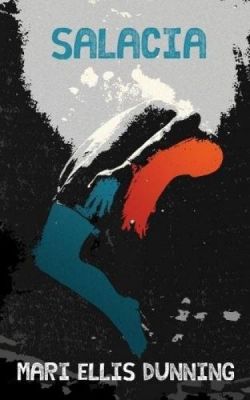
is an award winning Welsh writer of poetry, short stories and children’s books. Her debut children’s book was launched at the Abergavenny Writing Festival in 2016 and her debut poetry collection, Salacia, launched in October 2018 with Parthian Books. It was shortlisted for the Wales Book of the Year award in 2019. Mari lives in Llan-non with her husband and their dog. The coast is hugely important to her writing and wellbeing. She tweets at @mariiellis.

https://mariellisdunning.cymru

The Interview

1. What inspired you to write poetry?

I’ve always had a love of language and have been writing poetry since childhood. When I reached adolescence, I began to use poetry as a means of navigating the spaces around me. I’ve always suffered with my mental health, particularly during my teenage years, and I found poetry was a way to communicate. It still helps me now.

2. Who introduced you to poetry?

I’m really not sure. I’ve always been a big reader, and I remember I had a book of children’s poetry when I was younger. I wrote a ‘collection’ for my grandmother when she was ill, and used that book to find ideas and rhymes – I was six at the time. Then in school, I studied John Donne and enjoyed that. My teacher at AS Level gave me a copy of Sylvia Plath’s collected poems – that was really the beginning of something for me.

3. How aware were you of the dominating presence of older poets?

When I was a child, I wasn’t really aware of any poets in the way I was of authors like JK Rowling, Lemony Snicket and Jill Murphy. We studied the older poets like Seamus Heaney, John Donne and Wordsworth in secondary school, but it was coming across Plath that really got to me. The presence of Dylan Thomas is certainly dominating in Wales, which was made particularly evident when I lived for a few years in Swansea. Thomas’ work has obviously been massively influential for many contemporary writers, lyricists and musicians, (Bob Dylan famously took his name from the Welsh poet,) but I think we need to facilitate more space for new, unheard voices in literature, particularly in Wales.

4. What is your daily writing routine?

We’ve recently bought a house on the coast in Llan-non, which is breathtakingly beautiful and brilliant inspiration for writing. I tend to walk the dog along the coastal paths each morning, then come back to settle down with a coffee and put pen to paper. I’m working on a collaborative collection of poetry at the moment, as well as a collection of surreal short stories, and I’m finding the landscape so stimulating.

5. What motivates you to write?

People and their stories motivate me. I tend to write when I come across a story that won’t let me go. For example, I’m working on a poem at the moment about a pregnant woman who was charged in the death of her unborn baby having been attacked. That kind of event is so bizarre, and so heartbreaking, working through it in poetry is the only way I feel I can process it and share it.

6. What is your work ethic?

It varies from day to day! Sometimes I’m fully motivated and rearing to go, and on other days I just want to stay in my pyjamas and cwtsh the dog. I work freelance running creative writing workshops, writing blog posts and book reviews, and editing content for magazines, amongst other things, so I have to be careful with my time-keeping. It suits me really well, as it means I’m doing work I enjoy, mostly from home, while also having plenty of time to focus on my creative writing, but I do have to schedule my workload well to ensure I protect space to work on my poems and stories.

7. How do the writers you read when you were young influence you today?

I loved the Harry Potter books growing up, and I suppose JK Rowling’s use of mythology and magic has stayed with me, (my debut poetry collection, Salacia, is named for the Roman goddess of the sea.) My favourite series was The Worst Witch, by Jill Murphy – I had all the books and audio tapes. I’m still fascinated by magic and witchcraft today, and still hope I’ll learn to fly eventually! In fact, my PhD centres on witchcraft. I believe reading through childhood has a huge impact on us later in life – stories are vital to help children understand the world, and escape from it. From fairy tales to books like A Series of Unfortunate Events, we learn about morals, ethics and what it means to be a ‘good person.’

8. Who of today’s writers do you admire the most and why?

There are so many contemporary writers that I admire, across fiction, poetry and non-fiction. Carolyn Smart’s Careen has been an inspirational source for one of my future projects, (writing about Christine Keeler as part of the ‘Dear Christine’ exhibit); Daisy Johnson’s short stories and novel astound me with each re-read; Rebecca Goss is one of my favourite poets, writing with honesty and grace about such difficult and personal topics. Poets across Wales, like Rhiannon Hooson, Natalie Holborrow and Christina Thatcher, are definitely worth reading. Zoe Brigley’s poetry is breathtaking and timely, as is her non-fiction – she has an essay collection coming soon with Parthian.

9. Why do you write, as opposed to doing anything else?

Honestly, I think it comes down to not being able to not-write. There are other things I’m interested in, and could potentially have pursued a career in, but if I wasn’t writing professionally, I’d still be writing in my own time. There are poems and stories that come to me and won’t leave me alone until I put them on paper.

10. What would you say to someone who asked you “How do you become a writer?”

Primarily, you need to write. Nothing happens if you don’t show up, pull out a notebook, and write. Personally, I’ve found more and more over time that this comes down to allowing yourself permission to do that, to consider yourself a writer and to afford yourself the time and space to write. My time at Hay Festival this year really made that clear to me. It’s always worth submitting your work to competitions, anthologies and magazines – agents and publishers will sometimes become aware of you that way. Once you’ve got a body of work ready, have an honest group of beta readers feedback to you, then send it out, to as many publishers and agents as you can. (Just do your research first, to make sure your work is the sort of thing they’re looking for. Mslexia’s Indie Press Guide is a brilliant resource for this.)

11. Tell me about the writing projects you have on at the moment.

I’m working on a pamphlet of poetry with Natalie Ann Holborrow, (And Suddenly You Find Yourself, Parthian.) We both enjoy writing about marginalised characters, particularly female, so we’re putting together a pamphlet of poetry filled with conversations between two characters. We started with Gothel and Rapunzel, and are planning on including pairings from Greek and Roman mythology, fiction and more fairy tales. I’m also working on a collection of short stories, as part of a Literature Wales mentorship scheme. The stories are all surreal – a woman falls in love with the moon; a man attends a party where the other guests are hyenas; a young girl dates a crocodile; mermaids emerge from the sea once a year to steal the eyesight of sailors. I’m really having fun with it and enjoying writing the stories, which I think is important.