Wombwell Rainbow Interviews: J DG

Wombwell Rainbow Interviews

I am honoured and privileged that the following writers local, national and international have agreed to be interviewed by me. I gave the writers two options: an emailed list of questions or a more fluid interview via messenger.

The usual ground is covered about motivation, daily routines and work ethic, but some surprises too. Some of these poets you may know, others may be new to you. I hope you enjoy the experience as much as I do.

J DG

Justene Dion-Glowa is a bi, emerging poet from Canada. Her work has been featured in Burning House Press and Fevers of the Mind Poetry & Art Digest. She is a contributor to the The Poetry Question and curates a quarterly literary magazine with her indie publishing house 3 Moon Independent Publishing. Her first poetry chapbook and memoir are forthcoming.

jdgwrites.wixsite.com/home

3moonpublishing.wixsite.com/home

Twitter: @gee_justy or @3moonpublishing

Instagram: @jdgwrites or @3moonpublishing

The Interview

1. What inspired you  to write poetry?

I think initially, when I was much younger, poetry was a way to address serious issues in a playful way. Now that I am older, I feel that I may have replaced the playfulness with cynicism. But I think putting out cynical work can help make day-to-day life more livable. These are dark times, and putting the darkness on paper can make it easier to see the light.

2. Who introduced you to poetry?

I can’t pinpoint a specific person. I was just a voracious reader, and fell in love with darker poetry like that of Edgar Allan Poe first. Once I realized that poetry didn’t have to be all sunshine and rainbows, I think I sought out more classic poems.

3. How aware were you of the dominating presence of older poets?

Very. I still read that type of work today. While I’m sure it’s not obvious, it’s the work of Poe and T.S. Eliot and even Shakespeare’s sonnets that really inspired me to keep writing poetry. There was something universal in what they were saying, but it was also so clear they were recalling some specific situation. There was a beauty in that level of communication that appealed to me, and still does.

4. What is your daily writing routine?

I can’t say I have a steady routine. My life is too hectic for that right now. I just make writing a priority. Some days I plan to write and I don’t at all. Some days I don’t plan to write and I end up with a ton of material. Making it a priority works for me. I always carry around notebooks too, just in case I’m on the go and inspiration hits. I also try to immerse myself in it. I write reviews of poetry, I constantly submit to literary magazines; I just make this the focal point in my life.

5. What motivates you to write?

I think it’s the knowledge that no one experience in your life is truly your own, and yet you’re 100% unique in how that experience shapes you. The human experience, I suppose.

6. What is your work ethic?

I have a “throw them to the wolves” ethic, in that if I don’t let it completely take over my life, it isn’t going to happen. I am deeply passionate and unless I am committed fully to something, I cannot continue to do it.

7. How do the writers you read when you were young influence you today?

I think the thing that influenced my beyond what any author could was the firm belief of every person in my life that I was not “too young” to understand or read anything. I was always assumed to be able to read whatever I wanted, no matter the subject or complexity, and that lead to me reading incredible books at a young age. That influences me today because when I think about my writing, I know I can do it and that others will value it. It’s just got to find it’s audience.8. Who of today’s writers do you admire the most and why?

I honestly love YA authors right now. The material coming out of that scene is fearless, incredible, and representational. But I love how many literary magazines are out there right now. I get to read so much incredible work because of people volunteering to curate it for the public. That’s a beautiful thing.

9. Why do you write, as opposed to doing anything else?

Writing is an exercise in processing to me. I do not process my reality the way others do, although, I can’t say definitively why. I liken it to a full plate. My body is so full of unprocessed experiences and trauma, it doesn’t seem to matter how much I take off that plate, there is always another helping coming. When my plate is empty, I guess I will stop.

10. What would you say to someone who asked you “How do you become a writer?”

You have to practice. And then you have to be willing to detach yourself from your own work because you need to edit it with an eye that’s not your own. Prose and poetry can be deeply personal, but it is so important to be relentless in pursuing the real voice and message of a piece.

11. Tell me about the writing projects you have on at the moment.

I am currently working on a personal memoir called “Chuck”. I have nearly completed my first chapbook of poetry, which is entitled “Trailer Park Shakes”.  I write reviews for The Poetry Question and I curate a literary magazine called 3 Moon Magazine and Independent Publishing. We offer small-batch independent publishing as well as editing, transcription and audio book recording services.

On Fiction Wombwell Rainbow Interviews: Gill Thompson

Wombwell Rainbow Interviews

I am honoured and privileged that the following writers local, national and international have agreed to be interviewed by me. I gave the writers two options: an emailed list of questions or a more fluid interview via messenger.

The usual ground is covered about motivation, daily routines and work ethic, but some surprises too. Some of these poets you may know, others may be new to you. I hope you enjoy the experience as much as I do.

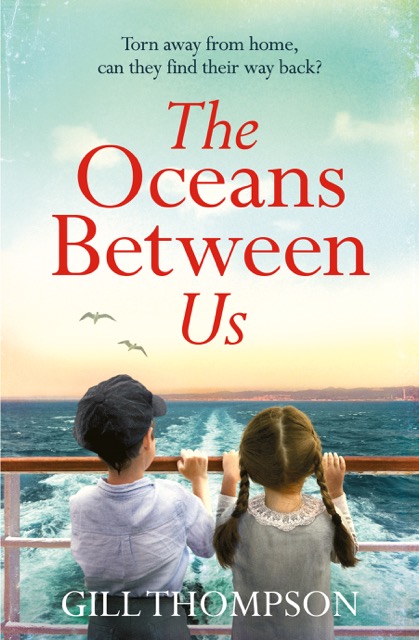
Oceans Between Us final image

Gill Thompson

My name is Gill Thompson. I have an M.A in Creative Writing from the University of Chichester, gaining a distinction for the extract from The Oceans Between Us which I submitted for my dissertation. The first three chapters of the novel were long listed for the Mslexia novel award 2015. The Oceans Between Us was published by Headline on 21st March.

I have written many short stories including The Christmas Wish List which was published in Yours and The Six Ages of Woman which won the Flash Fiction prize at the University of Winchester’s Writing Festival. I was runner up in the Thresholds’ International Short Story competition for my essay on Katherine Mansfield. I am a regular contributor of articles on literary and linguistic topics to emag, and I have also had an article published in Running magazine.
I have a B.A (Hons) in English Language and Literature and I have taught this subject at A level for many years.
I live with my family in West Sussex, UK.

Website: http://www.wordkindling.co.uk
Twitter: @wordkindling
Facebook: wordkindling

The Interview

1. What inspired you to write fiction?

I am an avid reader, often devouring two or three novels a week. I love to be able to escape into different fictional worlds and have always wanted to create a similar experience for others. Writing a novel has probably been a fifty-year-old ambition. As a child I was forever starting to write novels about the Tudors. If I had persisted I might have given Philippa Gregory a run for her money! My ambition to write continued into adulthood but life kept getting in the way – study, work, family… Then my father died and with the small legacy he left me I enrolled on a Creative Writing M.A at the University of Chichester. It was the best thing I ever did. My father had always believed in me as a writer and I am so grateful he enabled me to fulfil my ambition – although sad he never lived to know I would finally be published. My debut novel, ‘The Oceans Between Us’ came out this March.

2. Who introduced you to reading fiction?

I don’t really know. As a child I was always read bedtime stories so I suppose that started things off. Later on I joined a local library and spent most of my school holidays borrowing books and helping the librarians. I feel very sorry that libraries are in decline. They are such a wonderful resource for so many people. I doubt if I would have become a writer without my early library-fostered experience of being a reader.

3. How aware were you of the dominating presence of older writers?

That’s an interesting question! If by ‘older writers’ you mean ‘of advanced age’ I find that very reassuring. I am nearing retirement age myself so it’s immensely comforting to know that people like Judith Kerr were writing into their nineties. If, however, you mean the legacy of writers from the past, I suppose very. My day job is as an English Literature teacher to ‘A’ Level students. I am vey conscious of the literary canon and the influence it has. If it wasn’t for people like Samuel Richardson, Daniel Defoe, Henry Fielding and Jane Austen we might never have had novels at all. It’s often said that fundamental human nature doesn’t change, and even Shakespeare can give me ideas for my own characterisation. Mind you, teaching so many brilliant texts can be daunting. I’m conscious other authors have done things so much better than I can, but it doesn’t stop me striving for excellence. One day I might get there!

4. What is your daily writing routine?

I wish I had one! As I said in my previous answer, I am a teacher by day (although thankfully part-time now). I also have two lively granddaughters I look after two days a week so that doesn’t leave much time to write. When I have a deadline to meet I tend to start early in the morning. I’ve often woken up at the crack of dawn with ideas of what I want to write about that day, so it’s a question of sitting down and giving some sort of narrative shape to those early thoughts. One of the many problems with historical fiction, the genre I’ve found myself writing, is the amount of research that is needed, so I often have to stop to check facts or read up on something. With a fair wind following I can write 2,000 – 3,000 words a day. I usually run out of steam by mid afternoon, so I tend to do something more practical for a while like cooking or gardening before returning in the early evening to read through and edit what I’ve written.

5. What motivates you to write?

Initially it was the desire to tell a story. My first novel was about a child migrant to Australia, a story I’d stumbled upon when I first heard Gordon Brown apologise to ex child migrants back in 2010. These children, some as young as four, had been lured to a land ten thousand miles away, ostensibly to lead a better life, but in reality to satisfy racial governmental agendas. Many were lied to, told they were orphans when their parents were still alive; many were consigned to years of misery and abuse; few were ever to see their parents again. The account horrified me, and after many years of research and correspondence with ex child migrants, I started to base a novel around this event. The compulsion to tell what had happened, albeit through a fictional narrative, drove me onwards. It’s gratifying that many of the reviews for ‘The Oceans Between Us’ comment that the reader was unaware of this practice, and grateful for being enlightened. I felt the child migrant story was a story that had to be told, and I’m very grateful for being allowed to tell it.

Since the book was first taken up though, I have to say what drives me now is fear! As a teacher, I’m a stickler for deadlines, but I’m always anxious I won’t finish things in time. When I was just writing for myself I had all the time in the world, but I’m now very conscious I need to meet publishing schedules. It’s all quite stressful.

6. What is your work ethic?

See above! Very strong. I’ve waited so long for this opportunity that I certainly don’t intend to squander it, so I work hard to keep on target and produce the best work I can.

7. How do the writers you read when you were young influence you today?

I didn’t really set out to write historical fiction, but looking back I did read a lot in that genre. Jean Plaidy and Georgette Heyer were favourites. I always wanted to write something that moved people, and perhaps even changed the way they viewed historical events. I remember being very affected by ‘To Kill a Mockingbird’ by Harper Lee and I loved the Brontes. Although very different writers I thought they all had something powerful to say about human experience and behaviour.

8. Who of today’s writers do you admire the most and why?

I loved Kate Atkinson for what she does with structure and form. Some of the new wave of Irish writers, like Eimear McBride and Anna Burns, are brilliant pioneers of stylistic change. I have a bit of a love/hate relationship with Ian McEwan, but when he’s on top form – such as in ‘Enduring Love’ and ‘The Child in Time’ I think he is excellent.

9. Why do you write?

To create a legacy …to make my family proud…. to exercise a talent I believe I’ve been given…to move…to inform… because I (mainly) enjoy it.

10. What would you say to someone who asked you “How do you become a writer?”

I think you need to be a reader first. That’s your training ground and the way to perfect your skill. It’s helpful to read like a writer – ‘unpicking’ books to see what authors have done with structure, style and form. I also think it’s helpful to do a course. My Masters in Creative Writing put me in touch with some wonderful teachers and fellow students. They really helped me progress in my writing. Joining a workshop group is a good way to test out your writing in a safe environment, and discuss the process with others. Finally, there are competitions. The entrance fees are often inexpensive and it’s a great way to pit your work against others. For a bit more money you can often buy into a critique which can be very useful. And if you win a prize it’s a wonderful encouragement to continue and a validation of your writing.

11. Tell me about the writing projects you have on at the moment.

I’ve just sent back the proof pages of ‘The Child on Platform One,’ my second novel, which comes out next March. It was written to quite a tight deadline so I have decided to give myself the summer off. I’ll do some gentle reading over the next few weeks to see if I can get an idea for book three, then in the autumn, hopefully with some inspiration, I’ll start writing again.

Wombwell Rainbow Interviews: Tucker Lieberman

Wombwell Rainbow Interviews

I am honoured and privileged that the following writers local, national and international have agreed to be interviewed by me. I gave the writers two options: an emailed list of questions or a more fluid interview via messenger.

The usual ground is covered about motivation, daily routines and work ethic, but some surprises too. Some of these poets you may know, others may be new to you. I hope you enjoy the experience as much as I do.

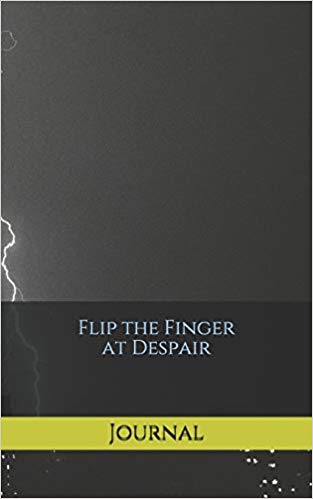
Flip_The_Finger_At_Despair

Tucker Lieberman

Tucker Lieberman’s poems are in Asses of Parnassus, Déraciné, Esthetic Apostle, Fruit Tree, Neologism, Oddball, Prometheus Dreaming, and Rockvale Review. He has a short story forthcoming in the anthology I Didn’t Break the Lamp: Historical Accounts of Imaginary Acquaintances. His essays have been published widely, and he wrote a book on eunuch villains. His photos are in Barren, Crack the Spine, L’Éphémère, and Nightingale and Sparrow, and his art is in Burning House. He and his husband live in Bogotá, Colombia. www.tuckerlieberman.com Twitter: @tuckerlieberman

The Interview

  1. When and why did you start writing poetry?

The earliest poem I’ve uncovered through home archaeology is: “Roses are red, roses are yellow / My grandfather’s nose got stuck in the Jell-O.” I may have been five. I’ve always been interested in sounds and rhythm, and I began to write rhyming poetry when I was ten. My poems were terrible. In fifth grade, I was invited to recite my tribute to the American flag outside my suburb’s Town Hall for Flag Day, at a microphone and everything. In eighth grade, my English teacher saw some promise in me and asked to work with me one-on-one. I showed her a free-verse poem about a man deconstructing himself by plucking out his own eyeballs and organs, and she sent me to the guidance counselor. I did have a handful of awards and publications in childhood, but that was probably relative to the competition in my age bracket. In college, I realized that I struggled to write poems that were both comprehensible and beautiful and that I wasn’t in the literary echelon I had fancied myself to be in. I turned my attention to essays, majored in philosophy, and got a graduate degree in journalism. In my late 30s, after leaving my IT job, I resumed writing poetry as I finally was able to give it the required attention. I’ve learned a lot during the past year just by reading poems every day, soliciting feedback on my work from other poets, and rewriting the same poems over and over. There’s no age limit for this kind of education and growth. I’m a much different writer now than I was one year ago.

2. How aware are and were you of the dominating presence of older poets traditional and contemporary?

Henry Wadsworth Longfellow wrote “Tales of a Wayside Inn” set in the New England town where I grew up. The Wayside Inn still exists, and we visited it. So I always had a sense of how formal poems could be used to commemorate something. In grade school, we were given contemporary children’s poems to memorize. Probably Robert Frost was in there, too. Inherited from a grandparent or great-grandparent, we had a hundred-year-old set of poetry books—Longfellow, Tennyson, Whittier—and, when I was ten, I opened to a random page and memorized Whittier’s long poem “Derne” about the 1805 Battle of Derna. I had no idea what the poem was saying. I just understood it was telling a story and making a statement. Those word combinations I’ve never heard anywhere else since. In just the first four lines: “city of the Moor,” “white-walled shore,” “ceaseless knock,” “harbor-gates unlock.” Later, I discovered Walt Whitman, which was revelatory. He was a contemporary of Longfellow, but he was doing something totally different.

Most, maybe all, of the poets I first knew were white men. However, in 1992, Rita Dove became the U.S. Poet Laureate, and, when a haiku of mine won a contest, part of my prize was to receive a letter of congratulations from her. The first poetry book that was really mine—a poetry book written for adults, and one that I had obtained because I wanted it—was Marge Piercy’s Mars and Her Children. In my teens, I knew women poets through a local writing workshop and by attending author readings. My high school literary magazine, which I worked on, was staffed mostly by girls.

So I had an evolving sense of who writes poetry, what they do with it, what it sounds like. As I entered college in the late ’90s, the Internet was popping up, and that certainly changed expectations around poetry. I never felt that poetry was inaccessible to me as a reader or as a writer. I did always feel, however, that it was incumbent upon me to learn to write well, to earn my place as a poet.

3. What is your daily writing routine?

My one superpower is that I do not currently have to go to an office, so I devote myself full-time to writing. This is not meant as “how-to” advice, since I don’t assume that others can have this lifestyle nor that they necessarily even want it. I’m just telling you what my day is like.

I wake up with the sun and I read and write all day (apart from outdoor exercise breaks) until I fall asleep. I toggle between a couple dozen simultaneous projects, large and small, as my attention wishes. I let the muse tug the leash. Without a pressing sense that my allotted daily time is scarce, I don’t force a routine. I can select a project more or less randomly. As long as I’m working on something, it doesn’t matter which project it is, and every project will eventually be completed.

Schedules give me headaches. They don’t hasten artistic innovation or the solving of existential questions. A submission deadline sometimes encourages me to finish a project earlier than I otherwise might, but the deadline alone doesn’t help me come up with the idea of what to submit.

Writing all day is a luxury that few people have, especially people my age (I am thirty-nine). It’s also a kind of work, though. It feels incorrect to say that I don’t work. I work all the time. These days, one can’t make a living as a freelance writer, but that doesn’t mean that the writing itself is any less work. It just means I rarely get paid for my work. This is a difficult point to drive home because of the assumptions that if you’ve produced something valuable then you should be able to convince people to pay for it and if you don’t receive the payment then you haven’t worked. Those are really hard assumptions to crack open.

4. What motivates you to write?

A vague urge to make the world a better place, which often diminishes to the more realistic hope that I can improve someone’s day. I want to say things that haven’t been said before. I want to say old things in new ways. I want to help people find the material. I want to hear a reader say, “Hey, I learned something,” or, better, “Now I can move forward with my life,” and then I’ll know I did my job well. I want to scratch the hard-to-reach places, pull out hidden answers, and help people get unstuck. Otherwise, if I’m just going to be cranking out the world’s hundred-millionth poem about a sunset, I’m not interested. It wouldn’t hurt anyone, but it’s not what I’m here to do.

5. How do the writers you read when you were young influence you today?

There’s no single writer I consciously try to emulate. There are, however, certain phrases or scenes that pop up from my memory. A few days ago, I thought of the scene at the end of Jean Craighead George’s Julie of the Wolves which won the Newbery Medal for children’s literature. The girl sees an airplane spraying bullets at the wolves with which she lives. It’s implicit that this is not a fair fight, and she is frightened and sad. They kill a male wolf. She yells that the hunters must be seeking a fifty-dollar “bounty” for the wolf’s left ear, but, moments later, after the airplane flies off, she corrects herself: “They did not even stop to get him! They did not even kill him for money.” I still remember these lines thirty years later. It occurs to me now that the scene was so effective because the girl had a sudden realization about how men think and act, and that moment was slowed down just enough that we could be part of the unrolling of her thought process. I suppose I am most influenced today by passages I read in childhood that were complex and that I’m still unpacking at an unconscious level.

6. Who of today’s writers do you admire the most and why?

I admire what Gabino Iglesias is doing with the direct look he takes at violence on the US/Mexico border and the way he weaves Spanish and English in his work. He’s actively publishing and reaching a lot of people, it seems to me. I also admire Margaret Atwood’s activism. I just read The Handmaid’s Tale, and the next day I attended a talk she gave in Boston about the book and the precarious political situation we face today. She wrote a book that’s had staying power since 1985, and she enhances its power by continuing to speak about it as she approaches her 80th birthday. That’s an example of how one can create a book that plays a role in the world. It’s not just about printing words, but about the energy with which we surround those words.

7. Why do you write, as opposed to doing anything else?

For me, it’s been a lifelong compulsion, so the question presents itself to me as “How do I write well?” rather than why write at all.

In my technology career, I focused on software design and testing and data analysis. That’s something else I know how to do and did for a decade. Beautiful and ethical IT design is also a way to communicate information, improve people’s lives, and make them happy. It involved very little writing.

8. What would you say to someone who asked you “How do you become a writer?”

I recommend working in a variety of genres. Poetry, fiction, nonfiction. On a printed page, on a webpage, in an eBook, at a microphone. In a classroom, for a boss, or shared with friends. For sale and for free. You begin to learn how different style choices work in different environments. A brilliant essay might make a boring speech, or vice versa. The more you can anticipate what you’re trying to do and whether it will fly, the better off you’ll be.

As one example, here’s my evolving understanding of “concise” writing over the past twenty years: My philosophy professors said they valued brevity, yet they asked for a minimum word count. There was no rush; we had all semester; we had to make an argument. My journalism professors, by contrast, asked for a maximum word count. They wanted us to get the scoop and begin with the conclusion, as most readers don’t care about the explanation under the first paragraph. My corporate bosses didn’t even want a story at all. They wanted me to email them only my conclusion and entirely omit my substantiation. And, these days, when you’re designing a website for customers, you don’t write a single word at all if you don’t have to. Customers’ attention is measured in milliseconds; you just have to persuade them to press the button.

The takeaway is that there are many different potential audiences and contexts. Each genre has its own standards, and those standards may be improved when they cross-pollinate. Until you learn more than one way of writing, you can’t see the flaws in the way you’ve always done it.

9. Tell me about the writing projects you have on at the moment.

I’m wrapping up a biography of an early 20th-century man. He was an unpublished writer, and part of my book is an exploration of why he couldn’t finish writing his own book. I also recently finished a chapbook of poems about grief using the imagery of the Epic of Gilgamesh. Both of those are seeking publishers.

I’ve got a psychological horror novella on the burner, but it’s a bit too early to talk about it!

Recently I put out a blank journal with some words of wisdom as prompts at the bottom of each page. It’s called Flip the Finger at Despair, and it’s geared to help people write about trauma and regret. I pulled it slowly out of specific slots in my memory and I think it may be useful to others.


Wombwell Rainbow Interviews: Samuel Guest

Wombwell Rainbow Interviews

I am honoured and privileged that the following writers local, national and international have agreed to be interviewed by me. I gave the writers two options: an emailed list of questions or a more fluid interview via messenger.

The usual ground is covered about motivation, daily routines and work ethic, but some surprises too. Some of these poets you may know, others may be new to you. I hope you enjoy the experience as much as I do.

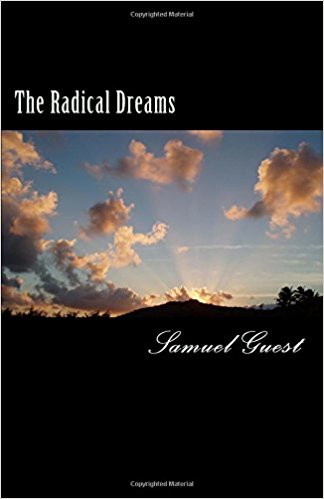
The Radical Dreams

Samuel Guest

writes on his blog:

I have made it my mandate to serve those who have fallen in and out of love. This blog is also for the lovers who have stuck it out and made a happy life together.  I am a Canadian author based in Toronto, Ontario.  My poetry book “The Radical Dreams” was published back in April, 2018. The book is also available on Kindle. Some of my poems have appeared in Half a Grapefruit Magazine and Montreal Writes.

Samuel Guest Writes – Fiction that goes beyond the screen.

Follow him also on Instagram or Twitter: samuelguest123.

The Interview

1. When and why did you start writing poetry?

Other poets inspire me. Sometimes it is the work I read, while other times it is how they perform live. For some reason their inspiration turns into a different kind of inspiration for me.

2. Who introduced you to poetry?

My grade six teacher introduced me to poetry. As a class we merely touched upon it, but that was enough to get me started.

2.1. What poets did your grade six teacher introduce you to, and why did they get you started?

My grade six teacher focused a lot on Emily Dickinson while also mentioning Rumi and Edgar Allen Poe. She got us to work on writing one poem as an assignment, and so that is what we did as a class.

3. How aware are and were you of the dominating presence of older poets traditional and contemporary?

Growing up I had no idea who the big wigs were, except for the ones that had already past away long ago. It is only within the last three years that I have really started to focus on poetry. Now I ingest as much as possible, and go to readings and launches as often as I can.

3.1. What prompted your refocus on poetry three years ago?

What prompted me to refocus on poetry was the fact that I had wanted to write a novel for many years, but never found much enjoyment in it. At the advice of my girlfriend, I started reading and writing poetry, and began to put a real effort toward it instead of bits and pieces every three or four years. It has really paid off. I wrote I self-published my first full-length collection last year, which got rave reviews from the likes of Kirkus indie as well as other online reviewers. Kirkus even put their review of my book into one of their print magazines. This happens to less than ten percent of the books that they review.

4. What is your daily writing routine?

My writing habits are sporadic throughout the day. If I’m lucky it can accumulate to an hour.

5. What motivates you to write?

My motivation stems from a love of nature and the important people and animals in my life. I feel love for my girlfriend of four years. I feel love for my cats. Family. Landscapes. Anything that flies

6. What is your work ethic?

Read, read, read. Write. Read, read, read. Write. More reading than writing

7. How do the writers you read when you were young influence you today?

The writers of past that influence me today are Izumi Shikibu, Matsuo Basho, Ono No Komachi, and Rumi. When I am stuck on a point, they take me back to where my heart is.

7.1. How do Izumi Shikibu, Matsuo Basho, Ono No Komachi and Rumi influence your writing today?

Back in their day, Izumi Shikibu, Matsuo Basho, and Ono No Komachi wrote haiku. Good haiku poems are extremely understated, and although I do not write haiku, I like to try and keep my work concise.

8. Whom of today’s writers do you admire the most and why?

Louise Gluck, Jeff Kirby, Robert Frede Kenter, Shannon Bramer, Robyn Sarah. Charles Simic, Mary Oliver, Greg Santos, Anton Pooles, Chuqiao Yang, and Edward Anki. What do all these poets have in common? When I read them I feel their connection to nature and human nature is that of my own. The majority of these poets are understated, and powerfully so. They help me to keep things quiet in my head, yet meaningful.

9. Why do you write, as opposed to doing anything else?

I write because it soothes my mind. Writing takes me far away from everything else.

10. What would you say to someone who asked you “How do you become a writer?”

Write every day. Even when there is nothing logical coming out of you. Even if it feels like the writing will never get to where you want it to go. Fight through that. Do not try and write like anyone else either. Be yourself. At the end of the day you can throw that paper away. No one else will see it unless you want them to

11. Tell me about the writing projects you have on at the moment.

I am editing a chapbook right now. Not sure where it’s going but I know where I want it to be.

Very pleased to have seven poems featured in talented company on The Poet By Day in response to last Wednesdays’ prompt about the seasons. Many thankyous Jamie.

“Ambiguous Spring” . . . and other poetic responses to the last Wednesday Writing Prompt

Wombwell Rainbow Interviews: Holly Pelesky

Wombwell Rainbow Interviews

I am honoured and privileged that the following writers local, national and international have agreed to be interviewed by me. I gave the writers two options: an emailed list of questions or a more fluid interview via messenger.

The usual ground is covered about motivation, daily routines and work ethic, but some surprises too. Some of these poets you may know, others may be new to you. I hope you enjoy the experience as much as I do.

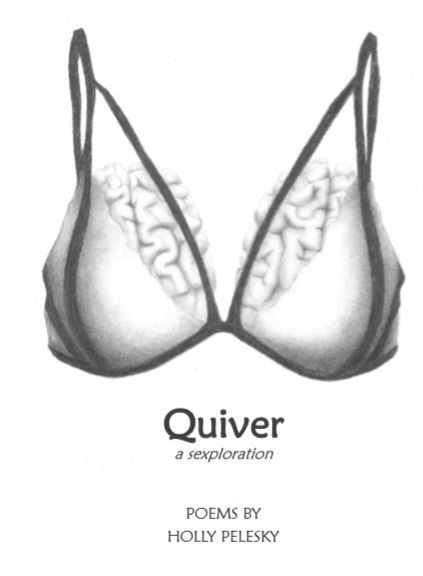
quiver front

Holly Pelesky

is a lover of spreadsheets, giant sandwiches, and handwritten letters. Her essays have appeared in The Nasiona, Jellyfish Review and Homology Lit among other places. Her poems are bound in Quiver: A Sexploration. She holds an MFA from the University of Nebraska. She cobbles together gigs to pay off loans and eke by, refusing to give up this writing life. She lives in Omaha with her two sons.

links:

website: https://hollypelesky.com/

Twitter: https://twitter.com/hollypelesky

The Interview

1. What inspired you to write poetry?

I don’t think I’m inspired to write poetry particularly as much as I’m inspired to write words generally. I was a very shy and sheltered child who found solace in reading books. That gave way to wanting to write my own stories. I used to write Nancy Drew fan fiction on legal pads or scrawl rhyming poems on floral stationery. I grew up in a religious household where I was rewarded for fitting in, not standing out, but in words I found a place to put my own voice.

2. Who introduced you to poetry?

Although I was aware of the genre before college, it was in undergrad that I really paid attention to poetry. I had the most amazing professor who was more of a mentor than a teacher and she introduced me to all sorts of new ways to arrange words. Poetry made words dance and dip in a way I hadn’t acknowledged before and I became a bit preoccupied with writing my angst in poetic forms, once I knew poems didn’t have to rhyme.

3. How aware were you of the dominating presence of older poets?

I knew they dominated the college textbooks and since I went to college before the internet was as vast as it is now, they were my main reference as to what poetry was. It is a pleasure to live now in an age where I have more control over what I consume and can find all sorts of voices to motivate and influence me.

4. What is your daily writing routine?

It is hard to describe a typical writing day because many days I don’t write at all. There are days for housework or submitting my existing work or the jobs I toil away at so I can continue to write. I count all that as part of the process, too. By the time I sit down to write, I have spent hours mulling through what I have to say, spinning words in my head, erasing them, writing them again without ever seeing them on a page. As much as I admire the people who wake up early or stay up late each day to write on a schedule, I am not one of them. My discipline is not in the time I set aside to write but the regenerating motivation to. Out of necessity, I have learned now to write amidst distractions. I can be found writing at my desk occasionally, or while my children are splashing in a pool or in the back of the coffee shop I work in.

5. What motivates you to write?

Words I read that other people have written so carefully, succinctly, emotionally, sensually. Images or sounds or movements or scraps of overheard dialogue that I want to ponder and explore. My own emotions that I don’t know how to articulate but want to make sense of. I am constantly intrigued by what motivates us and want to find it. The other day I heard a mother yelling at her daughter in the public bathroom, upset she hadn’t gone number two because they had a long trip in front of them and I thought there must be a story in that. I think what I mean is curiosity drives me and I am insatiable to it.

6. What is your work ethic?

With a deadline, I can be pretty impressive. I once wrote for three straight days to make the minimum word count on my manuscript in time for a contest. I just sat there in my own filth, writing through meal times and chores, ignoring everything. My girlfriend brought me bagels to make sure I ate. Without a deadline, I’m not that impressive (but more likely to bathe).

7. How do the writers you read when you were young influence you today?

When I was young I read Berenstain Bears and Arthur. I graduated to chapter books and read the The Baby-Sitters Club and Nancy Drew. I kept reading books that came in series because I identified with or enjoyed their characters.  Papa Bear is a non-conformist with a temper. D.W. is so sassy. Kristy brought Sheryl Sandburg energy to the Baby-Sitters Club whereas Claudia was an absent-minded artist who hid junk food from her strict parents. I read to know characters and their motivations, to feel connected to humanity in some way. Still, I am chasing that.

8. Who of today’s writers do you admire the most and why?

Lidia Yuknavitch’s The Chronology of Water changed what writing could be for me. She made it something that could be a bit dirty and raw and completely honest. She is someone who doesn’t hide parts of herself to please her audience. I want that grit between my teeth too.

9. Why do you write, as opposed to doing anything else?

I co-coach a slam poetry team with an amazing high school English teacher. Last week she told me what she tells students who are thinking about joining our slam team. Usually these students are unsure of themselves and still discovering their talents. She says to them, “You know what you need to have in order to be a writer? You need to have something to say.” When she said that, I understood my own motivation to write.

10. What would you say to someone who asked you “How do you become a writer?”

Pay attention. Eavesdrop on the world. Be mindful of the quiet moments in addition to the loud ones. Find what’s interesting. Write into the parts that inspire you. Explore the questions you’re always circling. Give it time, let it swirl in you, be patient. Then, stop at nothing to articulate it in a way that people beyond you will identify with, which is to say with honesty and clarity and verve.

11. Tell me about the writing projects you have on at the moment.

I have been really focused on creative non-fiction for two years now. I have been compiling a collection of letters to my daughter I placed up for adoption. She is turning fourteen this month and her absence has been this lump in my throat for all these years. Writing has been my exploration of that grief and love and the revolving question what if? I have been publishing them individually but next I want to see about putting them all together in a book. My dream has been to give them to her on her eighteenth birthday, a very important age to adopted children and their biological parents. I also have a bunch of other essays and poems and stories inside of me to extricate, but I’m taking it a day at a time.

Wombwell Rainbow Interviews: Maxine Rose Munro

Wombwell Rainbow Interviews

I am honoured and privileged that the following writers local, national and international have agreed to be interviewed by me. I gave the writers two options: an emailed list of questions or a more fluid interview via messenger.

The usual ground is covered about motivation, daily routines and work ethic, but some surprises too. Some of these poets you may know, others may be new to you. I hope you enjoy the experience as much as I do.

maxine rose munro

Maxine Rose Munro

is a Shetlander adrift on the outskirts of Glasgow. After spending the first eighteen years of her life exclusively on the islands, without even a small break for the holidays, the culture shock experienced on eventually seeing the wider world rocked her to her core and is still rocking some decades later. However, as the end result appears to be poetry, she is fairly ok with this. She has been writing poetry in for a few years now and her work has been widely published both in print and online, including in Northwords Now; Glasgow Review of Books; Pushing Out the Boat; and The Eildon Tree. She also publishes in her native Shetland Scots, some of which can be found in Poetry Scotland and Three Drops from a Cauldron. Her work has been nominated for The Pushcart Prize and Best of the Net, and shortlisted for the SMHAFF Award 2017. Find her here

http://www.maxinerosemunro.com

The Interview

1. What inspired you to write poetry?

I loved poetry as a child and wrote a lot of it when I was at primary school. It just seems such a natural way to express yourself when you are a child and words are fairly new and exciting. Adults become jaded. I think they acquire too many words, and never need the leaps of imagination children must employ to describe the things they see and feel.

Unfortunately when I hit teen years poetry was killed for me. I couldn’t relate to Plath, Owen, Yeats and the like. And the teachers couldn’t relate to my attempts at poetry. I expect there was also a huge dose of ‘don’t you know who I am? I’m great at poetry’ going on. So I abandoned it.

In 2013 two things happened, I was bought a poetry anthology that changed my world, and I had a very bad experience.

Knowing I was poetically inclined, someone gave me a copy of “These Islands, We Sing” edited by Kevin MacNeil, and for the first time since childhood I heard my own voice in poetry. I suddenly saw my own words were good enough, I didn’t have to be Plath.

Reading this anthology and trying to get strong again after the hell me and my family had been through, I suddenly knew I had poetry I had to get out. And I had to get it out to the world. So I started submitting the very second I had some completed poems.

2. Who introduced you to poetry?

It was always just there when I was growing up. My dad’s a big reader, especially of local poetry. Various Shetland journals were always lying around, and poetry was a strong part of them.

I take after him in that I read a lot, and I discovered Lewis Carroll and Edward Lear when still quite young. At about the same age I saved up and bought myself a Spike Milligan collection from the Puffin Book Club and I just loved it. I still rate him as my favourite poet, ever.

We had so many wonderful poetry books -“The Butterfly Ball” was another favourite of mine. But to be honest, no one introduced me to poetry. It was always there.

3. How aware were you of the dominating presence of older poets?

Not at all. As I said, poetry died for me when I was presented with ‘great poetry’ in my higher English classes. It wasn’t that I couldn’t appreciate it (or some of it), but that it all felt old, or clinical, or technical, or just plain baffling. I’m very plain spoken, very straight with my words when I write, and I only quake in awe in the presence of poets who do the same but better than I ever could.

4. What is your daily writing routine?

I don’t have a routine. I write on my phone, when a poem comes to me. I really don’t bother with the whole write something everyday thing. I think that’s more important if you are a novelist and need discipline and focus. But poetry starts in your subconscious and, for me at least, needs time to brew. The writing is the second, less important stage. I suppose instead I try to make sure that everyday I am feeding my subconscious by reading, walking, listening, experiencing. That’s where the poetry comes from.

5. What motivates you to write?

There are two things I look for in a poem. Either a brilliant story that just gives itself to the shortness of poetry. Or juxtaposition. By this I mean taking something small and tangible, and relating it to something huge and intangible. Or the other way round. Or variations thereof. So anytime I find this, I want to write about it.

6. What is your work ethic?

In the way life can bring you good things after bad, I am lucky enough to be able to not have to go out to work these days. But I know now that I have to balance everything, and that’s what comes first. My home, family, and sanity come first. Once that’s all dealt with, I fit in sewing and writing. But when it makes me unhappy I stop and go do something else.

7. How do the writers you read when you were young influence you today?

Milligan, Lear, Carroll, and all the other poetry of my childhood influences me all the time, in every way. I don’t try to write like them, I think that much is obvious. But it was those poets and poems that taught me to look at the world in a certain way, to link things into interesting groups, to join up dots wherever I saw them, and then turn all that into words. I wouldn’t do this if it wasn’t for those early poets. I wouldn’t know how.

8. Who of today’s writers do you admire the most and why?

I tend to admire poems over poets. I’ve never found a poet yet that could put out amazing poem after amazing poem. But the books on my shelf that I pick up the most tend to be by Scottish or Scandinavian poets, and the thing they all have in common is ‘sparse’. By that I mean they specialise in saying the most with the least. In addition, they all write poetry that places emphasis on meaning. I dislike poetry that turns out to be a beautiful string of images and nothing more. Some poets I like are Kathleen Jamie, Ian Stephen, Helen Allison, Hans Børli, Olav H. Hauge.

9. Why do you write, as opposed to doing anything else?

Writing is my identity, but I need to do other stuff. It’s less that I write instead of doing something else, and more I do everything I do to feed the writing. Saying that, I am the introvert’s introvert and I don’t need to be swinging off treetop ropes getting migraines from sheer terror to find material ( I have swung from the tree tops, the experience has yet to make it into poetry!). I have a little hand-stitching business, in which I use tweed my father designs and weaves in Shetland. This takes up more time than poetry for much of the year. But what I have found is that while I rarely write while focusing on my sewing, as soon as I stop a huge rush of poems that have been brewing in the background come out. It’s quite exhilarating.

10. What would you say to someone who asked you “How do you become a writer?”

Well, despite me saying I don’t write everyday, you do have to write and write a lot. I don’t believe you have to take creative writing degrees or post grad studies. But a bit of guidance is helpful. Writers groups or online courses (there are a good few reputable ones out there) are useful. If you are able, and not a complete introvert like me, then open mic nights are a brilliant way to get your poetry skills honed. And if you are a complete introvert like me, accept you still have to do some readings occasionally. And submit. And listen to feedback. And submit again. And realise you are hooked and this will be your life forever now. Then you’ll you be a writer. Woohoo!

11. Tell me about the writing projects you have on at the moment.

Well, I have always been unsure where I am going, I just started and couldn’t stop. But, nearing the 100 poems published mark I am thinking it’s time to get a pamphlet or three out. So I’ll be getting my head down and writing. The hardest part will be not submitting poems when I am convinced they’re awesome and all I want to do is share them with the world.

Wombwell Rainbow Interviews: Ava Hofmann

Wombwell Rainbow Interviews

I am honoured and privileged that the following writers local, national and international have agreed to be interviewed by me. I gave the writers two options: an emailed list of questions or a more fluid interview via messenger.

The usual ground is covered about motivation, daily routines and work ethic, but some surprises too. Some of these poets you may know, others may be new to you. I hope you enjoy the experience as much as I do.

Annotation 2019-07-22 140644

Ava Hofmann

Originally from Oxford, Ohio, Ava Hofmann is a writer currently living and working as an MFA student in Baton Rouge, Louisiana. She has poems published in or forthcoming from Black Warrior Review, Fence, Anomaly, Best American Experimental Writing 2020, The Fanzine, Datableed, and Peachmag. Her poetry deals with trans/queer identity, Marxism, and the frustrated desire inherent to encounters with the archive. Her twitter is @st_somatic and her nausea-inducing website is www.nothnx.com

The Interview

Wombwell Rainbow Interviews – Ava Hofmann

1. What inspired you to write poetry?

I really got hooked into poetry when I was a sophomore in a high school creative writing class. Like before this class, I was completely convinced I was going be a prose writer—I had been writing short stories and half-assed attempts at novels since I was in grade school. But then in that class I first encountered slam poetry and that was kind of the end of prose writing for me—reading and writing poetry spoke to me on a completely different level than what prose has ever done. And the rest is the disaster of my life!!!

2. Who introduced you to poetry?

So, the above is technically a lie, because the first “poem” that I ever wrote—more of a song, really—was written when I was in grade school, and it was called “The Grand Old Flag Bit Off My Nose.” Basically, it was about various U.S. monuments inflicting various injuries to my body. I would like to say that this was some kind of childly intuition about the way in which the government intervenes upon our bodies, but I really think it was just that when I was a kid I was really into the idea of all this Americana just absolutely going into me and ripping me to shreds. I think as kids we’re introduced to poetry through like nursery rhymes and shit, and we kind of intuitively know what they’re doing but don’t really understand that that something is called “poetry.” Then it gets disciplined out of you in grade-school, so you have to relearn what poetry is when you’re an edgy teenager or a too-serious college student or whatever.

Anyway, the person who taught that class that sent my on a poetry-trajectory was named Mr. Aerni, and I guess he was ok. He was really into the very hip, very sellable typewriters-and-coffee version of writing, which I just have always had a weird antipathy for. But I really appreciate the space he gave us to really write and explore.

The people who really showed me what I wanted from poetry and what poetry could really be were my undergrad creative writing professors—Cathy Wagner, Keith Tuma, and cris cheek. They all were so important for the development of my work, and for introducing me to the work of some of my major poetic inspirations.

3. How aware were you of the dominating presence of older poets?

I felt super aware of it, and still do. I remember thinking as an undergrad, when I was first studying poetry seriously, “where are all the poets who are under 30? Or at least under 40?” And this isn’t to like, knock older poets, but to ask a question about why there’s this weird thing going on with age diversity in the poetry community—there’s basically this grist mill of younger writers, and then the few poets who survive the grinder get to have institutional jobs and something resembling actual careers in poetry.

I think there’s obviously a little bit of an age bias in how an audience forms around writers, like—poets who have been in publishing for a longer time are obviously going to be more ‘established’ than younger poets, and so it’s more likely you’ve heard of an older poet. But this is also made worse by certain institutional structures surrounding the poetry “business”. Basically, to be someone with a full time job in poetry, you’re probably in the academy, which has a tendency towards seniority due to the tenure system. Meanwhile, some of the best poetry in the last 10 years or so was (as always) probably put out in random photocopied zines in editions of like 20 / posted to a deleted personal blog / published in now-defunct micro presses and then immediately forgotten, which makes accessible archives of this work which excites me very difficult to create.

All this creates this generational divide in the poetry community between these older and younger writers, rather than really allowing poets to approach each other as members of the same community. I think elements of the structural power imbalance between teachers and students might be a big part of it, that this imbalance in academia also gets played out in our artform.

4. What is your daily writing routine?

Bold of you to assume I have a daily writing routine! I end up tending to work in obsessive spurts where I produce a large amount of work in a short amount of time. In the first four months of 2019 I produced the first draft for two different chapbooks, for example. In-between those spurts, however, I’m basically procrastinating on writing and getting nothing done. It’s awful!!!!

5. What motivates you to write?

1) gay energy
2) sleep deprivation
3) the perverse enjoyment of writing absolute weirdo homo-garbage

6. What is your work ethic?

Honestly, I think my work ethic is pretty bad! Maybe it’s because capitalist work/productivity culture has structured our idea of labour around “continuous” work (the pervasive idea of the “9 to 5” job), but my irregular writing pattern makes me feel like I’m wasting a lot of time.

If you mean ethic in a sense of, like, what is the “ethos” of my “work”, I really value the same kind of intermittent access to real life which already comes out in my ability to consistently work—basically, if it’s not obvious, my bad work ethic comes from a place of being a low-energy and probably depressed person, and so my work, too, is about a search for value in the midst of the ruins of a life, to find pleasure in lacunae. This is just a very pretentious way to say that I’m all about being tired all the time.

7. How do the writers you read when you were young influence you today?

Wow, the books I read when I was young? Sometimes I feel like my life didn’t really start until my first year of college. I was a completely different person back then— religion, politics, gender, everything. That includes my taste in writing and art. I try not to think that much about my how I was back then.

One of the first poets I read and fell in love with was e. e. cummings—which, like, now is kind of embarrassing for me and there are a bunch of reasons why I’m not into him very much nowadays. But his work ended up being my first introduction into the type of experimental/visual poetry I personally value. I think a lot of his experiments into the visual dimension of poetry were kind of surface-level, but since I don’t think it was likely I was going to encounter any deep high-concept visual poetry living in an insularly Christian family in small-town Ohio, I owe a lot to that surface-level stuff kind of blowing open my mind about what was possible on the page.

I think another thing which is still maybe a big influence on my relationship to reading and writing today has been my process with understanding the text’s relationship to the writer. I grew up with my main exposure to textual analysis being through the religious study of the bible, which I was taught was an infallible text. So during my freshman year of college, when I first read Derrida’s writing on differance, and discovered that texts in and of themselves contain contradictory meanings which cannot resolve—that this imperfection was a fundamental feature of signification—it really changed my understanding of the world. Derrida was really the starting place for me to unlearn my religious indoctrination. And from that, I began to really value text as a place of irreducible contradictions, a space wherein resolution is impossible. This is probably why my writing is so concerned with visual elements and with gaps / revisions / doublings.

8. Who of today’s writers do you admire the most and why?

Gosh, there are so many writers who I absolutely adore:

Jos Charles’s historical bending of language towards the possibility of a trans future/past/present/resistance in feeld is work that I find really deeply inspiring. It’s kind of incredible it exists and is getting a lot of traction!

M. NourbeSe Philip’s Zong! is an incredible work which is perhaps one of the most incredible deployments of documentary form and content in poetry. It’s a masterpiece.

So much of Douglas Kearney’s work and process is so influential on my interests when it comes to form & the relationship to the reader/writer to the text.

I have to admit that Chelsey Minnis’s pseudo-ironic relationship to poetry and the poetic line is mega-appealing to me.

God, this is just the tip of the iceberg. Also shout-outs to Kinsey Cantrell, Never Angeline Nørth, V Conaty, Jayy Dodd, essa may ranapiri, and Mika, who are all people I really admire. There are so many others, but I don’t want to endlessly namedrop!!!!

9. Why do you write, as opposed to doing anything else?

I mean, I do, in fact, do other things? A lot of my work is multi-medium. And I’m, like, a person, you know? I don’t want being a “writer” to overshadow that.

I know you mean, why do poetry at all? Honestly, this is an intractable question that assumes I’m able to confidently diagnose the causes of my own desires, which I don’t really think I can do. I mean, on some level for me, there’s an affective pleasure to assembling words together in poetry—creating synchronicity between language and its special arrangement on the page. Maybe there’s some kind of psychological or synesthetic attraction to poetry, but I don’t think I’m aware of my own cognition enough to know what that is. You could probably also pathologize my writing to be about my transness or being a low-energy person or the problems I had with communication when I was a kid.

If I wanted to assign a narrative to my actions, though, I think I would say that I’ve been writing stories, poetry, etc. ever since I was a little kid and so there’s just a little bit of inertia there. I think I’ve always known that writing is kind of a private passageway out of that which consumes and totalizes our lives, a place where I can find pleasure even when pleasure or happiness seemed impossible. When I was still in the cult-culture of my upbringing, poetry was a big part of both my devotional practice and my exploration of my gender. I could imagine for myself the possibility of being a woman, even if that woman was worshipping a religion that hated her. So there, I guess I provided the pathology for you. But even then, for me, it’s kind of the opposite of pathology—poetry is the site of my own personal possibility of desire.

10. What would you say to someone who asked you “How do you become a writer?”

By writing. If you’re putting time into the artform, you’re a writer.

Yeah, I know that the person who is asking that question is really asking “how do you become a professional writer?”, but that question is really just another way of asking of “how do I make money by writing?” I’m pretty sure that’s a question which is plaguing and unanswerable for the vast majority of writers. I mean, almost nobody makes anything like a living wage from writing and selling copies of their poetry—it’s all from teaching, or doing talks, or some other institutional work which has coalesced around the medium. If you’re really wanting to do something poetry-adjacent as your job, you’re probably going to have to be lucky and/or have institutional favour in order to snag that kind of work. Oh, and you’re also probably going to have to be ok with these institutions being funded by money-laundering fronts for the bourgeoisie and/or the frantic workers’ nightmare of academia. Seriously! Actually look at who is funding like the four wealthy poetry institutions out there.

I know this sounds really pessimistic about the poetry business, but I actually find this is pretty liberating. I’ve been trying to “be a writer” since I first learned how to read, but my writing only really started coming from a good and genuine place when I stopped trying to “be a writer” and started instead trying to be a real person with a real life—coming out, escaping the cult-y environment which defined my entire upbringing, learning about the real world. Writing was and is the vehicle for my escape into a non-totalized life—for me, there’s something really valuable about poetry’s ability to be kind of secret and personal, even when someone else is reading it. It took me a long time to realize that I don’t need an artform I happen to practice to totalize everything about me.

This is why I answer the question literally: live your life first, write second. You’re still a writer. If you make your art practice all about institutional fealty or literary clout, you might as well just sell out by writing ad copy for some oil barons’ fascist propaganda wing or whatever, you know? Fuck that. Write to agitate. Write to organize. Write to discover new possibilities. Overthrow the ruling ontology!

11. Tell me about the writing projects you have on at the moment.

I’m working on a few different writing projects in different stages of completion:

Leech-book, the full-length manuscript that I’m working on as my MFA thesis. Leech-book is a collection of visual poems which concern themselves with the form of the medieval charm or spell as a site of the frustrated desire inherent to queer encounters with the archive; leech-book, is in a sense, a historical fantasy that one could find a source of radical-queer power within the scraps of our history, and also the elegy for the impossibility of that fantasy.

that I want, a more personal visual-lyric chapbook. the poems, which explicitly feature elements being crossed out / revised / added onto as a visual element, use this element of self-revision as a formal entry-point into an examination of my trans identity.

plastic flowers, a chapbook of explicitly Marxist prose poems which explore the ways in which capital-power embeds itself into the ‘personal’ experiences of daily life. it’s kind of a mix between a personal journal and a stand-up tragicomedy routine.

And finally, the woman factory, which is a series of sonnets written in the voice of a sex android.

There’s published examples of work from most of these projects up on my website, nothnx.com Hopefully at least one of these messes will be in print at some point!

Wombwell Rainbow Interviews: Shivangi Chatterji

Wombwell Rainbow Interviews

I am honoured and privileged that the following writers local, national and international have agreed to be interviewed by me. I gave the writers two options: an emailed list of questions or a more fluid interview via messenger.

The usual ground is covered about motivation, daily routines and work ethic, but some surprises too. Some of these poets you may know, others may be new to you. I hope you enjoy the experience as much as I do.

Annotation 2019-07-21 212548

Shivangi Chatterji

Focusing on grief poetry, Shivangi’s style wanders from weird, wise to whimsical. Growing up in a quaint suburb of Bombay (now Mumbai), her home overlooked the sea as she wrote and read her poems aloud to the birds on the terrace. Her ancestral home is in the hills, and the silence features in much of her poetry. A professional writer and editor for print and digital media, she is working towards publishing her own book (yet untitled) this year. Meanwhile, she continues to write some thematic poems on Instagram.

The Interview

1. What inspired you to write poetry?

My childhood was divided between the urban and rural – I grew up in Mumbai (then Bombay) and spent summers at my family’s farms in the foothills of the Himalayas. Being introverted, it was the stark contrast between the people and places that made communicating my thoughts all the more complex. I used my little ditties to express my thoughts through writing as a mode of communication with myself and with others.

Today, I mostly focus on grief poetry because of certain incidents in my life. When I tried to find solace through poetry, there weren’t many poets old or contemporary who could soothe a grieving soul. So, I started to write with a theme aside from my usual style.

2. Who introduced you to poetry?

My grandfather gave the gift of words to my mother. She wrote short stories and rhymes herself, but mostly she got me to read and develop an ear for languages. She believes that listening well is the key to writing well. Most Indians are multilingual, and my family came to acquire diverse cultural influences through marriage and travel. I grew up on a steady diet of poetry in at least 7 languages and a plethora of Indian dialects. Thanks to my mother, I read and listened to verse in Sanskrit, Hindi, Urdu, English, Bengali, Burmese and Nepali. The rhythm and cadence of words is what keeps me looking for new channels for listening and writing.

3. How aware were you of the dominating presence of older poets?

The sheer number of poets in the Indian subcontinent is enough to put immense pressure on budding poets! Add to that the fact that my parents’ and grandparents’ generations were greatly influenced by British poetry as the British Raj brought new genres like Anglo-Indian poetry and Foot Soldier poetry to the fore. Classical Celtic/ Irish poets lined the bookshelves in my home as did Resistance poetry in English and Indian languages. Of course, nonsense rhymes by contemporary American poets like Dr. Seuss rivalled British poets’ like Roald Dahl.

4. What is your daily writing routine?

It was a choice made 15 years ago, when I started a career in publishing. Writing and editing all day long seemed to be the best thing ever! And, I was thrilled to get to be the first pair of eyes that discover new literature. But, the occupational hazard is that I am too washed out to channel my creativity into my own writing at the end of the day. So, I have no dedicated writing time. I write on Sundays, holidays, on days special to me and most importantly, on days when I am feeling particularly distressed. I have a huge collection of notebooks and pencils that silently say, “Dream me.”

5. What motivates you to write?

Since I write grief poetry, my main motivation is finding a healthy outlet for my feelings. In this modern day and age, expressing ourselves freely is an illusion. Social media psychobabble puts a timer on our feelings, tells us to be soft and uses empty motivation to fuel a cycle of negativity.

In the larger scheme of things, there is no time limit to when our inner child has to grow up or feel a certain way (even those that are perceived as positive… because who is to say that life is fair?). It is best to appreciate what is in the present moment and write about it. We may change tomorrow, we might forget today. The Japanese word ‘Mono-no-aware’ captures this feeling for me; it’s a word that sensitises us to the transience of this world just like a cherry blossom that blooms and withers in springtime. The fact that beauty fades is what motivates me to constantly strive to create it.

6. What is your work ethic?

To me, writing is a form of mindfulness. I let everything extraneous fall away only to singly select those things that remain. Like Michelangelo who saw the Statue of David when it was just a hunk of rock. Fears that bubble to the surface are scary, but I just sit with them and continue till I feel I’ve created something with care and distilled my sensorial experiences for the reader. But I also self-edit mercilessly and try to read from the POV of the reader.

7. How do the writers you read when you were young influence you today?

For the longest time I thought of myself as someone like Alice – here and now, not in Wonderland. I was amazed to discover that writing could be a composition of prose, poetry and pictures. That is something that I carry with me as I illustrate my poems and short prose with inked doodles. They are often floral as the language of flowers is an added layer.

Closer home, I still like the good ole’ stuff – Dom Moraes and Sarojini Naidu. I cannot seem to outgrow them. Kamini Roy is a poetess who was a social activist and champion of women’s rights. I share my birthdate with her – just not the year! Her poetry is probably fiercely feminist and elegantly simple. The sheer research and the vivid historical storytelling in Amitav Ghosh’s works are awe-inspiring. Their style of storytelling is what I hope to emulate.

8. Who of today’s writers do you admire the most and why?

I was introduced to ‘The Wombwell Rainbow’ by Steve Denehan. A talented poet himself, I responded to his poems on Twitter because his work strikes that fine balance of logic and creative – just extremely honest poetry, no frills attached.

I think I am still lagging behind in discovering new poets that I really admire. I do see a lot of Instapoetry (poetry written on Instagram, often it takes the form of confessional poetry) as I too use Instagram for publishing my own poems at the moment. There are a couple of noteworthy accounts that I read and I’m constantly discovering awesome works on groups like ByMePoetry, EvePoetry and Her Heart Poetry. Personally, I’m honoured to have been a featured poet in these groups. They find some amazing folks 🙂

An unusual poet who inspires me is Korean pop artiste Kim Jonghyun. It is really unfortunate that his book Skeleton Flower: Things That Have Been Released and Set Free released post-mortem. The book is in Korean and I had to patiently wait for a fellow fan to translate it for international fans. I’ve followed Jonghyun’s career since his debut in 2008 and it really saddened me that his magnum opus released in 2018 would also be his last. His mastery of the craft shines through in his book and accompanying music album.

9. Why do you write, as opposed to doing anything else?

The embarrassing reason was that I started to write was because I was painfully introverted and escaping to my study was the easiest form of personal catharsis. But as I shared what I wrote with others, people began to relate and that really makes me happy about it. It’s a fulfilling sense of community that I can do with just my computer or a plain notebook. I make other forms of art and even therapeutic practices but writing offers the most interesting balance of what’s within and without.

10. What would you say to someone who asked you “How do you become a writer?”

Simply by writing. There is no teacher better than practice. Then, start expanding your writing circle to writing groups. Find a mentor or writing buddy. It’s very fluid really, and you do what works best for you. I like to create solitary but definitely like to take feedback from a group. Online groups have helped me find writing buddies and prompts. The goal is just so that you are happy with the output, and the sheer fact that you write keeps you in a state of momentum that’s constantly sparking new ideas.

11. Tell me about the writing projects you have on at the moment.

Currently, there are two personal projects I’m working on:

1) https://www.instagram.com/kelticfae/
This is my Instagram that is a collection of grief poems dedicated to everyday objects, places and faces that remind me of someone who is no longer walking this world with me.

2) This is a WIP manuscript with poems and prose about life and love. Some of the poems were originally written as song lyrics (and I call them sonGEMS = song + poems). This manuscript also contains poetry as artwork. The working title is Madrugada and it’s named after a Norwegian alt-rock band. I hope to have that one out by end of this year.