Wombwell Rainbow Interviews: Richard James Allen

Wombwell Rainbow Interviews

I am honoured and privileged that the following writers local, national and international have agreed to be interviewed by me. I gave the writers two options: an emailed list of questions or a more fluid interview via messenger.

The usual ground is covered about motivation, daily routines and work ethic, but some surprises too. Some of these poets you may know, others may be new to you. I hope you enjoy the experience as much as I do.
bgtFX4dg.jpeg

Richard James Allen

is an Australian born poet whose writing has appeared widely in journals, anthologies, and online over many years. Creator of #RichardReads (https://soundcloud.com/user-387793087) an online compendium of Global Poetry, Read Aloud, he has written ten books of poetry and edited a national anthologyof writing for performance.  Richard is also well known for his multi-award-winning career as a filmmaker and choreographer with The Physical TV Company (https://www.physicaltv.com.au) and as a performer in a range of media and contexts.

The Interview

1) When and why did you start writing poetry?

I came from a very literary family so there were always books around me and an abiding love of literature. An ancestor was the ‘Allen’ who set up the publishers Allen and Unwin. My grandfather took his copy of The Complete Works of Shakespeare with him to the trenches in the First World War. My mother and uncle were journalists. My father wrote short stories and later novels. My brothers did their PhDs on Marcel Proust and James Joyce and used to put on Samuel Beckett plays in the lounge room.

I started writing diaries at the age of 10, I can’t say why. Perhaps to try to fix some moments in what I was coming to understand as the fluid flow of experience. Perhaps it was a response to the dislocation of returning to Australia, where I was born in Kempsey, NSW, after a childhood spent with my family as expats in Vietnam and Japan. Gradually, I got less and less interested in recording specific events and more and more interested in recording colours, impressions, and feelings into dynamic literary forms that encapsulated a vortex of different experiences and these became my first poems. Looking back now, I see that it was only through writing that I was able fully to access the nuances of these experiences and my relationship to them. By the age of 14, I knew I wanted to be a poet.

2) How aware are and were you of the dominating presence of older poets traditional and contemporary?

I grew up during Australia’s ‘Poetry Wars’, so I was very much aware of the dominating presence on the landscape of, and the combative narratives that had been set up by, the earlier generations of traditional and contemporary poets. I am not really one for conflict, I can see both sides of most situations, so I never wanted to align myself with one group or another. Instead, I tried to have genuine relationships with each individual poet and to understand and appreciate their work for itself. Sometimes I thought this might have been to my detriment, politically, but I am glad I stuck to my ‘pacifist guns’.

At one point I was called ‘the heir to John Tranter’ but Les Murray also put me in his major anthologies. Perhaps through all this (and so many other influences) my work became a synthesis of traditional and contemporary impulses.

In 1999, when I was Artistic Director of the Poets Union, Inc., I created the inaugural Australian Poetry Festival. My idea was to bring these warring voices all together in a shared space, to create a poetic ‘roundtable’ of sorts. While not all the old warriors agreed to sit down together, I did feel that this initiative may have made a small contribution, as this spirit was carried on when Martin Langford took over the festivals after I left, and I don’t feel we have had those ‘wars’ with the same virulence since that time.

3) What is your daily writing routine?

I wish I could give you a simple answer to this. My father, Robert Allen, who, as I said, wrote short stories and novels, used to tell me about Georges Simenon’s legendary writing discipline and unbreakable schedule in creating novels in 11 days. And I was interested and surprised to learn that the poet Les Murray used to sit down every day with a blank sheet of paper. The best principle I have is to try to be creative first, before mundane realities and responsibilities swamp your imagination. How that actually works in practice, in negotiation with the multiple challenges and opportunities that each day of each week presents, ends up being different every day, so I don’t think I will go into details. But I will say that a saving grace is that you can ‘reset the clock’, reset your sense that of ‘first’ state of awakening quickness, through various activities of clearing away mental and physical tensions and distractions. That’s the best I can offer at the moment – to try each day to put creativity first in your life. It is truly the best part and actually makes everything else more joyful or at least more bearable.

4) What motivates your writing?

Writing is how I process the world. Writing is how I take deep breaths. It isn’t exactly voluntary. But it is necessary.

Whether these are the deep breaths of the fish coming up for air, or the smoker sneaking into a back alley, or the mountain climber who has finally reached a summit, I don’t know.

I also like the idea that something I discover and share may be of value to others, as so much writing has been to me.

5) What is your work ethic?

It is hard for me not to work. The question is to make sure I am focusing productively on the right things. As I said above, I try to put creativity first before the administration of an arts career or the jobs one has to take just to stay alive.

People often ask me how I can work in a number of art forms and my answer is ‘the bounce around theory’. There is only so much one can do at any given time in one area, so much pure focus, and then it is better to stop, not to force things. But going to another area sparks different questions, energies, creative skills and the opportunities to explore them. And having worked productively in this way in that second area, one can go on to a third area, or return refreshed and ready to work again in the first area, etc.

Life is finite and I try not to waste too much time, though I am as capable as anyone of disappearing into a long form TV series, so I have to be strategic about when I do that!

6) How do the writers you read when you were young influence you today?

I always find the ‘influence’ question tricky, because one reads, sees, listens to so much work over so many years it is hard to pinpoint actual influences. That said, I think there is a sense in which the writers you read when you are young do stay with you, or come back to you, or you find yourself coming back to them, even after many years.

The short story of you and I (UWAP, 2019) (https://uwap.uwa.edu.au/collections/richard-james-allen/products/the-short-story-of-you-and-i?variant=18298644889657) includes nods in the direction of some of these for me: Shakespeare and Dickens and Conrad in ‘Schlafwagen und Wunderkammer’, Pound and Joyce in ‘Spending a Pound in the Metro for Joyce’, Mallarmé and Baudelaire and Verlaine and Rimbaud in ‘Melancholy’, Eliot and Isherwood and Paramahansa Yogananda in ‘Nearer than knowing’, Dante in ‘Lessons from The Divine Comedy’, Proust in ‘Longtemps’, Slessor and Yeats in ‘The Singing Whirlpool in the Guest Room’, and Patanjali in ‘Why we sit’. When I look at this list, I see many who are missing, including Akhmatova and Paz and Różewicz, whom I have expressed my admiration for by reading on #RichardReads, an online compendium celebrating great poems, from a diverse range of authors across time, location and genre, read aloud: https://soundcloud.com/user-387793087

7) What would you say to someone who asked you “How do you become a writer?”

I would say that, from my experience, you don’t become a writer, you are either born one or not. But you can, and probably have to, go on a journey to discover and realise what kind of writer you are meant to be. And that’s where a wide exposure to the work, careers and lives of other writers in all forms and genres is most likely essential; and creative writing classes, workshops and mentorships can be helpful; along with, if you can, finding a community of like minds willing to support each other on their various trajectories. Further, if you don’t already have it, you will need to develop deep inner resources of patience and resilience, leavened by ever-renewing curiosity and a certain amount of fearlessness; the ability to work alone for long periods of time and then occasionally present your work, with at least some flair, in public; the ability to take on board feedback without losing touch with what you are trying to say; the ability to be self-critical without being self-doubting; the ability to find and maintain sources of income that are often unrelated to your essential work, but which you can hopefully learn from; the ability to survive on a lower income and standard of living than many of your friends, while often having nothing to show from your endeavours for many years; and ‘Titiksha’, a Vedic concept my Yoga teacher, Sharon Gannon, once translated as ‘stick-to-it-ness’. And, of course, joy, don’t forget joy – as there is nothing so wonderful as being creative!

8) Tell me about writing projects you are involved in at the moment.

Like any other writer, I am on my own journey of discovery to find out and realise what is next for me.

That includes, at the moment, in the back of my mind, as I write individual poems, finding a unique tone, shape and the appropriate content for the reading experience of my next poetry book; also solving various challenges of adaptation of poetry to other media; and finding my way through a number of hurdles and obstacles to completing screenplays for films that I want to direct.

Questions – Copyright © 2019 Paul Brookes.
Answers – Copyright © 2019 Richard James Allen..
Wombwell Rainbow Interviews: John Challis

Wombwell Rainbow Interviews

I am honoured and privileged that the following writers local, national and international have agreed to be interviewed by me. I gave the writers two options: an emailed list of questions or a more fluid interview via messenger.
The usual ground is covered about motivation, daily routines and work ethic, but some surprises too. Some of these poets you may know, others may be new to you. I hope you enjoy the experience as much as I do.

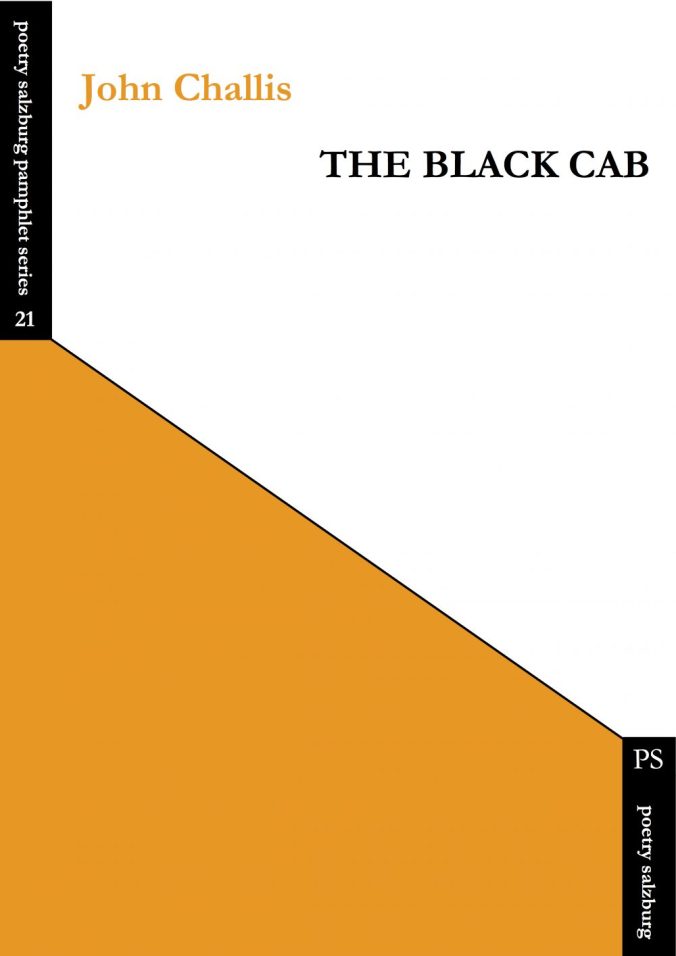
Cover-of-The-Black-Cab-by-John-Challis--1000x1415

John Challis

was born in London in 1984. He holds a PhD in Creative Writing from Newcastle University and is a recipient of a Pushcart Prize. In 2012 New Writing North awarded him a Northern Promise Award. His poems have appeared on BBC Radio 4, as well as in journals and anthologies including The North, Magma, Poetry London, The Rialto, Stand and Land of Three Rivers (Bloodaxe). The Black Cab (Poetry Salzburg, 2017) is his first pamphlet of poems and was chosen as a 2019 Read Regional title by New Writing North. He lives in the North East and works as a Research Associate at Newcastle University. http://www.johndchallis.co.uk/

The Interview

  1. When and why did you start writing poetry?

If I’m going to be honest, I started writing what I thought were songs during my mid-teens inspired by the likes of Dylan and the Doors, but poetry really grabbed me when I was 18. I had appreciated war poetry at school (Sassoon, Tennyson, Owen), but it was a chance encounter while browsing the library shelves with Dante’s Inferno that got my imagination really fired up. I wasn’t all that good at playing the guitar so I gave up songs for poems and gradually came to realize that there was far more I could do with the form. Then a creative writing teacher lent me Michael Donaghy’s Conjure, and I got hooked.

2. What was it about Dante’s Inferno that really fired you up?

At first I was captivated by how Dante had imagined his terrifying world in such excruciating detail. The way in which sins were enacted upon the sinner across the many levels of hell seemed a powerful and moral idea. I felt the reach of Inferno far and wide, notably in David Fincher’s neo-noir Se7en, which I’d just studied at sixth form college, but also further: in video games, detective shows, comics. In some ways, Inferno is the perfect dystopia. The way in which Dante assigned figures from history (politicians, conquerors, biblical figures and philosophers) to certain levels seemed to beg for endless comparison to the present. I was also intrigued by how Inferno provided a map to hell as an illustration, as though it was a theme park or a shopping centre. It made something so abstract very concrete.

3. How aware are and were you of the dominating presence of older poets traditional and contemporary?

It’s difficult to write in a vacuum. Whether the presence of older, more traditional poets dominate my writing life, it’s difficult to say. Guiding lights are both old and young. In particular, there’s a whole raft of American poets (James Wright, Larry Levis, James Dickey, Louise Gluck), all of whom might be classified as ‘contemporary’ poets writing during the second half of the 20th Century, that I’ve enjoyed reading and have learnt something from over the last few years. But then there are younger poets (Emily Hasler, Wayne Holloway-Smith, Ocean Vuong, Hannah Sullivan) who I’ve really enjoyed reading as well. In some ways, everything is influential. When I started to write more seriously I looked to Philip Larkin, Paul Farley, Sean O’Brien, and still do.

4. What is your daily writing routine?

Since having a daughter last year, regular writing has gone out the window. When I was younger, I tried to cultivate a space and a routine, but now it happens anywhere and usually when there isn’t time. If I can, I like to write fast, in between my daughter’s naps or on the metro on the way to work. I like to spend time editing and often play around with form and syntax before settling on one configuration. Though too much fiddling can sometimes strip a poem of its mystery. Generally, I’m more productive and less self-critical first thing in the morning.

5. What motivates your writing?

Many things: to remember and experience; to re-experience and re-examine; to think aloud on paper; to imagine something other than experience; to create connections between seemingly oblique things, subjects and phenomena; to connect with others; to respond to encounters with language in great poems, novels and non-fiction books; the inexplicable need to do all of the above at the same time by writing.

6. How do the writers you read when you were young influence you today?

Inferno taught me to consider what’s hidden below the surface, to drill deeper, figuratively speaking. Heaney said somewhere that the role of writing poetry was to unearth revelations about the self to the self. Given the time-intensive labour poetry seems to demand, it’s not hard to imagine images and ideas from texts I encountered earlier seeping in and emerging. If anything, I think that the sound and meter of favourite poems tends to crop up here and there and echo through my lines. I heard a recording of Michael Donaghy reading ‘Black Ice and Rain’ when I was starting out and his delivery of that poem had an enormous affect on me. Novels by J.G. Ballard and Haruki Murakami, which I obsessively read in my early twenties, have also had some kind of influence, perhaps in terms of subject. And film too, in particular neo-noirish classics like Big Trouble in Little China and The Terminator, and the strange otherworldly, edgy and pessimistic worlds they created.

7. Who of today’s writers do you most admire, and why?

Too many to mention, though one poet in particular whose success hasn’t translated into a huge volume of critical engagement is Sean O’Brien, whose collected work seems to me to show an incredible consistency, in terms of theme, subject and form across a 30+ year period. In particular, I love the way his poetry actively imagines events, moments, situations, that are all endowed with a kind of murky, subterranean sense. In his work time is traversed, history opened and spread out across the present. His work is metaphysical and elegiac, comic and resolute. If you’d like to read more, I have an essay on O’Brien’s engagement with the dead in his work over at Wild Court: http://wildcourt.co.uk/features/permanent-afternoons-underworld-poetry-sean-obrien/

8. What would you say to someone who asked you “How do you become a writer?”

I think writing is something you grow into over time through the act of writing. The more you do it, the more you come to realize it’s essential to your well-being and also to your thinking. I tend to think aloud on paper. It wasn’t always this way, but the more I wrote the more I began to realize that I thought differently on the page. It’s hard to describe what this difference is, except to say that there’s something about that marriage between physicality and cognitive thought that often produces surprising results. You become a writer by writing. Why do you write though? Because.

9. Tell me about writing projects you’re involved in at the moment.

At the moment I’m trying to finish a first collection of poems. I seem to have done this many times. The more finished the collection seems, as soon as there’s a contents page and a title, the more unfinished it becomes. But I think I’m beginning to get somewhere. Many of the poems carry themes over from The Black Cab – London, history, markets, work, class – but others look at parenthood, its affects on memory and a sense of one’s own time, which there is never enough of, as well as the idea of having place or purpose in all that time. I’m interested in fluidity, how a poem can seem present and continuous as it breaks into and dramatizes the past, and this perhaps is what drives my efforts. Elsewhere, I’ve been working with prisoners to produce a book of their work, which has been an exciting and touching experience.

Wombwell Rainbow Interviews: Ty Williams

Wombwell Rainbow Interviews

I am honoured and privileged that the following writers local, national and international have agreed to be interviewed by me. I gave the writers two options: an emailed list of questions or a more fluid interview via messenger.
The usual ground is covered about motivation, daily routines and work ethic, but some surprises too. Some of these poets you may know, others may be new to you. I hope you enjoy the experience as much as I do.

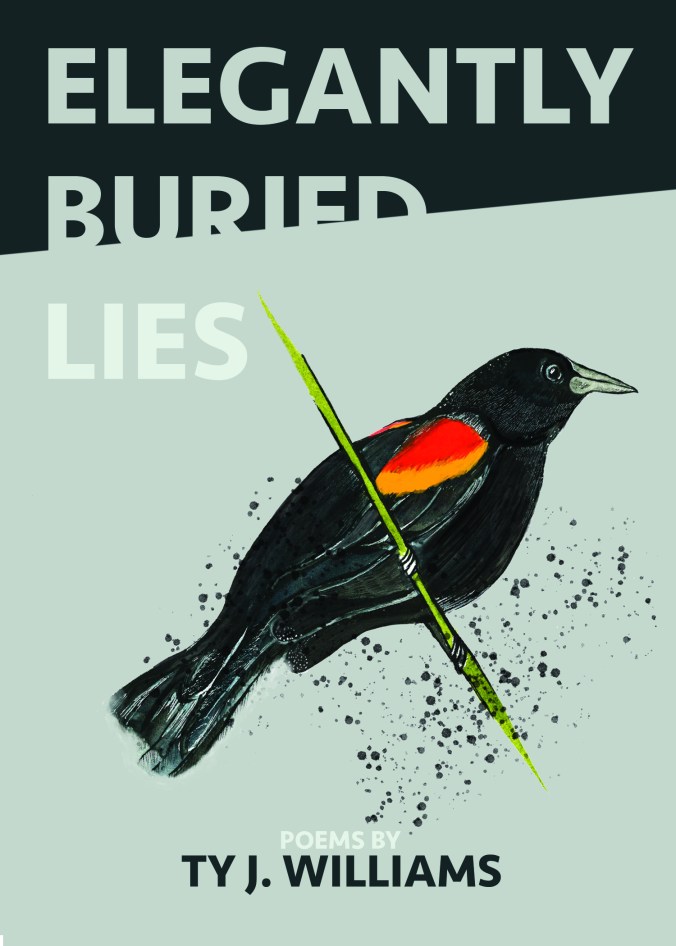
TYFront_Edit

Ty Williams

is an English Education student at The Ohio State University after 20 years in the corporate world. He balances far too many hobbies with writing, school, his three sons and being a taste-tester for his wife, a chef. Ty’s writing can be seen at Black Bough Poetry, Neologism Poetry, Columbus Alive, Fourth & Sycamore.

Email: tywilliamswrites@gmail.com
Twitter: @tywrites1
Instagram: @tjwwrites
Web: https://thelittleknownhistoryofbrooding.wordpress.com

The Interview

1. When and why did you start writing poetry?

I started writing when I was about 16. I copied styles of poems I liked and they were all pretty terrible. When I was in my mid-20s, I was frequenting open-mics, featuring here and there, and publishing nonfiction. I have only started publishing poetry in the last year. I’ll be 50 this June.

2. Who introduced you to poetry?

You know, I was an awful student. I was terribly unmotivated in school and consequently, I was on punishment quite often. So, I sat in my room and read. I always loved language and enjoyed reading. My 10th and 11th grade English teachers are who really encouraged my reading, introduced me to different kinds of poetry and encouraged my writing, even though it was bloody awful at the time. In 11th grade, I was invited to represent my school at the Young Authors’ Conference and that’s where I first heard published poets read their own work, not famous dead people in well-published anthologies. From that point, I was hooked.

2.1 Who hooked you at the Young Authors’ Conference, and why?

There was an English professor and poet (now retired) from Ohio University named Peter Desy. His work was very melancholy, which appealed to a brooding teen, but also very honest and not trying to BE poetry. It just WAS without being contrived. One particular poem he read blew me away: “My Father’s Picture on the Cover of a Buffalo Bison’s Hockey Program for 1934”. You can find it on the internet. I had a rocky relationship with my father, but always longed for approval and affection, like any normal child, and hearing this poem just completely knocked the wind out of my lungs. (I also am a big ice hockey fan) It was gut-wrenching and beautiful. I’ve been trying to write a poem like it for decades.

3. How aware are and were you of the dominating presence of older poets traditional and contemporary?

I’ve always been very aware of the presence of traditional and contemporary poets, though I readily follow more contemporary writers. I have and do constantly read poetry, partly out of enjoyment of the art and partly to learn how other poets execute their craft. I’ve never been in a bubble where wasn’t aware of contemporary writers in some form.

4. What is your daily writing routine?

My days are so hectic, I wish I had a daily writing routine! I am a student, I care for my 2 year old during the day, work with kids at the local library in the afternoon and evening, then study for school at night after everyone is in bed. All of that dominates my routine, and sadly, writing happens when it happens. I wish I had a more inspiring tale of how I balance all of those responsibilities and still discipline myself to write or revise a poem every day!

5. What motivates you to write?

Mostly fear and sadness. My wife keeps asking me why I don’t write poems for her. I try to explain that my poetry doesn’t come from a happy place. It’s me wrestling with my fear of death or working through childhood trauma or abusive relationships. I can’t seem to write sunny, complimentary, romantic poetry. So, I guess my writing comes from a desperate need of therapy.

6.  How do the writers you read when you were young influence you today?

I read different writers now. When I was young, I read Whitman, Frost, Kerouac and due to an obsession with The Smiths, Keats ,Yeats and Wilde. These days, I read a lot of anthologies and lit mags, and I read a of local (Ohio) writers. I like to keep up on new writers, and to see what is attractive to publishers and readers. Ohio has some fantastic poets, as well, so I immerse myself in their work. I still read that Peter Desy poem often, though. It’s one of my landmarks of poetry that moves me.

6.1. How did The Smiths, Keats, Yeats and Wilde influence your early poetry?

Well, I haven’t read Keats, Yeats in ages. I don’t think I have much, if any, of my writing from that time, so I’m not sure how much of a direct influence they had on my work. I did try a bit too hard to be an intellectual, and that’s where the Morrissey influence came in. Soon after, I related much more to Joe Strummer and Chuck D. My influences and my work have changed quite a bit over the decades.

8. Whom of today’s writers do you admire the most and why?

Ohio has an incredible wealth of talented and accomplished poets- many in my hometown of Columbus. Recently, I have been reading the greats from my state and city: Bianca Lynn Spriggs, Scott Woods, Ruth Awad, Maggie Smith (American writer, not Dame Maggie Smith), Rachel McKibbens, Jim Dwyer, and Hanif Abdurraqib. There are many  others, too, but these folks are accomplished poets who live in my area. A couple of them, I know personally. I enjoy hearing these artists create and write about their experiences and stories of living here in Ohio. This used to be a place everyone was trying to escape, but now people stay here and sometimes even seek Ohio out as a place to settle and make art. I relish that and I savor the work that these folks have put into the world.

9. What would you say to someone who asked you “How do you become a writer?”

The complicated answer is, “What kind of writer do you want to be? Do you want to be published often? Do you want to be paid for writing? Do you want to be able to earn a living from writing?”

The short answer is, a writer is simply a person who writes, whether that’s in a journal next to your bed, or in The Paris Review. So, the first step is to simply write. Write everything that comes into your head. Save all of your writing, whether it’s brilliant or rubbish. Your opinion of that same writing will change from day to day. Now, if you are interested in improving your writing, go to workshops. Go to open mics. Get on apps, like Meetup, to see when there are writing circles and workshops in your area. Talk to published writers and ask them all the questions they can handle. Don’t forget to READ. Read as much as you can. Read work that is similar to what you want to do. See what passes for “good’ or “great” writing in literary journals, in anthologies, in your chosen genre at your local bookstore. Write all of your ideas down. Go back to your “failures” and rework them. If you are at a loss as to what to write at any given time, there are websites and Twitter accounts that have nothing but writing prompts. Practice your craft as often as you can. Read, read, read, write, write, write.

10. Tell me about the writing projects you have on at the moment.

I am currently putting together my first honest-to-goodness chapbook. I have done the cut-paste copy-shop versions in the past, but I’m self-publishing a bound, proper chapbook this time around. I have a feature coming up in September, here in Columbus, that I’m really excited about.-my first major feature since the 90s. I’m working on a goal of 100 literary submissions in 2019. I’m at about 35, so I’m behind a bit, but plenty of time to catch up. 2019 has been a year of several small victories with my writing, so, I’m determined to keep it moving, keep writing, keep learning, keep workshopping, keep publishing.