Wombwell Rainbow Interviews: Steve Denehan

Wombwell Rainbow Interviews

I am honoured and privileged that the following writers local, national and international have agreed to be interviewed by me. I gave the writers two options: an emailed list of questions or a more fluid interview via messenger.
The usual ground is covered about motivation, daily routines and work ethic, but some surprises too. Some of these poets you may know, others may be new to you. I hope you enjoy the experience as much as I do.
Denehan

Steve Denehan

lives in Kildare, Ireland with his wife Eimear and daughter Robin. Publication credits include The Irish Times, Poetry Ireland Review, The Phoenix, Into the Void, The Opiate, The Hungry Chimera, Ink in Thirds, Crack The Spine and The Cape Rock.  He has been nominated for The Pushcart Prize and Best New Poet and his chapbook, “Of Thunder, Pearls and Birdsong” is available from Fowlpox Press.

Here are some relevant links:

Website – https://denehan.wixsite.com/website
Twitter – https://twitter.com/SteverinoD
Facebook – https://www.facebook.com/denehan

Steve performs his poetry at iambapoet.com

https://www.iambapoet.com/steve-denehan

The Interview

  1. When and why did you start writing poetry?

I started writing poetry when I was in primary school. I was lucky enough to win a small competition when I was around 9 years-old. My (very) short story was published in a national newspaper and I won a crisp £1 note. My father was a carpenter and worked so hard to provide for us and I remember being amazed at how he gave sweat and sometimes blood to turn wood into money whereas I had taken what was in my head and turned that into real, actual money. I thought, JACKPOT!

This would have been in the mid-1980s in Ireland and unemployment was very high. Times really were tough and my parents thought that writing wasn’t really going to give me much of a future. So I was discouraged from writing all the way along really. I can understand their thinking of course but I still wrote bits and pieces over the years.

I would have written with zero discipline and really with no objective. I just got a kick out of it. It’s still the same now really. I wrote short stories, poems and a few screenplays purely for the joy of it. My wife Eimear had tried for years to persuade me to submit the poems somewhere but I assumed that it would be just a waste of time. I would never have, and still don’t, consider myself a “writer”. I just like to write. Eventually Eimear wore me down and I put together a submission and sent it out. I absolutely expected it to be rejected so I put it out of my mind. If it had been rejected I doubt I would have ever tried again but, amazingly, a poem was accepted and published.

I was astonished and was sure that there had been some mistake. Until I saw the poem appear online I didn’t really believe it. This would have been just over two years ago. It seems strange to think back now but at the time I remember thinking that I had gotten further than I ever would have expected and I was happy to leave it at that. Sometimes when I think back to that time (and so many other times in my life) I want to give myself a shake.

Happily, I was persuaded to submit to a few other journals and got lucky again and I just kind of continued. Since then, and I still can’t believe this, I have had just under 200 poems published in print and online all over the world and a chapbook published which I still hold in my hands every once in a while, just to be sure it really happened.

The writing, like so many other things in my life, is something I just kind of fell into and I get an enormous amount of pleasure from it.

  1. Who introduced you to poetry?

An old teacher of mine, Mr. Shanahan. When my chapbook was published I got in touch with him after all these years to give him a copy as, if I had never met him there would have been no poetry and probably no writing full stop. Everyone seems to have a favourite teacher but Mr. Shanahan was more than that to those lucky enough to be in his class. He was, and still is, an amazing person who has an infectious enthusiasm for, well, everything.

He introduced, what he called, “Poetry Corner” every Friday where everyone was encouraged to write a poem and read it. In a classroom of boys only this was no mean feat but it didn’t take long before it was the highlight of our school week. We were taught how poetry could be anything, it could be personal or a complete fiction, it could rhyme, or not and it could be as long, or as short, as we wanted. It was fantastically freeing. I still remember the poem he read to us that he said was the shortest poem in the English language. It was called “Goldfish” and the whole poem was, simply, “wet pet”.

Besides having Mr. Shanahan we were also privileged to have a child prodigy and one of Ireland’s greatest poets in our class, Davoren Hanna. Like Christy Brown before him he had been born with a tremendous disability, quadriplegic cerebral palsy. He could not communicate verbally and could do nothing for himself yet within him was a burning intelligence that shone brightest through poetry. Sitting on his carer’s lap he would slowly lean toward oversized letters written on a large board, painstakingly creating some of the most wondrous poetry ever to come out of Ireland. Sadly he passed away in his late teens but his work lives on and is still absolutely transcendent. I wrote a short poem about Davoren actually if you would like to read it.

Davoren Hanna
A poem for one of Ireland’s greatest poets and, once, my friend

the wheels of his wheelchair squeak along my femur
he taught me
how words are an upturned collar against it all

he planted shame
behind my ear when I let him go
before he went

my body shared
my thoughts borrowed
and words, these little, late words
broken piano keys on the ocean floor

  1. How aware are and were you of the dominating presence of older poets traditional and contemporary?

I was not aware at all of the dominating presence of any other poets… But I guess I am now! Thanks for that Paul! Maybe it is because I write only for the love of it that I am oblivious to any shadows cast by anyone else. In the best possible way I really don’t care about what anyone else is doing or has done as it is not going to affect what I am doing. I am going to write regardless. I probably shouldn’t admit to this but I don’t really read a whole lot of poetry and never have. I listen to, and am often moved to tears, by song lyrics though. I find songs have a much greater impact on me than poetry.

  1. What is your daily writing routine?

My daily writing routine can be quite varied. It all depends on what, if anything, is going on in my head. I don’t seem to have a plan at all. Usually a line will come along based on something that has happened or that I have seen. I either take note of the line somewhere and come back to it later or, if time allows, write the poem on the spot springing off that one line. I often find that when I have written one poem another poem is ready and waiting so I tend to write several back to back. Once a poem comes along I find it is usually finished quickly. I don’t think I have ever spent longer than half an hour on an individual poem. I have met some really nice people through poetry and they can pour over a poem for days and weeks before it is just right. I have a huge amount of admiration for them and how they work. I have tried to spend more time honing a poem but they seem to lose whatever flow they might have had.

5. What motivates you to write?

I know a lot of people say that writing is a way of exorcising. I’m sure has been true for me occasionally but really it simply comes down to the joy of it. The idea of creating something that wasn’t there previously is weirdly intoxicating. It doesn’t even have to be good, luckily! There is an alchemy to it all. Taking thoughts and giving them some kind of life is incredible. They don’t even have to go anywhere. I have hundreds of poems that I have never submitted anywhere and probably never will but I am so happy that they exist. Though in saying that I never go back and read them again. At the risk of sounding ridiculously pretentious it is the act of creating them that is so addictive.

6. How do the writers you read when you were young influence you today?

I’m not sure really. I think I am probably more influenced by what and who I read now. The influence of the writers I read when I was younger has probably waned a little, or a lot, over time. Like my approach to writing I read only for pleasure and as a result I read (and probably write) a huge amount of nonsense.

7. Whom of today’s writers do you admire the most and why?

I absolutely love Glen Duncan and would encourage everyone to track down any of his books but particularly his startling debut, Hope, the devastating Death of an Ordinary Man and the darkly funny and dazzlingly inventive I, Lucifer. He has a way of putting the reader right in every moment and is so, sometimes frighteningly, relatable.
I also gobble up as much Joe R. Lansdale as I can though he is so prolific that he almost writes them faster than I can read them. In terms of variety there is nobody like Joe who can flit effortlessly between Elvis and JFK teaming up and fighting a re-animated ancient Egyptian mummy in Bubba Ho-Tep to the achingly beautiful and tender, The Bottoms, which could have been written by Mark Twain.
Paul Auster is another favourite but I feel he has faded a little over the last fifteen years or so. His earlier stuff was so beautiful and thought provoking and didn’t take itself as seriously.
They would be three contemporary writers who I would love hugely but there are many, many others.

9. What would you say to someone who asked you “How do you become a writer?”

I would say, “I’m not sure, ask a writer!” Really, the beginning of the answer is unbelievably simple I think. Just write. Beyond that I find that the two most important things for me when it comes to writing is to only write when I have something to say and to place more importance on content than style.

If you have written a few bits and pieces and feel that you would like to submit them I would recommend doing a little research beforehand. There are an almost infinite amount of journals and magazines but some might suit more than others. Also, feel free to reach out to me, or any other people out there who are writing, for advice. From my experience everyone is really warm, open and helpful and will gladly help steer you in the right direction while avoiding the pitfalls.

10. Tell me about the writing projects you have on at the moment.

I would love to dazzle you with a long list of interesting and impressive projects that I have going on at the minute but really I’m just writing away and seeing where it takes me. I have some poems coming up soon in a few amazing places like Into The Void and Poetry Ireland Review as well as a batch of poems that are coming out in the autumn in the amazing and artful language of Farsi. A couple of weeks ago I was shortlisted for the Anthony Cronin International Poetry Award at the Wexford Literary Festival but unfortunately didn’t win. It was a great experience though. I had been due to have a book published in September but I ended up withdrawing it as I found the publisher very, very difficult to deal with. That was a real shame and a painful thing to have to do as there is no guarantee that I might ever have the chance again. But I am glad I did as I want my poems to appear somewhere where they are wanted and that I, and the poems, are treated with respect.

I have since submitted the book to a few other presses and there has been tentative interest so maybe it might appear at some point.

Stoked to have five poems featured in the responses to last Wednesday’s writing prompt on the subject of reincarnation. Thankyou, Jamie.

“The Endless” . . . and other poems in response to the last Wednesday Writing Prompt

Wombwell Rainbow Interviews: Helen Angell

Wombwell Rainbow Interviews

I am honoured and privileged that the following writers local, national and international have agreed to be interviewed by me. I gave the writers two options: an emailed list of questions or a more fluid interview via messenger.

The usual ground is covered about motivation, daily routines and work ethic, but some surprises too. Some of these poets you may know, others may be new to you. I hope you enjoy the experience as much as I do.

The Cotton Grass

Helen Angell

is based in South Yorkshire. A lover of brutalism and urban infrastructure, she has worked creatively with the National Railway Museum, The Hepworth and Kelham Island Museum. Most recently, her poetry has appeared in Strix and The Blue Nib and will be in a forthcoming anthology from The Poetry Village.

Twitter: Helen Angell @helen_angell73

The Interview

1. What inspired you to write poetry?

I’ve always read and written poetry – even when I didn’t really understand what it was. At primary school I remember being frustrated by the poems we were given. To me, they were childish and I knew there was something more poetry had to give. I discovered Sylvia Plath when I was 13 then Dylan Thomas and William Carlos Williams soon after. When I was 15 I caught the bus from Rotherham to Sheffield – pre-Meadowhall days – to go and buy John Betjemen’s Collected Poems. Not my thing as it turned out on the bus back but I knew it was ‘proper’ poetry. Discovering T.S Eliot at A Level was crucial.

2. Who introduced you to poetry?

I have absolutely no idea. It’s like it was always there.

3. How aware were you of the dominating presence of older poets?

For a long time, it felt as if poetry was an older form that had fallen out of use and I read very little contemporary poetry. It’s quite the opposite now. I don’t respond well to the ‘dominating presence’ of anything and it would be foolish to feel anything other than appreciation for the wonderful work others produce. It’s there to inspire and enlighten not to feel jealous or inadequate about.

4. What is your daily writing routine?

I aim for a poem a week so I’ve always got something on the go. I’m a compulsive notebook carrier and I’m always jotting things down or taking photos. I try to strike a balance between being disciplined and being free. I prefer to write early in the mornings when everything is clear and no one else is up. I write very well on trains, too!

5. What motivates you to write?

The desire to capture the beauty of the world in words is pretty much there all the time. I’m as obsessed with concrete, especially brutalism, and other urban infrastructure as I am with poetry.  So any location like that will inspire me. Having said that, I might also write something quite emotional or philosophical. Although they might not be poems I’ll show to many people.  The beauty and mystery of the world seems endless to me. There isn’t enough time to write about it all.

6. What is your work ethic?

I don’t like to make a distinction between work and play. If I’m not enjoying it I won’t do it. If a poem seems like too much hard work, I’ll go and do something else to get myself back in the right place to write again.

7. How do the writers you read when you were young influence you today?

There’s no doubt the very sensory nature of Plath and the visual strength of Carlos Williams are aspects of poetry I’m drawn to, as is the playfulness in the language of Thomas and Manley Hopkins. With Eliot, it is the fragmentation of language and the search for the ‘objective correlative’ that really interests me. I’m trying to find a way of capturing the intangible in words and I’m fascinated by how different combinations can produce different resonances.  Today I’m influenced by Roy Fisher and Anna Akhmatova; I’m probably trying to find a mixture of the two. I love Akhmatova’s assertion and confidence. She just says, “It was like this” and you’re like, “Of course it was. How could it be anything other?”

8. Who of today’s writers do you admire the most and why?

There are so many wonderful poets and I’m surrounded by them in Sheffield. It’s good to be part of a community of people who are stronger than you. I also like Lila Matsumoto and Philip Gross very much, both use language in a precise and considered way. At the Sheaf Poetry Festival this year, I discovered Mark Pajak. He is not only a brilliant reader of his work but the master of the unexpected. I was fortunate to be taught by Denise Riley on MA Creative Writing and her intelligence is inspiring.

9. Why do you write, as opposed to doing anything else?

Poetry is magic.

10. What would you say to someone who asked you “How do you become a writer?”

For a long time, I was a writer who didn’t write. Just pick up your pen and get on with it.

11. Tell me about the writing projects you have on at the moment.

I’ve just finished working on a project with Kelham Island Museum which gave me a chance to look a bit further back in time and I worked with The Hepworth last year which was wonderful.  One of my poems from that project is up at Sheffield station until mid-September with the photograph by Simon Roberts which inspired the piece.

I’m working on my first collection which I’m about halfway through. Some of that has involved going off on brutalist adventures with the painter Mandy Payne who is a pleasure and inspiration to be with. I’ve also been working on a set of poems inspired by Alexander McQueen. They’re much more surreal and fantastical than my usual poems.

I have a huge admiration for visual artists and I love collaborating with people who see the world in that way. I’m very drawn to painters, photographers, designers, film-makers, architects, engineers…none of them are safe from my attentions! Also, the production of the poetry I see as an activity that I need to do by myself so it helps that we work in different media.

Wombwell Rainbow Interviews: Pearl Pirie

Wombwell Rainbow Interviews

I am honoured and privileged that the following writers local, national and international have agreed to be interviewed by me. I gave the writers two options: an emailed list of questions or a more fluid interview via messenger.

The usual ground is covered about motivation, daily routines and work ethic, but some surprises too. Some of these poets you may know, others may be new to you. I hope you enjoy the experience as much as I do.

Pearl

Pearl Pirie

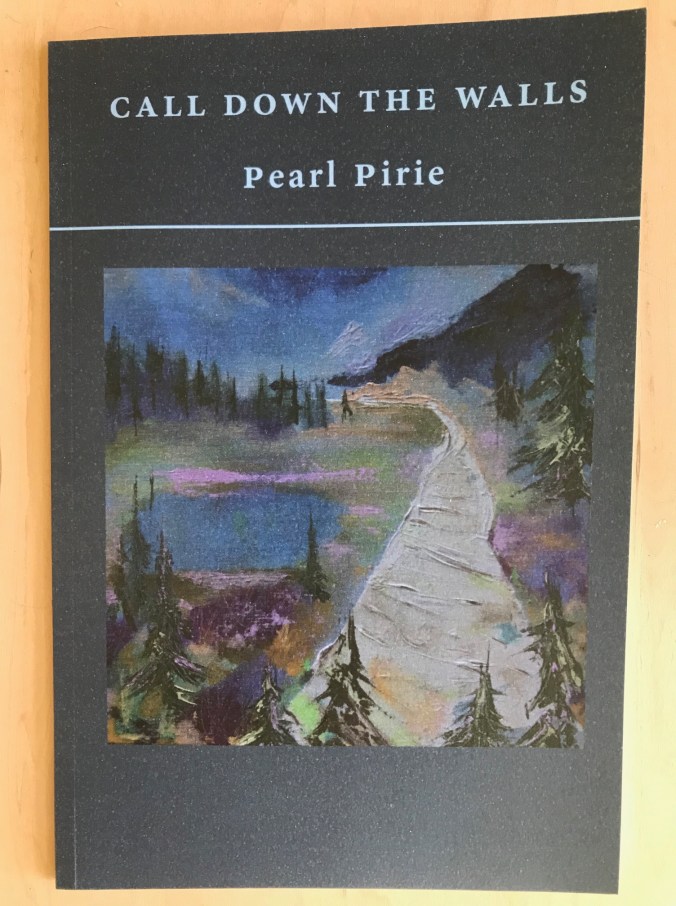
has has 3 poetry collections published, with a 4th forthcoming in the fall of 2020. Three times her poems were given a nod by the annual anthology Best Canadian Poetry in English.  She has a couple dozen chapbooks, and has run a small press for over a decade. She has been kicking around the boards of literary organizations since the mid-90s.  She assists poets with their manucripts through Chalkpaths, her editing service, and gives workshops on poetry in person and online through Studio Nouveau.Her latest publication is Call Down the Walls (Frog Hollow Press, 2019) https://www.froghollowpress.com/catalogue.html#walls. She is working on her first bilingual collection of haiku in rural Quebec, Canada where she volunteers at a charity shop and as a librarian. www.pearlpirie.com

The Interview

1          What inspired you to write poetry?

To in-spire, to gasp, to take in air. Guess it’s involuntary. The reasons change as I change. I like the density of poetry. Some of it maps better to my brain speed than longer literary forms. Writing is a choice for ruminating an ideology. Poetry is no better and is worse than some forms of expression. Even a long poem is a small canvas compared to a novel.

2          Who introduced you to poetry?

Old books I bought as auction as a kid, school. I made my first best-of chapbook around grade 5. I suppose because I do visual easier than acoustical, the written word called and despite being able to find few books of poetry, there’s something there from access, permission-to-speak to the page, and encouragement. I read Kate Braid early on and was impressed that a strong woman could be defiantly female and speak her truths. It wasn’t until I took a rob mclennan workshop about a dozen years ago that I found out about post-modern and modern beyond the contemporaries at local open mics.

3          What is your daily writing routine?

I have no routines. There’s no particular day of the week or time of day for most things except I like being in bed by 9:30 pm if not sooner. I write in snatches, edit in long stretches of 8 or 10 hour days. Because of concussion and body energy quirks I may only get 9-12 hours awake in a day but I aim to write some each day, or edit some at least. In 25 years of tracking my writing rates, I wrote 5700 poems and published about 200 so about 3%. Tracking I found there was not a lot of pattern to time of day, day of week, season, except when I chose to write. January to May I wrote more than summer, fall and Christmas season. Basically tho, I was the common thread I was looking for. And the pattern that every year I write more and edit more.

4          What motivates you to write?

I motivate me. Like most writers I feel a need to verbalize for order in the head & body as I’m working thru schtuff.

The more I read novels, the more I work on my novel, the more I read poetry the more I write poetry.

Prompts and seeing people perform tends to spur me to extra writing.

  1. What is your work ethic?

In favour. Peck away, hoping to not die in a useless way in the meantime.

I write full time, which is really part time with life maintenance. There’s little use attaching to particular outcomes at particular dates because my wonky body may not function when I want.

As novelist Sonia Saikaley said at the Ottawa small press fair, “first there’s your health & your family & if you have anything left, there’s all this (widening arms to take in the room).”

  1. How do the writers you read when you were young influence you today.

Nope. I suppose Edward Lear said nonsense is okay? Youth was a long time ago. I’ve been a few people since then. Self starts now & keeps moving. I grew up pre-internet in one spot. I didn’t meet an honest-live-in-the-flesh writer until grade 12. Mostly I read the 1800s.

  1. Who of today’s writers do you admire the most and why?

There are so many who organize, publish, support, read, broadcast, review, add to and improve poetry and create communities. Thousands and thousands of people.

Rita Wong puts her page of land & water protection principles into action. She was arrested for interfering with Transmountain. More info http://brokepipelinewatch.ca/

One of the poets I’ve come to admire most recently is David Groulx. He writes about what matters & who he cares about. Tightly packed but not in the overcaffeinated hyperactive leap sense of dense poetry. It’s not parlour word puzzles. from Turtle Island to Gaza with relating the poets of Palestine is a completely differently good book from Groulx’s love poems in the Silhouette of your Silences.

I also admire Leah Piepzna-Samarasinha. Her poems nail me to a wall by her stating her life paths.

Greg Santos’ poems have a kindness & sweetness in them. Poems by Nicole Brossard, Conyer Clayton, Gwen Benaway, Stephen Brockwell & Manahil Bandukwala have an intensity that hums me.

Poems by Mark Truscott, Cameron Anstee, Philip Rowland and Nelson Ball are automatic buys for their refined minimalism.

I admire Karen Schindler, Michael Casteels, Dessa Bayrock & Cameron Anstee for making beautiful objects for poetry.

Ron Silliman keeps people connected and in his poetry enacts how everything counts. Amanda Earl juggles many projects to promote others & creates unique beauties. rob mclennan gives forum for people to be heard and advances what words can do unhooked from direct narratives. Trish Hopkinson helps people with finding markets.

I’m wowed by Monty Reid’s spearheading Ottawa’s VERSeFEST festival seemingly tirelessly. And his poetry gets steadily tighter and more moving over  the decades. I don’t know how many books of his I have of his but I’ll buy any he’s selling. Likewise with poems by Phil Hall. Kay Ryan is profound and brief without being easy or sweet. Naomi Beth Wakan is articulate. Tyehimba Jess’s Olio. It was an immersive experience of a book. Yu Xuanji’s poems are contemporary in the sense of English translations I go back to for their punchy personality. Stuart Ross for his sense of the absurd, comic and tragic.

Haiku by Cherie Hunter Day & by Roland Packer click with me. I have a lot of haiku reading to do. I want to read more French poets.

In fiction, Peter Adamson’s The Kennedy Moment & non-fiction Charlotte Gray have a great attention to researched detail. Vivian Shaw’s series of Greta Helsing, doctor to the undead blew me out of the water for its turns & affection characters had for one another. And diving into more of Nnedi Okorafor where the magic is empowering young woman heroes.

  1. How do the writers around you today influence you?

Those I read give permission to do whatever but polished to nth degree, to write about what matters rather than nattering.

9          Why do you write, as opposed to doing anything else?

It’s good for flex-time. Low investment in materials, if I don’t count books bought. 😉

Writing doesn’t displace so much as complement other things. I would also like to do more art & science & political advocacy. It isn’t an either/or.

10        What would you say to someone who asked you “How do you become a writer?”

If you write, not imagine writing, but get pieces completed, by dictation or by hand, you are a writer. It doesn’t matter if it’s published. It’s the process of critical thinking and making. Sharing with someone.

How to become a good writer? Inner work. observation, & reading stuff better than you can do. Study how the mind & society work and write what you need to read. Learn about everything from many perspectives. Get feedback from a community you trust who are trustworthy. Have silent time, downtime & time to let the well refill.

How to become a read writer? Marketing, persistence, cash outlay or equivalent in time, zeitgeist, luck of who reads when, strong edits for a tight perfected work, and ideally be born rich and upper class if you can manage it. Time machine & manual of how to use it is a real edge.

11        Tell me about the writing projects you have on at the moment.

I think I have 9 projects on back or front burners. Maybe I forgot some.

One front burner item is a book of letters to my father as haibun. (He died a decade ago. About half of this is published here or there.). I’m still writing those.

A genre novel about a woman who is a stonemason daughter of a werefox with a mystery to solve about an inter dimensional perv. It’s coming along but has far to go.

Some lyric poems are out circulating. (I uncrossed my fingers so I can use my hands until I hear back.) I’m trying to sell more copies of Call Down the Walls (Frog Hollow, 2019).

There’s a gratitude journal of one liners, which I had started about a decade ago then saw Chiasson had just published his Beatitudes. Mine would be less cynical.

There’s a Tang dynasty project where I’m giving reply monologues to those ancient poets while giving tributes to people I am glad to know. I thought it was done but it’s back to substantial edits.

I’m in the process of translating my chapbook of haiku to French. That might come out next year. For my phafours press, translating the haiku and senryu of Paul David Mena in the U.S. for launch this fall.

I have been restructuring a book of poems based around flora & fauna and the culture of being young & female in Canada.

I will soon be with an editor editing a collection of poetry to come out in the fall of 2020 with Saskatchewan publisher, Radiant Press. These are more zany and offbeat poems.

Wombwell Rainbow Interviews: Paul Sutherland

Wombwell Rainbow Interviews

I am honoured and privileged that the following writers local, national and international have agreed to be interviewed by me. I gave the writers two options: an emailed list of questions or a more fluid interview via messenger.

The usual ground is covered about motivation, daily routines and work ethic, but some surprises too. Some of these fiction writers you may know, others may be new to you. I hope you enjoy the experience as much as I do.

paul sutherland 1 Final (2)

Paul Sutherland

Canadian-British poet/writer, in UK, since 1973, has fifteen collections, editing seven others. He’s founding editor of Dream Catcher a national-international journal in its 38th issue. He runs creative writing workshops and widely performs his poetry. Leads seminars; mentors, runs Writers Retreats and collaborates with musicians, visual artists and calligraphers. Lectures on e.g. Sufi poets and English Literature. He appears in anthologies and journals. Spires and Minarets was published by Sunk Island Publishing and Journeying from Valley Press 2012 (ww.valleypressuk.com). He reverted to a Sufi Muslim 2004; two books have followed, Poems on the Life of the Prophet Muhammad (saws) 2014, A Sufi Novice in Shaykh Efendi’s Realm, (first pub. In Romania in a bilingual book 2014; re-printed in UK 2015) describing his adventures in North Cyprus. He’s won literary awards; a poem of his helped promote Olympics 2012. He has won grants and participated in many projects. He turned freelance 2004. A New and Selected Poems, was re-launched from Valley Press 2017: 384 pages of 45 years of his writing a ‘unique …an unflinching and forensic exploration of a life through language.’ The book was listed by PBS for winter 2017 and selected as a choice for The Morning Stars’ books of 2017. The University of Lincoln archives his poetry, prose and criticism. A new collection of PS’s love poems, called Amoretti, has just been published by Dempsey and Windle. In 2019 his poetry sequence of miniatures Red Streamers was published as a bilingual edition of English and Romanian by PIM in Romania.

The Interview

  1. When and why did you start writing poetry?

I was 17 years old, playing football (Canadian-American) football on the street and thought, staring towards our house, I should be up in our attic writing poetry. Why is very difficult to pin down. I had experiences that confirmed for me I couldn’t easily fit in the game or team. Experiences and revelations that wanted to be written about, but it was some years before I did. When a toddler my grandfather recited poetry to me. So I felt poetry was a valid way to spend time. My attempts early on seem to me attempts at trying to understand who I was and why did events happen to me that I couldn’t explain. Relationships began to push in and I wanted to write about my feelings – perhaps those I couldn’t openly express. I was shocked by the beauty of nature and I desired to try to portray this sense of wonder and because my experiences were sometimes spiritual I wished to reveal a sense of the sacred which was so much a part of youthful encounters and dreams. Also I read poetry from all ages and from modern masters and wanted to have a go myself and see what would emerge.

1.1 What poetry did your grandfather recite to you?

He recited long 19thc. narrative poems like Lady of the Lake, Sir Walter Scott, Pied Piper of Hamlin, Robert Browning, Horatius at the Bridge by Mccaulay, Lady of Shallot, Tennyson and others of this romantic style which meant my first reading was of other romantic poems such as Shelley and Coleridge. But because our local library was very small I quickly went from romanticism and mystery stories for teenagers to German idealism Nietzsche and also poets like Rilke and Stephan George. I became a modernist overnight reading Eliot, Yeats, Pound, Woolf. Somehow also Chinese and Japanese poems in translation,

  1. How aware are and were you of the dominating presence of older poets traditional and contemporary?

Good question. In Canada in my youth I took little interest in trying to read my poems at gigs or meet fellow poets. My attitude meant I missed many opportunities to share and learn on the job from performing poets. To some extent I had doubt about my ability. My attempts to be published in Canada ended in disappointment and self-publishing. It wasn’t until the 1980s in York UK that I began to see the importance of not being dominated or overly influenced by older poets and try to enter and be recognised in the local poetry scene, take part in workshops, retreats, go to readings of the more famous, listen and learn from fellow poets in York and slightly further afield. I still read the classics in translation and almost all English epics of any renown. But I accepted my place among the grassroots and saw my growth as a writer in much more realistic slow measured steps. This approach was epitomised in me starting a literary arts journal at university in the early 90s, at last called Dream Catcher. It took time (too long in my opinion) for me to recognise the utter importance of living writers and modify my hero-heroine worshipping of dead and great. Maybe I’ll revisit this question before our interview appears.

Ironically against my strong classical leanings I steeped myself in rock and roll. Listened to exhaustion the Doors, Steve Miller Blues Band, Grateful Dead, Jimi Hendrix, Moody Blues, Cream, Animals, Bob Dylan, Rolling Stones etc. Neil Young being a particular favourite with Crazy Horse. A Sudanese Muslim friend says this kind of music gave insight of how to search beyond traditional boundaries and become a Sufi. For me it meant whatever I wrote was inconspicuously influence by another Violet Underground. So the dominance of older writers was dramatically titled by my passion for electronic music and youth culture that I absorbed to a high degree seeing Jimi Hendrix and Jim Morrison live and others. Perhaps this intense listening influenced my poetry by making me believe ‘I was free to do what I wanted’ to quote J. Morrison. Songs like The End fed my inclination towards a prophetic kind of poetry which inspiring my reading of English epics and seeking epical serious poets like Robert Lowell, John Berryman and others. The rebellious tendencies of that era’s electronic music (late 60s – 70s) certainly has helped me keep a critical and radical edge to my observations.

  1. What is your daily writing routine?

To your question of practice. I have gone through periods of great discipline, writing at the same time every day. Now this is not the case. I tend to write at night when the world is quiet as Ocean Voung recently remarked about Night Sky with exit wounds – poems that come from the night. My writing time, through marriage and Muslim prayer patterns, has been forced to fit into the gaps. But I remain prolific writing poems, short fiction, meta-essays, miniature poems and working on novels. I revisit work again and again to improve. Recently my wife selected poems for a competition I was entering and every poem she selected I had workshopped and edited many times. I accept that all I write will probably go through some editing filter before it reaches a public space literal or oral. When I can’t write afresh I go back over older pieces (7-1 year old) and re-examine them for how they might be improved. This is almost a daily process.
I write many miniature poems if I can do nothing else. I work in a shed in the summer and in the house in the winter. This goat-like transformation up and down the mountain affects my preoccupations and what I write. I try not to only write about Sufi practices or secular events or relationships but about as wide as range of subjects and approaches possible. To some no doubt I’m traitor to the cause, various causes. The New and Selected Poems is filled with radically different styles and subject matter.
My writing routine is therefore eclectic. I have lost my discipline and now more freely write whatever moves me and long term projects are fitted into the daily rapid observations which create miniature poems.

  1. What motivates you to write?

Another big question, rightly so. I want to refer to current poets who touch my heart: Ocean Vuong and Raymond Antrobus and Claudia Rankine. These poets who win big prizes seem to utter ‘say it say it say it and say it beautifully’ They are not PC. Many in our generation have been brought up in poetry to subdue ‘big emotions’ (but this has missed the point) and to subdue the use of ‘I’ relating to highly personal experiences. But the word motivation suggests something more than subdued emotions for the sake of craft. But for the poets mentioned craft is very important. but so is ‘big emotions’. This new vista of poetry connects with what motivated me to write, a desire to say it and say it beautifully. 50 years ago I was motivated by different subjects than now, but not entirely. My dyslexia meant words were hard won. This disadvantage spurred me to write about at first the beauty and power of the  Canadian natural world, winter in particular, which was infused with some kind of mystical quality. In my early 20s I worked in a hospital in Intensive Care Unit and saw people die each week. I wanted to write about these patients, what they said to me, their illnesses and struggles. Yet, my first significant piece of work (pub. in New and Selected Poems) Seven Earth Odes began with a search for a lost people’s grave, a first nation’s heroine. Eventually a butterfly guided me to the site. So began my ‘real’ efforts to write poetry, to describe this semi-natural-supernatural-human event (1972). No doubt the knowledge that I was leaving Canada stimulated furious poetic activity at the time. The poets that inspired me then which I mentioned above (the modernists) challenged me to write to that level and I committed myself to undertake epic serious poetry. In England working (beginning 1973) with disabled children, adults and teenagers I tried to write about these experiences. But I lost almost 15 years from my Canadian roots to restoring my real poetic intentions. During my years in residential care I wrote in a flowery Victorian style script with black Indian ink. Had no aspiration to be published. Finally in 1980s I joined York Poetry Workshop etc and started to engage with the literary scene in England which motivated me to write more contemporary poetry and forced me to try to recover my real poetic voice which meant frantic re-writing of the Odes. Direct and powerful spiritual experiences began in the mid-80s and these motivated much output to try to portray these elusive events. This motivation continues. I also became highly political and started to write about the Wretched of the Earth, the oppressed. This theme would be reinforced when I returned to university in 1994. Post colonial studies became my main focus and helped me understand my Canadian-ness and motivated much poetry up until 2004 to give a date. Then gradually becoming a Sufi meant a shift in emphasis away from the political to the mystical – yet this needs to be qualified because I continued to write on geo-political issues and intimate politics of gender. These motivations dominate Journeying (valleypress 2012). But writing about my Sheikh, spiritual guidance in general, Jesus and Muhammad (saws) has been a tremendous motivator, especially Muhammad (saws) who I see like a dyslexia misunderstood, an outsider.
My counter-western views started when working with Islamic students as a freelance tutor in 1995-6, my contact with these students forced me to rethink ingrained prejudices that e.g. favoured Israel over Palestinians. Islam has compelled me to re-examine everything: ethics, history, poetry and has been a great instigator in recent years. In 2012 I became forcefully separated from my dear granddaughter this event like others in my life caused an upheaval that had to be written about. The rights of the child ties in with my long term bias toward the underprivileged in the world. I seemed to have always been motivated to try to redress human suffering in somewhat a three-fold Shakespearean way of expressing nature, the human and the superhuman which might be the subconscious. Sorry for such a long answer. Vuong and Antrobus are multi disadvantaged, each struggle off sets the other so they don’t become rigid in their views such Black or foreign outsiders but their intimate otherness brings a remarkable level of beauty into the volatile mix. Their work gives guidance of how I might be motivated in the future. The difference between these protest poets (Antrobus, Vuong and Rankine) to me is they have multiple issues to address/redress which off sets their main preoccupations. For example Antrobus is motivated by his experiences from his deaf-ness but he is also black and an outsider, these other realities richly invade his work. His different themes create strong creative tension in the poems. Also I wanted to add regarding my motivation that recent visits to India, Australia and Cyprus all stimulated a considerable amount of writing.

  1. How do the writers you read when you were young influence you today?

First, I have to say that the heightened style, skill and creativity that poets like Yeats set are relevant. I apply some of his techniques like automatic writing. Those early poets I read influence me but in more complex ways then when young and impressible. I’m apt to resist now their messages as much as valuing their genius and creative achievements. Some years ago, in 1990s, I realised I couldn’t imitate Rilke or Eliot etc because I was not a privileged individual, a literary aristocrat and a polyglot. I’m a working class lad from the back streets of a Steel making city. This belated realisation first showed how I was different in person than my heroes and also that I couldn’t imitate them, I had my own voice. This was so important for me to understand that my voice was a valid as theirs. Derek Walcott and other Caribbean poets/writers/thinkers helped me see beyond the modernist vista to other themes subjects and other needs. Vitally they both respected and opposed the modernists. Re-assessing, though never quite like Antrobus erasing a poem by Ted Hughes and writing my own version, nevertheless I also re-write the masters’ themes and challenge their biases to create my visions. Ironically age has  helped me appreciate better the modernist agenda and see its limitations. I needed the classicists and elitists then and I needed to resist them to find my own voice. That’s taken time. David Jones was another important go-between writer to help shift me from my elitist obsessions. His Welsh perspective and highlighting Celtic myths challenged my Greek bias. He too was a male marker that needed to be reassessed. I saw that often I was following the creative route of WWI poets like Jones. He too, I had to push against to move on. Jorie Graham forced me to recognise that since Robert Lowell and before the individual voice has dominated, she challenges this with a concern, close my heart, that we have to develop a collective consciousness a ‘we’ voice because of the vast ecological issues facing humankind in our time  requires a communal voice. Your question is important because I realise I needed the greats of the past to learn from them and push against them to find my own way of speaking for my own time place. I’m still of course learning from them. I ran a writers’ retreat around the theme ‘why is the contemporary contemporary?’ researching this topic revealed a range of issues that I had to redress to modernise my language my writing. My Sufi practices also, with middle east origins, contradict the assumptions of many modernists; the romantics were closer to the middle east and Islam when it was less a threat to an Europe dominated world. Though not knowing Greek or Latin I’m profoundly grateful to have been soaked in the classics (on which the modernists focused) to have a sense of English literature as a continuum spanning epochs. I feel sometimes that contemporary poets discard the work of earlier eras, seeing it as irrelevant. I can never say that. In this way what I read as a young man still guides and challenges me as simultaneously I debate  and argue furiously with those famous past masters. Another lesson: those past poets were not isolated ‘wonders’ in ivory towers they interacted in literary communities which helped ‘ground’ and inspire their high flights of poetry. So I’ve learned the worth of sharing through workshops etc and valuing local writer contacts and seeking live performance. We now have chances to perform and network of support  of which the 20thc. modernist could only dream.

7. Whom of today’s writers do you admire the most and why?

This is a very taxing question to answer. I value and appreciate many poets writing today. Yet we lost recently some key influences for me: John Ashberry and Derek Walcott. Both writers show the potential of expansiveness. Ashberry’s Self Portrait in A Convex Mirror is a masterpiece but it wandering freedom I find exciting and inspiring. Walcott is a poet capable of an epic. I read Omeros in three days and couldn’t put it down. It does everything I want poetry to do and does it in one poem, Walcott’s mixing of history, global and intimate, is breath-taking. Like Ashberry at his best there is an enormous range of vision. I value how Ashberry holds things together in illogical patterns that reveal how everything is connected if one reaches a certain level of consciousness. Walcott also intrigues with his essays, like What the Twilight Said to back up his poetry. He can draw from the classics and the legends of the First Nations of North America in the same moment. He says ‘Homer belongs to the Caribbean’. I celebrate his bold conviction. Jorie Graham still alive and writing offers an expansive or in-conclusive view. Her step poems thrill me forcing again like with Ashberry to understand how the less rational works to create unity. Her ecological focus feels vital to her whole work. Anne Carson, her experimentation between prose and poetry I find utterly stimulating. Again her poetry is supported by a keen understanding of ancient poetics. When this apparent abstract style crosses a highly personal subject the result is sublime for example her pieces about her father, mother and brother. Again great poets break all the rules of workshops. Anne Carson is a fearless revealer of the politics of intimacies but she searches for truth exposing the necessity of decency in human relationships. She like Walcott, Ashberry and Graham is a compassionate writer trying to encourage humankind to care for each other. I also can not stray far from this motive and perhaps it is my greatest motivation to try to off set the violence, cruelty and ugliness in the world with beauty, kindness and peace. Graham’s work is so peaceful the poem seems to vanish between her discursive lines. I accept that these smooth educated voices have had to give way to assertive and aggressive depictions of the human condition. Claudia Rankine’s use of videos and scripts is the kind of intervention that I value; she wants to communicate and she’ll use everything in her range and power to do so. She melts the divides between reportage and poetry; she isn’t interested in colourful lies. She aims to reveal the truth about a situation whether it includes her or not. Ashberry and Walcott gave me the impression that they were very strong individuals who could resist the world and groups and helpers. Vuong and Antrobus give me the very opposite impression – they need groups, people. Their vulnerability, deeply personal, becomes a strength in their poetry. It creates magical tension when this obvious victim-hood can write so beautifully and convincingly. Perhaps the male modernist like the strongman in La Strada believes in overcoming weakness to some extent suppressing their dysfunction for the sake of art. But Vuong and Antrobus achieve art through disclosing their weakness making it the main subject. Rankine too takes a very personal view but is extremely aware of her community and wants to rouse her comrades to action. All three of these younger writers appear like activists on the page; they intend to speak and to act. I feel Ashberry and Walcott were more aloft from their communities, the same with Graham and Carson but not Antrobus and Vuong. Perhaps these writers are going to restore to some extent the belief (more in the civil war Yeats) that poetry leads to action. I suppose to conclude I’m intrigued to say at least that such strong feelings can generate great artist/poetic expression. They appear not to need to the old dictum of great emotions contemplated in tranquillity; they seem to create artistic tranquillity out of the white heat of conflicts. I value how they turn their vulnerability and weakness, illnesses, displacement and dysfunction into beautiful art. Strange I don’t feel I’m being preach to, but I know on some level they are preaching.

8. What would you say to someone who asked you “How do you become a writer?”

When I go through the 384 pages of my New and Selected Poems (covering 45 yrs of writing) I see the poems that have been workshopped, edited, read over by many and those ones that no one ever saw or had a word to say about it and sneaked out to become part of my output. This observation makes me realise that I would have to tell a would be writer that both take your poems or prose to workshops and have some resistance to workshops, courses, tutorials etc., both are important. A writer needs to seek feedback and not be defeated by negative responses. A late friend, you probably knew him, Sam Gardiner, said if you want to teach participants anything teach them how to accept rejection’. I would say to an aspirant please expect to be rejected often. It may take years before something you write is worth being noticed and is published. Earlier in my life I caved into negative comments, lacked confidence and almost shied from contact with poets/writers out of fear of being criticised or thought ‘I’m not worthy of their company’. I would say to a would-be writer, meet the famous or the more recognised than you, face to face, listen to them read their writing, participate as much as you can afford or are able to attend their sessions, workshops, retreats. But also spend time in silence, sitting on a chair, or floor, no music no phone, no PC, and just listen to your own thoughts, be inspired from your own ‘treasure house’ as Zen Master once called it. You must be ready to accept isolation, being on your own to write, and exposure being able to present your work and your self. I don’t deny the value of open mic, spoken word, but writing is more than this. It is an internal undertaking that is secretive and the results are often deferred for years. I worked, re-worked, re-wrote the Seven Earth Odes from 1972 to 2004 when they were finally published. They are in the New and Selected Poems. They are the oldest poems in the collection. Much of course must be discarded but something should be held on to, and returned to, over and over to help you see your own growth as a writer. Another friend says ‘ write worse to write better.’ He advocates and I agree just write and write, read and read, write and write. There will be so many (unless you are a genius) kinks, prejudices, bad writing to work through before you’ll create a piece that is appreciated widely. Engagement with other writers is important, to learn, to share experiences, to read your own work aloud and listen for how it sounds. Read until the moment comes when you are not reading to an audience for the event and people which/who inspired the poem. When published always be patient, help your publisher, try to sell your book, promote it on Facebook, social media, live events. I have had two publishers praise my efforts to sell the product; don’t expect them to do all the work. I think you should try to see your work in print and publicise it. Phil Larkin and Robert Lowell saw publishing as a key part of the process. When something is published it clears the way for new work, making the effort to be in print psychologically helps open space for new inspiration. But don’t be defeated by your circumstances, if success is slow coming it might be more rich and sweet when it arrives. If I had been published in the 1980s and 1990s I might not have developed my style of writing. With each rejection/disappointment look again at what you have written and try to improve it. I have finally accepted I am writer, one of millions, who try to portray what’s around them or was around them. Maybe also writers take time to listen to the music of the spheres. I think I would say to a someone wanting to be a writer: make the intention and work hard towards its realisation. I think I must add that self-publishing is ok as part of the process but it can’t be your goal.

9. Tell me about the writing projects you have on at the moment.

I’m always engaged in promoting my New and Selected Poems (Valley Press 2017) in any way I can. I purchase copies at a discount and carry them around with me to introduce the book to whomever takes an interest. I’m expecting a review in the next issue of The Blue Nib magazine. I’ll be presenting the book at the Walled Garden Festival at Baumber in Lincolnshire in a few weeks as well as running two poetry/creative writing workshops and the next weekend in Oxford shire, at the Willowbrook Festival I’ll be running workshops and performing from the stage. This event has more an Islamic slant than the previous occasion. Most of my current writing projects are related to my connections to Sufi Muslim practices. A new book is due from Beacon Books, ‘Servant of the Loving One’. It will be a new edition of the’ Sufi Novice… ‘   book with thirty pages of new writing added. I’m working with an editor in North Cyprus to make ready for publication many stories I have written over the years about becoming or being a Sufi Muslim.

I have a novel perhaps to be called ‘Sometime the Police are Friendly’ being read by a publisher, unclear whether it will be published or not. I’m adjudicating The Blue Nib’s Chapbook competition, results due on September 15. My wife and l will be flying to Canada in September-October and performing at a venue in Montreal and perhaps other places in my homeland.

Then in November I’m reading with Antony Owen and Joe Hagan at a Quaker’s event in London. Afterwards I’m flying to India to work voluntarily at Ma’adin Academy where I’ll be used 24/7 to run creative writing sessions, teach in schools across S. India Kerala particularly. I’ll be called on to read my poems. Last time there a read in front of 100,000 people through a tropical night.
The academy pays for everything. This is my third visit, the other two have produced much poetry and prose – perhaps publication is possible. I’m always working on new poems and am about three quarters through a second novel, though perhaps it shouldn’t be called a novel rather meta-historic-fiction. I’m inclined to blend fiction and fact and am very attracted to creative non-fiction. I attend three different writing groups, one meets once a week, the other two once a month. I attend and support them as much as I can. I have regular meetings with a ‘comrade’ who has become a dear friend and we are writing a Renga together. This sharing keeps me writing if everything else fails to inspire. I also have created a Facebook page and spend time considering how to use and develop it. It’s been eye-opening to make contact with many writers, poets, bookshop owners across the globe; and a website is also near to completion. I’m retired now and driving infrequently, so I’m doing less gigs. I see social media as a way to keep reaching a new audience and joining in the literary community in different countries.

To conclude I just wanted to say thank you very much for giving me the opportunity to express and share some of my ideas and preoccupations relating the world of writing.

Wombwell Rainbow Interviews: Peter Burrows

Wombwell Rainbow Interviews

I am honoured and privileged that the following writers local, national and international have agreed to be interviewed by me. I gave the writers two options: an emailed list of questions or a more fluid interview via messenger.

The usual ground is covered about motivation, daily routines and work ethic, but some surprises too. Some of these poets you may know, others may be new to you. I hope you enjoy the experience as much as I do.

The Cotton Grass

Peter Burrows

is a librarian in the North West of England. Poems have appeared most recently in Northwords Now, Dream Catcher, Marble Poetry, Words for the Wild and Coast to Coast to Coast. His poem Tracey Lithgow was shortlisted for the Hedgehog Press 2019 Cupid’s Arrow Poetry Prize.  

@Peter_Burrows74

peterburrowspoetry.wordpress.com

The Interview

  1. When and why did you start writing poetry?

Beyond silly rhymes in birthday cards, I started writing about 15 / 16 and this was part of my development as a young-for-my-age teenager and triggered by that need for self-expression. The usual woe is me stuff, unrequited love, naïve views of the world . I was also writing lyrics – which were very much inspired by The Smiths – for songs myself and a friend wrote. I’d always made comics so creating little titled booklets of poems was very appealing and I was obsessed with the running order of the perfect album so all this fed in first, rather than from any literary influence. Other than the war poets at school song lyrics were my first influence.

  1. Who introduced you to poetry?

I stumbled into poetry myself. I tuned in to the war poets at school, and that awakened something, and then again, it was through lyrics: The Smiths (rather than solo Morrissey which became caricatured), Billy Bragg and Elvis Costello. They were writing in a way that made me listen differently, and influenced my own scribbles. The Smiths Louder than Bombs US import had 24 tracks and I pored over the lyrics booklet which had a gorgeous font and was laid out like a poetry collection.

It wasn’t until I’d started reading properly myself at 18 and discovering Literature at my local library that my mind exploded and I saw it as a form in itself. Firstly, I’d say it was through poetic fiction such as Wuthering Heights or the novels of Thomas Hardy, and then Hardy and the Bronte’s poetry. Most of it was going over my head but I just had to spend time with it and it influenced me superficially as I had little or no critical reading skills. I then did my A-Levels at 19 and my Literature teacher who was Irish and a Seamus Heaney disciple introduced me to him, giving me stuff to read around him, and about the same time I got into Philip Larkin. I could then feel proper foundations were put down.

  1. How aware are and were you of the dominating presence of older poets traditional and contemporary?

I was aware of the canon and in my immature mindset would swing between thinking – because I didn’t know anyone else who wrote who had these inclinations – that I must be blessed, and other times that it had all been said before, and what’s the point of trying. Later, when I was new to Literature and then studying a Lit. degree and had no responsibilities and all the time to read, it felt like walking through the gates of a theme park and not knowing which author to rush towards first. I just felt that all of this would influence me and feed into my development. Much later, when in my mid-20s I stopped writing – and by this time from about 16 I must’ve written 800 odd poems – I felt like I wasn’t up to it. In terms of form, at that point, I was still writing ‘lighter’ verse. Still prolonged adolescence matters, and I outgrew it, but had nothing in place to continue with. I was still reading my favourites, but I was only writing scraps of things and was overawed thinking that I wasn’t up to it and when I read writers I could feel the chasm between them and me. When I started writing again – or, for the first year, warming up working through the scraps – about 5 years ago, I was conscious of my early favourites, Heaney and Larkin, who were writing from the 50s/60s onwards, and that these forms were still about – but I didn’t want to be investing my efforts looking backwards or writing homages. Although I liked Hardy’s poetical subject matter, his forms are too archaic and often contrived for me. So, I began subscribing to magazines and buying pamphlets and collections, following folks online and immersing myself to eavesdrop the conversations of now. But I do believe that all forms can co-exist simultaneously in the same way we change register to whatever generation we are speaking with. Heaney once said that he thought Larkin would be remembered in the future for a dated elegant style of poetry in the same way as Thomas Gray (as in Elegy Written in a Country Church Yard). Then, some forms I read are very experimental. Yet, I feel most poetry ends up falling back into a slowly progressive form of what has been predominantly the form of the age, with various outriders pushing off in all directions. I feel there’s some comfort there which is universally recognised, if not cherish.

  1. What is your daily writing routine?

I write most days, though it’s often only tinkering, and I write within the gaps in the day, which is why I think poetry suits me as my concentration span is too short. I work very slowly, and ineffectively. A poem will start with a hand-written scribble (dated), usually an idea or some lines, which are rarely definitive, more place-holders to an idea, and then after adding to this I type (in Perpetua) and print off on A5 – two pages on A4 – as the visual aspect of how any poem looks is aesthetically very important to me. I then edit onscreen, and each day print off a new draft annotating it, adding footnotes for what I’m inferring (so that I avoid cluttering up the text with prompts and pointers), then rewrite onscreen. I also number the lines to remind myself to be concise. Each draft is dated and most thrown away, though early on I kept everything. I write in the bath, at bed, have a couple of pages in my pocket to mull over and add bits to. Whereas when younger I dashed off complete drafts of light verse, things now come very slowly.  A poem can take anything from a month (that’s a quick one) to several years. One that I finished last week which I think is one of my better ones I first started in 2015 but kept putting it aside. I have a tendency to splurge and write lots, and then have to edit back. So I will most often put a poem aside and work on something else. At present I have about 40 poems on the go which are all contenders (and many others dormant) but I will usually have two or three as my main focus, with another half dozen on standby behind these. I wish I wrote differently (and it explains why I was so awful at exams) and was more efficient, but that’s how it is. I was heartened reading Larkin At Work which looks at his composition methods and saw a lot of similarities in how long he would take on a poem and have to switch.

When I’m closing in on a poem, like the one mentioned above, especially if I think it could be a good one (for me) then that poem does not leave my side (and by now I’ve taken away the numbering). I will have it with me in my pocket, in my work bag, on the passenger seat, and trying to land it the best way possible.

  1. What motivates you to write?

Early on it was to express or preserve. Now it’s more to working towards an idea and trying to understand it which I imagine is why it takes so much longer and so many redrafts. It used to come as a title or a line or two, and maybe that was the influence of lyrics, whereas now it’s an image or an idea and it takes longer to tease out the lines. I now dash out place-holder lines, and words as I can feel the shape of the thing I’m trying to work towards, but I don’t want to capture it too soon by pinning it down with words which may distort the meaning and will be hard to undo later.

It feels like archaeology – which is something I’m interested in and write about – in that you get a glimpse of something and must gently brush away to reveal the rest, and it may be that the rest of it is missing, or not in situ, so you have to decide on whether you guess the whole concept, or, like Keats’ negative capability, feel that it’s enough to be working in the right direction of what you’re trying to say and leave something unsaid.

Also, seeing a poem on a page gives such a deep sense of satisfaction. Its form. The white space. Any particular effect employed to convey meaning. Some little thing that was nudging at your consciousness has been realised and can be reanimated just by being read.

I started writing again 5 years ago, sending pieces off a year later just to gauge as I knew I was writing much better and differently from my younger years, and then a year later I got my first two poems published in The North and I was shaking, not so much from delight but from self-conscious exposure of the outside world, which surprised me. I hadn’t realised how much I’d been writing in my own little bubble. It is thrilling having poems accepted, and it’s fine when they’re not, and it does help focus my writing and help motivate, but the poems would be written anyway because I need to see them through, and there’s enough validation in that. Everything else is a bonus.

  1. How do the writers you read when you were young influence you today?

With Larkin I was much influenced by his odes and their forms were an ingrained template when I started writing again (the big poems like The Whitsun Weddings or Aubade which still blow me away), but less his character or persona which I felt a touch affected, and behind a front. I much preferred poems when he let his guard down like the unpublished An April Sunday brings the snow about his father’s death. With the odes as they were fairly long, it gave me space to try out things, but it may also encourage me to ramble or repeat myself. I liked how they looked on the page, but I had to ensure that I could justify the time it would take for someone to read them. Whereas I’d have a big Larkin reread every year I’ve not the last 3 or 4 years but I’m sure I’ll catch up again with him.
With Heaney I find my appreciation deepens especially in terms of his range, and I love his personal poems. Then, I love his political, historical, mythical poems, and his development from man, to husband, father, grandfather and how poems in his own oeuvre are in dialogue with each other. If I’m stuck on a form for a topic I will scan Heaney to see how he worked through it. He is like a grandfather poet, and his poems are a touchstone to me and a month doesn’t go by that I’m not reading Heaney. His books are beside my bed.

Both Heaney and Larkin stay with me as I always consider the weight and length any collection I read (as I did with music albums). Any collection I read I will make a scribble on the contents page of how many poems or pages there are. With Larkin and Heaney a collection spans between 30-36 poems (High Windows when Larkin was drying up is just 24), and these have become my template for a balanced collection whereas many collections now can have between 40-50 pages, and feel like double albums to me. Larkin’s collections, from page to page have a different form of poem, which helps keeps things interesting and fresh (and you can see in the Complete Poems that he could have included perfectly good poems but decided against as he would be repeating himself).

7. Whom of today’s writers do you admire the most and why?

Bernard O’Donoghue and Kathleen Jamie I’ve discovered in the last 5 years or so, and subsequently bought all their collections. When I read them (along with Heaney) I get the stirrings to write and so will often read them in the bath before reaching for whatever draft I’m currently working on. O’Donoghue’s poetry might seem anecdotal and slight at first, but its magic works on you and you realise how great it is. I completely buy into his world. The Quiet Man is one of my favourite poems. I think it’s perfect. Jamie writes about nature and subtly national identity, and like with Heaney and O’Donoghue a sense of place is integral, and that is something that interests and inspires me greatly. Jamie and O’Donoghue are doing similar things in completely different styles.

Stephanie Conn’s Copeland’s Daughter I admired greatly, and kind of wrote her a fan letter when enquiring about her other work. Poets that you bump into by being in the same publication is a good way to be introduced, and so I keep an eye out for Paul Stephenson (and I like what he’s done with his interviews website) to see how he’s developing. I read somewhere that he came late to poetry, and he seems to be having so much fun writing and is obviously doing it very well. I’d like to see a full collection after 3 successful pamphlets. Recently I’ve also enjoyed collections by Jane Clarke, Liz Berry and Robin Houghton.

8. What would you say to someone who asked you “How do you become a writer?”

Be a writer by writing. Be a better writer by embracing rewriting. Stephen King said, ‘Write with the door closed, edit with the door open’. By all means write what you need to write but try not to fall into the trap of being precious over what you write so that you daren’t touch a word. You are communicating an idea to a reader other than yourself. I used to be very precious when I was younger, but when I started again – and this is in my late 30s, that had vanished and I love redrafting, and now appreciate that writing is mainly about cutting and editing. As long as you have a strong enough central image (Frost mentioned this) of what inspired the poem in the first place, the words around it are quite malleable, and you’re just working out how to present it in the best light.

Enjoy what you do and don’t put any unnecessary pressure on yourself. If you’re going to write the joy of composing is enough to get started and you don’t need to be unfavourably comparing yourself to others, which stops you before you’ve started, and there just isn’t enough time for that. Be constructive, and see where you can improve, but always see it as that, moving forward with your own development.

If you’re doing the best you can then you don’t have to justify your place. Whether you are playing Sunday League football or in a World Cup Final, on the pitch and in your training you are going through the same universal emotions and challenges, and whatever level you are at, that’s good enough to keep persevering.

Finally, don’t take rejection personally. On Twitter I see a lot of people posting about rejections as if it’s a personal slight and if their whole sense of being was in that submission. Only a small percentage of poems get accepted, and even if what you’ve sent maybe a stonker, and the best thing you ever wrote, there may be another poem in that submission which is too similar to yours and had just edged it out. Or you might be sending the wrong poems to the wrong journals. Read other writers, read other journals (both in print and online) and you will start getting a sense of where is home for different aspects of what you write. This year I had a poem that got accepted on it’s 20th attempt over several years. It was a small poem, but one I liked and would add to a collection (if ever fortunate enough), so I kept sending it out until it found its home. Other times you slowly realise, ‘Ah, that one doesn’t quite work’ and retire it.

Concentrate on the work, and you will instil it with qualities that are recognised by an editor (though they may still not pick it due to the above!). But that’s ok. You are writing, and when you’re writing you’re workings towards something new.

9. Tell me about the writing projects you have on at the moment.

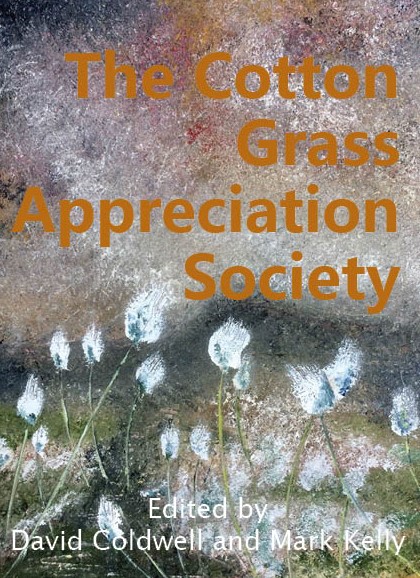
I’ve been fortunate to be included in two forthcoming anthologies: The Hedgehog Press’ Cupid’s Arrow: A Selection of Love Poems, after my poem, Tracey Lithgow, was shortlisted. This will be available as a free download soon. And, The May Tree Press’ The Cotton Grass Appreciation Society which contains poetry about the South Pennines. https://maytreepress.co.uk/2019/07/08/the-cotton-grass-appreciation-society/

Since I started sending stuff out about 4 years ago I’ve had about 60+ poems published, and I’m probably a few years off seriously considering any pamphlet competitions. I do have a rolling number of themed poems in order that make up a collection, as I naturally think of poems belonging to collections as it’s something I’ve done ever since I was 16 compiling them into little jotters with a title. The poems, and preoccupations, of the last 5 years I can feel nearing its final phase, and then, even for my own enjoyment I will put them together in a little collection. It’s a good way of marking the end of something, and the start of the next journey.

Wombwell Rainbow Interviews: Paola Ferrante

Wombwell Rainbow Interviews

I am honoured and privileged that the following writers local, national and international have agreed to be interviewed by me. I gave the writers two options: an emailed list of questions or a more fluid interview via messenger.

The usual ground is covered about motivation, daily routines and work ethic, but some surprises too. Some of these poets you may know, others may be new to you. I hope you enjoy the experience as much as I do.

Paola

Paola Ferrante

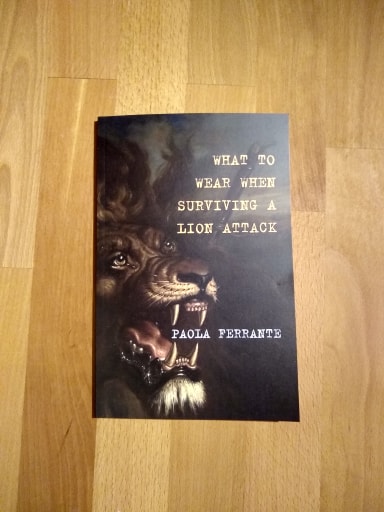
Paola Ferrante’s poetry and fiction have appeared in The Fiddlehead, The Puritan, CV2, Canthius, Joyland, and elsewhere. She won Room’s 2018 prize for Fiction, and was shortlisted for PRISM International’s 2018 Grouse Grind. She has a chapbook, The True Confessions of Buffalo Bill, with Anstruther Press, and is the current Poetry Editor at Minola Review. What To Wear When Surviving A Lion Attack is her debut poetry collection. She resides in Toronto, Canada.

I can be found on twitter at https://twitter.com/PaolaOFerrante

What to Wear When Surviving a Lion Attack is available at http://mansfieldpress.net/2019/06/what-to-wear-when-surviving-a-lion-attack/

The Interview

1. When and why did you start writing poetry?

If I’m honest, I started trying to write poetry in university because I had to, for a course. I didn’t understand what I was doing, and I wrote a lot of really terrible poems. But I also had a really great teacher, Priscilla Uppal, who sadly passed away recently. What I remember is her encouraging us to write poems about the thing we thought we couldn’t write a poem about. Years later, I was introduced to the idea of the unsympathetic voice in poetry by Robin Richardson, who I am also lucky to count as a fantastic teacher and mentor. And I thought, I want to be able to tell the hard truths in poetry, to talk about the things that really matter, to cut to the bone with words. That was when I really started to write poetry.

2. How aware are and were you of the dominating presence of older poets traditional and contemporary?

I haven’t really been aware of a dominating presence of more established poets, especially among my contemporaries. In my experience, many more established poets have been incredibly supportive in offering opportunities, mentorship and guidance, so I guess I’ve been very lucky in that sense.

3. What is your daily writing routine?

When I can, I write in the mornings. Saturdays are my best writing day because, if left to my own devices, I would like nothing more than to start working before I am fully awake. When I can do this, I can trick myself into not thinking about how good or bad the piece is going to be and actually get down to the writing. Usually though, my writing day starts at 5 or 6, after I’m home from my day job. Before starting to write, I let out my two ferrets, and between them wanting both my attention and in general just to nip at my toes, I provide myself with enough distraction to take the pressure off. When I’m writing poetry, I start with a word, a phrase, sometimes a sentence that’s not yet fully formed. I will read non-fiction that is somehow related to whatever I think my poem is going to become, and I collect fragments as I’m reading in my notebook. Words or phrases I think will make it into the poem as is I put a star beside or outline in a square. Most of the time this is so I remember to read them, because my handwriting is only slightly better than a child just learning to print and even I find deciphering it painful. I think if I ever became famous enough that students would want to study my notebooks they would need a background in cryptology. Most of the time, I can finish the bulk of a poem, minus edits in, two to three days.
Prose takes longer, and is more painful. I’m currently working on a collection of short stories, and spend an inordinate amount of time doing background research into things like possum biology, and sex robots. I will also take half an hour to rewrite a sentence if I don’t like the way it sounds (habits from poetry die hard sometimes). I rarely write fiction from beginning to end, although I need to nail down the first page before I’m convinced I’ll even finish the story. One thing I currently like to do is surround myself with short stories and collections with which I feel my work is in conversation (currently that’s Carmen Maria Machado’s Her Body and Other Parties, Zolitude by Paige Cooper, and the short story “Orange World” by Karen Russell). For me, it makes the process of developing a piece a lot less lonely.

4. What motivates you to write?

I remember reading Anne Boyer’s Garments Against Women when I first started seriously trying to write poetry, and being impressed by her ability to use the language of science to express a deep understanding of the politics of social injustice and violence against women. To me, poetry is like integral calculus; it wants us to understand the deeper truths about the issues in our world through code-breaking, revealing the obvious in unexpected ways. That’s the reason I write poetry, to make other people look at their world through a different slant in order to see the patterns in the issues inherent within it. I think, to be honest, I don’t know how to live a life where I’m not writing. I tried it for a couple of years, and didn’t like the results very much.

5. How do the writers you read when you were young influence you today?

When I was a kid, my mother had a huge, illustrated edition of the original Brothers Grimm fairy tales that I probably read cover to cover at least a dozen times, knowing exactly what pages to skip so I didn’t have to look at the wicked queen as she turned into a terrifying dragon or an old witch. Most of the time, I think these stories seep into my work unconsciously, because much of it looks at how relationships always subvert fairy tale narratives in real life. When I was writing my first book of poetry, What to Wear When Surviving a Lion Attack, I deliberately revisited these stories, so there are poems about women having their feet cut off because their red shoes won’t stop dancing, and poems about women as nightingales being kept in cages, and one, very unsubtly titled poem, “Beauty and The Beast,” that looks at domestic abuse.

6. Whom of today’s writers do you admire the most and why?

This is always a tricky one to answer because there are so many! For poetry, I love Anne Boyer for the way she uses science in her writing to talk about feminism. Garments Against Women was actually the book that inspired me to write my first collection. I also love Terrance Hayes for his direct “say what you mean” take on sonnets that tackle racism and Robin Richardson, who is also a mentor and friend, for her distinct ideas about the unsympathetic voice and honesty in poetry. Her poems hit you in the gut and I aspire to do the same. When it comes to fiction, I deeply admire Carmen Maria Machado for her ability to blend horror and lore and genre writing into some of the most masterfully crafted short stories I’ve ever read. She essentially inspired my next project, which is a collection of short fiction, much of it in the magic realist vein, with the working title Her Body Among The Animals. I also love Kristen Arnett and Catriona Wright for the way they blend the weird into something heart-rending and very darkly funny in their fiction.

7. What would you say to someone who asked you “How do you become a writer?”

Aside from reading everything you can, and chaining yourself to your desk for a specified amount of hours a day until it becomes habit, I’d offer the best piece of advice I ever got, from my mentor and friend, Robin Richardson, which was simply “remove the ego.” I think that’s critical when it comes to writing—you need to be able, after the initial messiness is on paper, to stop thinking that you’re not good enough as a writer, and worry only about the work needs. If you’re doing it right, it means you start to want to hear someone else tell you what’s not working, and what you could do to make the work the strongest it can be.

8. Tell me about the writing projects you are involved in at the moment.

I’m two thirds of the way through writing a collection of thematically linked short fiction with the working title, Her Body Among Animals, which explores the boundaries placed on women’s bodies. The stories all use animal metaphors and are a blend of magic realism, science fiction and some horror. And of course, I’ve started working on the next poetry collection. I’m also currently the Poetry Editor at Minola Review (minolareview.com), which is an online journal that, going into its fourth year, publishes quarterly and represents the strongest, most courageous voices in women’s writing. Currently, I’ve just finished putting together the details for our inaugural poetry and fiction contests, which will be open as of July 14.

Through My Father’s Eyes, Collected Poems by Sheila Jacob / Review, Interview, Poems

This is an excellent book and author. My review of her book wil appear shortly.

Jamie Dedes's avatarJamie Dedes' THE POET BY DAY Webzine

” . . . Two months later
you were hurried to the hospital
and died within the week.

“I stuffed your letters in a drawer
and found your fountain pen,
the ink inside still wet.”

excerpt from Letters From Home in Though My Father’s Eyes


I am often hesitant to review and recommend self-published books. Sometimes it seems that however talented and well-intentioned the poet, their collection needed another eye, an editor. We all need one frankly. Having said that, I am pleased with Sheila Jacob’s book as I knew I would be. Sheila did invite feedback from an editor and other poets before finalizing this volume, which I have now read twice and with great pleasure. Such is our humanity and the power of poetry that we can touch hearts across 3,500 miles and the wide Atantic.

Sheila, whose father died when she was thirteen, and I couldn’t be…

View original post 2,076 more words