Wombwell Rainbow Interviews: Tricia Marcella Cimera

Wombwell Rainbow Interviews

I am honoured and privileged that the following writers local, national and international have agreed to be interviewed by me. I gave the writers two options: an emailed list of questions or a more fluid interview via messenger.

The usual ground is covered about motivation, daily routines and work ethic, but some surprises too. Some of these poets you may know, others may be new to you. I hope you enjoy the experience as much as I do.

Tricia Marcella Cimera

is a Midwestern poet with a worldview. Look for her work in these diverse places: Anti-Heroin Chic, Buddhist Poetry Review, The Ekphrastic Review, Foliate Oak, Failed Haiku, I Am Not A Silent Poet, Mad Swirl, Silver Birch Press, Wild Plum and elsewhere.  She has two micro collections, THE SEA AND A RIVER and BOXBOROUGH POEMS, on the Origami Poems Project website.  Tricia believes there’s no place like her own backyard and has traveled the world.  She lives with her husband and family of animals in Illinois, in a town called St. Charles, near a river named Fox, with a Poetry Box is in her front yard.

Link to THE FOX POETRY BOX, my public art installation:

https://www.facebook.com/FoxPoetryBox

The Interview

1. When and why did you start writing poetry?

Before writing, there was reading.  When I learned how to read (my mother told me that I was convinced it would be too hard to learn; I was a tiny defeatist), another life began for me.  A life of imagination.  I fell madly in love with reading.  And through reading I found poetry.  It entered into the portal of my child mind in various forms such as the great Dr. Seuss.  When I was nine I wrote my first poem that came whooshing out spontaneously after a dinner with my parents and some business associates of my father.  One of the wives told us about her grown daughter being killed in a car accident.  This hit me so hard; after dinner, I sat down and wrote this little poem about grief.  Everyone seemed kind of astounded; the woman who had lost her daughter just wept.  My mother kept that poem for years but it was lost somewhere in time as we moved around.  Poetry then lay dormant in me for a while but returned when I was in high school where I wrote and submitted things to the school literary journal.  It went away yet again but returned full force when I was in my 30s and discovered a local writer’s class at the college.  Along with the class came a professor who encouraged me in a way that every poet should be in their life.  And that meant all the world to me – and my poems.

2. How aware are and were you of the dominating presence of older poets traditional and contemporary?

Aware and intimidated at first.  But with poetry, there are many masters and many forms.  I try and learn from older poets but it’s imperative I listen to my own voice. 

2.1. Who were you intimidated by?

I would say that initially every great poet intimidated me.  People like Ezra Pound, for example.  What did it all mean?  Poets like Emily Dickinson, Jane Kenyon, Leonard Cohen showed me that simple language coupled with deep ideas was something to strive for.  That was poetry too! Again, there are many forms to choose from – that was freeing to me.  MY voice is a form in and of itself.  

3. What is your daily writing routine?

I have no daily routine of actual writing.  Poems are always showing up and percolating throughout the day in my head, I let them gain form, which can take days.  Once I begin putting a poem to paper (computer screen), it generally goes quickly.  I’m a fast reviser.  I’m a big proponent of revising; I think it’s necessary to advocate for the poem, not the ego.  I know there’s a school of thought when it comes to organic outpouring of words to create a poem.  I think a poem deserves to be worked on and lived with.  It makes it no less gritty or tough if that’s what you’re going for.  

4. What motivates you to write?

My imagination, my specific experiences, the world, every art form there is, history, living and dead human beings and animals, the act of remembering – all of it motivates my writing.  Anything and everything can be a poem.  Once I understood this, a door opened.  You really can’t close that particular door once it flies open.  

5. What is your work ethic?

I don’t make a living through my writing so my ‘work ethic’ is fluid and not terribly militant.  Once a poem is begun, however, I feel committed to it and will revise/polish/finish quickly or revisit it as much as necessary until it feels right.  There are those poems, however, that just don’t work.  I don’t entirely abandon them but they are left to. . .sit there, waiting for a line to be used, an idea to be shaped .  Getting back to revision, I suppose that speaks to a work ethic.  As mentioned before, the poem should be served, not the initial delight in creating it.  

6. How do the writers you read when you were young influence you today?

Great question!  The books and stories of my childhood are forever of my beating heart.  I still have one of the first books I received for my 6th birthday – “Hamish Meets Bumpy Mackenzie” by Frances Bowen.  The Narnia Chronicles by C.S. Lewis truly saved my life when my mother was hospitalized for depression (when I was ten).  I return to my childhood books again and again.  “Half Magic” by Edward Eager still entrances me and makes me laugh.  I can’t imagine abandoning any of these fantastic books and their writers.  They are written so well and never talk down to anyone, except maybe those without an imagination.  I believe in magic and hope and weirdness and underdogs because of the books of my youth.   Of all the books I’ve read in my life, they mean the most to me.

7. Whom of today’s writers do you admire the most and why?

I have many favorite writers but I always cite Joyce Carol Oates and Larry McMurtry as two of my most favorite novelists because they both have such amazing  bodies of work.  Everyone calls JCO prolific – because she IS!  She can do it all (gothic, current social mores, retellings of Marilyn Monroe or JonBenet Ramsey, young adult, short stories, etc.) and with such intelligence and depth. She has revisited certain themes in her work for years; dark and psycho-sexual are her trademarks.  As for Larry McMurtry, no one can write a woman like he can.  He has created the most marvelous woman characters.  McMurtry is known for his westerns (Lonesome Dove), yet I haven’t read them!  Because I love his other books so much; I’ve got time.   He makes you fall in love with his people and suddenly, shockingly, someone will die.  I’ve literally let out screams and then cried.  Oh, McMurtry, how could you.  I have to mention Donna Tartt as well – The Secret History is the most amazing book.  I just reread it for the billionth time.  It reminds me so much of Brideshead Revisited; the college students dreamily and beautifully moving through life in a particular time.  Now I realize I haven’t even mentioned poets!  So many – Mark Doty, Sharon Olds, Raymond Carver. . .and always, always, always Leonard Cohen.  Poetry is alive and well.  The social justice poetry in America right now is just sizzling.  The times are right for it.  It’s exciting to read poetry and to write poetry these days.

7.1. Why Leonard Cohen?

Leonard Cohen is the finest.  His poems are so relatable and understandable, yet they are not simple in the least bit.  He references a LOT.   He tells us that we as humans encompass everything.  And he says that with sadness and with hilarity.  I know I’m speaking of Mr. Cohen in the present tense but he lives on, he’s the Master.  I’ve written three poems that he appears in and two of them are especially dear to me; I’m grateful that he shows up.  Anyone reading this – go read Leonard Cohen!  And listen to him as well.  The songs, the voice. . .

8. Why do you write, as opposed to doing anything else?

Writing is the thing I do best, creative-wise. I wish I could paint or play an instrument or sing (I sing with gusto but not well). So I write.

9. What would you say to someone who asked you “How do you become a writer?”

I would advise to Read, Write and Revise. How can you write if you don’t have a love of reading? And when you write, revise! Just a little revision goes a long way.

10. Tell me about the writing projects you have on at the moment.

Poems are always percolating in my mind but the writing projects I have in my life right now are really about other poets.  I maintain and curate a poetry box in my front yard where I display the work of living guest poets, dead poets, as well as songs, art, etc.  My poetry box is called The Fox Poetry Box.  Passer-bys happen upon it during walks; it’s a concrete and organic small literary billboard.  And it has an electronic life as well – the box has its own Facebook page.  In conjunction with The Fox Poetry Box, I created The Tom Park Poetry Prize which was just announced.  It’s named for a most marvelous cat that my husband and I had the privilege of knowing for a year and a half before he recently  passed on.  Tom Park was, as I wrote in the prize announcement, a profile in Courage, Character and Compassion.  Entries are open until April 15th.  Long live Tom Park!  And poetry!
Wombwell Rainbow Interviews: Christina Xiong

Wombwell Rainbow Interviews

I am honoured and privileged that the following writers local, national and international have agreed to be interviewed by me. I gave the writers two options: an emailed list of questions or a more fluid interview via messenger.
The usual ground is covered about motivation, daily routines and work ethic, but some surprises too. Some of these poets you may know, others may be new to you. I hope you enjoy the experience as much as I do.

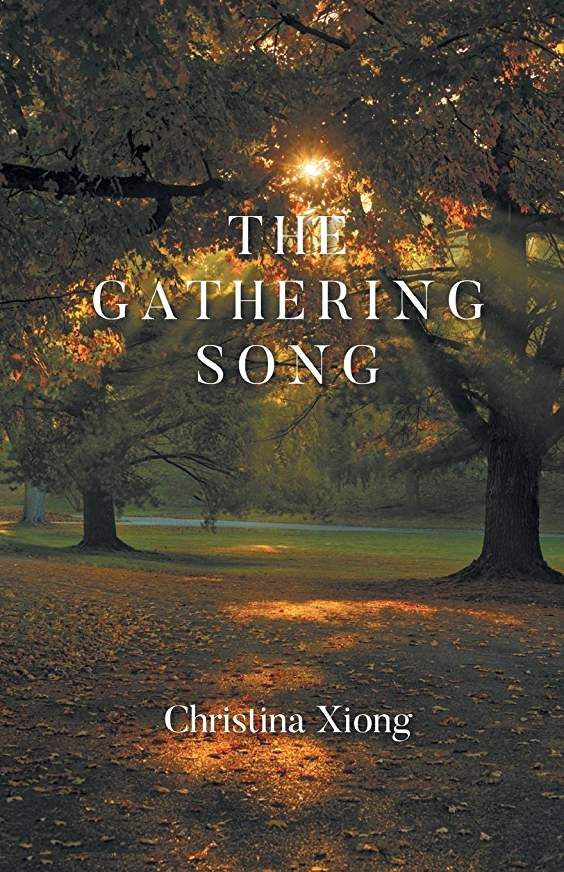
81K-e0ai4-L._AC_UL872_QL65_
Christina Xiong

According to Amazon, “has been published numerous times, including Slipstream and Wild Goose Poetry Review. Christina holds an MA in English and Creative Writing from Southern New Hampshire University and a BA in Literature and Creative Writing from the University of North Carolina at Asheville. She is a certified Story Medicine facilitator and a certified North Carolina peer support specialist. She lives in the foothills of Western North Carolina with her husband and daughter.”

The Interview

1. When and why did you begin to write poetry?

I began writing poetry as a small child. I started out writing short stories first. I always entered the Young Authors programs in elementary school. But I really began writing, poems almost exclusively, in middle school, where I dealt with horrific bullying. I feel like poetry saved my life (even though that sounds like such a cliché). I had a place to express my frustrations with being an outcast. I used poetry as a confidante partly because I lived in a space where figures of authority rarely intervened in my bullying.
There were times I read my poetry to the class, because a teacher would allow me to do this. The response I got from the other students was some of the only positive feedback I ever received from peers. My seventh grade English teacher also helped me during a particularly bad time. She made the class project a novel, put me in charge of it, and pulled me out of my other classes to work on it.

2. Who introduced you to poetry?

My mother introduced me to poetry and literature. We always had books in our house, and I learned how to read, from my older sister, by the time I was four. One of my aunts was a poet, and she gifted me with Emily Dickinson’s collected poems, which was a formative text for me. My mother gave me an anthology of poems when I was ten-years-old, and that is where I first read Muriel Rukeyser who made me want to be a poet. The poem was “Effort at Speech Between Two People.”

3. How aware were and are you of the dominating presence of older poets?

I had a huge gap between undergraduate and graduate school where I barely wrote, and did not publish. I still feel like a baby poet in some ways, even at thirty-nine. I dropped out of high school at fifteen and have struggled with addiction for much of my life. When I went back to community college, I was twenty-five, and it took me three years to transfer to a university, and three more years to get my BA in Literature and Creative Writing. I worked as a housekeeper at a hotel. I was the first person in my family to receive a college degree.

I started out my education with a preference for reading outside of the white male canon of writers. Poets like Sharon Olds, Rita Dove, Adrienne Rich, Elizabeth Bishop, and Ellen Bryant Voigt definitely influenced me poetically. I went through a rigorous literature program at The University of North Carolina at Asheville but I still had a self-directed path to some extent.
I rarely think of older poets as having a dominating presence. There are so many poets I admire who are a decade younger than me, or even younger. I don’t pay that much attention to who other people say “dominates” the poetry scene. I just enjoy what I like and respect people who do the work.

4. What is your daily writing routine?

I generally don’t write daily. I am a stay-at-home parent to a three-year-old, and my partner works long shifts, twelve or more hours a day, on the days he works. I don’t burn the candle at both ends and sacrifice sleep for my writing because by the end of the day, my brain is depleted from parenting. I also have chronic health conditions I manage, so rest is a priority that I can’t shirk for productivity’s sake.
When I have the opportunity to write, it’s usually because my partner has taken our daughter out of the house for several hours. I usually have a plan in my head for which ideas or pieces I will tackle. I go from one draft to another. Sometimes I revise while my daughter naps or watches a movie, but mostly I just squeeze in writing and editing any time I can. I also like to go to a coffee shop and spend several hours working.

I was able to complete graduate school and write my first chapbook at home because my daughter was very young at the time. She took long naps and spent hours inventing her own games. Now that she is older, I am constantly interacting with her.

5. What motivates you to write?

I don’t feel like I have much of a choice. Writing is just how I survive. I love language and the ways we can manipulate it, especially in poetry. Mostly, I want to connect with readers. I sometimes feel misunderstood by the world, as a highly sensitive person, and in my work, I convey something of my perception to readers. Even when my work is misunderstood, I suppose that, to me, the sense of connection, to be seen/heard is still present.

6. What is your work ethic?

Much of my writing happens off the page. One of my earlier mentors always said we had to live in order to write poems. Parenting, community-building, meditation, and experiencing nature are all ways that I work on my writing off of the page and are an important aspect of my work ethic.

My work ethic, at its best, is also gentleness and tenderness toward myself. I don’t try to force my writing. I am a slow writer. I process events slowly, and I approach them when I am inspired rather than when they first occur, or even when I want to write about them. I have my own voice, but I always want to push myself to explore different techniques and form. I am fascinated with the narrative structure in poems and with using sonic effects in subtle, unpatterned, but trackable, ways. My work ethic is to do what I can with what resources I have. I try not to deplete myself or beat myself up for lack of productivity.

7. How do the writers you read when you were young influence you today?

Muriel Rukeyser’s absolute fire is something I return to again and again when my words are looking a bit dim and washed out to me. Sylvia Plath and Anne Sexton, the way they wrote about women’s bodies, motherhood, and domestic life—it just fills me with the certainty that these are topics that I will continue to write about.

8. Who of today’s writers do you admire the most and why?

I have a deep admiration for so many writers. I recently became obsessed with the work of C. A. Conrad. Their work is clean, associative, sharp, and yet deep, angry— often enraged. C.A. is magic to me, really. I admire their generosity because they are willing to share the (Soma)tic rituals used to create their poems. I am fascinated. I have spent a lot of my life studying, practicing, and creating various rituals.

I also really admire Vanessa Angélica Villareal’s work. Her book, Beast Meridian, made me fall in love with form all over again. Her versatility and willingness to experiment both inspire me and almost give me permission to do the same in my work.

There are so many more poets I admire. For supporting me, showing me how to be a better literary citizen, and their talent—their wonderful poetry, Hannah VanderHart, Heather Derr Smith, and Emily Blair are like my poetry siblings.

9. Why do you write?

For survival, like I stated earlier. Honestly, it is also one of the only things I am good at, besides being an excellent cooker of stews and soups, and good at navigating emotions, but even those skills translate well into poetry.

10. What would you say to someone who asked you “How do you become a writer?”

Read widely. Write. Don’t stop. As someone who stopped writing for long periods due to my struggles with mental health and substances, that’s the most important writing advice I have ever heard. Most people will stop; do not be one who stops!

Find your own voice. Being derivative is how many of us learn, but finding our own voice is how we create memorable and compelling writing.

11. Tell me about the writing projects you have on at the moment.

I am working with Liz Howard on editing an anthology of work called It Will Not Be Simple: Motherhood, Mental Illness, and Trauma. This project has been a long-term work of the heart.

I recently completed and submitted a micro-chapbook of poems about relationships called Ghost Monogamies. Working on the micro-chapbook made me remember how amazing it feels to give myself permission to experiment and play in my work; some of the pieces are hybrid, prose, or more experimental than my usual poems. I also did the artwork, cover design, and layout myself. I hope it gets published, but the joy I felt doing the entire book on my own was so satisfying.

On Fiction Wombwell Rainbow Interviews: Jan Stinchcomb

On Fiction Wombwell Rainbow Interviews

I am honoured and privileged that the following writers local, national and international have agreed to be interviewed by me. I gave the writers two options: an emailed list of questions or a more fluid interview via messenger.

The usual ground is covered about motivation, daily routines and work ethic, but some surprises too. Some of these poets you may know, others may be new to you. I hope you enjoy the experience as much as I do.

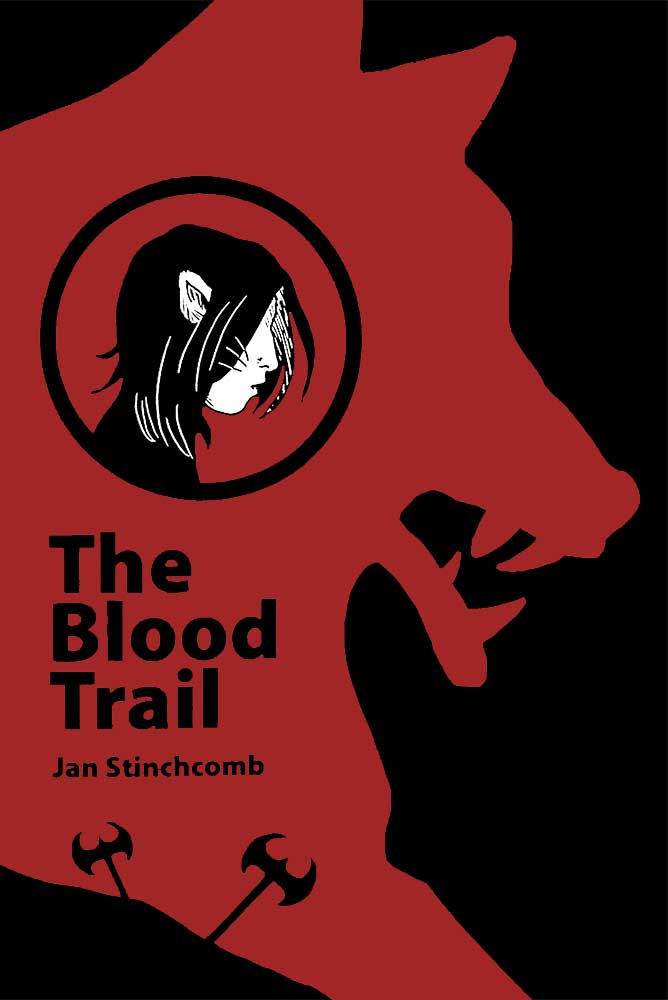
The-Blood-Trail-cvr

Jan Stinchcomb

is the author of The Blood Trail (Red Bird Chapbooks) and Find the Girl (Main Street Rag). Her stories have appeared in Longleaf Review, FlashBack Fiction, Gravel, Monkeybicycle and matchbook, among other places. She has been nominated for the Pushcart Prize and Best of the Net Anthology, was longlisted in the Wigleaf Top 50, and is featured in The Best Small Fictions 2018. Currently living in Southern California with her family, she is a story editor for Paper Darts.

Find her at janstinchcomb.com or on Twitter @janstinchcomb.

To order The Blood Trail:
http://www.redbirdchapbooks.com/content/blood-trail

The Interview

1. When and why did you begin to write flash fiction?

My notes say that back in 2004, when I had a baby and a toddler, I placed 15th in the Writer’s Digest Short Short Story Competition. There were almost 8,000 entries. I got a nice certificate, but what I really gained was a sense of confidence. I knew I could do a lot with only a few words.

2. Who introduced you to flash fiction?

I knew very short stories existed. I had read them. I remembered a tiny Tolstoy piece called “After the Ball” from when I was a graduate student. And then, when I was writing and trying to publish, I kept seeing contests for pieces with a limit of 1,000 words. I loved the discipline this required and the challenge of establishing a complete psychological dynamic without much description or back story. Finally, I began taking online classes with Kathy Fish, a flash master and one of the best teachers out there. She encourages her students to trust the unconscious and to write without self-editing.

3. How aware were you of the dominating presence of older flash writers?

I wasn’t, and this was perhaps a good thing, as my ignorance kept me from getting too intimidated. I simply wasn’t aware of there being a tradition of flash or micro writers. I somehow didn’t know about Lydia Davis, for instance. For me, fiction was composed of the “traditional” short story (roughly 20 pages) and the novel. I didn’t know about people specializing in flash or using it to structure longer works.

4. What is your daily writing routine?

I get the most done early in the morning after my kids have gone off to school but before the whole city is awake and hopping. I love writing early, when everyone else is asleep, both my family members and all the people who live in our building. It’s my personal witching hour.

5. What motivates you to write?

This is my work. I couldn’t get through this life if I didn’t feel I had made something while I was here.

6. What is your work ethic?

I try to write and publish several stories a year, while always aiming to get a longer manuscript picked up. That would be my goal. Sometimes it works out and sometimes it doesn’t. It’s equally important to be an involved member of the writing community. My work at Paper Darts allows me to facilitate the publication of people whose stories deserve to be heard.

7. How do the writers you read when you were young influence you today?

Another great question. I grew up on the classics and eventually majored in Comparative Literature. For years and years all I read were 19th-century novels, plays and longer short stories. I am grateful to have had this education but I sometimes feel far from it. Lately it seems that my interest in popular culture and the horror genre guides my work more than the classics ever did. Kafka and Gogol would be the exception. And Chekhov, always.

Of course, the most important and enduring influence, my Bible, would be the fairy tales, all of them, with an emphasis on Grimm and the Russian tales. And “Red Riding Hood” in all her incarnations. I have an entire bookshelf dedicated to fairy tales, and it has travelled with me to every new address.

8. Who of today’s writers do you admire the most and why?

This is a trick question because I could write several pages of adoring lists. I greatly admire Vi Khi Nao for her originality and her reinvention of language. She works in several genres. R.O. Kwon has debuted with a perfect short novel (The Incendiaries) that somehow contains every important thing in the world.

Long-time favorites include Alyssa Nutting and Karen Russell. Lily Hoang. Carmen Maria Machado. I also love the graphic novels of Emil Ferris and Nick Drnaso.

I am a fan of The Best Small Fictions annual anthologies and the Wigleaf Top 50 List, which is available online. I love all my flash friends and admire anybody who is trying to be a writer.

9. Why do you write?

I could not imagine doing anything else. The years before I was writing are a memory of pure agony. I was strangling myself by not taking the risk and doing the work.

10. What would you say to someone who asked you “How do you become a writer?”

Brace yourself. That’s the first thing I would say. It’s going to be a long and painful road of rejection and self-doubt. Years and years. The good news is that it’s never too late to start and that all experience is valuable.

You need to find other writers. This doesn’t necessarily mean that you have to move to New York or Los Angeles, but you do have to find colleagues. You don’t have to get the MFA but it’s probably a good idea to take a few classes. That’s where you meet the people who will be your colleagues. They’ll be in the critique group you set up outside of class. You have to be around other writers because non-writers have NO idea what you’re trying to do or what kind of life you lead or how your mind works. It’s painful and isolating. I know people have strong views about social media, but literary Twitter has been very helpful for me.

My spouse has been incredibly supportive over the years. If you’re around people who don’t understand this endeavour or undermine you, you need to drop them. Today.

11. Tell me about the writing projects you have on at the moment.

I recently published (February of 2019) a small chapbook of dark fairy tales, The Blood Trail. I have stories coming out in Synaesthesia and Gargoyle. I am shopping around a hybrid novel that is mostly domestic horror, set in Southern California, where I have been living since 2013.

In the past two days I’ve drafted a new flash piece and a new micro. I can’t really complain. Now I have to wait and see which direction our world will take.


Wombwell Rainbow Interviews: Gary Bills

Wombwell Rainbow Interviews

I am honoured and privileged that the following writers local, national and international have agreed to be interviewed by me. I gave the writers two options: an emailed list of questions or a more fluid interview via messenger.

The usual ground is covered about motivation, daily routines and work ethic, but some surprises too. Some of these poets you may know, others may be new to you. I hope you enjoy the experience as much as I do.

Gary Bills

was born in Wordsley, in the West Midlands, and currently lives in Herefordshire.  

He has published two poetry collections, which are The Echo and the Breath (Peterloo Poets, 2001) and The Ridiculous Nests of the Heart (bluechrome, 2003).

In 2005, he edited the anthology, The Review of Contemporary Poetry for bluechrome, sold on behalf of the Stroke Association.

He has won various prizes, including Poetry on the Lake’s Bill Winter Award in 2003, for the best short poem.

Gary is a graduate of Durham University, where he studied English Language and Medieval Literature. He is married to Heather, an artist, and the couple have a teenaged daughter, Isabella.

The Interview

1. When and why did you begin to write poetry?

Well, I first wrote poetry as an exercise at school, and I’d have been about 11 or 12. My efforts made the school magazine, which was gratifying; but I’d been reading poetry fairly regularly from about the age of eight – in fact, I remember reading Burns at that age, and Walter de la Mare, and Yeats – and so it was probably inevitable that I would try to write poetry myself at some point.

2. Who introduced you to poetry?

I think I probably introduced myself – reading anthologies of verse at Lawnswood Primary School, in Wordsley.
3. How aware were and are you of the dominating presence of older poets?

I don’t think I ever thought like that when I was younger. These days, I often get the impression of a youthful band of poets who are very interested in prizes, and themselves and very little else. Older poets, like me – I’m 55 next birthday… well, they can feel left out in the cold at times! It’s great you gave me a nudge, Paul! I’m very grateful!.

4. What is your daily writing routine?

I write for a living, as a journalist, most days. As a poet, and as a novelist – I write when I need to get something down. I can write all day, even for several days, or just for a few hours or so.

5. What motivates you to write?

Sometimes I just hear a line, or a good idea strikes me suddenly, and then I have to write.

6. What is your work ethic?

I don’t have one. Writing is not about rules, I’d say.

7. How do the writers you read when you were young influence you today?

I think I was drawn early on to poets who knew their craft and were capable of writing a musical line – such as WB Yeats. I still believe such things are rather important.

8. Who of today’s writers do you admire the most and why?

I saw James Fenton perform at the Ledbury Poetry Festival a few years ago – I say perform, because he really did perform, putting everything into his reading and engaging with the audience. I wish I could do that! To hear “The Ballad of the Shrieking Man” performed like that was something I shall never forget.

9. Why do you write?

I write, I think, when my subconscious has been brewing something up and finally allows it to enter my ‘normal’ thought patterns. Then I have to get the words down, you see?.

10. What would you say to someone who asked you “How do you become a writer?”

I think I can say no more about that, other than what I’ve said already.

11. Tell me about the writing projects you have on at the moment.

By choice, I publish poetry these days almost exclusively in HQ – a magazine run by a friend, Kevin Bailey. I have a third full collection ready to go, but no publisher at present! My first collection, The Echo and the Breath, came out with Peterloo – and Peterloo is no more, alas! My second collection, The Ridiculous Nests of the Heart, came out with bluechrome – and bluechrome also no longer exists….I’ve been unlucky, you might say.
This said, a novella, “A Letter for Alice“, should be out with a New York-based publisher in April or May, and I’m looking forward to that!


Wombwell Rainbow Interviews: Robin Houghton

Wombwell Rainbow Interviews
I am honoured and privileged that the following writers local, national and international have agreed to be interviewed by me. I gave the writers two options: an emailed list of questions or a more fluid interview via messenger.
The usual ground is covered about motivation, daily routines and work ethic, but some surprises too. Some of these poets you may know, others may be new to you. I hope you enjoy the experience as much as I do.
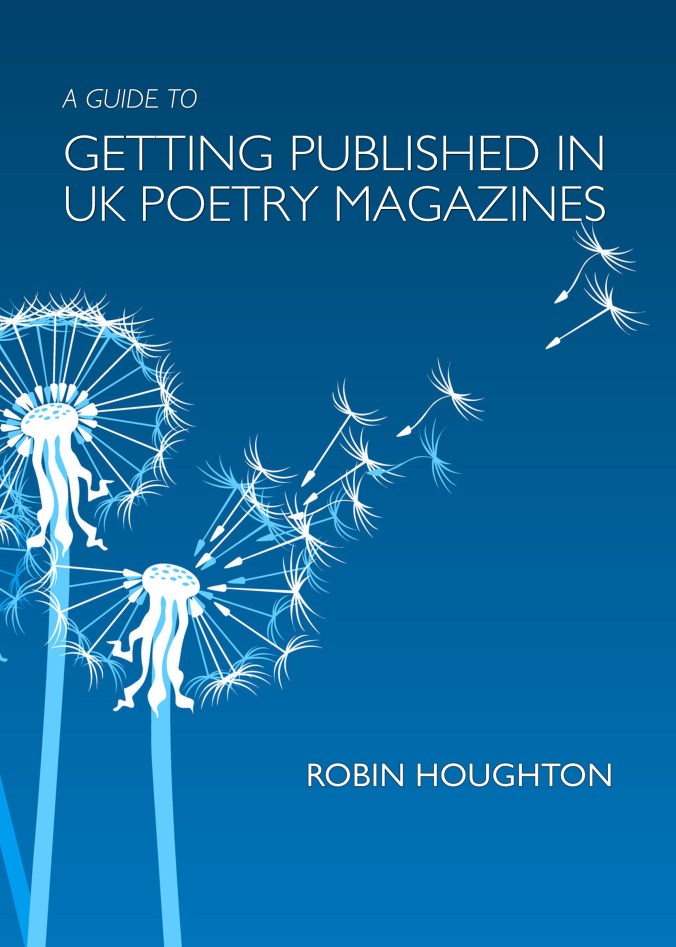
Basic CMYK
Robin Houghton
Robin Houghton’s latest pamphlet All the Relevant Gods (2018) was a winner in the Cinnamon Press Pamphlet Competition. She is widely published in magazines and in numerous anthologies including The Best New British and Irish Poets 2017 (Eyewear). She won the New Writer Poetry Competition 2012, the Stanza Competition in 2014 and the Hamish Canham Prize in 2013. Her first poetry pamphlet The Great Vowel Shift (2015) was published by Telltale Press, the poets’ publishing collective she co-founded. She has also self-published a hand-made mini-pamphlet, Foot Wear (2017). A former Nike marketer, for the last eighteen years Robin has worked in online communications and she’s written three commissioned books on blogging, including ‘Blogging for Writers’ (Ilex/Writers’ Digest, 2014). Her most recent publication is a manual for poets called ‘A Guide to Getting Published in UK Poetry Magazines’ (Telltale Press, 2018). Her poetry blog is robinhoughtonpoetry.co.uk
The Interview

1. What inspired you to write poetry?

I think I was more motivated than inspired. I started when I was at school – I got good marks for essays and poems, which I enjoyed, so it made me write more. I didn’t really write poems after I left school, apart from the odd outpouring of angst – which was just for my own benefit, there was nothing crafted about it. It was much later that I went back to writing poetry and finally took it seriously. When I was young I ardently listened to song lyrics and wrote them down – Al Stewart, Paul Simon, Steely Dan – much of which certainly influenced me and in my mind would pass for poetry even now.

2. Who introduced you to poetry?

My English teacher at school, Dr Upadhayay. She got us reading Ted Hughes, Thom Gunn, Stevie Smith, Brian Patten, mid 20th-century poets mostly. We weren’t very responsive in class I’m sad to say, I think she probably had a miserable time teaching us. Especially as we were more interested in learning the lyrics to the latest song by the Osmonds or whatever.

3. How aware were you of the dominating presence of older poets?

Not at all, do older poets dominate? When I was a teenager I assumed all poets were dead, including (to my shame) Ted Hughes, whose work I loved and who I discovered years later had been touring and talking to school groups at around the time that I was discovering him. If I’d known that I would have asked Dr Upadhayay to invite him to our school. These days it’s younger poets that dominate, it seems to me! People in my age group and demographic just aren’t seen as sexy or relevant. Of course there are a few exceptions. I hope that doesn’t sound like a moan – it’s just the way it is! I’ve been a professional marketer for 30 years so I know how things work.

4. What is your daily writing routine?

Oh dear, I can’t say I have one. If I have a project on the go, especially a commission or client work (I’m a commercial writer as well as a poet) then I might be at my computer all day and into the evening. Or when there are deadlines approaching. Other times I may take whole days off. I’m very fortunate in that I can organise my time flexibly. Having worked for myself for nearly twenty years I’m fairly good at understanding what a project is going to entail, prioritising my time, juggling various things and getting on with the work. I don’t tend to write freehand, I much prefer writing on a keyboard.

5. What motivates you to write?

Poetry? Anything that strikes me as interesting could be the starting point for a poem. Sometimes there’s an outside motivator – a competition, a magazine’s theme. I often feel like writing after I’ve been reading poetry, which is one reason I don’t understand people who write poetry but don’t read poetry. I also get ideas while at readings. I’m a bit bad like that – my mind will drift off on an idea for a poem instead of listening to the poet who’s reading. Very rude.

6. What is your work ethic?

I think I covered this in Q4. When I have a job on, I deliver. I don’t miss deadlines. Poetry doesn’t feel like work, because I don’t do it for money, or at least when I do get paid it’s not enough to feel like work. But I do work at it, because the point of it (for me) is to get better at it (see answer to Q9).

7. How do the writers you read when you were young influence you today?

I still go back to Hughes, Larkin, Auden and the like but to be honest I didn’t read widely when I was young. I came to the canon very late and I feel I’m still playing permanent and hopeless catchup. I once sent a manuscript to a poet/editor for critiquing and he told me any mentoring he could offer me would be a very steep learning curve because I have ‘no literary education’. Poetry workshops and courses have opened me up to poets I otherwise wouldn’t know – Cavafy, Tranströmer, Akhmatova for example. And I love the New Yorker poetry podcast where I’ve encountered many US poets.

8. Who of today’s writers do you admire the most and why?

(Presume you mean poets?) This is hard – plenty of names come to mind but not sure I can say why, beyond the fact that I’ve been absorbed, surprised and/or moved by their poems. It’s often individual poems or collections I’ve enjoyed and I couldn’t say there’s anyone whose entire oevre I’m familiar with. And all poets write bad poems occasionally! If I read a poem and think I WISH I’D WRITTEN THAT! then that’s a pretty good marker. Of the big guns Don Paterson, Carol Ann Duffy, Sharon Olds, Alice Oswald come to mind right away, Carol Ann particularly not just for her writing but for all she does for poetry. I’m fascinated by the work of Mary Ruefle. Recently I’ve been enjoying work by Zaffar Kunial, Kei Miller, Lorraine Mariner… beyond that I wouldn’t want to single people out as there are huge tranches of poets writing fine poetry many of whom I admire in various ways.

9. Why do you write?

Poetry? For my own enjoyment, a love of language and the endless quest to help people see and feel things in ways they haven’t before, to bring joy or wonder or anger or some sort of emotion to the reader. It’s also about practising until you get better – the best you can be. For me, I have to think I can get better. When I reach the point where I think I can’t get any better at it, I will stop writing.

10. What would you say to someone who asked you “How do you become a writer?”

I think it starts with a love of reading. You could still write, without reading anything, but it’s by reading you become a more fluent writer – you learn what it takes to communicate ideas, to develop styles, to use the whole armoury of language, irony, humour, nuance and magic at your disposal.

11. Tell me about the writing projects you have on at the moment.

A few months ago I wrote ‘A Guide to Getting Published in UK Poetry Magazines’ and it’s now sold out – crazy! I’ve also just updated my quarterly list of poetry magazines submissions windows, which has become quite a big job. A poet friend tells me I do these kinds of things as displacement activities, and I think he has a point. In January I gave myself ‘permission’ to focus on writing poetry, and so far so good. I’ve got new a pamphlet that I’m hoping will find a publisher. Not sure yet about a full collection, we’ll see.

“Her Power Leaps” and other poems for International Women’s Day

Good thoughts,

Jamie Dedes's avatarJamie Dedes' THE POET BY DAY Webzine

Art is when you hear a knocking from your soul … and you answer.” Terri Guillemets


In solidarity with all women and their children I offer four of my “women poems” written and originally published here and elsewhere between 2011 and 2017

HER POWER LEAPS

she’s present

returned to bite through the umbilical of tradition,
to flick her tongue
and cut loose the animus-god of our parents,
like a panther she roams the earth, she is eve wild in the night,
freeing minds from hard shells
and hearts from the confines of their cages,
she’s entwined in the woodlands of our psyches
and offers her silken locks to the sacred forests of our souls ~
naked but for her righteousness,
she stands in primal light,
in the untrammeled river of dreams
the yin to balance yang
the cup of peace to uncross the swords of war ~
through the eons…

View original post 721 more words

Wombwell Rainbow Interviews: John Saunders

Wombwell Rainbow Interviews

I am honoured and privileged that the following writers local, national and international have agreed to be interviewed by me. I gave the writers two options: an emailed list of questions or a more fluid interview via messenger.
The usual ground is covered about motivation, daily routines and work ethic, but some surprises too. Some of these poets you may know, others may be new to you. I hope you enjoy the experience as much as I do.

John Saunders

is a founder member of the Hibernian Writers’ Group. His collections are After the Accident (Lapwing Press, 2010) and Chance (New Binary Press, 2013). He is one of three featured poets in Measuring, Dedalus New Writers, 2012. John’s poems have appeared in journals and anthologies in Ireland, the UK and America, on many online sites. .and in The New Binary Press Anthology of Poetry, The Stony Thursday Book, The Scaldy Detail 2013, Conversations with a Christmas Bulb (Kind of a Hurricane Press, 2013), The Poetry of Sex, (Penguin, 2014), Fatherhood Anthology (Emma Press UK, 2014), The Fate of Berryman Anthology (Arlen House, 2014) The Launchpad Children’s poetry book and The Lion Tamer Dreams of Office Work, Hibernian Writers Anthology (Alba Press, 2015).

The Interview

1. When and why did you start writing poetry?

When I was at school I was attracted to the reading of poetry. I remember being fascinated with Shakespeare’s sonnets and searching to read the many that were not on the syllabus. To this day I have a fondness for the sonnet form and tend to shape many of my poems into sonnets. At that time I did not write poetry but I found myself studying not just the content of poems but also the structure and tone. I would dissect a poem like a science experiment to see what was inside it. Unconsciously I suppose that’s when I learned how a poem was constructed although it was much later when I began to write.
Looking back now I realise that my father’s interest in poetry was a strong influence. He had to leave school early to earn money and became a carpenter. I think if he could he would have been a teacher of English. He was widely read in history, literature and poetry and often quoted lines from poets such as Wordsworth, Keats and their contemporaries. I have a fond memory of sitting with him when I was about eight whilst he read aloud Gray’s Elegy Written in a Country Churchyard.

It was in middle adulthood when I returned to the reading of poetry and then eventually to writing. Like many writers I admire specific poets and was spurred on to find my own expression. I very much write for leisure as opposed to making a living which of course is impossible except for the very few, unless you want to spend time teaching poetry which i don’t.

Why do I write? Poetry for me is about personal expression and observation. I am as likely to write a poem about small thing such as watching someone cook a pancake to the big issues of love, war and death. For me all of the small observations of this world can be big issues and can be expressed in poetry. I like form and more recently have become engaged in the long poem form. I am more interested in writing for its own sake than for publishing although its nice to be published.
2. How aware are and were you of the dominating presence of older poets traditional and contemporary?

Most of the work I was exposed to during the school years were the older ‘dead’ poets of the 18th/19th century. Few of them stimulated me the way Shakespeare did although I did like Keats partly , I think because of his intriguing but short life which I found romantic in the imaginative sense.

After school I became more engrossed in 20th century writing and of course being in Ireland found Kavanagh, Yeats and many others including Heaney. Larkin and Hughes were also enormously influential. Of course there are numerous contemporary poets from all over the world that I like and I often revisit their work.
I think all poets strive to be like those that went before and often copy styles. I suppose this is a natural learning process on the journey to finding your own voice to use a cliche. For me Kavanagh and Heaney have dominated Irish writing in my lifetime and their effect is still seen in contemporary writing. That draw on the natural, the land, the familiar.

3. What is your daily writing routine?

I don’t have a daily routine. As I work fulltime at a non writing job my writing pattern is subject to all of the demands of a working life.
When I do sit down to write I usually have an idea or a subject to develop. In recent years I have often developed rough ideas and even specific lines in my head and may not write anything down until a rough shape has emerged.

Sometimes a word or phrase stays with me and becomes the genesis of a poem.
Despite technology I still like to do a first handwritten draft which I might edit a couple of times before moving to a word processor. There is something about hand writing which gives me comfort and satisfaction which I know is generational.
I have rarely sat down to a blank page without some idea in my head.

4 What motivates you to write?

Always, its a means of personal expression and reflection. In the early days i wrote to be read. I wrote with a view to being published. In that sense I think I was motivated to impress a reader the assumption being that everything one wrote would see the light of day.
Things have changed since then. I now write for myself and to please myself. There is no longer a reader in waiting, an audience wanting to find me in a magazine. I still submit poetry and some of it is published but the urgency to do so has diminished significantly. I write because I can. Because I want to.
5. How do the writers you read when you were young influence you today?

The poets I admire most some of whom I have mentioned all have the power to create the extraordinary from the ordinary. For me that’s the essence of a good poem. Most people’s lives are mundane. time given to work, survival, sustenance. A poetry which captures that is to me more significant than the sometimes grandiose descriptions of love, death, god, and so on. He any and Kavanagh, for example could find poems in everyday existence which they crafted into pieces of art.
Contemporary poets like Billy Collins, Carol Anne Duffy and many more do this with ease.

I also admire poems that surprise either by the unusual use of words or phrases or with punchlines. The American poets Galway Kinnell and Raymond Carver were in my opinion masters of surprise.

6. Whom of today’s writers do you admire the most and why?

There are so many writers I admire and revisit. If by contemporary one means the living poets, there is a handful including Micheal O’ Loughlin, Paula Meehan, Tony Curtis, Thomas Kinsella, Carol Anne Duffy, Simon Armitage, Robin Robertson and A E Stallings.
Of the more recently dead, apart from those already mentioned I like Michael Hartnett, Elisabeth Bishop, Dennis O’ Driscoll and Phillip Larkin.
Why do I admire these writers? I’m not sure I can rationally explain why. All of these and others have mastered form and as I said earlier translate the mundane into something special. They are also very readable, what is sometimes described as accessible and I don’t mean this in a derogatory way. In fact for me being able to write an accessible poem whilst remaining true to the technique of poetry and form is success. I am reminded of Heaney’s reply during an interview where he said that writing arcane poetry was not necessary and in fact was downright rude to the reader. There is an inherent snobbery in poetry where some poets think the achievement of extreme obliqueness is a prerequisite of a good poem. I disagree. Like wine, for me, the best poem is the one you like.

7. What would you say to someone who asked you “How do you become a writer?”

The short answer is ; write. I believe that anyone can become a writer once they have the fundamental literacy skill. Even someone who cannot write could compose words into a meaningful shape. After all poetry was originally aural.
In the context of the modern world we can all write. The quality of such writing is of course determined by skill, technique, knowledge, motivation and so on. In other words we have an innate ability to create. What we create can be nurtured.
I am reminded of Kavanagh’s quote that the hardest part of writing is keeping your arse on the seat. This suggests of course that writing is a task to which you apply yourself and that is definitely true. It’s worth noting also and it has been well quoted that you cannot write poetry all day. Most poets spend most of their time on the business of poetry;
reading reviewing editing teaching and so on and much less time actually engaged in creative writing.
So what advice do I have? I think good writing is contingent on wide reading,
not only of poetry but also prose. The tools of creative writing are vocabulary. A writer need to have as wide a vocabulary as possible to give him the wherewithall to produce good writing.

Writing poetry demands an understanding of technique so the reading of other poets gives great insight. I rarely read a poem without interrogating its structure and form to identify new ways of expression.

So for any one wishing to write, read widely ,learn from what others have done and them practice. While you may initially start out emulating other writing styles you will eventually with sufficient practice and time find your way of writing. Your own voice.

8. Tell me about the writing projects you have on at the moment.

As ever I have a number of projects which are best described as works in progress. I am finalizing a manuscript of children’s poetry which I have been working on over a number of years and have published some of them in magazines. I find writing for children an exhilarating experience and one that’s very different from writing for adults.
I’m also presently in an ancient Greece phase and have just completed a manuscript of fifty-two sonnets each one devoted to a god. Similarly and as an outcome of that work, I am writing a long poem on the life of Herakles. This is in the form of ten-line stanzas of ABABABABAA rhyming. I’m on the 20th stanza and he’s only just completed the 12th labor!
Finally, I have a manuscript ready on the theme of mental Ill health which is partly based on historical events of how people were treated on the past where the only option was the Victorian Asylum system.

“Gust Is Deaf, Hills Are Blind”. . . and other responses to the last Wednesday Writing Prompt

Very grateful to have four poems featured in blazingly creative company in The Poet By Day. Many thanks to Jamie.

Jamie Dedes's avatarJamie Dedes' THE POET BY DAY Webzine

“It’s that magnificent interlude in New York between winter and spring, when you feel the warmth stirring, and you remember that the dreadful naked trees will inevitably sprout tiny green buds, soon. Everyone rushes into the parks, the streets–and you even forget that, very soon , summer will come scorchingly, dropping from the sky like a blanket of steam…”  John Rechy, City of Night


In response to the last Wednesday Writing Prompt, Another Kind of Beauty, February 20, 2019, poets Paul Brooks, Cubby (Sonya Annita Song), Irma Do, Jen Goldie, Frank McMahn, Sonja Benskin Mesher, Marta Pombo Sallés, Anjum Wasim Dar share the joy and inspiration they find in nature. Special thanks to Irma and Anjum for the added pleasure of their photographs and to Anjum for her artwork. Nicely done.

Readers will note that links to sites are included when they are available so that you…

View original post 2,378 more words

Wombwell Rainbow Interviews: Chris Hemingway

Wombwell Rainbow Interviews

I am honoured and privileged that the following writers local, national and international have agreed to be interviewed by me. I gave the writers two options: an emailed list of questions or a more fluid interview via messenger.
The usual ground is covered about motivation, daily routines and work ethic, but some surprises too. Some of these poets you may know, others may be new to you. I hope you enjoy the experience as much as I do.

Party in the diaryhouse final

Chris Hemingway

is a poet and songwriter from Gloucestershire. His previous books include Cigarettes and Daffodils, and The Future. Chris helps with the organisation of the Cheltenham Poetry Festival and the Gloucestershire Writers’ Network. He was once described in Bristol’s Venue magazine as “suffering from hip Sunday school teacher with guitar syndrome”, but that was probably just because of the spectacles…

The Interview

1. What inspired you  to write poetry?

Lyrics and lyricists, specifically hearing “I am the Walrus” and “Life on Mars”, and reading Bob Dylan’s “Tarantula”, all at about age 15.

2. Who introduced you to poetry?

So following on from this, it may well have been reading the NME, and Charles Shaar Murray’s illustrated record bios of The Beatles and Bowie (12 inch square books, including reproduction sleeves).  I passed up on English Literature at school, picking technical drawing instead, so I don’t have any formal education in poetry (I haven’t drawn any bolts since 1978 either).

3. How aware were you of the dominating presence of older poets?

Ha, that sounds like a loaded question !  Not so much about age, but I know there’s a poetry establishment, and I’m guessing I’m not that good a fit for it.

4. What is your daily writing routine

I’d very much like to have a regular writing routine….I’ve got a full time job (working in finance and statistics) and have a teenage daughter, so need to fit my writing round these priorities !  I can start off poems in my head (and edit them to an extent), so getting them written down takes up less time.  I find walking and swimming good for starting up writing, and I do have routines for these.

5. What motivates you to write?

I think it’s to be able to articulate something (an idea, feeling or memory) concisely, and hopefully to do so in an original way.  That’s something  I value.  This question also made me think of a Michael Palin interview, where he suggested part of what drove Monty Python was the idea that if they wrote about something, they wouldn’t become it !

6. What is your work ethic?

I like to act on ideas, and see them through.  I’m not a dedicated editor though, I get impatient to move onto the next thing.

7. How do the writers you read when you were young influence you today?

The writers I was reading (or watching, or listening to) when I was between 14 and 23 definitely influenced me most intensely, and probably continue to do so.  I think the main things I’ve kept with me from these artists are a sense that writing should take the reader to a particular point/ moment, a sympathy and curiosity for outsiders, and that writing can be visual.

8. Who of today’s writers do you admire the most and why?

Probably Simon Armitage, for the range he writes about, and how much ground he can cover in a single poem, and also writers like Anna Saunders, Kate Garrett and Stephen Daniels, for the way they seem able  to really inhabit their poetry.

And outside of poetry, David Peace and Nick Cave, for sheer genius !

9. Why do you write, as opposed to doing anything else?

I like the immediacy of writing (that’s why I’m not a novelist), and the simplicity of using words (I’m also a musician, but not a prolific one).  I invest a lot in my parenting and day job roles, so prioritising writing can only be for specific occasions !

10. What would you say to someone who asked you “How do you become a writer?”

That if you’ve started and finished a piece of writing, then you’re a writer. But not to limit yourself to particular forms, or subject matter.  Also, that although you’ll have a good sense about what works and what doesn’t, try and get feedback, from friends, local writing groups, writing classes or workshops.  At that point I’d probably plug the groups I’m involved with  locally, (Gloucestershire Writers Network, Cheltenham Poetry Festival, New Bohemians@Charlton Kings ) and also the Squiffy Gnu poetry Prompt Group, which is on Facebook, so potentially international..

https://squiffygnu.wordpress.com/about-squiffy-gnu/

11. Tell me about the writing projects you have on at the moment.

I’ve had a pamphlet (“Party in the Diaryhouse”) recently published by Picaroon Poetry, so I’m promoting this (including readings in Worcester, Bristol, Cheltenham and Sheffield coming up, but I’m keen to do more !), and also developing my website.  I’m completing  and sorting poems for my second pamphlet, as well as regularly writing and (fairly) regularly submitting material for magazines and journals.  More links below

Thank you Paul, I’ve enjoyed doing this !