Wombwell Rainbow Interviews: Melanie Branton

Wombwell Rainbow Interviews

I am honoured and privileged that the following writers local, national and international have agreed to be interviewed by me. I gave the writers two options: an emailed list of questions or a more fluid interview via messenger.

The usual ground is covered about motivation, daily routines and work ethic, but some surprises too. Some of these poets you may know, others may be new to you. I hope you enjoy the experience as much as I do.
51ixxpxelxl._sx326_bo1,204,203,200_

Melanie Branton

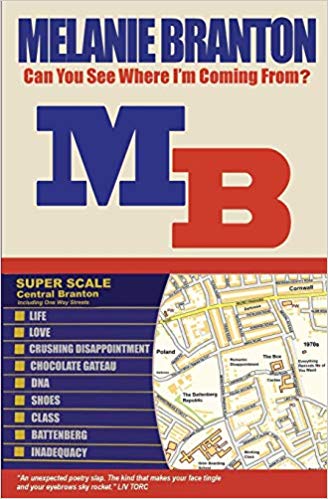
is a spoken word artist and poet from North Somerset. She has two published collections, Can You See Where I’m Coming From? (Burning Eye, 2018) and My Cloth-Eared Heart (Oversteps, 2017). Her work has been published in journals, including Algebra of Owls, Atrium, Bare Fiction, The Frogmore Papers, The High Window, The Interpreter’s House, Obsessed With Pipework and Prole. She has also reached three national slam finals and performed at numerous spoken word nights and arts festivals, including Womad.

https://melaniebranton.wordpress.com/   https://www.facebook.com/melaniebrantonpoet/

Twitter: @sapiencedowne

The Interview

  1. When and why did you begin to write poetry?


I don’t honestly remember. I know I had begun writing poetry by the time I was five, because I have a fleeting memory of a poem I wrote then and know it wasn’t my first. I wrote poetry continually and prolifically until I was about 20. Then some cutting criticism from a university lecturer made me feel that I was gauche and talentless and my poetry was crap and I stopped writing for nearly twenty years (although I continued to read and love poetry).

I started writing it again in my late 30s, when I was caring for my elderly parents. It happened by chance. I wanted to find an activity or group I could join to give me some time out of the house, but couldn’t join a theatre group or choir because the uncertainty of my parents’ health meant I couldn’t commit to being available for set performance dates. Then I saw a poster for a poetry writing group and thought, “That sounds fun and it’s something I could dip in and out of.” As soon as I went to one of their meetings it felt like coming home.

Then I went to a poetry slam when I was 46, just after I’d stopped caring for my parents, and was instantly hooked. That’s how I got into spoken word.

  1. Who introduced you to poetry?

I don’t know where I got it from. My parents had no interest in poetry (although they recited nursery rhymes and nonsense rhymes to me, as I suppose most parents do). They were madly aspirational and wanted my sister and me to have the education they hadn’t had, so surrounded us with books and made sure we had library cards practically as soon as we could walk, so I may have come across poetry in books or on children’s TV. Once she saw it was an interest of mine, my mother encouraged it, by buying me poetry books and praising my poems and I doubt if I would have become a poet without her.

3. How aware were and are you of the dominating presence of older poets?

I’m not entirely sure what this question means. Looking through other poets’ response on your website, many seem to have taken it as “How aware were you of previously published or well-regarded poets or poets of the past influencing your work and stopping you finding your original voice?” Others seem to have read it as “How aware were and are you of the literary canon?” I have become more and more aware of it as I’ve got older and I think this awareness does hold me back. I sometimes meet young spoken word poets who haven’t read a lot of poetry yet and although I think they need to read more if their poetry is going to develop, not having read it is in a way quite liberating for them, because they’re not afraid of being cliched, they’re not afraid of breaking the “rules”, because they don’t yet know what the clichés and the “rules” are. They just write and write and assume everything they write is bloody brilliant and through that process of writing they get better. Whereas I’m often too hesitant to finish things, because I’ve got this internal voice saying, “That’s been said before”, “Ooh, that’s a mixed metaphor!”, “ ‘Shards’? Seriously?” etc.I first read the question, though, as, “How aware were you of older poets hogging all the career opportunities and not letting young poets like you have a crack at the cherry?”

In my case, especially when I returned to poetry in my 30s and 40s, many of the poets who were “dominating” the scene, especially in spoken word, but also in page poetry, were actually much younger than me. I really think we have to get away from this idea that older poets are stifling and “dominating” younger poets and that young poets need all the encouragement and help. It’s ridiculous to suggest that Andrew McMillan and Martha Sprackland needed more help to get onto the first rung of the poetry ladder than a 40-year-old factory worker who discovered poetry on an adult literacy course or a 50-year-old housewife who only had time to write seriously once her children had left home.

3. What is your daily writing routine?

I don’t really have one. I know that makes me sound amateur and dilettante and hopeless and I keep meaning to establish one, but at the moment I write when I have the time and when the Muse comes to me, with no fixed pattern (although I am grateful to journals with submissions deadlines, especially those with set themes, because there’s nothing like a deadline to give the Muse a good kick up the arse).

5. What motivates you to write?

It depends. Sometimes it is pure self-expression – when I am hurt or angry or depressed or in love, I just need to let it out on paper.

Sometimes it’s something that I’ve read – it could be a story in a newspaper or it could be a mundane line in a notice or on food packaging that means something different when taken out of context.

Sometimes I want to explore an idea and find out what I think about it. I wrote my most recent collection, Can You See Where I’m Coming From?, sifting through my childhood memories and trying to explore my fractured sense of class and national identity.

I attend a local writers’ group (see answer to Q. 1) where we get set a theme every month and that is enormously motivating and forces me to write about topics I wouldn’t have chosen – I have produced some of my best work in response to these prompts. It’s also very helpful as it’s a very accepting, non-judgemental group and I take greater risks when writing for them, as I’m not scared to make mistakes in that supportive atmosphere.

I teach English part-time and it is surprising how often I have been inspired to write a poem about a writer or a topic I am teaching: I have a poem about almost every writer on the ‘A’ level English Lit syllabus, a couple of poems about the history of the English Language, and I use grammar as a metaphor so often in my poems that it’s becoming a bit of a cliché.

6. What is your work ethic?

I’m basically very lazy.

7.  How do the writers you read when you were young influence you today?

The two writers I most admired as a teenager were Roger McGough and John Betjeman. I don’t like them as much as I used to and I don’t write anything like either of them, but occasionally I can hear their voices coming out in my work, more so than the voices of many of the poets I most admire now. And I hope I have taken that light touch that they have, that ability to make a serious point more poignant by not overlabouring it and giving it a comic spin.I’ve always been a sucker for a ballad and I’d like to think that some of that passionate use of rhythm and compact storytelling has carried over into my verse.

I also studied Philip Larkin for ‘A’ level and he continues to influence me hugely – I love his unpretentious use of language, the way he conveys a huge amount through sudden changes in diction, the way he uses line breaks to create ambiguity, the way he’s able to expose his own deficiencies and unpleasant features without either trying to justify them or angling for pity.

I have always adored Seamus Heaney and even today, if a poem of mine isn’t working, I look at the ending and think “How can I make this more like a Heaney ending?” and nine times out of ten it fixes the problem.

8. Who of today’s writers do you admire the most and why?

Too many people to mention. Here’s a few: Selima Hill, whose voice is utterly inimitable. She’s accessible, funny, unpretentious, but at the same time difficult, surreal, shocking, and her poetry works on many, many different levels. She can suggest a detailed, disturbing story in just a few lines.

Raymond Antrobus, who straddles literary poetry and spoken word effortlessly and like many great writers is preoccupied with exclusion and not knowing where he belongs, as a mixed-race, working-class, hearing-impaired, literary poet. He’s also a very economical storyteller whose each word has been weighed for its precise connotations.

Fran Lock, who manages to combine the spontaneity and pure emotion of confessional poetry or spoken word with the dazzling, swaggering, self-consciously ostentatious crafted language of a latter-day Shakespeare.

9. Why do you write?

Because it’s always been my go-to way of getting a grip on my emotions and putting my thoughts into order. And because I am, frankly, shit at everything else.

10. What would you say to someone who asked you “How do you become a writer?”

The last thing the world needs is more people who want to “become a writer” more than they want to write. If what they mean is, “I write already. How do I become a published writer?”, I’d say submit to journals and/or enter competitions. Be prepared for it to be a slow and painful road and to receive a lot of rejections. If they want to be a performance poet, enter lots of open mics and slams and once you’ve got a bit of experience start asking promoters for feature slots. Be prepared for it to be a slow and painful road and to receive a lot of rejections.

If what they mean is, “I write already. How do I get better?”, I’d say read/listen to as much poetry as they can. Don’t just read/listen to poetry they like and find instantly accessible. If they read/hear a poem that’s been published in a top journal/won prizes/been otherwise highly acclaimed and they don’t understand why, keep reading it until they do understand. They don’t have to like the poem, but getting to the point where they at least see what other people prize in it will help expand their knowledge of poetry.

11. Tell me about the writing projects you have on at the moment.

I’ve published two collections in a little over a year and am in no hurry to bring out another, but I am interested in doing more writing for children and hope to take a children’s poetry show to the Edinburgh Fringe in the summer, so I’m working on that.

My parents died in 2013 and 2015, respectively, after a long battle with both dementia and physical health problems, and I cared for them for most of that time. I haven’t written much about it so far, because I know it’s going to take a lot out of me emotionally and I haven’t felt ready to deal with that, but I’m starting to tackle it now and I think that could dominate my writing for a time.

Wombwell Rainbow Interviews: Anne Caldwell

Wombwell Rainbow Interviews

I am honoured and privileged that the following writers local, national and international have agreed to be interviewed by me. I gave the writers two options: an emailed list of questions or a more fluid interview via messenger.

The usual ground is covered about motivation, daily routines and work ethic, but some surprises too. Some of these poets you may know, others may be new to you. I hope you enjoy the experience as much as I do.


Anne Caldwell

is a freelance writer, arts consultant and lecturer based in West Yorkshire. She has published a pamphlet: Slug Language (Happenstance) and two collections of poetry: Talking with the Dead and Painting the Spiral Staircase (Cinnamon Press 2014, 2016) and written for/edited a collection of creative non-fiction: Some Girls’ Mothers (Route, 2012). She is currently working on a new collection of prose poetry and editing an anthology of writers from the UK in this genre, which will be published by Valley Press in 2019, funded by the Arts Council. As well as tutoring for the Open University’s MA in creative writing, Anne is studying for a PhD at the University of Bolton. Her research has prose poetry and the idea of North as its focus and she has a strong interest in identity, place writing and eco-poetics. She is also part of a five-year, international prose poetry project co-ordinated by the University of Canberra.

The Interview

1. What inspired you to write poetry

I have always written, from being a child. I had a brilliant junior school teacher called Mrs Bestwick who got her class to write poems every day. Isn’t it strange how you can always remember a good teacher’s name! In later life, I think going to the University of East Anglia as an undergraduate was very inspiring when it came to writing.

2. Who introduced you to poetry?

The teacher above, who I have already mentioned, and then at University I met and worked with Fleur Adcock, Hugo Williams and Margaret Atwood and other visiting poets. What a brilliant group of writers to be in contact with at such a formative age!

3. How aware were you of the dominating presence of older poets?

When I left UEA I did not write for over two years because my head was so full of other voices. It took me until I turned 40 and did an MA in poetry at Manchester Metropolitan University, to begin to gain enough confidence to send out work and get published. My mother had died, and I just thought, come on, Anne, you have always wanted to take writing more seriously. Time is running out. Now is your chance.

4. What is your daily writing routine?

I don’t have a daily routine, but I do write on a regular basis with a writing friend and another group of two poets. These workshop meetings give me deadlines to produce material and fresh inspiration. I am also part of an on- line prose poetry project run by the University of Canberra. This is a group of over 30 international writers sharing work often on a daily basis via a group email and has proved really fruitful. IPSI – https://www.axonjournal.com.au/issue-c1/prose-poetry-project

5. What motivates you to write?

Often the usual big poetry themes – love, sex, death and our relationship with the environment around us. However, my next manuscript has been inspired by a sense of place and the politics of identity. I have written a new collection of prose poetry on the theme of ‘The North’, and it is currently with a publisher. I think I am using writing to try and make sense of the world, voice opinions, and delve beneath the surface to see what is concerning me, beyond the conscious mind. I am also increasingly writing about environmental issues. This has always been a strand in my writing but now feels very urgent indeed. I often think of the image of poets like canaries in a mine when it comes to voicing ideas and issues that need to be spoken about.

6. What is your work ethic?

I seem to have inherited a rather puritanical work ethic from my parents, – Scottish Presbyterian and Lancashire Baptists – so I have always got too many projects on the go. I am trying to address this at the moment, but it is very ingrained!

7. How do the writers you read when you were young influence you today?

I have gone back and re-read a lot of my early influences recently, such as Ted Hughes, the Bronte sisters and modern American poets such as William Carlos Williams. I think they still influence how I shape poetry, cut out wordiness, try not to be pretentious or flowery and concentrate on good craftsmanship.

8. Who of today’s writers do you admire the most and why?

My son gave me Ocean Vuong’s collection, Night Sky with Exit Wounds for Christmas this year. I love the confidence and wide-ranging subject matter of this book. I have also been editing a new collection of prose poetry for Valley Press, alongside Oz Hardwick. So, I have been reading a huge wealth of writers working with this genre. The process of editing has given me a real insight into a new bunch of talented writers. (https://prose-poetry.uk/events). The anthology will be out in the summer, and features writers like Carrie Etter, Helen Mort, Luke Kennard and Simon Armitage as well as newer voices.

9. Why do you write?

What a difficult question to answer! I think it feels like a useful emotional safety valve. I always feel much better after having written.

10. What would you say to someone who asked you “How do you become a writer?”

I think I had not realised when I was younger that connections with other writers would be so important, and that a sense of a community is needed to give you the confidence to begin to call yourself a writer. It is not something you can do in isolation, even if the act of writing is a solitary one.

11. Tell me about the writing projects you have on at the moment.

I have already mentioned the Prose Poetry project, which is funded through the Arts Council. We are launching the new Valley Press Anthology of Prose Poetry in July 2019, and other writers are very welcome to come to the Leeds Trinity symposium and launch. https://prose-poetry.uk/events

I am also working with Hoots, an organisation based in Huddersfield, who work with people with mental health issues. I have just started a writing/visual arts project exploring with a writing group, the wonderful Ted Hughes archive at the University of Huddersfield. Visual artist Sally Barker and I are working towards an on-line gallery of participant’s work and exhibition later this year.

Personally, I am doing a PhD in creative writing, focussing on the prose poem. I am about half way through, so I am writing creatively and critically for this doctorate. It is the most sustained piece of research and writing I have done, and is exciting, exhausting and challenging all at the same time!

Anne Caldwell
Current poetry collection: Painting the Spiral Staircase, Cinnamon 2016
https://annecaldwell.net
https://prose-poetry.uk

https://www.facebook.com/prosepoetry6/
Twitter: @UkProse and @caldwell_anne

Wombwell Rainbow Book Reviews: Persona Non Grata edited by Isabelle Kenyon

Persona

The Review

Let’s celebrate – my Granny’s lavender oil on my wrist,
tangs of sandalwood from the old hippie
with tangled Afro hair and a pet rat up his jumper,
an albino called Ruby. The patchouli-rich leathers of a Hell’s Angel,
a fierce softie who writes poetry to recite in the street.

from “Let’s Celebrate” by Ceinwen Haydon

Three poems helped me explore  this outstanding collection. The lines above are from the first which is surprisingly the last in the book. In straightforward language it shows diversity and undermines stereotypes. It led me back into a book of 45 poets, divided into seven sections that explore social exclusion, including homelessness, political asylum, war and mental health.

Shoes, pointing in all directions
as if they could not decide which
way to go. Ahead the river,
wide and fast, its shore empty of
boats. And people.
The shoes, fissured,
soiled, heels broken; children’s clogs. As

they stood in their final sunlight:
prayers? Huddles of comfort? Piss and
shit leaking onto ancient leather.
Hurled backwards, no funeral flowers
save the smoke curling from the guns,

From “Shoes” by Frank McMahon

Each day she scissors the paper
into inch-wide squares,
isosceles triangles
and imperfect circles.

She won’t leave the house until after dusk
and then only to source fresh paper and beige food.
She never repeats a design,
treble-checks against her colour-coded walls.
It takes seven years to fill the room
and another to post each piece
through gaps in the floorboards.

She sustains splinters,
bruises and paper-cuts,
wraps fingers tight
in flesh-coloured bandages.

She imagines each scrap
butterflying its way into the space
beneath the house
settling bright into a darkness she has never experienced.

She is motionless for a week.
Her hunger for crumpets, rusks and pasta
grumbles at the corners,
shimmies along the dado rail,
lumbers up the staircase.

There is a rainbow goat in the hallway mirror.
It has a strange red energy
and magenta eyes that blink when she blinks.
Its indigo fur itches
where she wants to scratch.

From “Inbetween the cracks” By Sarah L Dixon

For Jo Bell and the 52ers

First published in The Sky is Cracked, Half Moon Books

Finally, last night, I did it.
Although I’m now sitting
in a cell in this stinking jail
of sweat and fear, I’m grinning.
I stole in to the private rooms
in Westminster and I graffitied
on every wall and every mirror
the names of all the benefit suicides.
I prit-sticked photos to MPs’ desks,
sellotaped them on plush seated chairs.
I then confettied the Speaking House
with photos of Aunt Beryl (put her head
in the oven), odd-job-man-Billy
always ready with a smile
(took an overdose) young Sally
(mother of twins) hung herself,
stuck them down with chewing gum
along the central aisle,
all the way to the Speaker’s chair.

From “Posted on the quiet” By Bethany Rivers

This is a book to delve into when for the sake of organisation I sink into the all too human trait of thinking of people as things, not flesh and blood and breath.

All profits from the book will be donated to Shelter and Crisis Aid UK. Isabelle, who is the editor of small press, Fly on the Wall Poetry, hopes that with the support of her readers, and the 45 poets involved in the anthology, she will raise an incredible amount for charity, providing support and advice for anyone who finds themselves homeless.

Here are the links:

https://www.goodreads.com/book/show/42083023-persona-non-grata?ac=1&from_search=true

Wombwell Rainbow Interviews: ReVerse Butcher

Wombwell Rainbow Interviews

I am honoured and privileged that the following writers local, national and international have agreed to be interviewed by me. I gave the writers two options: an emailed list of questions or a more fluid interview via messenger.
The usual ground is covered about motivation, daily routines and work ethic, but some surprises too. Some of these poets you may know, others may be new to you. I hope you enjoy the experience as much as I do.

ReVerse Butcher

is a multi-disciplinary artist with focuses in making unique artist’s books, collages, visual art, writing & performance. She will use any medium necessary to engage and subvert reality until it is less dull and oppressive. When she grows up she wants to be a well-read recluse. She currently lives in Melbourne, Australia.

https://reversebutcher.com/

https://reversebutcher.com/pages/videos

The Interview

  1. What inspired you to write poetry?

Reading books. Listening to & playing music. Poetry is the logical gateway drug between reading, music, and altering consensus reality.

  1. Who introduced you to poetry?

My local library(s), firstly. Secondly, other poets. When I was ready to venture out of the books and start performing poetry in my late teens, I met real, live, weirdos doing poetry. Sometimes they were in bands, sometimes they were in books, sometimes on stage. But there they were. So off I went.

  1. How aware were you of the dominating presence of older poets?

Very aware of it. I started my performance poetry career sneaking into open mics in bars before I was of legal age. Navigating the task of developing my early work(s) was peppered with both honest & friendly alliances, and predatory behaviour. I ran my first collaborative open mic at 18, and started the first of my international tours in my 20s. Trying to confound and short-circuit the dominating presence of older poets as a queer woman has, so far, been a lifelong mission. Luckily enough, I’ve had some excellent role models in other female poets & artists who defied definition at any age, and just continued on making work largely uninterrupted. It can be done. So here we go.

  1. What is your daily writing routine?

Fairly regimented. I write, draw, collage, and/or paint every day. Because my practice has developed through performance and multimedia work, my poems are not usually developed in a linear way. I work on a lot of projects at once, cutting them up into different sessions on different days of work. My works often have different drafts or cycles depending on the type of distribution or performance planned for it. Because of the nature of regular performances to prepare for, I’m writing/creating new material in a few types of genres/media every week.

  1. What motivates you to write?

It is my life’s mission to break language over one knee to see what happens. Language creates consciousness, right? So if you mess with language and it’s functionality, and the way it is possible to think shatters. That is the most interesting thing in the world to me.

  1. What is your work ethic?

Brutal and very focussed. I have a schedule and a plan for each project, and I give myself deadlines before the official deadline so I’m always ahead of schedule.

  1. How do the writers you read when you were young influence you today?

Today? I just cut them up and glue them to other shit. Re-reading old books I loved as a younger person taught me that writers are fallible. That what speaks to one person at one time may change (or may not). That ‘professionals’ are only called that because they called themselves that once and one should not need their validation to continue working towards your own carefully designed endgame. That sometimes an idea is long-winded and may take a lifetime, or several to hatch, and for its relevance to finally be noted. That meaning is multiple and unfixed. That nobody, especially not even you, has the last word.

  1. Who of today’s writers do you admire the most and why?

Currently I am most interested in experimental writers and multimedia artists that are looking at future-media & the developing uses of text(s). Maybe that’s you? Say hi sometime.

Writers/Artists/Academics I have known personally and inspired me include: Kylie Supski, Christine Strelan, Sara Moss, Baden Offord, Jax Jacki Brown, Victor Marsh, Kerry Loughrey, Liz Hall-Downs, Lyn Ashby, Dagmara Gieysztor, Casey Sh, Circus the Interdimensional Prince(ss), Tanya Delys Mandorla, Gerald Keaney, and the late Gilli Smyth and daevid allen.

Writers I have found recently on social media whose works I admire: James Knight, Elytron Frass, Cergat Bos, Miggy Angel, Paul Hawkins, Richard Biddle, Steven J Fowler.

  1. Why do you write, as opposed to doing anything else?

I write AND do everything else. They are the same and not the same. Language makes up every inch of our world. I am also unwriting a lot of the time, does that count?

  1. What would you say to someone who asked you “How do you become a writer?”

Write something. Do it again. Repeat. Congratulations, you’re a writer.

  1. Tell me about the writing projects you have on at the moment.
    1. <li
  1. “Collage”, a collaborative multimedia performance art event. Check us out last Sunday of the next 3 months at The Burrow in Fitzroy, Melbourne. If you’re not in Australia, some videos of live performances are posted on my YouTube Channel from time to time.

I’m directing, and creating the visual projections for a multimedia adaptation of John Cage’s “Lecture on Nothing” later in the year. Kylie Supski is the lead performer, and Roger Alsop is composing and playing an original soundtrack.

I’m also currently working on a multimedia project called “The Illuminated Manuscripts” that incorporates performance, music, projection, altered books, collage, poetry, and virtual reality.

Starting Feb, I’m also collaborating with Chris Wenn on a new experimental music/poetry project.

I have also got a new altered book that’s 98% complete due out in mid-to-late 2019, called “Pinhole Theory.

The next altered book, called “Mad Boy” has already been plotted. Both the process of making it & the end product will feature, in part(s) & intermixed/remixed, in “The Illuminated Manuscripts”.

You can get my most recent book (launched in November 2018) “On the Rod, an Artists Book” online here: http://www.reversebutcher.com

This is a trailer video of “On the Rod, an Artists Book”

https://vimeo.com/287402827

This is the “Lecture on Nothing” teaser trailer for 2019.

https://youtu.be/WNLVVfEYrRs

This was taken from one of the Collage sessions last year. It’s my Kylie Supski performing her poem, while myself and another artist named Brigid Burke (2 x seperate projectionists) do visuals.

https://www.youtube.com/watch?v=o7a0d8nmQP0&t=122s

This was taken at Slamalamadingdong a few years ago. Kylie Supski and I collaboratively performing a poem I wrote called “How To Win A Slam”.

https://www.youtube.com/watch?v=lDkLNGrHscY&t=4s

This is a timelapse of me digitally creating an altered book double page spread in Procreate.

https://www.youtube.com/watch?v=QbeNoNn858Y&t=329s

And here is a link to Slow Process, a now defunct poetry/noise project I was in:

https://open.spotify.com/artist/3D16dUhamWoymfDB99tpOw

Wombwell Rainbow Interviews: Jeremy Michael George

Wombwell Rainbow Interviews

I am honoured and privileged that the following writers local, national and international have agreed to be interviewed by me. I gave the writers two options: an emailed list of questions or a more fluid interview via messenger.

The usual ground is covered about motivation, daily routines and work ethic, but some surprises too. Some of these poets you may know, others may be new to you. I hope you enjoy the experience as much as I do.

41znr0pbxsl._ac_us436_fmwebp_ql65_

Jeremy Michael George

originally from Northwood, New Hampshire, USA currently resides in Victorville, California, USA.  His passion for poetry began in his high school years, being a part of him ever since.  After a long, life-induced hiatus from writing, Jeremy has dedicated himself to sharing his heart with the world.  His work is often raw, gritty, sensitive and filled with joy all at the same time.  This dichotomy is meant to capture the breadth of human experience as best as possible.  Jeremy loves spending time in community, enjoys movies of a wide variety and just sitting down with a good book.

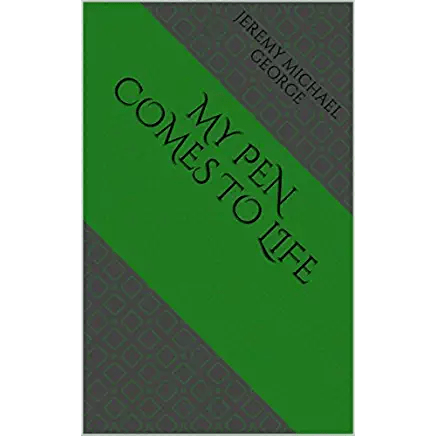
Mr. George now has two self published collections of poetry available via Amazon.com, Exposing Darkness and My Pen Comes to Life. He has also been blessed to be placed in the top 10 of the 10 Pen Modern Poet’s Chart twice; also currently having nine short pieces featured by The Poet’s List on Instagram.  Recently, he has been honored as a silver strip poet by The Poets of the New Era and will have work included in their annual anthology. Beyond his work as a poet, Jeremy’s regular job at Victor Valley Rescue Mission serves the community of the High Desert with a wide variety of valuable resources.  Like his poetry, Jeremy seeks to make a positive impact on the world with his whole life.

The Interview

1. When and why did you start writing poetry?

I began writing poetry in high school, my freshman year being 1994. During my middle school years I wrote stories mostly and I really enjoyed the creative process, even at that age, something about just exhilarated me.  As I began high school, I was introduced to poetry through English courses and in my sophomore year I elected to take a creative writing class. This is where my passion for poetry ignited. At first, it was simply that. The passion for poetic form and expression. What I realized very quickly was that poetry was actually an outlet for all the things I couldn’t put into verbal expression. So, poetry first, was avenue for me to purge my heart of struggles, pain, anger, frustration and even love. I had a hard time as a child expressing emotions, but poetry gave me the ability to do what I hadn’t been able to do otherwise.

2. Who introduced you to poetry?

My freshman year English teacher, did a whole segment on Shakespeare. I did not ever write in Iambic pentameter but I fell in love with the flow and beauty of the emotions expressed through his writing. Then later in my sophomore year, my creative writing teacher introduced a number of different poets, one of which impacted me by showing the raw side of poetry, Charles Bukowski

2.1 What do you mean by “the raw side of poetry”?

Well, I began to realize that poetry did not have to be “polished”, i.e. perfect line breaks and spacing, always rhyming, etc. I guess I was introduced to what is called free verse. It’s such a wonderful open format. I felt the tangible release of emotion as I realized my poems did not have to meet some particular standard to be considered poetry. Personally, I edit my poetry, but I tend to leave them purposefully unpolished sometimes. I believe this raw aspect communicates the emotion connected to the piece in a way that “over-editing” and extra “polishing” sometimes loses.

3. How aware are and were you of the dominating presence of older poets traditional and contemporary?

I was aware, at the time of several different poets, Shakespeare, E.E. Cummings, Kerouac, Angelou, Bukowski. Of course, most of these are pretty main stream, although they represent both traditional and contemporary styles. As for now, I am not overly aware of the mainstream of the poetry world, but I am very connected, via social media, to an amazing family of incredibly talented indie poets. There are so many that I could never list all of them, but to name a few, Rihan Mustapha, Mike Ristic a.k.a. The Word Nerd, Alahana Isgrigg, Kenneth Bryant, and I could go on and on.

I feel like the general population of the world thinks of poetry in terms of my first list and is, for the most part, missing the current heartbeat of poetry, from my second list and many others.

4. What is your daily writing routine?

Although my life does have routine to it, like anybody I suppose, I’m not a routine type of writer. I do write everyday, but I tend to allow inspiration to strike me and then write. My habit is to have several different notebooks in a number of different places; home, car, work, this way I can pick one up wherever I am and write. I also compose a lot on my phone, which is always with me. I do my best to write things out as soon as I feel that stirring. I am not what people may call Orthodox in any way.

5. What motivates you to write?

That is a big question for me… I’ll try to condense it to a two fold answer. My writing is, honestly, first and foremost for me as an outlet and a way to process my life. I would go as far as saying it is a therapy for me. With that being said, my writing is also intended to bless and encourage others. I’ve learned that if I write what is real to.me, it will also be real to other people. I am intentional about trying to capture all the aspects of my life, struggles, joys, angers, happiness and frustrations. My motivation behind this is to encourage people that they are not alone in the battles of life. We all struggle, we all fight but the point is we can’t give up thinking we are alone, because we aren’t alone at all!

6. How do the writers you read when you were young influence you today?

I would say their influence on me today is found in the uniqueness of my style. In reading different types of poets, it’s never been my goal to emulate a particular person or persons. Rather, as I saw their differences it gave me freedom to pursue finding my own style. Freedom to experiment with words and formatting, which all led me to be the writer I am today.

7. Who of today’s writers do you most admire and why?

There are a lot of current writers that come to mind and differing reasons for appreciating and admiring their work.  One person I value is Mike Ristic of Word Nerd Ink. His work is unflinchingly honest and his word play is nothing short of amazing. Then there is also Kenneth Bryant, whose style is more traditional but you’ll be hard pressed to find someone with a wider vocabulary and an strong grip on the heart beat of poetry. And of course, I also admire Rihan Mustapha, her knowledge and mastery of the short poetic forms is  thoroughly amazing and her boldness to take risks with her content grows with each piece she writes!

8. Why do you write, as opposed to doing anything else?

For me, writing just makes sense. I do play guitar as well, which I enjoy as a creative outlet, but writing is my first love. Words are precious to me and have always held a special place in my heart. And so, I use them, in the hopes that those words will strengthen someone else as they strengthen me too. I believe that words are the universal currency of all human beings and they, therefore have an incredible power among us.

9. What would you say to who asked you “How do you become a writer?”

The first thing I would say is find your passion. Writing can be learned but passion has to come from within a person. Personally, I never sought to become a writer, I believe I always have been. So, it was a matter of pursuing the passion I had for words and finding my voice to do so. The best way to “become” a writer is to write; good, bad or great, just write. Not everything I put to paper makes it to  my social media or print.

Secondly, I would say, believe in yourself.  There will be times that others won’t believe in, and they may not even like what you write, but if you’re persistent and you believe in what you are doing you’ll find your audience.

10. Tell me about any writing projects you’re involved in at the moment

Apart from my normal writing, as inspiration comes, I do have a particular project I’ve been working on. It will be a collection of short poems, i.e. no more than 2 to 3 stanzas each and not more than 8 to 10 lines per stanza.  It is meant to be a journey through a painful situation told from the perspective of the person walking through the emotional fallout that happens. I’ve contrived a further twist to the perspective of the pieces though. They are actually told through the perspective of the pen that is being used to write the poems, as though the pen itself is experiencing this pain for the first time.

My intention is to make it feel like a poetic diary. The reader will walk through the moments of pain with the narrator and experience the width and breadth of each emotion as they pass through it; from anger, frustration and rage to hope beginning to blossom again. The shortness of the pieces will move the collection along quickly.

My hope is to release this book by the middle of this year.  It’s been in the works for several months now and I am quite excited about it. It will be my third self-published release since October of 2017 when my first volume came out.

I also have a couple of storylines for some short story, possibly novels in the works as well. Little known fact, I enjoy writing stories too. They just take quite a bit more time than poems.

Thanks for taking the time to interview me. I am truly grateful for the experience. Many blessings to you!

After a long delay, the English Edition of Literary Journeys to the Holy Land will come out in June

Worth a gander

Notes from my personal diary - Sofia Kiopoglou's avatar

http://promachos.gr/the-holy-fire-by-sofia-kioroglou/

Τhe book “Literary Journeys to the Holy Land”, which is now available in Greek, is a fusion of poetry and narrative accompanied by pictures from Sinai and Israel. The book is inspired by my pilgrimage to Jerusalem and Sinai and reads more like a travelogue than anything else. If you enjoy books with a religious subject-matter, then this is the ideal book for you.
A lot of pictures accompanied by captions transport the reader to the places where Moses received the Ten Commandments and where Jesus walked and was crucified. The book sprang out of my need to communicate to others my personal life-transforming experiences which will surely raise eyebrows by some more rationalist minds but I am in there for the long haul as the truth must not be concealed. The truth opens doors to cross so many barriers and lead to the one and…

View original post 965 more words

Wombwell Rainbow Interviews: Sharon Larkin

Wombwell Rainbow Interviews

I am honoured and privileged that the following writers local, national and international have agreed to be interviewed by me. I gave the writers two options: an emailed list of questions or a more fluid interview via messenger.

The usual ground is covered about motivation, daily routines and work ethic, but some surprises too. Some of these poets you may know, others may be new to you. I hope you enjoy the experience as much as I do.

sharonlarkin

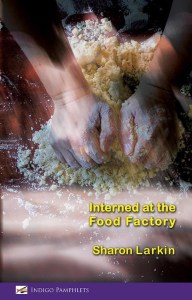
Sharon Larkin’s pamphlet “Interned at the Food Factory” was published by Indigo Dreams Publishing on 7 January 2019.  In October 2020: the collection focusing on relationship is called ‘Dualities’ and published by Hedgehog Poetry Press. It’s for sale on Amazon or from her website https://sharonlarkinjones.com

Sharon’s Website – Coming Up With The Words:  https://sharonlarkinjones.com

The Interview

1. When and why did you start writing poetry?

The first poem I wrote was as a school kid. It was, I suppose, a political protest poem at a time of social change … the 1960s. Prompted by public anger at the railway closures, the poem was entitled ‘Dr Beeching’s on the Move’. I can still recite the three stanzas which were very much of their period … rhymed and well scanned with an appropriately jaunty rhythm.

2. Who introduced you to poetry?

Early influencers on my writing were, predictably my parents and siblings (reciting nursery rhymes, tuning in to ‘Listen with Mother’, reading children’s poetry books … not forgetting the Rupert annual). Coming from a mixed church/chapel-going family, and with religious school assemblies a daily reality, the language of the Bible, the Book of Common Prayer and Hymns Ancient and Modern, were also pervasive influences in my early life. Later, some influential teachers secularised my repertoire of memorised poetry, notably my English teacher, Mr Griffith-Jones (a Welshman, obviously) with his love of poetry and drama. Under his direction, our school put on a production of Dylan Thomas’s ‘Under Milk Wood’, which was pretty audacious and ambitious at the time. Consequently, I was very aware during my teens of Dylan Thomas, as well as the Metaphysical Poets, William Blake, the Romantic Poets … and Shakespeare, of course. An annual competitive verse-speaking festival at school (which I now realise was an ‘Eisteddfod in exile’ for ‘Griff’) introduced me to Thomas Hood, T S Eliot, Patric Dickinson and others.

3. How aware are and were you of the dominating presence of older poets traditional and contemporary?

The early exposure to Dylan Thomas, especially, gave me an ear for the musicality of words and I still tend to slip, rather too easily, into assonance/alliteration and fusing unpredictable word-partners together. I also detect some lingering Biblical legacy in my writing, in terms of in rhythm and reference, but by my twenties and thirties, I’d also read a lot of Eliot, Yeats, Pound, Plath, Hughes, Heaney, Ted Walker, Peter Porter, Philip Larkin, R S Thomas, Roger McGough, Brian Patten, Adrian Henry etc, picking up new lexicons and new poetics en route. Somehow I managed largely to avoid the poets of the First World War, but have latterly come to appreciate the poetry of Edward Thomas. I specialised in languages for A level and beyond, dabbling with Racine, Rimbaud, Verlaine, Lorca and Pasternak, but my knowledge and appreciation of poetry in the English language was kept alive by taking English A Level later, and an Open University BA Hons which included a course in 20th Century Poetry (as well as the 19th Century Novel, Drama and Art History). In the last decade, I have acquired an MA in Creative Writing from the University of Gloucestershire, specialising in poetry … and a second BA refreshing my French and Spanish. I also learned the Welsh language to an advanced level, gaining an appreciation for Welsh poets writing in both languages, and a particular admiration for those who master cynghanedd and traditional Welsh forms such as the englyn and cywydd. This has brought another wave of temptation to overdo the assonance and alliteration in my own poetry, which my ‘internal editor’ has had to temper!

4. What is your daily writing routine?

I don’t have a writing routine. The trigger to write will invariably be something I see, read, hear or feel intensely enough to want or need to ‘offload’ … on screen or in print. Writing is often a way to declutter or clear ‘headspace’ … backing ‘data’ up to a separate ‘hard drive’, if you like, while the ‘main processor’ (brain) whirrs worryingly on, ruminating about the state of the world and my part in it. In theory, this ‘back-up method’ frees up further thinking space, or allows me to revert to child-like awe at the beauty and wonder still to be found in the natural world – and, to some degree, in science. I always have my smartphone with me and invariably thumb lines or whole poems into Notes when I’m out and about during the day. Or I might record ideas for poems in Voice Notes for working on later … often late in the evening, during the night, or early in the morning. I don’t seem to need as much sleep as I used to. Perhaps my biggest motivation to write is the emotional or psychological imperative to try to make sense of human relationships. I find some behaviour and motives extremely difficult to interpret and handle, but poetry seems to help me make sense of some of it, thanks to all the rumination that goes on in my head, trying to give my reactions and feelings some rational context, some form, some ‘rhyme and reason’.

5. What motivates you to write?

I’ve had approaching 150 poems published or accepted for magazines and anthologies, and a pamphlet entitled ‘Interned at the Food Factory’ was published by Indigo Dreams early in 2019. It’s dedicated to those who might describe their relationship with food as ‘problematic’ … and touches on issues such as eating disorders, bullying and abuse, factory food production, vegetarianism, appetite confusion, addiction … and possible ways to alleviate food-related dependencies. The pamphlet is pretty much ‘stand-alone’ with subject matter that is quite distinct from topics that usually interest me: the natural world, relationships, Wales and Welsh. Spirituality remains in the mix too. More recently, politics have been creeping back in, especially given the momentous turns in domestic and world politics over the last two-three years.

6. What is your work ethic?

My work ethic can range from ‘All’ to ‘Nothing’ depending how urgent the ‘making sense of the world’ becomes. I can become fully immersed (uninterruptible without irritation) when captured by an idea for a poem – or trying to perfect one. Concentration can prove difficult if there is an atmosphere of conflicting priorities around me. Strangely, I often work best in a café, over a coffee or two. There is something about being ‘in company’ but having no demands made upon one by that company. At other times, especially when other people are expecting or hoping for some interaction, I just have to abandon any idea of work and go with the flow until the ‘demanding hordes’ (which may be just one or two people!) have dispersed, and there is relative calm again. Another disruption to creativity is if the weather suddenly turns marvellous and my camera is shouting at me for an outing. Taking photos is not quite the obsession that writing poetry is … but it almost is. While poetry can be ‘done’ in any weather; capturing the natural world in pixels is best undertaken in the right light conditions and with minimum precipitation. Occasionally, taking photos will trump poetry but, more often than not, words will win over pictures. Increasingly, though, I find myself wanting to combine them … in photopoems.

7. How do the writers you read when you were young influence you today

Please see what I have already written about having to be on my guard about unconsciously emulating Dylan Thomas!

8.  Who of today’s writers do you admire the most and why?

I still read a great deal of poetry, and there are many poets I currently admire: David Morley for his affinity with the natural world; Pascale Petit for similar reasons, but also for her global sensibility and love of art and myth; Gwyneth Lewis, Menna Elfyn, Mererid Hopwood, Gillian Clarke, Paul Henry, Owen Sheers and Jonathan Edwards for the spirit of Cymru in their work (irrespective of language) … and many, many more: Martyn Crucefix, Andrew Motion, David Harsent, Simon Armitage, George Szirtes, Frieda Hughes, Kathleen Jamie, Sharon Olds … even Billy Collins. I could go on and on. Reading and writing are habits I cannot break. My brain seems to need a constant fix, in the quest to make sense of a complicated world with puzzling people in it; or to tame raging emotions; or to gee myself up when feeling defeated by the age we’re in. It’s a psychological imperative, I suppose.

9. Why do you write, as opposed to doing anything else?

Writing is overwhelmingly my major activity but, as I mention elsewhere, photography and learning languages, most recently Welsh, are also passions. Taking photos can act as a prompt for writing, or a complement to it.  Knowledge of other languages enriches my awareness of other cultures, as well as occasionally adding flavour to my poetry.  Learning Welsh, specifically, has not only given me a deeper awareness of my own family history and heritage, but it has enriched my knowledge of Welsh history and literature in general, and intensified my love and appreciation for Cymru in all respects.

10. What would you say to who asked you “How do you become a writer?”

Advice on becoming a writer? I’d say “Read loads and loads. Write a lot. Join with other writers, IRL or virtually, in order to learn from them and benchmark your own efforts. Submit yourself to writing, and submit your writing to places publishing the kind of writing you like to read. Basically, it’s an unending circle of reading > writing > analysing > critiquing > editing > submitting > getting rejected > re-editing > resubmitting > getting work published > getting work published in better places and in better company > reading more > writing more … ad infinitum. And, crucially, if you can help other writers along the way, it will help you make further progress. I find that organizing Cheltenham’s Poetry Café Refreshed and chairing Cheltenham’s Poetry Society bring many opportunities to reciprocate and support, to give and receive … all to mutual benefit. Thus the poetry community supports itself … and thrives.

11. Tell me about the writing projects you have on at the moment.

My future writing hopes and plans include getting more work published, of course! I started a publishing outfit myself last year – Eithon Bridge Publications https://eithonbridge.com – to specialise in anthologies, but possibly venturing into publishing pamphlets and collections eventually. So far, I have published All a Cat Can Be for a cat charity (New Start Cat Rescue) and another anthology is in progress, featuring poems from fellow members on a course entitled Invisible Zoos, held at Tŷ Newydd in September 2018, tutored by David Morley and Pascale Petit. I’m also proud of the on-line anthology of poems entitled Good Dadhood https://gooddadhood.com/the-poems/ that I curated three years ago. Perhaps they might make it into print at some point in future. Personally, I have at least four or five of my own books banging on doors, impatient to gallop out in the world … but I definitely don’t want to self-publish them. The books waiting in the wings include themed pamphlets drawing on the natural world (birds, plants, water creatures). There’s also a goodly body of ‘spiritual poetry’ is longing for a sympathetic audience. Small hopes for that in these über-secular times, perhaps. But things have changed in the past … and they might change again.

Wombwell Rainbow Interviews: Amy Alexander

Wombwell Rainbow Interviews

I am honoured and privileged that the following writers local, national and international have agreed to be interviewed by me. I gave the writers two options: an emailed list of questions or a more fluid interview via messenger.

The usual ground is covered about motivation, daily routines and work ethic, but some surprises too. Some of these poets you may know, others may be new to you. I hope you enjoy the experience as much as I do.

front_draft_978-1-916480-65


Amy Alexander

is a poet, visual artist, and mother living in Baton Rouge, Louisiana, not far from the Mississippi River, which is very far from her hometown on the Colorado River, but still familiar, because of moving water. Her work has appeared most recently in The Coil, Cease, Cows, Anti-Heroin Chic, the Mojave Heart Review, Mooky Chick, The Remembered Arts, and RKVRY. Follow her on Twitter @iriemom.

The Interview

  1. What inspired you to write poetry?

I grew up in Colorado, right between Aspen and Vail, and the breathtaking beauty, extreme cold, long winters, short days, odd folklore, and vibration of that place on earth was my first experience of poetry. When I was in sixth grade, we were given an assignment to write a poem. I wrote twelve, and felt like I was at home in that medium. It is definitely a medium that one has to grow into, though, and so, for many years, I considered myself much more a musician, dancer, and artist before I thought of myself as any kind of writer.

  1. Who introduced you to poetry?

My mother had a way with language and always encouraged us to express ourselves. She used to record us telling stories and she read a lot of poetry to us. When I went to college at Winthrop University in Rock Hill, South Carolina, I had the opportunity to study with two poets who were disciples of James Dickey, who taught down the road at the University of South Carolina, in Columbia. I love the notion of poetic inheritance, and I do feel like I was gifted with some of Dickey’s ear and wisdom by Susan Ludvigson and Dorothy Perry Thompson.

  1. How aware were you of the dominating presence of older poets?

I was taught to venerate Wordsworth, Shelley, Robinson Jeffers, and the like, but many of my teachers were also keen on introducing us to poets who were living alongside us. So I got the chance to attend readings by Charles Simic, for example. After college, I moved to Tucson, Arizona, where I sought out older poets and spent a lot of time loafing at The Poetry Center and volunteering to make posters for them. As a result, I got to go to a lot of readings.

  1. What is your daily writing routine?

I am a mom, first, so I get my kids off to school, attend to whatever household tasks I need to, and then I settle in for a few moments of time to read and write. I often write for several weeks at a time, fervently, and then take a season off. Last year, I tried to make that more consistent, to write every day, and found myself very unmoored, emotionally. I think I need time to rest between poetic sparks, so I am allowing that to take place this year.

  1. What motivates you to write?

It is either utter anguish or a really cool thing that I can research. I find that if I am not in a state of needing to really hash something out on the page, usually about my birth family, then I can go to the library or read, and often will find out something new that leads to questions, questions, and more questions that turn into poems. I’ve been a journalist for more than twenty years alongside being a poet, so research and writing feel like parts of the same process, to me.

  1. What is your work ethic?

I’m descended from Mormon pioneers, but live in Louisiana, married to a Cajun. So It’s kind of work really intently and then fly off and have a really good time dressed in costumes and then return, contrite, for a Lenten fast and more hard work, all the while looking out the window and wondering what’s for supper. Yeah, that pretty much sums it up (laugh).

  1. How do the writers you read when you were young influence you today?

I was lucky enough to grow up in a home with a lot of books. We were always reading and talking about books, and my mother was very committed to reading to us out loud. As a result, I think I fell in love with illustrators as much as writers, and particularly authors who both wrote and made art. I think that is why my latest book features colorful art. It is kind of like a children’s book for adults.

  1. Who of today’s writers do you admire the most and why?

Joy Harjo, because her writing feels familiar to me, somehow, in how it’s put together. It’s like going home. Naomi Shihab Nye, because, in a workshop with her, I learned that you can and should, as a poet, travel through time and space. She is the one who articulated that for me. Lately, I’ve been reading Tiana Clark, because she reminds me not to hide, and I am trying to put down the things that really scare me to say out loud. I really love the work of Cheryl St. Germain, because she is from Louisiana and does a good job of pairing the ragged, haunted interior life with small, external, trivial seeming details. Elisabeth Horan is my collaborator, co-editor, and friend. I get to read a lot of her work before anyone else, and it pushes me to climb outside of the narrative constraints that I cling to, maybe too much, as a journalist.

  1. Why do you write?

Probably because it does not require a lot of equipment, and I am a very practical gal. It is one of few art forms that you can take with you anywhere. It requires no expensive instruments, no mess, and not a lot of space. The down–or up?–side is that you have to be willing to give it the very fiber of your being in order for it to ring true. Getting older helps it, too, so patience is essential.

  1. What would you say to someone who asked you “How do you become a writer?”

That one is pretty simple. Sit down. Write. Repeat. Don’t worry about publishing. If you write a lot, the publishing will follow, naturally. You’ll have more nerve and more material to put out in the world. So just start writing. Also, find a mentor. Not a fancy university or institution with a big name, but someone you love and who loves you. I had a wonderful teacher, Barrie Ryan, I found after college who taught at Pima Community College, in Tucson. There were high school graduates looking for an easy A, many of whom became wonderful poets, almost by accident, alongside a whole bunch of serious, older poets who knew that Barrie would create a space that allowed our poems to grow. She did that beautifully.

  1. Tell me about the writing projects you have on at the moment.

I have a few. One is like therapy, so I do not work on it daily. It is shaping up to be some kind of a desert song. You can read some pieces from that sequence in the Mojave He[art] Review. Another, a set of sonnets about Typhoid Mary. And a third, a set of poems about the old pioneer cemetery on the mountain above where I grew up. I am researching each person who is buried there and writing poems about them that are both historical and personal. You can read some of those poems in Twist in Time Literary Magazine.

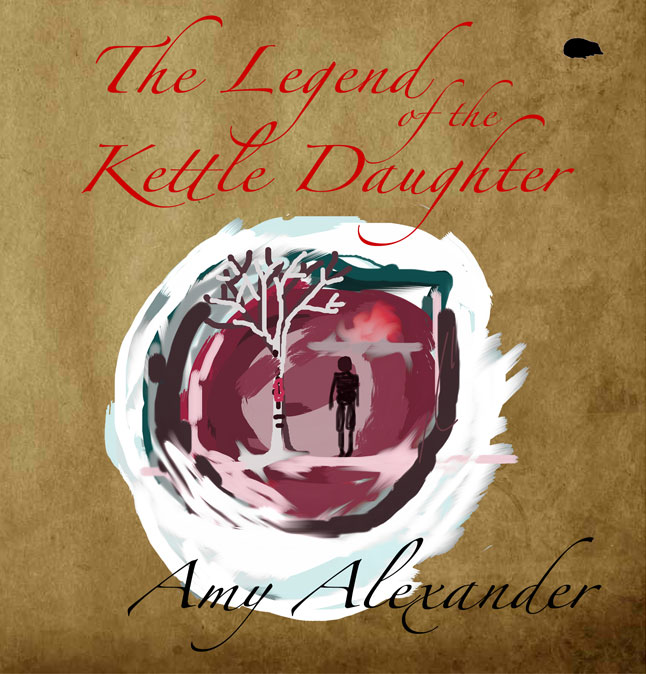
My book, The Legend of the Kettle Daughter, is coming out in April and you can find out more about that at www.kettledaughter.com.

Three Poems by Laura Potts

Exceptional

Amee Nassrene Broumand's avatarBURNING HOUSE PRESS

The Body Broken

Mass and Sunday mourning pass the chancel black

and chalice-back of I, spire-spined and last to part

my plumping bud to take the nocturne wine. Mine

the softly hills, mine the spill and steeple-swing

of fruiting breasts and bells, yes. We break the bread

and bless. Lady in the lancet holds the apple mocking red.

Dappled chant and dark, ahead the blood-bright night

and first-light glass of gasping Eve, winter’s heave

hangs always here with heads that bow before the vow

to never grieve the leaving eyes of youth. Truth

is lost and winterworn. Borne away on snarling winds,

the greening drop of spring falls from my hair. The cleric’s

cloak is a darkly thing. My deeper, deeper throat

receives the gloaming sermon there, heir of the berry

dreamt to burst in his hand. Damn the vestal

up-and-swung of lust that Woman loved, budblood

and the Garden…

View original post 660 more words

Wombwell Rainbow Interviews: Denis Olasehinde Akinmolasire

Wombwell Rainbow Interviews

I am honoured and privileged that the following writers local, national and international have agreed to be interviewed by me. I gave the writers two options: an emailed list of questions or a more fluid interview via messenger.
The usual ground is covered about motivation, daily routines and work ethic, but some surprises too. Some of these poets you may know, others may be new to you. I hope you enjoy the experience as much as I do.

41fv3jrb0ul._sx331_bo1,204,203,200_

Denis Olasehinde Akinmolasire

is a software engineer who has always enjoyed writing and is taking the opportunity to share his unique insights and hidden talents to the rest of the world. Denis’s perspectives have been formed through his own journey in finding love, battling to overcome the challenges and fears that have been put in front of him in the pursuit of glory and being the very best he can be at everything he does.

Where to buy the book:

Amazon.com: https://www.amazon.com/Love-War-Glory-Spoken-Seasons/dp/1546294503/ref=tmm_pap_swatch_0?_encoding=UTF8&qid=1542262377&sr=8-1

Amazon.co.uk: https://www.amazon.co.uk/Love-War-Glory-Spoken-Seasons/dp/1546294503/ref=sr_1_1?ie=UTF8&qid=1539637527&sr=8-1&keywords=Love%2C+War+and+Glory

AuthorHouse.com: https://www.authorhouse.com/Bookstore/BookSearchResults.aspx?Search=love,%20war%20and%20glory

AuthorHouse.co.uk: https://www.authorhouse.co.uk/Bookstore/BookSearchResults.aspx?Search=love,%20war%20and%20glory

More info on the book/Social Media Links: 

Instagram: https://www.instagram.com/denisakinbookauthor/

YouTube: https://www.youtube.com/watch?v=fKmc1axyP60

Website: https://www.lovewarandglory.com/

Twitter: https://twitter.com/lovewarandglory

Facebook: https://www.facebook.com/Love-War-Glory-Spoken-Words-For-Seasons-1979483698761774

The Interview

1. What inspired you to write poetry?

I have written in the past but because of where my career and where my life took me I never had a chance to explore this avenue. An opportunity arose last year to publish my first book Love, War and Glory: Spoken Words for All Seasons which allowed me to explore my writing skills fully.

2. Who introduced you to poetry?

I was introduced to poetry at my school by my English teachers. Poetry was a subject we used to explore and write about in the past.

3. How aware were you of the dominating presence of older poets?
I became more aware of the authors behind poetry when I got older. What I find interesting with poetry is how powerful it can be in terms of emotions. Poetry I have found on occasion can reveal the back-story behind a person.

4. What is your daily writing routine?

I don’t have daily routing at the moment as I’m kind of between books. I tend to write in the moment. As sometimes I will be inspired by a particular subject or topic and my ideas will just come from nowhere.

5. What motivates you to write?

Current events and what I experienced in my life. I choose the themes of Love, War and Glory for my first book as I was very keen on creating a message and a reading experience that many people can relate to. I also interested in writing things about areas that no one has explored before. I wrote Love, War and Glory as I felt there wasn’t a book out there that covered all 3 themes in one book.

6. What is your work ethic?

I have been the sort of the person that when I want to go and do something I just go out and find a way to make it happen. Similar to how I created my first book.

7. How do the writers you read when you were young influence you today?

Roald Dahl was one of my favourites; Fantastic Mr Fox was one of my favourites. I enjoyed reading Shakespeare especially Merchant of Venice; he was able to tell a story using poetic expressions which I felt was probably a little ahead of his time.

8. Who of today’s writers do you admire the most and why?

I’m currently reading Lost Gods written by Micah Yongo; he’s an upcoming Author whom I expect the world will be hearing more about in the near future. In terms of poetry I like some of the poems that Viola Allo has done especially in Bird from Africa.

9. Why do you write, as opposed to doing anything else?

In my day job I work as a software engineer. I took the opportunity to write my first book as I felt people in my line of work are often labelled as nerdy and not being artistic. Like for instance I went to a poetry event in September after work and one comment I received was you look too serious to be here because I was in my work suit. But when I read out my poems I think some of the audience were shocked by what I could do. People shouldn’t be defined simply because of what they do for a living on a day to day basis.

10. What would you say to someone who asked you “How do you become a writer?” To become a writer I think is actually quite simple; pick up your pen/computer and get writing. The medium you write in is a different matter; that will come over time depending on how far you want to take your writing. The advice I would give to people is don’t let anyone tell you what you can’t and can do. Trust your instinct and let your imagination fly. I believe writers are at their best when they let their ideas just flourish.

11. Tell me about the writing projects you have on at the moment.
At the moment my focus is on two fronts; promoting my current book Love, War and Glory: Spoken Words for All Seasons. I’m also preparing to write my second book. My second book is going to be a fiction book on the subject of slavery. I’m keeping the title to myself for the moment . All will be revealed in due course.