On Fiction Wombwell Rainbow Interviews: Shane Jesse Christmass

On Fiction Wombwell Rainbow Interviews

I am honoured and privileged that the following writers local, national and international have agreed to be interviewed by me. I gave the writers two options: an emailed list of questions or a more fluid interview via messenger.
The usual ground is covered about motivation, daily routines and work ethic, but some surprises too. Some of these fiction writers you may know, others may be new to you. I hope you enjoy the experience as much as I do.

Shane Jesse Christmass

is the author of the novels, Belfie Hell (Inside The Castle, 2018), Yeezus In Furs (Dostoyevsky Wannabe, 2018), Napalm Recipe: Volume One (Dostoyevsky Wannabe, 2017), Police Force As A Corrupt Breeze (Dostoyevsky Wannabe, 2016) and Acid Shottas (The Ledatape Organisation, 2014).

He was a member of the band Mattress Grave, and is currently a member in Snake Milker.

An archive of his writing/artwork/music can be found at www.shanejessechristmass.tumblr.com

Instagram: @sjxsjc

Twitter: @sjxsjc

The Interview

1. What inspired you to write fiction?

Not sure if there is one thing, or actually anything, that inspired me. I am always dubious on whether or not inspiration is an actual substance that is required to stimulate someone in order to create. I wanted to write novels, so I wrote novels. The urge pushed the outcome.  I know I didn’t talk much as a child, and one of the things I liked doing was reading a lot. I feel that I perhaps hallucinated, maybe fantasised intensely is the better choice of word, but was terribly miserable, and was probably left alone a lot, and therefore just simmered in my imagination by myself. I wasn’t particularly gifted in anything, except reading a lot, and that is especially not a great skill, I just made time for it, because I was terrible at other academic quests, or sports endeavours. I think there are benefits to speaking in an incoherent manner.  Writing is just a small human sacrifice in a suburban supermarket. Inspiration is just the cataleptic attack.

2.  Who introduced you to fiction?

Well you kind of have to don’t you. You have to learn how to read and write, so therefore you have to read all these little dinky stories and books. I don’t have fond memories of these sort of things. I don’t really like thinking about these things. I just spent a lot of time at the library. I nagged people in my family to take me to the library a lot, until I was old enough to go by myself. And when I was there I asked the librarians lots of questions. They pointed to the books for the answers. My father was this sort of person who was very detached, but did amazing things like purchase the complete works of Shakespeare, or the Romantic poets, in these Encyclopaedia Britannica type of leather bound books, something you probably bought from a salesman, or from a catalogue. They were on the shelf. I remember asking him once who all these books were for. He advised me they were for ‘us’ – meaning me and my siblings. I commenced pawing through them. By no means am I saying people should go read Shakespeare to be a writer. He’s definitely not my taste. I got it done early in life. I couldn’t imagine reading him now. That would be so boring. I just read him because it was in my house. I also read pretty much anything. I read my mother’s ‘Cosmopolitan’ magazine for example. I probably enjoyed that more than Shakespeare.

3. How aware were you of the dominating presence of older writers?

Massively. You don’t want to do something that someone did originally and more uniquely – that would just be very disappointing. But – you do also wish to do something in the experimental tradition, perhaps extend something further, or add upon something that came previous. I’ve had odd moments where people have commented that my writing is like a certain author that I have never heard of, or I have checked out an author that is new to me, say Saint-John Perse, and I can see massive similarities, but ones that are just magical coincidences. Someone once told me that my writing reminded them of Thomas Pynchon, a writer I wasn’t terribly familiar with, and who to this day I have never read. I mean why would I go read a writer that people say is similar to myself, or that I am similar to. One of the reasons I write the way I do is because I couldn’t find the fiction that I wanted to read.

4. What is your daily writing routine?

You know that shot in ‘The Omen’ where Lee Remick is pushed over the balcony balustrade and falls – and the fall causes her to miscarry? I once saw a documentary where the director, Richard Donner, explained how they set up and executed that particular scene and then how they shot it. Go watch it, it’s an amazing piece of filmmaking, but watching the documentary, I can only now watch that scene and think know about how they did it. The wonder that I had of initially not knowing how they did it has evaporated. Telling people my daily writing routine might be equivalent to watching that documentary.

5. What motivates you to write?

Because no one believed I could do it. And as mentioned in the opening question, it was always just something I wanted to do, I didn’t have much faith in my ability to do anything else, but this seemed somewhat natural, and I certainly felt less anxious doing it than other tasks. Fretted-about signs always show up in the skull housing, you can keep them inside, or you can plaster them onto a page and publish. I chose to plaster and publish.

6. What is your work ethic?

Cold hands, in a cool climate, need to tap some words out each day. And that’s the key, every day, something has to contribute to the writing of something. What that something is will be particular for each writer. Just don’t die wondering that you never put your crystalline vision into effect. Don’t get to the end, and as a luminous patient … suddenly think: I could’ve done more, I should’ve written more. One of the things that use to upset me, especially when I was young, was this equivalency, and this is particular in my family where my parents came from working class stock when they were children, and then moved themselves into a lowly middle class position, was that reading books or writing was equivalent to being lazy. My work ethic is inspired to prove that that equivalency is false, and that perhaps the benefits of doing something like that are not entirely immediate. Does sitting in an armchair and looking out a window thinking, or ruminating on a thought, lack substance or profit? No … it’s ghostly work. As Evelyn Underhill wrote, some natures have a special sense, an attempt to reach a transcendental consciousness, the contemplation allows us to reach it. My point is that a writer’s work ethic shouldn’t just be to write all the time. Contemplating, how you’re going to write something, why you’re going to write something, should have a worth ethic to it, in that it should be just as rigorous and productive as the actual writing, but it is no less valuable.

7. How do the writers you read when you were young influence you today?

Yeah good question.  Guess if I was going to make a list of my top ten favourite writers, or some list that is defined similarly like that, favourite writers or some such, most of the writers on that list would probably be favourites from when I was younger. The only book that might go onto that list, that I only just came around to, would be Gary Indiana’s Horse Crazy. I guess how they influence me today is a bit tricky to answer. I don’t put those books into any list, or hold them close, because of any exact influence on my writing, or an influence on the topics I write about. To a greater degree, most of the books, or these favourite authors, are the ones that I felt gave me permission to make early attempts at this writing business. Certain books made me realise I could do this. It gets back to your question regarding the dominating influence of older writers. I read less fiction these days, and what fiction I do read these days is more for entertainment purposes, meaning when I was younger I would read novels, but would take notes, mental or otherwise, regarding how the novel was written, all the mechanical and technical elements on what makes up a novel. So the reading of novels then was more from an educational aspect, whereas the type of books that influence my current writing, whether indirectly or directly, would be non-fiction work, and that’s not from a position of incorporating direct facts from non-fiction texts, but more to provide a feeling, or tone to inflect into my own work. I just read that famous work by Robert A. Monroe about out-of-body experiences. This in no way means that there will be a plot, or a character directly, in my next manuscript that has these experiences, it’s more just to provide some nebulous science fiction, or scientific, tone.
P.B Shelley is a volatile substance that did cast a slow expiration over me for a while though. Around when I was 14 years of age, and then for a long time afterward, but still, currently, very much presently, and probably forever actually. His words were some type of nauseous gateway to perfection. A natural faultlessness for me to read. There was a proportionate unity, and a particular shape to his work. Everything I had read prior to then reading Shelley just seemed like teabag stains in comparison, limp flints. A sudden jet of ceaseless elation.

8. Who of today’s writers do you admire the most and why?

Oh where can I start! Lots of people. Isabel Waidner. Rachel de Moravia. Candice Wuehle. Nadia de Vries. Darcie Wilder. Why? It seems very unlikely that writing could make a physical change to a person’s anatomy, but perhaps these writer’s may assist in a human’s evolution. Are we just vegetable matter? The future will have visual differences from what we currently see. Why can’t we have writers, like these, that act as handbooks, guides, to assist us when we encounter those visual differences? You can either be a body, or a bystander amongst the rubble, or you could read those writers. The interior of their books is like a telepathic reading, lurking emulsions of forward-looking designs and approaches. It’s good shit.

9. Why do you write?

The most common question to ask an author, but the most difficult for authors to respond to. Maybe there is no reason, except I just happen to write, it’s what I always wanted to do, and it’s what I always did. Do you know about the clinamen? The clinamen has numerous definitions, but I’m interested in how it was defined within pataphysics. Originally the Roman poet, and philosopher Lucretius, defined the clinamen as being an unpredictable swerve of atoms. Alfred Jarry, the writer who penned the main tenets of pataphysics, came to understand the clinamen as a slight change that can cause a greater, or the greatest meaning. For example: changing one letter in a word to make a new word, and that new word obviously caries a completely new meaning. I’m interest in the clinamen, but not a slight change, a delirious upheaval. A repetition of images, tweaks of images causing dislocation and jump-cut in narrative, the death of certain images only for images to reappear later, interchangeable images causing interchangeable narratives. I write, to perhaps take pleasure, or to promote the instability of meaning, and through that instability, reach new meanings through new forms, instructions or procedures. I want to create stories that start at any point in the manuscript, as this aligns with the spasmodic and aleatory experience of modern time, a somnambulist drift between tenses, a relentless overload of information. Shifts of attention to something irrelevant or disconnected – the clinamen. That’s how I feel today, my reasons will probably change completely tomorrow.

10. What would you say to someone who asked you “How do you become a writer?”

I know I shouldn’t answer a question with a question, but I might ask – ‘What sort of writer do you want to be?” I have a certain sphere as a writer, a speciality, but certain specialities might just be another name for limitation. Unfortunately there’s no glib answer to that question that suffices, except what they probably already know. I’ve seen so many interviews with writers, and I’m talking really famous and rich writers, who when they get asked this question always answer – read more. Yeah, no shit, thanks for nothing. Isn’t that the most asinine and dainty response you ever heard? I’d probably advise not to get distracted by the idea of being a writer, don’t get distracted by all these accoutrements of a writing life. Don’t get distract by finding some perfect, decorated writing space, or finding some enlightened pencil. But one thing I would say is, everything is a story, everything that happens can be a story. And everything you can possibly conjure up in your imagination, is a story.

11. Tell me about the writing projects you have on at the moment.

I’m nearing the end of a large piece of work that is, at the moment, unwieldy and a bit broad in its scope. I originally started out with the idea that I was going to write a memoir, not based on my life, definitely not based on my life, but a memoir based on the movements of two childhood male friends. These two friends, over the years, become on-again, off-again sexual partners with each other, but with an absence of love or any affection.  One of the male friends, is very loosely based on Herb Mullin. And definitely not based on the life of Herb Mullin at all, but an idea that Herb Mullin had. He thought that a small killing would prevent a major catastrophe to occur. He believed, at the start of his killing spree, that his killings could stop a massive earthquake from occurring in the San Francisco area. Actually he believed that all the deaths caused by the Vietnam War, up to that point, were enough to forestall this earthquake, but as the war in Vietnam was winding down, he’d need to advance the killings himself. Anyway – I was intending to write a massive cadaverous tragedy that plays out with these two male friends, based on this livid idea that an individual waging a war on society, that unfortunately involves bloodshed, could stop a massive war from commencing, or that could finish a massive war between two nations. Oh and it’s a love story. I’m really enjoying writing it and it is fucking nuts. If anyway wants to read it, by all means hit me up.

Wombwell Rainbow Interviews: Susan Castillo

Wombwell Rainbow Interviews

I am honoured and privileged that the following writers local, national and international have agreed to be interviewed by me. I gave the writers two options: an emailed list of questions or a more fluid interview via messenger.

The usual ground is covered about motivation, daily routines and work ethic, but some surprises too. Some of these poets you may know, others may be new to you. I hope you enjoy the experience as much as I do.

41gre4pvbol._ac_us436_fmwebp_ql65_

Susan Castillo

Susan Castillo Street is Harriet Beecher Stowe Professor Emerita, King’s College London. She has published two collections of poems, The Candlewoman’s Trade (Diehard Press, 2003), Abiding Chemistry, (Aldrich Press, 2015), and a pamphlet, Constellations (Three Drops Press, 2016). Her poetry has appeared in Southern Quarterly, Prole, The High Window, Ink Sweat & Tears, Messages in a Bottle, The Missing Slate, Clear Poetry, Three Drops from a Cauldron, Foliate Oak, The Yellow Chair Review, Poetry Shed, The Lake, Picaroon, Atrium, The Fat Damsel, The Writers’ Cafe and other journals and anthologies.

The Interview

1. When and why did you begin to write poetry?

In my teenage years, I wrote poetry with which I could be blackmailed today! Ghastly neo-Romantic poems in dactylic tetrameter.

2. Who introduced you to poetry?

I was taught to read by my mother when I was around 2 years old. I loved nursery rhymes and nonsense verse because of its musicality.

3. How aware were and are you of the dominating presence of older poets?

At the moment, I’m aware of the presence of extraordinarily talented younger poets, prose writers and editors. Names that come to mind are Angela Readman, Kate Garrett, Jane Burn, Holly Magill, Sarah Doyle, Kim Moore, Sarah Miles and Mary Norton Gilonne among many others.

4. What is your daily writing routine?

For poetry: I write when a poem starts scratching at my brain. Usually a first draft, and then several edits. For me, less is more, and I pare my poems down relentlessly. For my novel Casket Girls, I set myself a target of 1,000 words a day.

5. What motivates you to write?

That would be like asking, ‘Why do you breathe?’ Writing has saved my life, both literally and metaphorically, on more than one occasion.

6. How do the writers you read when you were young influence you today?

I love Southern Gothic writers like George Washington Cable, Carson McCullers, Eudora Welty and Flannery O’Connor, for the vividness with which they depict the humour, beauty and absolute insanity of the American South. They capture so well the voices of my childhood.

7. Who of today’s writers do you admire the most and why?

Where do I start! I love the elegance of Edith Wharton’s writing, and the pared-down prose of Ernest Hemingway’s short fiction. In poetry, the amazing Natasha Tretheway, because of the courage and skill with which she evokes issues arising from the complexities of race, gender, and the South’s complicated history.

8. What would you say to someone who asked you “How do you become a writer?”

Edith Wharton defined a writer as someone on whom nothing is lost. I think one becomes a writer by being completely present, by living intensely in the moment, and capturing these lived perceptions as richly as one can. I think children should be encouraged to daydream, to cultivate their imagination, and to learn to love to listen to and tell stories around the kitchen table.

9. Tell me about the writing projects you have on at the moment.

My novel Casket Girls is coming out this year with Paper Swans Press. It’s a historical novel set in 18th-century about a group of impecunious young women of good character who are sent to New Orleans as prospective brides for the French colonists under the protection of the Ursuline nuns, who were also committed to educating enslaved women, Native Americans, and prostitutes. I am beginning to assemble a body of poems on diverse subjects which I hope will be the basis for a fourth collection. I’ve also been writing a group of poems based on family photographs and daguerreotypes and the stories they tell.

Wombwell Rainbow Interviews: Z.M. Wise

Wombwell Rainbow Interviews

I am honoured and privileged that the following writers local, national and international have agreed to be interviewed by me. I gave the writers two options: an emailed list of questions or a more fluid interview via messenger.

The usual ground is covered about motivation, daily routines and work ethic, but some surprises too. Some of these poets you may know, others may be new to you. I hope you enjoy the experience as much as I do.

duqlzsiu0aa9owr

Z.M. Wise

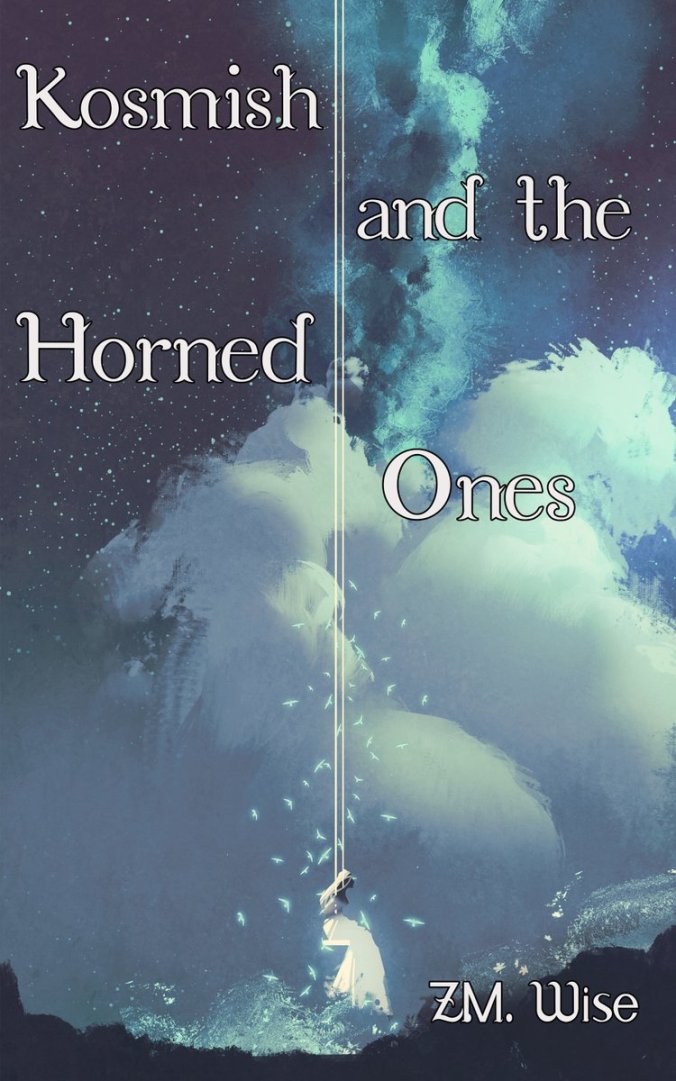
is a proud Illinois native from Chicago, poet, essayist, occasional playwright, seldom screenwriter, co-editor and arts activist, writing since his first steps as a child. He was selected to be a performer in the Word Around Town Tour in 2013, a Houston citywide tour. He is co-owner and co-editor of Transcendent Zero Press, an independent publishing house for poetry that produces an international quarterly journal known as Harbinger Asylum. The journal was nominated Best Poetry Journal in 2013 at the National Poetry Awards. He has published five full length books of poetry, including:Take Me Back, Kingswood Clock! (MavLit Press, 2013),The Wandering Poet (Transcendent Zero Press, 2014), Wolf: An Epic & Other Poems (Weasel Press, 2015), Cuentos de Amor (Red Ferret Press, 2015), and Kosmish and the Horned Ones (Weasel Press, 2018). Other than these five books, his poems, essays, and book reviews have been published in various journals, magazines, and anthologies. The motto that keeps him going: POETRY LIVES! Mr. Wise will make sure to spread that message and the love of poetry, making sure it remains vibrant for the rest of his days and beyond. Besides poetry and other forms of writing, his other passions/interests include professional voice acting, singing/lyricism/songwriting, playing a few instruments, fitness, and reading. 

Link to website (links to other websites are included on the ‘Related Links’ page): http://zmwise.wixsite.com/zmwisethepoet

The Interview

1. When and why did you begin to write poetry?

At the tender age of six, my juvenilia announced its unexpected presence with both an explosion and a series of sweet nothings whispered in my ear. I began to write a few observational stories that I turned into poems. From that day forward, my mind and pen simultaneously felt tickled at this newfound sensation. Until I was eighteen, I explored many avenues of literary creation, including short fiction (particularly in the speculative genre), teenage erotica, and song parodies. In addition to those, I wrote and drew comic books based on my own stories and stories inspired by video games and comic strips, as well as individual drawings I produced. In between the wide array of forms that writing donned, I wrote poetry. It came most natural to me, though I would not know that until I reached the final stage of adolescence. In my junior year of high school, I wrote half a book of love poems that I dedicated to my girlfriend at the time, with the exception of a few universal love poems and a love poem celebrating the marriage between a U.S. History teacher and her new husband. Unfortunately, some silly crayon (my euphemism for imbecile) decided to steal the notebook. Why anyone would steal a half finished book of amateur love poetry written by someone with dysgraphia (a handwriting disability) is beyond my level of comprehension, but if that individual could decipher my atrocious penmanship, then I highly commend them. Luckily, I was able to recover four of those pieces that I happened to type and revise. Why did I begin to write poetry? I believe it sought me out, to be perfectly honest. I suppose I literally and metaphorically read between the lines and found it staring back at me, begging me to dedicate my life to it. Since then, I have found solace in poetry, poems-turned-songs (which I record and sing), essays, the occasional flash fiction piece, short verse dramas, a play in one act, a screenplay, occasional articles, book reviews, musings, quips, vanity quotes, and almost any form of writing I can get my hands on.

2. Who introduced you to poetry?

In regards to reading poetry, I believe it was my immediate family and grandparents. Writing poetry, on the other hand, I inherited from my grandfather on my father’s side. Concerning the love of poetry, writing, and language, I owe it all to him. We would have numerous ‘writing sessions’ where he would lecture me on the forms, styles, and rules of language, grammar, spelling, and literature. It was an illuminating experience for me. Both he and my father heavily dabbled in formal poetry, akin to writing a greeting card. The pieces were mainly sentimental with a rhythmic flow. I learned about rhyme schemes quite early in life, as well as the tone of individual poems. To this day, my father still writes what I call ‘personal song parodies’ for his friends’ special occasions, i.e. birthdays, anniversaries, and retirements. He will meticulously listen to a song and then write down certain lyrics to match the melody and then sing the parody itself to said person. It is a remarkable feat.

3. How aware were and are you of the dominating presence of older poets?

While my contemporaries have always inspired me and continue to inspire me by means of oral speech and written work, I constantly find myself looking to the elders for answers. It is not so much because of traditional value or ancient ethics, per se, but more of a belonging. It was a different time for poetry. Before rhyme scheme ever existed, the most primeval pieces were written with the gusto that I could not even begin to describe. Pieces like The Epic of Gilgamesh, poems written by Sappho, and poems written by Enheduanna still bewilder me to this day and age, almost as much as a totally unrelated piece of literature, The Voynich Manuscript. Hypocritically speaking, many of my contemporaries have seemed to channel the elders in their work, just as I do with a great many pieces of my own. We can only be so original with our work, for we borrow a fragment of nearly every idea …even if it is subconscious and we do not sense it. It is no crime as long as we eventually find our individual voice and carry it with us for the remainder of our days.

4. What is your daily writing routine?

Goodness gracious, great balls of fire…I wish I had one. I believe I will in the years to come. However, I attempt to write every day when I have a spare gap. Instead of eating lunch on my break at work, I write instead, for I cannot keep away from my craft for too long. Some commit to a certain number of words a day. Some commit to a number of poems per day. I, on the other hand, must write as naturally as possible. I applaud people who are able to crank out said number of words or poems a day and have the result turn out to be incredamazing…after much editing and revision, of course. As long as I have some finished work by the end of each day, my mission is accomplished. However, I try to write a few poems a day, unless I am working on another project that is not poetry.

5. What motivates you to create?

It is a requirement of my nature. It is a craving, a lustful desire, and a primal focus of my life. While I work full time to provide financial stability and security, you will never hear me mention my occupation. I only speak of my writing, occasional singing, and somewhat abstract pen sketches. Concerning visual art, I am still somewhat of a neophyte, but I dabble nonetheless. As a certain quote reads, “I don’t live to work; I work to live.” It has embedded itself in my skull for all eternity. There is no singular goal as far as motivation itself is concerned. I believe it is just one more milestone in my progression and personal evolution as a creator.

6. What is your work ethic?

A.) Wake up with the infinite drive to create and manifest something worthwhile, whether it is during my break at work, when I return home, or before bed. In my writing process, the rough draft is about the significant release for me, so even if the draft is absolute drivel, it is on parchment. That is what the editing and revision stage is for, of course.

B.) I also believe in giving credit where it is due. While many ideas and philosophies have been borrowed from one source or another…even subconsciously, we owe it to the creators before us, for we would not be where we are today without their transcendence on paper. To the contemporary minds of completely original style, I salute you.

C.) Protect your creations would be another major tip that is vital to one’s archive. There are one too many digital thieves lurking online, waiting for their latest opportunity. Copyright your work if you are choosing to post it online. Email drafts to yourself so that you have actual proof at the ready.

D.) Expect rejection when submitting. It will not sting as much if I my work is rejected. On the upside, if my work is accepted, it is that much more of a celebration and that much more of a genuine thrill.

E.) ALWAYS. READ. THE. SUBMISSION. GUIDELINES.

7. How do the writers you read when you were young influence you today?

I was always diverse about what I read and which authors I read, but in the middle of high school, I cut fiction out of the literary spectrum. It became too tedious for me and my level of appreciation for it greatly reduced over time. I have been rediscovering my love for short stories, though. Dave Barry influences the sarcastic and humorous side of me. Edith Hamilton brings me back to the question of mythological morals. Maya Angelou speaks words of refreshing lightning and lets loose tremors of reality. Enheduanna, Sappho, and other ancient women write stanzas of revolution that occasionally echo in my written ear. Richard Matheson, Ray Bradbury, and other speculative authors remind me to explore the realms of the unusual and unexplained, only to be washed ashore by the book-laden surf. Though my taste in music is nothing short of eclectic, I owe it to David Bowie and Al Stewart, constantly encouraging me to rewrite the rulebook of the arts and take eight steps further beyond the infinite line of creation. Langston Hughes murmurs the blues before opening one’s eyes to humanity’s numerous aspects, giving me the frisson that I require to carry on in this life. I owe it to William Blake and Arthur Rimbaud for paving the way for other prophetic humans before their time. Jim Morrison, Leonard Cohen, Marc Bolan, Ian Curtis, Patti Smith, Serj Tankian, Phil Ochs, Donovan, Ani DiFranco, and countless other musical poets nudge me and reassure me that it is quite all right to sing one’s pieces as well as read them aloud. Thank goodness for the unseen faces behind poems-turned-songs such as Peter Sinfield, Robert Hunter, and Pete Brown, taking our ears for a lyrical voyage across oceans of verse. Rumi, Basho, Tagore, and certain poets from the T’ang Dynasty put my spirit at ease during turbulent times. There are many more I could name, but these are decent enough to start with.

8. Who of today’s writers do you admire the most and why?

Instead of giving each person a description as I did with the previous question, I shall just provide a brief list of those I do admire. They include: Weasel, Mallory Smart, Arielle Tipa, M.D. Friedman, Rosemerry Wahtola Trommer, Brian Kehinde, Maya Garcia, Julie Anderson, Leo Goya, John Gorman, Khalypso, Usha Akella, Ken Jones, Kevin Young, BGK, Kaveh Akbar, Faleeha Hassan, Kristin Garth, H. Melt, Dustin Pickering, Rupi Kaur, Dimitris Lyacos, Sharon Olson, Saul Williams, Lyn Lifshin, Naomi Shihab Nye, Chen Chen, and many more.

9. Why do you create?

I create for the same reason that I breathe: to survive…to release and unleash the many beasts that never meant to be tame in the first place. I create so that my (overrated) sanity may remain in meditative phases and in a luxurious bedroom of organized chaos. I create to make a semblance of a difference in this blue-green sphere we inhabit, even if it involves affecting one individual’s mindset. Creations of mine are sometimes but not always the byproducts of my mental health and my muse and goddess working in harmony with minimal rancor.

10. What would you say to someone who asked you “How do you become a writer?”

Without sounding too pompous, I would ask them what their intention was. What kind of writer are they interested in becoming? Is it for technical purposes? Are they interested in entering the field of academic writing? Are they interested in multiple disciplines of writing? Concerning the field of creative writing, I would tell them to read a great deal of literature. They should surround themselves with volumes of work. They should experience life in its many guises as well. I would tell them to let nothing stop them from creating the written word. They should save every piece they have ever written for the purpose of watching their progress and upward evolution as a writer. I would be more than happy to play the role of a mentor and push them in the right direction, telling them to be as diverse as possible with how they write and what they write, never identifying themselves with the word ‘limit’. However, certain writers stick with one particular concept and it works wonders for them. It will just depend on each individual writer.

11. Tell me about the writing projects you have on at the moment.

While I tend to focus on one project at a time, I have been rather creatively promiscuous within the past few months. First of all, I am near completion on the rough draft of a play in one act. Secondly, I finished notes for a screenplay that is completely separate from the former. I am also transferring poems and poems-turned-songs written on the back of receipts to a notebook. The poems were mainly written last year in between and during books and other projects. Last but not least, I am also working on a book of ‘lost poems and writings’ from 2010 to the present date. In between all of those projects, I am writing new individual pieces. As I mentioned before, I must create.
Poetry lives! Long live the arts!


Wombwell Rainbow Interviews: Juliet Cook

Wombwell Rainbow Interviews

I am honoured and privileged that the following writers local, national and international have agreed to be interviewed by me. I gave the writers two options: an emailed list of questions or a more fluid interview via messenger.

The usual ground is covered about motivation, daily routines and work ethic, but some surprises too. Some of these poets you may know, others may be new to you. I hope you enjoy the experience as much as I do.

malformed confetti

Juliet Cook

Juliet Cook’s poetry has appeared in a small multitude of magazines. She is the author of numerous poetry chapbooks, recently including a collaboration with j/j hastain called “Dive Back Down” (Dancing Girl Press, 2015), and an individual collection called “From One Ruined Human to Another” (Cringe-Worthy Poet’s Collective, 2018).
Cook’s first full-length individual poetry book, “Horrific Confection”, was published by BlazeVOX more than ten years ago. Her more recent full-length poetry book, “A Red Witch, Every Which Way”, is a collaboration with j/j hastain published by Hysterical Books in 2016. Her most recent full-length individual poetry book, “Malformed Confetti” was published by Crisis Chronicles Press in late 2018

Cook also sometimes creates semi-abstract painting collage art hybrid creatures.

Find out more at http://www.JulietCook.weebly.com

Feel free to peruse and/or acquire some of the poetic/artistic creations of Juliet Cook and others via her Blood Pudding Press shop at https://www.etsy.com/shop/BloodPuddingPress
***

You can acquire your own copy of Malformed Confetti from Crisis Chronicles Press, HERE -https://ccpress.blogspot.com/2018/10/Cook102.html

Or from Amazon, HERE -https://www.amazon.com/gp/product/1640929738/ref=cm_sw_r_tw_myi?m=AXH8DEUFPPU2O

Or directly from the author’s own Blood Pudding Press shop, HERE – https://www.etsy.com/listing/641070988/malformed-confetti-by-juliet-cook-2018?ref=shop_home_feat_1

The Interview

1. What inspired you to write poetry?

Other poetry and my own creative impulses mixed with my own communicative impulses. I’ve been writing my own poetry for over 25 years now so I’ve been drawn to poetry as a form of creative expression for more than half my life. I know there are people who don’t understand or relate to my poetry, but I also know that over the years, many other people’s poetry has inspired me, wowed me, moved me, strangely disturbed me, elicited thoughts/feelings/strong emotions/artistic impulses – and I hope my poetry does those kinds of things to a few others.

2. Who introduced you to poetry?

As far as contemporary poetry goes, I think I initially introduced myself by semi-randomly stumbling upon a book at a semi-random bookstore and thinking, “Oh my gosh! Poetry can speak like THIS?”. That was sometime when I was in high school. Prior to that, I had been exposed to some poetry in high school English class, most of which had seemed old-fashioned in terms of language and some of which I had been strongly interested in and enjoyed, such as E.E. Cummings. But at the time I was in high school, none of the limited amount of poetry they shared in high school English class seemed up to date enough for a teenager. So when I semi-randomly discovered a more contemporary poet and then more and more and more, I began to realize you can create your own creative voice, however you choose. Granted, it took me a while to get mine to come out the way I wanted it to, but that’s another story.

3. How aware were you of the dominating presence of older poets?

I think my above answer kind of insinuates this. When I was in high school, most of the writing we were taught was outdated. I didn’t dislike it, but it probably turned a lot of people off to poetry right away when a lot of what you’re reading in your teenage years is in a style of speech and subject matter that differs from the present day and age. Also, pretty much all the writers we were exposed to were old dead white men. Fortunately, that changed when I was in college and was surrounded by a larger library and more diversity and uniqueness. Hopefully, these days, high school English is more broad and inclusive too. Also these days, one can discover for themselves online.

4, What is your daily writing routine?

I don’t have the same routine every day, but my mind is focused on writing and poetry and art every day in one way or another, from thinking about it to reading it to writing it to revising it to submitting it to publishing it to promoting it to the way I think and feel and speak.

5. What motivates you to write?

Mostly my own thoughts and how my brain responds to life experiences, emotions, art, and other writing. Also, in a more indirect way, I’m sometimes creatively inspired by horror films, the psychological, the supernatural, and the political.

6. What is your work ethic?

To try to stay focused on some sort of creative expression in one way or another, whether personal communication, reading, writing, revising, submitting, being published, publishing others, working on art. To maintain my own unique and individual creative passion.

7. How do the writers you read when you were young influence you today?

For me, I think it’s more the fact that I was reading lots of different kinds of contemporary poetry when I was young, was exposed to lots of different styles, and was thus made aware that my poetry and my style should be my own. I never wanted to be like anyone else, but I did ideally hope to move people as strongly as some of my favorite poets moved me when I was younger.

8. Who of today’s writers do you admire the most and why?

I find it impossible to narrow my admiration down to one or a few writers. What I admire most about writers, in addition to their own unique poetic style, is maintaining their style(s) for their own reason(s), maintaining their own passion, staying true to themselves while continuing to grow, and remaining open to considering the creative work and viewpoints of others.

9. Why do you write?

To express myself my way. Poetry has been my favorite form of creative personal expression for many years. It captures parts of me that might otherwise disappear. I can re-read an old poem of mine and remember/re-live/re-connect with and/or re-examine various aspects of my past mind. I can write a new poem and explore my present mind.

10. What would you say to someone who asked you “How do you become a writer?”

You need to maintain your own passion, work at your own pace, and set your own goals. You need to be true to yourself, but also try to develop and grow as a writer. You need to have your own personal definition of success as a writer, but you can’t expect success to happen with a few clicks of your fingers. You have to keep working to achieve your goals.

11. Tell me about the writing projects you have on at the moment.

First and foremost, ongoing reading and writing (with bits of revising, submitting, and publishing in between).

In the middle of 2018, my poetry chapbook, “From One Ruined Human to Another” was published by Cringe-Worthy Poet’s Collective – and closer to the end of 2018, my second full-length poetry book, “Malformed Confetti” was published by Crisis Chronicles Press – so I hope to promote those two collections a bit more this year – and I have a few poetry readings lined up.

Sometime this year, I have another poetry chapbook, “Another Set of Ripped Out Bloody Pig Tails” forthcoming from The Poet’s Haven. I also have another poetry chapbook manuscript, “red circles into nothing” circling around the poetry universe. I’m in different stages of considering and working on the creation of various other creative projects too.


***


Wombwell Rainbow Interviews: R.M. Francis

Wombwell Rainbow Interviews

I am honoured and privileged that the following writers local, national and international have agreed to be interviewed by me. I gave the writers two options: an emailed list of questions or a more fluid interview via messenger.

The usual ground is covered about motivation, daily routines and work ethic, but some surprises too. Some of these poets you may know, others may be new to you. I hope you enjoy the experience as much as I do.


lamella

R. M. Francis

is a poet from Dudley. He recently completed his PhD at the University of Wolverhampton where he lectures with the Creative and Professional Writing team. He’s author of four poetry chapbooks: Transitions, (Black Light Engine Room, 2015), Orpheus, (Lapwing Publications, 2016), Corvus’ Burnt-Wing Love Balm and Cure-All (Black Light engine Room, 2018) and Lamella (Original Plus, 2019)

https://rmfrancis.weebly.com/

https://twitter.com/RMFrancis

The Interview

  1. What inspired you to write?

Growing up, my brother used to bully me in to telling him stories at night – I’d make up really rude tales about the cats in the street. I think his reaction to these stories runs pretty deeply in why I write. On one hand, I want to make sense of things and to add my perspective on things. On the other, I want to impress, show off, garner the big brother’s approval!

In terms of influence it was rock music, and that influence remains to this day. I loved Iron Maiden as a kid, partly because the older kids did, so I spent quite a bit of time trying to imitate Steve Harris and Bruce Dickinson lyrics. Maiden taught me about William Blake and Coleridge, HG Wells and Robert Aikman. Years later, The Manic Street Preachers did the same with Plath, Pinter, Miller and Mailer. Morrisey did the same. Billy Corgan did the same. My old man has always been a big reader, and a wider reader than most people I know. I was lucky enough to have some good English Teachers, Mrs Rowe from Redhill Secondary School has been particularly important to me – she gave me Simon Armitage who I’ve been hooked on for decades now. So, I suppose I was always surrounded with poems and stories and I associated them with adult / peer approval and a certain peacock-ness and I never looked back.

All of this is slightly off though because I feel compelled to write, even when I really don’t want to put pen to paper, I’m under its duress.

  1. Who introduced you to writing?

I’ve mentioned some early influences above so I won’t repeat myself. This is a bit of a weird question for me, maybe for a lot of writers too because we go through various stages of feeling different levels of “writer”. I’ve spent a lot of time doing it on my own, so I introduced myself in some ways. That said, I don’t really consider any of my juvenilia to be “proper writing”. It wasn’t until I started my MA at Teesside University that it all started to take shape. I was a student of poet, Bob Beagrie and he has had a massive influence on my approach to poetry, he introduced me to p. a. morbid who also helped steer the ship, and subsequently became my publisher – The Black Light Engine Room publishing two of my four chapbooks. I recently completed my PhD at the University of Wolverhampton, for which I wrote a novella. This was a huge learning curve for me, I’d only written poems and short prose before. You might say my supervisor, Paul McDonald (novelist, poet, critic) introduced me to tackling this form. You’ve got to keep looking and keep treating your writing as a never complete, ongoing process so I reckon we should all be on the lookout for the next person who might introduce us to writing.

  1. How aware were you of the dominating presence of older writers?

Very aware. They hang over everything I write. Dominate might be the wrong word, or at least not fully. There’s pressure from those who came before, a pressure not to repeat or merely replicate, and a pressure to live up to them – to produce work that is at least in the same stadium, if not the same game. The other side of this though is that the great gods of the past offer helping hands too. All of this is part of the process in becoming a “writer-proper” as Harold Bloom might say. We translate, clash, fuse then break away from what came before, making something new out of it. I like the idea of a hero or a set of heroes anyway, they act as target and as judge. If I can finish a poem, look up at my photo of Tony Harrison and ask, “is that alright, boss?” and get a psychic nod of approval then it means I’m aiming and I’m aiming properly.

  1. What is your daily writing routine?

I write every day and have done for quite a few years. That’s as close as it gets to a routine really. I rarely set myself word count targets or anything like that. I don’t do it at a certain time of day. I just make sure half an hour as a minimum (it’s often several hours) goes down. Of course, this all changes depending on what sort of project I’m working on. For example, I recently completed the manuscript for my chapbook, Lamella out with Original Plus Press this year. At this point the editing process takes priority over new ideas, so the routine is about reading, revising, reading out loud, revising some more, getting feedback from people, revising a bit more.

  1. What motivates you to write?

This is a tough one, and I’ve mentioned some of my motivations in the other questions so far. I’ve spoken about early reactions and of influences so perhaps I’ll tackle this question in terms of discipline. I’m motivated to write by being strict with myself. I want to try to keep getting better, to aim at a perfect sentence or perfect poem – that’s really hard to do and you can only get close to it by getting up and working at it every day. Creativity is like a muscle, the more you use it the easier it gets to use – that’s not to say everyone can do it, most people aren’t creative. Like I’ve mentioned before though, I’m under its curse, there’s part of me that does just want to slob out and watch Hollyoaks, but the more I do that the louder the little daemon gets.

The other side of this is the puzzle of it all, the game of writing is fun. Slowly whittling away at a piece is profoundly satisfying – it’s like the feeling you get when you’ve just cleared out the garage or finished the weeding. There’s orgasmic pleasure in taming the beast!

  1. What is your work ethic?

I’m quite tough on myself and I make sure I go as flat out as I can without burning out, and as rigorous as I can too. The work of Professor Jordan Peterson has helped recently, he says quite a lot about adding up the amount of time you waste, volunterily stepping up to the hard responsibility of life. I think many people think the writer needs to be liberal, flexible and open in their mindset and that is true, but you’ve got to be conservative, stoic and orderly too. Right and left brain have to work together. Being overly liberal creates nothing but ideas. One needs the conservative side to sculpt it down, polish it up and organise the time-space to allow for that. When you get tough on yourself, you get better results, that makes you tougher and you can try even harder next time, and get better and tougher and harder again and again and again.

  1. How do the writers you read when you were young influence you today?

What do you mean ‘when I was young?’ I’ve only been bald for a decade!

I’ve always loved horror and sci-fi and you can see the influence of strange bodies, uncanny tropes, off-kilter landscapes and disturbing images in my work for sure. Simon Armitage, who I read at about 14, gave me the permission to write about things in my own town, estate and experience from a very early age so that’s definitely stuck and is observable in my Black Country poems. I did Blake at A level, his fourfold vision has inspired my poetics; the way he made whatever he was talking about take on a literal, social, political and spiritual resonance.

  1. Who of today’s writers do you admire the most and why?

Wow! Where to start. I’ll pick two to make sure I don’t bore everyone.

Anthony Cartwright is my favourite contemporary novelist. He writes about the cultures and communities of Dudley, and does so in such a beautiful way. He’s measured and clever, giving the dark and light of the region. I love the way he fuses the factual with the fictional and mythical, creating storyworlds where Saxon kings, the local football team, gyspy folktales and the steelworkers all share space.

Samantha Roden is a poet published with Original Plus. She’s absolutely stunning. Sharp as a tack, vulgar as a drunk miner on payday and juggles themes that are too mucky for most poets to handle. Her work is tough and gorgeous and very funny – a much needed remedy in today’s increasingly sanitised culture.

  1. Why do you write?

When I talk to people, I don’t get the chance to edit and revise and work out the best possible way to say things. When I write, I do – it makes me appear smarter than I am. I’m half-joking. Only half, mind.

Writing is fun, like I’ve said before, there’s a dopamine hit that comes from the playfulness of working the puzzle out. That said, I don’t always love doing it, sometimes it’s a real chore, so it’s not just enjoyment.

I don’t feel like writing is a catharsis like many people do, I don’t do it for any self-help reasons or as a release in anyway. I suppose there’s a sense that the way I see the world requires documenting in some way, but that doesn’t sum it all up; that misses out the narcissistic, show-off element. I can’t deny that the peacock side of things is a pull for me. But, like I’ve said, I’m compelled by it, as if its outside of me. I know that sounds pretentious, I love-hate myself for saying that!

  1. What would you say to someone who asked you “How do you become a writer?”

Well, first I’d say never stop asking yourself if you’ve got there yet. Keep trying to become more of one. I still am.

In practical terms, you need to read loads and write as much as you can. Write and read as widely as you can too – the different blueprints will help show you what works, what doesn’t and what rules can be bent. You also need to get in to that liberal-conservative state of mind too – you need ideas, but you need craft and tradition and rigour too. Also, if at first you don’t succeed, try again. Try a second and third time. Try really hard. If you still don’t succeed, give up, it’s not for you. Despite what people say, not everyone is creative. Finally, measure your success on what you intended to do set against how well you executed it, not fame, not sales, not twitter followers.

I eat an egg everyday too – eggs are really good for your brains.

  1. Tell me about the writing projects you have on at the moment.

My next poetry chapbook is out in February. It’s called Lamella and is being published with Original Plus. It’s a series of poems that look at liminal landscapes of post-industrial Britain, the underbellies of everyday life, in the unlooked and overlooked, where we might find the lost feral, primal and off-kilter parts of selfhood.

My novella is looking for a publisher at the moment. It deals with a small community in Netherton, a suburb of Dudley, and their attempts to unlock a mystery that has loomed over them for decades. Everyone has a theory. Everyone has an experience of the ghostly activity. As they delve into the story they not only unlock the truth of the crime but, the odd borderlands of being – the liminal spaces of fear-fascination, attraction-repulsion, sex-death.

I’m currently writing a book chapter about Joel Lane’s horror stories for a collection of essays about New Urban Gothic, and I’m tinkering around with a collection of flash fictions and short stories all set on the Wren’s Nest Housing Estate in Dudley– my home. I’m making a start on writing some proper horror too – playing with the idea that there are things we do in life that welcome in the devil. I like that idea!

Verve Poetry Press have just released an anthology called 84 which is a collection about male suicide, mental health and grief – Helen Calcutt has edited the collection and has done an amazing job of curating something that touches on the polymorph nature of such a subject. I’m one amongst many awesome poets in this.

Next year, my first full collection of poetry is out with Smokestack Books, this is an angry, dialect driven Black Country collection that explores life just before and just after the Brexit referendum.

I’ve got few other irons in the fire at the moment too, in terms of literary events and publishing ideas … I’ll leave you with that.


Wombwell Rainbow Interviews: Mendes Biondo

CAUTION: ADULT MATERIAL

Wombwell Rainbow Interviews

I am honoured and privileged that the following writers local, national and international have agreed to be interviewed by me. I gave the writers two options: an emailed list of questions or a more fluid interview via messenger.
The usual ground is covered about motivation, daily routines and work ethic, but some surprises too. Some of these poets you may know, others may be new to you. I hope you enjoy the experience as much as I do.


spaghetti-and-meatballs

Mendes Biondo

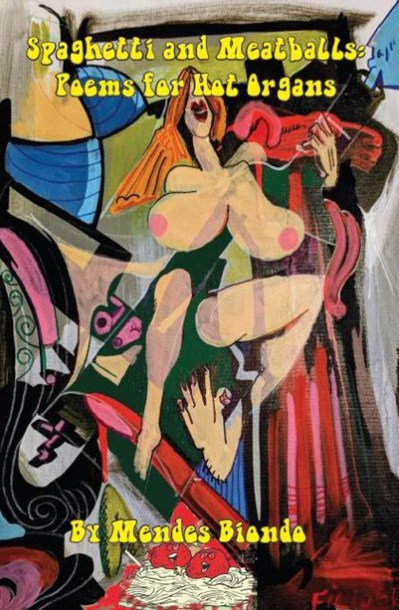
is an Italian journalist and author. His works appeared on Visual Verse, I Am Not A Silent Poet, Literary Yard, Angela Topping Hygge Feature, Indigent A La Carte, The BeZine, Scrittura Magazine, The Song Is, Poetry Pasta and other magazines. He is one of the editors of The Ramingo’s Porch along with Marc Pietrzykowski and Catfish McDaris. His book of poems “Spaghetti & Meatballs – Poems for Hot Organs” was published by Pski’s Porch Publishing.

Blog: https://ramingoblog.com/

Publishing House: http://www.pskisporch.com/

Book:https://www.amazon.com/Spaghetti-Meatballs-Poems-Hot-Organs/dp/1948920107

Magazines: https://www.amazon.com/s/ref=nb_sb_noss?url=search-alias%3Dstripbooks-intl-ship&field-keywords=The+Ramingo%27s+Porch


The Interview

First of all thank you Paul and to your rockin’ readers for having me!

  1. What inspired you to write poetry?

I started writing poetry in Italian during high school, as I believe most of us did. I needed a fast way to shot out my bad and good vibes, my blues and my joy. Anyhow, the real motivation that led me to write poetry is that, at the time, I was courting a girl and it worked, you know? This year Elena and I are celebrating ten years together. Ten years of love, words and travels here and there.

  1. Who introduced you to poetry?

High School introduced me to Italian poetry, and it was both a trauma and a wonderful discovery, while I had a great poet as godmother for English poetry: Deborah Alma, the Emergency Poet. I will never stop thanking her for the help she gave me. She pushed me to write and read more in English language. I’m still writing typos and other kind of silly things but I suppose it’s part of the game, isn’t it?

  1. How aware were you of the dominating presence of older poets?

Consider I live in Virgil hometown and near to me there are cities where Catullo and Ovid lived. Then there are all the other big masters of poetry from Dante Alighieri to Giuseppe Ungaretti. They are two-faced masters: on the one hand they are a great resource, but on the other they are a burden that is difficult to remove from shoulders

  1. What is your daily writing routine?

Working as a freelance journalist permits me to write everyday with method. Poems, generally, comes in the depth of night while I’m going to sleep. So I have to jump down from the bed and write them as fast as I can. Sometimes slumber is so heavy that they are lost in my mind.

  1. What motivates you to write?

As I said in another interview, there are two elements that move me to write: fun and other people happiness. I think poets should be catalysts and give to the reader a sort of balsamic feeling of well-being. You feel down because you’re not able to find a job and a poem helps you to find new energy? That’s what I mean. You feel happy because you’ve had sex with your partner and a poem remembers you that moment? That’s what I mean.

  1. What is your work ethic?

Stay true, also if it hurts you to write those words, or if it could hurt people you know. As a great artist of the past once said: “The flesh, my son, you have to show the flesh of the world”.

  1. How do the writers you read when you were young influence you today?

Every book I read influenced me. I’m a sponge for ideas and thoughts. Probably they gave me method in working and thinking.

  1. Who of today’s writers do you admire the most and why?

Check my friends on Facebook and you’ll find a long list of talented authors – poets and writers – I admire. They are living voices and they are strong. The only names I’ll do without taking away honours to others are Catfish McDaris and Marc Pietrzykowski. They are my fellows “musketeers” at The Ramingo’s Porch, but, first of all, they are Pals of mine.

  1. Why do you write?

Because I’m out of tune, I’m not able to play an instrument, I’m not good at drawing, I’m not able to sculpt and so on…

  1. What would you say to someone who asked you “How do you become a writer?”

Good question! I’m still looking for an answer. Ha.

  1. Tell me about the writing projects you have on at the moment.

Phew, this question is easier than the last one. I’m very happy and proud to say my book “Spaghetti&Meatballs – Poems for Hot Organs” is out. The rockin’ Pski’s Porch Publishing believed in my words and decided to publish it. Soon will be available the fourth issue of The Ramingo’s Porch magazine and it will be a good occasion to celebrate talented voices coming from all over the world. Then I’m always open for collaborations and new projects. Let’s rock all together Brothers and Sisters!

Link to the book: https://www.amazon.com/Spaghetti-Meatballs-Poems-Hot-Organs/dp/1948920107


Wombwell Rainbow Interviews: Phil Vernon

Wombwell Rainbow Interviews

I am honoured and privileged that the following writers local, national and international have agreed to be interviewed by me. I gave the writers two options: an emailed list of questions or a more fluid interview via messenger.

The usual ground is covered about motivation, daily routines and work ethic, but some surprises too. Some of these poets you may know, others may be new to you. I hope you enjoy the experience as much as I do.

philvernon_frontcover


Phil Vernon

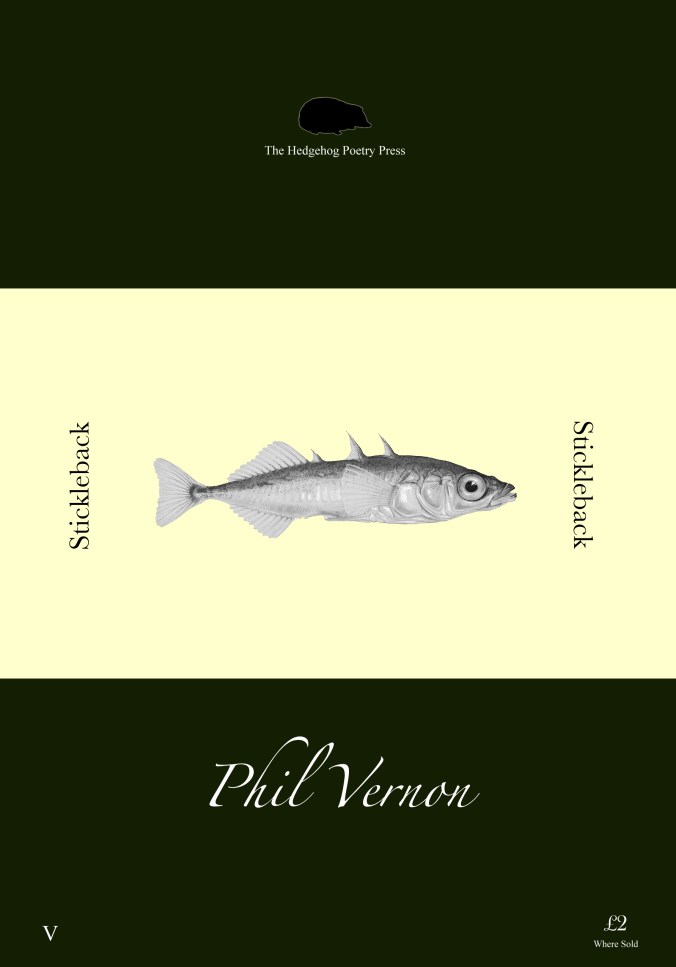
lives in Kent in the UK, where he returned in 2004 after two decades in various parts of Africa. He works as an advisor on peacebuilding and international development. He mainly writes formal poetry, finding the interaction with pre-established patterns of rhythm and rhyme can lead in surprising directions. His poems have been published in numerous magazines, journals and websites, and been shortlisted in, and even won a couple of competitions. A micro-collection, This Quieter Shore, was recently published by Hedgehog Poetry Press https://www.hedgehogpress.co.uk/product/stickleback-v-phil-vernon-this-quieter-shore-limited-print-edition/

Some of his poetry can be found on his website www.philvernon.net/category/poetry.

The Interview

  1. What inspired you to write poetry?

I have written poetry during three phases of my life. At school, and for a year or two thereafter, I wrote a few poems, but I can’t recall why, and they weren’t much good. In my late twenties I lived in a remote village in Sudan and wrote poems as a way to compress and express my sense of awe at the landscapes and the sheer difference. And then I took up writing poems again six years ago, partly as a way to occupy long international flights and my (then) daily commute, and got hooked.

  1. Who introduced you to poetry?

Hard to recall. But I do remember my father persuading me and by brother to learn Blake’s Tyger Tyger, burning bright,/ In the forests of the night by heart.

  1. How aware were you of the dominating presence of older poets?

I think I’ve always been aware of both older and modern poetry.

  1. What is your daily writing routine?

I read some poetry most days, but may go for a week or two without really working on a poem. I keep a notebook where I scribble odd ideas as they occur. Sometimes they never get used; sometimes I use them in a poem the same day or soon after; other times I might pick them up again a year or more later, and start to work a poem around them. Once that happens I work fitfully on the poem until it seems to be finished – perhaps 3-4 times per day. And then later on, revise it again; and again. And probably again.

Because I usually write formal verse, it can take a long time to get the form and content to fit.

  1. What motivates you to write?

The pleasure of the craft. Interest in the insights which emerge. The desire to say something interesting and/or inspiring in an aesthetically successful way. Pride when it comes together.

  1. What is your work ethic?

Driven by the work, rather than driving the work.

  1. How do the writers you read when you were young influence you today?

I used to like Dylan Thomas then, and probably unconsciously tried to imitate his musicality. Nowadays I find his style outweighs the content. TS Eliot was a favourite and probably influences me unconsciously still.

When I was a little older, I remember being knocked sideways by Larkin’s Aubade when it came out. He is still a favourite and perhaps my most important influence. I am impressed by the virtuosity, and moved by the emotions of Arundel Tombs and The Whitsun Weddings, for example.

  1. Who of today’s writers do you admire the most and why?

Don Paterson consistently, for his ear, his insights, his technique and knowledge.

  1. Why do you write, as opposed to doing anything else?

Probably because I am still trying to make sense of things, and poetry is a way to explore that.

  1. What would you say to someone who asked you “How do you become a writer?”

Read a lot. Then write. Keep doing both.

  1. Tell me about the writing projects you have on at the moment.

Two main threads to my poetry currently. First, I’ve been writing a series of poems loosely woven around the garden, gardening and landscape more broadly, as metaphors for a variety of things including relationships, dealing with change, and examining the concept of progress. For example:

Mysterious garden

That loosestrife overwhelms the rose

in June, which branches bow when wet,

a secret silence when it snows,

how birds change key before sunset,


that leaves now green were apple red,

where wrens build nests behind the fern,

which clematis wear velvet threads

and which wear silk: all this we’ve learned.


And yet, it’s only as we turn

the soil, and sow and thin and hoe,

and tie the taller stems to stays,


and coax the unforeseen, and prune

to let light in, we start to know

what this year’s garden wants to say.


Second, I’m interested in how individuals – some well-known, many not – interacted with the circumstances they found themselves in at their particular moment in history: how they were shaped by their environment, and shaped it in return. For example:

Catherine writes home from the Via Appia  

After the Romans subdued the insurrection led by Spartacus,

they crucified more than 6000 slaves along 130 miles

of the Via Appia. – Nineteenth century guide book.


‘A cold, dry wind blows hollow through the hearts

of travellers from Capua to Rome;

a cross set every thirty paces marks

their haunted progress northward and reminds

them uniformly, order outweighs stone.


Uncountable, the undrawn souls consigned

to void, unnamed in epitaph or song…

Conflict is human history’s constant bride;

her dowry underwrites a wedding feast

for which both invitation list and night are long.


With fewer wars today, by learning peace

we darkly learn ourselves: is it enough

we see the cruelty in war decrease

and yet sustain it, plainly hidden among

the dancing shadows of our winter hearth?


All hurt is felt and meted out by one

and every violence is intimate:

upon each cross a soldier nails a man.

Each night I shrink and tighten, and await

the terror of your voice, your breath, your hand.’

On Fiction Wombwell Rainbow Interviews: Kerry Hadley-Pryce

On Fiction Wombwell Rainbow Interviews

I am honoured and privileged that the following writers local, national and international have agreed to be interviewed by me. I gave the writers two options: an emailed list of questions or a more fluid interview via messenger.
The usual ground is covered about motivation, daily routines and work ethic, but some surprises too. Some of these fiction writers you may know, others may be new to you. I hope you enjoy the experience as much as I do.

51wy57oop0l._sx324_bo1,204,203,200_

Kerry Hadley-Pryce

was born in the Black Country. She worked nights in a Wolverhampton petrol station before becoming a secondary school teacher. She wrote her first novel, The Black Country, whilst studying for an MA in Creative Writing at the Manchester Writing School at Manchester Metropolitan University, for which she gained a distinction and was awarded the Michael Schmidt Prize for Outstanding Achievement 2013–14. She is currently a PhD student at the University of Wolverhampton, researching Psychogeography and Black Country Writing. Gamble is her second novel.

Here’s a link to Salt Publishing’s website with info about her two novels: https://www.saltpublishing.com/collections/vendors?q=Kerry%20Hadley-Pryce

A link to her website: https://kerryhadley-pryce.weebly.com/

The Interview

  1. What inspired you to write fiction?

I can’t remember not wanting to write – physically handwrite, I’m talking about. My parents used to give me notebooks before I went to school and I used to write ‘details’ in there. My Dad kept them all, these notebooks. I used to love the feel of the pen in my hand. When it came to writing fiction, I always loved making up stories, creating comic books (or ‘graphic novels’ as they’d be called now). I think it was my Dad, who read a lot to me and encouraged me to be a read, and who introduced me to the library, who inspired me to begin writing fiction.

  1. Who introduced you to fiction?

Reading fiction? My Dad. He was a very committed reader and borrower of books. He believed that reading was vital, and he encouraged me to read as widely as possible. School, I hated, in every single way, so whatever works of fiction I was introduced to (‘Northanger Abbey’ and ‘Macbeth’ together with a lot of war poetry, as I remember) had no impact on me whatsoever.

  1. How aware were you of the dominating presence of older writers?

I read a lot of Dickens as a kid, and made a project of reading everything by Edgar Allan Poe, so, yes, very aware, I’d say.

  1. What is your daily writing routine?

I work to a self-imposed deadline every week. I put together a timetable every Sunday night so I know where I am. I like to write a short story every week, so at some point in my timetable, that happens, but it depends where I am with the project I’m working on as to how the routine goes. Now, for example, I’m editing a novel, which is a different to writing the first draft. I like to make an early start on that, so a 5am start is good as I can get a couple of quiet hours in before the issues of the day start to crowd in. I have a break about 7.30am, take the dog for a walk, then take myself to the gym (I run 10km a day) and might have a couple of hours later on in the day. I’m a Visiting Lecturer at Wolverhampton University, where I’m a PhD candidate, so fit that in, and a bit of property development.

  1. What motivates you to write?

This is a good question. The therapy of it, really. I think it’s like some kind of meditation, for me, a way of getting into a proper state of flow. Writing is a solitary process, and I like that aspect of it. It’s a bit like wakeful dreaming. If I don’t write, I actually feel ill.

  1. What is your work ethic?

Organised, purposeful, serious (see question 4.).

  1. How do the writers you read when you were young influence you today?

I remember reading ‘Alice in Wonderland’ and being profoundly moved by it when I was about eight. There is, of course, a depth of darkness about that novel that is utterly affecting. I missed out a lot of the ‘appropriate’ fiction when I was a kid, skipping across to Andrea Newman quite quickly. That sense of darkness and domestic crisis seem to be themes I return to now.

  1. Who of today’s writers do you admire the most and why?

Not in any particular order: Paul Auster – I love the way he evokes a sense of place. Now, here’s a creepy fact: I went to New York a couple of years back and cruised around Park Slope in Brooklyn because that’s where he lives… (I didn’t see him, sadly.) Vesna Main is a brilliant short story writer. Her work has an excellent unsettling feel. Cynan Jones, because he has an amazing way of constructing sentences and he writes short novels, set in Wales which are absolutely exquisitely dark. Daphne Du Maurier, obviously. She was prolific and her short stories ‘The Birds’ and ‘Don’t Look Now’ are outstanding. Jennifer Egan, for her very clever, experimental writing. Michel Faber who is a total master of writing about place, of making the everyday not everyday at all. I could go on…

  1. Why do you write?

I love everything about it. I like the intrinsic pleasure of it. I like it when an idea materialises as a plot. Through writing I’ve met some fantastically talented people I’d never have met otherwise.

  1. What would you say to someone who asked you “How do you become a writer?”

You have to think of ‘becoming a writer’ as ‘becoming an athlete’. Same thing. See, just because you can run a bit doesn’t automatically make you a champion marathon runner, and just because you can physically put pen to paper doesn’t make you a ‘writer’. Professional writing is a cognitive process, so you need to write, write, write, and read, read, read as much as you possibly can. You need to suck it up, learn and write. You need to actually do it. You need to be open-minded to criticism and rejection, take advantage of any opportunity to write, and you need to heed advice. You need to do it, then do it some more. You need to stop thinking about it and do it. You have to get your head round the fact that not everything you write will work, or be any good. That doesn’t matter. We’re lucky to live in the times we do, as far as writing is concerned, because there are so many ways you can get your work out there: attend open mic nights, construct a website, do a creative writing course – any way you can motivate yourself to write, do it. Don’t go worrying about that massive multi-million pound publishing deal because that’s not the point. Make a project of your writing. Keep busy. When someone asks, tell them you’re a writer. Make a decision, and do it.

  1. Tell me about the writing projects you have on at the moment.

My first two novels, ‘The Black Country’ and ‘Gamble’ are published by Salt Publishing, and I’m writing my third novel with a working title of ‘God’s Country’. It’s part of my PhD in Psychogeographic Flow in Black Country Writing, and is another novel set in the Black Country. As I’m editing it, I am aware it’s becoming more and more dark and more unsettling, which I’m pleased about. I have a short story due to be published by Fictive Dreams, and I’m writing more of those. I had an idea for a series of ‘Black Country Noir’ novels, so I’ve written the opening to one of those, and that’s simmering on the back burner. Teaching creative writing is a pleasure of mine, as is my Visiting Lecturer work at Wolverhampton Uni. I’m also involved with a ‘Smells and Memory’ project called ‘Snidge Scrumpin’’ at the university, in which we’re researching Black Country smells and the memories they invoke, and I’m also writing some non-fiction for that.


my god is – Paul Brookes

Stoked to ne featured by Bola, this months editor at Burning House Press.

bolapoet's avatarBURNING HOUSE PRESS

my god is

imperfect, a perfect image for me.
humbled by its mistakes.

my god is a mistake.
a wrong answer,

differently abled.
its winters often in spring.

its summers sometime in autumn.

View original post 162 more words

Wombwell Rainbow Interviews: Andy Armitage

Wombwell Rainbow Interviews

I am honoured and privileged that the following writers local, national and international have agreed to be interviewed by me. I gave the writers two options: an emailed list of questions or a more fluid interview via messenger.

The usual ground is covered about motivation, daily routines and work ethic, but some surprises too. Some of these poets you may know, others may be new to you. I hope you enjoy the experience as much as I do.

andy armitage

Andy Armitage

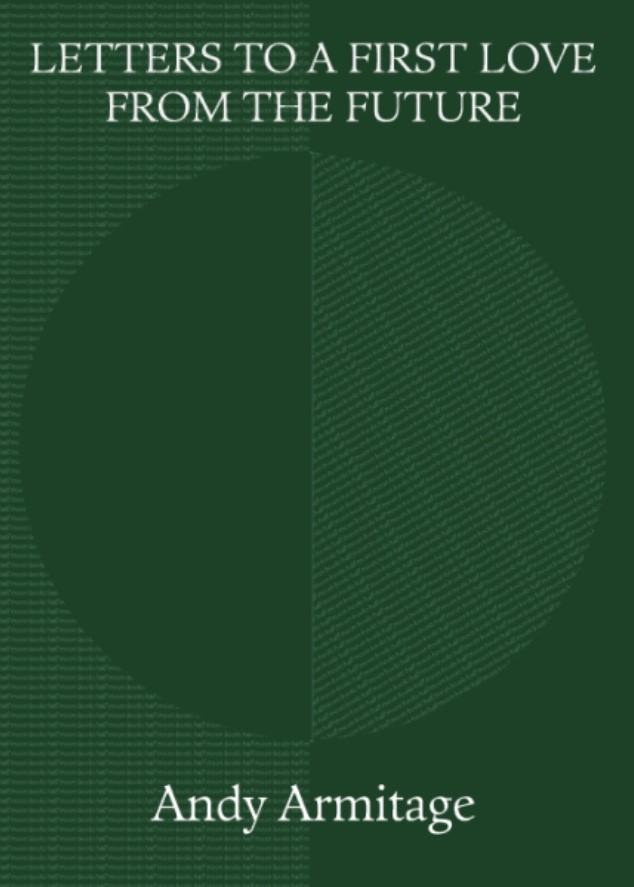
is a poet and editor from Leeds, West Yorkshire. His first book, ‘Letters to a First Love from the Future’ was published by Half Moon Books in 2018.

Andy won First Place in the Leeds Museum Poetry Competition (2017),  was Highly Commended in the York Literature Festival Competition (2018) and Commended in the Elmet Poetry Prize (2018).

His website is: www.andyarmitage.com

The Interview

1. What inspired you to write poetry?

I kept on reading poems that had a powerful affect on me. I could see how some of these poems seemed to work and poems seemed like quite simple things, made up of so few lines on the page and I thought – I bet I can do that. I just started by imitating other poets. It’s like watching a great footballer and then kicking a football. You understand what can be done you just have to work out how.

2. Who introduced you to poetry?

I remember reading Keats and Shakespeare as a teenager but struggling with the language and getting frustrated I couldn’t understand everything. I was more into song lyrics, which seemed less pretentious at the time.  When I went to university and learned some strategies for reading poems I was hooked quite quickly.

3. How aware were you of the dominating presence of older poets?

I don’t feel that this is a problem. Earlier poets are there to show how to write great poems (or how not to) and to inspire rather than oppress. I rarely read a poem and think ‘I could never write as well as that’; more often I think ‘I want to write as well as that’.

4. What is your daily writing routine?

I’m not a morning person but I usually write first thing in the morning for an hour before I’m dressed as it’s the best time to catch myself off guard and get past the censors.

5. What motivates you to write?

I enjoy the feeling when something I write surprises me. It feels as though I’ve made a discovery about myself, or about whatever I’ve been writing about, that I would not have made without the poem – it’s like a gift.

6. What is your work ethic?

I try and write an hour a day. If I have an idea that’s exciting me then I think about it and make notes all day and return to it on an evening.

6. How do the writers you read when you were young influence you today?

W. B. Yeats and Ted Hughes have had a tremendous influence on my writing and on my understanding of what makes a great poem. But whenever I encounter a new poem that interests and surprises me, my idea of what makes a great poem evolves.

7. Who of today’s writers do you admire the most and why?

David Constantine would be the poet I most admire, if only for his first book ‘A Brightness to Cast Shadows’ which is a masterclass in lyrical Romanticism. Of the emerging poets coming through, I really admire Tom Weir who has such a delicate control of language and of images and ideas; his poetry illuminates the most ordinary objects and events.

8. Why do you write, as opposed to doing anything else?

I like the egalitarian nature of writing. You don’t need any specialist equipment, you don’t need a race car, you don’t need a guitar and an amplifier, you just need a pencil and paper.

9. What would you say to someone who asked you “How do you become a writer?”

You just write. When you stop, you stop being a writer – so just keep writing as often as you can manage. To be a good writer you also need to read other poets.

10. Tell me about the writing projects you have on at the moment.

I’m still promoting my first book ‘Letters to a First Love from the Future’ a sequence of poems that came out last year with Half Moon Books. I’m not writing new poems about love or any theme in particular. The last thing I wrote was about the Yorkshire Ripper.