Wombwell Rainbow Interviews: Alexis Rhone Fancher

Wombwell Rainbow Interviews

I am honoured and privileged that the following writers local, national and international have agreed to be interviewed by me. I gave the writers two options: an emailed list of questions or a more fluid interview via messenger.
The usual ground is covered about motivation, daily routines and work ethic, but some surprises too. Some of these poets you may know, others may be new to you. I hope you enjoy the experience as much as I do.

Fancher

Alexis Rhone Fancher

Alexis Rhone Fancher is published in Best American Poetry 2016, Rattle, Hobart, Verse Daily, Plume, Tinderbox, Diode, Nashville Review, Duende, Wide Awake, Poets of Los Angeles, and elsewhere. Her books include: How I Lost My Virginity to Michael Cohen & other heart stab poems (Sybaritic Press, 2014), State of Grace: The Joshua Elegies (KYSO FLASH Press, 2015), Enter Here (KYSO FLASH Press, 2017), and Junkie Wife (Moon Tide Press, 2018), the story of her first, disastrous marriage. Her photographs have been published worldwide, including the covers of Witness, Nerve Cowboy, Chiron Review, Heyday, and Pithead Chapel. A multiple Pushcart Prize and Best of the Net nominee, Alexis is poetry editor of Cultural Weekly. She lives with her husband on the cliffs of San Pedro, California, a sleepy beach town 20 miles from her former digs in downtown L.A.  http://www.alexisrhonefancher.com

Links to purchase her books on Amazon:

Junkie Wife- (https://www.amazon.com/Junkie-Wife-Alexis-Rhone-Fancher/dp/0997483741/)

Enter Here (https://www.amazon.com/Enter-Here-Alexis-Rhone-Fancher/dp/0986270377/)

State of Grace (https://www.amazon.com/State-Grace-Alexis-Rhone-Fancher/dp/0986270326/)

How I lost my Virginity to Michael Cohen and Other Heart Stab Poems (https://www.amazon.com/How-Lost-Virginity-Michael-Cohen/dp/1495123197/)

Facebook: https://www.facebook.com/alexis.fancher

Website: http://www.alexisrhonefancher.com

The Interview

1. What inspired you to write?

I’ve written poetry since childhood. It has always been my passion and my form of choice.

2. Who introduced you to poetry?

My father. My first poems were nursery rhymes he read to me. Additionally, there was always music in our home; my father had a beautiful singing voice. He taught me the lyrics to popular musicals, Gilbert & Sullivan, folk songs, and rock and roll. He took me to the opera, to see West Side Story, and to hear Johnny Cash live. I inherited his voice and love of music. We often harmonized together. Music may well be a gateway drug to poetry.

3. How aware were you of the dominating presence of older poets?

I never felt “dominated” only inspired. Maybe I got lucky. As an “outsider poet” (no MFA or PhD in Poetry – I have a BFA in Theatre, with an Emphasis in Acting from UCSB), I had the usual literature classes in high school and college, read Sappho, Shakespeare, Tennyson, Eliot, Dickinson, Millay, Sexton, Plath, Houseman, etc.. But by majoring in Theatre, I ended up finding my own path to poetry, reading poets I discovered through friends or in bookstores or in workshops. I studied for five years with the great poet/teacher/mentor Jack Grapes, and he turned me on to everyone from Catullus to Frank O’Hara, Marie Howe, Dorianne Laux, and Gerard Manley Hopkins.

4. What is your daily writing routine?

I’m a creature of habit. Up every morning at 5:30 am. A 10-minute meditation, then a fresh-brewed mug of French Roast coffee, and I’m at my computer, writing, by 6 am. I write for a minimum of four hours. Often longer.

5. What motivates you to write?

Writing is my purest form of communication. I cannot not write. It’s like breathing; it’s how I process. I consider myself a storyteller, and most often those stories are about my life. Writing poems is like a second chance – an opportunity to go back into my life and explore it, from the point of view of time and distance. I like to think my readers find something of value in what I discover – a shared moment, a memory, a feeling of oneness in our alienating world.

6. What is your work ethic?

My motto is: “Ass In Chair.” (Stolen from prolific author, Nora Roberts.) I write seven days a week. A minimum of four hours a day. Then I switch to editing. I have several clients whom I work with. After that, I like to read. I also submit my work for publication on a weekly basis, often daily. It’s a numbers game.

7. How do the writers you read when you were young influence you today?

Lawrence Ferlinghetti’s Coney Island of The Mind was a huge influence on me as a young teen. I carried that book with me everywhere! But I read mostly novels, one writer leading me to another; Henry Miller to Anais Nin, Laurence Durrell to Ernest Hemingway and F. Scott Fitzgerald, like that. I fell in love with John Fowles, and Isaac Dinesen. And Truman Capote, and John Kennedy Toole. I read five novels a week on average, for decades. Not to mention poetry and plays and philosophy! I was insatiable. These writers shaped my worldview. And it was wide. And sexy. Nothing was off limits. I credit my parents for that freedom.

8. Who of today’s writers do you admire the most and why?

I’m a big fan of the American novelists, like Lauren Groff. I adore Ann Patchett and Donna Tartt. All three weave a fabulous tale. Poets? Michelle Bitting, author of Broken Kingdom, and The Couple Who Fell To Earth,” is not only a great poet who mines her life, popular culture, and mythology for material, but a close friend. Her work is brilliant. Dorianne Laux is a favorite of mine as well. She showed me what was possible in poetry when I first started writing seriously, back in 2012.

9. Why do you write?

I write because I have to. Writing is hard, lonely work. Excruciating and exacting. And these days, mostly unpaid. Why would anyone want that job if they had a choice? That said, except for my marriage, it is the thing in life that gives me the most joy.

10. What would you say to someone who asked you “How do you become a writer?”

I would say “read.” Write every day. Edit. Edit. Edit.

11. Tell me about the writing projects you have on at the moment.

I’m editing my third, full-length collection, which will be ready for submission this spring. The Dead Kid Poems, my follow up chapbook to State of Grace: The Joshua Elegies (KYSO Flash Press, 2015), will be published in March of 2019, and a New & Selected volume is due out in 2019 from New York Quarterly. I’ll be doing a number of readings, including one with great poets Kim Dower and Francesca Bell, in June at Beyond Baroque. Check my website, http://www.alexisrhonefancher.com  for details and updates on my whereabouts. You never know where I might turn up.
Wombwell Rainbow Interviews: Gary Glauber

Wombwell Rainbow Interviews

I am honoured and privileged that the following writers local, national and international have agreed to be interviewed by me. I gave the writers two options: an emailed list of questions or a more fluid interview via messenger.
The usual ground is covered about motivation, daily routines and work ethic, but some surprises too. Some of these poets you may know, others may be new to you. I hope you enjoy the experience as much as I do.

41Xwh5CBA7L._AC_SY400_

Gary Glauber

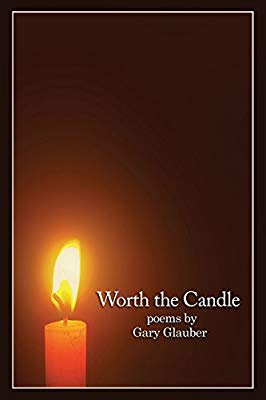
is a poet, fiction writer, teacher, and former music journalist. His works have received multiple Pushcart Prize and Best of the Net nominations. He champions the underdog to the melodic rhythms of obscure power pop. His two collections, Small Consolations (Aldrich Press) and Worth the Candle (Five Oaks Press), and a chapbook, Memory Marries Desire (Finishing Line Press), are available through Amazon, Barnes & Noble, and directly from the publishers.

Here is a link to his Amazon Author Page:

https://www.amazon.com/Gary-Glauber/e/B012BMLL3E/ref=ntt_dp_epwbk_0

The Interview
1. What inspires you to keep writing poetry?

A noble insanity compels me to continue this difficult quest even when only a dedicated few may wind up reading (or less, if it never gets published).  There is an inherent love of language, of the vocable tradition, of storytelling, and flashes of confidence and intelligence that are my pilot lights even during long winter nights when the elusive poetic muse has absconded. I cannot help but write, and for the past several years, poetry has been the medium of choice. I read and write, experience the tragedy and comedy that life has to offer, and must at times remind myself that creativity is its own reward. The odds are long, longer, and longer yet. But this is not a numbers game. Bask in the good life of this semi-obscurity; it does not last forever.

2. Who first introduced you to poetry?

Sounds like a criminal interrogation here.  Who was it?  Come on, name names. Was it that Dr. Seuss guy, Hugh Prather, Carl Sandburg, Robert Frost, Bukowski, Catullus, Wordsworth, Shelley, Dorothy Parker, Ogden Nash, Browning, Tennyson, Ginsberg, Hopkins, Shakespeare?  ‘Fess up, boy.  We can find out. Well there is a picture of me as a toddler carrying a copy of R.L. Stevenson’s A Childhood Garden of Verses – so that might have been my first literal introduction. However, my existence is forever intermingled with popular music – so lyrics were my poetry long before any real academic how-do-you-dos. Truth: every time I read something new, I am hoping to be re-introduced all over again.

3. How aware are you of the dominating presence of older poets?

I am a teacher, so such domination is inescapable (and at times, most welcome). In any five-day poetry forecast, there’s always a front of past older poets approaching (some causing greater storms than others).  Some provide inspiration, or perhaps stylistic challenges. For instance, this past April I wrote something on this hypothetical premise: what would Gerard Manley Hopkins have written if his obsession was graffiti artists. Let those who came before help guide you on your own path of words and phrases (and see if it will indeed make all the difference).

4. What is your daily writing routine?

During the school year, it is extremely hard to keep to any daily writing practice. Instead, the poetry builds up inside until such time as I have to make time, discover the magic of creation anew, and of course then follow through with edits, revisions, and the oft-lengthy process of submitting and re-submitting. I try to challenge myself to send new work out for submission at all times and always to read more than I could ever write. I am fortunate to teach literature to others, so I am living in the world of words and thoughts always.

5. What motivates you to write?

An innate desire to tell stories and an ego that sometimes convinces me they are worth sharing with others.

6. What is your work ethic?

Learn from others always – challenge yourself to try new things in your writing – never settle for less – believe what resonates from the criticism and praise you might accrue along the journey – and listen carefully to what those voices in your head are saying.  Trust them – they might be muses.

7. How do the writers you read when you were young influence you today?

That is hard to ascertain. I still read as much as I can, for no influence is wasted — and the more you experience, the better your own writing will be. I try to revisit my favorite writers when time allows.

8. Who of today’s writers do you admire the most and why?

There are too many to list here, but I will state why I admire them.  Many of them are brutally honest and unafraid, and can find ways to convey humor and humanity through powerful and playful communication. Poetry is the new journalism. We can relate the world’s problems through beautiful precise language – and perhaps get closer to understanding this life through discovering solutions that first untie us, then unite us.

9. Why do you write?

It is not a conscious choice – it is what I have always done – non-fiction, short stories, poetry, playwriting, songwriting, and more – there is no why.  Writing lets me slay the inner demons, explore the fantastical notions, show aspects that might remain hidden otherwise, and play. I experiment, I grow, I incorporate, I create.  It’s a coping strategy to educate, entertain, interpret and translate. It’s a means of survival. I like to write; I have to write. It is who I am.

10. What would you say to someone who asked you “How do you become a writer?”

You write. If you have to ask that question, perhaps you are not cut out for this. It’s a process. Read always, write, edit, never give up on yourself. Remember that every rejection brings you closer to the next acceptance. Work hard and be lucky. Enjoy!

11. Tell me about the writing projects you have on at the moment.

Currently, I am assembling my next full-length collection, hoping to find a press that believes in my particular brand of expression. The years have been kind and I am still growing and learning as a poet. Recently, I crossed the threshold of having my 400th published poem. That’s a good start. I remain eager for what comes next.


Wombwell Rainbow Interviews: Hannah Brockbank

Wombwell Rainbow Interviews

I am honoured and privileged that the following writers local, national and international have agreed to be interviewed by me. I gave the writers two options: an emailed list of questions or a more fluid interview via messenger.
The usual ground is covered about motivation, daily routines and work ethic, but some surprises too. Some of these poets you may know, others may be new to you. I hope you enjoy the experience as much as I do.
9781910834640

Hannah Brockbank

is published in a variety of journals, magazines and anthologies including: When Women Waken journal, The London Magazine, Envoi, Sarasvati, Atrium, and Raving Beauties (ed.) Hallelujah for 50ft Women anthology (Bloodaxe), Chalk Poets anthology (Winchester Poetry Festival, 2016). Her debut pamphlet, Bloodlines is published by Indigo Dreams Publishing. She is studying for a Ph.D. in Creative Writing at the University of Chichester.

The Interview
1. What inspired you to write poetry?

Poetry grew out of a period of grief, isolation, and silence. I started writing for a short amount of time every day and I cherished those moments of focus and expression. It felt as if I’d found my voice again and could be heard, even though no one read it. It provided a great deal of solace. I started reading poetry too and I was curious to learn more about it.

2. Who introduced you to poetry?

My first memory of poetry was a bright pink paperback copy of John Betjeman’s Collected Poems that my mother had on her bookcase. My mother started reading it to me after school. My favourite poem was ‘The Licorice Fields at Pontefract’, particularly the lines, ‘And held in brown arms strong and bare/And wound with flaming ropes of hair.’ I wanted to have ‘flaming ropes of hair’ more than anything. At the time my hair was a shortish mass of dark curls and not rope-like in the slightest.

3. How aware were you of the dominating presence of older poets?

As a child, I was more aware of male poets, but as I got older and went through the school system, I encountered more women poets, but there was an imbalance. It was only when I did my undergraduate English degree at the University of Chichester, that I really got a good and broad exposure to poetry.

4. What is your daily writing routine?

It’s rather chaotic, but as a general rule, I try and write for two hours a day or night. I’m a terrible insomniac, so I have to be flexible about when I write and when I rest.
Up until recently, my writing place was at the kitchen table because I felt I could still be part of the family environment and needed to be accessible, particularly when the children were very young. Now they are older, we’ve built a writing shed in the garden which the children call ‘Narnia’. It’s where I disappear to.

5. What motivates you to write?

Pleasure is the main reason we should write, in my opinion. There are of course, many moments of frustration when things are difficult to express, or I can’t find the right words, but overall, creative writing nourishes me.
I’ve started writing more critical pieces as a result of my Ph.D.’s accompanying study on matrifocal narratives. The driving force for me, is the possibility of promoting other maternal voices and creating awareness for positive social change.

6. What is your work ethic?

I have a strong desire to work hard and I often don’t get the balance right. I’ve realised that it’s very important to allow life in and not always be sat in front of my laptop. I make sure I include other creatively nourishing activities into my day. I’m fond of painting, gardening, yoga, walking, and crochet. In fact, I’ve made stacks of crochet blankets over the last couple of years. They are incredibly relaxing to make, and I often devise poems whilst working on them. I think the process of making one, dispels excess energy and focuses my mind.
7. How do the writers you read when you were young influence you today?

I’ve realised that I have an urge to self-censor my writing. Reading poets like Sharon Olds and Vicki Feaver gave me a sense of permission, so I now feel braver to write about life as I find it.

8. Who of today’s writers do you admire the most and why?

If I had to narrow it down to poets only, I would choose: Vicki Feaver, Robin Robertson, Margaret Atwood, Les Murray, Stephanie Norgate, Elizabeth Bishop, Sujata Bhatt, Mimi Khalvati, Anne-Marie Fyfe, Selima Hill, and Medbh McGuckian, but there are many more I admire too. I think the ability to write a good poem is an admirable quality in itself – it’s certainly not an easy thing to do.
I think with all these poets, it’s their fine ability to distil emotion so skilfully that I admire the most.

9. Why do you write?

The feeling of pleasure I previously spoke about, plus the opportunity writing gives me to explore human nature and my own sense of place. I’m intrigued by that.

10. What would you say to someone who asked you “How do you become a writer?”

Becoming a writer evolved organically for me and I imagine that is a fairly common experience. I think it begins through a strong curiosity for our environment, the people around us, and the language we use. Our experience and the need to pay witness to it, is what compels us to write.
Of course, deciding to write and then make it public through publishing it, is another thing altogether, and it’s worth noting that writing for the self is a fine and laudable pursuit too. If the drive is there to make public and publish, then it’s always wise to seek advice and educate oneself, so what you write is as polished as possible.

11. Tell me about the writing projects you have on at the moment.

Currently, my main focus is writing the accompanying study to my Ph.D., and also, polishing my new collection of poetry about my experience of mothering. The collection includes themes of pre and postnatal physical and psychological transformation. I will then look for someone to publish it.


Wombwell Rainbow Interviews: Andre Bagoo

Wombwell Rainbow Interviews

I am honoured and privileged that the following writers local, national and international have agreed to be interviewed by me. I gave the writers two options: an emailed list of questions or a more fluid interview via messenger.
The usual ground is covered about motivation, daily routines and work ethic, but some surprises too. Some of these poets you may know, others may be new to you. I hope you enjoy the experience as much as I do.

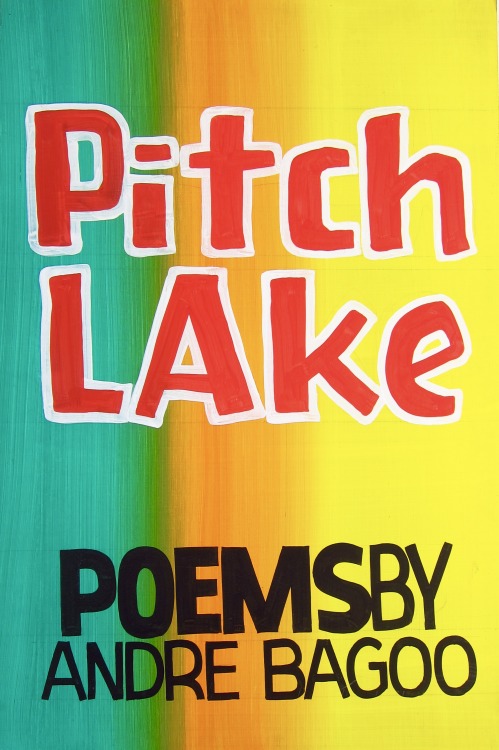
coverPitchLake

Andre Bagoo

Trinidadian poet Andre Bagoo’s work has appeared in journals such as Boston Review, Cincinnati Review, St Petersburg Review, and The Poetry Review. His books include Trick Vessels (Shearsman, 2012), BURN (Shearsman, 2015), Pitch Lake (Peepal Tree, 2017), and a book-length visual poem The City of Dreadful Night (Prote(s)xt, 2018). He was awarded The Charlotte and Isidor Paiewonsky Prize in 2017. Twitter @pleasureblog

The Interview

1. What inspired you to write poetry?

In my teens I wrote poems for boys. I made little chapbooks and would gift them to these baffled studs, sometimes anonymously. Poetry became me.

2. Who introduced you to poetry?

The answer to this question depends on the answer to another question: what is poetry? I feel poetry is around us all the time even when it’s not on our radar. So it’s hard to say who introduced poetry to me. But I do remember a teacher who showed me a whole new level of analysis when it came to reading poetry. This was in secondary school. We had Mr Perkins for English. One hot afternoon he came in and told us to open our textbooks and read ‘Mass Man’ by Derek Walcott. He unpacked the poem word by word, line by line in a way that felt like discovering the world is not flat. I went deeper. I explored the National Library’s collection. I found poets like Samuel Beckett. (I encountered his poetry before his plays, which was a blessing.) The poem became not only an object but also a process. All at once so much opened.

3. How aware were you of the dominating presence of older poets?

As a reader first and foremost, other poets, other voices, always dominate. Very early on, encountering each poet’s work was like encountering strokes of a painting, shapes of a costume, notes in a score: the form always seemed magical and meaningful. Dominating was not the word. It felt like communing. It still feels that way.

4. What is your daily writing routine?

Someone once advised me to always listen and wait for the poem. To give it time. To let it happen. So I would say it depends on what you mean by writing. The preparation for writing – researching things, feeling things out – is as much a part of writing as typing words or making jottings in a notebook. Sometimes I latch onto a form or rhythm that works. In those instances I might devise a routine to support the work. Other times I am haphazard. So I guess if there is a routine it is the absence of routine. Opening a space for mystery, accident, surprise.

5. What motivates you to write?

Dancers have this thing called muscle memory. Writing feels like something that happens to me because it’s now part and parcel of me. Even when I step away, even when I cross into other terrains like dance and visual art, it remains. Heidegger believed poetry was the essence of all art and sometimes I think that’s true. In a way, then, everything motives me.

6. What is your work ethic?

One of my favorite books is What Work Is by Phillip Levine. Something about its searching, its reportage, its drilling down and surrender to the profound questions that surround human beings and our labours beguiles me even in its uncomfortable moments. It all seems to implicitly ask: What is the work of the poet? Someone once said every poem is an ars poetica. I feel each poem makes a world while also becoming a part of it; is a setting-into-being that opens setting-into-being to new possibilities. So, to go back to your question, I guess we can look at this in terms of what work the poem does, what work the poet does, and whether there is a relationship between both things, or a separation, and what patterns or systems might shape how much I do any of these things. I am tempted to say I have a strong work ethic driven by the fact that I’m not sure how much time I have on this planet. At the same time, Locke’s insights on labour and mercantile notions of productivity don’t seem to be useful models when approaching poetry. All I can say, then, is these things called poems come, sometimes frequently sometimes infrequently. Always there is a questioning: is this a poem? Why? Why not? At which stage is the poem a poem? When someone else reads it? When I write it? When it forms, inchoate, in my body? Do I have a responsibility or relationship to it? And do only poets write poems? It’s hard to paper over all of this and describe my own processes. Even if I dream of a world where poems, which seem to do nothing, change everything.

7. How do the writers you read when you were young influence you today?

I like to read in an engaged way. I’m experiencing what I am reading. I am also analysing what I am reading. And learning from what I am reading. So whatever I read tends to soak in. I’m very permeable that way. I am not too sure how to trace the strands of influence but it’s there. But influence is more than just a surface resemblance. It’s about process and context; particularly civic context too. Real influence might not be discernable on the page.

8. Which writers do you admire the most and why?

Currently, I’m drawn to Heathcote Williams’ audacious investigative poetry; as well as Tom Raworth’s work. Raworth was one of the first people to have open heart surgery and someone once suggested you could sense a different kind of heartbeat pulsing through his writing, an idea I find not only beautiful but true when considering the sensibility of some of his poems.

9. Tell me about the writing projects you have on at the moment.

In 2018 I published The City of Dreadful Night, a book-length visual poem that takes James Thomson’s poem of the same name and seeks to dialogue with it through a sequence of images. I like to think of form in poetry in a wide sense, extending beyond questions of whether a poem is a sonnet or a villanelle to include questions of medium. I’m drawn to this idea of drilling down to the essence of things using whatever is at hand. To go back to Heidegger, perhaps what he said was true, “All art is poetry”.


Wombwell Rainbow Interviews: Claire Trevien

Wombwell Rainbow Interviews

I am honoured and privileged that the following writers local, national and international have agreed to be interviewed by me. I gave the writers two options: an emailed list of questions or a more fluid interview via messenger.
The usual ground is covered about motivation, daily routines and work ethic, but some surprises too. Some of these poets you may know, others may be new to you. I hope you enjoy the experience as much as I do.

BRAIN-FUGUE-COVER-SAMPLESQ-3

Claire Trevien

Trévien is an Anglo-Breton author. Born in Brittany in 1985, she has resided in the UK for nearly two decades and performed her work internationally, from South Africa to New Orleans. She is the author of  the pamphlet Low-Tide Lottery (Salt, 2011), and two collections The Shipwrecked House (https://www.clairetrevien.co.uk/books) (Penned in the Margins, 2013), and Astéronymes (Penned in the Margins, 2016). She was a module leader on LCCM’s Creative and Professional Writing degree. She has now moved back to her native Brittany.

Most recently, she was commissioned by the Museum of Oxford to create digital poetry-postcards of the city, interviewing its citizens and creating film poems from them.

The Shipwrecked House was longlisted in the Guardian First Book Award and highly commended in the Forward Prizes. It was co-commissioned as a one-woman show by Ledbury Festival and supported thanks to Arts Council Funding. It toured the UK in , reviews of the show can be found here. (https://www.clairetrevien.co.uk/events–workshops)

Her poetry has appeared in numerous publications including POETRY (https://www.poetryfoundation.org/poetrymagazine/poems/57492/the-evening-after), The Sunday Times, The Guardian, Magma, Under the Radar, Poetry Salzburg, The Forward Book of Poetry 2014 and Best British Poetry 2012. She recently won third place in the 2018 Verve Poetry Competition with her poem ‘Brain as City.

She founded Sabotage Reviews, co-edited Verse Kraken, and co-organized Penning Perfumes. She co-edited with Gareth Prior Other Countries: Contemporary Poets Rewiring History. She was Annexe Magazine’s poetry editor in 2015.

In November 2013, she was the Poetry School’s first digital Poet-in-Residence.

Claire is available for manuscript feedback, workshops and mentoring (details here, (https://www.clairetrevien.co.uk/workshops-and-mentoring)

Click here for Claire’s academic website.

(https://clairetrevien.com/)
Click here for Claire’s marketing website
(http://www.trevien.net/)
‘Luminous, tender, and frightfully emotionally accurate, Trévien will be a household and classroom name in years to come’, Abriana Jetté.

The Interview

1.       What were the circumstances under which you began to write poetry?

It’s hard to pinpoint exactly when I started focusing on poetry – like many writers I was first an avid reader, and writing happened organically over a period of some years. I started getting more serious about in the sixth form, but in a terribly emo way. I would scribble lines on notes, then scrunch them up and leave them on the classroom floor in the hopes of it being ‘discovered’ (thankfully they weren’t). I also found myself an online community in the form of a message board, where I posted poems and learned to give feedback on other people’s work. It was a really formative experience, marred unfortunately by a predatorial older man whose influence I fell under for a number of years. Whilst I wish the psychological damage hadn’t occurred, I do still have fond memories of that community

2.       Who introduced you to poetry?

School did! I grew up in France and learning poetry by heart to recite in front of the classroom was a standard thing. I discovered one of my favourite poems that way, including Rimbaud’s ‘Ma Bohème’.

3.       How aware were you of the dominating presence of older poets?

If you mean in the current scene – I think it took me some years to understand the structure of the poetry world – it felt quite impenetrable and intimidating for some time.

4.       What is your daily writing routine?

Inconsistent. I do go through periods where it’s more structured, but if I’m honest it tends to be more of a “ok, this poem is interrupting other stuff in my life, going to have to stop and pay attention to it” situation.

5.       What motivates you to write?

Anger. An unhealthy obsession with replaying the past. Whimsy. Playfulness.

6.       What is your work ethic?

Depends for which kind of work you mean. I am trying to move towards a better work balance – I have tried this for some years unsuccessfully, so we will see if it ever happens. I define myself too much by how useful I am to others, and that’s not healthy, because you can’t put your value in the hands of other people. So you could say my work ethic is going through a process of transition.

7.       How do the writers you read when you were young influence you today?

The decadent poets will always have some pull on me I think – reciting their poems embedded their metrical music into my veins.

8.       Who of today’s writers do you admire the most and why?

I admire so many poets, so it’s difficult to narrow that down. I’m going to take this space to recommend someone your readers might not have heard of. Her name is Vangile Gantsho, I met her in South Africa a few years ago, she is a phenomenal poet and has also co-founded a new pan-African feminist press called impepho press. As she puts it in this interview, (http://bookslive.co.za/blog/2018/08/23/we-are-seeing-that-there-is-more-to-poetry-than-the-dead-white-men-of-high-school-textbooks-a-qa-with-poet-and-cultural-activist-vangile-gantsho/)

“you have to knock, or break the doors down yourself.”

Two of their titles, including Vangile’s stunning red cotton can be ordered to Europe through the African Books Collective website (http://www.africanbookscollective.com/publishers/impepho-press). The UK poetry scene is still blinkered geographically – it’s great to see more USA writers getting coverage in the UK but there’s so much more out there, and poets like Vangile

9.       Why do you write?

Anger. An unhealthy obsession with replaying the past. Whimsy. Playfulness.

10.   What would you say to someone who asked you “How do you become a writer?”

Read read read until you get a notion of what kind of writer you want to be. Accept that ‘becoming’ a writer isn’t a tidy diploma but an ongoing process.

11.   Tell me about the writing projects you have on at the moment.

My next poetry pamphlet ‘Brain Fugue’ will be published by Verve Poetry Press in February 2019 – it is open for pre-orders now. (https://vervepoetrypress.com/product/claire-trevien-brain-fugue-pre-order-free-uk-pp/)

I am also collaborating with Tori Truslow (who I also run writing retreats with (https://www.clairetrevien.co.uk/writing-retreat)) on a poetry/art book revolving around maligned animals.

Wombwell Rainbow Interviews: Martha Sprackland

Wombwell Rainbow Interviews

I am honoured and privileged that the following writers local, national and international have agreed to be interviewed by me. I gave the writers two options: an emailed list of questions or a more fluid interview via messenger.

The usual ground is covered about motivation, daily routines and work ethic, but some surprises too. Some of these poets you may know, others may be new to you. I hope you enjoy the experience as much as I do.

Screen-Shot-2018-11-06-at-08.47.16

Martha Sprackland

is a writer and editor. She was co-founder and poetry editor of Cake magazine, was assistant poetry editor for Faber & Faber, and is one of the founding editors of multilingual arts magazine La Errante. She is the editor of independent press Offord Road Books. In 2018 she joined Poetry London as associate editor. She is also a freelance editor working across the publishing and poetry industries.
Twice a winner of the Foyle Young Poets of the Year Award, she was also the recipient of an Eric Gregory Award from the Society of Authors, and was longlisted for the inaugural Jerwood–Compton Poetry Fellowships in 2017. Glass As Broken Glass was longlisted for a Sabotage Award, and she placed in the Poetry London Competition in 2015. Her work has appeared in Poetry Review, LRB, Five Dials, New Humanist, Magma, Poetry London and many other places, and has been anthologised in the Salt Book of Younger Poets, Lung Jazz: Young British Poets for Oxfam, Best Friends Forever, Vanguard, Birdbook, and the Best British Poetry series, and she has read at a number of festivals, including Port Eliot, The Good Life Experience, Caught by the River Thames, and Curious Arts Festival. In 2015 she was invited to participate in the Elizabeth Kostova Foundation poetry festival in Sofia and Koprivshtitsa, Bulgaria. In 2017 she spent a month in residence at Yaddo. In 2018 Martha returned to Sofia as part of the Sofia Poetically Animated conference, and in September 2018 she will be in Tunisia with the British Council and Modern Poetry in Translation.
Martha is poet-in-residence for Caught by the River. Her debut pamphlet, Glass As Broken Glass, was published by Rack Press in January 2017, and she is currently working on a full-length collection. A non-fiction book on sharks is forthcoming with Little Toller Books in 2019.
 
“[With] formal acuity Martha Sprackland’s ‘Domestic’ characterizes a broken relationship as helplessly frozen syntax teetering on that very word – as – everything that’s just happened in a nameless quarrel ‘as’ something faraway, free of it, clear of it, like smoke or sky. Numbness of spent emotion, wonderfully anatomized: ‘Glass as broken glass.”‘ – Glyn Maxwell


“Sprackland refreshes the domestic and mundane in poems which are outwardly calm, but lit from within to reveal unusual visionary angles.” – Eric Gregory Award judges 2014


The Interview 

  1. When and why did you start writing poetry?

The first poem I remember writing was at a creative workshop in Liverpool’s Sefton Park, in the beautiful Victorian glass pavilion, the Palm House, that is filled with exotic hothouse plants; bromeliads, palms, orchids. My mum, who is also a poet, had brought me and my brother there; probably she was doing a reading or leading a workshop. During a writing session run by poet Deryn Rees-Jones I wrote a poem, in felt-tip on sugar-paper, about a mouse. I think it’s still in the attic somewhere. I was probably five or six.

2. Did your mum introduce you to poetry?

Not explicitly, I don’t think – there were lots of books on the bookshelves, and I would just take and read them. Lots of fiction as well as poetry. I remember coming by Sharon Olds that way, among many others. She would sometimes take us along to things, though, and I’m sure that piqued my interest.

3. How aware were you of the dominating presence of older poets traditional and contemporary?

Not really at all, I don’t think. Or if I did then I don’t remember. Only once I started being taught it in schools, maybe.

4. What motivates you to write?

To be honest, I think it’s just for the sheer pleasure of construction. As someone who also writes prose, I don’t feel that poetry is a burden, or a gift, or that it is my only outlet; it’s more a joy, albeit a fierce one, than a therapeutic tool or cathartic exercise. For the latter, I go elsewhere. I don’t have much truck with pronouncements on the muse; inspiration, another itchily motivational word, I’d always rather simply call ideas. I don’t much like a lot of the passive, sentimental assertions I see around the writing of poetry – that it sets us apart in some mystical way; that poems are delivered from elsewhere; that we are slaves to an anthropomorphised driving force that pushes us to write. Rather, I want to feel that it’s all my own work; that I chose – and choose – to sit down to write something; that there are practical skills and exercises that you can do to improve, and that putting in the work (by reading other poets; by redrafting; by looking at things in an inquisitive way) is what makes a good poet, not chance, fate, or ‘the muse’. What motivates me – I enjoy it. It feels good. Satisfying, fiddly, rewarding.
 

5. How do the writers you read when you were young influence you today?

The writers I read when I was young certainly do still resonate. I mentioned Sharon Olds already; her work has long been a touchstone for me. There’s a sort of euphoric brutality that I aspire to there. Some of my feelings about sound and rhythm come from Jack Lindsey’s Clue of Darkness and Keats and other things. One of the first poets I read was Selima Hill – I love the weirdness of her animals. Adrienne Rich. Plath, of course. Glück. Lorca’s deep midnighty feeling. Akhmatova. O’Hara. Walcott. Hopkins. Celan.

6. You’ve mentioned some contemporary writers so far, please could you expand on those of today’s writers you admire most and why?

So many, many of whom I’m lucky enough to know or have met – Amy Key, Rebecca Perry, Clare Pollard, Wayne Holloway-Smith, Vahni Capildeo. I love Karen Solie, and Sara Peters, and have recently been reading Shivanee Ramlochan’s Everyone Knows I am a Haunting, which is brilliant. Denise Riley, Richard Scott, Dorianne Laux, Kayo Chingonyi, Hannah Sullivan, Ilya Kaminsky. I found Danez Smith’s book addictive and euphoric. I can’t wait for Rachael Allen’s debut, from Faber next year, or Anthony Anaxagorou’s. I’ve been watching Romalyn Ante’s rise, too – I think she’s fantastic (and at tie of writing has just been announced as the winner of the Poetry London competition) Many of the poets I admire I get to edit – which feels like ridiculous good fortune: AK Blakemore, Helen Charman, the whole roster at Offord Road. The list of contemporary poets I love is long – the world feels very full of extremely good and exciting work at the moment.

7. Why do you write, as opposed to doing anything else?

It’s only one of things I do, really. I’m currently studying Arabic at SOAS, and have done translation in the past (from Spanish). I’ve been a teacher. I studied horticulture, I run, I review, I draw, I swim, I am pretty obsessed by food. I’m more often being a publisher or editor than I am a writer – people always look sympathetic when I tell them that, but I love being an editor as much as I love writing.

8.  What would you say to someone who asked you “How do you become a writer?”

Depends on the kind of writer you want to be.

Write first thing in the morning, not ‘just after checking these emails’. Use nice sharp pencils with a little rubber on the end, and a big flat A4 pad of lined paper. Beautiful notebooks are great, but I think their beauty can be intimidating; you want to feel free to scribble, cross out, fold, tear, rearrange, crumple.
 
Otherwise, just try and read every day. It does matter. Oh, and find likeminded people – whether in real or online life – to exchange poems with and swap feedback. Take advice well, grow a thick skin, kill your darlings. Interrogate first lines, and almost always excise them. Spend as long on the title as you do on the poem. Be disciplined about sending them out to magazines, if you want them to be published; print them out and bind them together to look at and feel proud of, if you don’t.

9.  Final question, Martha. Tell me about any writing projects that you are involved in at the moment.

I’ve got a new pamphlet, Milk Tooth (on Rough Trade), launching next week, which is nice. (http://roughtradebooks.com/editions/milk-tooth/)

It’s actually a bit nervewracking, as it’s a lot more personal than previous stuff I’ve allowed out into the world. We’ll see. Otherwise, I’m finishing my collection, which should be out in early 2020. Doing a bit of a reviewing. And translating some interesting Arabic poetry, by two poets I met in Tunisia earlier this year – Zouleikha Elhamed and Fatima Al-Zahra, from Mauritania and Libya respectively. I’m also finalising the texts of Seán Hewitt’s and L. Kiew’s Offord Road pamphlets, as they’ll need to go to press right after Christmas. Always something to be getting on with!


Wombwell Rainbow Interviews: Rowan McCabe

Wombwell Rainbow Interviews

I am honoured and privileged that the following writers local, national and international have agreed to be interviewed by me. I gave the writers two options: an emailed list of questions or a more fluid interview via messenger.
The usual ground is covered about motivation, daily routines and work ethic, but some surprises too. Some of these poets you may know, others may be new to you. I hope you enjoy the experience as much as I do.

20181011_144354[119691]

Rowan McCabe

is a poet and performer from Newcastle upon Tyne. Aware that poetry isn’t a proper job, he decided to create his own and is now the world’s first Door-to-Door Poet. Knocking on stranger’s houses, he asks what is important to them. He then goes away and writes a poem about this, free of charge, before bringing it back and performing it on their doorstep. Rowan also performs on stages and has appeared at Glastonbury Festival and the Royal Albert Hall. He was the winner of the 2015 Great Northern Slam, was longlisted for a 2018 Saboteur Award and his work has been featured in the Guardian, on BBC Breakfast and was named ‘Best of Today’ on Radio 4.

“Highly talented with verse”– Broadway Baby

“Moves seamlessly from hilarious anecdote to poignant poem”– The Journal

“A must-see”– Morning Star
http://www.rowanthepoet.com

http://www.doortodoorpoetry.com

The Interview

1.  When and why did you start writing poetry?

I’ve done it as far back as I can remember really. When I was about 5 or 6 I wrote a poem about a rocket ship that got published in a book. In my angsty late teens I got into bands like The Libertines and that spurred me on a bit.

In terms of why, I suppose a big turning point for me was identifying and connecting to an audience. When I went to Uni I started taking part in open mic nights and suddenly there was a room full of 50 people listening to what I’d written. I think that changes the way you work. Previously, it had just been a collection of thoughts with no real intention. Once I started thinking about who I was writing for, I began to think about how I wanted them to feel. So I suppose I write to make someone feel something I’m passionate about, to think about a subject from another perspective, or just to shock or surprise them in some way.

2. Who introduced you to poetry?

My Mam. She’s a teacher, so we always had a lot of books.

3. How aware are and were you of the dominating presence of older poets traditional and contemporary?

I don’t know if I’d call it a ‘dominating presence’ myself. I can appreciate that some people might find more established work kind of intimidating. For me, there are some poets whose work I really like. There are some whose work I don’t like. It’s as simple as that really. If I don’t like it, it doesn’t really effect my life at all, regardless of how old or respected it is. If I fall in love with it, it occupies nearly every thought I have until I move on to something else. I’m reading The Parish by John Clare at the minute. I don’t consider the work dominating because it’s nearly 200 years old and a respected bit of Romantic satire. For me, it’s no more of a dominating presence in my life than a poet like, say, Daniel Piper, who I discovered last weekend in the upstairs of a pub and really enjoyed.

I think I do see where you’re coming from though. The establishment waves these respected names at us in an attempt to make us feel small if we haven’t read them: Shakespeare, T.S Elliot, etc etc. I’ve always tried to look at things objectively, to make my own mind up. Not all things in the literary canon are automatically good.  Likewise, much modern work that is on the fringes of the art world today is worthy of deep analysis. There is no ‘high’ or ‘low’ culture as far as I’m concerned. I find entertainment in many places.

4. What is your daily writing routine?

Well, on the days when I focus on writing (instead of poetry admin) I like to start at about 9 or 10am and finish at 5. I always write in an A4, lined notebook that is hard-backed. It’s very important it’s hard-backed, so I can lean on it and the paper doesn’t flop or bend on stage. I’ll usually spend some time free writing, getting anything in my head on the paper. Then I might flesh out an idea I’ve had, or start editing something I’ve already got. I often work at home, but I like going to Newcastle Central Library as well. It’s a glass building and on the top floor they have these big pink swivel chairs with huge backs on them. You can see for miles and I sit and look out at the city, at all the people below, and I pretend I’m a super villain in a big evil tower.

5. What motivates you to write?

I think it’s the desire to surprise people and make a connection with them. Every poet is aware of the stereotypes associated with poetry. I’m usually playing with those stereotypes, or subverting them, to make people laugh, or think, or to shock them in some way. And then, with my Door-to-Door Poetry project, writing about my experiences in places with a bad reputation also became about questioning negative stereotypes. I hope that someone might read about that, or watch the show I made about it, and reconsider some of their pre-convictions about people, which might make the world a slightly better place.
6. What is your work ethic? Do you consider writing a business or a pleasure? Do you wait for inspiration or a craft where you work up whatever you write into good copy?

I suppose it’s all business now, in the technical sense. But I just finished 2 new poems the other week, I wrote those purely for my own satisfaction, it wasn’t a commission or anything. Something like that doesn’t feel like business. It was just for fun. But then I’ll be performing them at my next few gigs and getting paid for it, so it’s still business.

In terms of when to write: I think there’s a balance. When it’s not working, it can be good to take a bit of a break. But we’ve all met those people who spend their whole lives talking about how they’re going to be writer and never actually pick up a pen. If it’s been a long time since I’ve done anything I’ll force myself to write. But really I think I’m often waiting for an interesting idea.

7. How do the writers you read when you were young influence you today?
I suppose they’re all still in my brain somewhere. I believe everything you’ve read still has some small, imperceivable effect on you for the rest of your life. Or sometimes it’s very perceivable, in the case of a really good book. I don’t think I could point to a bit of writing I’d done and say ‘I wrote that because of Philip Pullman’. But everything I’ve enjoyed has probably had an effect.

8. Who of today’s writers do you admire the most and why?

There’s too many to name them all, but some of my favourites are Ross Sutherland, because he walks an incredible line between making work that is highly experimental and yet also very accessible for an audience. Also Jess Green, for making political poetry seem as un-cliche as possible.

9. What would you say to someone who asked you “How do you become a writer?”

Well, at the risk of sounding disingenuous, I’d probably say “You need to keep writing things.” I’d also advise taking people’s advice with a pinch of salt. There are many people out there who claim to know ‘the secret’ to becoming a good writer. It’s worth remembering that the most celebrated artists broke the rules. And what works for one person might not necessarily work for all.

10. Tell me about the writing projects you have on at the moment.

The big one is that I’m laying plans to go all around England as a Door-to-Door Poet from next February. It’s dependant on a grant from the Arts Council, so I’ve got my fingers crossed for that. I’d be visiting 10 very different communities all over the country and writing poems for them, as well as recording their stories and ideas. I’ve got a commission with a local library, The Word, next month, to write 9 poems about lost words from the Geordie dialect. Right this minute though, I’m enjoying writing for myself and not to commission. I’m hoping to flesh out a good set of poems that I can use in my next show, but I’m also not forcing anything out. It’s nice to take your time if you can!


Wombwell Rainbow Interviews: Camilla Reeve

Wombwell Rainbow Interviews

I am honoured and privileged that the following writers local, national and international have agreed to be interviewed by me. I gave the writers two options: an emailed list of questions or a more fluid interview via messenger.
The usual ground is covered about motivation, daily routines and work ethic, but some surprises too. Some of these poets you may know, others may be new to you. I hope you enjoy the experience as much as I do.

51iWOUrmiBL._SX351_BO1,204,203,200_

Camilla Reeve

The Interview

  1. When and why did you start writing poetry?

After my first marriage ended I was lonely and confused, in one short-term relationship after another. A friend suggested I give my heart a rest and join a poetry group instead. In “Time Out” I found the Riverside Poets who met in the Room On The Roof at Riverside Studios in Hammersmith. Thinking we’d read other people’s work, I took along some Robert Frost poetry. But they asked me to read my own poems. When I said I didn’t write any they told me to start by bringing a poem to the next meeting. It was like someone suddenly gave me permission to become a writer. That evening as I walked home the first poem started coming to me. For two years I couldn’t stop writing and must have churned out an awful lot of bad poems. But I took them along to various poetry groups and started learning how to say what I really meant more effectively.

2. What made you take Robert Frost?

His poem “Stopping by woods” had become very important to me – the silence it conveyed, being alone with ones thoughts, able to watch nature and listen – at a time when, as a single parent and breadwinner I almost never had time to do so.
I was deeply aware of the sound patterns, not realising how brilliantly they were crafted, just drawn to saying the poem over and over, like a meditation.

3. Who introduced you to him?

My first encounter with “Stopping by woods” was at school in “A Galaxy of poems old and new” chosen by E W Parker. At first it seemed pastoral – reminding me of the countryside where I grew up – rather than metaphoric. Later a cousin introduced me to “The Road Less Taken”. But it was hearing “Stopping by woods” quoted after John Kennedy’s assassination that reinforced my interest in its other layers of meaning.

3.1 Other layers of meaning?

While I was at school in London, the first effect of Frost’s poem was to imagine myself in the woods  around the home I had grown up in, the physical sensations of cold, silence, solitude.
In the aftermath of my marriage, the poem brought back my childhood. An only child, I remembered being happy to be alone and free from anxiety. In the lead-up to my first husband leaving anxiety had been constantly dragging me down.
As I got older, I became aware of the layer of political or spiritual meaning, the tension between living as one might wish, for example giving in to sadness or desire as opposed to following through on promises one has made.
Behind all of that is the sound of the words and the poem’s rhythms, the mood of calm melancholy they evoke in me

4  How aware were and are you of the dominating presence of older poets traditional and contemporary?

Growing up I was aware of many “classical” poets through both school and my parents: Blake, Wordsworth, Shelley, Milton, Dante Alighieri,Shakespeare’s sonnets. At that stage, too, I knew about more recent poets D H Lawrence’s poems, Jacques Prévert, Apollinaire, Auden, Leopardi, TS Eliot. There were so many I had never even heard of let along read. Since starting to write poetry I have been reading so much more of it as well.

Thinking some more about this, I had heard of very few woman poets. There was nothing in the curriculum about Maya Angelou, Elizabeth Barrett Browning, Sylvia Plath or Sappho. So although I was aware of older poets traditional and contemporary there was nothing that said I could be accepted as a poet. We need to do better for girls growing up today.

5. What is your daily writing routine?

A good question! This used to be my writing routine while I had a day job. I spent 10-20 every morning writing “morning pages” to clear my thoughts. Right through the week, new poetry or story ideas came at bedtime, first thing in the morning or traveling to and from work. I would write it long hand in one of my recycled A5 notebooks – they’re dotted around the house and there was always one in my bag. At the weekend I would type up the week’s new poems, doing a first edit in the process. Also at the weekend I used to work on my novel. typing up any sections I had written on the train or bus.
Somehow, now I don’t go into Central London to work, my writing routine has fallen down. Running Palewell Press occupies not just my work time but most of my waking awareness.  Poems surface much less often. But I do travel more and find I can write on the journey. And I read so much more poetry now, especially last thing at night.

6.  What motivates you to write?

Writing is part of my interaction with the world. When writing, I want to record what I see, think and feel as honestly as I can. Coming back to a poem I feel an echo of the original emotion.  With particular poems like “Thorny Afghan Flower” and “Some days just end in sadness” writing them down eases the emotional intensity. Writing is also a tool for understanding tangled knots of thought. I love the physical experience of making a poem too, metaphor, meter and  rhyme rising to the surface, hearing in my head for the first time the pattern all of it makes is deeply satisfying.

7. How do the writers you read when you were young influence you today?

The writers I read while young influence me in three particular ways:

The earliest poem I remember hearing was William Blake’s Songs of Innocence. My mother often recited it just before I went to sleep. The qualities of childlike wonder and immersion in the landscape shape many of my poems. I particularly loved the narrator making a quill pen out and settling down to write  in the open air. One hears people talking about their inner child. For me, that part of my memory or personality is still very strong. In my poem “The long journey of humans” the last two verses include the lines: “But I discovered in my mind, and smiling,/ the little girl/ who stood there in the dark.//She is still full of wonder/ and delight, still looking out/ and up and round her/ at the enchanting and unknown,/”

Among other writers who made a lasting impression are those with strong and unusual rhyming patterns, like Hilaire Belloc in the last verse of Tarantella: “No sound/ In the walls of the halls where falls/ The tread/ Of the feet of the dead to the ground,/ No sound:/ But the boom/ Of the far waterfall like doom.”

I love rhyme though I tend to us slant rhymes and half rhymes more than full rhyming at the end of two or more lines. As well as the aural pleasure of listening to a beautiful sequence of rhyming lines, they make poems easier to memorize. Another favourite, encountered at school, is Dog Tired by D. H. Lawrence. The last few lines not only end the poem gracefully but, through their repeated slant rhymes, deliver its emotional payload: “I should like to lie still/ As if I was dead; but feeling/ Her hand go stealing/ Over my face and my head, until/ This ache was shed.”

Many of my own poems adopt a narrative voice, especially in the latest pamphlet, Tales from Two Cities. Looking back, poetry as story-telling has had a major influence on me, especially poems that use a sense of place to create a filmic effect – like Rappelle-toi Barbara by Jacques Prévert: “Rappelle-toi Barbara Il pleuvait sans cesse sur Brest ce jour-là. Et tu marchais souriante. Épanouie ravie ruisselante. Sous la pluie. Rappelle-toi Barbara.” Within 58 lines, Prévert builds all the elements of a short story or film.
8. Who of today’s writers do you admire the most and why?

If we include recently dead writers, the poets I admire most are Carol Ann Duffy and Seamus Heaney.

•         Carol Ann Duffy: For her ability to convey emotion without sentimentality as in “Last Post”, and the way rhyme and meter gently build the mood in “Prayer”

•         Seamus Heaney, how his poems walked the border line between Protestant and Catholic – as in “The Other Side”. The poem starts with the poet’s resentment of the attitudes and possessions of their better-off neighbour across the stream. But then the writer crosses the stream, stands behind the neighbour and begins to empathise with him. And you glimpse where reconciliation between warring communities might begin:
“But now I stand behind him
in the dark yard, in the mourn of prayers.
He puts his hand in a pocket
or taps a little tune with the blackthorn
shyly, as if he were party to
lovemaking or a strangers weeping.
Should I slip away, I wonder,
or go up and touch his shoulder
and talk about the weather
or the price of grass-seed?”
•         And in his two poems about the murder of his cousin by extremists.  But also, the “Skylight” where the first part of the sonnet uses sounds that are hard to say so one feels shut in.
“The perfect, trunk-lid fit of the old ceiling. Under there, it was all hutch and hatch,
The blue slates kept the heat like midnight thatch.”
and the second part changes the sounds giving an open feel.
•         There are other contemporary poets I greatly admire, generally for particular poems:

o  Adrian Blamires “The Effect of Coastal Processes”, title poem in his collection (published in 2005 by Two Rivers Press). It tells the story of two lovers on a beach using the metaphor of eroded pebbles so subtly to convey the decision the woman is making and the man’s emotional distance from her.
•         Sue Johnson “Lily of the Valley” in the anthology “The Physic Garden” (published in 2017 by Palewell Press). Memory evoked by flower-scent – a woman comes to terms with memories of her dead mother by recognising similar characteristics in her own daughter.

•         Stuart Henson “The Builder” a translation (after the prose poem “Le maçon” by Aloysius Bertrand). This is the best prose poem I know. In six four-line “verses” the poem opens, like a short film, with a stone-mason at work high up on a mosque. The atmosphere is calm. But each “verse” widens our view, further and further into the distance until we discover what’s happening to the world around the mosque. Again, it’s a story-telling poem, with the poet in such control of our perception.

•         Adam Horovitz “I believed I understood the land”, first poem in his collection “The Soil Never Sleeps” (published by Palewell press in 2018). Masterly use of rhyme and meter to focus our attention on the poem’s final warning:
“If you’ve listened, you’ll know we’re balanced on the edge
between oblivion and life and that the only charm
for our salvation comes in the moments when we pledge
to do no lasting damage, cause a little harm
as we can manage in field or office, city street or farm.”

8. What would you say to someone who asked you “How do you become a writer?”

Early on in my time at writing groups and going to Arvon, I heard someone say that a writer is someone who writes. That may be because they like to write or can’t help writing, because they have something to say or a problem to sort out. How you become that person is a step in each person’s unique journey. For me it happened this way: I was coming out of a difficult 15-year marriage with a lot of unacknowledged anger and sadness.  For two years, all my troubles poured out in poems – most of them seem like rubbish now but they cleared the way for learning how to write more effectively.
But becoming a writer wasn’t just one step. It goes on for the rest of your life. Each course you take, each new poem or story you start to write, is part of the learning process. In order to be a writer you need to do two things: work out what you want to say and get on with writing it down.

9. Tell me about the writing projects you have on at the moment.

There are two projects:

The Sea’s White Horses
Part 2 of the Reins of Power sequence of Young Adult futuristic fantasy novels. The sequence has an environmental theme with a teenage weather-witch trying to protect England’s South coast from devastating storms. I published Part 1 (The Cloud Singer) some years ago and have written most of the first draft of Part 2. But it’s really hard to find time while I’m also running Palewell Press. So I’ve signed up to a course with Cinnamon Press called “Finding the Still Point in your Story.”

Passing Clouds
A pamphlet collection of poems about my mother and two other close female friends, all of three of who died of cancer. This new project will make use of poems written over a long period. At present, I think the work involved is editing the poems and shaping the collection rather than writing a lot of new material. But once I start assembling the collection I’m aware it may take off in an unexpected direction.


Wombwell Rainbow Interviews: Martin Appleby

F WORD WARNING

Wombwell Rainbow Interviews

I am honoured and privileged that the following writers local, national and international have agreed to be interviewed by me. I gave the writers two options: an emailed list of questions or a more fluid interview via messenger.
The usual ground is covered about motivation, daily routines and work ethic, but some surprises too. Some of these poets you may know, others may be new to you. I hope you enjoy the experience as much as I do.

Martin Appleby

is a punk, poet, vegetarian, cider drinker and editor of Paper and Ink Literary Zine from Hastings, England. Follow on Facebook/Instagram/Twitter @paperandinkzine

The Interview

1. What inspired you  to write poetry?

Women. Quite simply. The first poem I ever wrote was as a love struck teenager about a girl I had a crush on but was too afraid to tell. Then when I started writing poetry again in my twenties it was drunken ramblings scrawled in a notebook after a break up. It wasn’t until my late twenties that, for the first time, I wrote a poem that wasn’t about a woman.

2. Who introduced you to poetry?

Henry Charles Bukowski Jr. His words opened my eyes to a whole new world. Poetry was no longer just the flowery, pretentious nonsense they had tried to teach me in school. It was simple, honest, raw, brutal, beautiful and working class. It was a gateway drug that lead me to discovering an underground wonderland of beats, outlaws and outsiders.

3. How aware were you of the dominating presence of older poets?

It is not something I have thought about too much. I guess the older you are, the more shit you have seen, the more life experience you have to draw from, and the more equipped you are to articulate it? I don’t know, maybe you have to be a certain age before you start to appreciate poetry.

4. What is your daily writing routine?

I fucking wish I had a daily writing routine. I write when I feel like it, when I feel that I have something to say. Sometimes that may be two or three poems in a day, sometimes that may be two or three in a month.

5. What motivates you to write?

That is a very good question. I guess all writing comes down to ego doesn’t it? The feeling that whatever you have to say is so important that it needs to be written down. Documented. Recorded. For posterity or publication, it’s all just ego. I don’t have any children and don’t plan to have any, so I like the idea that my poems will live on after I’m gone. A piece of me that will survive  long after my body packs up.

6. What is your work ethic?

I run a submission based literary magazine, so I am always working on the next issue. So, if I am not writing poetry, I am at the very least reading it. I also publish the odd poetry collection, the latest one being Too Many Drinks Ago by my friend John D Robinson. I am always  working on something. It’s what keeps me sane.

7. How do the writers you read when you were young influence you today?

I still love Bukowski’s writing, and whilst I don’t necessarily agree with some of the things that he wrote about – he had some problematic views which have been well documented – his writing will always stand out to me as a beacon of excellence, and continue to inspire me. As a kid I used to read things like Goosebumps and Star Wars novels , and whilst I enjoy the odd horror and sci-fi novel, I don’t think they particularly inform the stuff I write today.

8. Who of today’s writers do you admire the most and why?

I admire anyone who takes action. Anyone who doesn’t wait around for things to happen to them, but makes them happen. Anyone who has the fortitude to put their truth out into the world to be judged by total strangers.

1. Why do you write?

I like telling stories. I love the rush, the exhilaration, and the sense of accomplishment when it all comes together – when you’ve written the perfect sentence, or poem – when everything ties together in a neat little knot. Plus, how else am I supposed to tell people about all of the stupid shit I have done in my life? Start a fucking podcast or YouTube channel like very other brainless idiot these days?

2. What would you say to someone who asked you “How do you become a writer?”

One thing that I hate more than anything is people who describe themselves as “aspiring” writers/poets. It’s bullshit. Don’t aspire, be. Don’t try, do. Start typing.

1. Tell me about the writing projects you have on at the moment.

I started writing a novel in 2015 which I am yet to finish the first draft of. I would like to finish it before I die, but at the moment I’d say the chance of that is 50/50. I am also working on Issue 14 of my literary magazine, Paper and Ink – the theme is missed connections and  features a fantastic line up of writers, poets and artists from all over the world and all walks of

Wombwell Rainbow Interviews: Gopal Lahiri

Wombwell Rainbow Interviews

I am honoured and privileged that the following writers local, national and international have agreed to be interviewed by me. I gave the writers two options: an emailed list of questions or a more fluid interview via messenger.
The usual ground is covered about motivation, daily routines and work ethic, but some surprises too. Some of these poets you may know, others may be new to you. I hope you enjoy the experience as much as I do.

Gopal Lahiri

was born and grew up in Kolkata. He has done his post-graduates in Geology from Presidency College, Kolkata and travelled across India and abroad in view of his job assignments. He currently lives in Kolkata.

He is a bilingual poet, writer, editor, critic and translator and widely published in Bengali and English language. He has had seven collections of poems in Bengali and nine collections of poems in English. His English collections are as follows and most of them can be viewed in Amazon/Lulu publications also,

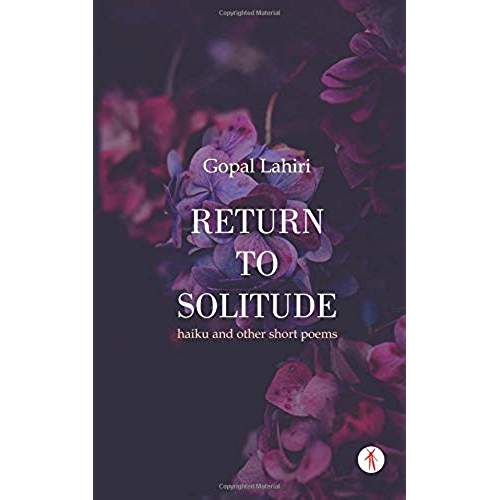
Silent Steps (Cyberwit, Allahabad), Living Inside (Authorspress, New Delhi), Tidal Interlude (Shambhabi, Kolkata), Cities: Two Perspectives (Authorspress, New Delhi), Return To Solitude, Hawakal Kolkata) and Four Books (Flicker of Hope, Sandstone Corridor, Give You Back and Light and Shadow, Lulu Publications, USA)

Anthology appearances (among others) include National Treasures, Indus Valley, The Silence within, Indo-Australian Anthology, Homebound, The Dance of the Peacock, Illuminations. His works have featured in printed journals like Indian Literature, Taj Mahal Review, Tranquil, Triveni, Beyond the Rainbow, Ethos, CLRI, and Haiku Journal and in electronic publications Arts and Letters, Underground Window, Muse India, Setu, Dead Snake, Tuck Magazine, Debug, Eastlit, InkSweatTears, Kolkata Review, Madras Courier and Coldnoon Diaries.

He is also an experienced book reviewer both in English and Bengali and his Bengali poem and review has been published amongst others in the prestigious Desh weekly and The Telegraph Kolkata in the eighties and nineties. He is currently in the panel of reviewers of Indian Literature of Sahitya Akademi, (Print journal), Muse India and Setu online journals.

His translation works in Bengali Not Just Milk and Honey, (published by NBT, India), a collection of short stories of Israel is widely acclaimed.

He has jointly edited the anthology of poems: Scaling Heights and is the recipient of the Poet of the year award in Destiny Poets, UK, 2016 and also received featured poet award in Poetry In A Cup, USA, 2004 and a winner of Haiku in Poetry.com, USA, 2004.

41eOnNrmGrL._AC_US500_QL65_

The Interview

1. What inspired you to write poetry?

I got the influence of nature early on and I still love that. It means so much in my poems. I am happier writing about my childhood. But yes, I don’t think I could live without it, the childhood memory. The people and the surrounds are there who create the sound and silence. I observe, listen and inhale the atoms and molecules of life. This portal into the past is unlocked by poetry alone.

We know that poetry is the place where language performs. It’s hard to resist from finding patterns, from making something that connects and progresses from randomness. It’s what satisfies us when we really be able to make coherence and order, however tenuous, out of the disparate lines or images and evolve a poem. I create my own space inside in a closet where my personal and emotional experience are in search of breakthrough. Poetry is not always an end to itself but an echo of life and I follow that. I think there is space for both loose inspiration and informed engagement.

2. Who introduced you to poetry?

I fell in love with poetry during my school days and could understand that no other form is as nuanced as poetry. The aroma of poems flies me even now directly to the poetry classes where my teachers used to explain the meaning of poetry. The seed of interest was sown then. Social media was not there. Later I joined some poetry groups and started breathing poetry. The scents of poems evoked primal experience and aromas were the links that hold together all of us

3. How aware were you of the dominating presence of older poets?

Tagore is a towering figure in Indian literature especially in Bengali writings if I may say so. Poems, novels, essays, song, paintings and what not where Tagore isn’t there and one is stunned to get a feel. When I began to write poems, I looked to Tagore. But yes, I read Tagore and that is that and it is presumptuous to talk about the influence of Tagore. There were a few other poets who inspired me. I was wild about Byron in my early days. It doesn’t come in a moment. Later I took to Eliot, Pond, Dylan Thomas, Browning, Emily Dickenson, Sylvia Plath, Pablo Neruda, Langston Hughes, Philip Larkins, Dom Moraes, Nissim Ezekiel and a few others.

When I look back, I realise that poetry is a place in where many poets come and inspire me all at once. That’s always drawn me to my existence. It still does.

I love to watch and listen to the people in realms of beautiful earth, how the world is and how the world ought to be. Surely it’s not an extension of dreams but multitude of thoughts and given the opportunity, words and letters can create texture and rhythm and I feel that’s poetry.

4. What is your daily writing routine?

It’s certainly not ten to five job. I prefer night time to write and yes on my desk almost on a regular basis if I stay at home. I do travel a lot and the airport lounges, lobby, hotel rooms, even on a park bench are the places where I scribble on a piece of paper or type it in my cell notes. It gives a feeling of lightness, a sense of living to which I belong.

5. What motivates you to write?

In my thoughts, Poetry is a picturesque journey and I borrow the moments of pure soaring beauty from my surroundings to hit against the most ordinary in life. Then expand the bounds of connections that give us life. All these processes invite me to enjoy and It is good to recollect that we need one another, my soul and poetry.
I want to take my readers on a wonderful walk where a little rain is a downpour, where silence is a part of our essence, where a solitary mind is a chorus.

6. What is your work ethic?

It’s only hard work. Yes, I do set some values and try to follow that in search of truth in my poetry. Poetry is a journey and it’s a trip that leads me to wonder about how, ultimately we can get the most of our existences as conscious beings in the world. A part of me usually is there in my poems but not in all poems.

7. How do the writers you read when you were young influence you today?

Perhaps their influences are filtered through the lens of time for a sense of timelessness to be placed right beside on the contemporary plane.

8. Who of today’s writers do you admire the most and why?

Vikram Seth. He is an Indian poet and novelist. Golden Gate and A Suitable Boy are the two landmark modern classics. But I love his vibrant and lyrical poems more due to their musicality and the topics that they touched upon.

9. Why do you write?

Poetry is life. It is like a habit, it comes out seamlessly. I know I have to write. I believe it’s destiny. In my opinion, poetry can’t be hurried and the dominant sound is its quietness, its gentle collapse, its own unhurried music, its unsung harmonies. All my poems do not overtly address any crisis, nor any inventive desperation but the underlying suffering is palpable.

10. What would you say to someone who asked you “How do you become a writer?”

It’s difficult to answer in one go but may be a combination of many activities. It’s that mix of defiance, inclination and passion for poetry that makes me what I am today. Poetry is a part of my heart- a source of love, desire, pain and rage. We all know poetry can heal wounds too. There is no denying that it packs in a lot of emotions and needs to be celebrated at the end.

11. Tell me about the writing projects you have on at the moment.

My collection of Haiku and short poems has been published recently. I’m working further on new and a selected bunch of published poems, but it will take a while before the book will be ready for publication. Perhaps editing an anthology of poems will also be on my next agenda but nothing has been firmed up.
@gopallahiri hi