Month: December 2018
The Best of 2018. April: Jennifer Copley and Judy Brown — The Great Fogginzo’s Cobweb

Jennifer Copley Basement 1940, but they feel safe here, between the ping-pong table and the bottled fruit. Light from a tiny barred window spills down dust-motes. There’s a birdcage he always knocks his head on, a cupboard that creaks. Today it’s hot. They remove more clothes than usual. Her buttons roll into mouse-holes. His braces, […]
via The Best of 2018. April: Jennifer Copley and Judy Brown — The Great Fogginzo’s Cobweb
Songs of Selah: Transcendent Zero Press — 17numa

On the latest episode of Songs of Selah I had the pleasure of interviewing the publishers of Transcendent Zero Press, Dustin Pickering and Z.M. Wise. An archive of that conversation can be listened to here… http://www.blogtalkradio.com/17numaradio/2018/12/11/songs-of-selah-with-scott-thomas-outlar Dustin Pickering is the founder of Transcendent Zero Press and editor-in-chief of Harbinger Asylum. He won a poetry contest […]
Overnight by Val Pargeter — The Poetry Shed
Overnight Yesterday trees stood leafless as the east wind whipped the last of autumn’s gold Dawn gives way catches us by surprise sun’s winter-stare highlights old hoar trailing white hair beard along hedgerows, rimming leaf’s edge. A winter covering to conserve earth’s strength The breath of morning mist wraps around sticky webs, cradles of silver magic […]
THE YEAR OF THE WOMAN IN LITERATURE: LONGLISTS FOR 2019 PEN AMERICA LITERARY WARDS ANNOUNCED
Good to see.

British writer, Virgina Woolf (1882-1941) 1902/public domain photograph by George Charles Beresfor
“Women have sat indoors all these millions of years, so that by this time the very walls are permeated by their creative force, which has, indeed, so overcharged the capacity of bricks and mortar that it must needs harness itself to pens and brushes and business and politics.” A Room of One’s Own
PEN America released the longlists for its 2019 Literary Awards with 90 titles in the running for juried prizes honoring literary work including fiction, nonfiction, poetry, and translation. Conferred by the country’s only organization that both celebrates literature and defends free expression, the PEN America Literary Awards honor literary excellence and celebrate voices that challenge, inform, and inspire. Prizes for debut fiction, international literature, science writing, sports writing, biography, essay writing and more will be awarded at the PEN America Literary Awards…
View original post 861 more words
Wombwell Rainbow Interviews: Lucy Evans
Wombwell Rainbow Interviews
I am honoured and privileged that the following writers local, national and international have agreed to be interviewed by me. I gave the writers two options: an emailed list of questions or a more fluid interview via messenger.
The usual ground is covered about motivation, daily routines and work ethic, but some surprises too. Some of these poets you may know, others may be new to you. I hope you enjoy the experience as much as I do.
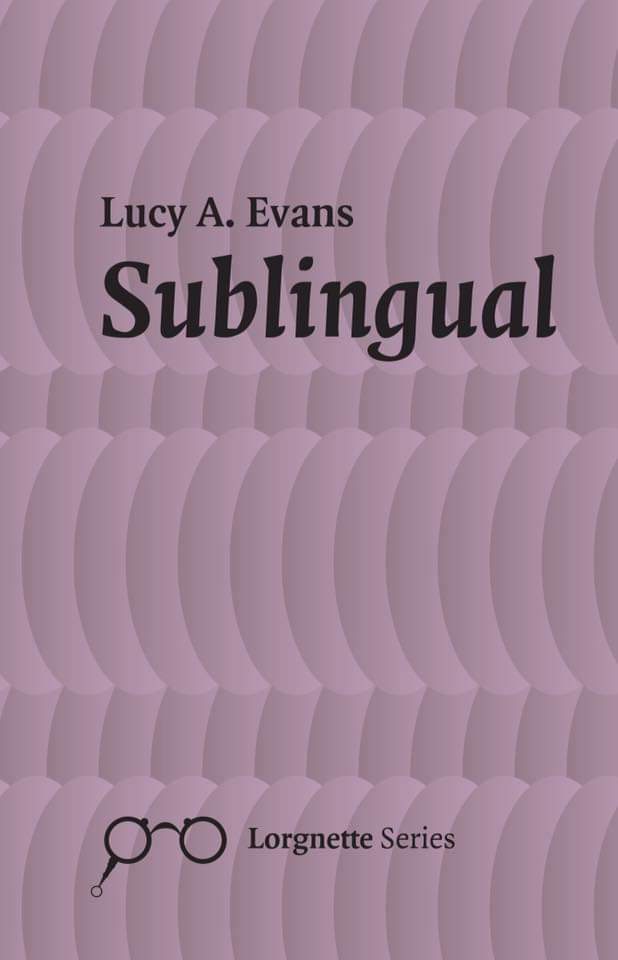
Lucy A. Evans
was born in Kingston upon Hull and lives in rural mid-Devon. She is a former stand-up comedian and the burlesque pioneer Pixie Truffle, founder of the world s only lesbian burlesque troupe, Lesburlesque. She received an MA in the History and Philosophy of Medicine, Science and Society in 1998, specialising in the history of alienism, witchcraft and magical belief in the seventeenth and eighteenth centuries. She was recently named one of Bunbury Magazine s Best Kept Secrets in Poetry . In addition to writing, her spare time is taken up with luthiery and arcade cabinet making.
The Interview
1. When and why did you start writing poetry?
I had a career as a burlesque performer. To be honest with myself, I was average at best. That being said, the troupe I started – Lesburlesque – was wonderful. For a few years, at the beginning of this decade, the troupe flourished, got the attention of the UK tabloids and elbowed its way into burlesque history. But in 2013 everything disintegrated.
While my life was spiralling out of control, I met someone who was in the middle of a turbulent and chaotic summer of her own. She was a published poet. I started writing poetry in 2014, really to see if I could. I’d post it on social media in the usual hopeless expectation of support from friends, but also to see if she’d be impressed because I had a tremendous admiration for her gift and her craft. I continued because she and one or two others felt I had the beginnings of a talent.
2. How aware are and were you of the dominating presence of older poets traditional and contemporary?
Now that’s a heck of a question. The honest truth is that I paid them no mind whatsoever when I revised my first stanzas. The friend was a British beacon on the alt-lit scene, and I became delighted by the British Next Generation poets Luke Kennard and Melissa Lee-Houghton. Of course, I reacquainted myself with Sylvia Plath. Yet, the inspiration never went beyond admiration because I felt it all to easy, to borrow a phrase from my poetry friend, to ‘Plath the fuck’ out of my own creations. So I stood clear of being too traditionally confessional.
In the last couple of years I’ve developed a huge admiration for Frank Bidart. When I’m caught up in the anxiety of birthing verse, I’ll take to imbibing Frank. It seems to do the trick.
3. What is your daily writing routine?
Chaotic. I binge write. I’m working on my first full collection at the moment and it’s harrowing. It charts a thirty year friendship with a boy I met at school in 1983. He took the off ramp from this world in April 2013. It devastated me and it angered me. Writing about him has a re-traumatising effect. So I can go weeks without writing. I string together phrases while I’m busy doing health and safety audits at night for my full time job. When I’m bursting with them, I’ll write 25 poems in a few days. As chaotic as that may be, it works so well for me that I’m loathed to force it. As a result I’m late on a deadline for it. But I’d sooner get it right than do my memory of him a disservice.
3.1 How does the trauma and anger motivate you?
The Legal Deposit ensures that printed books have longevity. At first I had the intention of keeping my friend alive, making him immortal by having his name mentioned in my first collection. But anger has overtaken that sentiment. He is referred to throughout as ‘the boy,’ ‘the lad,’ ‘the fella.’ His name was Giles Adrian Stevens and that’s the last time he’ll be associated by name with this book. To be clear, my anger is with myself. I trained as a psychiatric nurse and I had no idea he was suicidal. He knew this, and chose to keep his distress from me. The only anger I have toward him is caused by the humiliation of knowing I probably meant less to him than he did to me; a sort of reluctantly requited friendship. The trauma keeps me from writing, the anger motivates me through it.
4. How do the writers you read when you were young influence you today?
Ah I get to liberally proselytise my youth. I grew up in Hull. I wasn’t scrabbling around the Victorian ruins of the old city or the bombed out prewar factories that still partially stood erect in the seventies. But I am a product of the seventies and eighties version of deprivation in that city and firmly working class and northern. I did little to no reading as a youngster. I had regular visits to Hull Royal Infirmary as a child, whereupon my mum and I would be photographed and categorised because we share a genetic pedigree that manifests itself as small hands with a bilateral simian crease. This was endlessly fascinating for paediatric doctors who wished to make us their latest research paper. Being around the medical paraphernalia and staff woke my brain up at exactly the right time in my intellectual development. From that moment on academia was rarely challenging. In that sense, I didn’t need much literary input to flourish intellectually. It wasn’t until my late teens that I began to read and only comparatively recently that I took up reading poetry.
5. Who of today’s writers do you admire and why?
I am fortunate enough to read the kinds of poetry I could never write. Jane Clarke’s The River is simultaneously joyous and sorrowful. Bidart’s early confessionalism is as inventive as it is nuanced and, for some reason, allows me the out-of-body aesthetic I need to unhinge and write. Plath darkened the cult-like hypnosis of the light of the natural world. There’s a writer that launched with me in December 2017 called Derek Harper. He has that same quality as Plath without obvious style cribbing. I’m fortunate enough to have formed a friendship with Derek.
6. Why do you write, as opposed to doing anything else?
It isn’t the only artistic pursuit. It just happens to be the one that I’m enjoying the most and that costs me the least in terms of finance and resources. Also, it’s enthralling. I had this mantra as a burlesque performer, ‘this is my world to rule, to ruin and to reinvent.’ It is a maxim I’d like to put behind me. Writing gives me the capacity and breathing room to imagine. That has a back-feed that makes the routine of life so very bearable.
6.1 What do you think burlesque has brought to your writing?
I did a brief secondment into filthy stand up at the end of my burlesque career and that gave me the ability to hold the gaze of an audience with just a monologue for company. The truth is that be is responsible for me having the intestinal fortitude to put myself in a critical crucible. I take submission rejection very well. I have a moment of grief for letting go of the fantasy of being published in a particular journal and then see it as an opportunity to improve. Taking my clothes off for an expectant paying audience was a baptism of fire that means I take criticism very well. It could never compare to surviving a routine that goes badly wrong on stage.
7. What would you say to who asked you “How do you become a writer?”
Notwithstanding impostor syndrome, that I have in a large psychological lockup somewhere about my internal landscape, I’d say I’m probably not a template for aspiring writers. It would be a much more rewarding and pleasant experience to follow the conventional path of courses, open mics and community immersion. I feel I made a dog and pony show of my talents, having stepped from a fairly flamboyant stage to obtain the limited success I’ve enjoyed so far. Do it my way and you’ll be forever looking over your shoulder for the hand of reason that pulls me back into a reality that says ‘well done Lucy, now let the real poets prevail.’
8. Tell me about the writing projects you have on at the moment.
I’m loath to take on too many projects at once. So I have a few on the back burner. Once my full collection is ready I’m going to write a short story about a time traveling historian that plagiarises a well known rock album, only for fame to ruin her life. Then finally I’ll sit down and write my Sovereign trilogy, which would take far too long to explain. In any case, in between these projects, I’ll keep plugging away, writing poems and submitting them to various journals and playing what’s the time Mr Wolf with the hand of realism.
Wombwell Rainbow Interviews: Alex Mazey
Wombwell Rainbow Interviews
I am honoured and privileged that the following writers local, national and international have agreed to be interviewed by me. I gave the writers two options: an emailed list of questions or a more fluid interview via messenger.
The usual ground is covered about motivation, daily routines and work ethic, but some surprises too. Some of these poets you may know, others may be new to you. I hope you enjoy the experience as much as I do.
Alex Mazey
-
- Alex Mazey (b.1991) won The Roy Fisher Prize for Poetry in 2018 with his debut pamphlet, ‘Bread and Salt’ (Flarestack, TBA). His poetry has featured regularly in anthologies and literary press magazines, most notably in The London Magazine, Anima and The Staffordshire Poetry Collection. Between 2010-2013, he completed a BA Hons before moving to Keele University in 2015 to complete an MA in Poetry. His MA dissertation was conducted in consultation with T. S. Eliot Prize nominee, James Sheard. He graduated in 2017 with distinction. He has previously helped facilitate creative writing workshops with Writing West Midlands, an Arts Council England National Portfolio Organisation operating the UK’s largest programme of creative writing groups for young writers. He spent 2018 as a resident of The People’s Republic of China, where he taught the English Language in a school run by the Ministry of Education. His own writing has been described as ‘wry and knowing,’ with ‘an edge that tears rather than cuts or deals blows.’
The Interview
- What inspired you to write poetry?
There’s an essay written by one of Philip Levine’s former students, called ‘How Difficult It Is to Live.’ The essay, written by Mark Levine, now an associate professor of poetry at the University of Iowa – I believe – speaks about taking a class with Philip Levine back in 1985; first meeting the poet three days after Ronald Reagan’s second inauguration. According to the essay, Philip Levine really ‘believed poetry was the most important thing a person could do, and that poems bore the impulse for collective transformation without which lies and injustice would prevail[…] [Levine] spoke of the crimes that politicians and capitalists had done to language. The right words mattered, he said, because poems could restore meaning to language.’ I believe that through the artifices of the modern world, we have become caged inside false perspectives of ourselves as imperfect beings from which material products can be used to repair our ever-accumulating deficiencies. Jean Baudrillard talked about these false realities as being maintained by ‘an order of the hyperreal.’ I think poetry has the ability to glance through these falsities and illusions, offering readers a glimpse into something authentic and transcendental.
- Who introduced you to poetry?
No one in particular introduced me to poetry – I’ve found a lot of life is learning how to introduce yourself. But with guns pointed, I’d say the generic English teacher. In my experience, poetry in the state-school system often focused on a machine-like examination of the poetic record through an historical lens, starting with Shakespeare and ending with someone like Siegfried Sassoon. I did have a wonderful English teacher who adored Carol Ann Duffy – but I was never able to fully appreciate Duffy’s proficiency for the dramatic monologue. I have always tried to read voraciously, so finding the voices I enjoyed was more of a natural process.
- How aware were you of the dominating presence of older poets?
The presence of older poets has never really bothered me. Hera Lindsay Bird has a poem, ‘Keats is Dead so Fuck me From Behind’ where the poetic voice states, ‘Nobody, not even the dead can tell me what to do’. I think that poem is remarkable, and should indicate how every aspiring, talented person should engage with the guardians of any ‘proper tradition.’ Writers often want to talk foolishly about the presence of archaic traditions when really the only truly dominating presence in the poetry community are the darlings of the literary establishment itself. I believe a lot of contemporary poetry has been co-opted by a ‘bohemian bourgeois’, appropriately described by David Brooks as ‘folk who have one foot in the bohemian world of creativity, and another foot in the bourgeois realm of ambition and worldly success.’ I suspect that’s why we see poetry anthologies and competitions built around hot-button issues. Whilst they’re promoted as raising awareness, I suspect book sales and monetary gains are the primary motivation behind these kinds of creative output. There’s a fine line between what’s entrepreneurial and what’s exploitive and some publishers are evidently selling social justice as a commodity. Obviously, there are exceptions to this, but it’s disingenuous to think it’s always about altruistic concern.
- What is your daily writing routine and work ethic?
Coffee has been my only serious routine as a writer. I spent 2018 as a resident of The People’s Republic of China, where I taught the English Language in a school run by the Ministry of Education. Most of my latest writing has been produced in the time between teaching classes. The poems that appeared in my first pamphlet were almost entirely written in the Keele University Library, where I would usually spend up to eight hours a day writing as a postgraduate student. Previous to this, my writing was conducted around menial work commitments, with almost everything written at night or on the weekends when I had the time.
- What motivates you to write?
When asked to give some advice to writers, Christopher Hitchens said, ‘If you want to write it must be the thing not that you want to do, or would like to do – it must be the thing you feel you have to do. It must be that without which you could not live. If you’ve got that, then it will be alright because you can survive the disappointments.’ I’m no stranger to disappointments. In fact, a life can be characterised by a series of disappointments. It’s ironic to think that suffering at the hands of existence could fuel a motivation to write – but I think that’s what keeps me going.
- How do the writers you read when you were young influence you today?
Aged sixteen, I bought a yellowing second-hand copy of Friedrich Nietzsche’s ‘Twilight of the Idols’ from Gloucester Green Market. I still have the copy on my shelving unit. Nietzsche’s ability to write from a perspective of unapologetic presumption still resonates with me. It’s important to remain optimistic and carefree when you’ve been cast aside, ostracised or deemed too transgressive for writing communities. Most of the writers I read when I was younger, Albert Camus, Yukio Mishima, Chuck Palahniuk and Charles Bukowski, for example, dealt with seriously conflicted protagonists living in flawed environments. I think their personal narratives have left a lasting impression on me.
- Who of today’s writers do you admire the most and why?
I admire contemporary writers who keep their creative integrity intact, and don’t follow publishing trends. There’s an insipid promotion of identity politics that’s crept into poetry, and it can be tempting for emerging poets to join the cohort of writers who are keen to tie themselves down to geographic location and/or ethnicity. I actually find a lot of contemporary page poetry banal with spoken word often appealing to superficial condemnation. Tao Lin’s collection ‘you are a little bit happier than i am’ was a major breakthrough in wanting to read more contemporary poetry. I was eighteen when that book was published. American writer, Megan Boyle adequately described that collection as the ‘iconic first doctrine of self-conscious, disappointed with people/the universe/the self (to some degree) poetry.’ Published in 2016, Ocean Vuong’s ‘Night Sky With Exit Wounds’ was one of my favourite collections to appear in a long time. In a 2013 interview with Edward J. Rathke, Vuong discussed the ‘utterances and stutters’ of a poem, which was beautifully insightful. He’s probably one of the best poets writing today. For me, his poetry is about finding redemption in a world of chaotic violence and trauma. I was saddened to see the achievements of that collection reduced to his sexuality by leading members of the poetry establishment, especially on Twitter. Between 2015 – 2016, I was fortunate enough to have James Sheard supervise my MA dissertation at Keele University. He introduced me to ‘the quiet utterance’ which was probably a kind way of telling me to be less obnoxiously declarative in my own writing. Either way, I admire his collections for their haunting representations of memory and loss. I think someone once described his poetry as ‘secular prayer’, which is a beautiful way to view poetry. The great American poet, Philip Levine passed away in 2015. Time magazine once described Levine’s speakers as ‘guerrillas, trapped in an endless battle long after the war is lost.’ I admire Levine’s poetry above anything else I’ve read. His poems like ‘The Simple Truth’, ‘Burial Rites’ and ‘What Work Is’ are impeccable examples of writing produced from places of ordinary hardship. Lastly, I think it’s an absolute crime that the Chinese poet, Bei Dao has yet to receive The Nobel Prize for Literature. I’m usually shocked when poets say they haven’t heard or read his work.
- Why do you write?
Not writing makes me unhappy.
- What would you say to someone who asked you “How do you become a writer?”
I see a lot of writers on social media complaining about this or that, talking about writing, or being writers, or wanting their craft to be taken more seriously. The writing community is full of people who would probably have better careers in social media marketing. My advice would be to ignore the distractions and put your time into actual, tangible writing. Find your voice. Find publishers who will have you. Harden yourself to rejection, criticism and ridicule. Read the library. Read outside of the style or genre you want to write in. Read non-fiction, especially. My number one piece of advice for writers is to nurture your own compulsion to write because nobody will nurture it for you.
- Tell me about the writing projects you have on at the moment.
I’ll be returning to Stoke-on-Trent in 2019, after a year teaching in China. My debut pamphlet, ‘Bread and Salt’, is currently in the safe hands of Jacqui Rowe and Isabel Palmer, who have both been immensely kind to me over the course of the editing process. I have also been delighted to continue interviewing Lofi Hiphop artists for London-based, digital magazine PublicPressure.org, where you can also read my contributions on politics and culture. There is, of course, a second pamphlet in the works, with poetry written over the last twelve months. I’ll probably continue to reach out to literary magazines and publishers where I can. Aside from that, if anyone has a job, a PhD offer, a lucrative grant, or a cure for depression, please get in touch.
You can tweet me @alexzandermazey or read my blog at alexmazeyblog.wordpress.com.
Wombwell Rainbow Interviews: Spangle McQueen
Wombwell Rainbow Interviews
I am honoured and privileged that the following writers local, national and international have agreed to be interviewed by me. I gave the writers two options: an emailed list of questions or a more fluid interview via messenger.
The usual ground is covered about motivation, daily routines and work ethic, but some surprises too. Some of these poets you may know, others may be new to you. I hope you enjoy the experience as much as I do.
Spangle McQueen
is a happy grandma and hopeful poet living in Sheffield. She is proud and grateful to have work accepted and/or published by Three Drops Press; Picaroon; Lonesome October Lit; Bonnie’s Crew; Burning House Press; Dwell Collective Zine; Strix; Awkward Mermaid; I am not a Silent Poet; The Writers’ Café; Foxglove Journal and Sad Girl Review.
http://dancingtosyllables.blogspot.com/
The Interview
1. What inspired you to write poetry?
I have written poetry sporadically since my teenage years, but my recent inspiration is my gorgeous friend Liz Ferrets, who sadly left us too soon in 2016. I became inspired by her energy in writing and performing poetry before I realised she knew she had limited time to get her words out there. I loved drinking tea, talking life, the universe, parallel universes, people, music and poetry with her. I miss our conversations. It was Liz who encouraged me to submit my work and whenever I get a piece accepted I give my thanks to her. You can check her out on Liz Ferrets Poems on Facebook or on I am not a Silent Poet. Her beautifully haunting poem Moon on the Water was published at Three Drops from a Cauldron – https://threedropspoetry.co.uk/2015/10/31/moon-on-the-water-by-liz-ferrets
2. Who introduced you to poetry?
I guess I was introduced to poetry by my estranged biological father. I remember having a battered Faber anthology he had given me – a thick book with a yellow cover stuck together with brown tape gaffer tape. I randomly remember it contained The Jumblies and Kubla Khan. However, I’m sure before I owned this book my mum would have taught me all the nursery rhymes …as I now see her teaching my grandchildren…so I’m going to say my mum, my mum introduced me to poetry!
3. How aware were you of the dominating presence of older poets?
I had quite an old-school grammar school education and I also studied Classics so some of my favourite works were very old! I think what I was conscious of was the male dominance in poetry and I used to seek out women writers. I still do.
Nowadays, I’m aware that I am an older presence among the poets who I read and watch perform and engage with on social media. I love their energy and vibrancy. I wish I’d started out younger…but as I Iearnt from Liz, it’s all about seizing the moment.
4. What is your daily writing routine?
I have ME (Myalgic Encephalomyelitis) which means I am constantly ‘running on empty’ and I suffer with ‘brainfog’ so many of my days are spent sleeping and doing nothing or very little. So, much as I’d love a daily writing routine and it’s my goal to have one, I accept that I just write bits and bobs when I can. It’s hugely frustrating. A silver lining is that I rarely have the concentration to read novels like I used to, so I get to read lots more poetry and keep in touch with other writers online.
5. What motivates you to write?
Emotions, quite often anger at social injustices. Before I got ill my work involved helping women in the criminal justice system – one of the most disadvantaged and stigmatised groups in this country. I desperately miss being able to work with and support people and advocate for them so I think I channel some of that into my writing.
6. What is your work ethic?
I no longer have a strong work ethic. I do what I can when I can. Maybe that is an ethic?
7. How do the writers you read when you were young influence you today?
I think everything I ever read and loved (and hated) is under my skin somewhere.
8. Who of today’s writers do you admire the most and why?
Alice Walker – for her writing and her activism. Horses Make a Landscape Look More Beautiful was my favourite poetry book for a long time as a young woman.
And there are lots of other contemporary poets I admire – Fleur Adcock, Joolz Denby, Kate Tempest, Carol Ann Duffy, Patti Smith, Kate Garrett, Serin Thomasin, Amy Kinsman, Alan Summers, Amee Nassrene Broumand, Kate Dlugosz, Salena Godden, Reuben Woolley, Rachel Bower, Hollie McNish, Simon Armitage, Jane Burn, Karissa Lang, Paul Waring, Mike Garry, Richard C. Bower, Nico Solheim-Davidson, Wren Tuatha …..ad infin. All awesome in their own unique way.
9. Why do you write?
I write to put words on paper – or nowadays on screen or in a cloud. I write to express myself and speak out for others.
My admiration for Liz Ferrets grew from seeing her perform her work and I became aware of other great contemporary performance poets. The punk poets were very influential for me … I remember seeing Joolz Denby in the early 80’s and being awestruck by her power. More recently Salena Godden had that effect on me. I envy these performance poets but I am not a performer and so up til now haven’t written for my words to be spoken aloud. I’m trying to get the courage together to read somewhere publicly, In Sheffield we have great nights such as Verse Matters and Gorilla Poetry and I attend when I can and listen. I’m trying to challenge myself to write something with a view to an open mic slot but not quite got the nerve yet!
10. What would you say to someone who asked you “How do you become a writer?”
I’m not even sure I am ‘a writer’ yet. Apart from the obvious answer of ‘just write’ I would say take advantage of the communities online and in-real life. Submit to journals that you love or read at poetry nights that inspire you.
The internet and modern technology has made it so much easier to become involved in the world of writing poetry and to find a place in a community of like-minded people. This has been especially vital for me as someone who is chronically ill and often housebound.
11. Tell me about the writing projects you have on at the moment.
I’m trying to write a series of poems about ‘the last woman executed in [insert country]’.
I am very anti the death penalty. It scares me not only that countries still use the death penalty but also the reasons why it is used. I am currently watching the media for news about Israa al-Ghomgham, a Shia human rights activist for whom Saudi prosecutors are seeking the death penalty even though charges she faces relate to peaceful activism. I am praying that I never need to write one of these poems for her.
My other fledgling project is more personal. For my 50th birthday my friend Helen gave me a folder full of letters that I wrote to her in the early 80s when she was at uni in London and I was unhappy in Oxford. One of those letters and a photo of me at the time is about to be published in Sad Girl Review’s The Handwritten Issue. I want to write some poems in response to that ‘sad girl’ and let her know that it turns out OK.
Thank you for asking this question and reminding me I have poems to think about!
Wombwell Rainbow Interviews: Matthew J. Lawler
Wombwell Rainbow Interviews
I am honoured and privileged that the following writers local, national and international have agreed to be interviewed by me. I gave the writers two options: an emailed list of questions or a more fluid interview via messenger.
The usual ground is covered about motivation, daily routines and work ethic, but some surprises too. Some of these poets you may know, others may be new to you. I hope you enjoy the experience as much as I do.
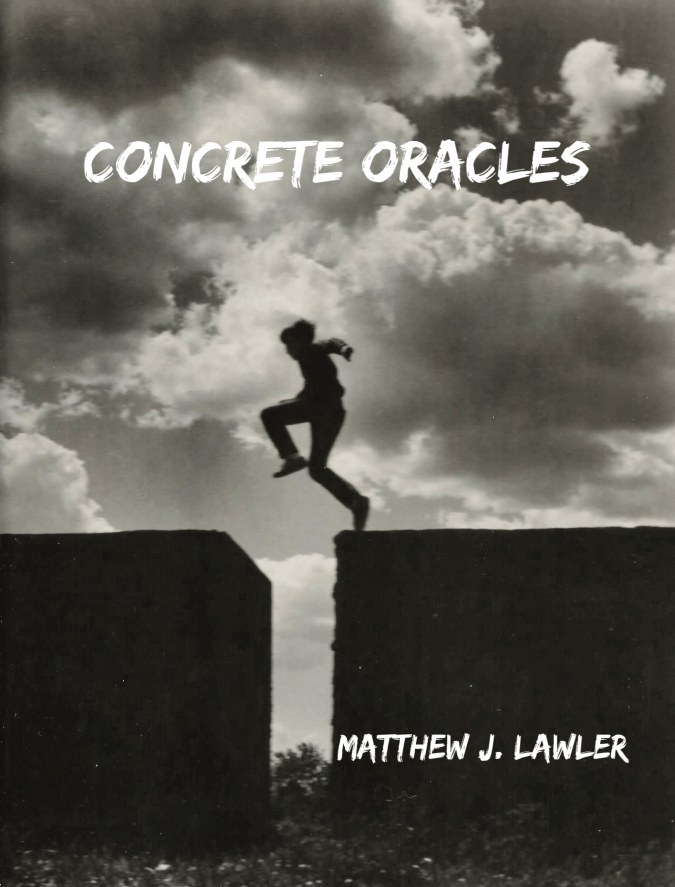
Matthew J. Lawler
is a Chicago native and poet. He has been published in numerous journals, including, The Miscreant, Scarlet Leaf Review, Peeking Cat Magazine, Eunoi Review, Dissident Voice, Spillwords, Madness Muse Press, People’s Tribune, Caravel Literary Arts Journal, Sick Lit Magazine, Visual Verse, and in an anthology titled “The Best Emerging Poets of Illionois,” put out by Z Publishing. His first full-length collection, “Concrete Oracles” published by Alien Buddha Press is available on Amazon, Barnes and Noble, and also available throughout various local Chicago bookstores. It is a collection of 41 grippingly introspective poems that delve into concepts of identity, urban life, gangs, self-esteem, police brutality, the loss of a friend, and the ongoing struggle of living with juvenile diabetes since the age of thirteen. You can find him on Instagram @poetmjl or on facebook at http://www.facebook.com/matthewjlawlerpoet
The Interview
What inspired you to write poetry?
I’ve always loved words and had an affinity for the poetic language. I think being exposed to writers like C. S. Lewis and John Bunyan in my childhood helped me to appreciate figurative language. I’ve always loved allegories and writing with multiple meanings beneath the surface, so naturally the poetic language is no different. I also grew up in Chicago and lived through the “golden era” of hip hop which inspired me to become lyrical. I started writing raps and spittin’ them at a young age and eventually became a pretty well respected rapper in Chicago’s underground hip hop scene. I would venture to say that my “surroundings” birthed an immense amount of poetry in me. I grew up in a gang infested area in Chicago’s Irving/Albany Park neighborhood and at that time,( mid-nineties) gangs were really prevalent and so was peer pressure. I think I learned early on how to write down what I was feeling and seeing on a day to day basis. Also being diagnosed with Type 1 (juvenile diabetes) at the age of thirteen helped me to get in touch with my feelings in a deeper way. Emotions definitely inspired me to start writing.
Who introduced you to poetry?
In childhood my parents introduced me to Dr. Seuss and Aesop’s Fables. My dad also exposed me to the imagery, paradoxes, sounds, and language of the Psalms. In grammar school I experienced Tennyson, Dickenson, and Edgar Allen Poe, but really didn’t have a transcendental encounter with it until high school when a neighborhood friend Don Hall, introduced me to a more abstract style of rhyming. As I mentioned above, I grew up in the “golden era” of hip hop, so I was exposed to some of the greatest lyricists ever, Rakim, Nas, Krs-One, Pac and Biggie, Wu-Tang, Doseone, and Slug from Atmosphere. Early on in high school I was writing more straight forward narrative stuff pertaining to the neighborhood and Don was writing more abstract surrealistic nonsensical metaphorical ramblings reminiscent of Captain Beefheart, but it was the language that really captivated me, it was waaay out of the box, but it was beautiful. I believe it was in that moment when I truly encountered “poetry.” Next thing I know I’m taking a poetry class at Wilbur Wright College in Chicago and my Professor Perry Buckley explained figurative language to me in a way that was life altering. I fell in love with symbol, metaphor, imagery, tone, and the overall sense of the language.
How aware were you of the dominating presence of older poets?
I was very aware, especially after taking my poetry class with Professor Perry Buckley at Wright College. I started studying the greats, Keats, Blake, Wordsworth, Rossetti, Elizabeth Barrett Browning, Whitman, and Poe as well as some of the metaphysical poets like Herbert and John Donne. I acquainted myself with more contemporary poets like Etheridge Knight, Jaroslav Seifert, Anne Sexton, Adrienne Rich, Denise Levertov, Ai Ogawa and Frank Stanford. These past giants of the literary world definitely helped me to form my own poetic voice.
What is your daily writing routine?
I don’t know if I have a daily writing routine. When I was writing my first book “Concrete Oracles” it seemed that poems would just come to me out of nowhere and I think that’s the way I like to approach it now. I believe it has something to do with “vocation” and knowing that writing is something I was made to do. It is a spiritual experience for me. My thoughts come and go in a peripatetic quest to formulate words upon paper. I’m a firm believer in not forcing the writing out, but to be still, and wait for the time when memory, emotion, and the present moment collide to conjure images that can be translated into words.
What motivates you to write?
It is cathartic to me. There is a great burden within compelling me to write. It is both a blessing and a curse. I would say experiences, memories, and emotions all motivate me in capturing images and feelings that can only be expressed through words. Most times it’s in observing things and paying attention to my feelings in the moment that I find inspiration. My inner-life is a complex world of anxieties, hopes, dreams, beliefs, pain, happiness, void, fullness, grief, love, light and dark. It’s in the soul where I truly find motivation. Rimbaud thought of the poet as a “seer and a scientist” one who can delve into the unknown and make it known. I guess I like to think of myself in that way (metaphorically of course) delving into the interior life to bring something tangible to the surface.
What is your work ethic?
I like to think of my work ethic as passionate and consistent and though I fall short of being considered a prolific writer, I value the depth and emotion that I write with above all else. “Less is more” is the paradox.
How do the writers you read when you were young influence you today?
Edgar Allen Poe definitely inspired me to write. I loved the emotions that I could feel while reading his stuff, the rhythms and rhymes of his poems always intrigued me. John Keats, William Wordsworth, and the great mystic romantic poet William Blake also had a profound impact on the forming of my own poetic voice. Blake was the only “city poet” of the romantics, a product of the rough and tumble London of the late 18th century. He was also immensely unconventional, untamed, and a free spirit. I think all of these romantic poets inspired me to write with emotion and freedom, a certain vulnerability, if you will. I guess in a way, “I’m a whole lot of everybody else,” yet uniquely myself.
Who of today’s writers do you admire the most and why?
Luis J. Rodriguez is by far my favorite poet today. In fact his book “The Concrete River” actually inspired my book “Concrete Oracles.” I got a chance to meet him a few years back and he is just the most humble and unpretentious guy. His poems are full of grit, truth, and emotion. I definitely admire Yusef Komunyakaa as a “philosophical” poet and one who weaves a plethora of images into a narrative language. His poem “Facing It” is a powerful persona poem about facing the past, as the speaker is a Vietnam vet visiting the Vietnam Veterans Memorial in Washington DC. The poem is personal, thought- provoking, emotional, and full of the agony that comes with confronting one’s demons. Komunyakaa is simply brilliant and his poem “Facing It,” will forever be etched upon my heart with its imagery, tone, and reality.
Why do you write?
It is cathartic for me. I’m driven to write as a way of creating and healing. It is the only time when I feel truly free to be myself with all my idiosyncrasies laid bare upon the page. I write for myself and the inner joy that it brings. I want to dig beyond the surface and I feel writing is a way to do that. It is a spiritual experience that transcends the material world. In a way it is related to the insatiable desire to live. Writing is immortal and that urge to “live” is something innate and within us all. I just choose to express that desire through writing. There is a deep urge to create something real, I want to feel something when I write, something birthed from the invisible life of the soul. In a world of materialism and artificiality writing is a gateway to transcendence, and to be a poet is really to be an outsider, a contemplative, one who finds meaning and joy not in the way the rest of the world finds it, but to find it in the silence and brokenness of one’s own spirit.
What would you say to someone who asked you “How do you become a writer?”
Well, the first thing I would inquire about is the person’s reading habits. If they do not read or read a little, I would probably say their chances are slim to none. I’ve heard it said that reading is like inhaling and writing is exhaling. In order to write you need to feed the mind with words and images that provoke the inner muses. Once the inner muses have been awakened it is imperative to jot down anything that comes to mind. Don’t worry about sense at this point, it’s more about getting things out than any kind of sensical language. You can sift through the pieces and put the words together like a puzzle once your words have hit the page. The great English romantic John Keats said, “nothing ever becomes real until it is experienced.” I would say to be attentive to the moments and what you’re feeling inside with every interaction, every emotion. Poems, language and images are everywhere, but the most important thing is to always keep your eyes open and observe in order to transfer thought and emotion into writing.
Tell me about the writing projects you have on at the moment?
My first full-length poetry collection, Concrete Oracles, published by Alien Buddha Press is out and available on Amazon and Barnes and Noble. It was a project that I was working on for the past 4 years and I’m extremely grateful to see all my hard work finally pay off. It is a collection of 41 introspectively gripping poems that chronicle my experiences of growing up in Chicago. It is confessional and vulnerable, and full of the ups and downs that come with “city life” and the constant crutch and roller coaster ride of dealing with Type one diabetes. I consider it my baby and my masterpiece. I only hope one day, perhaps, it will be remembered and looked upon as a great book of poetry. At the moment I’m starting on some chapbooks and hopefully I will have those out sometime next year.
Wombwell Rainbow Interviews: Laura Potts
Wombwell Rainbow Interviews
I am honoured and privileged that the following writers local, national and international have agreed to be interviewed by me. I gave the writers two options: an emailed list of questions or a more fluid interview via messenger.
The usual ground is covered about motivation, daily routines and work ethic, but some surprises too. Some of these poets you may know, others may be new to you. I hope you enjoy the experience as much as I do.
Laura Potts
is twenty-two years old and lives in West Yorkshire. Twice-recipient of the Foyle Young Poets Award, her work has been published by Acumen, Aesthetica and The Poetry Business. Having worked at The Dylan Thomas Birthplace in Swansea, Laura was listed in The Oxford Brookes International Poetry Prize and became one of the BBC’s New Voices last year. She has recently been nominated for The Pushcart Prize. Her first BBC radio drama aired at Christmas, and she received a commendation from The Poetry Society in 2018.
The Interview
1. What were the circumstances under which you began to write poetry?
The simple answer is that I have always been a reader, and always held the belief that the best writers are the best readers too. The one followed on from the other quite naturally for me: I read and found my poetic voice in time through listening to the voices of others. And there was also a quiet joy in claiming my own small corner of intellect back then: after all, no-one expected the shiest child in the class to have the loudest voice in literature. Even then, writing was the medium by which I wrote and they listened. It was connective on a level which I hadn’t known before. And a natural tendency to introversion probably helped. The act of writing, contemplative and solitary, has always brought catharsis since my infancy. It was never pretentious or false. It just lit up my stage in the quietest way.
2. Who introduced you to poetry?
My grandmother. I was born to older parents, and grandparents who were way past retirement when I arrived. While these elderly figures seemed transient to the other children at school, and seemed to flit in and out of their lives on a throwaway basis, I always knew that my time with my own was short. I spent most of my days with them, especially my grandmother. She had been, before the age and the illness came, an amateur writer herself. We spent hours in her old armchair, reading Chaucer and Tennyson and Keats. Of course, I had no idea what they meant back then. But that great gravelly voice of hers, broken by gas and smoke from the war, has stayed with me ever since. And today, whenever I read aloud (which is, take note, as poetry should be read), I hear her voice in my head. She gave me the smallest gift of time, but one which will last to the end.
3. How aware were you of the dominating presence of older poets?
I’ve always been aware of poets who have gone before me and those who write around me, but to say they are dominating is to imply a sense of threat which I have never felt. Whether I enjoy their work or not, they have all been my guides in one way or another: by drawing towards or deviating from their style, I can find my own voice. And so I have come to deviate from the density of Browning but towards the music of Dylan. As for older poets, I often take more joy from reading this infant stage of emerging writers. Maybe it’s the mother in me, but I like to watch them grow. And all ways round, I read. That can only ever be a good thing.
4. What is your daily writing routine?
As I don’t write every day, I’m afraid there isn’t one! I refuse to produce art for art’s sake, and have learnt that time is the greatest gift I can give myself. My routine is long and peaceful. It is a process of carrying. I read for weeks, make notes for months, and the poem is the end of that passion. I need a morning to start, an afternoon to lull, and an empty house to write in. The last few lines are left alone to write another day. So it’s a long and onerous process, but the best form of catharsis I know. And when you read aloud and think for hours (often into the night), you realise just how fettered you are in other parts of your life.
5. How do the writers you read when you were young influence you today?
I like to think I carry them all in one way or another. Most will identify the echoes of Dylan and Gerard Manley Hopkins in my work and it’s true: I endlessly read them both as a child. There’s Tennyson too, who taught me metre so well. I think it was their music. The verbal density, the restlessness, the rhyme and sprung rhythm: the words are given such life aloud. And they are true to the ancient roots of verse, when its mainstays were orality and the music of the lyre. I hope they always stay with me.
6. Who of today’s writers do you admire the most and why?
I hold Sasha Dugdale in very high regard. Not only is Joy the only book to make me cry since the Flopsy Bunnies were caught in Mr McGregor’s garden, but her gentle music speaks with such an urgency and passion that it has haunted me ever since. When feeling bright and young, I turn to her work; when feeling lost and low I do the same. She is the only poet today whose work I endlessly return to and each time read it anew. And, of course, she is also a first-rate translator who has done much to strengthen the rightful place of translation in academia. I have a lot of time for her.
9. Why do you write?
To be heard without having to speak. Or even just to be.
10. What would you say to someone who asked you “How do you become a writer?”
Read. Read for the joy of it, for the hell of it, for the love of the book alone. Read with a mind which is open to asking whether what you’re reading is right. It’s like I said: the best writers are the best readers. That doesn’t mean they read the most or have a library of their own. It means they read with more than the eye. They listen long to the voices which have come and gone before them, and to those who write beside them. They gauge their place in the annals of time by working out just where they stand. Even I am not there yet. In fact, I’m not sure that an end exists. But it is a slow and patient process, and you must be kind to yourself. You will find your place in time.
11. Tell me about the writing projects you have on at the moment.
Lately, I’ve been happy to write when I wish and read for the love alone. But the upcoming step is my first collection, which I will send to the world very soon. Other than that, I have a play for BBC Radio 4 in its infant stage and a poetry commission waiting for me in the New Year. I’ve also promised to return to Latin and the worth of translation. But I suppose that time will tell. When not writing I am reading, which is good enough in itself.
 The Wombwell Rainbow