Wombwell Rainbow Interviews: Gareth Writer-Davies

Wombwell Rainbow Interviews

I am honoured and privileged that the following writers local, national and international have agreed to be interviewed by me. I gave the writers two options: an emailed list of questions or a more fluid interview via messenger.
The usual ground is covered about motivation, daily routines and work ethic, but some surprises too. Some of these poets you may know, others may be new to you. I hope you enjoy the experience as much as I do.
4633346005_280x435

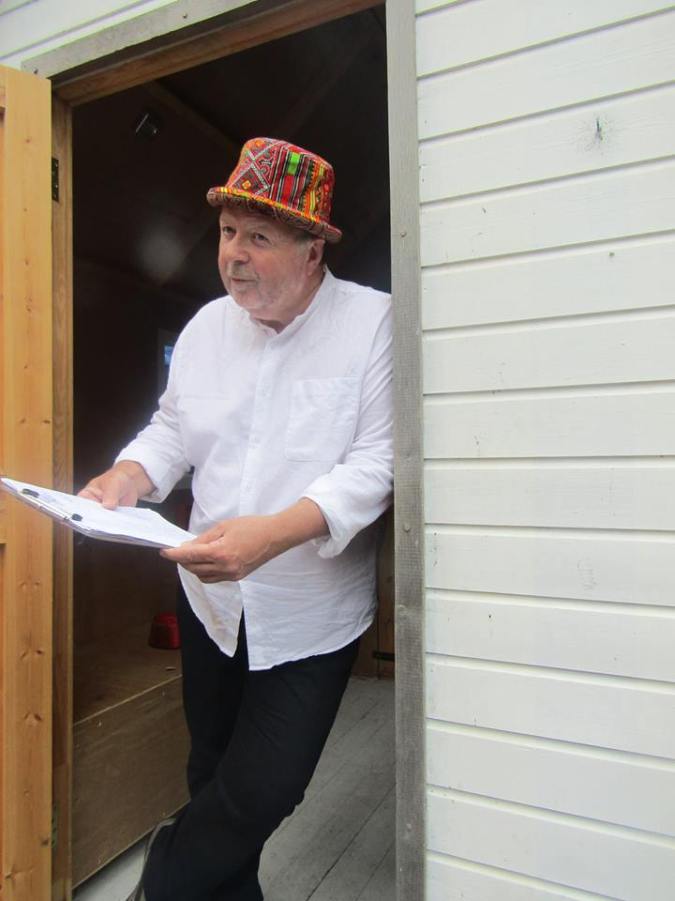
Gareth Writer-Davies

Gareth Writer-Davies is from Brecon Shortlisted for the Bridport Prize (2014 and 2017) and the Erbacce Prize (2014)Commended in the Prole Laureate Competition (2015) and Prole Laureate for 2017. Commended in the Welsh Poetry Competition (2015) and Highly Commended in 2017

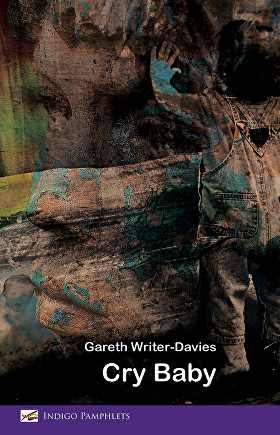
His pamphlet “Bodies”, was published in 2015  by Indigo Dreams and the pamphlet “Cry Baby” came out 2017.

His first collection “The Lover’s Pinch” (Arenig Press) was published June, 2018.

The Interview

  1. When and why did you start writing poetry?

I started about eight years ago after a break of some thirty years of not reading or writing poetry. I showed a poem from my teens to a girlfriend and she thought it was good and encouraged me; thereafter I kept writing.

2. Who introduced you to poetry?

Primary school. I grew up in a household that was not bookish or creative.

I always avidly read any books, though sports were as important as I was growing up.

2.1 What poetry books did you read?

Mainly those set by school. So Milton and Shakespeare and T.S. Eliot. I remember buying the Selected poems of Louis MacNeice and the selected Poems of Thomas Hardy so I must have had some response and interest but a poor result at English A-Level probably killed that although the teacher did say I had a true poetic response and that thought lingered.

2.2  What did you think he meant by “true poetic response”?

I guess he meant that I had a way of responding to the text that was not driven by exam success and the building of an essay but that I felt and reacted emotionally to the text. I wish I could have done that AND had technique! Sadly, he’s dead now, otherwise I would like to tell him that it all turned out alright!
I know one or two teachers I’d like to say that to.

3. What style were your early poems?

They came from periods of both crisis and emotional uplift and so they were quite heavy going and probably somewhat overdone. They were free verse and dealt with loss and love. It was a year or two before I realised I could play and imagine rather than reportage. Also, I started to write in a lighter style about dark subjects; I liked (and still do) the tension.

4. Did the way any particular poets you read dealt with such matters help at all?

I feel severely under-read after that long gap but I have tried to make up for lost time as best I can. I have some poets I refer to such as Bishop, Oswald, Larkin as guides for tone and sometimes technique. I tend to read poets from the 60s and 70s and it’s surprising how many are now forgotten when they were big names in their time.

Which is helpful sometimes. I’m told I’m quite original, but I think it’s more to do with my influences now being quite obscure!

I agree. I try to promote forgotten poets as often as I can.

5. What is your daily writing routine?

I’m glad you mention routine. I think the dull truth about creativity is that it is based on routine ie; turning up at the desk and setting to work. 6 days out of 7, I’ll be doing something with my poems, even if it’s just changing a title . Of course this routine needs to be balanced with the floaty head space, but it works for me; I would recommend the William Stafford method to anyone.

5.1 The William Stamford method?

https://­www.powells.com/post/­poetry/­four-elements-of-a-da­ily-writing-page-in-­william-staffords-pr­actice

Here’s a link. It’s all about getting poems started.

6. What motivates you to write?

Not sure; it’s become such a large part of my life, it just is. I always like to look ahead; could this poem be part of a sequence; could that sequence be leading to a pamphlet or book. That gives me forward motion. I know that if my writing stopped, i would miss it sorely.

7. This relentless routine is your work ethic?

Yes. I was bought up Calvinistic Methodist!

8. Who of today’s writers do you admire the most and why?

Samantha Wynne-Rhydderch, Alice Oswald, John Ashbery (though recently deceased)

Not sure why, but then why should I know; I just do! I guess I like wit and daring.I would say about Ashbery that any time a read a page of his dense poetry I came away with something.

8.1 What do you come away with?

Mainly a way of expressing something difficult.

Technique really.

9. Why do you write?

Probably some sad need for approbation! But more seriously, it fulfils a need in me to express my thoughts and if people like my poetry and are entertained or moved or both by it then I’m happy

10. What would you say to someone who asked you “How do you become a writer?”

I try not to overthink it;

11. And finally, Gareth, tell me about the writing projects you have on at the moment.

Wow, that’s a question of responsibility! I would say practise and then practise some more. It’s like a marathon runner has to build up the miles. There’s inspiration, but you can’t rely on that, so craft and read, read, read (not just poetry) and write, write, write.

At the moment I am getting my act together for the Wilfred Owen Festival at the start of November where I’m appearing. I also have a new pamphlet in the works and a collection being considered. I like to keep busy.

 

Wombwell Rainbow Interviews: Chris Jones

Wombwell Rainbow Interviews

I am honoured and privileged that the following poets, local, national and international have agreed to be interviewed by me. I gave the writers two options: an emailed list of questions or a more fluid interview via messenger.
The usual ground is covered about motivation, daily routines and work ethic, but some surprises too. Some of these poets you may know, others may be new to you. I hope you enjoy the experience as much as I do.

DoMWChfXkAAOtv-

Chris Jones

Chris Jones has lived in Sheffield since 1990. He was awarded an Eric Gregory Award for his poetry in 1996. From 1997 to 1999 he worked as a writer-in-residence at Nottingham Prison. He was the Literature Officer for Leicestershire for five years and then spent some time as a freelance writer and poetry festival organiser. He currently teaches creative writing at Sheffield Hallam University.
In June 2015 he published his second full-length poetry collection Skin with Longbarrow Press.
n 2013 he published a chapbook with Shoestring Press entitled Jigs and Reels and his work featured in the Longbarrow Press anthology The Footing, publishing his sequence on Pre-Reformation wall art and its destruction ‘Death and the Gallant’.
His poem ‘Sentences’, published in the magazine Staple, was nominated for the Forward Prize Best Single Poem Prize 2011. The work appears in The Forward Book of Poetry 2011.
In 2007 he published his first full-length collection, The Safe House, with Shoestring Press. Here you can find his prison and River Don poems in full, along with pieces on family and travel.
A pamphlet collection of poems was produced with Longbarrow Press in November 2007. The sequence, entitled Miniatures, is concerned with the experiences of fatherhood, and reflections on wider family ties.

The Interview

  1. When and why did you start to write poetry?

I knew I was going to be a writer from an early age. I thought I was going to be a prose writer, a novelist. But at the age of fourteen I read Wilfred Owen’s poetry and everything changed. I hadn’t read anything so moving or powerful and decided this is what I would focus all my creative energies on.

1.1 Did you use Owen’s poetry as a template for your early work?

My first attempt at a ‘proper’ poem described a tank lumbering across no-man’s land. I was interested in wars and battles as a teenager – but that piece must have been influenced by Owen’s poetry. Perhaps more importantly, the tank piece was a sonnet. I remember spending ages over the form and getting the rhymes right. Therein began my love affair with rhyme, metre and prosody. What you read when you’re starting out is really important. One of the first anthologies I bought was The New Poetry (edited by Al Alvarez). It’s full of dry 1950s/1960s ironic, academic verse which I tried to copy. This nearly ruined me! But I also came across the poetry of Thom Gunn in that volume: his work spurred me on; his literary demeanour still greatly influences my writing and creative outlook.

1.2 Literary demeanour?

Yes, well I suppose I mean that Gunn took his role as a poet very seriously – not in a po-faced way – his stance was more to do with rigour, intellectual energy, a catholic taste in terms of the scope of his reading. Gunn was not so much interested in the lyrical or confessional ‘l’ – his gaze was directed outwards into the world and the people that he met. He thought carefully about form, structure and voice when he wrote. For all these reasons I admire him as an exemplar, a guide through life.

2. How aware were you of the dominating presence of older poets?

You become quickly aware of a tradition when you start writing poetry. I read Chaucer at school – so that’s six hundred years of tradition right there in front of you. I read a lot of contemporary poetry to begin with then slowly worked my way backwards through older generations of writers. I think the trick is not to be intimidated by older poets – whether that be Shelley, Eliot, Hughes or Heaney. See them as friends or at least acquaintances who you can have a conversation with, who you are in dialogue with through your poems.

2.1 With whom of those do you have most of a dialogue?

I think I would have to say Thom Gunn, though there plenty of poets I read who I listen to attentively.  There’s a triumvirate of Irish poets who I constantly revisit – Seamus Heaney, Derek Mahon and Michael Longley – from the same post-war generation who had to face up to and write about the Troubles in Northern Ireland. Each poet found a different, singular route through the terrain: they found their own voice (or voices).   But on another day I may be reading Elizabeth Bishop or Kathleen Jamie to see how each one of them solves the puzzle of writing poetry. Constant chatter. Often my poems are homages to other poets, or to poems I wish I had written. I love Vikram Seth’s verse-novel The Golden Gate and thought I should try to shape my own (limited) version. Of course it ended up just sounding like me – but I like the idea of finding exemplary models to use as a starting point.

3. What is your daily writing routine?

I have to fit my writing in between the job (especially during the week) and looking after my children.  On my way to work I’m usually listening to a poet read his or her work or listening to a podcast – The New Yorker Poetry Podcast is particularly good.  I read bits and pieces, articles, reviews, poems, through the day (reading is part of the writing process I have always found).  If I catch the bus home I do some editing on my phone of the latest poem/poems (I’m usually writing two or three at once).  When the kids were younger there was a stretch during the evening from about 8.30pm to 10.30pm when I could write uninterrupted but now I get on with it whenever I can catch a spare moment.  I recently got a visiting ticket for the University of Sheffield Library (Western Park Library) and every so often I go there for a morning or afternoon. I have some very productive sessions in there. I don’t have a routine as such – it’s more peripatetic, more improvised than that. As long as I’ve read/written something during the day I am happy.

4. What motivates you to write?

In the most general (and critical) sense of motivation, well I’ve been writing for most of my childhood and adult life, so to stop writing now would be like bricking up all the rooms of my house.  In a more specific sense, I attempt to write about things that have confused me, made me uncomfortable, asked me to question my own moral/ethical values, moved me in some way emotionally. I write about experiences that I don’t have easy answers for.   These experiences are mostly my own, sometimes other people’s: I increasingly fictionalise the events/inciting incident – though that doesn’t make it any less true or faithful to me.  Ideas for poems usually sit around in my head for years – if I keep returning to them, testing them, then I will end up writing about that memory or thought, impulse. I don’t want to say a lot but I hope what I do end up saying is thoughtful, engaging and moves people in some way.

4.1 This is, to use a phrase you wrote earlier “the puzzle of poetry”.

I’d like to say writing poetry is easy – but it’s the hardest thing I do.  And each time I start a new poem I have to put in the same concentrated effort to get the poem where I want it to be. Writing poems are puzzles for any writer, particularly when it comes to how much you choose to tell the reader, how much you leave out.  What images do you pinpoint to tell your story? Is there a conflict between being poetical and cogent, lucid? How much do you want to puzzle the reader?  Sometimes you just have to trust being ‘simple’ – that there’s enough in, around and between the lines for the poem to be interesting. Sometimes you want to startle the reader with the language that you use. I’m constantly making these decisions through the process of re-drafting.

4.2 What makes you want to “startle” a reader?

I think as poets a whole range of emotions should be open to us in terms of how we want to affect our readers when they come to our words.  I’m wary about being too programatic about this – that we should try to manipulate the reader or try to impose on them a certain way of reading a poem.  But surely as writers we want to the readers to have a rich emotional experience when they read our works.  And to startle or surprise is just one part of the spectrum that we can open up to our readership.  I’ve just read again Tim Liardet’s sequence about the twenty three Chinese cockle-pickers who drowned in Morecambe Bay (the poem is called ‘Priest Skear’).  That is a startling, a visceral piece of writing – extraordinary, it deserves a wider readership.  It moves me because of the force of the writing, the empathy involved in constructing such a complex narrative.   I think more overtly now about the emotional content anchoring my poems: I believe I need both the heart and the head to write a three-dimensional, persuasive, dramatic creative piece.  Personally, there are lots of poems I read that leave me cold because there’s too much head and not enough heart.  I suppose people are wary of the term ‘heart’ because it conjures up ideas of sentimentality, of mawkishness, an unregulated overflow of feeling.  But writing with the heart is as complex, in terms of technique, tone, voice, language as writing with the head.  I suppose another issue is how can we develop a rigorous, critical language that explains/elucidates how we feel about a poem. Maybe we shouldn’t – maybe that’s not the role of the theorist or the critic. But if we come to poetry wanting that emotional hit surely it should be recognised in some way in terms of how we address it in our reflective, evaluative language as readers.

5. Why do you write?

I’m reminded of the Seamus Heaney lines: ‘I rhyme to see myself, to set the darkness echoing.’  I like that sense of self-exploration. Also I suppose I’m interested in saying something of importance, that matters to me in the most articulate way.  We don’t get that often to choose our words really carefully (and not be interrupted!) I also write to remember.  I spent some time writing about my children when they were younger. I’m glad I did so because I would have forgotten a lot of things I focused on if I hadn’t noted them down. I write because that’s what I’ve been doing for the last thirty five years or so.

6. What would you say to someone who asked you “How do you become a writer?”

The two main things anyone should do is read a lot and write a lot.  To every poem I write I probably read over 100 poems by various writers, probably more.  I think people forget that reading is integral to the process of creating.  I get a huge amount of joy from reading poems – particularly ones that move me, that make me think deeply about the experiences being examined. Writing means that you become part of a community, that you are effectively in conversation with many different poets.  I suppose I mean this in the general sense that poems are often in dialogue with (are influenced by) other poems – so the poems we write add to the talk.  But every writer needs to find a supportive community of fellow writers and readers who can help with feedback or just provide ongoing support. Writers groups are good for that. Having a couple of friends to read your work is beneficial to all. Writing is inward facing (we spend a lot of time in a room doing the business of composing) but it’s also important to make contact with the outside world as writers from time to time.

7. And finally, Chris, tell me about the writing projects you have on at the moment?

What am I doing at the moment? I’m trying to write a poem about trespass – and in particular trespassing in ‘tree work safety zones’. It’s for an exhibition on trespass in all its forms being put on at Sheffield Hallam University in November. Also – and this has been a long-term project – I’ve been writing a sequence of poems that has at its centre a fictional terrorist incident that takes place in Sheffield. Each new piece has someone new reflecting on the shooting – telling their own personal stories of trauma, survival, heartbreak and hope.  I’m nearly 3/4 of the way there, I think.  Another year or two before the sequence makes it to print.

Wombwell Rainbow Interviews: M W Bewick

Wombwell Rainbow Interviews

I am honoured and privileged that the following writers local, national and international have agreed to be interviewed by me. I gave the writers two options: an emailed list of questions or a more fluid interview via messenger.
The usual ground is covered about motivation, daily routines and work ethic, but some surprises too. Some of these poets you may know, others may be new to you. I hope you enjoy the experience as much as I do.
MW Bewick Scarecrow.jpg


MW Bewick

Recent credits for MW Bewick include Envoi, The Stinging Fly, London Grip, The Sentinel Literary Quarterly, Coast to Coast to Coast and The Interpreter’s House. He was highly commended in Words By the Water’s 2018 competition and his poems have also featured in a number of anthologies. He is the co-founder and director of independent publishing house and art project Dunlin Press, which published his first collection, Scarecrow, in 2017. The Orphaned Spaces, a collaboration with his wife, the artist Ella Johnston, was published in 2018. He is widely published as a journalist and has a PhD in literature from, and has taught at, the University of Essex.

MW Bewick’s website is mwbewick.com and he is on social media as @mwbewick

The Interview

1. What inspired you to write poetry?

I came to the conclusion, after years of writing, that no form of writing can be as instantly, and simultaneously, direct and impressionistic as a poem. The more prosaic answer would be: ‘a full-time job and a commute’. I found I could get some half-decent poetry writing done on the train, on the way into or back from work, and I enjoyed it. Secondly, I also started attending poetry events and soon found myself somewhat assimilated. And thirdly, I’ve always loved short-form texts. I used to write songs, so poetry – though a different skill – felt a natural space for my writing to inhabit.

2. Who introduced you to poetry?

My secondary school – a Sixties-built Comprehensive in West Cumbria. In the sixth-form library there was a pile of the original Penguin Modern Poets series. To me at the time it felt like discovering punk, or free jazz, or both. It opened the doors. Later, while writing up my PhD on Scottish author James Kelman, Kelman himself got me into Tom Leonard. This led me an Etruscan books festival in Devon and poets such as Tom Raworth and Bill Griffiths. From there, back in London, I touched on Bob Cobbing and the Writer’s Forum group. You’d probably never spot any of this in my own work, but that’s where it comes from and it still gives me a prod sometimes if I’m getting too ‘safe’ in my writing.

3. How aware were you of the dominating presence of older poets?

I suppose that depends on what’s meant by old. Chaucer? H.D.? Lorca? Wendy Mulford? I like their presence. Sometimes I wish they had more of one. We can still learn. I often feel a much deeper connection with the poetry of high modernity or the 1960s than I do with contemporary writing. In fact, I think there are some incomplete projects in poetry to which we should still attend. I understand the emphasis on ‘now’, because ‘now’ sells and helps keep poetry relevant. But that same impulse also produces a lot of what Richard Caddel might have called “high-street poetry”. It can do a great job in broadening the reach of poetry, but there’s more to poetry than that. The past is an education.

4. What is your daily writing routine?

At the moment, in all honesty, it’s about grabbed hours. However, I tend to grab them when I need them, and it gets done. There’s nothing fixed. I still write a lot on trains – I travel quite a lot on them and find it conducive to creativity, for some reason. You see the world go by, I suppose, while you’re in your little bubble of thought. But I write maybe one new poem every week, some of which I’ll scrap or ‘park’. And I edit every week too. It’s ongoing, regular work.

5. What motivates you to write?

Other poetry motivates me. I can hardly read another poem without wanting to start writing myself. Art and music, too. If I’m at an exhibition or really listening to a good record, then it’s a reflexive response – I can do nothing about it. It’s about being in the world; a way of reminding myself that I’m here and what we’re capable of. I mean, someone’s got to do it, haven’t they? And I’m no electrician.

6. What is your work ethic?

I often feel like I’m slacking but I’m probably not. I have a day job in publishing/editing (though I often work at home), and then I tend to Dunlin Press, the little publishing concern I run with my wife, Ella Johnston. Then there’s writing. They don’t always happen in this order. I think it’s important to write and re-write as much as you can. I always have. It keeps you honed. If you have a block, keep writing anyway. Write your way out. Write something different. But keep going.

7. How do the writers you read when you were young influence you today?

I think they’re there, even if they’re not visible – like ground water or something. I went through my Robert Frost phase, which told me there are infinite ways that trees and landscape can inspire. That’s present in what I write now. And if I need a kick up the arse or a shoulder to cry on, then the 20th-century avant-gardists buy me a pint and tell me it’ll all be okay.

8. Who of today’s writers do you admire the most and why?

In the last year or two I’ve been really blown away by Vahni Capildeo and Emily Berry. I like writers that allow themselves to be playful with form; who aren’t afraid to experiment a little. I’m also a useless minimalist, and wish I wasn’t, so a shout out here to Billy Mills whose long sequences of short poems slowly chip away at the city and the seasons. Finally, two writers who taught me the value of not always listening to other people who don’t ‘get’ what you’re doing, and about believing in yourself and working hard to become better – the aforementioned James Kelman, and the poet and songwriter/musician/cult indie pop legend Martin Newell.

9. Why do you write?

Simple. As Alain Robbe-Grillet put it: to find out what it was I wanted to say.

10. What would you say to someone who asked you “How do you become a writer?”

Everyone’s a writer these days, aren’t they? It’s about what sort of writer you want to become, and whether you want to be good. If it’s about making money, or getting on the radio or TV, or having Instagram followers, or even winning prizes, then that’s a very different thing to just being a writer, or trying to make yourself a better writer. Really, I think you need to read a lot, and really work out what, how and why other writers are doing what they do. Then comes the most difficult thing: casting all that aside and and being your own person.

11. Tell me about the writing projects you have on at the moment.

I’m reading at Aldeburgh in November, and need to finalise what I’m doing for that. I have a couple of new projects to scope out for Dunlin Press. And I’m still trying to work out what it is I’ve been wanting to say. That will probably continue. I hope it does.


Wombwell Rainbow Interviews: Paul Dyson

Wombwell Rainbow Interviews

I am honoured and privileged that the following writers local, national and international have agreed to be interviewed by me. I gave the writers two options: an emailed list of questions or a more fluid interview via messenger.
The usual ground is covered about motivation, daily routines and work ethic, but some surprises too. Some of these poets you may know, others may be new to you. I hope you enjoy the experience as much as I do.
me1


Paul Dyson

Born in Sheffield, Paul Dyson sees himself as an ‘Arts Activist’. A member of a number of creative groups in South Yorkshire, he found the Arts later in life and has a passion for writing and performing poetry and a love of avant-garde painting. He is currently working on a selection of poems for publication early next year.

The Interview

What were the circumstances under which you began to write poetry?

I’d started to write a few years ago for personal amusement – vignettes on daily life based on experiences and observations, these soon developed into poetic prose without me realising.

Who introduced you to poetry?

Having found writing to be exciting and fun I visited local Open Mics to hear other local writer’s work and poems. Realising that poetry was a form I wanted to pursue I joined writers’ groups in Mexborough – Read to Write led by poet Ian Parks and Write on Mexborough with Steve Ely.

How aware were you of the dominating presence of older poets?

I had very little knowledge of poets and literature when I began to write – I never took the arts at college.

What is your daily writing routine?

I usually write in a notebook observations, feelings, overheard conversations, thoughts on music, the arts, anything that stimulates a conversation. These are collated and often are building blocks for a completed work.

What motivates you to write?

Anything that moves me emotionally and I need to get it down immediately before the moment is lost – it’s like getting that perfect photograph.
What is your work ethic?
Poems don’t write themselves, divine inspiration is rare and I am easily distracted by life’s temptations – so oftentimes I write through the wee hours when distractions are fewer.

How do the writers you read when you were young influence you today?

I read Hemingway when I was young – enjoyed his terse minimalist robust style.

Who of today’s writers do you admire the most and why?

I have an eclectic taste in writers as with music – I read and write for the moment – my taste is endless.

Why do you write?

Writing feeds my soul, if I didn’t I would starve.

What would you say to someone who asked you “How do you become a writer?”

Write down just one thing you know and make it interesting – take it from there.

Tell me about the writing projects you have on at the moment.

I have many poems started, or on a to do poetry list and many pages of scribbles in notebooks that require development into poems. I hope to publish a pamphlet, a selection of my work in 2019.

Wombwell Rainbow Interviews: Kali Rose Schmidt

Wombwell Rainbow Interviews

I am honoured and privileged that the following writers local, national and international have agreed to be interviewed by me. I gave the writers two options: an emailed list of questions or a more fluid interview via messenger.
The usual ground is covered about motivation, daily routines and work ethic, but some surprises too. Some of these poets you may know, others may be new to you. I hope you enjoy the experience as much as I do.

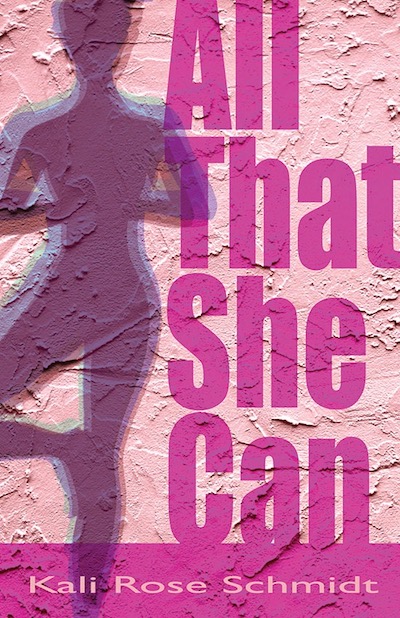
AllThatSheCan-FrntCvrPink

Kali Rose Schmidt

Kali Rose Schmidt is a writer and poet from North Carolina living in Toronto. She is a certified yoga teacher, uncertified book hoarder, and mother of two. The best place to find her is on Instagram at KaliSchmidt, but she can also be found at KaliRSchmidt.com. Her latest chapbook, All that She Can, is available on Amazon.

The Interview

1. What inspired you to write poetry?

Ironically enough, 9/11 inspired me. I was in 5th grade and my teacher had us write a poem on how we were feeling about the events that transpired on 9/11. I wrote a lengthy poem, probably the first I had ever written, and since then, I had returned to poetry at various times in my life to help get my thoughts and feelings onto the page.

2. Who introduced you to poetry?

The first works I remember reading from poets like Emily Dickinson, Robert Frost and Samuel Coleridge and others were during university, where I was an English major. My professors were very into poetry, as English professors tend to be, and their enthusiasm spread to me. Prior to that, I adored Poe all on my own.

3. How aware were you of the dominating presence of older poets?

Pretty aware, particularly with Poe. Great work is great no matter the age of the work.

4. What is your daily writing routine?

This is very dependent on whether or not I’m actively writing a manuscript (I write books and articles as well as poetry). On average, I write 2000 words per day, but this can be much more if I’m in the middle of a book, or much less if I’ve just completed a project. I get my work done while my kids are napping or in childcare. Every day I write something.

5. What motivates you to write?

I can’t not write. It is as necessary for me as eating and yes, I realize that’s such a dramatic, poetic thing to say, and yet it’s true.

6. What is your work ethic?

I like to be busy (which can have many downsides, by the way). I am currently editing two of my own books for publication, I just had a poem released today, a chapbook earlier this year, and am in the midst of writing my next book, which is non-fiction. I also edit and handle social media marketing for a few companies, and I consider reading a necessary job duty, so I do that every day as well. In addition, I have two children, age two and under, and the various life responsibilities that everyone has. I may not be the best writer in the world, but I put in the time to do the work.

7. How do the writers you read when you were young influence you today?

Harry Potter was my first obsession, as well as Lemony Snicket. I think J.K. Rowling’s world of magic has inspired most people on some level, whether writing or not. Creating a world that fosters hope even among the darkness is something I strive to do in all of my writing, fiction or not. Lemony Snicket is just pure fun and horror, and sometimes that reflects in my work, too.

8. Who of today’s writers do you admire the most and why?

This list is long. I really enjoy reading Ryan Holiday’s work – all non-fiction, but all so good. I adore Sabrina Benaim, Sarah J. Maas, still love J.K. Rowling’s new work as Robert Galbraith, Nikita Gill, the list goes on.

9. Why do you write?

Because I can’t not write. Writing is cathartic for me, a stress reliever, a way to put the anxiety of my thoughts into a manageable, editable form. I can’t imagine my life without writing.

10. What would you say to someone who asked you “How do you become a writer?”

My professor told me this once after class: If you write, you’re a writer. I still believe this to be true.

11. Tell me about the writing projects you have on at the moment.

I’m currently editing two of my books, one of which should be out later this month entitled “All the Dead Souls”, and another next year and that title is being worked on.

Wombwell Rainbow Interviews: Mike Jenkins

Wombwell Rainbow Interviews

I am honoured and privileged that the following writers local, national and international have agreed to be interviewed by me. I gave the writers two options: an emailed list of questions or a more fluid interview via messenger.
The usual ground is covered about motivation, daily routines and work ethic, but some surprises too. Some of these poets you may know, others may be new to you. I hope you enjoy the experience as much as I do.

cover of aberfan t grenfell
Mike Jenkins

Retired teacher of English. Former editor ‘Poetry Wales’ and co-editor ‘Red Poets’ for 25 years. Winner of Eric Gregory Award, John Tripp Prize for Spoken Poetry & Wales Book of the Year. Author of children’s poetry, stories and novels as well as many poetry books. Next collection – ‘From Aberfan t Grenfell’ ( Culture Matters) illustrated by Alan Perry.

The Interview

1. When did you start writing poetry?

A number of things converging at a point in my life when I was 15.
My mother gave me an anthology called ‘New Poetry’ which I loved reading and we were very lucky to be studying a book of contemporary poetry in school which I think was called ‘Here Today’ and was accompanied by a number of poets reading their work.
At the same time my parents’ divorce had a profound influence and my early poems were personal ones, hidden away in a drawer like a diary.
We also studied some First World War poetry and Owen, in particular, had a lasting impact.

2. Who introduced you to poetry?

Although I wasn’t close to my mother ( none of us children were) I’d say she was the one member of our family  who enjoyed poetry greatly, especially Dylan Thomas and Manley Hopkins.
I then tended to rebel against her tastes, preferring Eliot and the Mersey poets : poles of gravity and humour.
She loved to read it out loud and could quote Thomas and Hopkins readily ; as a Drama teacher I think she was besotted by the sound of their language.

3. How aware were you of the dominating presence of older poets traditional and contemporary?

I did find 19th century poetry stuffy in school and didn’t engage with Hardy’s work at ‘A’ Level, despite adoring his fiction. I got into song lyrics about this time, though it was bands like the Beatles, Kinks and Jethro Tull rather than Cohen and Dylan ( who came later).
When I studied for a degree in English I came to appreciate the Romantics for instance, though John Clare made the biggest impression as I’d grown up in rural East Anglia and could identify with his subject-matter.

4. What is your daily writing routine?

I don’t have any routine. I’m prolific when it comes to poetry, but now find prose difficult, though I do write a regular blog on my website http://www.mikejenkins.net
I find late at night the most creative time for some reason, when no-one is around.
I don’t make notes, but find walking can be inspirational. Sometimes I do write haiku on my phone while out walking.
There is so much glorious countryside near where I live, not just the Brecon Beacons but the Valleys themselves.

5. What motivates you to write?

I’m literally motivated by everything : weather to animals, conversations to dreams. However, I’d have to admit that people are my main source of inspiration.
I write specifically from and about my own ‘milltir sgwar’ ( ‘square mile’ in Welsh) and often take the persona of both real and imaginary characters in the town I’ve lived for over 40 years, Merthyr Tudful , on the river Tâf.
No doubt my political beliefs inform my work, yet I hope they’re always open and never pushy. I’m not a party person at all and my republican socialism is hardly mainstream.
There’s a satirical side to some of my poetry which does seek to mock views I find repugnant, but I really do want to write in as many ways and about as many things as I can.

6. What is your work ethic?

When I was teaching fulltime in Comprehensives I always found time for poetry, though not so much for fiction ( I’ve written novels and short stories in the past).
Now I’m retired there’s less urgency and the only pressure I put on myself is to write a blog fairly regularly. These blogs can be based on the themes of poems I’ve recently written or I can write poems to accompany them on my varied interests such as politics, education, music and football.
I published 2 books last year and there’s one on the way this year from Culture Matters, a leftwing press based in Newcastle : it’s titled ‘From Aberfan t Grenfell’. I’m sure I write too much, but it’s preferable than the ol’ block!

7. How do the writers you read when you were young influence you today?

Ted Hughes, Wilfred Owen and the Mersey Poets : I’ve always had an eclectic taste and all still influence my work.
I like the way you can adopt very different forms and try to make them work. Several of my books have been wholly in Merthyr dialect and , looking back, I’m indebted to the likes of Derek Walcott, James Berry and Linton Kwesi Johnson ( all of whom I later met).
Then there’s my book ‘Moor Music’ (Seren) written in ‘open form’ and this definitely comes from my student days when I was an avid reader of the US Black Mountain Poets, particularly Charles Olson.
From the likes of  McGough and Adrian Mitchell I love the use of humour and the importance of music in verse. Somehow comic verse is belittled, yet it can often say far more than dry, dispassionate poetry.

8. Who of today’s writers do you admire the most and why?

Many of my comrades and friends in the Red Poets such as Phil Knight, Patrick Jones, Mike Church and Tim Richards have produced the poetry which has moved me most and I’ve had the immense pleasure of bringing out their books in our Red Voices series.
Last year two books from Bristol-based poets were the most impressive : the late, great Helen Dunmore’s ‘Inside the Wave’ and Cardiff-born Bob Walton’s ‘Sax Burglar Blues’.
I’ve just finished Martin Hayes’ ‘The things our hands once stood for’ (Culture Matters) and he reminds me of a witty Whitman : open, expansive, ranging…..well away from the closeted elites.

9. Why do you write?

I write because I can and have to. I love poetry and in Cymru ( Wales) poets are annually crowned and throned at the National Eisteddfod.
The word for poem in Welsh is ‘cerdd’ and that can also mean ‘song’. Poetry and song : so close as to be one.
Today we’re in danger of over-teaching it, of making it too self-conscious.
Better swim in the sea than photograph its surface.

10. What would you say to someone who asked you “How do you become a writer?”

Well, I used to be editor of ‘Poetry Wales’ in the 80s and received piles of poems from writers who obviously didn’t read any contemporary poetry.
It’s vital to read widely and diversely and to listen to poetry read or recited out loud. Poetry’s meant to be enjoyed aloud just as drama is for stage not page.
I’d say, never be afraid of imitating those you admire and don’t think you have to confine yourself to one ‘voice’. Why not a multitude of voices?
With the growth of the Creative Writing industry the idea of books of poetry with single unified purposes has taken over, yet there’s no reason why one book can’t comprise many facets, forms, themes.
There’s not much money in verse and no real celeb glamour and that’s what makes it exciting : still a rebel art-form, word-sniping from the derelict buildings.

11. Tell me about the writing projects you have on at the moment.

I’ve just finished my next book, due out next month I hope and I’m very excited about it.
It’s a book of Merthyr dialect poems each illustrated by the superb Swansea writer and artist Alan Perry, who has done the drawing on the same page as each poem, so the two merge.
Two of the poems are about the Grenfell fire: one links it to the Aberfan disaster and the other takes a fire-fighter’s viewpoint.
Once it’s out I’ll be on the road again , doing as many readings as possible. If Alan frames some of his work then we can combine the readings with exhibitions.
‘Red Poets’ issue 24 is just out, even though we’ve been going for 25 years and I’ve co-edited it from the start. It’s always thrilling giving poets their debuts in the magazine.
This month I’m off to Cameroon to launch an anthology of Welsh and Cameroonian poets called ‘Hiraeth / Erzolirzoli’ with editor Eric Ngalle Charles and the National Poet of Wales Ifor ap Glyn.
‘Sall appnin!’  as we say here.

Wombwell Rainbow Interviews: Ben Banyard

Wombwell Rainbow Interviews

I am honoured and privileged that the following writers local, national and international have agreed to be interviewed by me. I gave the writers two options: an emailed list of questions or a more fluid interview via messenger.
The usual ground is covered about motivation, daily routines and work ethic, but some surprises too. Some of these poets you may know, others may be new to you. I hope you enjoy the experience as much as I do.
Ben Banyard

Ben Banyard

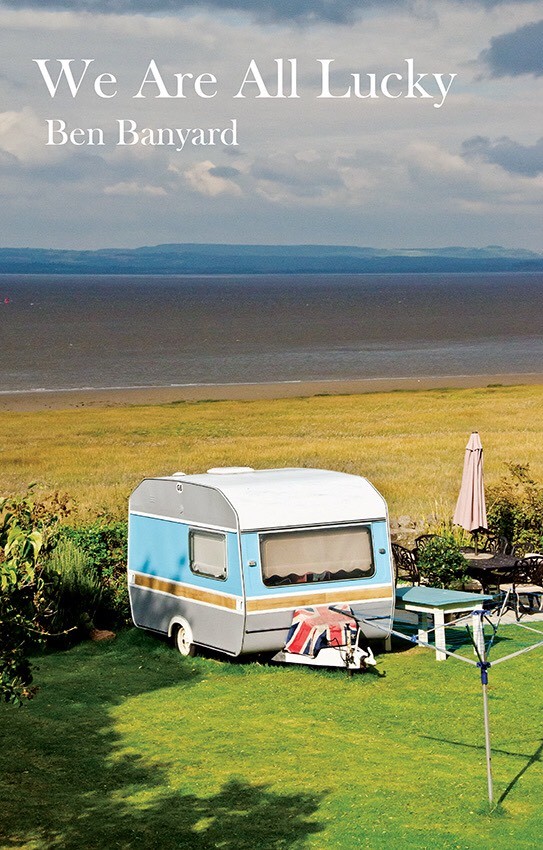
Ben Banyard lives in Portishead, near Bristol. His two published collections to date are ‘Communing’ (Indigo Dreams, 2016) and ‘We Are All Lucky’ (Indigo Dreams, 2018). He was formerly the editor of the Clear Poetry webzine. Ben blogs and posts mixtapes at https://benbanyard.wordpress.com

The Interview

  1. When and why did you start writing poetry?

I was at Plymouth University in the mid-90s, reading English with Theatre and Performance Studies. One of the modules in the first term was Contemporary Poetry, which was taught by John Daniels (a very fine poet in his own right). It was my first sustained contact with free verse, and I began to dabble! I wrote on an off throughout the next four years, but then stopped. I don’t know why, it wasn’t a conscious decision.

I started again in 2012, a few months after my mum died. She’d always been very supportive of my writing and would often ask what I’d done recently. Her death hit me very hard, but at the same time our twins were babies so there was a lot going on which I needed to make sense of, and writing poems seemed to help with that.

2. How aware were you of the dominating presence of older poets, historical and contemporary?

Being an English Literature student, you can’t fail to be aware of the ‘Greats’ but for me they were never an intimidating presence when I was starting out with my own work.

Larkin and McGough were perhaps the biggest influences on me initially but I began to find my own voice and realised you can only ever be yourself.

I can’t bear that type of writing which feels like it’s been moulded in postgraduate courses and most of the individuality which sets a writer’s voice apart from their contemporaries has been sanded away.

3. What is your daily writing routine?

Daily? Chance’d be a fine thing! I work full time and have a busy family life so any writing I manage to do is in brief stolen moments. Inspiration strikes at any given time so I tend to note ideas down in Google Docs on my phone and then attempt drafts whenever it looks like a I might have a spare half hour. Expect my output as a writer to go through the roof as soon as I’ve retired and my kids have left home!

4. what motivates you to write?

I suppose it’s a communication thing, a sharing thing. In the same way that I’ve always made mixtapes of music I really love for people (and still do, on my blog), I have this overwhelming need to talk about experiences, about life and nudge people and say ‘what about this, eh?’. My favourite writers, like Anne Tyler, Nick Hornby, Thomas Hardy, Kurt Vonnegut and so on, are incredible observers of people and society. Even Beryl Cook and Martin Parr, really, noting and marvelling, warts and all. Holding mirrors up.

5. What is your work ethic?

I try and write in complete drafts, otherwise I find it difficult to get back into the feel of a fragment of a poem. Drafts are then stashed away on Google Docs for a couple of months, when I have a play to see how they might be improved. Then they go into a folder ready to be submitted, sit in a ‘Maybe’ folder to be looked at again at a later date, or they land in the ‘No’ folder where they may languish forever! I never delete anything, though, just in case…

I keep careful records of where poems have been submitted and try to manage that side of my writing in as professional a manner as I can.

I also take care to make sure that wherever my poems appear, they’ll be well presented. I don’t often submit to new journals or websites until I’ve had a chance to check them out and make sure they’re of a good quality. I learned that the hard way, shall we say!

I also try to get out and do at least one reading a month. Although I’m more of a page poet in style, I really enjoy performing my work and get a lot out of sharing it to audiences. It can be hard work, in terms of preparation, travel, juggling diaries and so on, but it’s generally extremely worthwhile.

6. How do the writers you read when you were young influence you today?

Definitely on a subconscious level. But I think I’m more likely to be influenced by brand new contemporary poetry in journals because that’s really what I read, outside of novels.

7. Who of today’s writers do you admire the most and why?

With Clear Poetry and 52, I came into contact with an incredible wealth of poets at all stages of their development as writers.

Although it’s hard to single people out, I’d say I’m consistently impressed by Richie McCaffery, Claire Walker, Geoff Hattersley, Carole Bromley, Rose Cook, Bryony Littlefair and Robert Nisbet. They all have a clarity and a precision about their writing which I really admire.

8. Why do you write?

I enjoy the process of writing. An idea pops into my mind, and before I know it I’m off and running.

When I came back to writing, after that long break, it was like I turned a tap back on and suddenly I couldn’t stop.

And it’s a really good way of ordering your thoughts or emotions, even if the result isn’t much good, or you have no ambition to publish – that process of following things through from an idea to the page (or screen) is incredibly rewarding.

9.. What would you say to someone who asked you “How do you become a writer?”

Get a blank screen or sheet of paper in front of you. Write or type the first thing that comes into your head. Explore that. At this point you are a writer – not ‘aspiring’, not ‘budding’. There’s no proficiency test – you’re in.

Of course, you can improve – by writing lots and listening to good, constructive feedback.

Read a lot, as widely as you can, and not just in the form or genre you think your work might fit into.

But don’t make the mistake of thinking you can only call yourself a writer if you’re doing it full time and getting paid for it.

10. And finally, Ben tell me about the writing projects you have on at the moment.

When I closed Clear Poetry last year I did so claiming that it was so that I could spend more time writing, so I need to come up with some evidence of this year’s efforts!

I’ve just finished another attempt at writing a poem a day for a month – it’s a good group, managed on Facebook by Simon Williams. While I didn’t manage the full 30, I have a good 15-20 drafts which I’m quite pleased with.

In the next few weeks I want to start putting my next full collection together, so watch this space!

I’m also aiming to write two or three more short stories by the end of the year.

Wombwell Rainbow Interviews: Adeena Karasick

Wombwell Rainbow Interviews:

I am honoured and privileged that the following writers local, national and international have agreed to be interviewed by me. I gave the writers two options: an emailed list of questions or a more fluid interview via messenger.
The usual ground is covered about motivation, daily routines and work ethic, but some surprises too. Some of these poets you may know, others may be new to you. I hope you enjoy the experience as much as I do.

Adeena Karasick

Adeena Karasick is a New York based Canadian poet, performer, cultural theorist and media artist and the author of ten books of poetry and poetics. Her Kabbalistically inflected, urban, Jewish feminist mashups have been described as “electricity in language” (Nicole Brossard), “proto-ecstatic jet-propulsive word torsion” (George Quasha), noted for their “cross-fertilization of punning and knowing, theatre and theory” (Charles Bernstein) “a twined virtuosity of mind and ear which leaves the reader deliciously lost in Karasick’s signature ‘syllabic labyrinth’” (Craig Dworkin); “one long dithyramb of desire, a seven-veiled dance of seduction that celebrates the tangles, convolutions, and ecstacies of unbridled sexuality… demonstrating how desire flows through language, an unstoppable flood of allusion (both literary and pop-cultural), word-play, and extravagant and outrageous sound-work.” (Mark Scroggins). Most recently is Checking In (Talonbooks, 2018) and Salomé: Woman of Valor (University of Padova Press, Italy, 2017), the libretto for her Spoken Word opera co-created with Grammy award winning composer, Sir Frank London. She teaches Literature and Critical Theory for the Humanities and Media Studies Dept. at Pratt Institute, is Poetry Editor for Explorations in Media Ecology, 2018 Andrew W. Mellon Foundation Award recipient and winner of the 2016 Voce Donna Italia award for her contributions to feminist thinking. The “Adeena Karasick Archive” is established at Special Collections, Simon Fraser University.
LINKS:
Website: www. adeenakarasick.com
Checking In VISPO https://www.youtube.com/watch?v=p-syLYJ4Ma8
Salome Promo vid:   Salome.mp4
Videopoem Compilation https://www.youtube.com/watch?v=sWid5HMhd9E

The Interview

1. What inspired you to write poetry?

I have always been obsessed with the orthogorphy of letters / their shapes, pericopes, the way they move effortlessly on a page and brush up against each other to create soaring sonic and hyper-referential graphematic and syntactic meaning; inextricably connected to how we breathe, communicate act, are.

2. Who introduced you to poetry?

My first real teacher was American visionary, poet seer, founder of Tish and editor of New American Poetry (with Donald Allen), Warren Tallman. In the late 80’s / 90’s he introduced me to Robert Duncan and Denise Levertov in San Francisco, Robin Blaser, Robert Creeley, bill bisett, bp nichol, Charles Bernstein, Allen Ginsberg. It was crucial as a young poet at that time to be able to meet, talk with, hear their work; learn there were passionately oracular writers in the world dedicated to recreating reality through a patterning of words.

3. What is your daily writing routine?

Not so much a routine but a routing. i write whenever / wherever i am; walking through the East Village, on trains, busses, benches in bars or beachside; hunting and gathering; sculpting mashing up conversation, philosophic and Kabbalistic discourse, political analysis, advertisements and pop songs, re-examining the world through its fissions, scission, elisions, fragmentation, brokenness, extasis, to see the world in new ways  — effecting socio-political n aesthetic transformation and change.

4.  What motivates you to write?

Sociopolitical unrest, passionate obsessions, and sonic or graphematic clusters that roll around in my mouth

5.. How do the writers you read when you were young influence you today?

Too many to name, but a list would include Abraham Abulafia, Bruce Andrews, Walter Benjamin, bill bissett, bp Nichol, Charles Bernstein, Hélène Cixous, Paul Celan, Jacques Derrida, Edmond Jabès, Emmanuel Levinas, Gertrude Stein, Michael Wex, Elliot Wolfson, Slavov Zizek, Louis Zukofsky. Each of them teaching me ways of how to sculpt with language and sound and focus on language as an auratic system of fiery letters, spilling their secrets.

6.. Who of today’s writers do you admire the most and why?

All my language-focused colleagues, mentors, teachers, heroes, friends, warriors, who are challenging borders, power structures in the face of enormous cultural political and aesthetic adversity, controversy, outrage; and with commitment to transgression and at times anarchic intervention, continue to fight through their language.

7. Why do you write?

To expose language as – (in the words of Dr. Scott from Rocky Horror) ”some kind of audio-vibratory, physiomolecular transport device”.

10. What would you say to someone who asked you “How do you become a writer?”

Read everything you can, write as much as you can, go to readings, attend openings, perform at open mics, submit to magazines, start a journal, belong to a community of writers who you can bounce your drafts off of. And when no one’s looking, crawl into the materiality of the letters; smell them, taste them feel them, dwell with them and listen closely as they guide you toward new lexical galaxies, new landscapes to live in.

11. Tell me about the writing projects you have on at the moment.

Two books have just come out and i’ve been touring extensively with them  –Checking In (Talonbooks, 2018) which is a kinda ironic investigation of the way we gather truth, construct reality, and how time itself is contemporaneous. The past is at our fingertips, and the future is always-already arriving. And though we are inundated with information, we have little access to a stable, definable Truth. So it kinda highlights how our past is re-passed in an ever-evolving resonant present; how time and subjectivity and knowledge and reference are so fluid; and how through ironic punning and radical juxtapositions of temporality and spatiality, we are forced to see the world anew.

Salomé: Woman of Valor is both a book and a Spoken Word opera which i created with Grammy Award winning, recently knighted, composer and trumpeter Frank London, and revisits the apocryphal story of Salomé through a Jewish Feminist perspective; and has been touring internationally at Festivals with dancers, live musicians and screen projections. It really has been one of the most intense and all-consuming writing adventures of my life.

I’ve been working on it for 5 years and not only has it been published as a book, but  is an “opera” which debuted in New York and Vancouver in March 2018, Toronto in Sept. 2018 and will be at the Oberon Theater, March 12-13, 2019 in Boston. The book has gotten tremendous international recognition (it’s been translated into Italian (by Pina Piccolo and Serena Piccolo), published in Italy by University of Padova Press and also an English-only Limited edition Artist Book has just come out with Gap Riot Press in Toronto; and sections have been translated in to Bengali, German, Arabic and Yiddish; (the Bengali translations are due to be launched at the Kolkata Book Fair this February in a collection entitled, Bridgeable Lines: An Anthology of Borderless World Poetry in Bengali. Part of its intrigue i think is that we are living in a climate where we acknowledge that history is complicated and multiperspectival.

After years of research, and realizing that Salomé has been serially mis-represented i became obsessed with re-inserting her back into her rightful place in history. Re-translating the misogynist and anti-semitic myth to one of female empowerment, where she is not a victim but a revolutionary and all swirls in a world of conflictual socio-political, erotic and aesthetic transgression.

Also, in terms of its form – incorporating contemporary sound poetry, Midrash,13th C. Kabbalistic references, pop culture and homophonic translations (paying homage to the Oscar Wilde text), i wanted to investigate how a jouissey interrogation of form and content could lead to new ways of seeing; reminding us how there is never one story or perspective to be told– and allowing the unvoiced be celebrated and heard.

Though in tone, the Salomé project is quite different than Checking In, they both highlight how history is not something static but how myths, stories, legends are multiperspectively received and continually reshaped – ironically exposing how both “fact” and “fiction” come from the Latin, “to make” and “to shape.” And i think particularly in this present political climate this is something we are all negotiating.

ADEENA KARASICK

UPCOMING READINGS
Sat. Oct. 27
“Bandage Bondage, Strippers and Slippage: The Language and Meaning of Salomé in the 21st Century”
for the 66th Annual Alfred Korzybski Symposium:
Language and Meaning in the 21st Century”
Institute of General Semantics
New York, NY
5:30 pm

Sat. Nov. 3
“Otiot” and “This Poem” exhibited at Concrete Is Porous; Act I: Visual
The Secret Handshake Gallery
170a Baldwin
Toronto, ON
2:30 (Opening Reception)

Sat. Dec. 15 (possibly Jan. 12 or Nov. 17)
Salomé: Words and Music (with Frank London)
Women Between Arts
The New School Glass Box Theater
55 W 13th St.
New York, NY
4:00 pm

Mon. Dec. 17
Fabricadabra (with Maria Damon)
for the 50th Anniversary Association for Jewish Studies Conference:
Writing the ‘Self’ Back into Jewish Studies.”
Sheraton Boston
39 Dalton St
Boston, MA

Thurs. Feb. 7
Launch of Bridgeable Lines: An Anthology of Borderless World Poetry in Bengali, (featuring Salomé translation into Bengali)
Press Corner, Kolkata International Bookfair, Central Park Mela Ground, SaltLake, Kolkata
6:00 pm

Fri. Feb. 8
Salomé a capella at Kolkata Book Fair
Kolkata International Bookfair,
Central Park Mela Ground, SaltLake, Kolkata
6:00 pm

Sun. Feb. 17
Great Weather for New Media
Parkside Lounge
317 E. Houston
4:00 pm

Tues. March 12
Salomé: Woman of Valor
Oberon: American Repertory Theater
2 Arrow St.
Cambridge, MA
8:00 pm

Wed, March 13
Salomé: Woman of Valor
Oberon: American Repertory Theater
2 Arrow St.
Cambridge, MA
8:00 pm

Fri. April 26
Scenes Screams Screens and Semes: The Salomaic Elasticity of the Page and the Stage for TEXT/SOUND/PERFORMANCE: Making in Canadian Space University College Dublin
Dublin, Ireland

June 27-30
The 20th Annual Convention of the Media Ecology Association: MEDIAETHICS Human Ecology in a Connected World
University of Toronto
St. Michael’s College,

Adeena Karasick
adeenakarasick@cs.com

Wombwell Rainbow Interviews: Tania Hershman

Wombwell Rainbow Interviews

I am honoured and privileged that the following writers local, national and international have agreed to be interviewed by me. I gave the writers two options: an emailed list of questions or a more fluid interview via messenger.
The usual ground is covered about motivation, daily routines and work ethic, but some surprises too. Some of these poets you may know, others may be new to you. I hope you enjoy the experience as much as I do.

TaniaNewBooks

Tania Hershman

Tania Hershman’s third short story collection, Some Of Us Glow More Than Others, was published by Unthank Books in May 2017, and her debut poetry collection, Terms & Conditions, by Nine Arches Press in July. Tania is also the author of a poetry chapbook, Nothing Here Is Wild, Everything Is Open, and two short story collections, My Mother Was An Upright Piano, and The White Road and Other Stories, and co-author of Writing Short Stories: A Writers’ & Artists’ Companion (Bloomsbury, 2014). Tania is curator of short story hub ShortStops (www.shortstops.info), celebrating short story activity across the UK & Ireland, and has a PhD in creative writing inspired by particle physics. Hear her read her work on https://soundcloud.com/taniahershman and find out more here: http://www.taniahershman.com

The Interview

  1. When and why did you start writing poetry?

I started tiptoeing towards poetry in around 2011, when I went on an Arvon course in radio drama tutored by Sue Roberts and her husband, Simon Armitage. I was too nervous to go on a poetry course but I decided I could sidle up to Simon during the week and ask whether some of my very short flash fiction stories might actually be poems, as a few people had mentioned to me. He was extremely supportive and helpful, pointing me to poets like James Tate in the US – he won the Pullitzer Prize for Poetry and to me his work looks like short short stories! This gave me permission to start to think about poems and poetry, which I had always found unfathomable at school. In 2013 I went on three poetry courses where I would keep asking the tutors, What is a line break? Help, I don’t understand! Until finally, on one of the courses taught by Pascale Petit, it began to click, I started to feel what breaking a line might do – to the breath, the pacing. And that’s when I started to fall in love with poetry, to see how it could enhance and extend what I wanted to do in fiction, and allow me to do new things.

2. What motivates you to write?

It doesn’t work like that for me. I don’t need motivation to write because writing is how I am in the world, it’s how I make sense of things, how I process what happens in my life – through fiction, poetry, other – and what I read, what I hear and see. I’ve always written and I am in some ways always writing, always noticing, thinking. I had two new books published last year, and I finished my PhD, so right now I’m putting no pressure on myself to produce anything in particular. I don’t worry about “not writing” because that seems a bit like “not breathing” to me.

3. What is your daily writing routine?
No daily writing routine – no writing routine at all!

4. How aware are you of the dominating presence of older poets traditional and contemporary?

If you’re asking if I am aware of the poetry community and the poetry scene, then very aware and extremely appreciative of its richness and diversity. Coming from a background in short story writing, we don’t have anything like the institutions that promote poetry in the UK – the Poetry Society, say, and the Poetry School and the Poetry Book Society… I could go on. The short story scene is extremely vibrant, there’s so much going on, but you have to dig a little to find it, which is why I set up my short story site, ShortStops, 4 years ago, to try and create a one-stop-shop to find much of this activity. With poetry, you have so many places to find out what’s going on, so many courses, workshops, prizes. And you have the amazing prize-giving events for, among others, the TS Eliot and Forward prizes, at the Royal Festival Hall every year, which give such a valuable look at contemporary poetry today. I don’t feel a dominating presence, generally. I feel encouraged to do my own thing, there are always kindred spirits to be found.

5. What would you say to someone who asked you “How do you become a writer?”

You become a writer by writing, it’s that simple, no qualifications necessary. You become a good writer by reading. Read everything, things you think you’ll like and thinks you think you won’t. Then find a way to keep that inner voice quiet enough – everyone has their own methods – to start warming up your writing muscle so that you can write what you want in the way you want to.

6. Why do you write?

I think I covered that mostly under the motivation question! I write both to try and make sense of the world and also to more clearly express my questions about it, not to necessarily find any answers. I write because I love words and I love putting them in a certain order that feels pleasing to me. I write to meet the characters who appear in my fiction and to do their stories justice. I write to connect with strangers, too, there’s nothing more moving to me than when someone gets in touch, somewhere in the world, to say that they read one of my stories/poems and it spoke to them. That means everything.

7. Who of today’s writers do you admire the most and why?

To be honest, I get less of a crush on poets than on individual poems – and individual short stories. For example, Adrienne Rich’s ‘Dreamwood’ is a poem I go back to again and again, and ‘Under One Small Star’ by Wislawa Szymborska. Also, Peanut Butter by Eileen Myles, and the House On Terry Street by Douglas Dunn. I am a huge fan of Sharon Olds, I took a workshop with her a few years ago in the US, and do have a bit of a poetry crush on Louis Macneice. I find new poets and poems to love all the time from literary magazines, in particular POETRY magazine from the US, and various UK magazines such as Butcher’s Dog, Rialto and Magma.

8. Finally, Tania, tell me about the writing projects you have on at the moment.

Well, I’m shopping around two pamphlet-length works: the prose/poetry/fiction/non-fiction book inspired by particle physics that I wrote for my PhD, and a poetry pamphlet which includes poems I wrote as responses to Arthur Miller’s play, The Crucible. I’m currently writing something I’m only prepared to call a Long Thing, which is a sort of fictional speculative memoir-in-collage. And I’m going to start working on a hybrid popular science book on time next year. Also: some poems and short short stories. Busy!
Thanks so much for having me, Paul!