Wombwell Rainbow Interviews: Tricia Knoll

Wombwell Rainbow Interviews

I am honoured and privileged that the following writers local, national and international have agreed to be interviewed by me. I gave the writers two options: an emailed list of questions or a more fluid interview via messenger.
The usual ground is covered about motivation, daily routines and work ethic, but some surprises too. Some of these poets you may know, others may be new to you. I hope you enjoy the experience as much as I do.
61NcZQRUhML._AC_US500_QL65_

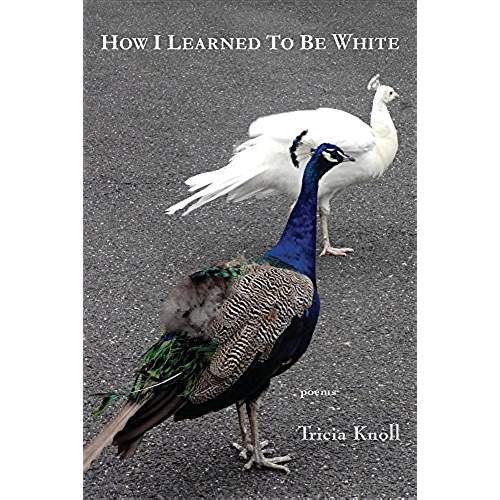
Tricia Knoll

is an Oregon poet who grew up in a suburb of Chicago and earned degrees in literature from Stanford University and Yale University. This collection of poems records how her ancestry, education, early childhood and work experiences changed her understanding over many decades of the impact of white privilege on her understanding of race relations. Her poetry appears in dozens of journals and anthologies. This book joins her other published poetry collections Urban Wild, Ocean’s Laughter, and Broadfork Farm which explore ecological relationships in Oregon and Washington

Poetry collections –
• How I Learned to Be White is now available from Antrim House — and on Amazon.
• Broadfork Farm collects poems about a small organic farm in Trout Lake, Washington to highlights its people and creatures.
• Ocean’s Laughter, a book of lyric and eco-poetry about Manzanita, Oregon. Look at Amazon.com or for .Reviews.
• Urban Wild, a poetry chapbook now available from Finishing Line Press.
Website: triciaknoll.com
twitter:@ triciaknollwind
Amazon author page

The Interview

1. What inspired you to write poetry?

I read a lot of poetry in high school. Mostly from an anthology of British poets, no doubt mostly white and male. Early on I had thing for George Herbert. I wrote little rhyming poems at an early age for my mother. I think poetry was “in” me.

2. Who introduced you to poetry?

I’m sure we studied the obligatory poetry in English classes starting in middle school. I remember having to memorize a poem and I chose “A Red, Red Rose” by Robert Burns which turns out to not be a particularly helpful poem burned into my brain.

3. How aware were you of the dominating presence of older poets?

For women poets my age, I think the dominating presence of older poets were white male older poets – the likes of Keats and Shelley. I came around to the American poets a bit later.

4. What is your daily writing routine?

I write something – or edit several poems – every day. I generally write a haiku every day to focus my awareness of what’s going on around me. I often suspect that the haiku will be part of a poem of place later on. I carry a notebook with me everywhere to jot down words that come to me that I might want to use in a poem. Yesterday it was backtrack and I started to think about how you never go back exactly the way you came, like the saying from Heraclitus that you can’t step into the same river twice. Today I read the word greenly in some song lyrics in relationship to fall. Kim Stafford, the great Poet Laureate of Oregon, teaches a daily writing course that I’ve taken twice. It’s been an inspiration to me. What comes out of the practice doesn’t have to be perfect or finished, but what it does is make me feel better about myself and the world.

5. What motivates you to write?

I suppose there is a fair amount of grief. I write eco-poetry because I care intensely about forests, plants, beings with roots. I know what challenges we have thrown in the way of living things. I’ve seen enough changes from climate crises to be profoundly saddened by what is happening – which makes the observation of the truly sublime and beautiful a blessing which finds its way into poetry. I also write a fair amount of political poetry, reflecting on what is happening in the world today. And then I write some lyric and narrative poetry as well. I think they are all aimed at healing and sharpening my own insight.

6. What is your work ethic?

I work hard. Discipline has never been a problem for me whether it was training for a marathon or showing up on time at work for a job that wasn’t my dream job. I try to never let a random floater of an idea for a poem go unacknowledged. I am obsessed with the great joy of being able to write poetry in my retirement.

7. How do the writers you read when you were young influence you today?

Today I read predominantly women poets although not exclusively. What my early reading did was give me a great interest in word choice, how poems are formed, and I love the open-endedness of great titles. From time to time I fall back on Walt Whitman.

8. Who of today’s writers do you admire the most and why?

Right now I’m reading Mary Oliver’s new collection Devotions. I’ve found two poems in the opening section that are forever-keepers. Most poets recognize that Billy Collins and Mary Oliver are two poets whose names and work always show up at weddings, funerals, church services or big “events.” They make a livelihood out of being poets. In that respect they are unusual. I got Devotions out of the library, but I’ve been so amazed by the first poems in the book from her collection Felicity that I’ve ordered that from Amazon.

That said, in my personal pantheon of favorite poems I include work by Langston Hughes, Kim Stafford, Ursula Le Guin, Ellen Bass, Joy Harjo, Wendell Berry, W. S. Merwyn, Han Shan, Jane Kenyon and many more.

In any given season I return to Naomi Shihab Nye whose work resonates with me because of its gentle nudging toward the universe of loving kindness. If I had to be stranded somewhere with one poet, it would be her work.

9. Why do you write?

My mental health requires it. Particularly in these divisive and dark times.

10. What would you say to someone who asked you “How do you become a writer?”

You write. You don’t stop if someone doesn’t like what you write. You agree to give yourself the time to explore, not to judge what you’re doing, but to let it sweep you to somewhere that is different than where you started. And when you’re done writing, you read until it is time to write again.

11. Tell me about the writing projects you have on at the moment.

Early in 2018, Antrim House press released my collection How I Learned To Be White, poems that looked at how education, ancestry, family and socio-economic privilege impacted who I became as a person. That culminated three years of intense introspection so I could make sense of the story that was my life in regard to race.

I just completed a manuscript of poems about my relationship with trees called “One Bent Twig.” Many of the poems in it have been published. It is seeking a publisher.

In June 2018 I moved from Portland, Oregon (where I lived for over 40 years) to Vermont to be closer to my daughter. That 3,003 mile journey involved packing up a lifetime, discarding bits, and starting with new buds under the fingertips of a dedicated gardener. I’m writing a lot of poetry about this new place – discovering that the migration of seniors to be closer to their children is a fairly common occurrence. A kind of migration to “renuclearize” the family.

I’m giving myself space to write about whatever strikes my fancy here in Vermont. Why are all the barns red? Why do eastern white pines speak to me? Today I learned that bass fishing is a competitive high school sport in Vermont. I’ve written many poems about Oregon’s red cedars, but this is new. I’ve fallen in love with a white pine on my property. Why am I spending so much energy pulling goldenrod? I look forward to a winter of snow; it’s been decades since I lived where it really, really snows. On my to -do list is the need to by an ergonomic snow shovel…and maybe there will be a poem in that. I tried to buy one at Home Depot today, and the employee there seemed a bit surprised I was thinking about this in mid-October. The aging homeowner’s snow shovel.

Thank you for your interest, Paul.

Wombwell Rainbow Interviews: Ira Lightman

Wombwell Rainbow Interviews

I am honoured and privileged that the following writers local, national and international have agreed to be interviewed by me. I gave the writers two options: an emailed list of questions or a more fluid interview via messenger.
The usual ground is covered about motivation, daily routines and work ethic, but some surprises too. Some of these poets you may know, others may be new to you. I hope you enjoy the experience as much as I do.

phonewriting_grande[117446]


Ira Lightman

https://www.knivesforksandspoonspress.co.uk/search-results-page/ira%2520lightMAN

Ira has made public art throughout the North East and also in the West Midlands and the South West. He made a documentary on Ezra Pound for Radio 4 last year, still on iPlayer. He is a regular on Radio 3’s The Verb and has been profiled on Channel 4. A mathematician by training, he is very interested in pattern and form, making poetry visually and with pure sound; he believes anyone can make poetry, as long as they stop worrying that it has to be *written*. He is a professional storyteller. He proofreads for academic journals for a living, and has had many residencies in schools. He won the Journal Arts Council Award for “innovative new ways of making art in communities” for his project., The Spennymoor Letters. He has lived in the North East since 2000. His new chapbook is called “Goose”. He has been described by George Szirtes as “Harpo Marx meets Rilke” (https://www.facebook.com/Nussbach3rM/posts/10152559224041534)
The Interview

1. What inspired you to write poetry? AT THE OUTSET? WHEN I WAS AT MY FIRST PRIMARY SCHOOL, THERE WAS A COMPETITION TO WRITE A NEW VERSE FOR ONE OF THE SCHOOL HYMNS, AND I LOVED TRYING AND THEN WON, AND LOVED HEARING IT SUNG. THESE WERE THE DAYS WHEN THERE WAS NO CREATIVE WRITING COMPONENT AT SCHOOL AND VERY LITTLE AT UNIVERSITY. I WAS ALSO VERY INTO ACTING AND PARTICULARLY COMEDY SKETCHES, AND I WROTE ABOUT TWO, AS I RECALL, FOR A YOUTH DRAMA COMPANY I WAS IN. I’D WRITE OCCASIONALLY AS A TEENAGER WHEN I WAS SAD. UNIVERSITY WAS WHERE I REALLY STARTED WRITING, DOING AN ENGLISH DEGREE (AS I SAY, WITH NO CREATIVE WRITING COMPONENT, AS THIS DIDN’T EXIST AT UNDERGRADUATE LEVEL IN THE 1980s; BUT ONE OR TWO TUTORS LOOKED AT MY POEMS, ANYWAY, PERHAPS BECAUSE I WAS ALREADY GETTING PUBLISHED IN LITERARY MAGAZINES). THE LARGER PHILOSOPHICAL QUESTION OF “WHAT INSPIRED ME” WOULD PROBABLY BE THE CHANCE TO MAKE PATTERNS WITH WORDS (RATHER THAN CONVINCE PEOPLE TO LOOK AT AN ISSUE OR PUT THEIR FEELINGS INTO WORDS). I COULD ALWAYS READ MORE INTO THE PATTERNS OF OTHER PEOPLE’S POEMS THAN MOST OF MY CONTEMPORARIES (WHO WEREN’T POETRY SPECIALISTS): AT UNIVERSITY, I ANNOYED ONE STUDENT BY SAYING THAT STEVENS’ LINE “THE JAR IS ROUND UPON THE GROUND” SEEMED TO CAPTURE THE WHOLE OF TENNESSEE INSIDE THE ROUND-NESS. I LIKED ACTING AND PUBLIC-SPEAKING, BUT REALLY WANTED TO SHOW PEOPLE “I WROTE THIS” RATHER THAN “I CAN DELIVER THIS WELL”. AS I GET OLDER, I’D RATHER MOVE PEOPLE, WHICH HAS VERY LITTLE TO DO WITH SAYING “LOOK AT ME”.
2. Who introduced you to poetry?

I WAS AWARE OF POETRY AS A THING BECAUSE OF PAM AYRES ON THE TELEVISION AND HER POEM “I WISH I’D LOOKED AFTER MY TEETH”. I RECITED JABBERWOCKY WHEN I WAS 11 IN MY FIRST MONTH AT SECONDARY SCHOOL. I LIKED MACAVITY THE MYSTERY CAT, ALTHOUGH REALLY ONLY PAID ATTENTION TO THE REFRAIN. AND I ALWAYS LIKED WORDY POP SONGS. AT GRAMMAR SCHOOL, I LOVED THE POEMS THAT MY ENGLISH TEACHER, MR THICKETT, INTRODUCED AND DISCUSSED. BEHIND ALL THIS MUST HAVE BEEN MY MOTHER, WHO WRITES POETRY, HAS PUBLISHED TWO OR THREE, AND MUST HAVE BEEN READING THEM TO ME AND MY BROTHERS. MY ELDER BROTHER WROTE A POSTGRADUATE THESIS ON “THE POETRY OF FILM” AND HE LIKED BLAKE BUT IT NEVER STRUCK ME THAT HIS THESIS TITLE MEANT ANYTHING OTHER THAN “IT’S NOT QUITE NARRATIVE AND IT’S GOT GOOD IMAGES”, WHICH ISN’T REALLY WHAT POETRY IS, EXCEPT BY SOME BASIC RULE OF IT’S NOT QUITE NORMAL. NONE OF MY THREE BROTHERS LIKE OR READ POETRY, ALTHOUGH MY YOUNGER BROTHER LOVES SONG LYRICS. I NEVER THOUGHT OF MY FATHER AS WANTING TO INSPIRE ME TO LIKE POETRY, ALTHOUGH ONCE I BECAME AN ADULT AND STARTED WRITING IT, HE DOES RECITE LONG BITS OF DONNE AND WORDSWORTH AND EVEN POUND THAT HE LIKES AND HAS CLEARLY LEARNED BY HEART LONG AGO OFF HIS OWN BAT.

3. How aware were you of the dominating presence of older poets? I HELPED RUN THE UNIVERSITY POETRY SOCIETY, AND PICKED MOST OF THE POETS. I DREAMED NOT JUST OF BEING ACCEPTED FOR PUBLICATION BUT OF MATTERING TO ANOTHER POET, OF SOMEBODY WHO KNEW POETRY WELL AND COULD WRITE IT WELCOMING ME INTO THE CLUB. I WAS AN UNDERGRADUATE IN LONDON AND HAD THE CHANCE TO SEE A LOT OF POETS READ, WHICH I USUALLY PREFERRED TO JUST THE COLD PAGE (ALTHOUGH I LOVED READING CAROL ANN DUFFY ON THE PAGE; AND SHE WAS JUST STARTING OUT THEN). I WAS READING WIDELY AND BOUGHT A LOT OF POETRY (TO THIS DAY, I OWN LESS THAN ONE SHELF OF FICTION). IN LONDON, I WAS REALLY ONLY AWARE OF THE LIVING MAINSTREAM POETS AND THE DEAD MODERNISTS. WHEN I DID A MASTERS IN NEW ZEALAND IN 1990, EVERYTHING CHANGED. I BEGAN TO LOOK AT CONTEMPORARY EXPERIMENTAL POETRY (WHICH HAD BEEN GOING ON IN LONDON WHEN I WAS AN UNDERGRAD, I JUST HADN’T KNOWN WHERE). AND THE LARKINESQUE STYLE I’D LEARNED DIDN’T FLY AT ALL IN NEW ZEALAND MAGAZINES. I GOT HEAVILY INTO POUND’S CANTOS, AND THESE OTHER MORE CONTEMPORARY BOOKS, AND MANAGED THE DIFFICULT FEAT OF NOT CONVINCING THE NZ MAGS, AND BECOMING TOO WACKY FOR THE UK MAGS. I DIDN’T PUBLISH FOR FIVE YEARS. SO I WAS AWARE OF GATEKEEPERS AND REPUTATION MAKERS, AND THAT THE WORLD WAS FULL OF REALLY DISTINCTIVE POETS, MANY OF WHOM DIDN’T LIKE OR READ EACH OTHER: SCHOOLS, IN OTHER WORDS. I DON’T KNOW THAT THE POETRY WORLD LOOKS AT ALL LIKE THAT TO A YOUNG POET NOW, EXCEPT FOR THE GATEKEEPING. I HAVE HEARD SEVERAL YOUNGER POETS NOWADAYS SAY THAT THEY DON’T REALLY READ OLDER POETS. THIS WAS, TO PUT IT MILDLY, UNTHINKABLE WHEN I WAS STARTING OUT. ALTHOUGH IT HAS ALWAYS BEEN TRUE THAT 90% OF NEW POETRY IS MIDDLING, THE IDEA WAS STRONG IN MY YOUTH TO MAKE (OR AT LEAST LOOK FOR) THE FORMALLY DISTINCTIVE VOICE, TO TRY TO STAND WITH THE GREATS. THE DOWNSIDE WAS THAT THERE WAS A DISPARAGING OF CONTENT, AND THAT IT WAS SLIGHTLY VULGAR TO INSIST ON WRITING “ABOUT” AN ISSUE TO RAISE AWARENESS OF IT. IN MY YOUTH, YOU WOULD SAY “PETER READING WRITES VERY DIFFERENTLY FROM GEOFFREY HILL, AND WHAT THE L=A=N=G=U=A=G=E POETS OR PRYNNE DOES JUST ISN’T POETRY, EXCEPT FOR ONE OR TWO POEMS YOU MIGHT PUSH ON OUR ATTENTION”. I CAN’T FIND SIMILAR NAMES TO REMAKE THAT SENTENCE FOR THE POETRY WORLD OF 2018, IN TERMS OF AMBITION TO BE FORMALLY INNOVATIVE (INCLUDING IN THE MAINSTREAM, WHICH IS WHERE HILL AND PETER READING WERE).

4. What is your daily writing routine? I REALLY DON’T HAVE ONE. IT’S ALWAYS BEEN FAMINE OR FEAST FOR ME, WITH LONG PERIODS OF FAMINE SOMETIMES. I DON’T ASSUME I’LL WRITE, AND I DON’T MAKE TIME FOR IT. I WAIT.

5. What motivates you to write? SOMETIMES AN IMAGE/THEME FOR THE WHOLE POEM, SOMETIMES A LINE. I’M LESS AND LESS CONVINCED BY MY OLD MOTIVATIONS FOR WRITING THESE DAYS: I’D LIKE TO WRITE A DIFFERENT KIND OF POEM, BUT I DON’T KNOW HOW TO JUST NOW. I REMAIN A VERY KEEN TRANSLATOR OF POEMS, WHERE THE RELATIONSHIP WITH THE AUDIENCE IS ALREADY SETTLED AND THE PUBLIC GOOD OF THE EFFECT PROVEN; SO I JUST HAVE TO RISE TO DO SIMILAR IN ENGLISH.

6. What is your work ethic? TRY TO BE CONGRUENT WITH MY SOUL, AND KEEP DRAFTS (BECAUSE SOMETIMES THE REVISION IS BETTER, AND SOMETIMES THE FIRST DRAFT). PUT THE WORK ASIDE FOR MONTHS THEN LOOK AT A PILE OF IT AND CHUCK MOST OF IT AWAY.

7. How do the writers you read when you were young influence you today? I FEEL I WANT TO KNOW MORE ABOUT THE LARGER PULL SOME OF THEM HAD, WHICH MAKES SENSE THE OLDER I GET; SO THEY READ MORE PROFOUNDLY AS TIME PASSES. SOME I NOW FIND SPOKE ONLY TO THE CHIPS ON MY SHOULDER AT THE TIME. SOME THAT I ONLY LIGHTLY TOOK ON AT THE TIME SEEM MUCH MORE PROFOUND NOW: AUDEN, OR THE MAKERS OF CHEERIER SONGS. THE LIGHT TOUCH YOU HAVE TO PAY A LOT FOR. I STILL HAVE A LOT OF TIME FOR THE EARNEST OF EARLY DUFFY, THE ANGULARITY OF OPPEN AND DAVIE, THE ZANINESS OF DORN, THE MONUMENTALITY OF POUND, THE COLLAGE AND AMBIGIOUS SENTENCES OF SILLIMAN, THE FIERCENESS OF DENISE RILEY, THE UNDERSTATED HUMANITY OF CARLA HARRYMAN, ASHBERY, AND THE PUBLIC VOICE OF LARKIN. THE VOLUBILITY OF DAVID ANTIN, AND NON-POET-VOICE OF HIM.

8. Who of today’s writers do you admire the most
and why? OF LIVING WRITERS, I READ GREGORY WOODS WITH GREAT ENVY OF HIS METRICAL SKILL AND EXCAVATING AND INVENTING OF FORMS. I REALLY ENJOYED THE ANTHOLOGY “THE MIGHTY STREAM: POEMS IN CELEBRATION OF MARTIN LUTHER KING”, LOTS OF NEW POETS I DIDN’T KNOW. I’M INTERESTED IN WHATEVER KNIVES FORKS AND SPOONS, MY PUBLISHER, PUTS OUT. I WANT TO KNOW FROM OTHER POETS HOW TO DESCRIBE THE WORLD, AND TO AVOID PLAYING TO THE POETRY CROWD WITHOUT SACRIFICING FORMAL SKILL.

9. Why do you write? I THINK I USED TO WRITE FOR MOTIVATIONS I NO LONGER HAVE, TO FEEL SORRY FOR MYSELF IN PUBLIC. I’VE ALWAYS LIKED MAKING WORK THAT HAS A NICE PATTERN, OR THAT SEEMS A LUDICROUS COMIC IDEA THAT WILL MAKE AUDIENCES LAUGH. I’VE TENDED ONE WAY AND ANOTHER TO WASH MY DIRTY LINEN IN PUBLIC, AND VOICE EVERY COMPLAINT I’VE HAD. NOWADAYS, I’M IN THE MIDST OF SOME OF THE MOST PAINFUL FEELINGS OF MY LIFE, OF ALIENATION FROM LOVED ONES, ALONGSIDE SOME REALLY AMAZING MOMENTS OF BEING HAPPY. I DON’T WANT TO WRITE ABOUT THE PAIN, BECAUSE IT MIGHT WORSEN THE ESTRANGEMENTS; BUT IT’S HARD TO WRITE ABOUT THE HAPPINESS WITHOUT THAT CONTEXT. I FIND IT HARD TO THINK OF WRITING POEMS OF PERSONAL CATHARSIS THAT I WON’T EVENTUALLY PUBLISH, AND SO LITTLE IS COMING. I’D LIKE TO WRITE ABOUT PUBLIC THEMES MORE, WHICH IS WHERE MY TRANSLATING WORK COMES IN.

10. What would you say to someone who asked you “How do you become a writer?” READ A LOT, AND TRY YOUR WORK OUT ON PEOPLE (BUT REALISE THEY DON’T OWE YOU ANY ATTENTION, SO MAKE IT WORTH THEIR WHILE). THEN MAKE SOME SOCIAL MEDIA NOISE (SAME RULE APPLIES THAT NOBODY OWES YOU), SEND WORK OUT AND BE PREPARED FOR REJECTION, THAT SOMETIMES IT’S TIMING AND THE LUCK OF A GOOD FIT. TRY TO SEND WORK TO PLACES WHOSE WRITERS YOU ENJOY READING, AND WOULD BUY.

11. Tell me about the writing projects you have on at the moment. I HAVE GOOD INTENTIONS, AND SOME ABSTRACT IDEALS, BUT THAT’S ALL I’VE EVER HAD, EXCEPT GOOD HUNCHES AND NOT RUSHING MYSELF.

https://www.knivesforksandspoonspress.co.uk/search-results-page/ira%2520lightMAN

Wombwell Rainbow Interviews: Andrew Darlington

Wombwell Rainbow Interviews

I am honoured and privileged that the following writers local, national and international have agreed to be interviewed by me. I gave the writers two options: an emailed list of questions or a more fluid interview via messenger.
The usual ground is covered about motivation, daily routines and work ethic, but some surprises too. Some of these poets you may know, others may be new to you. I hope you enjoy the experience as much as I do.

51a29dAm4NL._SX331_BO1,204,203,200_

Andrew Darlington

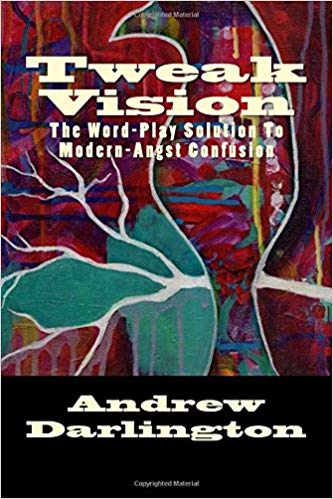
I’ve had masses of material published in all manner of strange and obscure places, magazines, websites, anthologies and books. I’ve also worked as a Stand-Up Poet on the ‘Alternative Cabaret Circuit’, and I’ve interviewed very many people from the worlds of Literature, SF-Fantasy, Art and Rock-Music for a variety of publications (a selection of my favourite interviews collected into the ‘Headpress’ book ‘I Was Elvis Presley’s Bastard Love-Child’). My latest poetry collection is ‘Tweak Vision’ (Alien Buddha Press), while my new fiction collection ‘A Saucerful Of Secrets’ is now available from Parallel Universe Publ.

The Interview

1. What were the circumstances under which you began to write poetry?

The weird thing is that I was always writing. The problem was what to do with the stuff once I’d written it. Mostly I was doing fiction, with a strangely-strange SF slant, but I was nudged into poetry via Allen Ginsberg and the Mersey Poets thing. This would be around 1966-1967. And I had mounds of it. It was discovering access to the underground press and the independent magazines that turned things around for me. I stumbled upon an issue of a magazine called ‘Sad Traffic’ by accident in a Leeds Head Shop, it had the right tone of informality and irreverence. I bought it, sent in a poem, and they accepted it. I was so amazed that I promptly shifted everything I owned into my beat-up old car, drove down its publishing address in Barnsley… and moved in with them!

2. Wow. Big change of life. Digging into your past who introduced you to poetry? Where did find find Ginsburg and the Mersey poets?

There was a series of ‘Penguin Modern Poets’ books, I bought the Mersey Poets one… Adrian Henri, Brian Patten and Roger McGough, which snagged neatly into the Pop continuum. And the Beat Poets one with Greg Corso, Lawrence Ferlinghetti and Ginsberg’s ‘Howl’ which is a key poem. I also loved the Dada and Surrealist poets Tristan Tzara and Paul Eluard. But it was just in the air. Donovan had a single called “Atlantis” which was essentially a poem. I liked that one a lot. And the Fugs albums too…

3.1. Music appears often in your poetry. What do you think it brings to the words?

It’s all the same continuum, just twisted into alternate forms. I’m not a musician. I don’t play an instrument. If I did I’d probably be busking in the precinct. There was a thing called Jazzetry… or Jazz-Poetry with Mike Horovitz and Pete Brown. I envied that fluidity. A great jazz solo by-passes the logic centres of the brain and sets up a direct link from intuition to expression. And Bob Cobbing’s Sound Poetry which reduces language down to its most basic elements. Poetry has its roots in Bardic troubadour tradition. In my humble way, I think that’s still part of its function…

With fiction, a review or a feature, you have the structure there already, you’re just shading it in. Poems are… largely, different. They come in their own time, or they don’t come at all. Once they’ve found their voice, they write themselves.

3.2. How do you know when a poem has found its voice?

First drafts are usually best. A little tinkering and fine-tuning, but too much destroys the energy and spontaneity. When it sounds right, it’s right. As with the Beat writers, it’s the authenticity that makes it work, more so than technical perfection. At one point, if they’re lucky, a writer invents themselves…

I’ve always worked on the assumption that there’s as many forms of poetry as there are poets. There’s a million ways to laugh. There’s a lot of poetry out there that I don’t like. But there are also writers I respect and admire. Every now and then you stumble over a new poem, or a new voice, that reaffirms and rejuvenates the joy of words, and kickstarts new energies in your head.

4. What is your daily writing routine?

I’m not sufficiently organised to have a daily writing routine. I’m usually working on a number of projects simultaneously, so when I get bored with one, or hit an impasse, I simply switch to another. Publisher deadlines tend to focus things. New Wave SF writer Michael Butterworth said that ‘I love to hear the sound of deadlines hurtling past my ears.’ Which is a great line. But when I get a buzz-date from my ‘R2’ editor it acts as a stimulus, and I’ve never so far faulted….

5. What motivates you to write?

I’ve always loved words, and the games you can play with them. Whatever academic potential I may once have had was totally stomped-on by loud Rock ‘n’ Roll and cheap Science Fiction, but it’s that incredible head-spinning buzz that I get from others that I’m attempting to replicate in what I do. Not the style or form, but that head-kick energy-charge. Not that it always necessarily works out that way. But in future, if someone happens randomly upon one of my books in a secondhand book shop or website, and flicks through it, and says ‘hey, that’s pretty good’… I’ll be well-pleased.

6. What is your work ethic?

I work in Yorkshire, not in Ethics! Although guilt contributes substantially. The terror of lost time that invades my darkest terrors and night-fears. The blank word.docs of unrealised potential slipping away over the event horizon…

Like it. How do the writers you read when you were young influence you today?

I’ve always had this sense that we form a global community of misfits, oddballs, poem-freaks, word-junkies, writers, geeks, nerds, artists and ne’er-do-wells, we have become the ocean in which we swim, and each small achievement for one validates the rest of us.

I was the dysfunctional brat who devoured books, trashy-magazines, comics and records to an unhealthily obsessive degree. And the writers I read then were hugely influential in shaping me. I subsequently tracked down some of those hack writers from old Pulp magazines, got to thank them and by interviewing them, drawing a slight degree of deserved attention to their frequently-neglected­ careers. And by doing what I’m doing now I’m howling back through time to that dysfunctional brat that I was, and telling him ‘it’s gonna work out fine, don’t worry, stay true to your strangeness…’

7. Why do you write?

What do people actually DO who DON’T write it…? I find it difficult to conjecture. I guess they must do something, I suppose…

8.. What would you say to someone who asked you “How do you become a writer?”

I worked in a print factory for many years. There was a guy there who, every six months or so, would come across to me and say ‘I have this great idea for a story’… and I’d tell him, write it down, no-one can see a story that’s just in your head. But six months later he’d return and tell me the exact same thing. So write. Write it down.
When I was talking to the vintage SF writer EC Tubb he told me how people would approach him in the pub and tell him ‘I’ve got this great idea for a SF story’… and he’d tell them ‘that’s a plot, but not a story. For a story you need to get inside it and find its voice.’
I consider that pretty good advice.

9. Tell me about the writing projects you have on at the moment.

Life is an ongoing perpetually uncompleted project. The things I’m working on at the moment include ‘In The Time Of The Breaking’ – a retro-styled SF novel, and a biography of Derek Taylor, the Beatles PR man. I’m open to offers from potential publishers in both instances.
This is alongside short and longer fiction in the SF/Fantasy genre plus music-related features and interviews…

Wombwell Rainbowed Review 

My review of Andrew’s latest can be found here: https://thewombwellrainbow.com/2018/07/08/my-vision-tweaked/

Wombwell Rainbowed Review

is open to any authors who wish me to review their work.

Wombwell Rainbow Interviews: Leanne Neill

Wombwell Rainbow Interviews

I am honoured and privileged that the following writers local, national and international have agreed to be interviewed by me. I gave the writers two options: an emailed list of questions or a more fluid interview via messenger.
The usual ground is covered about motivation, daily routines and work ethic, but some surprises too. Some of these poets you may know, others may be new to you. I hope you enjoy the experience as much as I do.

51cSQWeTISL._AC_US500_QL65_


Leanne Neill

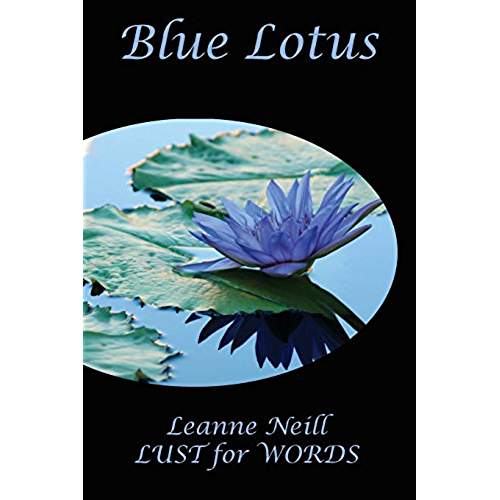
is a company director, mother of three, and a self-professed ‘composer of words.’  She has over twenty years of experience in public libraries and local government.  In 2016, she started her poetry and art inspired Facebook page :  LUST for WORDS, and has since been published in many ezines and pages including Spillwords , Bymepoetry, including their WOMb anthology, The Scarlet Leaf Review, Blue Nib, Raven Cage, Husk Magazine, and US anthologies, Dandelion in a Vase of Roses and Warriors With Wings.  Her first collection, Fine Lines and Unpolished Pieces of Me was published by The Australia Times in 2017.  Her second poetry collection, Blue Lotus was released in June, 2018. Leanne lives in Melbourne, Australia.

Find her at :
Facebook.com/LUST-for-WORDS
Instagram : lust_for_words_by_leanne_neill
Twitter : Leanne Neill@LeanneNeill2

The Interview

1. What inspired you to write poetry?

From my early teenage years, I felt compelled to write.  I kept diary after diary that turned into a collection I now realise, was “loose” poetry.  I wrote teen fiction that I would take to school in chapters to eager readers awaiting the next instalment.  Any time I was in love, out of love or simply lost, I wrote poetry.  As an adult after losing my baby, my first inclination was to express my grief in poetic form.  I can only conclude that poetry is somehow intrinsic to my being and an instinctive form of emotive expression for me personally.

2. Who introduced you to poetry?

I remember a rather awkward “spoken word’’ presentation of ‘‘I wish I’d looked after my teeth” by Pam Ayres, complete with props in Primary school.  I don’t recall much in High school unless the dreaded obligatory Shakespeare counts?  I studied English literature at university where they forced Yeats, etc, down our throats, made us analyse in essay form, and I’m certain contributed to me detesting poetry altogether afterwards for at least 15 years!  I worked in libraries as an adult and was blessed to work at one time with esteemed Australian Poet, Robbie Coburn. In reading his poetry, I was reintroduced to the artform, and remembered why I had once loved it.

3. How aware were you of the dominating presence of older poets?

Other than through education, mostly at university level, barely.  Only here was I introduced to classics such as Frost, Yeats, Keats, Eliot etc. As mentioned earlier, these in fact deterred me from enjoying poetry for some time afterwards.

4. What is your daily writing routine?

At one point in my short poetry writing time of two years, I felt obliged to produce a poem EVERY day.  Perhaps this stemmed from the self-imposed pressure of maintaining fresh pieces on my poetry page, LUST for WORDS.  Creativity flowed easily, and this was feasible for quite a long time.  Now I don’t force creativity, although if I don’t push myself on some level, I’d possibly never write another word! I try to take in a new art piece daily, or an interesting word and see if anything is born from it creatively. If not, I no longer feel any angst about resting my mind for a while longer.  Work, family and other interests also often prevail out of necessity.

5. What motivates you to write?

Life!  My experiences, those I witness through others, joy, love, despair, grief. Inspiration is endless and if it does end, it usually means you need to leave your comfort zone and experience something you’ve never seen or done before…sky dive, see a psychic, take a holiday, take a walk, even around the corner!  Fresh air and nature are huge motivators for me, but then equally so, a busy city scenario.
Music and art are my BIGGEST motivators.  I live for music. I feel ill if I’ve gone a day without it!  Lyrical content and emotion are everything to me in terms of inspiration.  Often if I feel totally blocked but itching to write, I will browse through Pinterest art.  There is usually at least one image that screams for words! Feedback from every day people in the form of messages or comments motivate me.  If I have touched someone’s heart or mind, I feel I’ve won the most prestigious literary prize!

6. What is your work ethic?

Any time a poetic thought or concept enters my mind, or even just a word that suddenly intrigues me, I record it in my notes on my phone. This sometimes happens when I’m trying to sleep. I know if I don’t record the thought, I’ll spend a sleepless night trying to memorize it!  At some point, usually the next day, I’ll go back to it and try to develop the thought into poetry.  Sometimes, these notes will sit for months until they evolve into something. After a certain period- of- time, if not fruitful, I delete them altogether. They weren’t meant to be!

7. How do the writers you read when you were young influence you today?

I grew up an avid reader. My mother couldn’t keep up financially with my book purchasing requests and finally joined me up as a member of my local library. Ironically years later, this became my first place of real employment!  In my youth I read and collected every Enid Blyton book, the Nancy Drew series etc. Most typical of this time I guess. In my teens, I typically moved on to Judy Blume and series such as Sweet Valley High and Sweet Dreams; a teen version of Mills & Boon which I now find totally amusing.  I’m not certain any have influenced my poetry. My passion for the written word, absolutely! My poetry is influenced most by contemporary poets.

8. Who of today’s writers do you admire the most and why?

My reading preferences, especially in poetry are varied and eclectic. They range from classic to contemporary poets, including the ghastly termed ‘insta-poets’.  If I had to name contemporary poets I admire they would mostly be Australian poets; Ali Whitelock, Anne Walsh, Anne Casey, James Walton, Robbie Coburn, Michele Seminara and Beth Spencer, just to name a few.  In the ‘pop-poetry’ genre I enjoy Beau Taplin, Chloe Frayne, (coincidentally, also BOTH Australian), and receiving great commercial success currently. I’m not a huge fan of rhyming poetry but I believe Lang Leav mostly does it well.  Kimberley Reynolds (Kimspiration) is an Australian rhyming queen.
I prefer to read non-fiction or biographies outside of poetry, though I love a good chick-lit novel!

9. Why do you write?

Refer to question 1.  This question should be deleted in my opinion.  Too much repetition.

10. What would you say to someone who asked you “How do you become a writer?”

I don’t think you” become” one, I believe you’re born one.  If you have the inherent passion and drive to create any culmination of words, you ARE a writer.  The reality is, especially in the poetry genre sadly, you’re likely never to be wealthy or well-known. Write because you just can’t NOT write…something, sometimes anything! Oh, and practice never makes perfect, but it definitely makes for better!

11. Tell me about the writing projects you have on at the moment.

This year in June (2018), I published my second poetry collection, ‘Blue Lotus’.  I’m astounded by and grateful for its sales and success! I published my first collection with the help of The Australia Times Magazine, ‘Fine Lines and Unpolished Pieces of Me’ in 2017.  This was a one-off, seventy copy limited edition print, as I wanted to test the waters for sales.  All sold within six weeks of release.

For my future venture, (I’m allowing myself a minimum of one year), is a collected work called ‘Rebellious and Almost Repentant.’  It will contain mostly new poems, but also a selection of relevant pieces from the above fore-mentioned collections.  I plan to include personal photographic artwork.  I’m feeling totally inspired but want to ensure the quality and relevance of the content to perfection. I’m also fastidious about the aesthetic presentation of my books.  I want them to look beautiful too.

Meanwhile, my social media presence continues to grow on Facebook and Instagram.  LUST for WORDS is close to 25, 000 followers in just over two years.

I regularly submit to online poetry publications including The Blue Nib and Spillwords.  I expect to be included in my third group anthology for 2018 by the end of this year.
LINKS:

Facebook.com/LUST-for-WORDS
Instagram : lust_for_words_by_leanne_neill

Wombwell Rainbow Interviews: Kitty Coles

Wombwell Rainbow Interviews

I am honoured and privileged that the following writers local, national and international have agreed to be interviewed by me. I gave the writers two options: an emailed list of questions or a more fluid interview via messenger.
The usual ground is covered about motivation, daily routines and work ethic, but some surprises too. Some of these poets you may know, others may be new to you. I hope you enjoy the experience as much as I do.
seal wife cover

Kitty Coles

Kitty’s poems have been widely published in magazines and anthologies. She was joint winner of the Indigo Dreams Pamphlet Prize 2016 and her debut pamphlet, Seal Wife, was published in 2017. Her poems have been nominated for the Forward Prize and Best of the Net. http://www.kittyrcoles.com

The Interview

1. What inspired you to write poetry?

I started writing poetry at school, because we had to, and then continued doing it in my own time and as I got older because I found that I got something out of it. I’m still not entirely sure what that something is, but it has to do with a desire to communicate and share experiences, to make someone else think, ‘Ah, so that’s how that feels’.

2. Who introduced you to poetry?

My parents, first of all through nursery rhymes. My mum knows lots of poetry by heart and I remember her reciting ballads like ‘Sir Patrick Spens’ when I was a very young child and being drawn in by the rhythms and sounds of the words: rhythm and how a poem sounds when spoken aloud are still major preoccupations for me. I also remember seeing my dad’s books of poetry on the bookcase in my parents’ hallway, writers like Sylvia Plath, Anne Sexton and Ted Hughes. I didn’t read them till I was in my teens but they gave me a feeling that poetry was something available and part of everyday life.

3. How aware were you of the dominating presence of older poets?

I didn’t start reading much poetry written since the early 60s till about five or ten years ago so I wasn’t aware of most contemporary poets when I started writing. At that stage, I was reading a lot of poetry but it was all stuff like Shakespeare, the Romantics, Dickinson, Emily Bronte, Donne, Wilfred Owen, etc, etc. I didn’t experience it as dominating, more as giving me ideas and encouraging me to try to write better. Everyone I admired had been older than me when they first got published so it gave me hope that, as I got older, my writing would improve.

When you’re 17 you imagine that there’s hope that, by the time you’re 30, you could’ve written another ‘Ariel’. And then you get past 30 and it hasn’t happened!

Now that I’m older, I’ve had the realisation that many of the people I admire (not just poets but novelists, musicians, etc) had either died or produced work far better than I’m ever going to by the time they got to my age. So, if anything, I now experience younger poets as a dominating presence, people who’ve already overtaken me in terms of quantity and quality of output and who I’m never going to catch up with.

4. What is your daily writing routine?

I don’t write daily or even near daily. I have a full-time job and various other time-consuming commitments and my energy levels aren’t very high due to ill health. Over the last few years, I’ve been trying to write 52 poems a year, and so far I’ve been succeeding in that, but I might write three poems in one day and then nothing for weeks. In the past, I’ve gone through very long periods of being unable (or not wanting) to write but I find it helpful now to think of those as times of germination rather than sterility. I have a notebook with me all the time and a line or few lines will suddenly materialise in my head and, when I write them down, the rest of the poems flows out almost fully formed, though I will come back to it later and revise it.

I prefer to sit at my desk – with a big cup of herbal tea – to write if I can but sometimes wake up in the middle of the night and write a poem in the dark, which I then have to try and decipher in the morning, or pull my car over to write if a poem occurs to me while I’m driving.

5. What motivates you to write?

I’m prompted by dreams, things I’ve read or observed or experienced, music and being outside in nature. But where the deeper motivation comes from I don’t know.

6. What is your work ethic?

I write when I’m able to and that’s about it. I’m in awe of writers who are more disciplined about sitting down and writing 500 words a day or whatever but unfortunately my brain doesn’t work like that. If I’m not moved to write and try to force it, my mind goes into a blank panic and nothing happens. I’m very interested in how other people are able to write to order and their process for making that happen but at the moment that’s not me.

7. How do the writers you read when you were young influence you today?

When I was about 13, I would’ve said my biggest influences were Keats and Wilfred Owen but I don’t think either of them has much discernible influence on me now. When I was a bit older, I read Sylvia Plath, who remains a very significant influence. I’m particularly interested in her use of rhythm and the sound of words.

I’m also influenced by prose writers and the lyrics of songs. I first read Mervyn Peake and Thomas Hardy aged about 14 or 15 and they remain big influences, Peake for his folklore-style, archetypal narratives, Gothic atmospheres and ability to evoke incredibly vivid visual images and Hardy I suppose because I found it comforting to encounter a writer who allowed himself to look at things so bleakly.

8. Who of today’s writers do you admire the most and why?

When I first started reading contemporary poetry and submitting my writing for publication, I subscribed to a writing magazine but I found that most of the stuff in it felt very bloodless and wasn’t for me. But there was one poem, ‘Briar Rose’ by Maggie Sawkins, which resonated deeply with me and made me feel like perhaps there was a place for my poems and that some of them might resonate with other people. Maggie continues to be one of my favourite poets writing today and has been very kind to me.

I admire everyone who gives their time and energy to editing and organising open mic nights and the like and provides opportunities for the rest of us.

9. Why do you write?

I don’t fully know but it started as something just for myself, not to be shared, and now it’s connected to a wish to communicate. I don’t think I would write, now, if I had no way of sharing my writing with others.

10. What would you say to someone who asked you “How do you become a writer?”

I don’t consider myself to be a writer because it isn’t writing that pays the bills. But if the question was ‘What helps you to write?’, my answer would be:
–          read as much as possible (poetry, novels, non-fiction, play scripts, literary criticism, etc) and listen to songs.
–          try to think of any times you can’t write as times of germination rather than sterility.
–          have a note book with you all the time so you can write down poems wherever they come to you.
–          take an interest and keep learning about new things.

11. Tell me about the writing projects you have on at the moment.

I’ve completed a second pamphlet, around the themes of illness and the body, and third, about the natural world and our place in it and I’m trying to find homes for them. I’m about a third of the way through a fourth pamphlet, which is the first one I’ve ever deliberately written as a series of poems with some connection, as opposed to having realised after the fact that  I’ve written some poems that belong together. I’m also trying to write a novel, although progress is very slow as I only write in short bursts.

Wombwell Rainbow Interviews: Tim Humphreys-Jones

Wombwell Rainbow Interviews

I am honoured and privileged that the following writers local, national and international have agreed to be interviewed by me. I gave the writers two options: an emailed list of questions or a more fluid interview via messenger.
The usual ground is covered about motivation, daily routines and work ethic, but some surprises too. Some of these poets you may know, others may be new to you. I hope you enjoy the experience as much as I do.
Rorschach Book Cover - different option

Tim Humphreys-Jones

a.k.a Double Barrelled is the founder of Voicebox (a spoken word event in Wrexham) and also the co-founder of The Larynx (a hip hop platform from the same area).
As a writer and performer he turns his hand to both abstract hiphop ramblings and traditional spoken word; he has released 3 collections of poetry with the most recent being “The Rorschach” horror themed collection and has also dabbled in recording a few EPs, with the most recent being the Tomes EP.

The Interview

1. What inspired you to write poetry?

I always find this to be a difficult question to answer, which it probably shouldn’t be when you consider creatives are supposed to have this  impetus about them at all times; however, for myself the truth is that there is a continuous need for inspiration so: originally I wrote out of teenage angst, then I wrote out of confusion, then I wrote out of pride, then ambition, then self-doubt and these days I write out of a simple need and it is probably the most comfortable my writing has been for quite some time.

What I will mention here is that for many years I have been surrounded by other great writers who will have given me both guidance and  offered me support, which would be my most regular source of inspiration.

2. Who introduced you to poetry?

I think it would actually be my elder brother (though he may not have realised it at the time).

I am not a writer who reads a lot but when I was about eleven years old my brother handed me a cd which featured the likes of Eminem, Linkin Park, LimpBizkit and Rage Against The Machine and although each of these acts have great musical elements, what drew me in at the time were the lyrics.  A few years later he read the beginning of This be the Verse by Philip Larkin out loud in our living room, with my parents present, and from there if I remember rightly my Dad proceeded to tell me about Roger McGough and The Liverpool poets. It wasn’t long after this that I was writing my own poetry and had joined a writing group led by a key figure in our community, Aled Lewis-Evans.
3. How aware were you of the dominating presence of older poets?

In one word: very. I would have been the youngest person in the writing group mentioned above by about 35 years, being fifteen or sixteen when I joined; personally, I feel that this benefitted me a great deal as it allowed me insight into many different styles of traditional poetry away from my standard listening/reading at the time.

This ‘presence’ as you call it is also something which encouraged me to set up my own event Voicebox, after attending Poetica (which was hosted by Martin Daws) and The Absurd (which was hosted by Sophie McKeand), where I saw that there was a way to create a diverse room of writers and audience members.

4. What is your daily writing routine?

I wouldn’t say I write fortnightly let alone daily. I am not someone who believes that writing little and often is the key to improving your writing; in fact, I definitely believe that distancing yourself from the page/screen can really help from time to time.

I have found that in the past if I have started a poem and feel I must finish writing it I will end up persevering for the sake of perseverance, rather than writing it for the actual reason I started the piece in the first place, and then by the end of the poem I don’t like what I have written and it gets archived.

5. What motivates you to write?

In a similar sense to the first question I find this perplexes me more than it probably should; I don’t often find that I witness an event or experience an emotion and then think I must write about that, I just write. This is not to say I have never been to an event and left thinking that I had a great idea for a piece, it is more to say that more often than not I write in an almost idle state.

I tend to write when I am tired and or bored. It has become a different sort of outlet for me, compared to what it would have been when writing with all the fire of adolescence, in that I am able to release any monotony or distracted moments in a productive manner; I suppose I write my own internal-monologue is what I am trying to get at, I allow the daydream a canvas to some extent.

6. What is your work ethic?

As a writer, questionable and sporadic would be the honest answer. I aim to be happy with the pieces I finish when I read them out loud. I am also prone to finishing projects and sitting on them until I have what I feel is the correct plan of action. This may be me being too harsh on myself though and I am working on organising myself and pushing my work out into the world more than I have previously.

When it came to hosting and organising my own event I had to have a different approach and found that I was better at encouraging others to share their work and arranging to bring something new to my local poetry scene than I had been at establishing myself as a reputable writer, however, as mentioned I am working on this…

7. How do the writers you read when you were young influence you today?

When I was a lot younger I remember reading Roald Dahl and a book called The Sleeping Sword several times…I can’t say I am aware of either of these having a profound impact on my current work, although both were quite fantastical and I would like to think my writing carries some eccentricity and abstraction that could maybe be comparative.

If we were to discuss the impact that hip-hop has had on my writing then we would be onto a much lengthier conversation; when I first heard rap music that would probably have been the first time I experienced what I would deem to be honest and direct storytelling. I found myself delving into the lyrics of the songs to discover elements of rhyme that I hadn’t come across in traditional poetry, I would be able to look into slang that would be completely alien to me at that time, I would hear new ways of working a metaphor, new ways of breaking words up and the use of homophones etc. I would argue that some of the best writers of the past twenty years are rappers, remove the music and the writing can stand the test.

Just one example of some of the brilliance would be this line from Aesop Rock’s song No Regrets where he is speaking as a character called Lucy:

Look, I’ve never had a dream in my life
Because a dream is what you want to do, but still haven’t pursued
I knew what I wanted and did it till it was done
So I’ve been the dream that I wanted to be since day one!

8. Who of today’s writers do you admire the most and why?

Slug, from the rap group Atmosphere, repeatedly impresses me; their recent track Virgo has pretty much been on loop in my home over the past fortnight. When I first came across their music at the age of sixteen I saw a whole new side to rap music with phrases such as ‘carve my charm into your arms’ and ‘they love the taste of blood, now I don’t know what means but I know that I mean it’ truly capturing my attention and making me see a way to merge my hip hop influences with my poetic learnings.

There are several others I could list (including Aesop Rock who I mentioned earlier) but we would be here a while.

9. Why do you write?

I enjoy the process on a fundamental level. I enjoy wordplay, I enjoy rhyme, I enjoy taking established styles and formats and reconfiguring them; I think I have been writing for so long now that it becomes my default way of occupying myself.

10. What would you say to someone who asked you “How do you become a writer?”

Know your own voice and then if you’re going to perform for others, accept your voice and their feedback.  Try different styles. Challenge yourself.

Write for yourself more than you write for others.

11. Tell me about the writing projects you have on at the moment.

As mentioned earlier, I hoard. I have multiple projects that I am assessing at the moment with the idea that I will act on at least one of them in 2019; one project being a 30-40 minute set of poetry, which I am hoping to refine and then tour across the UK if I am able to secure some bookings in the next few months.
 

Wombwell Rainbow Interviews: Harry Gallagher

Wombwell Rainbow Interviews

I am honoured and privileged that the following writers local, national and international have agreed to be interviewed by me. I gave the writers two options: an emailed list of questions or a more fluid interview via messenger.
The usual ground is covered about motivation, daily routines and work ethic, but some surprises too. Some of these poets you may know, others may be new to you. I hope you enjoy the experience as much as I do.

Harry book

Harry Gallagher

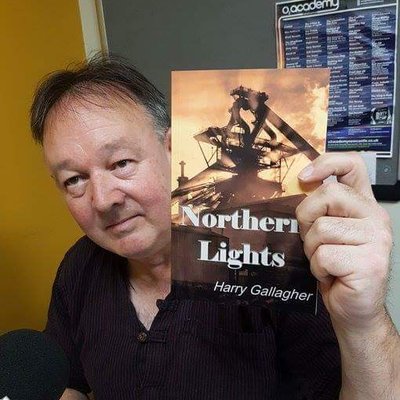
Harry Gallagher has been widely published by Prole, The Interpreter’s House, Poets’ Republic, Iron Press, Black Light Engine Room and many others. He runs the north east stanza of the Poetry Society and performs up and down the UK. His book ‘Northern Lights’ (Stairwell Books) was published in 2017.

The Interview

1. What inspired you to write poetry?

It’s difficult to say really. A big part of me thinks you’re either driven to write or you aren’t. I’ve been writing poetry of varying quality since I was a child and I’m now 55 and still trying to understand why. I sometimes think it’s a character fault! Your average person in the street seems to get by perfectly well without it, while the rest of us are cursed to keep thinking it somehow matters.

2. Who introduced you to poetry?

I can’t remember anyone sitting me down and introducing me to it. I think my fascination came via songs. We’re talking 70’s album inner sleeves here and sad youths who pored through them trying to make sense of the words. Yes, I was one of them. I think it’s probably why I’m still a little overly fond of using internal rhymes.

3. How aware were you of the dominating presence of older poets?

In terms of famous poets, the ones I loved – and still love – were all old or dead, so people like Auden, Thomas, Larkin, Betjeman were all regulars and still are, though I’d also like to think my reading has slightly widened in the last 40 years or so! And despite that list, I do also read and love lots of poetry by women writers.

4. What is your daily writing routine?

I carry a notepad and pen with me pretty much wherever I go and at the first chance I’m off into reverie. I write most days, though that’s not to say any of it is much good. But I must say that the daily writing habit has only in come to the fore in the last few years. I’ve been through periods in my life where I haven’t written at all, or only sporadically. But I have found as I get older that it’s a joyful experience to be able to take up a pen and say any damn thing I like.

5. What motivates you to write?

A desperate need to dominate the world around me haha! No, as I’ve already said it’s more of a need than anything else. I think at the heart of it all is a desire to make sense of the world around me and to connect with it.

6. What is your work ethic?

I must admit, if you analyse the time I spend writing, editing, promoting etc, then I do work pretty damn hard at it – it’s really a full-time job. But like every other poet I know, it doesn’t pay the bills so it’s a bit like having a second full time job. But I must say, it doesn’t feel at all like work, it’s something I love doing.

7. How do the writers you read when you were young influence you today?

I think they’re just there under the skin. It’s like most popular recording artists, you can sort of hear their influences in the background if you listen carefully, but they also – if they’re any good – produce something which sounds new and original.

8. Who of today’s writers do you admire the most and why?

A difficult one because I am mates with a lot of current poets, so if I name one then I’d have to name-check a load of others! But of the people I don’t know personally, I’ll name Colm Keegan, a great Irish poet. The way he writes about ordinary, working class life in his home country blew me away. Great poetry should really hit you in both the heart and the head and his does that to me.

9. Why do you write?

Because I can’t help it. It’s a happy compulsion. As I’ve already said, I have been through periods in my life when I’ve pretty much stopped and what I found is that I became unhappy. Of course, I didn’t make this connection at the time.

10. What would you say to someone who asked you “How do you become a writer?”

Do it. Just do it. Expose your work to audiences and read their reactions. Read lots of other poetry and other books generally. And keep doing it. Expect to be destitute or get a proper job. Better still, go to a prominent university and get yourself on the funding and publishing merry-go-round. I didn’t, I got lucky doing a job that pays for this ridiculous folly and scribe happily away in semi-obscurity.

11. Tell me about the writing projects you have on at the moment

Right now I’m doing a few things. I’m writing a few ‘home town’ poems about the village where I live – Cullercoats – for an Iron Press book out next year. I’m also busy getting together one half of a collection, the other half of which is being written by my poet best buddy p.a.morbid, which is hopefully coming out before Christmas this year from Black Light Engine Room Press.

Harry Gallagher
http://www.harrygallagherpoet.wordpress.com

Wombwell Rainbow Interviews: Stefan Goncharov

Wombwell Rainbow Interviews

I am honoured and privileged that the following writers local, national and international have agreed to be interviewed by me. I gave the writers two options: an emailed list of questions or a more fluid interview via messenger.
The usual ground is covered about motivation, daily routines and work ethic, but some surprises too. Some of these poets you may know, others may be new to you. I hope you enjoy the experience as much as I do.

13131658_767815246688915_3909728502567894227_o

Stefan Goncharov

was born in Sofia, Bulgaria 1996. He has one published book with poetry and multiple publications in all of Bulgaria’s major literature-oriented  magazines, newspapers, and internet platforms. He has also been translated and published in the notorious Turkish magazine for contemporary literature: “Edebiyatta Üç Nokta” and received first prize at the national student’s competition for poetry in Bulgaria: “Боян Пенев”. Furthermore, he works as a film critic for a Bulgarian internet platform.

The Interview
1. What inspired you  to write poetry?

I don’t think I have been ever inspired to write. It just came out of some kind of necessity to confront myself and all my failings and shortcomings as a person. From then on it was the “existential inertia” of writing that kept me going. The whole process is beyond me at this point. I just can’t stop even if I wanted to. In this sense I have always felt as a prisoner of circumstance and not as an artist whose agency has played or plays a quintessential part in his art.

2. Who introduced you to poetry?

I don’t think I’ve had a formal introduction. When I started I was 16 and hadn’t read any significant poets or writers. I knew that people wrote and I guess that was mystifying enough to get me to try it. My father is also a writer but at that time I had never read any of his works or talked to him about literature. When I started writing and reading we started talking but to this day I still don’t read him all that much.

3. How aware were you of the dominating presence of older poets?

I was completely unaware. I had a strange intimation or inkling that all good authors are dead. I’am still not sure if I was right or not but I think that this way of thinking freed me from the burden of being influenced. I don’t think that I would have had the courage to start writing if I knew that there was an older generation whose tastes and feelings I have to take into account if I want to be taken seriously.

4. What is your daily writing routine?

I just write something down every day. Sometimes I can go a week without writing but I always come back feeling sorry.

5. What motivates you to write?

I always feel as though nothing if I have to be perfectly honest. Although I must admit that I have felt motivated before. Its an ecstatic feeling. You can write for days and you do but then you stop and its all trash.So if there is something that motivates me I would really like to avoid it. I write best when i have nothing to loose and nothing to gain.
6. What is your work ethic?

Writing is a lifetime of work. You need rhythm and a somber tempo. A disciplined beat that can last throughout the years. My role model is a heart.
7. How do the writers you read when you were young influence you today?

I didn’t read a whole lot when I was young but when I finally started getting into literature I sometimes felt really pressured to conform to what most people deemed “good writing”. Then I started to diversify my reading habits and found kindred spirits in writers such as Antonin Artaud, Gherasim Luca, Clark Coolidge and many others but I don’t think that they influenced my writing per say. It is more the case that they made me feel as though I am free to become who I am.

8. Who of today’s writers do you admire the most
and why?

For the purpose of this interview I will say Milan Kundera because “Life is elsewhere” is the only book that has made me feel truly ashamed to be a poet. It was a revelation.

9. Why do you write?

As I said it’s “existential inertia”. It will just cost toо much to try to stop it now. So I am along for the ride although I am not sure if I have always wanted to be. When all is said and done there is something pretentious in the sentence “I am a writer” and its not always easy to distance yourself from it. I feel like there are a lot of people who pride themselves on being writers or generally speaking – artists. For me that is truly terrifying.

10. What would you say to someone who asked you “How do you become a writer?”

Impersonate yourself or someone else (Fernando Pessoa) and then just sit down and write. If life and art are to be interesting we need good actors/personas not proud and self-righteous individuals. When and if you finally write something play with it but remember subversion is never the only answer.
11. Tell me about the writing projects you have on at the moment.

I hope that I will get a second book published soon but other than that I’ll just keep on writing. I would like to try my hand at producing prose someday but I don’t know when I’ll feel comfortable enough with the idea to actually give it a shot. I don’t like to rush things es


Wombwell Rainbow Interviews: Isabelle Kenyon

Wombwell Rainbow Interviews

I am honoured and privileged that the following writers local, national and international have agreed to be interviewed by me. I gave the writers two options: an emailed list of questions or a more fluid interview via messenger.
The usual ground is covered about motivation, daily routines and work ethic, but some surprises too. Some of these poets you may know, others may be new to you. I hope you enjoy the experience as much as I do.

Isabelle Kenyon

is currently a northern, UK based poet. Isabelle is the author of This is not a Spectacle, Micro chapbook, The Trees Whispered (Origami Poetry Press) and Digging Holes To Another Continent (Clare Songbirds Publishing House, New York). She is the editor of Fly on the Wall Press, a small press for charitable anthologies, the latest of which is Please Hear What I’m Not Saying, which raises money for UK mental health charity, Mind and came runner up for Best Anthology at the Saboteur Awards, 2018.
Her poems have been published in many poetry anthologies, such as The Road To Clevedon Pier and The Inkyneedles anthology. She has had poems published in literary journals such as The Blue Nib, Foxtrot Uniform, Mojave Heart Review, Bonnie’s Crew, The Pangolin Review, I Am Not A Silent Poet, Eskimo Pie, Scrittura, Anti – Heroin Chic, Bewildering Stories and Literary Yard.

Her website is:

http://www.flyonthewallpoetry.co.uk

The Interview

1. What inspired you  to write poetry?

Originally I think it was just a love of words and storytelling and then became a way of processing feelings! Now I’d say it’s more important to me than a diary.

2. Who introduced you to poetry?

My Granny Olga was a poet and author and she used to get me to read out loud to her, my short stories, comics and poetry. I told her at the age of 7 that her poems weren’t any good because they didn’t rhyme!

3. How aware were you of the dominating presence of older poets?

I wasn’t very aware then because I was reading more fiction. Now I have heaps of older poets who I absolutely adore. I’ve always loved Sylvia Plath though.

4. What is your daily writing routine?

I don’t have one but at the moment I’m writing on a certain theme- the value of women’s bodies, to develop into a full manuscript. I try to write a poem a day at the moment but sometimes I’m lucky if it’s one a week!

5. What motivates you to write?

People! Humans do weird things.

6. What is your work ethic?

Work the hardest that I can, tire myself out, then try even harder!

7. How do the writers you read when you were young influence you today?

I used to adore Cornelia Funke, whose descriptions were always very imagery heavy. I love layers of imagery when writing and reading.

8. Who of today’s writers do you admire the most and why?

I think Indigo Dreams is publishing some of the most innovative writers currently. Poets like Kitty Coles and Anna Saunders.

9. Why do you write?

To process how I feel! Often, to make a statement.

10. What would you say to someone who asked you “How do you become a writer?”

You say that you are one and people will believe you, as long as you do.

11. Tell me about the writing projects you have on at the moment.

Publishing ‘Persona Non Grata’ via my press, Fly on the Wall Poetry Press, for charities Shelter and Crisis Aid UK, on the theme of social exclusion.

Starting Fly on the Wall Poetry Press’ first magazine!

Finishing my first full length collection to submit to presses…

Wombwell Rainbow Interviews: Maiya Calise Dambawinna

Wombwell Rainbow Interviews

I am honoured and privileged that the following writers local, national and international have agreed to be interviewed by me. I gave the writers two options: an emailed list of questions or a more fluid interview via messenger.
The usual ground is covered about motivation, daily routines and work ethic, but some surprises too. Some of these poets you may know, others may be new to you. I hope you enjoy the experience as much as I do.

wp_ss_20181008_0001


Maiya Calise Dambawinna

The Interview

1. When and why did you start writing poetry?

A lot of my poetry started as a way to deal with emotions – Id been sporadically trying to write a diary (and absolutely failing) so poetry sort of came naturally. I always say that I started PROPERLY writing about a year and a half ago, but generally around 3 years ago x

When I first started writing it was full of cliches metaphors and I can’t say it was distinctly my own style, I was very much copying poets I’d read! I think properly writing is when you can transition into your own style and create your own phrases x

1.1 Which poets did you copy?

Madisen Kuhn, R.H. Sin, Rupi Kaur

1.2 What is it about these writers that appeals to you?

I must admit I’ve strayed away from them now; with Madisen, it was the fact she was a young female writer and that obviously resonated with me. She dealt with emotions fantastically and the way she wrote “18 years” was beautiful. With Kaur and Sin, it was more their style – they rejected rhyme and long poems and just wrote how they wanted to, and still managed to make it poignant and I really liked that.

3. How aware are you of the dominating presence of older poets traditional and contemporary?

Very aware, I’m quite widely read with classical poets. I’ve read Ovid and Catullus and love their literary style

I think my own poetry is a mix of both classical and modern influences.

3.1 Their “literary style”?

The way they structure their works and the words/phrases they use. It’s very distinctive in classical literature.

4. What is your daily writing routine?

About 9:30pm every night I sit and write or edit for an hour without fail. However, I also write when inspiration strikes during the day. I tend to draw inspiration from movie lines or song lyrics or pieces of art so if i see something, I’ll record it and write about it there and then or save it for later.

5. What motivates your writing?

Quite a few factors to be honest, I’ve always written for myself – it’s a cathartic way for me to sort through my own emotions, but recently people have been the driving force. My parents and my best friends and boyfriend all push me to better my writing and keep going every day.

6. What is your work ethic?

Dedicated, If I’m struggling writing I’ll read a book or listen to music and actively search for inspiration

7.  Who of today’s writers do you admire the most and why?

I think Caroline Bird, especially after being lucky enough to meet her. The surrealism in her poems is so well constructed and I’ve never met anyone so passionate about what they do

8. Why do you write?

Because I think writing is the most poignant form of explaining circumstance and history

9. What would you say to someone who asked you “How do you become a writer?”

To start reading everything and anything you can, and just to write. I know it sounds silly but you need to start with writing cliches to be able to discover ‘your’ writing style

Just to keep writing every day, get inspired by anything they see

10. And finally, Maiya tell me about the writing projects you have on at the moment.

I’m currently working on three poems for the National Poetry Competition and also a small collection for the Foyle New Poets Prize.