Wombwell Rainbow Interviews: Fiona Pitt-Kethley

Wombwell Rainbow Interviews

I am honoured and privileged that the following poets, local, national and international have agreed to be interviewed by me. I gave the writers two options: an emailed list of questions or a more fluid interview via messenger.
The usual ground is covered about motivation, daily routines and work ethic, but some surprises too. Some of these poets you may know, others may be new to you. I hope you enjoy the experience as much as I do.
New file


Fiona Pitt-Kethley

says in her Amazon profile “I am the  author of more than twenty books of prose and poetry. I live in Spain with my husband, the chess grandmaster James Plaskett, our son Alexander and some feral cats i have adopted. I have written for the Times, Telegraph, independent, Guardian, London Review of Books, Oldie and other publications. My last poetry was Mineral Adventures from Rack Press. Most of my older titles are now available for Kindle. I am currently hoping to sell a large new poetry collection, Around the World in Eighty Lays, a shorter one on the mining of the Sierra Minera and two prose books: a general one on life in Spain and one on collecting minerals in the Sierra Minera. I have called that Washing Amethysts in the Bidet. I live in Cartagena where my hobbies include mountain walking, snorkelling and rock collecting. My agent is Annette Crossland of A for Authors.”

The Interview
1. What were the circumstances under which you began to write poetry?
I started as a child at 7. I was already reading Paradise Lost and other difficult books.

2 . Who introduced you to poetry?
My mother by reading to me and by having a full tall bookcase of the stuff available to dip into.

3. How aware were you of the dominating presence of older poets?
The great ones were something to live up to.

4. What is your daily writing routine?
Flexible. I write prose as well as poetry and I like to do a lot of exercise and go on adventures which I can subsequently write about. Sometimes hours writing at home or in the library. Sometimes more time spent submitting or finishing off pieces.

5. What motivates you to write?

Several different things. Anger, sometimes. Knowing I can do it better than many of those out there. Wanting to record something that is going – places, history, etcetera.

6. What is your work ethic?
Do as much as I can.

7. How do the writers you read when you were young influence you today?
I still love the best ones: Shakespeare, Milton, etcetera. The Metaphysical poets were a big influence as was Latin satire. There are elements of both in my writing though not many people see this.

8. Who of today’s writers do you admire the most and why?
So many writers out there it is hard to choose. Probably Tony Harrison for his classical elements and David Morley for his observation of nature and the Romany touches. I may well have missed some I would like. Perhaps easiest to say what I don’t like. I am less keen on prose poems and very long lines. I have a dislike visually of the very long line with a pause in the middle and shaped poems. I also don’t like the sort of typical creative workshopped poem as it does not have enough individuality. I am a bit suspicious of the whole creative writing scene and think, on the whole, it has done more damage than good.

9. Why do you write?
A need to record and transmit my way of seeing things. This may be pointing out a universal truth or sketching something transient.

10. What would you say to someone who asked you “How do you become a writer?”
Write a lot, read a lot, submit a lot.

11. Tell me about the writing projects you have on at the moment.
I have 4 books to offer with my agent, 2 poetry, 2 prose. Washing Amethysts in the Bidet is about the Sierra Minera and its history. It has been a huge project of physical research, going down mines, etcetera across ten years or more. There is nothing else on this subject in English and not much in Spanish. The prose also sparked a series of poems on the same subject, In Search of San Valentín. The other poetry book I am trying to sell in Around the World in Eighty Lays. The otherprose  book is a general one about my life in Spain, Traitor or Ambassador. I also have enough poems for a pamphlet on the Cats of Cartagena. I am working on more poems and a picaresque novel, plus various essays.


Wombwell Rainbow Interviews: Ann Christine Tabaka

Wombwell Rainbow Interviews

I am honoured and privileged that the following poets, local, national and international have agreed to be interviewed by me. I gave the writers two options: an emailed list of questions or a more fluid interview via messenger.
The usual ground is covered about motivation, daily routines and work ethic, but some surprises too. Some of these poets you may know, others may be new to you. I hope you enjoy the experience as much as I do.
41226183


Ann Christine Tabaka

According to her Goodreads site Ann Christine Tabaka is a nominee for the 2017 Pushcart Prize in Poetry.
She was selected as Poet of the Month for January 2018, and interviewed by Kingdoms in the Wild. She lives in Delaware, USA. She is a published poet and artist. She loves gardening and cooking. Chris lives with her husband and two cats. Her most recent credits are Page & Spine, The Paragon Journal, The Literary Hatchet, The Stray Branch, Trigger Fish Critical Review, Foliate Oak Review, Bindweed Magazine, The Metaworker, Raven Cage Ezine, RavensPerch, Anapest Journal, Mused, Apricity Magazine, Longshot Island, The Write Launch, The Stray Branch, Scryptic Magazine Ann Arbor Review.
*(a complete list of publications is available upon request)

The Interview
1. What were the circumstances under which you began to write poetry?

ACT: It was 1965.  I was 14 when I wrote my first poem.  I was more interested in visual arts and was planning on being an art major.  In fact, I did not care for reading or literature at all at the time.  The Vietnam War was on most of our minds with family and loved ones being drafted daily.  My first poem was “The Young Soldier” about a soldier being away from home at Christmas time.  Our Junior High School printed a journal every year at Christmas and everyone was offered the chance to enter a drawing, story, poem, or cartoon.  For some reason, writing a poem just seemed right at that time.  And so it began.

2. Who introduced you to poetry?

ACT:  We were forced to memorize poems in grammar school.  I still can recite most of Trees by Joyce Kilmer.  I never really did care for poetry until I started to write it myself, in my own
words. Even today, I will read poetry by my poet friends, but there are very few famous poets that I have read any of their works.

3. How aware were you of the dominating presence of older poets?

ACT:  Quite frankly, not at all!  Since I did not connect with any other poets until I was in my mid -60s, just a few years ago.  I was not aware of any poets, older or otherwise.  Since 2017, I have joined many online poetry groups, especially on Facebook.  Now, I notice that there are talented and successful poets of every age.  In fact, I have noticed that some of the most successful as far as being published and selling books are in their 20s right now.

4. What is your daily writing routine?

ACT:  I do not have a daily routine.  Sometimes I wake up in the middle of the night with an idea, and the light goes on and I write all night long.  Other times I go days without writing while I keep busy in my gardens, with my exercise, and cooking.  Whenever a thought enters my mind, I stop whatever it is that I am doing to write it down.  I constantly keep a notepad and pen at hand everywhere I go.  And yes. I write in pen on paper every time.  The only time I ever use the computer is when I feel a poem is ready to be put into a form to submit or go into one of my books.  And I never use my cell phone for writing.  I am very old fashioned when it comes to creating.   I guess that is because I am old.

5. What motivates you to write?

ACT: Just about anything and everything.  Since I am so involved with nature, it is a big part of what inspires me.  Also, feelings and emotions play a big part in what I write.  I will not go into details, but I had a very traumatic childhood, and several badly failed relationships, so I find solace and comfort in venting when things bother me.  Writing has become a release and a blessing.  It has a calming influence on me.

6. What is your work ethic?

ACT:  My work ethic has changed over the years as I have aged.  I used to be a real go-getter.  I was passionate about everything.  Now, I have learned to pick and choose what works best for me
and for my family.  Too many times in the past I have driven my family crazy with my anxiety over things that I thought were so important, only to find out later that they were not.  Now I try to be more easy-going about most things.  Although I must admit I can still go quite bonkers when I get a
bee in my bonnet about an idea that I want to work on.

7. How do the writers you read when you were young influence you today?

ACT:  AS I mentioned before, I did not read much.  I did not like to read, so I cannot say that they influenced me at all.  I do love to read now, but mostly fun novels and my friends’ poetry books.

8. Why do you write?

ACT:  I am sure that you must hear this from every writer and poet out there – I write because I feel I have to.  It is who I am and what I am.  I identify with my words.  I write so that my words will be
out there in the world, so that they will continue to live, even after I no longer do.

9. What would you say to someone who asked you “How do you become a writer?”

ACT:  WRITE!  Just keep writing.  Scribble down a word here, and a line there, and when you look back you will start to see that they will come together in a thought or pattern.  There is not magic formula.  You just keep writing because you love to do it.  If you happen to become known as a writer someday, Bravo for you.  But, you can always be a writer to yourself.  That is what is
important, to write for yourself.

10. Tell me about the writing projects you have on at the moment.

ACT:  I just finished having a book of micro-poems published by Cyberwit.net.  I am thrilled to be working with them.  Right now, I am writing new poems and new micro poems, and hope to have more books someday, but I think I need to take deep breath and slow down for now.  I will
continue to write to submit to journals, but I have published 7 poetry books within the past 2 years and I need to thank about what is next for me.  Also, I do not want to abuse my friends who have loving supported me by always purchasing my books.  Time to take a rest and just write for fun,learning new techniques, and challenging myself.

Thank you so much for giving me the opportunity to share a little about myself with such intriguing questions.  You made me think about things in a different way than before.  I even learned something new about myself.

Wombwell Rainbow Interviews: Matthew Clegg

Wombwell Rainbow Interviews

I am honoured and privileged that the following poets, local, national and international have agreed to be interviewed by me. I gave the writers two options: an emailed list of questions or a more fluid interview via messenger.
The usual ground is covered about motivation, daily routines and work ethic, but some surprises too. Some of these poets you may know, others may be new to you. I hope you enjoy the experience as much as I do.


general_gregor_macgregor_retouched

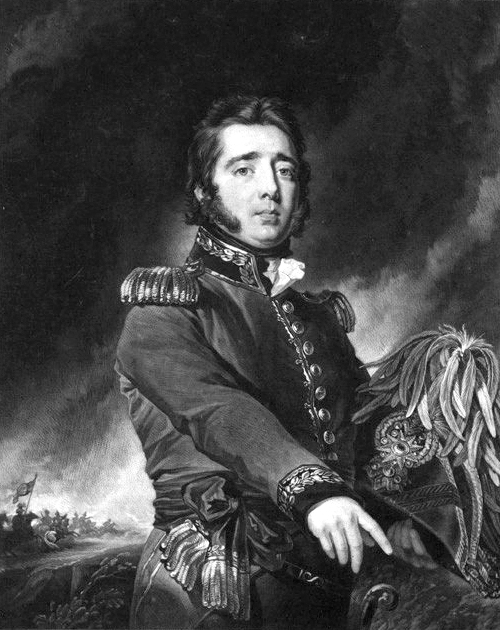
General MacGregor of MacGregor Cazique of Poyais


Matt Clegg

Matthew Clegg was born in Leeds in 1969. He received an Eric Gregory Award in 1997, and from 1999-2001 he was poet in residence at the Wordsworth Trust, Grasmere. His published works include Lost Between Stations

(https://longbarrowpress.com/current-publications/matthew-clegg/ ), West North East

(https://westnortheast.wordpress.com/), and The Navigators (https://matthewcleggthenavigators.wordpress.com/ ).

His next collection, Cazique, will be published by Longbarrow Press in October, 2018. He has worked as a Literature Officer for Arts Council England, and has taught at Sheffield University Lifelong Learning, and for the Open College of Arts. He currently lectures in creative writing at Derby University, and he lives in Sheffield.
Matthew Clegg: The Navigators | Poems by Matthew Clegg
matthewcleggthenavigators.wordpress.com

‘A Navigation’, led by Matthew Clegg and songwriter Ray Hearne, tracked several miles of the South Yorkshire Navigation between Mexborough and Conisbrough on 24 May 2015, with an audience of 25.

Matthew Clegg | Longbarrow Press
longbarrowpress.com
The Navigators (hardback, 128pp) £12.99 UK orders (+ £1.70 postage) Europe orders (+ £5 postage) Rest of World orders (+ £7 postage) Matthew Clegg’s second full-length collection explores the portals that connect time and place, and meditates on the element of water, as it moves through both. The book opens with rain falling in the Lake District, flowing to…

Matthew Clegg: West North East | Poems by Matthew Clegg
westnortheast.wordpress.com
West North East: £12 (hardback) UK orders (+ £1.70 postage) Europe orders (+ £5 postage) Rest of World orders (+ £7 postage) West North East is the debut full-length poetry collection by Matthew Clegg. A beautifully produced 96-page hardback book, it is available from Longbarrow Press for £12 + P&P. You can order the book securely by clicking on…(https://longbarrowpress.com/current-publications/matthew-clegg/ ), West North East

The Interview

Q: What were the circumstances under which you began to write poetry?

A: I began reading poetry when I was an ice-cream man outside Canal Gardens in Roundhay, Leeds. I was 18. I’d made friends with an art student who managed a charity café. I was also a little bit in love with her. She was smart, and had seen more of the world than me. She told me I looked bored, so she gave me a copy of The Oxford Library of English Poetry. It was very kind of her. I enjoyed the idea that she thought I looked like someone who’d like poetry. I read that book diligently, going backwards from Seamus Heaney. It introduced me to poets that genuinely excited me: Ted Hughes, Philip Larkin, Auden, Eliot, Wordsworth, Hardy and Hopkins, just to name a few.

Writing started a few years later. My first efforts were just those of a young man trying to get the attention of a woman. I couldn’t think of any other way of getting her attention at that time – which shows how limited my imagination was.

Things started to develop for my writing when I was living in a suburb of Birmingham in the early 90s. I was lodging with my first girlfriend and her parents, and they were pretty much the only people I knew in the city. I was in love, but not with Birmingham. The trees seemed diseased. The air was dirty. There was a grey dust of car exhaust on the roadside weeds. Our neighbours had this dog that barked all night. My girlfriend’s dad got into a fight with the owner in the street. I started to feel a little directionless and isolated. My friends were elsewhere. I was estranged from my own family. The jobs I had meant nothing to me. There were signs that the relationship I was in was going to end soon. Eventually, I got sick – a gastric stomach ulcer – and this laid me pretty low. All in all, these circumstances created a crucible for introspection. I started to write more often, and I started to make little handmade pamphlets of the poems – all lost now. The poems were clumsy and pretentious, but they helped me through that illness and introspection.

In 1993 I started an English Degree as a mature student at Sheffield University. That was where I attended my first writing group. It was chaired by Chris Jones, who lectures at Hallam now, and most of the people who went were postgrads. They were more sophisticated writers than I was. This was where I began some kind of tough weekly discipline, and where I started getting encouragement and constructive criticism. ‘Why don’t you write like you talk?’ ‘You write better when you write about the world you know.’ The usual good advice for beginners.

I wrote my first ‘real’ poem there – or at least the first poem that was close to my own spoken idiom, rather than a naff impersonation of a poem. In this poem I tried to process thoughts and feelings about my father’s working life, and about the difficult beginning of his second marriage. Writing it helped me empathise, which enlarged my world, and it also helped me locate one theme and territory that I’m still exploring today: the relationship of people to their predicament in life, and how the persona they adopt reflects their place – and their sense of place in the world.

When you write about people, you are also writing about the places and circumstances that shaped them. This has been one of the strategies I’ve used to try and dig deeper into sense of place. My first two collections (Lost Between Stations, and West North East) are full of voices and characters who are all genii loci – that is, spirits of place. Like William Carlos Williams, I’m more drawn to (so-called) ‘none-entities’ than I am to (so-called) ‘leading citizens’. I add the brackets because I’m not really interested in conventional status hierarchies. It’s the grass-roots of life that attracts me. It’s one source of authenticity. Of course, our social conditioning can make it hard for us to appreciate authenticity. It can be difficult, or painful – it can clash with the constructs we build around our egos and aspirations – our sense of how the world ought to be, or what we want from it. Authenticity can be threatening. I think there is a sense of threat driving some of my early poems – a potentially positive sense of threat – positive because it can crack that shell around the ego, if that makes sense.
Q: “Crack that shell” as in puncture any complacency that may creep in?
A: Complacency, yes. We can all get locked inside our little world-views. We can grow too comfortable with those views. I love that part of Joyce’s Portrait of the Artist as a Young Man when he observes that Stephen saw nothing in the world unless it was a reflection of his own inner life. I’m paraphrasing. I was always very excited by scenes in novels where difficult events break a character open, make them vulnerable again, and their authenticity is restored. I think we have to guard against arrogance, too. I’m not saying it’s a fault I’m susceptible to. Pride and pig-headedness, yes, and defensiveness, certainly. But I have been in circumstances in my life that fed arrogance. These circumstances were often where I experienced a sudden surfeit of conventional status – or at least relative to the status I didn’t have before. The individual isn’t entirely to blame. Our status-orientated culture feeds arrogance. Sometimes it actually expects it. We can treat people like fools if they don’t have a carapace of arrogance. This is not even good for those getting arrogant. There’s often a little burn-out or breakdown waiting to happen to them.

Q: How does this affect your writing? Is each new poem or collection a reappraisal of the attitudes and ideas expressed in the one before it?
A: Not in any programmatic or mechanical way. But I do tend to reappraise quite naturally in all walks of my life – and that feeds into my writing. I try and keep open to the challenges to complacency life throws at us. I try to challenge myself through reading too. I’m not a conservative, but I want to understand how conservatives think, and why they think that way. I’m reading Jordan Peterson’s book because I want to understand where he’s coming from. I don’t want to join in with the mud-slinging between different tribes of thought. I don’t think Peterson is ‘the greatest thinker of our age’, and I don’t think he’s an alt-right madman or monster either. I expect there’s a little piece of Jordan Peterson inside middle-aged me. Some of his thought seems rooted in classic liberal ideas, which interests me. I also think he genuinely wants to help people become more competent. But reappraisal is absolutely essential to what goes on between my different poems and my different books of poems. I don’t tend to try and close topics down. I want to be able to open them up, again and again, and let some new light in. I worry that stiff ideological thinking can actually seal out the light. I don’t tend to believe in closure in life or writing. Pound wrote ‘there is no end of things in the heart’. I connect with that. When I believe things, I can believe them strongly. And then a challenge will come along, and I will get opened up again, and there will be new light to take account of. I look forward to it. It will often be a new poem growing. It will tell me things I didn’t already know. It will be a discovery.
Q: Poetry is a revelatory act for you?

That’s an interesting question. I always hope that the creative process will reveal something to me that I didn’t know before. Derek Walcott said something like ‘if a poet knows beforehand how a poem is going to end, it’s going to be average.’ In ‘Poetry and the Constellation of Surprise’, Jane Hirshfield says ‘a good poem makes self and world knowable in new ways, brings us into an existence opened, augmented, altered. Part of its work, then, must also be to surprise – to awaken into a new circumference is to be startled.’ I like that idea of ‘new circumference’, and the notion of enlarged consciousness it implies. I suppose it is possible to enlarge consciousness by argument, or other more prosaic means, but there’s something powerful and immediate about how surprise can open our minds to new apprehension of the world. But if I was to say that poetry IS a revelatory act for me, it would be to set a standard I couldn’t possibly maintain. Many of my poems strive to reach that ‘new circumference’ but fail to get there. They catch the scent or sense of something close, but just can’t quite bring it home. Intellect, or language, fails to follow through. Life often leaves me feeling like that. There is still plenty for poems to do, though, if revelation fails. They can evoke our human experience of searching or striving or trying to open ourselves up. They can dramatize our failing and falling and our determination to go on taking our chances. There is a fine poem by the American poet Philip Levine. It’s called ‘The Great Truth’, and you could read it as a poem about waiting a lifetime for a revelation to materialise, accepting the possibility that by the time it arrives, it might be too late for us to change or respond. Ordinary life and disappointment might well have already made us who we are. I also accept that might be true. There’s a flip-side to revelation.

Q: Surprise rather than revelation. When a poem of yours or others does not surprise is it a bad poem?
I think I was trying to say that revelation and surprise are interlinked. What kind of revelation doesn’t surprise? If we know something already, can it be a revelation? What is revealed? OK, it can be something we know, but don’t feel, or even try to deny, so maybe the revelation makes us feel it on a deep level – as something real, rather than just an abstract concept. Poems are better at dealing with these nuances than explication, perhaps – or at least my attempts at explication. ‘Never try to explain’ is good advice for poets! I think I tried to answer the second part of your question when I talked about dramatizing our failure to bring revelation home. Also, I think the Levine poem tries to offer a poetry of accrued experience over time. The great truth of ‘The Great Truth’ doesn’t materialise as a revelation, but through a lifetime of coping and getting on with things, and outliving youthful expectations. That is what it communicates to me. But I suppose you could argue that this subverts the Romantic expectation for a poem, and so is surprising, in its sobering way. I think it’s a great poem. Once of his best. Another poet who seems to offer a poetry of disenchantment is Ken Smith. So many of his personae seem to have outlived a belief in surprise, or change for the better. I’m thinking of the poems in Terra and in Wormwood, especially. The poems in that hard-boiled Bogart voice he sometimes adopted, or the poems about, or in the voices of outcasts and prisoners. There is a concentrated ennui. A claustrophobic pressure. I find these poems powerful, but they don’t seem to conform to some expectations for poetry. There is no little epiphany. This is poetry stripped of the obligation to re-enchant. And yet the dark places these poems take me awakens my compassion for my fellow creatures. Somehow the poems speak meaningfully about the human condition. That they achieve this without using the conventional apparatus is actually surprising. So my answer goes round and round the mulberry bush. I don’t think I can break the circle today. Sorry.
Q: What is your work ethic?
That’s a hard question to answer. Is poetry ‘work’, in the conventional sense – in the way that we mean it when we talk about a job, or a living, or a contribution to society, or the economy, or whatever else? Can it be included in the nexus of ‘doing your best’, or improving yourself, or fulfilling yourself? Is it therapy? Is it extra and outside of all that? Is it an expression of free will, a kick against the pricks? If poetry is a job, what is its function, or its responsibilities? Derek Walcott saw poetry as votive – a devotional act. I find that helpful. Poetry is an organism that refreshes our perception of the world. It channels imagination and transforms our understanding. We use it to sing our pain and our joy. Walcott talks of singing the pain and joy of the tribe. I suppose there are other words we could use to describe our sense collective responsibility. I have a strange affiliation with people on the margins, or people who are ignored. I do feel I have devoted myself to poetry in some way. I feel a responsibility to maintain the quality and integrity of my contribution to that project. I work hard at my poems – at times I’ve over-worked them. I don’t see myself as a poem factory though. I’m not a slick machine. The world will clearly survive without its quota of Matthew Clegg poems. Why should the world care if I have a successful ‘career’ or not? Of what interest is anyone’s ‘career’ to anyone else? There seems to me very little existential value to a career. It’s just a construct for the ego to live in. What’s the real content, beyond that? There have been times when I’ve preferred the notion of ‘art ethic’ above ‘work ethic’. I mean an ethos whereby we seek to refresh our practice – keep it living and alert. Keep it creative, not merely productive. Keep it real and honest. That does take devotion. It’s a sort of path, or Tao. Perhaps that is how I see it. A combination of devotion, discipline, persistence – and a sense of adventure, too, and a commitment to risk, and to opening yourself up.
Q: How do the writers you read when you were young influence you today?

I think Ted Hughes reminds me that language can act as a physical force. Handled in the right way, it can be physically affecting. It can summon beings and places. It can make them present. It doesn’t have to be a polite or restrained or genteel business. It can accommodate wildness, and otherness, and difficulty. It can take us strange places – and inside strange mental states. I think Derek Walcott and Seamus Heaney remind me that the ordinary can also be a place of revelation – that ordinary people can embody virtues and values worth celebrating, and unlikely places can be the site of wonders. Walcott made the tiny island of St Lucia the heart of his near-epic poem, Omeros. He encourages me to go on absorbing new territory into poetry – that there are plenty of places and people and predicaments that have not been celebrated by poems. Nothing is unworthy. As Patrick Kavanagh said, the universe starts from where you stand. Peter Reading reminds me of the value of persistence – that a bloody-minded project might not be the most popular, but it can accrue value over time. He encourages me to keep on looking at the dark and difficult stuff. He encourages me to learn my craft, and master my techniques: that they are tools for coping, as well as writing. Thom Gunn reminds me that I can be interested in both traditional form, and experiment. I don’t have to subscribe to a camp, or a school, and there is a lot to be gained from moving between poles. He also reminds me that poetry is an adventure, and the adventure continues, even as we get older.
Q: Who of today’s writers do you admire the most and why?

I’m getting old. Most of the writers I admire the most are dead. I try to stay in touch with what’s being written now, and I try to engage with the new voices, but the mechanisms of the current poetry world – the careerism, the promotion, the tribes and cliques – it costs me a lot of effort to filter it and try and make sense of it. And there is so much being published, so much to absorb.

I found Melissa Lee Houghton’s Sunshine brave and vital. The (apparent) self-disclosure is discomfiting, but the images are searing and the voice is brimming with life and presence. There is a strange music to her work too – something almost rhapsodic. There’s nothing stiff or stagey about it. The subject matter is difficult – mental illness, desire, sex and pornography, self, but there is no shying, nothing cute or coy about it.

I love Thomas A Clark’s poetry. This is a very different ethos altogether. His lyric sequences celebrate place. The poems are haiku-like. The ego is left out. The poems are almost found – or discovered in the world. Their music is minimal, but still very much a music. They leave spaces for the reader to fill. There is a nuanced simplicity I find beautiful. A lightness very close to Japanese karumi.

I’ve just discovered Jane Hirshfield’s poetry. Her work feels calm and wise. I’m guessing Buddhism is a guiding force. I’m more and more attracted to work that applies Chinese and Japanese frameworks and aesthetics. Taoism, Zen, and Pure Land Buddhism all interest me. The Japanese aesthetic philosophy of Wabi Sabi is fascinating too.

Some performance poetry engages me and wakes me up. Kate Tempest’s ‘Europe is Lost’ (from Let Them Eat Chaos) hit me like a mid 60s Dylan song. She electrifies language. Jamie Thrasivoulou – an ex-student of mine – is writing a contemporary punk poetry. It’s great to feel how the room bristles awake when he performs.  It’s an energy bomb.

I find this question a hard one. There are other writers I could mention. Andrew Hirst – from Sheffield – was an inspiration to me, from the first time I heard him read in 1997, when he was performing with Ken Smith at the Graves Gallery. I love his command of tone. He’s written some of the most riveting 4.00 o’clock in the morning poems. His Frome Primer pamphlets from Longbarrow Press deserve to be better known. They are a kind of elegy to places and communities passing (or being pushed) from our lives. As he says: ‘the city I love is disappearing…’

Fay Musselwhite’s ‘Goat Boy’ sequence in her book Contraflow is also a voice from the edge – the edge inside us, and the edge of society. I can’t think of anything else quite like it either. The character of Goat Boy has a genuine outsider wildness – not at all ersatz or faux. There’s nothing inhuman about him.

I love John Burnside’s poems. I admire his presentation of consciousness, and his fine-tuning. His poetry is so sensitive to traces and glimpses that are so often lost in the rush and noise of modern life. The poems create a quiet and a concentration where hidden presences emerge: shadows and quiet wonders.

I enjoyed Inua Ellman’s #Afterhours project. He takes poems written (by other writers) during the first 18 years of his life, and writes his own responses to those poems. His response to Andrew Motion’s ‘The Aftermath’ is a terrific piece of contemporary psychogeography. It’s a night walk through central London: its building sites, used condoms and greasy puddles.

Q: Why do you write?

You certainly ask the big questions Paul. It might take an essay to answer that one. I remember watching Henry Moore being interviewed once. The interviewer asks him why he had made so many mother and child sculptures, and Moore declined to answer. He said he feared trying to rationalise these things because it might cure him of his driving obsessions, and then where would he be? I worry that I can’t offer an answer that does justice to the time and effort I’ve put into poetry. I also realise I often ask my students this question, so it’s my turn now to feel the tension and anxiety some of them feel, no doubt, when they can’t manufacture a slick response. As I said earlier, I started to write in order to get someone’s attention, but grew out of that. I’ve written to navigate through periods of introspection. I used writing to push back against anxiety. I’ve also used it to talk back to the forces I believed were grinding me down. I’ve used it to try and advocate for people and places that aren’t given a fair hearing – because I feel an affiliation, sometimes on levels I can’t fully understand. I’ve used it to try and discover or rediscover my world – or the hidden wonders in my world. I’ve used it to try and get out of my own narrow head and climb into other and different perspectives. I’ve used it to try and expand my consciousness. I’ve used it to rescue my own perspective or my own sanity from what people call hegemony, or the dominant and dominating ideology. I’m one of those people who can’t quite feel comfortable with this neo-liberal, materialistic consumer society. Writing helps me keep channels open to other values. In Psycho-politics, Byung-Chul Han proposes one antidote to neo-liberal conformism. He sees it in the figure of the fool, or the idiot. They can be idiosyncratic. They can be other. Perhaps writing is my way of being an idiot.

Q. What would you say to someone who asked “How do I become a writer?”

I think you start by becoming a reader. You read everything you can get your hands on, and you start to read like someone who wants to open themselves up to as many ideas and perspectives as they can. If you want to be a genre writer, don’t just read that genre. Horror writers can learn a lot from existential fiction. Short story writers can learn from poets. Poets can learn from none-fiction writers. You start to read like someone who wants to learn about technique, voice and structure – and all the rest. It’s amazing what you’ll learn from reading – and you’ll learn it unconsciously as well as consciously. Reading is essential. Next, you need to practice and persist. You need to write and keep on writing. Follow your impulses. Be brave. Take risks. There will be plenty of mistakes on the way. There will be a feeling of failure. Trust the process. If you persist, you’ll improve. Compare yourself to how you used to be, not to others. There will always be someone else doing ‘better’. Learn to be sceptical of the myths that culture circulates about writers and other creatives. I don’t think it’s helpful to think about fame and success in the terms society glamorises, either. It’s flimflam. At some stage you will probably need to join a writer’s group (or equivalent) so you can start to get constructive criticism on your work. Then you’ll need to learn how to take and process criticism. This is a complicated and difficult stage of the journey. You won’t like some of what you hear, but if you take it on it will be good for your work. Sadly, not all that you hear will be useful. Readers are no more infallible than writers. Some can only tell you what they would do – and the trouble is, you might want to do something entirely different. So you will need your wits about you, and you will need to learn to separate the pearls from the dross. You always need to be thinking. This is good preparation for what comes later: rejection. Every writer experiences rejection. Don’t take it too personally. Easy to say, I know. Again, after rejection, you will need to persist. Hold fast to what motivates you. It’s good to know where these energies come from. Personally, I don’t think ‘getting published’ is a good enough motivator. It makes you too dependent on external factors. I’m talking about what feeds and drives you on the deepest level. This leads me back to Derek Walcott: ask yourself, what are you devoting yourself to when you devote yourself to writing? It needs to be bullion to you. It needs to be real. Lastly, trust in your own path, and be wary of anyone who tells you there is one formula for ‘success’. They are probably trying to sell you something.

Q: And finally tell me about the writing projects you have on at the moment.
I have a new book coming out in October. It’s called Cazique, and it will be published by Longbarrow Press. It’s made up of three poetry sequences. The title sequence is in the voice of a washed up conman – a man who imagines he’s related to the 19th century conman Gregor MacGregor, the self-titled ‘Cazique of Poyais’. One of the themes is the relationship between deception and self-deception, and how manipulation is hard-wired into our culture. I enjoyed the irony of having a conman speak truthfully about this. He is neither victim nor monster, but something altogether more difficult and complex (I hope). In some ways, it’s been the most challenging sequence I’ve attempted. I’ve had to acquaint myself with my own inner Cazique. I wrote a short essay on this project, which you can find at this link:

https://longbarrowblog.wordpress.com/2018/07/08/outside-inside-matthew-clegg/
The Outside Inside: Some Notes on Creative Practice …
longbarrowblog.wordpress.com
i. Not long ago, I stumbled into a website that sported an article titled ‘What Marketing Can Learn from Conmen.’ [i] There was something brazen about it that carried the stink of our times – this stage of capitalism that some people refer to as ‘late’. I was working on a poetry sequence about the…
The other sequences are ‘Officer’ and ‘Holodets’.

‘Officer’ dramatizes a break-down of relations between employee and corporate employer. There is a sequence of sonnets in quite corporate language that runs parallel to a sequence in tanka (‘Zipped File’). The tanka offer something slightly more interior than the sonnets, although there are instances where the private / public modes flip over. How much of us do our employers ‘own’? How do we keep hold of those parts of us they don’t? What happens when our private values clash with our employer’s objectives – or values in the larger culture? Are certain kinds of nervous or mental illness a protest from the body, or from the inner life – a set of signals urging us to change our life? What if we get caught in a loop we can’t find a way out of?

‘Holodets’ is a sequence about the relationship between an unknown English poet and a Russian immigrant and single mother. Holdets is a Russian meat jelly, which is served chilled. The word derives from ‘holod’, the Russian for cold. On one level the poems dramatize a breakdown of communication between the lovers – there are cultural and psychological differences, and they are under different kinds of pressure – but it also deals with the issue of coldness creeping into a relationship. The immigrant is fighting a depression, and feeling is draining from her life. The poet’s coldness perhaps relates to the act of writing itself. I’m thinking about Graham Green’s notion that ‘there is a splinter of ice in the heart of a writer’. The sequence is made up of sonnets, epigrams, little songs, and some very free translations of Pushkin (and one poem by Osip Mandelstam).

All three sequences are all about individuals in certain places and predicaments, coping with different pressures, and they are all comprised of poems in slightly different modes. I’m trying to use music and structure as an intensifier. The ‘Cazique’ sequence has a chiasmic structure, for example. Largely, they are a continuing exploration of my interest in personae and place – and the relationship between the two. The book is quite dark, but not without moments of affirmation. I hope there is some catharsis, too. I’m interested in adapting ‘Cazique’ as a kind of masque play, or performance – as a means of trying to get away from me and my own ego. That will probably be the next stage of my journey with this project. I hope to collaborate with some creative people – and take some risks. I’m a little bored with how I’ve been presenting my poetry in the past.

Wombwell Rainbow Interviews: Mark Hartenbach

Wombwell Rainbow Interviews

I am honoured and privileged that the following poets, local, national and international have agreed to be interviewed by me. I gave the writers two options: an emailed list of questions or a more fluid interview via messenger.
The usual ground is covered about motivation, daily routines and work ethic, but some surprises too. Some of these poets you may know, others may be new to you. I hope you enjoy the experience as much as I do.

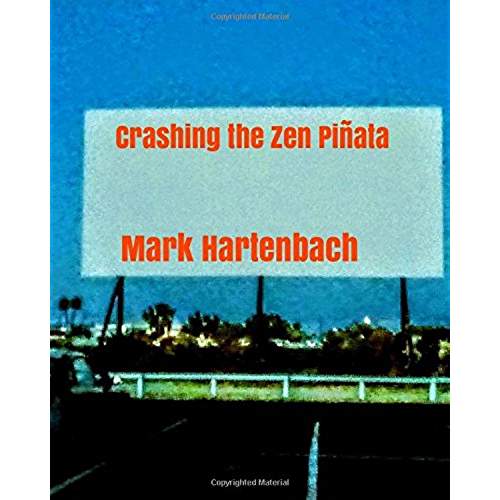
517+BGPYo4L._AC_US500_QL65_

Mark Hartenbach

“latest books are ‘crashing the zen pinata’ from alien buddha press
& ‘lost bastard chronicles’ from rose of sharon press.”

The Interview

Q. What were the circumstances under which you began to write poetry?

A. i didn’t seriously start writing until i was 30. i had written songs since i was 18. i played guitar so i cld write my own songs.
Q. Who introduced you to poetry?

A. i introduced myself for the most part. i bought a few books by poets i had read abt. william blake, rimbaud, e.e. cummings.
i was also heavy into the beats via kerouac.
Q. How aware were you of the dominating presence of older poets?

A. i am an older poet. smile.
Q. What is your daily writing routine?

A. i’ve always written best in the morning. sometimes early
afternoon. i don’t have a ‘routine’.
Q. What motivates you to write?

A.  i write most when i’m feeling level. neither extremely
up or down.

Q. What is your work ethic?

A. strong. i believe if you want to excel it takes hard work along
with being kissed by the muse.

Q. How do the writers you read when you were young influence you today?

A. it’s difficult to put my finger on any specific writers or any
style. i’ve tried to develop my own riffing, especially in past
10-15 years.
Q Which of today’s writers do you admire the most and why?

A. i admire friends danny baker, s.a griffin, lonnie sherman, john bennett, larry tomoyasu. i also like sesshu foster, juan felipe herrera, david berman, ray gonzalez. i’m sure i’m leaving out some folks.

Q. Why do you write?

A. it’s a healthy psychological pursuit. it’s fun.


Q. What would you say to someone who asked you “How do you become a writer?”

A. write like no one’s looking over your shoulder. read. write, write, write.


Q. Tell me about the writing projects you have on at the moment.

A. i’d like to do a book of short stories for my next project.


Wombwell Rainbow Interviews: Helen Ivory

Wombwell Rainbow Interviews

I am honoured and privileged that the following poets, local, national and international have agreed to be interviewed by me. I gave the writers two options: an emailed list of questions or a more fluid interview via messenger.
The usual ground is covered about motivation, daily routines and work ethic, but some surprises too. Some of these poets you may know, others may be new to you. I hope you enjoy the experience as much as I do.

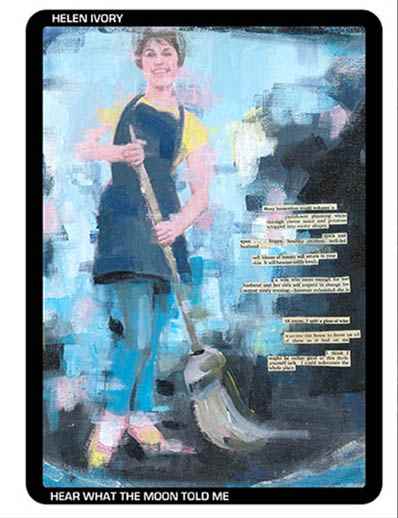
HEAR WHAT THE MOON TOLD ME COVER

Helen Ivory

Helen Ivory is a poet and visual artist.  She won an Eric Gregory Award from the Society of Authors in 1999 and is a current judge for the Awards. Her fourth Bloodaxe Books collection is the semi-autobiographical Waiting for Bluebeard (May 2013). She edits the webzine Ink Sweat and Tears and is a tutor for the UEA/National Centre for Writing online creative writing programme. Fool’s World, a collaborative Tarot with artist Tom de Freston (Gatehouse Press) won the 2016 Saboteur Best Collaborative Work award.  A book of collage/ mixed media poems Hear What the Moon Told Me was published KFS last year. She was awarded Arts Council funding to work on The Anatomical Venus which will be published by Bloodaxe in April 2019. A  chapbook, Maps of the Abandoned City is forthcoming from SurVision Press.

The Interview

1. What were the circumstances under which you began to write poetry?

I was doing a Cultural Studies Degree at Norwich Art School when I properly began to read poetry and then write it.  Prior to that I’d been in a Goth band and written songs  –  you know teenage angst stuff but with crows, earth witches and deathly love.  I think I’d always known that I wanted to do something with words but didn’t really know there was such a thing as being an alive person and being a poet.  I cliché I know, but there we have it.

2. Who introduced you to poetry?

George Szirtes at Norwich Art School.  There was a creative writing part of the Degree, and the first or second session he bought in some poems by Vasko Popa and Hart Crane.  Imagery and metaphor packed into neat boxes.  I thought – yes, I want to do this!  I’d never come across writing so sparse and so strange, but then I hadn’t read much poetry before.  I got an ‘A’ for O level English, (which dates me!) but we didn’t really do poetry at my Luton high school, so this was a huge eye-opener.

3. How aware were you of the dominating presence of older poets?
Not at all because I came to it totally fresh.  I come from a visual art place, so my creative mothers and fathers are painters and animators – Leonora Carrington, Howard Hodgkin, Jan Svankmajer , Oliver Postgate. . .

4. What is your daily writing routine?

It is neither daily nor a routine!  When I am not teaching over summer I have a massive Helen Helen Helen blitz of writing time.  I sent off the manuscript for my new The Anatomical Venus collection to Neil Astley at Bloodaxe just before the summer and have been working on a sequence of poems called Maps of the Abandoned City these past months.  The collection was quite research and desk-based, but the sequence is wilder and freer and to get myself into this spirit, I’ve been working on my laptop at the beach or nested on the sofa with no internet.  So it has been going – breakfast, coffee, writing writing writing  – for as long as the first draft takes.  It’s been pretty blissful, but I am sure that if my year had no structure I wouldn’t be seizing this time so fiercely!

5. What motivates you to write?
The past few books have been project-based, so I get into the zone of something and then populate it with poems.  I think it’s the work that motivates me to make it, really.  One poem begets another and so on.

6. What is your work ethic?
I’d never really thought about this before now, but it appears to be – to find an idea/ theme and then cover it from every angle to the best of my ability . . . and try to reach beyond my ability! I don’t really think of writing as ‘work’, it’s more ‘play’ to me.  All creativity is play.  I do have goals though – which is the book.  Making the book or finishing the project is the goal. The goal is achieved when I run out of words.

7. How do the writers you read when you were young influence you today?

I didn’t come from a bookish background, so I have no answer to this question.  My culture was Bagpuss, really.  The Mice on the Mouse Organ as fabulists, the whole cast as bricoleurs . . . making stories from broken things – shining them up and sending them on their way.
8. Who of today’s writers do you admire the most and why?

Charles Simic because he says a thing, says another thing, and lets the reader put them together in their head.  Pascale Petit because of her wild and visceral imagery.  George Szirtes for his magical and concrete fable-making, and sheer energy as a writer and generosity as a tutor.

9. Why do you write?
As an act of translation, as a way of restorying experience, because I can’t help it, because if I don’t I start climbing the walls and I forget what my name is.

10. What would you say to someone who asked you “How do you become a writer?”

I really have no idea how you become a writer – I would glibly suggest that you write and see how it goes! I never set out to become one, I just discovered that it’s something I can do.  Well actually – George Szirtes recognised this – I was just responding to homework exercises he suggested.  He told me I was a poet, which was useful because prior to that I was just a bowl of non-specific creative soup! Once you start thinking of yourself as a writer or a poet, you then find that you have a receptacle or channel for your creativity.  So, it’s partly a state of mind, and partly then, doing lots of reading to see what’s possible with language.

11. Tell me about the writing projects you have on at the moment.

The Maps of the Abandoned City sequence I mentioned earlier, is a cluster of poems around the idea of a city which humans have left.  There are creatures still there, and the remnants of human ‘civilization’ which consists of both architecture and trash.  This is the central idea, but I am also thinking of the city as a body, and the cartographer as a mythical being who was summoned to create order in a ramshackle creation.  It’s an imagined world, but probably this world told through metaphor and fable. I am always slant in my thinking!

This will be a chapbook eventually, to be published by SurVision Press in Ireland. At the moment there are twenty poems, and I am aiming for about another eight before the summer break is over.  With the nights drawing close, I guess I should probably get a shift on!


Jamie has some good things to say about my ongoing interview series here: SUNDAY ANNOUNCEMENTS: Calls for Submissions, Competitions, and Other Information and News. Thankyou Jamie.

via SUNDAY ANNOUNCEMENTS: Calls for Submissions, Competitions, and Other Information and News

Wombwell Rainbow Interviews: Lorette C. Luzajic

Wombwell Rainbow Interviews

I am honoured and privileged that the following poets, local, national and international have agreed to be interviewed by me. I gave the writers two options: an emailed list of questions or a more fluid interview via messenger.
The usual ground is covered about motivation, daily routines and work ethic, but some surprises too. Some of these poets you may know, others may be new to you. I hope you enjoy the experience as much as I do.

content

Lorette C. Luzajic
http://www.mixedupmedia.ca

The Interview

What were the circumstances under which you began to write poetry?

It’s not an exaggeration to say that I simply always did. I can remember the exact moment when the dots connected for me learning how to read- it wasn’t a process, it was an epiphany where I saw how the letters put together were symbols and if you followed them, you could read the words. My older sister was reading a story and I was suddenly reading it myself. This was long before kindergarten. I pretty much skipped all the easy reader and word association books and went directly to narrative picture books and simple novels immediately. The writing of poetry followed before I really had any exposure to it. I would scrawl out imaginative vignettes and fun loops of rhymes.

While it’s definitely true that I had an unusually early gift for reading, and was naturally creative from the get-go, the same did not hold true for mathematics or other areas of learning!

My love of writing developed rapidly however. I created a zine in second grade called The Sunshine Peanut, featuring class poems and stories and artwork. I loved spending my spare time alone and processing my thoughts in a notebook. I was overwhelmed by the social aspect of school, preferring time in solitude, so I would often tell Mom I felt sick, so I could stay home, typing out little stories on a Fisher Price typewriter and taking notes for poems while reading and looking at magazines like National Geographic.
Who introduced you to poetry?

No one. My mother was a very creative person, visually, who loved music and colour, and my father was someone profoundly moved by debate, theology, and religious poetry, so I was simply one possible combination of their genes and interests. I spent a lot of time at the library because it was my haven, and discovered the poetry section myself. I loved the way the words were spaced out on the page- nothing was more beautiful than opening a page to all that negative space and then a few words seeping in and stabbing you in the heart with their beauty.

My father indulged my youthful desires to be a writer and would sometimes take me to library writing groups, church or community writing circles or readings, and even a weekend religious writing conference in the big city. I learned from these meetings how to write a cover letter and use a self-addressed, stamped envelope and began sending out poems to journals and newsletters. I amassed heaps of rejection slips, of course, but I was also exposed to the world of writing. My first favourite poets were e.e.cummings and Raymond Souster.
How aware were you of the dominating presence of older poets?

My nature was and is so curious, I’m curious about everything. So I’ve always been hungry to experience everything and learn from those whose talents I admire or who have experience in something that interests me. I’m indebted to all the writers I read and love, because of all I can learn from them.


What is your daily writing routine?

I juggle my visual art career, my odd jobs and part time anything to get by work, my creative writing passion, and editing the journal The Ekphrastic Review (www.ekphrastic.net).

A typical day includes several hours spent on the magazine, looking at submissions, sourcing images, posting poetry. It includes working on proposals and applications for participation in potential art events. I try to send out a few submissions of writing or art or both every week, so those must find some time, too. I spend a few hours in the studio painting and a few hours on errands like picking up or delivering my paintings to and from shows, or in meetings with people I work with in some way. My writing and my visual art are not really separate in my mind: my art is built on words and images, inspired greatly from poetry and literature, and my writing is often ekphrastic or otherwise about art, such as my column Wine and Art for Canadian food blog, Good Food Revolution. They bleed into each other.

I studied journalism in university and discovered how much I hate the stress of trying to get paid for writing- I decided to do what I had to for work and write what I wanted, rather than thinking up paying stories like “Fix Your Own Toilet for Women” or “Can Your Dog Get Lung Cancer?” It was a big relief to let myself be led to writing by inspiration, and although I do have assignments and I do take paying work writing boring SEO blogs and other stuff, I take what comes to me rather than worrying about selling my stuff.  I love that freedom to be creative for its own sake. I tend to relax when writing, with some candles lit and a glass of red wine, leafing through art books, reflecting on my travels or an intense emotional situation, and I use an old fashioned pen and paper as much as I use the computer and keyboard.

What motivates you to write?

Art and poetry, primarily, and also deep emotional affect or spiritual experiences, or seeing new things such as when travelling.

Contemplating art is the most immediate ticket into other minds, other eras, other worlds, other cultures that we know of. Writing about or from art is the most amazing process of discovery. It can take me to new knowledge and to intuitive places of feelings and ideas, too.
What is your work ethic?

I never stop working. Every single moment of my life is accumulative fodder for my writing and art, and even doing dishes is incubation or percolation time. Even when I’m asleep, my imagination is going wild and sifting through possibilities and scenarios. My down time is studying art or reading poetry. Because poetry is everywhere, the stuff of life, you can find it in anything you do from sitting in church to making love.

I do work hard, but I appreciate that making pictures and sweating over how words fit together on a page isn’t the same thing as slaving under the hot sun building a roof or pulling out tree trunks, the kind of work my brother and other close family members do. I felt guilty and indulgent for my lifelong obsession with words and pictures, something other people can relegate to a night course or weekend hobby, like golf. I had to accept somewhere along the line that right or wrong, this was my fate, and I’ve made many foolish sacrifices to live this intensity and to live in an imaginary place. I live without security, I have no “marketable” skills, I don’t know how to grow vegetables, I forgot to have children, and I took great risks with nihilism and hedonism in the days that I struggled with active bipolar disorder and romanticized that being an artist or writer meant being tortured and insufferably self absorbed. I would say I’m a lazy person, but my obsession with creating is an exception and I’m willing to work all the time, giving up everything, for almost nothing. It’s madness, and the most gorgeous life I could have dreamed of.
How do the writers you read when you were young influence you today?

In a big way. I continue to read and reread them.

Who of today’s writers do you admire the most
and why?

I’m leaving out hundreds by mentioning a few, but I am eternally infatuated with some fellow Canadians like Leonard Cohen, Lynn Crosbie, Catherine Owen, and Gwendolyn MacEwen. They all have a dark beauty that wrings everything out of our soul. My peers Noah Wareness and Darrell Epp are both geniuses for detail, spanning the quotidian and the eternal with crazy ease.

I am also extremely fortunate to work with some of the greatest writers through The Ekphrastic Review. I get constant exposure to the poetry of brilliant writers. I can’t believe the audacity and fearlessness of Alexis Rhone Fancher, who writes about really frank candid stuff that no one else will touch. We will all write about sex or relationships or family but we won’t get that naked. She is unbelievable, another one who just stabs you with words. Two more women whose work I adore are Devon Balwit and Tricia Cimera Whitworth, who have come to feel like friends although I’ve never met them in person. They can both write about any subject at all at the drop of a hat, and bring great beauty and creativity and spirit to their words. I could literally tell them “write a poem about an extension cord and a compost bin” and they would floor you.

Probably my favourite poet in the world is Sharon Olds. She completely rejected the “trim everything, get rid of excess words” ethic pumped into writers. It’s probably a good ethic to live by, since we would all otherwise pontificate until kingdom come. But Olds ignores such restraint, and tells her stories in wordy, dense, tumbling, overstuffed bounty of language, and it’s amazing. There’s no one like her.

Why do you write?

I’ve been trying to figure that out for years. There are definitely moments where what I have to say is unique and I feel I’m contributing to a conversation or sharing my own ways of looking at the world. Other times, I am simply contributing to a glut of language on subjects that have been done to death, and it’s rewarding for me to process my ideas but isn’t of much value to a reader. I believe that some of us have this need, a need almost deeper than thirst or sex or hunger, to tell stories because language and stories make us human. Some have to hunt, some have to nurse babies, some have to toil, and some have to write. Language is one thing that sets us apart from other life forms, it is something we have used to remember and grow- a cat might have ways of communicating and sounds that convey meaning to other cats, but he cannot pass down stories of his grandmother or communicate to cats not present what kind of dangers they might face or amuse them with jokes. There’s a philosophical element to the question, and a spiritual one- I was always taken with the passage of the Bible that says, “In the beginning was the Word, and the Word was with God, and the Word  was God.” Creativity and language are the part of us that is divine and eternal. We all use it and have it, because we speak and make things. Some of us are obsessed with it, and spend our lives writing stuff down.

What would you say to someone who asked you “How do you become a writer?”

I try to talk them out of it, and encourage them to explore writing for fun or personal growth but not to think in terms of “being a writer.” Same goes for art. Those who can’t help themselves will do it anyways, and the rest will have a chance at a life includes both their passion and security.

That said, a writer is someone who writes. Period. It boggles my mind how many people are jealous of artists and writers, or who moan constantly about wanting  inspiration or wanting to be a writer or artist. Then when I say “write something down” they have a thousand excuses. I don’t really get this impasse. You have all kinds of brave souls who write and write, even if they have limited or jejune talent, hopefully pouring out their hearts and working to improve. I hand it to these ones, because at least they’re doing it. They are more of a writer than the potentially gifted soul who is complaining but won’t get to it.

When someone is bemoaning how they always wanted to be a writer or artist, I often invite them to my studio to make art, or offer them free attendance to my fun art workshops, or to participate in the ekphrastic writing challenges we have at the journal I edit, The Ekphrastic Review. They don’t come. The truth is harsh and bitter: if you want to be a writer, you have to write. You are way ahead of the game, you are way ahead of even the greatest talents out there, if they aren’t writing a word.
Tell me about the writing projects you have on at the moment.

I’m slowly finishing up my fifth collection of poetry, which is an ekphrastic collection, as well as working on a book of poetic essays about Mexico, a place of so much inspiration to me. It’s very hard to capture it in words, but I’m trying.

Earth-bound by Rosemary Badcoe

Excellent

Christine Klocek-Lim's avatarAutumn Sky Poetry DAILY

Earth-bound

Tonight we’re waxing gibbous, giddy
with our arms out-flung in late-night light from stores
that stock their windows high. We sow distraction,
lope in doorways, carve our immortality
in bus shelters and benches. Here’s where hares
shovelled starlight on the recreation ground,
the mound like broken glass flinging reflections of our feet
up to a sky boxed in by banks of tenements.

Like leverets we’re born in shallow scrapes, eyes wide –
no chance to set a burrow where there’s space to grow.
We sling the stones that burst the lighted panes.
The hares pursue the moon into the sky
and squat there, pestles pounding rice cakes,
faces turned away.

by Rosemary Badcoe

Editor’s Note: The imagery in this loose sonnet is rife with surrealism. The slant rhymes lull the reader into a world that seems ordinary, but is ever so slightly unrecognizable.

View original post

Wombwell Rainbow Interviews: Tim Fellows

Wombwell Rainbow Interviews

am honoured and privileged that the following poets, local, national and international have agreed to be interviewed by me. I gave the writers two options: an emailed list of questions or a more fluid interview via messenger.
The usual ground is covered about motivation, daily routines and work ethic, but some surprises too. Some of these poets you may know, others may be new to you. I hope you enjoy the experience as much as I do.

38955113_10156563094936798_3563328327320076288_o

Tim Fellows

The Interview

  1. What were the circumstances under which you began to write poetry?

I did some family history research and was asked by my mum to look into the story of her uncle Jim Hooper who was killed in the pit at the age of 20. A chance remark then led me to the Memorial Garden project at the National Coal Mining Museum where the family contributed to the art installation there. I attended a commemoration service where some mining poetry was read. I went straight home and wrote Jim’s story as a poem. Everything followed from that.

2.  Digging into your past, who introduced you to poetry?

Originally it was through school – Wilfred Owen and William Blake are the two that stuck in my head. I did also have to learn poems at Sunday School. My dad wrote poems as well.
2.2 Why do you think Owen and Blake stuck in your head?

I think it was the imagery – the brutal descriptions of war by Owen had a profound effect on me politically too. He wanted to make sure people understood what it meant to send people into battle and it certainly worked on me. Blake – I’m not sure why him and not other Romantics. The Tyger is the one most people know, or Jerusalem, but The Chimney Sweeper is a more interesting poem that I liked.

2.3  Interesting? In what way?

It looks at first like it’s saying that you get your reward in heaven so just get on with your lot in life. As a child raised as a Christian the realization that in fact he was saying the opposite possibly led to me become sceptical about religion.

Or at least that you didn’t have to accept that kind of nonsense.

2.4 It made you question your own beliefs, and showed you a new way of questioning those beliefs?

Yes – in both cases. Lucky I didn’t find Shelley or I might have become a revolutionary!

Since I restarted, 40 years later, I’ve found that different poets appeal to me, although I still look back fondly on those two, very different, poets.

3. Both Owen and Blake followed strict rhyme and form. How important is this to you?

Less so now than it was then. It’s the main way that going to workshops and poetry groups has changed my own work. I still like form but I don’t define what I like, or don’t, by the form that’s chosen.

3. What kind of poetry did your dad write?

A variety really. I’ve got about 10 pieces of his. Mainly events from his life but one or two are more lyric pieces. They are influenced directly or indirectly by his Christian beliefs.

4. What is your daily writing routine?

Don’t have one – I have a reading routine in that I try to read something every day. Maybe from a favourite, something new or something random online. I let the writing come to me, unless I’ve got an exercise to do for the group. Then i have to force myself to do something and I don’t like that. The poem has to come to me – but when it does i have to start it right then. I hate not being able to work on a new idea. This morning I found something I’m excited about using but have to wait until later to start work. I’ve just jotted a few things down for now but I’ll be thinking about it all day. Like an itch.

5. An urgent impulse? What motivates you to write?

Just an impulse to convert an idea or a story into written form and get it out there. It’s mainly selfish really, if people like them it’s a bonus.

I’d hate to try and make a living from it.

Thinking again about the “routine” question, in addition to writing new stuff I will also, when I have time and feel relaxed, spend an hour or so redrafting or re-reading the poems that are half finished, or exist as ideas and a few lines. If nothing is jumping out at me to finish, I stop.

6. Who of today’s writers do you admire the most and why?

The scene today is interesting because of the explosion of performance poetry. and the ability of so many people to publish themselves on the internet. This can’t be a bad thing in terms of making poetry “cool” but in terms of longevity much of it will disappear. I’ve always liked John Cooper Clarke, the grand-daddy of the modern style. I read a lot of current work but I can’t pick anyone out who would make my top ten all-time list.

7. Why do I write?

I think it’s because it offers an intellectual and emotional challenge that’s very different to my day job as a manager in a software company.

8. “How do you become a writer?”

I would say in addition to the obvious “start writing”, I would find a group where you can share your work in a comfortable and supportive environment. To do this go along and see how they deal with others’ work. I would also read as much as possible. Pick great writers with established reputations – find out what works. Don’t get seduced into slavish copying but take some notes as to the poems and the sections that appeal to you and examine what it is about the piece that makes it great.

At a workshop with Ian Duhig, he pointed out that everybody starts with a great splurge of work that gushes out – good, bad and indifferent. WIthin that, it’s important to find out which is which and to start finding your voice. After that, it’s refining the work to make it cleaner. More experienced writers will help with some obvious tips.

9.  Current projects

I am about to publish my first pamphlet “Heritage”. It’s been an interesting exercise to work with an editor and to find the right poems out of the 100 or so that I’ve got that work together in 29 pages. It was difficult to leave some out but I’m pleased with the end result. I hadn’t intended to seek publication but when Ian Parks approached me to do it I felt it was an opportunity not to miss.


Wombwell Rainbow Interviews: Reuben Woolley

Wombwell Rainbow Interviews

I am honoured and privileged that the following poets, local, national and international have agreed to be interviewed by me. I gave the writers two options: an emailed list of questions or a more fluid interview via messenger.
The usual ground is covered about motivation, daily routines and work ethic, but some surprises too. Some of these poets you may know, others may be new to you. I hope you enjoy the experience as much as I do.

Woolley

Reuben Woolley

Reuben Woolley has been published in Tears in the Fence, The Lighthouse Literary Journal, The Interpreter’s House – The Yellow Chair Review, The Goose, and Ink Sweat and Tears among others. Published Books: the king is dead, 2014, Oneiros Books; dying notes, 2015, Erbacce Press; a short collection on the refugee crisis, skins, 2016, Hesterglock Press; broken stories, 2017, 20/20 Vision Media Publishing (email: rhysjones@twentytwentyvisionmedia.com). His new book, some time we are heroes, is published this month by The Corrupt Press: http://www.corruptpress.com.  Runner-up: Overton Poetry Pamphlet competition and the Erbacce Prize, both in 2015. Editor of the online poetry magazines, I am not a silent poet: https://iamnotasilentpoet.wordpress.com/  and The Curly Mind: https://thecurlymindblog.wordpress.com/.
He may be found on Facebook at: https://www.facebook.com/reuben.woolley1, and on Twitter at @ReubenWoolley. He blogs at: https://reubenwoolley.wordpress.com/

The Interview

  1. What were the circumstances under which you began to write poetry?

I first started writing poetry in 1968 when I was in the Fifth year or Lower Sixth at school. I was very much influenced by an anthology of 20th Century poetry we had read for ‘O’-levels. I found poems about recent events in a language I could understand and relate to, such as Louis MacNiece’s ‘Prayer before Birth, Spender’s ‘Port Bou and Yeats’ ‘Easter 1916’. At the same time I found the Liverpool Poets with Adrian Henri singing the praises of Sixth Form schoolgirls! In the Sixth Form we had a brilliant teacher who took us through Baudelaire’s ‘Les Fleurs du Mal’ and he suggested reading T.S. Eliot. From here I went on to Jacques Prévert and Yevgeny Yevtushenko, Rimbaud and others in the various Penguin series. I took up residence in the school and Coventry libraries and discovered Dylan Thomas. I deluded myself into thinking that I could do this too.

Someone at school showed the art teacher my work and he became a confidante. He took me to the Herbert Museum and Art Gallery in Coventry and introduced me to the Director, a Northern Irish poet called John Hewitt. Although he was soon to retire he took great interest in my work and became my mentor.

I continued writing when I went to Bretton Hall College of Education (University of Leeds) and also when I came to Spain in 1976. Indeed, by 1985, I was developing a similar voice to now and some of my last poems went on to form part of my first collection (‘the king is dead’, published by Oneiros Books in 2014). I stopped writing in 1985 and did nothing till 2012 when I was encouraged by a student of mine as well as by someone I met on Facebook. They demanded I should write again.

2.  What motivates your writing?

The simple answer here is ‘I wish I knew so I could do it more often’!

It could be a word, an image, even a line or a couplet that occurs to me and seems to lead somewhere. Where that somewhere is might become clearer as the poem develops or it might not appear till the poem tells me it’s finished and ready for editing, cutting or carving up. Even my better protest poems don’t start off as a protest very often; towards the end of the process I might realise ‘ah this is about the Syrian refugees’, for example. It’s when I sit down with the idea of writing about something in particular that the result is usually rubbish.

In general terms, I may be motivated by other poets, by a painting, music or I might pick up something from Scandinavian, Saxon, Celtic, Greek, Judeo-Christian, Arabic mythology and that might just appear as a metaphor or brief reference in the whatever-it-is-I-am-writing-thing. It’s all in my head anyhow and I’m just another crazy!

You should include Catherine Ayres in that category; I would love to have had her as a teacher! I like to think I was a good teacher, but  my subject was English Language, the nuts and bolts of the language. I failed my English Literature ‘A’-level, but later went on to do an MSc in Teaching English as a Foreign Language,and also what would be the Spanish equivalent to an MA in Applied Linguistics.. I sometimes used a song or a poem in class, and even used Geoffrey Chaucer when I occasionally talked in class about the history of English, but I don’t think I really got many of my students interested in literature.

I did get some of them to read Harry Potter and even Terry Pratchett occasionally, but I think the interest was already there.

3.  What is your work ethic?

I’m not sure I have a work ethic as such. I think I’m reasonable ethical but work?
I suppose poetry can be considered to be work but it¡’s certainly not the get-rich-quick type of work. Those of us who do it normally seem to get on well together and help each other. I’ll sign on the dotted line for that. I try to help others, especially with my online magazines, ‘I am not a silent poet’ and ‘The Curly Mind’. I’m happy if I can help someone on the way to wherever it is they want to go in the poetry world.

How do the writers you read when you were young influence you today?

Eliot is still very important to me. His use of images and the feeling that it is not necessary to understand a poem 100%. James Joyce and Beckett for similar reasons. I still like Adrian Henri but not so much the other Liverpool poets. I don’t agree with this recent requirement for poetry to be ‘accessible’. As Geoffrey Hill said, public toilets should be accessible, not poetry. However, sometimes I get the feeling that some poetry is deliberately complicated just to impress.

4.  Who of today’s writers do you admire the most and why?

Fran Lock for her wild control of the flow. I think she stands out and is outstanding.
Antony Owen for writing political poems very poetically. Protest does not need to be expressed in easy terms. It must still be a good poem.
Jerome Rothenberg for the tremendous feeling he expresses and for all his work in international poetics.
Helen Ivory for being Helen Ivory and doing it so well.

5. Why do you write?

a.) Because I can’t play guitar like Eric Clapton or Jimi Hendrix or saxophone like John Coltrane
b.) Because it’s what I can do and I seem to be able to do it reasonably well.
c.) Having started writing again, there’s no way I can stop now.

6. What would you say to someone who asked you “How do you become a writer?”

Become a professional snooker player instead! You might make some money.
But seriously, if they need to ask a question like that, they should be looking at other futures. I’d accept a question like that from a schoolchild but not from an adult. Now if a young writer asked me about which journals or publishers might take their work, I would be delighted to give my opinions. That is useful knowledge that we have all asked for and been grateful to receive.

Two things should be pointed out to young writers: firstly, they are going to get vast numbers of rejections so learn from them, and, secondly, they should learn to edit and cut and rewrite, then start all over again.

7. Tell me about the writing projects you have on at the moment.

This September I have a new collection coming out with The Corrupt Press, ‘some time we are heroes’. It’s based on the very English, very middle-class and very white protagonists of the old Ladybird Easy Readers. However, they are no longer so English, so middle-class or so white and we follow them through episodes of the (mis)adventures in this dystopian reality of ours.

I have another manuscript which I’m pushing out in search of a publisher, written through the eyes of a young woman who lives on a parallel world in this multiverse of string theory. For some reason she can see and partially understand and even participate in events on this world.

I said earlier that my work is very influenced by music, the Bob Dylan of ‘Bringing it all Back Home’, ‘Highway 61 Revisited’ and ‘Blonde on Blonde’, especially, Roy Harper and Captain Beefheart. These have all influenced me rhymically and verbally. Miles Davis, John Coltrane, who led me into Free Jazz. I’m trying to get a Free Poetry of a similar nature. This does not mean anarchy; no good verse is free. The good poet, just like the good free jazz saxophonist, controls every element at his or her disposal: just this, just here, just now!