Wombwell Rainbow Interviews: Kevin W. Peery

Wombwell Rainbow Interviews

I am honoured and privileged that the following poets, local, national and international have agreed to be interviewed by me. I gave the writers two options: an emailed list of questions or a more fluid interview via messenger.
The usual ground is covered about motivation, daily routines and work ethic, but some surprises too. Some of these poets you may know, others may be new to you. I hope you enjoy the experience as much as I do.

81oCyCUADCL._SL1500_

Kevin W. Perry

Americana songwriter and Kansas-City-based storyteller K.W. Peery is the author of seven poetry collections: Tales of a Receding Hairline; Purgatory; Wicked Rhythm; Ozark Howler; Gallatin Gallows; Howler Holler; Bootlegger’s Bluff.

Tales of a Receding Hairline was a semifinalist in the Goodreads Choice Awards – Best in Poetry 2016.

Peery is a regular contributor in Veterans Voices Magazine. His work is included in the Vincent Van Gogh Anthology Resurrection of a Sunflower and the Walsall Poetry Society Anthology, Diverse Verse II & III.

In 2018, Peery is scheduled to have poems published in The Main Street Rag, Chiron Review, Big Hammer, San Pedro River Review, The Gasconade Review, Blink Ink, Rusty Truck, Mad Swirl, Outlaw Poetry, Mojave River Review, The Asylum Floor, Horror Sleaze Trash, Ramingo’s Porch, From Whispers to Roars, The Rye Whiskey Review, Under The Bleachers and Apache Poetry.

Credited as a lyricist and producer, Peery’s work appears on more than a dozen studio albums over the past decade.


The Interview
1.       What inspired you to write poetry?

The Blues.

2.       Who introduced you to poetry?

My Uncle. He introduced me to cats like Langston Hughes, Dylan Thomas, Richard West and John Trudell.

3.       How aware were you of the dominating presence of older poets?

I was always more attuned to American songwriters. Chuck Berry, Jimmie Rodgers, Jimmy Reed, Johnny Cash, Merle Haggard, Loretta Lynn, Guy Clark, Willie Nelson, Billy Joe Shaver, Mickey Newbury, Tom Waits, Tom T. Hall, Tom Petty and Townes Van Zandt.

4.       What is your daily writing routine?

I try to write something every day.

5.       What motivates you to write?

Since I turned 40 there’s an indescribable urgency inside. A thirst for sharing words like never before.

6.       What is your work ethic?

I just do the work and let others determine if it’s worthy of their readership.

7.       How do the writers you read when you were young influence you today?

They continue to inspire me. The best writers bleed eternal. I remain grateful.

8.       Who of today’s writers do you admire the most and why?

Too many to list here. Lately, I’ve been revisiting the work of Dave Alvin and Michael Madsen. I also really dig cats like Donald Ray Pollock, Willy Vlautin, Bob Mehr and Jonathan Ames.

9.       Why do you write?

I have no other choice.

10.   What would you say to someone who asked you “How do you become a writer?”

Write what you know and never allow your foot to slip from the accelerator.

11.   Tell me about the writing projects you have on at the moment.
My sixth collection of Eccentric American Poetry, “Howler Holler” is being released on 09/14/2018 – via Gen Z Publishing (New Jersey)
The seventh collection, “Bootlegger’s Bluff” is scheduled for release later this Fall, via Spartan Press (Kansas City, Missouri)
There will be three releases in 2019 – “Cockpit Chronicles” Hellraisers Hieroglyphics” and “Hillbilly Hand Grenades”.
I’m also working on a double vinyl album of spoken word poetry…”Lawbreaker Blues” that will most likely be released with an accompanying poetry collection in the Spring of 2020.


Thank you,

K.W. Peery
https://www.facebook.com/KWPeery/


Wombwell Rainbow Interviews: Helen Mort

Wombwell Rainbow Interviews

I am honoured and privileged that the following poets, local, national and international have agreed to be interviewed by me. I gave the writers two options: an emailed list of questions or a more fluid interview via messenger.
The usual ground is covered about motivation, daily routines and work ethic, but some surprises too. Some of these poets you may know, others may be new to you. I hope you enjoy the experience as much as I do.

51nXxuu9LCL._AC_US500_QL65_

Helen Mort

61L7fAIEuzL._AC_US500_QL65_

The Interview

What were the circumstances under which you began to write poetry?

I’ve been writing since before I could hold a pen! I grew up listening to the radio from a very, very young age and apparently I would dictate poems to my long-suffering mum for her to write down. I was obsessed with trains, she reckons. The first poem I published was – I think – when I was 9 years old and it was about being made to tidy my messy bedroom. In it, I described my mum as an ‘angry rhino’ and I’m not sure she’s ever forgiven me!

Who introduced you to poetry?

My parents. My mum read everything she could find to me when I was little and then when I was a bit older my dad started introducing me to the poets he loved: Seamus Heaney, Wilfred Owen, a bit of Ted Hughes. I’m very grateful to them for the way they encouraged me as a reader and, later on, as a writer too.

How aware were you of the dominating presence of older poets?

I’m not sure I was aware of their influence as ‘dominating’. When I was a teenager, I was lucky enough to win the Foyle Young Poets of the Year Award a few times and the prize was always a week’s Arvon course with established poets. All the writers I encountered there (Jean Sprackland, Matthew Sweeney, Amanda Dalton, Steven Knight, Moniza Alvi and many, many others) were extremely supportive and encouraging mentors. They seemed to regard us as their peers rather than looking ‘down’ to us as younger writers. It was very empowering. I think those mentoring relationships exist informally between poets all the time and they’re so valuable.

What is your daily writing routine?

I don’t write daily and I don’t have a routine! I have a full time job teaching at a university as well so the time I have to write varies throughout the year. Some months, I might snatch opportunities to scribble down ideas and lines on my commute from Sheffield to Manchester, other months I might be able to spend a week working intensively on a novel. My poems all arrive in very different ways anyway too: I might carry an image or idea for a poem around in my head for months or years, waiting for something else to connect with it and generate the ‘surprise’ I think the poem needs, or something might strike me unbidden and I’ll feel compelled to write it down. I’ve had ideas for poems and stories while running, while driving, while having a bath…..you name it.

What motivates you to write?

I’ve always felt that writing is the way I express myself best. So much of the time, I’m not articulate enough to say what I really mean but in writing (particularly poetry) I think I find a truer version of myself. Whatever ‘truer’ really means!

What is your work ethic?

If something needs to be written (either because the idea feels emotionally urgent or because I have a commission deadline) I won’t rest until it is finished. I’m capable of writing quite intensively when I need to, even when I don’t have much time. I’m a bit believer in the ‘if you want something doing, ask a busy person’ maxim. Though that isn’t always good for my life overall – I can forget that I also need a rest!

How do the writers you read when you were young influence you today?

I’m still a huge admirer of Wilfred Owen and think of ‘Futility’ as one of the best poems ever written – its poignancy and emotional honesty. I’ve just finished writing a commissioned poem about Owen and it was a tremendous honour to do that.

Who of today’s writers do you admire the most and why?

I admire a huge number of the writers I meet and I love discovering new work. I’m a big fan of Liz Berry and can’t get enough of her collection ‘Black Country’ or her astonishing recent pamphlet ‘The Republic of Motherhood’. I am also really excited by the work Kim Moore is doing at the moment around everyday sexism. I was lucky enough to work with Malika Booker in Leeds a few years ago and find her energy, commitment and talent incredibly inspiring. And nowadays I work with Andrew McMillan whose new collection ‘Playtime’ is astonishingly good. But the list goes on.

Why do you write?

Because it helps me know what I really think and believe in a confusing, overcrowded, over-burdened, anxious world. And because I can’t read poems without wanting to write them!

What would you say to someone who asked you “How do you become a writer?”

Keep a thin skin for your writing life, develop a thicker skin for your public life as a writer. You have to be very open to the world as a writer, but you need to be able to switch that off when you’re dealing with the realm of publishing, feedback, critique and all the business of everyday life.

Tell me about the writing projects you have on at the moment.

I’ve recently finished the last edits on my novel ‘Black Car Burning’ which is due out with Chatto and Windus in April next year – it’s about trust, trauma, rock climbing and the aftermath of the Hillsborough disaster. I have been working on it since 2012 and I’m really excited about it coming out. A more long term project is a collection of poems called ‘Failsafe’ which I’ve been steadily writing for a while now. The manuscript-in-progress received a Northern Writers’ Award in 2018 so that was a really welcome boost.

Wombwell Rainbow Interviews: Dave Roskos

Wombwell Rainbow Interviews

I am honoured and privileged that the following poets, local, national and international have agreed to be interviewed by me. I gave the writers two options: an emailed list of questions or a more fluid interview via messenger.
The usual ground is covered about motivation, daily routines and work ethic, but some surprises too. Some of these poets you may know, others may be new to you. I hope you enjoy the experience as much as I do.

51BrtSkz7aL._AC_SY400_

Dave Roskos

51NaybBYHFL._AC_SY400_

The Interview

What were the circumstances under which you began to write poetry?
I was 15 years old in 9th grade home room (first period of the day, a study hall) and I wrote my first poem spontaneously. I was high on marijuana, as I was most mornings. This was in September of 1979.

Who introduced you to poetry?

I was already a Bob Dylan and a Doors fan, so Dylan and Jim Morrison were the first poets I was exposed to. I showed my first poem to my Art teacher, Hal Stacey. He told me it was a poem and gave me a copy of Richard Brautigan’s Trout Fishing in America. I started reading poetry at the library, T.S. Eliot, Walt Whitman, Emily Dickinson, etc. I read an article in HIGH TIMES magazine about City Lights Books and the Beats and I mail ordered books by Allen Ginsberg and Gregory Corso. Around the same time I discovered William Blake and Arthur Rimbaud and William Carlos Williams. Read On The Road, Naked Lunch…..

How aware were you of the dominating presence of older poets?
I was aware of older poets because I started going to poetry readings. Barbara Holland was one of the first older poets who I saw read that made an impression on me.
What is your daily writing routine?
I don’t have a daily writing routine at the moment. I have at different times of my life. I write in composition notebooks. I have kept journals since I was a teenager. Most of my poems have come out of the journals. I write spontaneously and later revise or rewrite (if necessary).
What motivates you to write?
Most of my poems have come out spontaneously. Sometimes it feels more like channeling than writing. Ideas motivate me to write. I also edit a magazine and publish books by other poets. I don’t really differentiate between editing and writing. They are all part of the same thing. It is my real work (as opposed to the work I have to do in order to pay rent and live indoors). I am motivated by a sense of urgency to GET THE WORD OUT.
What is your work ethic?
I usually have a book or magazine project in the works. If I am not actually working on one, I’m thinking about the next one. Lately my day job is second shift, 4pm to midnight. On mornings that I do not take care of my son Ayler before work, I work on writing and publishing projects. (Ayler is 21 years old and has Duchene’s Muscular Dystrophy, cannot walk & uses a wheelchair. He lives with his mother.) I am lucky that I have downtime at my job and can often read up to 4 hours a shift (I work in Human Services, at a Group Home). I read poetry every day. I believe that reading poetry is as important as writing it, especially if you are a poet.
How do the writers you read when you were young influence you today?
The poets I read when I was a teenager and in my 20s continue to inspire me. I still enjoy reading their poetry. WCW has been a major influence all along.
Who of today’s writers do you admire the most and why?
Most of the poets I admire most have died. Matt Borkowski and Michael Pingarron are two, who I have recently published books by. They were personal friends as well, fellow New Jersey poets. The late Bob Rixon is another NJ poet that I really admired. As far as living poets, there are so many, I wouldn’t want to leave anyone out. Look at the table of contents of Big Hammer over the years & you’ll see many recurring names. However, Joe Weil and Lamont Steptoe are two that stand out.
9. Why do you write?

Because I am driven to.
10. What would you say to someone who asked you “How do you become a writer?”
I would suggest that they write, find their own voice, and read a lot.
11. Tell me about the writing projects you have on at the moment.
I am working on issue 20 of Big Hammer magazine.


Wombwell Rainbow Interviews: Stella Wulf

Wombwell Rainbow Interviews

I am honoured and privileged that the following poets, local, national and international have agreed to be interviewed by me. I gave the writers two options: an emailed list of questions or a more fluid interview via messenger.
The usual ground is covered about motivation, daily routines and work ethic, but some surprises too. Some of these poets you may know, others may be new to you. I hope you enjoy the experience as much as I do.

AfterEdenFront

Stella Wulf

Stella’s poems are widely published both in print and online. Publications include (in random order): Atrium, Amarylis, Rat’s Ass Review, Ink, Sweat & Tears, The French Literary Review, The Sentinel Literary Quarterly, Obsessed With Pipework, Clear Poetry, Prole, three drops from a cauldron, The Black Light Engine Room, Lancaster Flash Journal, Riggwelter, The High Window, Sheila-na-gig, The Fat Damsel, Open Mouse, The Curlew, The Dawntreader, I Am Not A Silent Poet, Poetry Village, Elbow Room, Here Comes Everyone, Smeuse, The Stare’s Nest, Raum, and The New European. Anthologies include: The Very Best of 52, three drops from a cauldron, Clear Poetry, NILVX A Book Of Magic and #MeToo.

The Interview

What were the circumstances under which you began to write poetry?

In my youth writers were god-like creatures who existed on an altogether different plane than the one I occupied, ergo I never had any aspirations to write. In times of frustration or anger, I’d had momentary hankerings in that direction and even indulged in a spot of venting. It made good kindling. Girls growing up in the 50’s were not generally encouraged in education and I was no exception. I hated school and left at the earliest opportunity. My early married years were spent restoring an old mill cottage in North Wales, with very little money and two small children in tow. Survival was the name of the game. It was some twenty years later when my husband and I bought a derelict ‘petit chateau’ in France, that writing took hold of me. It happened in an epiphanic moment whilst painting the bedroom doors of this one hundred and fifty year old house, and musing on what might have gone on behind them. The first line of a poem suddenly popped into my head, then another, and another. I grabbed a pencil and paper and scribbled them down before they could escape. I had written my first poem, albeit a not very good one, but I’d unleashed something I’d always felt was inside me. I wrote like a demon in those first few months and though I’ve slowed down I’ve never stopped. It was the most cathartic and defining moment of my life.

Who introduced you to poetry and how aware were you of the dominating presence of older poets?

From early childhood I’ve loved reading. My father had an extensive library and as The Kama Sutra was beyond my reach I settled on what I could lay my hands on. The pocket book of nonsense verse was a favourite. It introduced me to Lewis Carroll, Ogden Nash, and Edward Lear. Poems like, The Dong With the Luminous Nose, and, The Hunting of the Snark, fostered a love of rhythm and verse, and a strong sense of pathos and empathy. Later, at secondary school, I was seduced by Dylan Thomas’ Poem in October. This for me was poetry in its truest form and a huge influence on my early attempts. Another favourite within my grasp was The Golden Treasury of Classics. Here I discovered TS Eliot, Keats, WB Yeats, Louis MacNiece and Philip Larkin, with Ted Hughes as the most contemporary of the bunch.
In 2014 I had the good fortune to be invited to join Jo Bell’s 52 group. Until that time I’d been struggling alone with my writing, learning from teach yourself books and although I’d managed third place in The Sentinel Literary Magazine competition, that was my only publication to date.

What is your daily writing routine?

Committing to write a poem a week for 52 weeks is no mean feat, yet discipline coupled with a competitive nature allowed me to achieve what I’d imagined was impossible. The unstinting support and friendship from within the group was the grounding for what I considered to be my apprenticeship. My poems were at last, being published, I was on a roll. Determined to learn and hone my craft I looked around for online courses and came across an ad for a Distance Learning MA in Creative Writing, with Lancaster University. It was already September, I didn’t have a degree, I had no chance, but the course was everything I wanted. They responded immediately to my insouciant email and I was enrolled before I could bottle out. From the outset I kept a journal which would help me with my final reflective essay. I still write in it most days. It helps me to gather my thoughts, to reflect and comment on current events, and sometimes just to vent. It’s not a great masterpiece, rather a ragbag of ideas that keep the grey matter working but I thoroughly recommend it. Better to write something, however banal it might seem at the time, than to write nothing at all.

What motivates you to write?

Nothing and everything. A fear it will leave me as suddenly as it found me. If you’re a writer you are motivated to write, however, there are poets I have need of to inspire me to write, to help me get ‘in the zone,’ and many are from within my circle of virtual friends; I hesitate to name them because I will surely miss someone out and there are so many who take my breath away with their talent.

What is your work ethic?

I’m a bit of a workaholic in everything I do, having spent eighteen years restoring the French ruin and twenty years prior to that restoring the Welsh ruin, doing A levels, going back to art school to study Fashion and Textiles, Illustration, and Interior Design, and a Masters degree in the middle of it all. I’m also a painter and have exhibited here in France. None of it feels like work because it’s what I’ve chosen to do and what I’m passionate about. I make it a rule never to procrastinate. My experience tells me not to dwell on or overthink a task, it only induces dread; I prefer to wade in and get on with it, whatever it is. For me the best part of the writing process is the revision. Once I have the bones and the sense of meaning, I have something to build on. Every word must earn its place and the joy lies in creating a beautiful place in which the words can live.

How do the writers you read when you were young influence you today?

I’m not sure they still do. I think of them as the foundations on which I’ve built. The world is ever changing, I’m not the same person I was even a year ago. We move onwards and upwards, I’m discovering new voices, new passions, new influences every day and I hope my writing reflects that evolution.

Who of today’s writers do you admire the most and why?

A difficult question to answer in a paragraph because there are so many writers I admire for their many strengths and differences and a hundred others that will come to mind after I have written this, but off the top of my head: Helen Mort, Liz Berry, Clare Shaw, Angela Readman, Jo Shapcott, Jo Bell, Jane Hirschfield, Simon Armitage, Graham Mort … too many to list; I admire them for their love, dedication, passion, and deep comprehension, for their lucidity and beauty, for the absolute commitment and joy that they bring to their craft and for gifting it to me, the reader.

Why do you write?

Writing gives me time to think about what I want to say. It uncovers things I didn’t know I knew. It astonishes me. I tend toward a third person narrative in my writing which allows me to explore a range of perspectives. In short, writing helps me to make sense of the world.

What would you say to someone who asked you “How do you become a writer?”

Show up for work every day, sit down and write.

Tell me about the writing projects you have on at the moment.

I am fortunate to be acquainted with some excellent poets. Many have had pamphlet or full collection submissions that make it to the shortlist only to be passed over at the eleventh hour, usually after six months or longer of waiting. In February 2018, in response to this wealth of talent going unrecognised, 52 Group friend Lesley Quayle, and I, got together to form 4Word Press as an independent, non profit making publisher of poetry pamphlets. In May 2018 we produced our first three pamphlets; Black Bicycle by Lesley Quayle, After Eden by Stella Wulf, and Androgyny by our invited poet, Kevin Reid, who we were lucky enough to scoop. On September 1st 2018 we launched our fourth pamphlet, Girl Golem by Rachael Clyne. We were delighted to able to represent Rachael and to bring her beautifully crafted narrative to a wider audience. We have many exciting new voices in the pipeline. The last pamphlet of 2018 will be launched on 1st December. We aim to publish four pamphlets a year by invitation. Follow our website for upcoming announcements: http://www.4word.org
On a personal note writing is a lifelong commitment, it is life enriching, it looks for the delight, reflects on the awful, but always gives back joy.

Wombwell Rainbow Interviews: Mary McCarthy

Wombwell Rainbow Interviews

I am honoured and privileged that the following poets, local, national and international have agreed to be interviewed by me. I gave the writers two options: an emailed list of questions or a more fluid interview via messenger.
The usual ground is covered about motivation, daily routines and work ethic, but some surprises too. Some of these poets you may know, others may be new to you. I hope you enjoy the experience as much as I do.

51JRPnH6PoL._SY177_

Crazy Odds

Mary McCarthy

Mary tells me “Since the end of my nursing career I have written thousands of poems, often one or more a day, and it has been an astonishing journey. The discovery of writing communities on the internet, of poets international and of all ages, has become a constant source of entertainment and inspiration. I have had work appear in many print and online journals, and have two electronic chapbooks
Crazy Odds, available on Amazon, and Things I Was Told Not to Think About, available as a free download from Praxis Magazine online”

The Interview

1. What were the circumstances under which you began to write poetry?

I was always a voracious reader, and in high school discovered and fell in love with the poetry of Gerard Manley Hopkins, Dylan Thomas, Walt Whitman, and Yeats. The music of their language was like an enchantment, magic I could revisit over and over, a sort of secret treasure. Going through the trials of adolescence, and my first episodes of what would be a life long struggle with depression, I started to write my own poems, finding this a way to clarify and explore experience. And it was fun.
3. Who introduced you to poetry?
That would be my mother. We watched the Hallmark productions of Shakespeare on TV–I most clearly remember Macbeth and The Tempest.  This was when I was about 10 years old. The first book she ever gave me was Hawthorne’s Twice Told Tales, and we bought Shakespeare’s plays in editions found at the local thrift shop. So, after nursery rhymes, my next experience of poetry was Shakespeare–again, magical, beautiful language, a world of words far from my everyday experience, and yet speaking directly to the core of what it is to be human.
4. How aware were you of the dominating presence of older poets?

Not really that much aware. Plath, Sexton, Piercy, Clifton, Rita Dove, Dorianne Laux, Mary Oliver, Jan Beatty–many of the women poets among the contemporaries that I most enjoy. I also like Galway Kinnell a lot, as well as others, but I don’t feel their presence as dominating.
5. What is your daily writing routine?

I don’t really have a daily routine, although I read and write for a good bit of every day. My process of composing doesn’t involve writing until the last step. It is usually begun by a few words, an image or idea that snags my attention, then there is a process of meditation, or maybe rumination, where it’s all working in the background for a while–maybe hours, maybe days. And when I sit to write it all comes at once in an initial form, that I then work to polish and refine. Or tear down and rebuild.

6. What motivates you to write?

All the usual culprits–emotion and experience, grief,  anger and delight, sometimes just the urge to play. And the need, not to state truths, but to discover them. Sometimes I write to find out what I think. For me all the joy is in the process itself, nothing else measures up to creating something with words.
7. What is your work ethic?

I’m a hard worker, not a slacker, but not a drudge. I don’t believe time is ever wasted, and work should also be joyous and fun. I cant remember ever being bored. Ever.
8. How do the writers you read when you were young influence you today?

First, with the beauty of their language, and then the beauty of their spirit. They inspire and challenge me to reach for the best I can do, to do it in my own way, not as an imitator or copier, and to be  scrupulously honest in both what I say and how I say it. And they all: Dickinson, Shakespeare, Donne, Milton, Whitman, Hopkins, Thomas, Eliot, Yeats, Rimbaud, Baudelaire–taught me to delight in language itself, in the music of words and the dance they do with meaning- the sense and sensuality of words, the stuff of poetry.
9. Who of today’s writers do you admire the most and why?
Jan Beatty, John Guzlowski–two examples out of many, but exemplary for their dedication to telling the truth, both personal and universal, and for their mastery of language conveying, and really embodying that truth.
10. Why do you write?
Because I can’t Stop writing. It’s how I find out what I think, who I am, and what is happening. It’s how I both explore and address the world.
11. What would you say to someone who asked you “How do you become a writer?”
By writing and reading. There is no other way. No lesson, no formula. Read everything and write every day.
12. Tell me about the writing projects you have on at the moment.
No big projects, just trying to keep writing part of my daily life. Lately have been enjoying Ekhprastic writing, something fairly new to me. I have two electronic chapbooks, and sometimes think about trying to put together a full length manuscript, but don’t feel particularly pressured about that. I’m not building a career, or a legacy–in the long view none of that will last. I’m very centered in and focused on the present, and most days, that is enough.

Wombwell Rainbow Interviews: Steve Ely

Wombwell Rainbow Interviews

I am honoured and privileged that the following poets, local, national and international have agreed to be interviewed by me. I gave the writers two options: an emailed list of questions or a more fluid interview via messenger.
The usual ground is covered about motivation, daily routines and work ethic, but some surprises too. Some of these poets you may know, others may be new to you. I hope you enjoy the experience as much as I do.

51ISa2rWS4L._AC_SY400_

Steve Ely

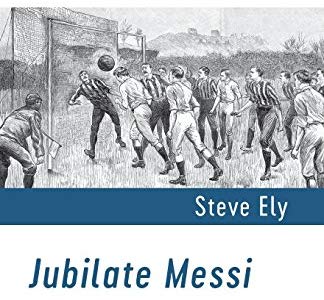
Steve Ely has published seven books of poetry, most recently Incendium Amoris, Bloody Proud & Murderous Men, Adulterers & Enemies of God, Zi-Zi Taah Taah Taah and Jubilate Messi.  His book Ted Hughes’s South Yorkshire is the definitive work on Hughes’s poetic formation.  He teaches Creative Writing at the University of Huddersfield.

The Interview

What were the circumstances under which you began to write poetry?

I decided to be a poet and wrote my first poem on1st January, 1982, my seventeenth birthday.  Prior to that I’d written lyrics for non-existent songs for the non-existent band I hoped I might one day be in.  I wrote pretty solidly for about six years after that and beginning in 1984/5ish began subscribing to and submitting to magazines and journals, with no success, even though some of the poems were decent.  I was writing in isolation.  I didn’t know any poets or of the existence of things such as writers’ groups or workshops.  I wasn’t aware of things called poetry readings.  My influences were Blake, Yeats, Lawrence, Eliot, Graves, Hughes and Plath.  Nietzsche. Occultism. Greek mythology.  The Bible.   Nature & animals.  My resources were South Kirkby and South Elmsall libraries and Austick’s University Bookshop in Leeds. In 1986/7 I did a few Open University courses — mid-Victorian Period, the Romantics, Shakespeare.  In 1988 I went to Sheffield University to do a degree in Biblical Studies.  I wanted the Bible to underpin my poetry in the way that Greek mythology underpinned much of the poetry of the Canon. At about that time I stopped writing poetry — I suppose I channelled my energies into the course, which was fantastic, with several excellent teachers – John Rogerson, Philip Davies, David Clines, David Hill, Loveday Alexander, Andrew Lincoln.  Until recently I didn’t think I’d published anything at all during my first poetry coming,  until the poet Liz Barrett drew my attention (in 2016) to my poem, ‘Suicide Note: California Condor’ in a 1990 edition of Canadian literary/ecological magazine, The Trumpeter.  The poem was the final poem of a sequence of six about extinct or near extinct birds I’d written in 1986 and sent to the journal in 1987.  However, the editor rejected my submission after I rejected his dumbass editorial ‘corrections’.  So how and why it ended up being published I’ve no idea.  I didn’t write another poem until 2nd November 2003, when I wrote a poem called ‘Gina’, about one of the victims of the American serial killer Kenneth Allen MacDuff.  The first few poems I wrote in 2003/2004 were based on themes drawn from True Crime. I’ve no idea why I started writing again.  I’d read Elaine Feinstein’s biography of Ted Hughes on holiday the previous August, and maybe that planted a seed.  I’ve not stopped writing since.

Who introduced you to poetry?

No-one in particular.  ‘School’, I suppose.  My mother used to recite a couple of poems she remembered from school – Leigh Hunt’s ‘Abu Ben Adam’ and Longfellow’s ‘The Slave’s Dream’.  She didn’t know the authors.  I looked them up years after.  I think they learned poems like by heart in the 1950s for ‘Choral Speaking’.   My mother also encouraged me to read and bought me virtually any book I wanted.  But I can’t remember any poetry specifically.  I remember writing poems about the 1972 Apollo XVII moon landing in Miss Hall’s class at Burntwood Junior & Infants, which took their cue from the singing moonwalkers Harrison Schmitt and Eugene Cernan  who fooled about singing Ed Haley’s ‘The Fountain in the Park’ — ‘I was strolling on the moon one day/In the merry, merry month of May’ – as they took their giant leaps for mankind.  In my poem I too strolled on the moon in that month, when I was, ‘taken by surprise/when a shark blacked my eyes/in the merry, merry month of May’.  A moon shark, presumably.  At Northfield Middle School in I remember writing a poem called ‘The Otter’ which included the phrase ‘a quicksilver flash of trout’.  Maybe it was for the school magazine, The Glovonian.  Can’t remember.  At Minsthorpe High I occasionally wrote invective loaded punk-poems aimed at my mates who positioned themselves as heavy metal rebels but who got their biker jackets from their Mams’ catalogues – ‘So you think you’re a big man/Now your leather jacket’s come/But you’re nothing but a poser/Just shit elitist scum’ — and so on.  The fact that I got a lot of my alleged punk gear from the catalogue was neither here nor there.  I first learned to enjoy poetry independently  in Mr Blakemore’s class in the lower year — (Year Nine).  I remember liking Robert Frost’s poetry – ‘The Hill Wife’, ‘Birches’, ‘Mending Wall’, ‘Stopping by Woods on a Snowy Evening’.  But Mr Blakemore wasn’t my ‘inspirational teacher’, even though I quite liked him personally – I’d always hated school and I decided early on not to cooperate or fall for any of the teachers’ schtick.  It was in Mr Blakemore’s class in 1979 that I first encountered Ted Hughes.  A Sixth Former named Toni Hancock had left her copy of Selected Poems 1957-1967 (for the ‘A’ level syllabus) on my desk after a lesson and I half-inched it.  Never looked back. Still got the book.

How aware were you of the dominating presence of older poets?

I lack a formal grounding in English Literature.  I’ve never studied it at ‘A’ level or read for a degree in the subject.  So I’m not particularly well-versed in ‘the Canon’.  I’m more or less an autodidact in the field and I have a huge hole in my encounter with Eng. Lit.— in the period 1988-2003 not only did I not write a single poem, I don’t think I even read one.  When I decided to become a poet in 1982, I think meant a poet like Blake, Yeats, Lawrence, Eliot, Graves, Hughes, Plath (etc).  So I suppose that first time around I resolved to become to be what used to be called a ‘Major Poet’.  The poets I go back to are all the usual big hitters, from anonymous Old English ‘Maxims’ poets to the English ‘Triple H’ —  Harrison, Hill, Hughes — I think John Montague’s The Rough Field is one of the great books of the last fifty years.

What is your daily writing routine?

All being well, I get up early and write for three or four hours.  Then I’m burned out for the day.  Occasionally I get a second wind, and write for a few hours later on, in the evening.  But not often.  If I’m working or have other commitments in the morning then often I find it hard to write at all. I’m increasingly finding I need routine in order to write, rather than time.

What motivates you to write?

I get anxious and restless if I’m not writing creatively.  Also, I think I’ve got some interesting and perhaps urgent things to say – about England, the violence of the state, the fragile balance of good and evil that exists in each of us – the potential to do good and commit horrors – the devastations of globalisation and the Anthropocene and the capitalist growth and exploitation system that drives both those disasters.   All that as mediated through personal experience and landscapes in my ‘parish’, as Patrick Kavanagh would call it.  I’m an expressive writer with strong subjectivity and I enjoy the process of bringing that subjectivity into the concrete form of a poem, the playfulness and audacity of it, the sense of accomplishment you get when you realise your vision or execute your ambition and intention.
How do the writers you read when you were young influence you today?

They’ve entered my psyche at a deep level.  All those I mentioned earlier are still there, but not as immediate influences – well, I don’t think so.  I’m not sure who my immediate influences are now – Old English, Middle English, Norse Sagas, the King James & Geneva Bibles?

Who of today’s writers do you admire the most and why?

Tony Harrison is the last of the ‘Triple-H’ still standing; one of the greats by any standards, in drama, translation and a wide range of verse forms; and of course, politically committed, international and Northern, which is why English London poetry doesn’t know what to do with him. The Irish poet John F. Deane writes movingly from the quick of human experience in the context of his compassionate, humane and but devotional Catholicism.  Pascal Petit’s unflinching, atavistic and lapidary expositions of abuse, cruelty and confinement have a raw and disturbing power.  Peter Riley’s intensely alert, alive and elegiac recent work is as good as anything currently being written. Kim Moore has written two of the best poems of the last several years with In That Year and My People. Carola Luther writes about the natural world with poise, delicacy and humility. Outside poetry, Cormac McCarthy is a great stylist and he doesn’t flinch from exposing and confronting horror at the core of his vision of humanity and civilisation.  James Ellroy’s novels are tours-de-force of audacious technique, virtuoso ensemble characterisation, exhilarating pace, obsession and rigorous research.  Elmore Leonard & Harry Crews are recently dead, but the former is the stylist par excellence, the absolute master of economy, driving narrative entirely through the POV of characters (and largely dialogue) with the narrator almost totally effaced; the opening section of the latter’s Feast of Snakes is an astonishingly vivid unravelling of a single rolling scene, one of the best pieces of writing you’ll ever encounter.
What would you say to someone who asked you “How do you become a writer?”

You write.  And for every hour you spend writing, you spend ten reading.  The right stuff, obviously.  What moves and feeds you, not what everyone else is reading, or what you think you should be reading or those books whose publishers happen to have a machine that gets them reviewed and publicised. I’ve always thought that to want to ‘be a writer’ is a narcissistic ambition.  It seems to me that many people who express that ambition are attracted to the imagined life of the writer rather than the work itself  — how many young (and not so young) writers spend their time getting arseholed and showing off about getting arseholed and imagining git makes them Bukowski redivivus.  Career ambition and ‘lifestyle’ is irrelevant. The only thing that’s important to a writer is about whether or not they’ve got something to say that’s worth saying — and that only they can say. Subjectivity and technique, not  status and celebrity.

Tell me about the writing projects you have on at the moment.

I’m about half-way through a collection of poetry provisionally called Lectio Violant — ‘Profane Reading’. The poems are improvisations based on certain chapters of the New Testament.  They’re about extinction, the Anthropocene, the North, class, capitalism, republicanism, with a dash of veneficium and maleficium; there’s a pamphlet collaboration (with the mysterious artist P.R.) ‘about eels’ in the works; I’ve nearly finished  a collection of autobiographical short stories about my childhood — Tales of Nelly Pledge.


Wombwell Rainbow Interviews: Rob Hindle

Wombwell Rainbow Interviews

I am honoured and privileged that the following poets, local, national and international have agreed to be interviewed by me. I gave the writers two options: an emailed list of questions or a more fluid interview via messenger.
The usual ground is covered about motivation, daily routines and work ethic, but some surprises too. Some of these poets you may know, others may be new to you. I hope you enjoy the experience as much as I do.

grail-roads-cover

Rob Hindle

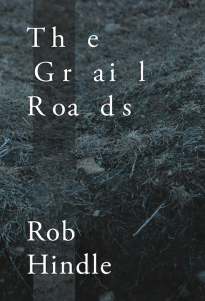
According to Longbarrow Press “Rob Hindle is the author of several collections of poetry, including Some Histories of the Sheffield Flood 1864 (2006), Neurosurgery in Iraq (2008), The Purging of Spence Broughton, a Highwayman (2009) and Yoke and Arrows (2014). Five long poems and sequences, collectively titled Flights and Traverses, appear in the Longbarrow Press anthology The Footing (2013). The Grail Roads is his first full collection with Longbarrow Press.”

The Interview

1. What were the circumstances under which you began to write poetry?

I started writing fiction first and found the early stuff was so derivative I had to pare it back and back until it felt more authentic.  Then I found that these taut (or thin!) pieces of writing had some lyricism in them as well as story – and increasingly, I preferred to work with the lyricism (although most of my poetry has a strong narrative element – and in recent years I’ve worked in sequence form so I can explore the idea of story through poetry).

2. Who introduced you to poetry?

Ian McMillan and others in the Circus of Poets came to my school when I was 15 or 16.  It wasn’t a Eureka moment but I enjoyed it.  Then I did A Level and didn’t really engage with it: probably I didn’t have enough understanding of the world to understand poetry.  But (after a fair bit of arsing about) I took a course on Romantic Poets at Sheffield University’s Extra-Mural Department.  Eventually I did a degree at Leeds and loved the whole lot.  Well, not Pope and (sacrilege!) Wordsworth.  Perhaps the Circus of Poets sowed a seed about the deep satisfaction of poetry; but then I had to work at the engagement before getting that.

3. How aware were you of the dominating presence of older poets?

Massively.  Because of coming to poetry through pretty formal routes I had a slight sense of awe: of the big white tower at Leeds, the old library, the Victorian houses of the School of English.  So poets were Poets.  One of my Professors had known some of the Beats: pretty cool, but not quite Keats.  And as I say, when I started writing poetry, it wasn’t mine.  In fact, I think I wanted it to be someone else’s – preferably Eliot’s.

4. What is your daily writing routine?

When I started properly writing poems, my son was a baby, so it was from when he woke up (about 5.30 or 6am) until breakfast.  Another reason for writing poetry: you can achieve something in an hour or even in 20 minutes.  Then for years I wrote most evenings between tea and around 8.  After finishing a big project (see below) I stopped for a few months.  Then I started again for a few months.  Then stopped, until yesterday – but this is a story.  I feel a bit poemed out at the moment.  It’ll pass.

5. What motivates you to write?

At first, stories; then once I get going, sounds and patterns, and what they add to the meaning of words, lines, poems, books.

6. What is your work ethic?

When I’m in a project, the work makes me work.  The actual process of it.  And if you’ve made a good line or couplet and you put it away then get it out the next day and it’s still there, you’re back in.

7. How do the writers you read when you were young influence you today?

As above, I didn’t read much poetry when I was young – except the usual (Cat in the Hat and so on).  Fiction had a much bigger influence.  There was a lot of strange fiction for children around when I was young: The Midnight Folk, Stig of the Dump.  This kind of thing has always appealed to me – the slantwise look at the world.  I did a PhD on Mervyn Peake, even.  The themes and approaches that motivate my poetry are influenced by this, I think.  I inhabit byways and eddies (geographical and historical) to get a different view.

8. Who of today’s writers do you admire the most and why?

Alice Oswald for what she has done (in Dart and Memorial) with the form: the creative interaction with narrative and epic / drama heightens our awareness of the language.

Steve Ely’s Englaland for its necessary challenge of orthodoxy and privilege.  Although the formal ancestor is Geoffrey Hill, his political anger is mined from the northern experience of Tony Harrison.

If today’s writers offer me ideas and different ways of approaching the work, it is twentieth century poets – Heaney, Hughes, Plath, Bishop, Larkin, Lorca, Eliot, Owen, Edward Thomas, and those still working – Mahon, Walcott – that are constantly sourced.  It is like playing scales.

9. Why do you write?

I used to think (and say!) I wanted to be a writer – and for me, that was as much about a way of life.  Now I know that a writer is someone who writes – and is urged internally to write.  It is fundamental for me, both in terms of the whole process (idea, research, organisation, production, organisation) and the craft, one word then another.

10. What would you say to someone who asked you “How do you become a writer?”

Write.  The clue is in the title.

11. Tell me about the writing projects you have on at the moment.

As I said earlier, I’m drawing breath following a long project.  This is a reworking of Malory’s Quest for the Holy Grail, set in the Western Front.  In all the current focus on the First World War, I’ve been struck by the fact that north west France has been a killing field for millennia: Malory, they say, fought at Agincourt, where farmers dig up bullets and barbed wire each autumn; and the nationalism of his quest is echoed in Kitchener’s call to arms: us against them.  So nothing changes: the victors write it up and ‘the dumb go down in history and disappear’, as Harrison had it.  Galahad dies gloriously; Launcelot comes home to live wretchedly.  ‘If I should die’ and all that.  The book is called The Grail Roads and it is being published by Longbarrow – next week.


Wombwell Rainbow Interviews: Donna Snyder

Wombwell Rainbow Interviews
I am honoured and privileged that the following poets, local, national and international have agreed to be interviewed by me. I gave the writers two options: an emailed list of questions or a more fluid interview via messenger.
The usual ground is covered about motivation, daily routines and work ethic, but some surprises too. Some of these poets you may know, others may be new to you. I hope you enjoy the experience as much as I do.

41f-DRq6VBL._AC_SY400_

Donna Snyder

Described in Amazon as “work as an activist lawyer advocating on behalf of indigenous people, immigrant workers, and people with disabilities has garnered multiple prizes and recognitions. In 1995 she founded the grassroots, not-for-profit Tumblewords Project in the West Texas/Southern New Mexico/Northern Chihuahua region. She continues to coordinate its free weekly workshops, occasional publications, and performance events in the El Paso area.”

The Interview

  1. What were the circumstances under which you began to write poetry?

I began to write poetry when living in Santa Fe, New Mexico litigating a class action law suit against two branches of the USA federal government. My clients were a class of over 10,000 disabled Native American children. There was a heavy briefing schedule and I had no support staff, so life was stressful. My first husband, a dear and creative soul, dared each other to join a writing group we heard about. I wrote fiction and memoir until the leader, Joan Logghe, gave me a bilingual book of poems by Pablo Neruda and César Vallejo. That book changed my life.

It had never occurred to me that my childhood scribbles were “poetry.”

I had been told I didn’t have a creative bone in my body. I believed it until moving to Santa Fe in my early 30s.

Another prominent poet told me I was too old to become a poet.

People there pegged me for prose. They liked my stories based on growing up poor in rural North Texas Panhandle. Soon thereafter I moved from Santa Fe to southern New Mexico and became active in the spoken word scene. Poetry was good for brief readings as part of an open Mic. And the people there didn’t pigeon hole me.

1.1  What was it in Neruda and Vallejo that captured your interest?

Both poets were passionate and wrote about things that made sense to me. Both wrote about common people and common life in beautiful but common vernacular. Until reading them, my concept of poetry was alienating. I thought it all rhymed and was written by upper class Brits and New Englanders.

I was not educated in poetry. I had read little of it and did not know the “rules.”

Neruda and Vallejo opened my eyes.

Around that time I also became immersed in Mexican and Mexican American cultures. Poetry is a living thing in both.

Should I go on?

3. How is it a living thing?

For one, it is taught in Mexican primary schools. It is a natural and inherent part of their socialization and education. It is nothing for the shyest, non-English speaking 2nd generation immigrant child with the slightest encouragement, to write good poems about their life and loved ones. Doing poetry workshops in the schools is a breeze in this borderland I live in.

Also, poetry is valued in the culture. Mexican currency has pictures of historic poets like Sor Juana de Inez and Nezahualcoyotl. Dos Juana was prominent in the court of the royalty in the Spanish colony. Before the conquest, Nezahualcoyotl was a great poet king of the triple alliance that ruled Mexico.

Mexican Americans have a thriving Chicano culture. Poetry was a big part of the Chicano movimiento, that is, the Chicano civil rights movement and cultural renaissance.

Political rallies included and still include poets.

Plus I was in the thick of the political movement. I worked at Centro Legal Campesino, a legal aid office for farm workers, almost all of whom were Mexican migrant workers. I spoke in public constantly. I met leaders of the farm labor movement such as the great César Chávez, and leaders in the Chicano literary movement.

All my clients were campesinos and campesinas. All my co-workers were Mexican or Mexican American. Even when I left southern New Mexico and Centro Legal Campesino and moved to El Paso, Texas, almost all my clients were immigrant workers from Mexico or first or second generation residents of the USA.

4. So your poetry speaks directly with their voices.

My partner of 12 years was a Mexican poet. He was killed at age 44 in a fall. I later married a Mexican American artist well known for his murals focusing on the local culture.

I do not speak with their voice, but what I write is informed by their voices.

I also was an activist lawyer on behalf of people with mental illness and developmental disabilities, as well as people with addictions. Those clients influenced my poetry as well.

4.1 In what way?

I worked daily with people affected by these conditions. I had both sympathy and empathy. I gave public presentations at least weekly. I internalized these issues. Plus, being a poet who lived with artists, I knew a thing or two first hand. As well there was mental illness in my family of origin. All these experiences formed me as a human as well as a writer.

My husband the visual artist, who died suddenly at 54 from an undiagnosed medical condition, identified with Gully Jimson in The Horse’s Mouth, a great novel. Need I say more?

I also read Anne Sexton, Sylvia Plath, and other notable writers described as mentally ill.

4.2 You say “mental illness and developmental disabilities, as well as people with addictions. Those clients influenced my poetry as well.” How did it inform your writing?

I believe working closely with people who had schizophrenia can be considered to have freed up my earlier writing to embrace a more surreal and hallucinogenic use of imagery and internal monologue. I’m thinking of a few poems in particular. Moreover, living with people who had bipolar disorder or personality disorders expanded my understanding of people as a whole. Those experiences and the widening of my understanding had to influence my writing, whether or not this minute I can point to specific examples. I believe I was better able to give myself over to flight of thought and the rush of imagery.

Let me add that it is not just clients and artists who immersed me in mental illness. The legal profession is known to have a higher incidence of bipolar disorder, depression, and addictions. In my last decade of practice I had five lawyer colleagues who killed themselves. In that time, I can recall one writer who killed himself. Not counting the artists and writers who died young due to excess.

4.3  You have had a lot of grief to process.

My second book is called Poemas ante el Catafalco: Grief and Renewal. I didn’t name it. The publisher contacted me with the concept after learning that in 12 years I was widowed twice, my father died, two brothers-in-law died, six colleagues died, four by suicide, three close friends died, a 16 year old dog died, and a 14 year old dog died.

Then in the next 2 years two close friends died unexpectedly and my two favorite dogs of all time, boxer sisters, died. And then my sister died the next year.

All those deaths before I was even 60.

So I can’t deny the truth of your statement. But, as someone told me, Everyone’s father dies. Everyone’s spouse and siblings and dogs die. Everyone’s friends die as we age.

Oh, yeah. One more thing. In that same 12 years, I lost my job due to poor health. I had to take early retirement. After a busy, demanding, and fulfilling career as an activist lawyer. This was a body blow. Or rather it had a huge impact on my self-image and identity.

4.4 How did that body blow affect your writing?

I have a whole book on death and a fair amount of my other two books have related poems. And since then I keep on writing more poems on loss. Many of my published poems relate to these issues.

Including my most recent.

Unlike many writers, I don’t choose the subject matter of my poems. They come to me in a rush. Without intent or planning on my part.

And without much crafting.

I’m not a schooled writer.

Even my legal writing, tends to seem to come out of me on its own.

Some people don’t respect my poetry because of this lack of crafting and mental struggle.

5. What is your daily writing routine?

It’s mutable, affected by physical and mental health. In general, I tend to read most puff the day and write into the wee hours. However I create most of my poems during Tumblewords Project workshops on every Saturday afternoon except holiday weekends. The focus is on the practice of writing and reading aloud. Whoever shows up will write on the spot and then immediately read it aloud as we go around the circle. Everyone writes. Everyone reads. With limited feedback so as to stay within the creative moment rather than switch to editing mode.

I founded the Tumblewords Project in 1995 and continue to present free weekly workshops and occasional readings. Here’s some background info.

Tumblewords Project – ABOUT
sites.google.com

Tumblewords Project
About TumbleWords Project
Tumblewords Project is a grassroots, not-for-profit weekly series of free writing workshops founded in 1995 with seed money from the New Mexico Arts Division. Originally the workshops met at Concilio Campesino in San Miguel, New Mexico and was called the Mesilla Valley Tumblewords Project. Shortly after the first workshops, I moved to El Paso and began presenting workshops in Segundo Barrio as well, and dropped Mesilla Valley from the name. After a few years of…
More

6. What motivates you to write?

I dunno. I just enjoy it. I feel much better when I write. In the moment, if it’s good, I enter a state of flow, both in the psychological meaning as well as in the musical and improvisational context.

Now that I no longer practice law, writing is my sole identity. I have no children. What remaining family members I have are far away, distant, and are not a source of the ready identity family or clan often provide. I have writing, Tumblewords, writing colleagues I correspond with all over the world, and my four dogs.

Writing and my dogs keep me alive.

7. What is your work ethic?

When I practiced law and worked as an activist, people consisted me a workaholic. 12 or more hours a day were normal. Now, work ethic is affected by my health. Every day I read many hours, but I no longer write every day. When I am on deadline, whether externally or internally imposed, I tend to work around the clock.

Organizing Tumblewords and putting out press, or p.r., requires several hours a week. I’m always looking for new presenters or devising new workshops for me to present myself.

Honestly, the year after my two boxers died, I hardly wrote. I just cried all the time. That was the year after the second man widowed me, near the end of that spate of deaths and during a period of serious health issues. I kind of lost my way for awhile.

I still published when people solicited me or nagged me. Mostly boo

8. Who of today’s writers do you admire the most and why?

Ten years ago this would have been a far easier question, as my pool of potential favorites was much more limited. Now I read all the time. I know writers from all parts of the world, most of whom are not world renowned with traditional, corporate publishers. Some of these writers, of whom I learned from the online social networks and blogs, as well as the multitude of literary journals I encounter now. Naming favorite contemporaries is a risky business. Additionally, I’m constantly encountering new writers who blow me away.

A list of favorites and influences would truly be too long to detail.
9. What would you say to someone who asked you “How do you become a writer?”

Read good writers. Read bad writers. Read every day. Write good stuff and bad stuff. Write whether or not you’re in the mood. Buy journals and other people’s books. Go to readings at least once a month. Submit to journals and anthologies. Cast your bread upon the waters; support other writers and independent publishers.

10. Tell me about the writing projects you have on at the moment.

I’m writing three reviews and looking for publishers as suddenly all the editors who published my book reviews are no longer available by some sad coincidence. I’m gathering collections. A couple small presses have expressed interest in publishing books. One collection might be loosely called poetry related to maths and sciences. Another about Eros and the end of passion. A third of ekphrastic pieces. I have just begun thinking of a collection of my reviews. And recently I’ve noticed an accumulation of poems that relate to my dogs.

I just had a poem come out early September 2018 in Inanna’s Ascent, an international anthology. In August 2018 I had three poems appear in Lummox 7, an annual journal out of Southern California.

This has been a year of writing blurbs and reviews, which are fun but a great deal of work.


Wombwell Rainbow Interviews: Matthew Borczon

Wombwell Rainbow Interviews

I am honoured and privileged that the following poets, local, national and international have agreed to be interviewed by me. I gave the writers two options: an emailed list of questions or a more fluid interview via messenger.
The usual ground is covered about motivation, daily routines and work ethic, but some surprises too. Some of these poets you may know, others may be new to you. I hope you enjoy the experience as much as I do.

510OCdexuUL._AC_SY400_

Matt Borczon

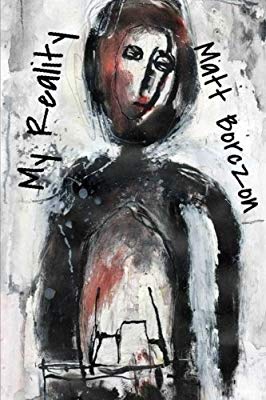
is described on his Amazon site as “a writer, nurse and Navy sailor from Erie, Pa. He has published several books of poetry including A Clock of Human Bones (Yellowchair Review), Ghost Train (Weasel Publishing), Sleepless Nights and Ghost Soldiers (Grey Boarders), Battle Lines and The Smallest Coffins are the Heaviest (Epic Rites Press), and Code 3 (Alien Buddha Press). He received the Emerging Artist Grant in Erie and has been nominated for a Pushcart prize and a Best of the Net prize for poetry in 2016. Matt is married with four children.”

The Interview

1. What were the circumstances under which you began to write poetry?
I started writing in grade school and poetry in high school, started with song lyrics and grew as I started reading poetry.
2. Who introduced you to poetry?

My twin brother, he has been writing since maybe the second grade. He was the first person who ever gave me a book of poetry to read not as a school assignment.

3. How aware were you of the dominating presence of older poets?

Not really at all at first. But by high school I was aware of the major players. A local university brought in 6 Pulitzer Prize winning poets over the course of an academic year. I heard Gwendolyn Brooks , Galway Kinnell, and others. It was an eye opener. I was always more into contemporary poets, the old guard classics never moved me.

4. What is your daily writing routine?

I usually write in my car in the morning as I wait for my kids to come out so I can take them to school. I revise it over the course of the day in my head and usually rewrite it into my saved file in the evening.

5. What motivates you to write?

Currently I am writing as a form of therapy for my secondary PTSD from my time in Afghanistan. I had not written a poem in years and I had not planned on starting again. I was really struggling with nightmares and depression and a ton of hostility. How this turned into poetry I am not always sure of. I was not able to say it plain enough in my art anywhere else so I needed a direct and simple way to say out loud a lot of what I was and still am carrying.

6. What is your work ethic?

I like to work 5 days a week, I try to take the week end off unless the poem just decided it needs to be written, which does happen sometimes. I write even when I do not have a poem in my head. I am not above forcing the words to keep my discipline intact. As a result of this I write a lot of bad poetry that never sees the light of day. That is ok with me I am a big believer in practice and repetition as a way to get down to what I am really hoping to say.

7. How do the writers you read when you were young influence you today?

I still enjoy some of their work, but to be honest I am way more influenced by my peers and really it is they who motivate me now.

8. Who of today’s writers do you admire the most and why?

I actually belong to at least 6 writing groups and the list of poets I admire is really long. Too long for this short article, but why I love the work I do is because the current small press scene is more alive now than at any time in history! The internet has made it way more possible to get your words out to an audience, and the work is alive and sometimes angry and vital and not always politically correct and strange and gritty and just freaking wonderful!! I believe poetry has probably never been more alive than right now, it just isn’t a money maker so not everyone notices, but as a reader of small press poets I am constantly amazed by what powerful stuff is getting done.

9. Why do you write?

I write to try to put the ghosts away; I needed a way to look at some of the things I had been running away from. I was not doing well with therapy which is something I continue to try from time to time. But the act of acknowledging my PTSD and putting my head into its mouth every day sort of lets me take it and use the awful feelings for something and that helps me to put it down for the rest of the day. This does not work every time, but it works often enough to be the only thing that I believe helps.

10. What would you say to someone who asked you “How do you become a writer?”

I say read a lot and write a lot, work at your craft and do not settle until you are getting exactly what you want to say in the way you want to say it. It takes a life time but it is worth it.

11. Tell me about the writing projects you have on at the moment.

I am always just working on the next poem. I have 2 completed manuscripts sitting on editors desks so I hope they will see print in 2019. I am also working on a collection of my flash fiction I hope to try to convince someone to publish, though the stories are a lot harder than the poems for me to write.