Wombwell Rainbow Interviews: Tracy Dawson

Wombwell Rainbow Interviews

I am honoured and privileged that the following poets, local, national and international have agreed to be interviewed by me. I gave the writers two options: an emailed list of questions or a more fluid interview via messenger.
The usual ground is covered about motivation, daily routines and work ethic, but some surprises too. Some of these poets you may know, others may be new to you. I hope you enjoy the experience as much as I do.

39536101_2166958950011966_743647473901240320_o

The Interview

  1. What were the circumstances under which you began to write poetry?
    I was led by a soldier of the Great War. My life was at a crossroads or a turning point. I started researching my family tree and was following up leads on my great-grandfather who was killed on the Somme.
    I was inspired to write poetry by Ian Parks and his Read to Write Poetry Group. I had no interest in poetry and met Ian through my interest in family and local history. I attended his talk on the local poet Harold Massingham, which he did for Mexborough Heritage Society. I was enthralled by the voices and dialects of the Read to Write poets reading Massingham poems, especially the Anglo-Saxon and Old English words. Inspired, the next day I wrote a ‘poem’ for the first time since leaving school. I then went on Ian’s walk and talk about the Battle of Maisbelli. The following week I felt a need to take my ‘poem’ to show Ian – not because I thought it was any good, but because I wanted him to know that he had inspired me to write it. I did think this was a bizarre thing to do, but I have since learned that people often give their ‘poems’ to poets. I took it to Ian’s Read to Write group in Balby and stayed out of curiosity for the rest of the session. I thought I would check it out as it might be an interesting activity I could do with my relative who likes poetry. I returned the following week and I’ve been an active member of the group ever since.

2. Who introduced you to poetry?
Ian Parks.

3. How aware were you of the dominating presence of older poets?
I was not, and I am not, aware of a dominating presence of older poets. Whether by older poets you mean pre-20th century poets, or whether you mean older poets still living.
There appears to be no shortage of younger poets, especially in the spoken word arena. I’m sure the next generation are already writing poetry and waiting to be discovered.

4. What is your daily writing routine?
I don’t have a daily writing routine. I can’t write to order, I have to write when I have ideas spinning in my mind. If I am busy I try to note down a couple of words in the memo on my mobile phone and hope that I can still remember my ideas later when I have time to write. My own favourite poems woke me in the middle of the night or in the morning. Sometimes I write late at night or into the early hours if the ideas are flowing. It’s probably when my brain processes my thoughts without distraction. If I do wake with ideas in the middle of the night I find it less disruptive to write on my mobile phone instead of pen and paper.

5. What motivates you to write?
Writing poetry has become one of my passions – an addiction. It rewards me with a sense of achievement.
Poetry group exercises motivate me to produce a poem within a timeframe. A given theme is a good starting point, but then my writing often goes off in a different direction.

6. What is your work ethic?
I take my writing seriously. I put a lot of thought, time and effort into it.

7. How do the writers you read when you were young influence you today?
Not at all or minimal – I wasn’t an avid reader.
The only well-read book in my childhood collection was ‘A Child’s Garden of Verses’ by Robert Louis Stevenson. I started young and then abandoned reading. My book is well battered and I still have it! Until 18 months ago it was my only poetry book and now I have many.

8. Who of today’s writers do you admire the most and why?
Obviously my first choice is Ian Parks because I can connect with the language and landscape in his poems. His amazing knowledge, classical literature and historical facts all find their way through time in his poetry. I’m interested in how personal poems become universal and the interplay of past and present. I like the variety from love poetry to political to translations. In addition to his great poetry I admire him for inspiring others to enjoy poetry. He does so much to promote poetry in the community and for the support and encouragement he gives to others. I love the poets of Read To Write, increasingly recognised outside of our group. I liked Incendium Amoris by Steve Ely, because of the local interest, the historical and the use of other languages like Latin and Old English. I love the unique style of Laura Potts. I recently heard a modern, political poem called Ministry of Loneliness by Clare Proctor that I really liked. It imagines the types of red tape questions and hoops a lonely person would have to jump through in order to apply for the help they needed.

9. Why do you write?
I believe in lifelong learning and taking opportunities for self-improvement. It has become an addiction. I enjoy it. I write poems for myself, it’s a bonus if other people like them too.

10.   What would you say to someone who asked “How do you become a writer?”
Read. You’re never too old to start – but don’t leave it as long as me to start reading! Pick up a pen, a sheet of paper (or a memo on a mobile phone!) and just write something, anything, every day – even if it is just one word. Just make a start and develop it from there. Consider joining a reading and writing group, if you mix with people who share a common interest it sparks creativity, enthusiasm, momentum and improves understanding. Also, observe the world around you and beyond.

11.   Tell me about the writing projects you have on at the moment
Most of my writing is the result of an exercise from Read To Write where we study poets and their poems.
I also read my work at Well Spoken when I can. Well Spoken is an Open Mic held monthly at the Brewery Tap, Young Street, Doncaster.
I entered one of my poems into the Poetry of the North competition.
I am writing a poem for the Doves of Doncaster project.
I have a theme and a title in mind and I have just written my first poem for this series.

“Tears of God” and three more poems in response to the last Wednesday Writing Prompt in inspired company. Thankyou Jamie.

via “Tears of God” … and other poems in response to the last Wednesday Writing Prompt

Wombwell Rainbow Interviews: Mike Griffith

Wombwell Rainbow Interviews

I am honoured and privileged that the following poets, local, national and international have agreed to be interviewed by me. I gave the writers two options: an emailed list of questions or a more fluid interview via messenger.
The usual ground is covered about motivation, daily routines and work ethic, but some surprises too. Some of these poets you may know, others may be new to you. I hope you enjoy the experience as much as I do.

5190xyTz-ML._AC_SY400_

Mike Griffith

According to The Blue Nib

“began writing poetry as he recovered from a disability-causing injury. His poems, essays, flash fiction and articles have appeared in many print and online publications and anthologies. He resides and teaches near Princeton, NJ. His first poetry chapbook is slated to appear later this year from The Blue Nib.”

https://thebluenib.com/2018/08/29/forthcoming-from-blue-nib-publishing/

A link to some of Mike’s poems at The Blue Nib

https://thebluenib.com/article/michael-a-griffith/

The Interview

  1. When and why did you start writing poetry?

I started about three years ago as a way to keep my mind sharp and my emotions a bit better under control. I was living in a nursing and rehabilitation home at the time and was having a hard time dealing with my “new normal,” as it were. I was recovering from an injury which ruined my right ankle.

Reading and writing poetry was and still is a mental challenge. Poetry is also an incredibly helpful form of therapy.

1.1 How does it help?

For me it helped me first collect my thoughts, emotions, and frustrations in a coherent way. Then I ordered those thoughts and in so doing came to grips with them and understood them better.

So instead of just having thoughts and emotions roiling about my head, I channelled them onto paper then the laptop screen.

Understand, Paul, I’m not saying talking to loved ones didn’t help; it certainly did. And I am also not saying all (or much) of what I wrote resulted in art. A poem, yes. Something worth others reading? Not by a longshot.

But I am very pleased that some of my earliest writings from the nursing home have been published and in some cases have been published multiple times.

Poetry is a tool for therapy, not a replacement for those with diagnosed issues or for people feeling totally overwhelmed.

2. Which poets that you read encouraged you to write?

When I first started, I picked up the current issue of Poetry magazine and read each poem carefully, trying to suss out the tricks each poet used as best I could.

I knew only a little bit about poetry from rock song lyrics (a very predictable form of lyric poetry in the cases of most songs) and a college course from my undergraduate days, but beyond that, I was a babe in the woods.

As most of the poems I encountered were not at all like narrative fiction, basic rock songs, or nonfiction (which I have a good deal of experience writing and editing), learning the tools of poetry just by reading is like a guitar player trying to learn by ear, not knowing musical theory.

Soon after I bought a poetry anthology that had big figures like Plath, Eliot, Bishop, Hughes, Robert Lowell, Thom Gunn, and many others, so I began to learn not only by working poets but past masters as well.

3. Did you take a form or poem by one of these and try to do the same thing?

No, but I greatly admire poets such as Patricia Smith who can spin their spell on readers using forms in a stealthy way. I’m not that skilful. I think my attempts at form are pretty amateurish and feel forced. But I keep trying to work up a satisfying sonnet (which my friend Ken Allen Dronsfield does quite well), a coherent pantoum or a ghazal that doesn’t read like a madman’s shopping list.

4. What is your daily writing routine?

I’d love to say there is a routine to my writing. Like most people, work, friends, and family come first time-wise for me.

My injury has had a few positive aspects on my life, one of which is I do much of my work at home like teaching online. This will change in the future, but for now on a typical day I can afford an hour or two devoted to writing.

I may need to track submissions, hunt new markets for submitting work, work on revising or retiring old drafts, or, when that all-important muse hits, to scribble down or pound out a new piece.

I try to read at least several poems from writers who are new to me by way of Poetry magazine, Rattle, or other publications a day as well as read the newest successes of friends on Facebook. A poet needs to keep reading as much or more than they need to keep writing.

5. What motivates you to write?

It’s probably the same motivation many artists express: we create because we have to.

As children we all create with blocks, with dolls, with clay and crayons, and we all play make-believe. It’s only when we grow up and start earning a living that some of us begin to see such “make-believe” and creative play as time wasters. Our time is equated with money, and most people want as much money as possible. Typically this results in a LOT of work and very little creation for the sake of creation.

As I mentioned earlier, once I start working out of the home more, my creative output will doubtlessly slow down. That happened over much of this summer when I taught five days a week, eight hours a day. It took a lot to send poems out, revise, let alone create new poems.

But, really, I write because I love it. I process both logically and visually, so concepts and themes if not fully-formed passages come to me pretty often. That can be both a good thing and a not-so-good thing.

5. 1 In what way?

So many times a thought or line will come to me as I am half-asleep at night, during a movie, out with friends, teaching, and in other places and at times when I am not able to write the idea or thought down. And once I DO get the chance to write it down, well, the blush has fled the bloom, as it were. The heat, the magic, the timgle of the muse’s tender lips is gone.

Yes, the germ of the idea may last, but it’s very seldom what I’d first come up with and almost never as good.

Yesterday I was at a doctor’s appointment and my notebook was home, my cell phone off, and a great line entered my head. Luckily I was alone in the examining room. I tore off a bit of that thin and crinkly paper that covers the exam table, took the pen from the doctor’s table, and scribbled the line down all before being asked to turn my head and cough.

Ideally a writer is always ready to capture thoughts and images, but life is seldom ideal.

6. What is your work ethic?

Well, always do your best, no matter your job, hobby, skill level, and so on.

That said, today’s best is tomorrow’s not-good-enough.

Far too many writers (or musicians, painters, athletes, and others) get frustrated by failures which are inevitable at all levels, especially when just starting out, then they give up and leave their hobby behind. There are also those who settle in at a certain level of their art or their level of success and rest on their laurels. Both of these fates are, I feel, poor work ethics.

To live is to evolve. One can only evolve by taking risks and learning new things. So my ethic when it comes to all sorts of work is to evolve. I must continually evolve as an instructor if I hope to teach effectively. In like fashion I must evolve as a creator if I hope to reach ever-larger audiences.

One other aspect of evolution and change in art and in work is knowing how to accept criticism, both from peers and the audience. Most of this criticism is of help if the artist is willing to listen with objective ears. Too many of us are too protective of our poems.

7. How do the writers you read when you were young influence you today?

When I was young (a boy of 5 to about 12) I read very many comic books like Spider-Man, Superman, and Captain America. So I learned pretty basic good vs. evil morality and more, the power of hype from the tone of the comic books and the ads found in them. Morality comes up in some of my writing and I do realize the power of hype in spreading the word about my latest successes.

From about 15 or so I got deeply into rock ‘n’ roll, joining a band, learning songs, then later on writing lyrics. The nature of song lyrics with hard end-stopped rhymes and syllabic patterns is so ingrained in the minds of pop and rock music fans that it takes effort for them to the write outside those familiar constraints.

What most influenced me three year ago when I began to actively read poetry is the sheer variety presented in the world of poetry. Anything is an option. Take risks.

To most inexperienced poets who are not immersed in modern and current writing, taking a risk might be writing about some “naughty” or political topic. News flash: it’s all been done before. The risk a new writer should try to pull off is to offer new tries at form or new line break methods.

With such incredible variety in current poetry, risks need to be attempted.

8. Who of today’s writers do you admire the most and why?

I enjoy the work of Patricia Smith, Charlie Bondhus, Jee Leong Koh, Ted Kooser, sam sax, Shirley Bell and the works of many of my friends from publications like Ariel Chart and The Blue Nib and the Princeton-based poetry group of which I am a member, the U.S. 1 Poet’s Cooperative.

Why I admire each poet or group of poets is the sheer difference of vision and voice each poet brings to their public writing.

Patricia Smith does amazing work from a pretty urban landscape while Charlie Bondhus focuses on the world through the lens of a gay man. Shirley Bell offers up a mature voice full of quiet yet aching loss. My friends from the Poets’ Cooperative can write about dreams or dead foxes or irises or a trip to an Italian crypt or wedding vows – anything at all – and each does something in a special way that I could never do since it would never occur to me to do so.

We are all unique souls. Good artists can let what is unique to them shine through their art despite the subject.

Look at all the love poems, all the poems about heartache, alienation, hatred, anti-Trump themes, etc. So many of these poem we see posted on Facebook and other social media outlets are virtually copies of each other because the writer has not been able to let their own unique soul shine through. They may contest this, to which I would respond then why does your poem read like every other one out there on Facebook about how alone you are or how you love your mother or somesuch.

I hope not to come off as harsh, but I admire each poet I named above because none of them read like anyone else but themselves. They are each utterly unique in ways over 90% of current poets I have read are not unique.

9. Why do you write?

I write to get ideas and images out in the open. I can’t not think in a poetic or fictive way.

While at an outdoor jazz festival today two lines and a title for a poem or a short story came to me. I lost the music, lost the crowd, lost everything else by gaining these lines – the first and final one of the piece – and the piece’s title. I must write this out, must figure how how we get to that final line. And the piece must make sense within the confines of the title.

I create best by talking and by writing.

10. What would you say to someone who asked you “How do you become a writer?”

And this is how one becomes a writer. They just come up with a title or a line and explore.

There is no such thing as writer’s block in my life. Cripes, the opposite is true! I have too damn many ideas to capture!

I give my students, from 9 year-olds up to senior citizens, the same exact prompt: they must list 6 words off the top of their heads as I read things off like “a color,” “your favorite holiday,” “your best friend,” and so on. From those 6 items they must form a story. It can be silly, sad, whatever. They have a good deal of fun.

And when it stops feeling fun, we feel blocked.

So go write something fun. A love letter to yourself. A hate letter to your boss. Mr. Trump’s shopping list. A recipe from Mars. Just WRITE!

Look, Paul, you know as well as I do that not everything we write can or should become art.

Not every lap a runner runs is part of a race. 99% or so of her laps will be practice or warm-ups for the race itself, a pretty short and rare event.

So if you, the poet, get a dozen or so damn good poems written in your life, you’ll have maybe 12,000 attempts which will range from pretty good, okay, then down to utter crap.

We need to feel okay to write utter crap now and then, practice, write just to run laps. That’s all it takes to be a writer.

11.  Tell me about the writing projects you have on at the moment.

Thanks for asking about my projects. My first chapbook, Bloodline, will be released very shortly by The Blue Nib. It’s such a good feeling to have Bloodline come out from Dave and Shirley of The Blue Nib. I see only a bright future for them and to be part of that future is thrilling.

My second chapbook, New Paths to Eden, is being shopped around and I hope to have it produced and available by mid-2019.

Gearing up for a third book, but I need to see a theme come together firmly first. Bloodline is a collection of various themes and styles while New Paths to Eden is a more cohesive collection of poems dealing with the good and not-so-good aspects of love.

For my third book I may focus more on some of my darker, moodier pieces or ones dealing with injury, recovery, and the process between them.

We’ll see what feels best.

Thank you so much for these wonderful questions, Paul! This was both an honor and a pleasure.


Wombwell Rainbow Interviews: Emma Bolland

Wombwell Rainbow Interviews

I am honoured and privileged that the following poets, local, national and international have agreed to be interviewed by me. I gave the writers two options: an emailed list of questions or a more fluid interview via messenger.
The usual ground is covered about motivation, daily routines and work ethic, but some surprises too. Some of these poets you may know, others may be new to you. I hope you enjoy the experience as much as I do.

New file

Emma Bolland performing ‘Le Silence #2’ at Future Imperfect, 2017.
Emma Bolland

Emma Bolland is an artist and writer working across forms. Recent publications include ‘Manus’, in On Violence, ed. Rebecca Jagoe and Sharon Kivland, London: Ma Bibliothêque, 2018, and in 2019 her experimental prose work Over, in, and Under, will be published by Dostoyevsky Wannabe Experimental. Recent performance readings include at Offprint, Tate Modern 2018, and at Dundee University’s The Essay Conference, 2018, where she was also a guest speaker on ‘inter-medial’ essay form. For a full list of past and future publications and performances see her website:

Biography / CV / Contact Me


The Interview

1. What were the circumstances under which you began to write poetry?

I have to start by saying that I am not a poet, or rather that I don’t call myself a poet. I call myself an artist writer. I am an artist writer who works through and across forms. However, sometimes certain of my works are referred to as poetry by others, I have work in the collection in the Poetry Library in London, and I have been invited to contribute to or take part in events that are framed as poetry, or even introduced as a poet. I can see that some of my work may look like poetry on the page, or sound ‘poetic’ in that it employs experimental language, but I am not concerned with the ‘poetics’ of poetry in the way that many poets are. Furthermore, I don’t have the knowledge that many of them have, either of the histories and structures of the genre, or of its various theoretical tropes, that comes from doing Literatures or Creative Writing at Universities. I call it the ‘poetry rules’. I am not versed in the ‘poetry rules’.

I will reframe your question as: What were the circumstances under which you began to write?

My background is in contemporary art, and while I have always written as part of my visual practice, I only started writing seriously in 2012. I was doing a collaborative project with another artist, the photographer Tom Rodgers, and the curator Judit Bodor. We were looking at what might be called ‘post-traumatic landscapes’, specifically the sites where the victims of the so-called Yorkshire Ripper had been found. The project was around landscape, memory, and mourning, and as the site visits continued (we made visits to gather material for about six months) I felt the need to write about the experience of walking these desperately sad places. We set up a blog and these, what?, half essay, half fiction, poetic texts began to emerge. It felt, for the first time, like I needed to write, like there was something that needed to be written. I remember thinking, ‘oh, am I a writer now?’
1. Who introduced you to poetry?

I found poetry really dreary at school. Anthologies of white men droning on about wars, butterflies, and Grecian urns. Poetry with a capital P seemed to have very little to do with me or my world. In my later teens and early twenties I made a an effort to read contemporary poetry, but I was getting it from those ‘modern poets’ anthologies from the likes of Penguin et al… so it was a bit of a chore to be honest. I was more excited by the kinds of writing I was coming across at art school: ‘poetic theorists’ like Helène Cixous, ‘punk’ writers like Kathy Acker, philosophies from Freud and Lacan. It was when I met the splendid poet and essayist Brian Lewis (who is also the publisher and editor at Longbarrow Press) in 2012 that I became aware of formalised poetry with a capital P that I found worth reading. We had met via Twitter, and I went to one of the Longbarrow poetry walks, and then he came to the opening of the first MilkyWayYouWillHearMeCall exhibition, and I think we pretty much fell in love on the spot—though neither of us realised it at the time—and he would send me stuff by W. S. Graham, Rosemary Tonks, and of course pieces by some of the poets he works with—Kelvin Corcoran, Peter Riley, Angelina D’Roza, and others. Because of these gifts I am now finding my own way through some aspects  of contemporary poetry, which has much to offer me. Superb writers such as Claudia Rankine, Anne Boyer, Jay Bernard, Vahni Capildeo, Sandeep Parmar, and many more.

2. How aware were you of the dominating presence of older poets?

I have never felt dominated by older poets or indeed by older writers of any description.

3. What is your daily writing routine?

Um… I wish I could say it was good. So much stuff gets in the way… admin, job applications (I really need a job), earning money to live on, depression and anxiety, family illness… I need to be more disciplined about making some of the other stuff wait, and writing / making work even if I feel like shit. Tomorrow (September 14th) the writer Jenn Ashworth and I are starting a round of #100DaysOfWriting. There are no rules, except to write every single day, be gentle, and keep some kind of record of it (we will be using Instagram and Twitter). Jenn invented / devised #100DaysOfWriting, and you can read an interview with her about it here: https://prolifiko.com/100daysofwriting-gentle-productivity/ I’m hoping this will get me back into a routine, as this summer has been difficult.

4. What motivates you to write?

Deadlines. Being in love. Imagining a reader. Ambition. Most of all, feeling that there is something that needs to be written.

5. What is your work ethic?

Not sure what you mean? If you mean do I have a disciplined routine, then see above… If you mean what are the principles by which you frame your practice, then pretty rigorous. There are people and platforms that I would not write for.

6. How do the writers you read when you were young influence you today?

I don’t know if I hold with the idea that one is ‘influenced’… I think rather that there are writers who allow one to see the possibility of writing… I don’t think that I have brought many of the writers that I read when I was young with me into middle age… if I look on my shelf to see who is there from 30 years ago, then there is still Cixous, still Acker, still Freud, still Lacan. There are writers I still love from back then, but they don’t necessarily feed into my own writing style…

7. Who of today’s writers do you admire the most
and why?

I think who one ‘admires’ is changeable, depending on what one is writing, how one’s writing is unfolding, either in the short or long term. And perhaps better framed for me as who excites me, who offers me possibilities, who frames me, who offers me context, whose writing I feel I have a relationship with… so at the moment, looking on my desk (and not all of these are ‘today’s’ writers… Anne Carson, Nathalie Léger, Marguerite Duras, Lara Pawson, Kate Briggs, Maria Fusco, Imogen Reid, Maggie Nelson, Claire Potter, Claudia Rankine, Anne Boyer, Raymond Williams, Freud, Lacan, Clarice Lispector, Walter Benjamin, H.D. (Hilda Doolittle)…

I could write a page on all of the above, but to pick out a couple of examples… I have in front of me Anne Carson’s Float, (2017), (a surprise present from the poet A.B. Jackson—thank you Andrew!). It is a boxed collection of 22 slender chapbooks whose various forms include performance notes, scripts, poems, essays, lists… it epitomises the kind of writing I am currently engaged in (or at least aspire to). Fragmentary, inter-medial, open, offering possibility, managing to be both anti-didactic and magnificently assured. Nathalie Léger’s A Suite for Barbara Loden (2015, French edition 2012) is a brilliant, reflexive account of an investigation that uses fiction as both material and archive. Léger has set out on the trail of Barbara Loden—actor, film director, and the second wife of film director Elia Kazan. Loden wrote, directed, and starred in the highly acclaimed film Wanda (1970), based on a newspaper story that Loden had read about a woman who had been convicted of robbing a bank. Léger writes that ‘Barbara would say how deeply affected she had been by the story of this woman—what pain, what hopelessness could make a person desire to be put away?’. Léger drills down through the layers of real-and-fictional-real ‘selves’: Barbara, Wanda, and the imprisoned woman, returning again and again to the question of who writes who, and the question of piecing together truths from fictions. I am now reading the French edition—reading a book you know and love in the original (or indeed in translation) is a great way of learning a language. I started teaching myself French like this about a year ago… Also, everyone should read the poet Anne Boyer’s prose fragment collection Garments Against Women (2015).

9. Why do you write?

Because language suits me.
10. What would you say to someone who asked you “How do you become a writer?”

Read. Keep reading. Never stop reading. Be curious. Consider your reader (which is not the same as being considerate to your reader). Be ruthless with your work (sometimes we write rubbish—not everything should be read), but do your best not to do yourself down. Be generous. Take an interest in what other people are writing. Find a critical ‘other’: this could mean a trusted friend, a reading group, anywhere you can find an honest eye to give you feed back. (I’m very lucky to be shacked up with Brian Lewis—we operate as each other’s first stage editors, and we are brutal). Don’t be comfortable. Find a community, or create one: start a reading night, start an online journal or magazine where you publish others… write what needs writing. Edit, edit, edit. Read your work out loud, over and over, it flags up mistakes and develops your rhythm. I always aim for my work to work both on and off the page. Read. Keep reading. Never stop reading.

When it comes to advice on being published, I am not the best person to ask… but I guess one piece of advice is ‘do your research’. If you are sending work to a magazine / journal then check that it is suitable for what you are writing. Do they have formatting guidelines? Are the submissions even open. Ditto presses. Don’t send huge manuscripts to ‘the editor’—this is a human being, find out who they are. Take an interest in what they do. Buy one or two of their books! Check if they even accept submissions. Some writers / editors, (especially the kind of cultural gatekeepers who wouldn’t recognise their own privilege even if it walked up and punched them in the face), are snobby about self-publishing. I’m not.

11. Tell me about the writing projects you have on at the moment.

I have a few finished pieces being proofed / tweaked for publication. The first is an experimental essay (poem-like in parts) ‘White’, which was commissioned by Emily Speed from a book that will also include pieces by Eley Williams and others, which will be out later this year (I have forgotten the title of the book I’m afraid). The second is Over, in, and Under (after Über Dekkerinnerungen) a novella length ‘experimental’ translation of a Freud essay, that reads like a prose poem—that’s being published early 2019 by Dostoyevsky Wannabe, (I’m also editing the Dostoyevsky Wannabe Cities ‘Sheffield’ book, but that is under wraps for the moment).  The other one is an article for The Journal of Adaptation in Film and Performance. Its talking about a long term project in which I am experimentally translating, rewriting, a screenplay for a lost 1920 silent film by the French impressionist filmmaker Louis Delluc. The article explains my methods and thinking, and they are also publishing the first part of my ‘rewrite’ alongside it. I guess parts of this are ‘poem-like’ too.

In terms of things I am actually writing ‘right now’, I have two deadlines. One is a collaborative performance text / zaum poem with the artist writer Helen Clarke, which we are performing at the ‘Writing Photographs’ event at Tate Modern on October 13th. The other is a piece commissioned by the artist Kevin Lycett (who is also a founder member of The Mekons), which I am performing t the opening of his exhibition in Leeds on October 26th. It is going to be about monsters… I think…


BIOGRAPHY / PUBLICATIONS
Emma Bolland is an artist and writer working across forms. Recent publications include ‘Manus’, in On Violence, ed. Rebecca Jagoe and Sharon Kivland, London: Ma Bibliothêque, 2018, and in 2019 her experimental prose work Over, in, and Under, will be published by Dostoyevsky Wannabe Experimental. Recent performance readings include at Offprint, Tate Modern 2018, and at Dundee University’s The Essay Conference, 2018, where she was also a guest speaker on ‘inter-medial’ essay form. For a full list of past and future publications and performances see her website: https://emmabolland.com/about/


Wombwell Rainbow Interviews: Bozhidar Pangelov

Wombwell Rainbow Interviews

I am honoured and privileged that the following poets, local, national and international have agreed to be interviewed by me. I gave the writers two options: an emailed list of questions or a more fluid interview via messenger.
The usual ground is covered about motivation, daily routines and work ethic, but some surprises too. Some of these poets you may know, others may be new to you. I hope you enjoy the experience as much as I do.

51qmlvacscl

Bozhidar Pangelov

Bozhidar Pangelov was born in the soft month of October in the city of the chestnut trees, Sofia, Bulgaria, where he lives and works. He likes joking that the only authorship which he acknowledges are his three children and the job-hobby in the sphere of the business services. His first book Four Cycles written entirely with an unknown author but in a complete synchronous on motifs of the Hellenic legends and mythos. The coauthor (Vanja Konstantinova) is an editor of his next book Delta and she is the woman whom The Girl Who… is dedicated to. His last (so far) book is The Man Who.. In June 2013 a bilingual poetry book A Feather of Fujiama is being published in Amazon.com as a kindle edition. Some of his poems are translated in Italian, German, Polish,Russian,Chinese, Turkish, Arabic, Romanian, Portuguese and English languages and are published on poetry sites as well as in anthologies and some periodicals all over the world. Bozhidar Pangelov is on of the German project Europe .. takes Europa ein Gedicht. Castrop Rauxel ein Gedicht RUHR 2010 and the project SPRING POETRY RAIN 2012, Cyprus.
His penname “bogpan” means “god Pan” – in Greek religion and mythology,

The Interview

  1. What were the circumstances under which you began to write poetry?

I have the feeling that I have always written poetry. At home we used to have quite rich book library. Throughout my awkward past the (the political system), reading was a way of having a life in another worlds. Can you imagine that there used to be long queues for each translated book from a foreign author! Well, eventually the cause of writing my first poem was quite funny. Me and a friend of mine used to be in love with the same girl. The conflict about who is going to meet her was resolved after each of us wrote a poem. Romantics of the youth.
2.       Who introduced you to poetry?
To answer this question I would like to make some clarifications concerning the educational system in my country. In that system literature is considered as a compulsory subject and leads to serious exams that allow you to apply for a higher educational degree. In the study books are included national as well as international authors. In that aspect, if you like literature you just start writing.
3.       How aware were you of the dominating presence of older poets?
During the time when I was young, the goverment used to dictate names of poets, but I have always been a rebel and that’s why I never accepted any names. Later on, when the political system changed what remained was my love and amusement by the great worldwide poets.
4.       What is your daily writing routine?
I am not a professional poet and therefore I don’t need to daily write to earn my living. Certainly I don’t trust poems written by professional poets because in most of the cases these poems have unclear aesthetic values and are there to satisfy the popular reader’s taste.
5.       What motivates you to write?
The emotions. Despite the fact that everybody feels the defined emotions as love,pain and etc., every each person senses them in his/her own unique way. The thought,which inevitably exists in a poem rests between the conscious and unconscious. I think that a poem written only by the conscious effort of one’s mind is rather a short essay or a short novel. Still there should be a cross point between poetry and prose –  and for me that’s the emotions.
6.   What is your work ethic?
I understand this question as related to writing. Ethic for me means to write a “real” poem. Now I sense the forthcoming question which would be what is the criteria or how would you determine what “real” is. A possible answer to this question is the one of the Nobel winner of Greek origin Georgius Seferis, who answers to a similar question in the following way: But he must somehow have an instinct—a guiding instinct—which says to him: “My dear boy, my dear chap, be careful; you are going to fall. You are exaggerating at this moment.” In this sense my instinct tells me that it’s an absurdity to expect everybody to understand poetry. Whoever wants to understand everything can read newspapers or magazine news. Still it’s uncertain that one will understand everything. At that point I would like to remind the following thought of T.S. Eliot:  “Genuine poetry can communicate before it is understood.“

7.   How do the writers you read when you were young influence you today?

Youngsters, who tend to get highly impressed after reading an author who relates to their inner self remember this artwork and this author which remains forever in their subconscious no matter if they are aware of it or not. That’s how the model works, which we reproduce in our own way. A poem doesn’t emerge from the nowhere.
8.   Who of today’s writers do you admire the most and why?

Considering my experience and age it’s hard for me to get impressed. I just get extremely happy when I come across with an author, who has his/her own unique style, who is distinguishable from the majority. I would like to point at one single name, so I don’t miss out on some of my favourite authors. Stefan Goncharov – quite young poet, who established his presence in a quite powerful and mature way just within few months time and having in mind that these were his first poems! As I can say – this man was born a poet.
9.       Why do you write?

With writing I’m trying to express the unexpressable.
10.   What would you say to someone who asked you “How do you become a writer?”
In case that your question is – how can I become a professional writer, I can’t reply. I guess that this is something you can learn at the creative writing courses. For me this question has never been important. I just write. I think that if one wants to become a good writer, not only many books need to be read, but that person at a certain point needs to forget about all the knowledge and without a fear start writing in the way of expressing his/her own thoughts and feelings. To be honest with himself/herself and without thinking how to be liked by the readers. There isn’t an ultimate audience of readers that is there to like your writing. Here I would give a longer quote from the interview with Georgius Seferis – Henri Michaux “You know, my dear, a man who has only one reader is not a writer. A man who has two readers is not a writer, either. But a man who has three readers”—and he pronounced “three readers” as though they were three million—“that man is really a writer.”

11.   Tell me about the writing projects you have on at the moment.
At the moment I don’t run my own projects. I’m engaged as an editor of the monthly magazine “New Associal Poetry”. We are preparing surprises for the published authors and new sections. There is already a new section for translations from mostly English language. At this point I would like to say that most of the young people know English, but unfortunately only few people for whom English is their mother tongue know my language. Maybe the reason for that the Cyrilic alphabet is mistaken for the Russian alphabet. Historically is exactly the opposite. Translations require hard work, especially when the literature is created in another language. For that reason we came up with the idea of having a new section for foreign literature dedicated to foreign authors who are a living example for language’s application and usage. All the authors, who are interested in participating in such project can read more about it on  http://newasocialpoetry.com/category/translations/. Whoever wants to learn more about the publishing requirements is kindly invited to apply with his/her literature by contacting me online -newasocialpoetry@gmail.com.


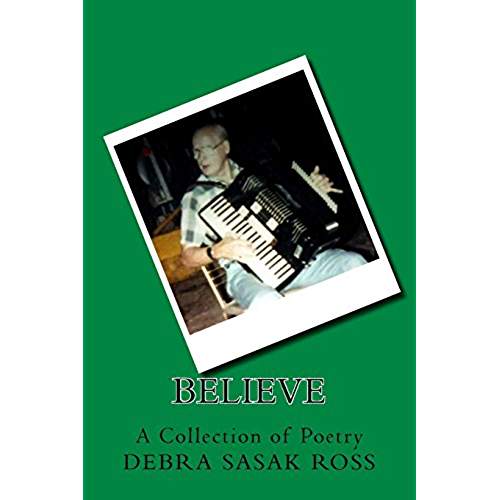
Wombwell Rainbow Interviews: Debra Sasak Ross


Wombwell Rainbow Interviews

I am honoured and privileged that the following poets, local, national and international have agreed to be interviewed by me. I gave the writers two options: an emailed list of questions or a more fluid interview via messenger.
The usual ground is covered about motivation, daily routines and work ethic, but some surprises too. Some of these poets you may know, others may be new to you. I hope you enjoy the experience as much as I do.
41HBsCKcrDL._AC_US500_QL65_

The Interview

1.   1. When did you start writing poetry?

I started writing when I was around seven or eight years old, but I started writing songs.

2. Who introduced you to poetry?

William Shakespeare and my mother. I was an introvert and my mother encouraged me   to write. I was always observing other people, their lives and circumstances.

3. How aware were you of the dominating presence of older poets?

Not at all at first. Music was my first love. It wasn’t until High School that I fell in love with poetry.

4. What is your daily writing routine?

Nature, life, personal experience and pain drive me.

5. What motivates you to write?

I have been on disability for quite some time, but I admire hard working individuals. I try to follow yet maintain my own original ideas.

6. What is your work ethic?

When I was young, I read a tremendous amount of gothic romance novels, but I think it led me to see the beauty out of the ordinary and mundane things in life.

7. How do the writers you read when you were young influence you today?

Some writer’s pieces are simply timeless like Edgar Allen Poe’s The Raven.

8. Who of today’s writers do you admire the most and why?

I would have to say Michael Lee Johnson. He works endlessly and encourages so many new writers.

9. Why do you write?

It is just something I have always loved to do and will continue to do for as long as I possibly can.

9. Why do you write?

I would have to say Michael Lee Johnson. He works endlessly and encourages so many new writers.

10. What would you say to someone who asked you “How do you become a writer?”

Write, edit, edit, edit and repeat.

11. Tell me about the writing projects you have on at the moment.

I am working on two more books. One on nature and one on the human condition.

Wombwell Rainbow Interviews: Martin Hayes

Wombwell Rainbow Interviews

I am honoured and privileged that the following poets, local, national and international have agreed to be interviewed by me. I gave the writers two options: an emailed list of questions or a more fluid interview via messenger.
The usual ground is covered about motivation, daily routines and work ethic, but some surprises too. Some of these poets you may know, others may be new to you. I hope you enjoy the experience as much as I do.

WP_20180912_11_26_14_Pro (3)

Martin Hayes

According to Amazon “About the Author
Martin Hayes was born in London in 1966 and has lived in the Edgware Road area all of his life. He played schoolboy football for both Arsenal and Orient, and cricket for Middlesex Colts. Asked to leave school when he was 15, he got a job as a leaflet distributor. Since then he has worked as an accounts clerk, a courier, a telephonist, a controller, a recruitment manager and a control room supervisor. He doesn’t t expect his situation to change much until he dies or else the sun explodes.

He has worked for over 35 years in the London courier industry and is the author of 4 books of poetry: Letting Loose The Hounds, (Redbeck Press, 2001). When We Were Almost Like Men, (Smokestack, 2015). The Things Our Hands Once Stood For, (Culture Matters, 2018) and ROAR! (Smokestack, 2018)

The Interview

What were the circumstances under which you began to write poetry?
Stress mainly. I couldn’t deal with the frustration and stress of living and having no way of getting it out of me. I’d done years of 11-hour shifts as a courier controller and I’d come to a point where it all seemed so pointless. I had nothing tangible to show for it. It was a bit of a crisis for me. I didn’t know what to do and felt that I was wasting my life. Writing for me was the metaphorical tap that when turned on got all of that shit out of me. I tried other ways but writing was the best way I found to make sense of it all. Make it all seem worthwhile.

Who introduced you to poetry?
I introduced myself to it, I think. There was a group of us who used to hang around our area and we got to an age where we started drinking and experimenting with other things and a couple of them I identified with more than the others and so we started to get into the literature and music that accompanied that. Blake, Bukowski, Morrison, Hendrix, The Jam, The Who, The Kinks etc. And then from all of that I got into poetry and it just did it for me. So much magic in so few words – I liked the way it could make you feel – there was such potential in it – the way the good ones smacked their hammer right on top of that head.

How aware were you of the dominating presence of older poets?
Not a lot. I never grew up with poetry or writing or any other creative influences around me. Apart from the music. I grew up on my estate – the only ‘dominating presence’ around there were ‘The Big Twins’ from Dinton House and ‘Terry The Tosser’ – mean bastards, all three of them. School wasn’t a learning experience – it was a test of survival – like it is for a lot of people I guess. But now, I see the hierarchy in the poetry world, the way it is tiered. The best way I can describe my experience of it so far is to imagine a castle with a moat around it and you arriving at its gates and hollering up – let me in, I’ve got something to show you – so you chuck what you’ve got over the walls and then you wait and wait and wait for the drawbridge to come down to let you in but it never does – so you begin hollering again – hey, remember me, I thought you’d at least get back to me – but again there’s no answer – and there won’t be any answers either – so everything goes quiet and the occupants of the castle, the coterie, hope you’ll just come to the conclusion that you’re writing is crap and go away – but if you know that it isn’t crap you start to wonder why they won’t let the drawbridge down for you and one of the reasons is because you smell different to them – for them, you smell of shit. It’s a clique and a class thing, which – as Martin Malone recently said – ‘is still the biggest game in town’. Having said that, there are also some editors and publishers out there who don’t give a toss where you went to school – or how well educated you are – or who you know – or what clique you’re a part of – and they just publish stuff that they like and think is relevant – most of them though don’t receive grant money so may feel that they have a bit more freedom than those who need to toe the line in tone and style and subject matter lest their precious standing in the poetry community and their grant money is taken away.

What is your daily writing routine?
I don’t have a daily one. I only write on Friday nights and some Sundays. I jot things down – ideas, scenarios etc. – on the bus and when I’m having coffees in the morning before work starts but what with the long shifts I do I don’t get time to write anything at all during the week – too bloody knackered – and then Friday comes around. I love Friday afternoons/nights – the potential of them – it’s the time!
I’d love to have the time and the space to write on a daily basis. But my financial circumstances and my responsibilities mean that it just ain’t gonna happen.

What motivates you to write?
The magic. I love trying to make sense or trying to interpret what we go through and then having it there in front of you fresh off the typer. The way when you’re into the first couple of lines of a new poem and you can feel it, feel the rest of it in there rising up out of you – that’s the magic. Of course, sometimes it plops out of you like a turd – that’s not so nice. But when it’s one of those magic ones, it is one of the best feelings in the world.

What is your work ethic?
Working 11-hours a day Monday to Friday for the last 30 years gives you a pretty good idea. So I think I’ve got a good one. I don’t have a choice though. There’s rent and bills and debt to pay off. Writing wise – as I said above, I only write on Friday nights and on a Sunday – they are my times – if I don’t get it done on those days then it has to either wait or it doesn’t get done.

How do the writers you read when you were young influence you today?
I’ve never really analysed that one. I’m sure they have but I didn’t start going out looking for particular authors to read till I was in my late teens. Miroslav Holub was a writer I always went back to – his necessary veiled sarcasm – the need to have to use metaphor because otherwise if you said it how it was back then you might get ‘disappeared’ while walking down an alleyway towards home tipsy after the pub – that meant a lot to me – the guts of him – his methodical approach to a poem, like the experiments of his day job, I admired and liked that a lot. Bukowski too – his conversational style was very influential to me – like you were in a pub with him just chatting and then that chat could just balloon into something more. Blake as well for the beauty good insight can bring to everyday things. And Thomas’ Under Milk Wood – the thump thump thump of the language in that I read over and over.

Who of today’s writers do you admire the most and why?
Fran Lock – she’s definitely got the magic and her imagery unsettles me, sometimes she makes me shit scared for her and the potential of fragility that she paints. We all go there and it’s scary. Very special writer.
Fred Voss – I am lucky enough to have become friends with Fred, his poems are inspiring – both on a human level and a political and solidarity level – for me, he has the most relevant and poetic voice I have ever come across.
Peter Raynard’s Precarious book is good – real good. His voice – and what the book is about – a working class man growing up and into fatherhood is spot on – so identifiable to me – he’s a bonafide witness to what that is like.
Martin Espada – his writing, but especially his book The Meaning of the Shovel, is elegant and striking – a brilliant and very necessary book.
Also Jon Tait – he’s a postie from up in Northumberland – a brilliant catcher of what people can feel in a particular moment or a scene – extremely good writer.
These guys spring to mind now but there are individual poems by other writers that I would like to mention too but I know this isn’t the place for such a long list.

Why do you write?
The magic. The buzz. The need to make sense of a world gone mad. I write a lot about work – it’s what pays for the roof over my head, for my families food, heat and hot water blah blah blah – it’s important to me. But it is also changing. Or has changed I should say. The relationship between employer and employee is so stacked in the employers favour nowadays that the employee has become 99% voiceless whose rights are largely and often blatantly ignored. And when you throw technology into the mix, eating away at the job stock, you get this pressure being placed on people that is almost unbearable. Having said that, the camaraderie that exists in the workplace can be very inspiring and uplifting too. The people and characters I have met over the years in the courier business have been amazing – both the good and the bad – the dark sense of humour and sarcasm they turn on everything, developed as a survival tactic – and I have always felt that through their stories, put down plain and simple, a picture of this system and the society that it has created, the worker’s and other individual’s place, in all of that, could be told. That is the point of writing isn’t it, to make things more understood, otherwise why did we pick up those charcoals and pigments in those caves centuries ago in the first place.

What would you say to someone who asked you “How do you become a writer?”
It’s easy. You pick up a pen or open a typer and just do it. Tons of people do it. There’s writers and poets everywhere. They infest us. But if you are talking about  becoming a writer that is relevant – then I’d say go out and live – work and play and learn – meet as many people as possible – ask as many questions as you can – get some life into you – then build a hide as thick as a rhinos – but keep your heart intact – and drink a lot of wine – and then write.

Tell me about the writing projects you have on at the moment.
No projects. Just looking forward to the next Friday night to come around and see if that magic comes.


Wombwell Rainbow Interviews: Annette Skade

Wombwell Rainbow Interviews

I am honoured and privileged that the following poets, local, national and international have agreed to be interviewed by me. I gave the writers two options: an emailed list of questions or a more fluid interview via messenger.
The usual ground is covered about motivation, daily routines and work ethic, but some surprises too. Some of these poets you may know, others may be new to you. I hope you enjoy the experience as much as I do.

41kBrS6AorL._SX331_BO1,204,203,200_

Annette Skade

Her website tell us Annette is from Manchester, and moved to the Beara peninsula in West Cork in 1989.

Annette has always read poetry, but only began  writing it  about ten years ago when a friend persuaded her to go to a poetry workshop.
She has a degree in Ancient Greek and Philosophy from Liverpool University and has recently completed an MA in Poetry Studies from Dublin City University, (First Class Honours) where she read everything from Basil Bunting to the York Mystery Plays, Elizabeth Bishop to Maurice Scully. She particularly enjoyed the range of poetry  studied and the close reading of work. She has recently received a scholarship from DCU to pursue a PhD on the work of the Canadian poet Anne Carson, commencing September 2016.
Her poems have appeared in the SHOp poetry magazine, Abridged and  When Women Waken Power Issue. In 2014 her work was published in Crannog Summer Issue and Poetry Bus Money Issue.  In 2015 her work appears in Tellus Magazine and the Sea, an Anthology in aid of the RNLI. Her poems appear online at Poethead.org and she is Caught in the Net Featured Poet for May 2015 on the PoetryKit website. In 2016 new poems appear in the Lion Tamer Dreams of Winter Anthology.
She won the Bailieborough/ Cara poetry competition in November 2013 and  the Poets meet Painters Competition in 2010 and was placed second in 2012 and her work appears in the Poets Meet Painters anthologies. In 2014  she won second prize in the Allingham Festival Poetry  Competition, was Commended in the Liquorice Fish “Lost Voices” Competition and was Highly Commended in the Poetry Kit Summer Poetry Competition on the theme of “Film”. She was delighted to be awarded third place in the Basil Bunting Poetry Competition in March 2015 and was commended in the Wordsworth Birthday Blog competition in 2016.
Thimblerig is now available on Amazon

Her website is well worth a visit:

http://annetteskade.com/

The Interview

Wombwell Rainbow Interviews

1. What were the circumstances under which you began to write poetry?

Over ten years ago now I met a friend in a local supermarket who wanted me to go with her to a poetry workshop. My first response was “Why would I do that? I don’t write.” In the end I was persuaded and, after it, I began to write, off and on, over the next few years. The first poem I got published was about a year in the making! I really came into my own after a week long series of workshops with Paula Meehan, who gave me the confidence to write as I wanted, and not as others seemed to think I should.

2. Who introduced you to poetry?

Although I’m from a working-class background (my mum was a widow and we lived in a council house in Droylsden on the outskirts of Manchester), I went to Grammar School. My English teachers were amazing and I seemed to be always reading poetry with them, quite often poems which were not on the syllabus, and not always looking at them critically.  I can still hear their voices: Mr Goodwin’s unforgettably quirky reading of Blake’s “Tiger”, and Mrs Bryce, my final teacher, reading Samuel Laycock’s “Welcome Bonnie Brid”. It was wonderful to me to hear poetry with an accent similar to mine. “Heow tha skrikes” put me in mind of my own mother’s warning to “Stop skriking!” when we were crying for nothing. We read Eliot, Stevie Smith, Sylvia Plath, Hughes, and Beckett, as well as the usual Tennyson and Wordsworth, which I also loved. In another class we were encouraged to each make an anthology of poetry and prose of our own choosing and had a great school library to burrow into.  Although I did Ancient Greek and Philosophy at University it was natural to continue reading poetry for pleasure after leaving school.

3. How aware were you of the dominating presence of older poets?

When I was young I didn’t write poetry. It seemed to me those I’d read could do it so much better and anything I tried to write seemed a bad imitation of their work. When I started writing I was already  “older”, but had been to many poetry readings, particularly from some high profile poets who were visiting the Beara peninsula on the West Coast of Ireland, where I still live. The poets I saw were, largely, male and seemed to be poets with a capital P, and I didn’t imagine for one second I could be like them. I was thrilled by their readings, but was phased by their repeated assertions of the “We write because we have to. . .” variety. In my own mind, and unintentionally on their part, this came with the addendum”. . . and if you don’t write it’s because you can’t.” Now I want to shout, “If you read you can write. Finding space to do it is the hard part!”  Equally, established poets such as Paula Meehan and Bernard O’Donoghue, who both gave workshops locally when visiting the area, were really encouraging, and this did a lot to build my confidence. I thought, if they believed my poems were good, then they just might be!

4. What is your daily writing routine?

There are times when I never stop writing and times when other things take over. I don’t have a writing routine, but I’m connected to the poetry on a daily basis. Sometimes, if I don’t have an “in” to get started, I focus on editing, or on the business side of things, rejigging a series of poems or checking what I have available to submit, and finding the right place to send to. So often, acceptance or rejection is about getting this right.  I usually have a note book with me, in my pocket or in the car, in case something strikes me. I don’t have internet when I’m outside, and this gives my mind plenty of room to range around. I try to be alive to what surrounds me.

5. What motivates you to write?

I’m motivated by a thing, person, sound, memory or phrase which catches my attention or which I’m curious about in some way. Something scratches at me and I want to take it further, listen to it, look at it differently, wash away my old ideas about it, and start as clean as I can. To start with I usually just write and wait for the words which rise to the surface, and take it from there. Quite often I wake at four in the morning, after sleeping with these words tumbling in my head, and I have some of the lines, or shape, I need. When this happens I get up and get on with it. I think to write differently, you have to be in some kind of altered state. A four a.m. state of mind is about right, everything takes on a new light then. A really long walk also works for me
6. What is your work ethic?

After the intuitive four a.m. stuff comes the graft: the draft, re-drafts, return to the start, the scrapping, the salvage. Every word matters and so does every space. I’m trying to get a second collection out there at the moment and there are times when I’m sick of looking at it, as I  consider, in particular,  the dynamic of a full collection: how one poem rubs off another, or the others. This is the hard part because, until it’s right, it’s difficult to see your way.  With an individual poem you can get a buzz from a word or phrase and you can see it coming together. Putting around sixty poems together, most of which you’ve read a hundred times, can feel like your hands are full of too many plain-wrapped parcels.

7. How do the writers you read when you were young influence you today?

After some thought it strikes me that I’m very influenced by T S Eliot, particularly Four Quartets which I’ve carried in my pocket on walks for many a long year. This didn’t immediately spring to mind as I haven’t read it recently, but I’ve loved that book all my life. As a child there was a programme called Timeslip where children would accidentally walk through portals into the past in each programme. I wanted nothing more, and did it in my mind instead. I fully agreed with the opening lines . “Time present and time past/ are both perhaps present in time future,/ and time future contained in time past.”  and this still influences my poetry. I also loved the fantastic images , created out of simple words, and the music of  lines such as “Garlic and sapphires in the mud/ clot the bedded axle-tree.“ He responds to what he sees and hears and reflects on it, and this is also what I try to do, though I try not to do too much overt reflection in my poems. I am inclined to ask myself what that tree, or shell, or patch of land is telling me, while I’m in the process of writing. I’m also influenced by Homer and Sappho  which I read at school, and characters from Homer and Greek plays can come up in my poems. They help me to explain things to myself, and have done since I was eleven.
Poetry has a Northern (English) accent for me and poets from the North of England, such as Basil Bunting and Tony Harrison are influences to some extent. Homer and Sappho were meant to be read aloud and I embrace Bunting’s assertion that poetry is “lines of sounds drawn in the air which have not even a name in prose.”

8. Who of today’s writers do you admire the most and why?

I’m currently doing a PhD on the Canadian poet, Anne Carson, and the more I delve into her work the better it gets. There’s a cleanness, a lack of clutter, but there’s also a wealth. It’s an amazing combination which gives and gives.  I love Mark Doty and Kei Miller. They both show a massive humanity, Doty writing about his barber or a young man’s sneakers, Kei Miller’s A Light Song of Light or the idea of a “heartbless”, which keeps coming through in a more recent collection, but also his telling of Jamaica’s colonial past through a poem like “ A Ghazal for the Tethered Goats”, restrained and terrible.  I also love how their poems are crafted, the space Mark Doty breathes in his poems and the sheer beauty of Miller’s words and the music in his lines. I’m completely taken with the searing, seeming simplicity of Lavinia Greenlaw’s writing, Alice Oswald for making the past immediate to me, Paula Meehan for the lyrical beauty of her poems, her speaking out, her celebration of ordinary things. I could go on, there are so many poets, well-known and not so well-known, who have poems that set me on fire, or poems that feel like a homecoming.


9. Why do you write?

Once writing takes over it becomes a way of thinking. “Wool-gathering” implies your not thinking of much,  but  it’s like that, seeing wisps and skeins  on bushes and fence posts or on the coat of a person that you meet that you can catch at. It’s as low key and constant as that. Then you have to be open when the stuff you gathered in your notebook wants to be made into something. A dialogue starts between it and yourself, a long running conversation. Since I started writing I’m not often bored or lonely.
10.   What would you say to someone who asked you “How do you become a writer?”

Writers agonise so much about calling themselves writers. The first time I called myself a poet was in my twitter bio, because my publishers said I had to. I still find myself hiding in my jumper or qualifying the word, on the occasions when I need to introduce myself as such. It seems to me that you become a writer if you write. The key is finding time and space to do it. You also need to read, otherwise it’s like trying to swim without water. You can go through the motions but you won’t get the movement or the lift. One thing that has stayed with me from my working class origins is a feeling of a lack of entitlement, which I still struggle with, especially in a room full of creatives. I’m still convincing myself that I have the same right to be there and as much to contribute as everyone else. I want others from a similar background to know their worth, and to feel that sense of entitlement.

11. Tell me about the writing projects you have on at the moment.

These days I’m putting the finishing touches to “that difficult second collection”. This has taken me some time, and a bereavement put a stop to it for a while. The great thing about writing poetry is that you can submit individual poems for publication in magazines and journals during the process of creating a collection, and this gives you a certain buoyancy, and visibility, while you grapple with a body of work. I’m very grateful to the publishers of these magazines, on-line and in print, who keep going on a shoestring. They are so important to the health and wellbeing of poetry.
I’m also collaborating with other U.K. and Ireland based poets who live on the coast, in a project devised and currently being worked on by the Liverpool based poet, Maria Isakova Bennett, which she’ll present at the Aldeburgh Festival in November. Each of us had to go to our chosen part of the coast, on or around 31st August, we read a poem which had resonance for us, and wrote a few lines. We also took a photo. Maria has the task of putting these lines together in some way for a final exhibition in the Lookout Tower at Aldeburgh.  Maria makes handmade books, with hand-stitched cloth covers.  They are art objects in themselves, and this project grew out of one issue of these beautiful books, the Coast to Coast to Coast Irish Edition, which launched at the Belfast Literary festival last June. Those two days in August I had the sense that our lines were like stitches over the surface of the sea, connecting all of us along the coasts of these islands.


Wombwell Rainbow Interviews: Mike Stone

Wombwell Rainbow Interviews

I am honoured and privileged that the following poets, local, national and international have agreed to be interviewed by me. I gave the writers two options: an emailed list of questions or a more fluid interview via messenger.
The usual ground is covered about motivation, daily routines and work ethic, but some surprises too. Some of these poets you may know, others may be new to you. I hope you enjoy the experience as much as I do.

whippoorwill-a7cfc858e43b02124d0c3c1516e0291f-bird-watching-art-and-illustration

Call of the Whippoorwill

Mike Stone

In his blog Mike tells us “I was born in Columbus Ohio, USA, in 1947. I graduated from Ohio State University with a BA in Psychology. I served in both the US Army and the Israeli Defense Forces. I have been writing poetry since I was a student at OSU. I moved to Israel in 1978 and live in Raanana. I am married and have three sons and seven grandchildren.”

The Interview

1. What were the circumstances under which you began to write poetry?

I began to write poetry while in high school. That’s about 55 years ago. I remember being immersed in an overwhelming gush of creativity involving mathematics and geometry, drawing and painting, writing poetry and short stories, playing clarinet and saxophone, and composing music. I had also just met my lifelong friend, David H. Rathbun, who was also immersed in a similar gush of creativity and we got caught up in a musical and poetic dialectic, in which we inspired and encouraged each other. My younger sister also inspired and encouraged my poetry. Victoria was Phoebe to my Holden Caulfield.

2. Who introduced you to poetry?

My mother was a poet. She died young in a tragic accident at the age of 34. I was 13 at the time. I like to tell myself that poetry was the only language in which I could speak to my dead mother. The truth was that the poetry I happened to read spoke to the love and tragedy raging through me in a way nothing else did.

3. How aware were you of the dominating presence of older poets?

The poets who burned most deeply inside me were Stephen Vincent Benét, Walt Whitman, Carl Sandburg, William Butler Yeats, T.S. Eliot, Ezra Pound, and Yves Bonnefoy, although I’ve picked up many more dominating presences along the way.

4. What is your daily writing routine?

It depends on what I’m writing. When I’m working on a novel, I have the characters and the whole storyline mapped out before I start to write. Then I write the beginning and then the end. Then I start filling the gaps and creating the bridges. The story ends up in sequence, but I write non-sequentially, as I think of solutions to get my characters from one point to another. I can write that way 8 hours a day, day after day, until I finish. With poetry it’s different. I usually wait for inspiration. When it comes it’s a surprise to me. Sometimes I try to push a poem into existence by withdrawing into myself or empathizing with another soul. Sometimes I just put a few words down on paper and try free association. I even wrote an Excel macro which uses a random-number generator to select certain words from 10 different lists and put them together in a sentence. That sentence is usually nonsensical but it can usually trigger a free association that can end up in a fairly decent poem. For more information about it, see my blog post https://uncollectedworks.wordpress.com/2015/05/23/the-flying-poetry-creation-contraption/.

5. What motivates you to write?

Writing is its own motivation. Although I enjoy the appreciation of my readers very much, I would write if I were alone on a desert island. I write what I’d like to read, but can’t find anywhere. I write because some ideas and feelings deserve to exist. Also, I write in order to get ideas out of my head and onto paper so I can start thinking of more ideas. Writing is spilling the overflow of your mind onto paper.

6. What is your work ethic?

Since I retired a year and a half ago, my work ethic is to make time for my family and, for myself, to do the things I love doing. Before I retired, my work ethic was to do what I have to do, in order to be able to do what I want to do.

How do the writers you read when you were young influence you today?
The writers I read when I was young influence me like a compass, showing me the depths and breadths that are possible to think and feel. Of course, I would never think to copy their work, but they egg me on to attempt similar depths and breadths in my own soul and my own works.

7. Who of today’s writers do you admire the most and why?

I admire Sharon Olds and Wendell Berry very much. I was captivated by the originality of Sharon’s perspective. The simplicity of Wendell’s poems and their connection to nature and local history generated similar feelings in me. I read their poetry like other people read novels, page after page, not skipping around, and heavily underlining. I also admire several Israeli poets, among them, Michael Dickel, Sabine Huynh, and Michal Pirani. Michael introduced me to G. Jamie Dedes whom I greatly admire. Michael, like me, is an American ex-pat living in Israel for many years. I found that we shared many of the same experiences. Sabine’s poetic voice is soft and breathless, creating a fragility that you’d want to protect. Michal’s poetry also has a quiet voice and is deceptively simple, masking a depth of feeling behind it. I also admire Joanna Chen’s minimalist writing. Jamie’s poems are uniquely sharp and enticingly alien. The best poet I’ve ever known, however, and one of the best poets I’ve ever read was my lifelong and best friend, David H. Rathbun, who passed away recently from brain cancer. As I wrote in the foreword to our book of poetry, An Extraordinary Friendship, “If I had to guess what guides Dave’s poetry writing, after reading all his poetry, I would have to say that it was to memorize the names of every single flower, plant, tree, forest, animal, person, geological stratum, body of water, weather phenomenon, sight, sound, taste, smell, and feeling around him, to pay attention to everything, and to write about all that is and all that is not. Simple.”

8. Why do you write?

I suppose I answered this question under “What motivates you to write”. I write what I’d like to read, but can’t find anywhere else. I write to get stuff out of my head (and onto paper) to make room for new stuff.

What would you say to someone who asked you “How do you become a writer?”

Although the way I became a writer was probably unique to me, I don’t believe that’s the only path. I would say that, above all, you must learn to pay attention to everything that is going on around you and inside you. Then you must develop your own language to describe those things. That language is what poets and writers call ÿour voice. The voice is what the reader “hears”in his or her own head while reading what you wrote. Avoid clichés. Write simply. Sometimes the most powerful writing is that which sounds like it’s not the speaker’s native language, like it comes out of his mouth with great difficulty.

9. Tell me about the writing projects you have on at the moment.

I’ve published 5 books of poetry, 3 of my own poetry, one of my mother’s poetry (and my dialogue with her after she died), and one which was a cooperative effort of David H. Rathbun and myself (150 poems each from the period 2000 – 2016). I also published a series of 4 science fiction novels, which I called “The Rational Series”, and one book of essays. I am currently working on a new book of poetry, entitled “Call of the Whippoorwill”. To keep up readership interest in my poetry while working on my latest project, I publish another poem from four of my books every day on the social media networks to which I belong, and I maintain a blog for my essays and to allow readers to look over my shoulder as I write.

10. Why did you call it “Call of the Whippoorwill”?

As one book closes (“Call of the Whippoorwill”, my fourth book of poetry), another one opens (“The Hoopoe’s Call”).

As any multi-generation American can tell you, the whippoorwill (or whip-poor-will) is the bird that most characterizes the American soul. For me, the single poem that best captures that bird/soul is Stephen Vincent Benet’s “The Mountain Whippoorwill”:

“Born in the mountains, lonesome-born,
Raised runnin’ ragged thu’ the cockleburrs and corn.
Never knew my pappy, mebbe never should.
Think he was a fiddle made of mountain laurel-wood.
Never had a mammy to teach me pretty-please.
Think she was a whippoorwill, a-skittin’ thu’ the trees.”

The hoopoe is Israel’s national bird and has occupied a special place in Israeli lore at least as far back as King Solomon and the Queen of Sheba.
For me, both birds have a personal meaning: the whippoorwill represents the first half of my life, growing up in America, while the hoopoe represents the second half of my life, maturing and discovery in Israel.

My Whippoorwill Years began shortly before I was conceived when my father and mother dropped out of college to elope. Dad was an aspiring writer and Mom was an aspiring poetess. They crossed over the Ohio River into Kentucky where the justice of the peace didn’t ask too many questions before hitching them and that was that. I was born and a few years later my sister was born. We weren’t a religious family although we had a few religious skeletons in our family closet. I don’t remember whether I was happy or sad during those years (most probably a healthy mixture of both); however, I do know that during that time my soul ran wild and free. That is to say, my imagination and my predilections pretty much matched the world around me. Even after Dad divorced Mom, when I was seven years old, although it was a cataclysm of cognitive dissonance for my sister and me, our souls continued to run wild and free. Dad’s family lawyers pressured Mom to give us up, so Dad got custody of my sister and me. Dad remarried when I was nine, this time to a Jewish woman. Ruth meant well and tried to be a good mother to us but she ended up putting our souls in a cage, a Jewish cage. Lest my words be misconstrued, Judaism is neither closer to nor farther from God than any other religion, as far as I know, but my little whippoorwill was caged until the day I finally moved out from under my parents’ roof.

Once again, my soul ran wild and free through fields of love and squalor. I finished university, worked awhile, was drafted into the US Army, sent to Germany for a couple years, and hitchhiked around Europe. I met my future wife (although I didn’t know at that time that she’d be the one) in Israel. After I was discharged back stateside, I married Talma. We had two children in America.
In 1978, when I was thirty-one, we emigrated to Israel.

Thus ended my Whippoorwill Years and began my Hoopoe Years. Talma is a third-generation Israeli, born during the British Mandate before Israel was declared a state, while it was still called Palestine, so she was just returning home. From the point of view of the Israeli government, as a Jew, I was also “returning” to Israel, the Jewish homeland, under the “Right of Return” which is granted to Jews around the world. After three years and three months living in Israel, I was granted Israeli citizenship automatically.

Around the same time, I was drafted into the Israeli Army, in which I served, a few weeks a year, almost until I turned fifty. I also volunteered for civil guard duty once a month in my hometown of Raanana. During my civilian life, I worked in computers as I had in America.

Our third son was born in Tel Aviv in 1984. Our sons grew up, went to college or university, served in the Israeli Army, married, and have their own children. We have seven grandchildren these days. The oldest just turned eighteen. The youngest is one and a couple months. Our oldest son moved his family back to America.

I have lived more than half my life in Israel. There are no whippoorwills in Israel. My soul tried to make the leap of faith from one bird to another but it ended up inside another cage, a cage of dissonance and loneliness, an unrequited love of the Holy Land, the land of broken promises, the hills and valleys, the rivers, lakes, and seas, animals and trees, the people, the language, the poetry, the music, and the skies.

11. How important is God in your poetry?

First of all, here’s a little context to my answer. I am an agnostic Jew; that is, I am not persuaded one way or the other whether there is a God as is commonly discussed or not. Judaism, for me, is a historical narrative and a cultural pattern to which I feel very loosely bound.

That said, God is a potent metaphor in my poetry, whom I cannot ignore given the context in which I live: Israel, the ancient Promised Land. Far from the conventional thinking and definitions of God, I often imagine how I could construct a God in which I could believe with my heart and mind. Sometimes these God-like products of my imagination find expression in my poetry. Sometimes I rant against the conventional patterns of belief in God.

I do admire Jacob (from the Old Testament) who wrestled with the angel, some say, or with God Himself. I like to say that I am still wrestling with God.

12. Yes, there is a searching for answers in your poetry, a need to make the unseen seen, the invisible visible.

Thank you for your observation, Paul.

Yes, there is a difference between those who think they’ve found the answer and can stop thinking about the question, and those for whom the question remains open, unanswered, but still demanding to be answered. With respect to God, I’m more like the latter than the former.

13. Why do you associate your cultural experiences with birds?

For me, different birds represent different souls. Don’t look for a logically consistent philosophy here. While I’m writing poetry, I allow my mind to freely associate and I encourage it to leap when it feels like it. I’m much more logically consistent in my science fiction novels. Back to your question: I’m not so original in using birds to represent the soul. The Hindu Upanishads compare the two souls (the soul and the Super Soul)) in each body to two friendly birds perched on a branch of a tree. One eats the fruits thereof while the other looks on in silence. The Super Soul is the Atman, if I remember correctly, the God-principle in each of us, while the “soul” is more like our individual ego. The image stuck with me over the years.

14. Your relationship with Daisy is a recurring motif in these poems.

Daisy was diagnosed with cancer a year ago and the prognosis at the time was 6 months to a year, so every day with her, every day she loves living and is not cowed by pain, is an unexpected blessing. She’s twelve and a half years old which is pretty old for a boxer. I’ve loved dogs, especially boxers, ever since I was a kid, although we never had a dog while I was growing up. I got the dog-loving gene from my father telling me stories he made up about dogs. I was so used to not having a dog that when I grew up, moved away, and got married, I didn’t think about actually getting a dog of my own, but I kept up the tradition of telling my father’s dog stories to my three sons. When my youngest son turned thirteen, he was bar-mitzvahed (when a Jewish boy becomes a man) and wanted a boxer for his gift. I was beside myself with joy. My wife reluctantly agreed. We got Chewy whom we all (including my wife) loved fiercely. Chewy was a recurring motif in my poetry at the time. Chewy lasted only eight and a half years and died of cancer. We tried to live without a boxer for a year but my wife couldn’t stop crying. We got Daisy and life for us seemed to pick up where it had left off. Now we have to face the fact that Daisy’s days are numbered, that it’s only going to get worse for her. I won’t let her suffer.

I had read Kafka’s “Metamorphosis” (about a young man who became a cockroach), a collection of his short stories. Included in the collection was his “Investigations of a Dog”. I liked that story and it stuck with me. One day the Daisy muse inspired me to write my own version of Kafka’s story which I called “Investigations of a Kafkaesque Nature”.

I think I’m more inspired by people and animals that don’t talk a lot. Daisy’s a natural as a muse. She’s mostly silent. She prowls like a panther. She’s muscular. She has sad eyes. She’s as protective of me as I am of her.
When she goes, we won’t get another dog.

15. You have a distinctive style of telling a story and ruminating on its meaning, often citing Biblical stories.

What you call “a distinctive style of telling a story” I would call “a writer’s voice”. I think it’s not enough to write well; one must also write uniquely.

As I said before, I write what I like to read. What I like to read are rambling stories that start out somewhere, meander along, and end up somewhere else that turns out to surprise me as much as it surprises the reader. I’m not sure, but I think that what you call ruminating on its meaning, I would call ouija-style free association. That’s part of the process of coming up with those surprises.

It’s hard for me not to cite Biblical stories, even though I’m not a true believer. In America, unless you are raised in a God-fearing Bible-thumping family and/or religious school, you may know most of the Bible stories from Saturday or Sunday school or highly summarized picture books. For the non-religious the Bible is mythology. In Israel, whether you or your family are religious or not, by the time you’ve graduated high school, you’ve read the Bible cover to cover at least three times. You can quote chapter and verse in the original Hebrew. Whether you are religious or not, the Bible is history, your history. You can walk around in most of the places mentioned in the Bible. I envy native-born Israelis’ knowledge of the Bible, mostly because of the metaphors they know and use in modern Hebrew. When I cite Biblical stories or references, it’s mostly in irony.

16. What do you hope the reader will come away with after reading this book?

The poetry in this book reflects the unique perspectives and experiences of an American in Israel. The book is a smorgasbord of descriptions, empathies, wonderings, and questionings. “Promises” describes the secret promises, some kept, some broken, in the Promised Land. “As Your Face Guides Me Home” transforms a lover into a constellation of stars and then into a goddess. “Zen and the Art of Dying” describes death as a kind of meditation, not as frightening as one might think. “There Will Never Be Another” is a wake-up call for those who would deny global climate change, to consider that the rainbow they see today may be the last they’ll ever see.

I suppose what I’d like the reader to come away with is feeling some of what I feel, loving what I love, and worrying about the things I worry about. A shared vision is easier to bear.
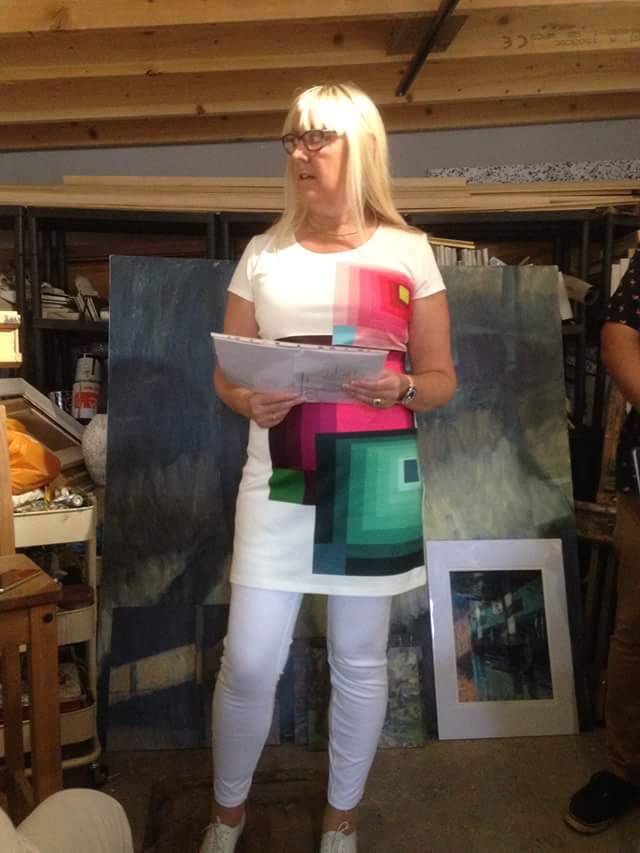
Wombwell Rainbow Interviews: Alison Brackenbury

Wombwell Rainbow Interviews

I am honoured and privileged that the following poets, local, national and international have agreed to be interviewed by me. I gave the writers two options: an emailed list of questions or a more fluid interview via messenger.
The usual ground is covered about motivation, daily routines and work ethic, but some surprises too. Some of these poets you may know, others may be new to you. I hope you enjoy the experience as much as I do.

51Ozj3DeJ+L._AC_US500_QL65_

Alison Brackenbury

On Amazon she tells us “I am possibly Britain’s only poet to have worked in a boiler suit! Born in 1953, I grew up in the countryside and come from a long line of shepherds and farmworkers. I won a scholarship to study English at Oxford, and have since worked as a librarian, accounts clerk, and, for twenty-three years, in the family metal finishing business.

I have recently retired, and am gratefully rushing around the country doing readings from my new collection, ‘Then'(published in 2013).

I am married with a daughter. I have published eight collections of poems, on animals, history, love and politics (especially global warming).

I am keen to reach readers, have a blog,www.alisonbrackenbury.co.uk, and a Facebook group sending out free poems, called “Poems from Alison”.

My poems can now be heard (and read) on the marvellous Poetry Archive site:
http://www.poetryarchive.org/poet/alison-brackenbury”

The Interview

1. What were the circumstances under which you began to write poetry?

I was six. I was sitting outside a Victorian farmhouse in Lincolnshire. We lived in part of it, but did not own it. My father was a farm lorry driver, and my mother, a teacher, had been eager to camp out in the farm’s grandest, if decrepit housing. But I wasn’t admiring the marble fireplace by which we stored apples. I was listening to the deep sea sounds of the small wood around the house (which, to me, made up most of the world). I then wrote a two line poem which started in a promising rush, then suffered total rhythmic collapse. Nothing changes.

2. Who introduced you to poetry?
First, my mother, who had been to a teacher training college in London, and owned the poems of Robert Louis Stevenson and Walter De La Mare. Then my Great-Uncle Will from Buckinghamshire, a former merchant seaman who loved poetry, gave me the leather-bound books his failing eyes could no longer read. In ‘The Golden Treasury’, I discovered poem after poem which are still very close to me, including some fine work by nineteenth century women writers. I also read a good deal of poetry at both my schools. Anthologies were the widest gateways.

3. How aware were you of the dominating presence of older poets?
This didn’t trouble me at all when I was very young. It was perhaps more oppressive when I was at university. I knew very little about the techniques which underpinned the writing of Wordsworth or Eliot, so at times their work could seem as dauntingly perfect as the marble fireplaces of my youth. When I read the poems of John Clare, I began to glimpse an alternative, ballad tradition. This was more open to a writer like me, who had not had a long training in classical metres, the apprenticeship of many of the poets I had studied.

4. What is your daily writing routine?

I try to write for an hour before breakfast, before the world wakes up, the post comes, and the telephone plays me recorded messages. The white cat slumbering peacefully on the sofa is my main ally. My main cause of distraction is myself.

5 What motivates you to write?
Tennyson – also from Lincolnshire – said that for me in three words. ‘Because I must’.

6 What is your work ethic?
Patchy. I can concentrate ferociously – but not for very long. I’ve never tried to write poetry for hours. I suspect I’d end up spoiling what I’d started. Perhaps I will try that, when I’m very old. (I’m only 65…)

I allow my daily writing of poems to be disrupted by frequent travel, and by commissions (e.g. reviews). The travel does lead to other poems. I also think I have a duty to be a good citizen and will spend hours helping with campaigns to protect local oak trees…
7 How do the writers you read when you were young influence you today?
I possibly have rather old-fashioned tastes – although I think poetry can have many forms. My bookshelves have Ashbery next to Ayres. I am particularly drawn to narrative, strong rhythms, poems which are close cousins to song. That may well stem from the lyrics and long story poems in Uncle Will’s leather-bound 1912 ‘Golden Treasury’!

8 Who of today’s writers do you admire the most and why?

Out of writers active in my lifetime, I would probably single out Philip Larkin. I don’t think that what today’s readers may hate in his letters, for example, is often evident in his poems. These are shadowed by something very close to despair, yet, time and time again, they bring their reader face to face with vision. This is possible partly through superlative technique, including an interweaving of rhymes so subtle that my ear cannot tease it apart.

9. Why do you write? ‘

‘Because I must’. Then, to publish: to give the work away to strangers, as widely as possible.

10. What would you say to someone who asked you “How do you become a writer?”
I can only suggest a possible pattern of becoming a poet.
You read. Painstakingly, you study formal techniques, of metre and verse form, even if you think you will never use them again. Then, when your subject falls out of the sky on top of you (quite possibly at a time of pain and chaos), you will be ready to write.

11. Tell me about the writing projects you have on at the moment.
There are hundreds of them. Yes, honestly. They’re called poems. They date from 2013 to today, and they are in a stout cloth bag, now so heavy that I can barely lift it.  Meanwhile, I keep travelling, rashly taking on commissions… and writing new poems faster than I can thin out the old.

I am also thinking about my project for my 80s (I’m only 65…) This is a prose memoir of the extraordinary village where I grew up, with Victorian waggoners, a pioneering Edwardian woman archaeologist, racehorses, a very large and black ghostly dog … and me. If we meet, please remind me to take my daily vitamin tablet. I must make it to 85, so I can start work on  ‘Village’…